Skylight repair: when to fix and expected costs
By Housey · Last reviewed 1st of June 2026
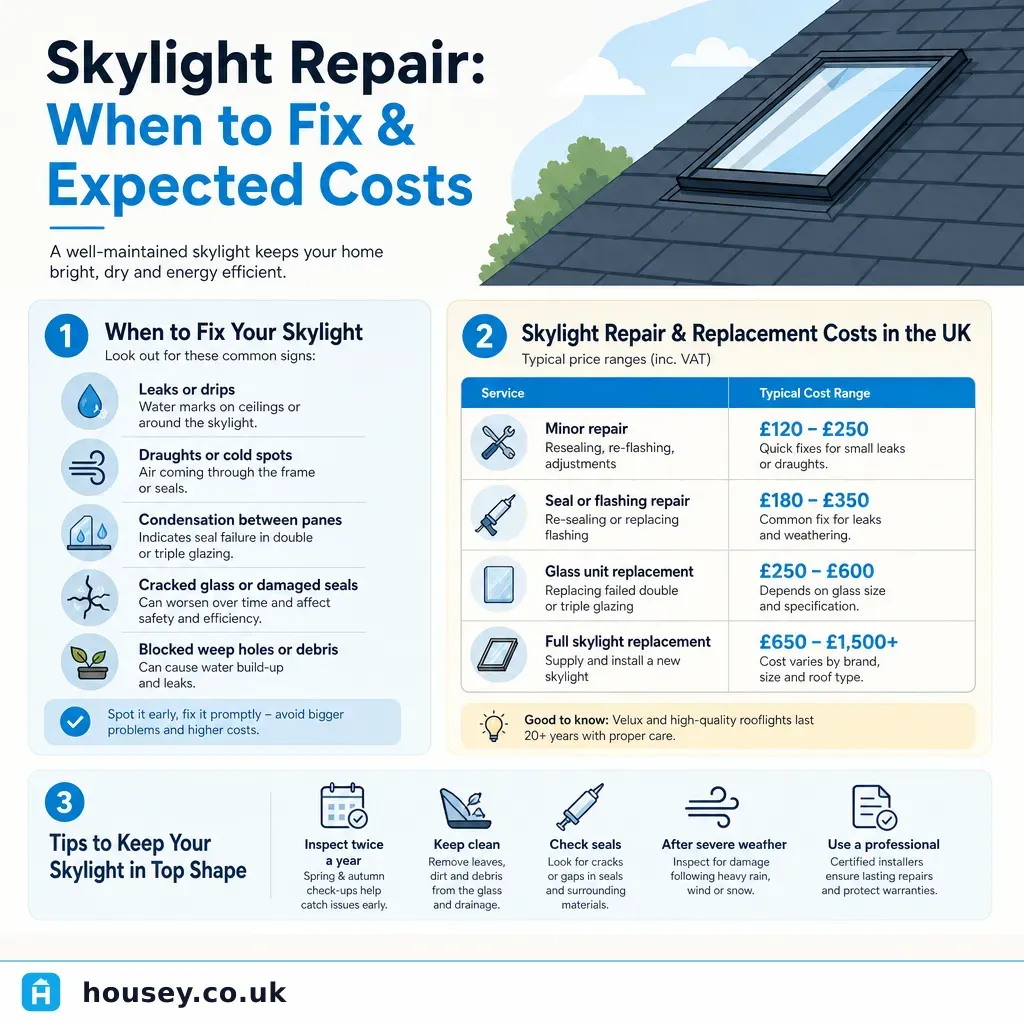
Skylight repair: when to fix and expected costs
Skylights are among the roof components most exposed to the British climate and — as the junction between glazing, framing, and roof covering — are susceptible to gradual deterioration that, left unaddressed, can lead to water ingress, structural damage to surrounding timbers, and significantly higher repair bills. This article is for homeowners who have noticed a problem and want to understand the most likely cause, whether a targeted repair or full replacement makes more sense, and what costs a qualified contractor is likely to charge.
Key points
- Most skylight leaks originate at the flashing rather than the glass itself; corroded, cracked, or poorly sealed lead or aluminium flashing is the most common cause of water ingress.
- Condensation between double-glazed panes indicates a failed sealed unit — the inert gas fill has escaped — and the glazing unit must be replaced rather than repaired.
- Velux recommends inspecting and cleaning skylight seals, gaskets, and drainage channels every one to two years; many warranty claims are refused where maintenance records are absent.
- Repair typically costs £150–£800; full replacement usually ranges from £500 to £2,500+, including installation (indicative UK costs, last reviewed 2026-06-01).
- Any work involving access to a pitched or elevated roof should be carried out by a qualified roofer; falls from height account for around 40% of fatal injuries in the UK construction sector (HSE data).
Common skylight faults and how to identify them
Fault | Common cause | Repair or replace? |
|---|---|---|
Water ingress at frame edge | Failed or cracked sealant, corroded flashing | Repair — reseal or reflash |
Water ingress at hinge or opening | Worn seal, damaged gasket | Repair — replace seal or gasket |
Condensation between panes | Sealed unit failure; argon fill has escaped | Replace glazing unit |
Cracked or broken glass | Impact or thermal stress | Replace glass panel |
Frame rot or delamination | Timber neglected; prolonged moisture ingress | Repair or replace frame |
Stiff or stuck opening mechanism | Worn pivot, debris, or paint overspray | Repair — lubricate or replace mechanism |
Mould around interior frame | Ventilation shortfall or cold bridge | Address root-cause ventilation issue |
Mould growth around the interior frame is frequently misdiagnosed as a skylight defect. In many cases it reflects a ventilation shortfall or a cold bridge in the surrounding roof construction, and replacing the skylight will not resolve the problem.
How much does skylight repair cost in the UK?
Indicative UK costs, last reviewed 2026-06-01. Prices vary by location, roof pitch, access difficulty, and skylight brand and model.
Repair type | Indicative cost range |
|---|---|
Resealing or reflashing (single unit) | £150–£400 |
Replacing a single rubber seal or gasket | £100–£250 |
Replacing a sealed double-glazed unit | £200–£600 |
Replacing a cracked single-glazed panel | £150–£350 |
Replacing the opening mechanism | £120–£300 |
Full skylight replacement (supply and fit, standard rooflight) | £500–£2,500+ |
Scaffold or MEWP hire when required for safe access | £300–£1,500 per day |
Scaffolding or a mobile elevating work platform (MEWP) becomes necessary when roof pitch or height makes ladder access impractical. Not all roofers carry appropriate access equipment — confirm this before booking.
Parts availability also matters: Velux and FAKRO both maintain extensive spare-parts catalogues for units dating back 20 or more years. For less common brands, parts may be difficult to source, and full replacement may be more economical than repair.
When to repair and when to replace
- Repair if the skylight is under 15 years old, structurally sound, and the fault is limited to sealants, gaskets, or the glazing unit.
- Replace if the frame is warped, rotten, or beyond reasonable repair; if the unit is more than 20–25 years old; or if the glass no longer meets current energy performance standards. Under Building Regulations Part L, replacement rooflights in most domestic applications must achieve a U-value of 1.6 W/m²K or better.
- Seek a roof survey first if water damage is visible on surrounding timbers, if the leak is recurring after previous repair attempts, or if multiple skylights are failing simultaneously.
Booking a scheduled repair is nearly always cheaper than an emergency call-out. If the fault is minor, it is worth waiting for a planned visit rather than paying out-of-hours rates.
Red flags: signs the problem may be more serious
These signs warrant a professional roof inspection rather than a targeted skylight repair:
- Water staining or rot visible on surrounding rafters or roof decking, seen from inside the loft
- Multiple skylights developing faults at the same time, which may indicate a broader installation or weathering issue
- Daylight visible around the frame perimeter when viewed from inside the loft
- Flashing that is lifting, cracked, or shows evidence of previous repair on top of repair
- A flat or warm roof section adjacent to the skylight where water is clearly pooling
- The roof covering itself is approaching the end of its serviceable life — in this case, repair the skylight alongside the roof, not separately
What to ask before hiring a contractor
Before accepting a quote for skylight repair or replacement, ask:
- What access method will you use — ladder, scaffold, or MEWP?
- Are you insured for work at height? Request a copy of their public liability insurance certificate.
- Will you inspect the surrounding flashing and roof covering while on the roof?
- What does the price include — materials, disposal, and VAT?
- Do you stock spare parts for my brand and model, or will parts need to be ordered?
- What guarantee do you provide on the repair? A minimum of 12 months on labour is reasonable.
- Will you issue a written report if additional faults are found during the inspection?
When to get professional help
Skylight repair at roof level is not a safe task for most homeowners. Falls from height are among the most common causes of serious injury in domestic settings, and any work on a pitched or elevated roof should be carried out by a qualified roofer who is competent to work safely at height.
Seek professional help promptly if:
- A leak is worsening rapidly after heavy rain
- Water is entering in volume or reaching electrical fittings
- You notice any sign of structural damage to the roof deck, rafters, or other timbers around the skylight
- The skylight is on a steeply pitched roof, a fragile covering such as natural slate, or a listed building where specialist conservation skills may be required
How Housey can help
Housey connects you with vetted professionals for skylight repair and replacement. Find a local roofer experienced in domestic rooflights, or contact a qualified window and door installer for glazing unit replacements. If you want a full condition assessment before committing to repair costs, our roof survey service can give you an independent picture of what needs attention.
Frequently asked questions
Does repairing or replacing a skylight need planning permission?
Like-for-like skylight repair or replacement does not usually require planning permission under permitted development rights for most houses. However, if your property is in a conservation area or is listed, you may need prior approval or listed building consent before replacing roof glazing. Always check with your local planning authority if you are uncertain.
Is a leaking skylight covered by home insurance?
It depends on your policy and the cause. Sudden accidental damage from a storm is commonly covered; gradual deterioration due to lack of maintenance is usually excluded. Report the leak promptly, document the damage with photographs, and review your policy wording carefully before instructing any repairs.
How long does a skylight repair typically take?
A straightforward sealant repair or seal replacement usually takes one to three hours on site. Replacing a sealed glazing unit typically takes two to four hours. Full skylight replacement usually takes half a day to a full day, depending on roof access and the size of the unit.
Can I repair skylight flashing myself?
Flashing repair involves working at significant height and requires correct lead or aluminium working techniques to achieve a lasting weathertight result. Unless the skylight is on a ground-floor flat roof extension that is safely accessible, this work should be left to a qualified roofer. Never work on a pitched roof without appropriate fall-protection equipment.
Sources and further reading
- Working at height: a brief guide (INDG401) — Health and Safety Executive
- Building Regulations Approved Document L (Conservation of fuel and power) — GOV.UK
- Skylights and rooflights: planning guidance — Planning Portal
- Velux maintenance and care guidance — Velux UK
Useful next reads
 Improvement & Build
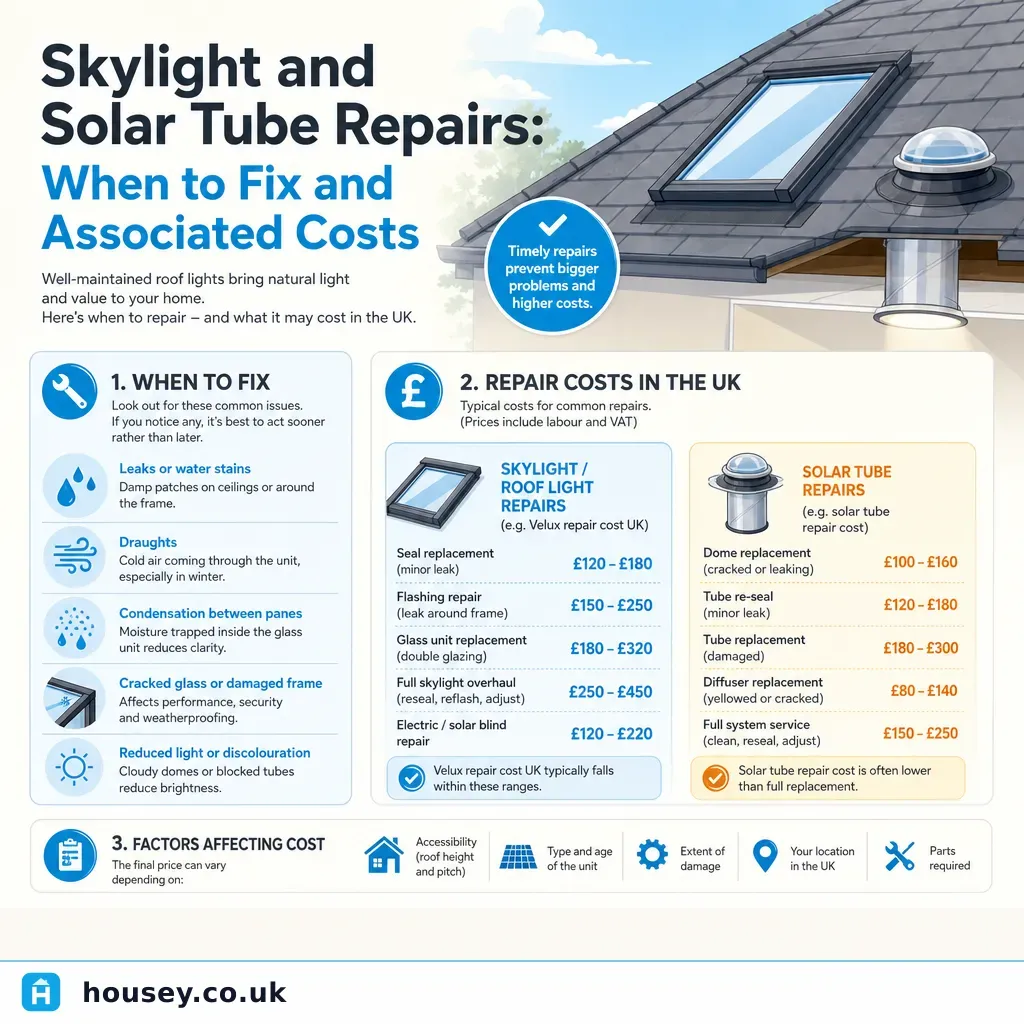
Skylight and solar tube repairs: when to fix and associated costs
Skylight repairs — resealing, reflashing, or replacing a misted glazing unit — typically cost £150–£400 for minor work and £800–£2,500+ for a full replacement in the UK.
 Improvement & Build
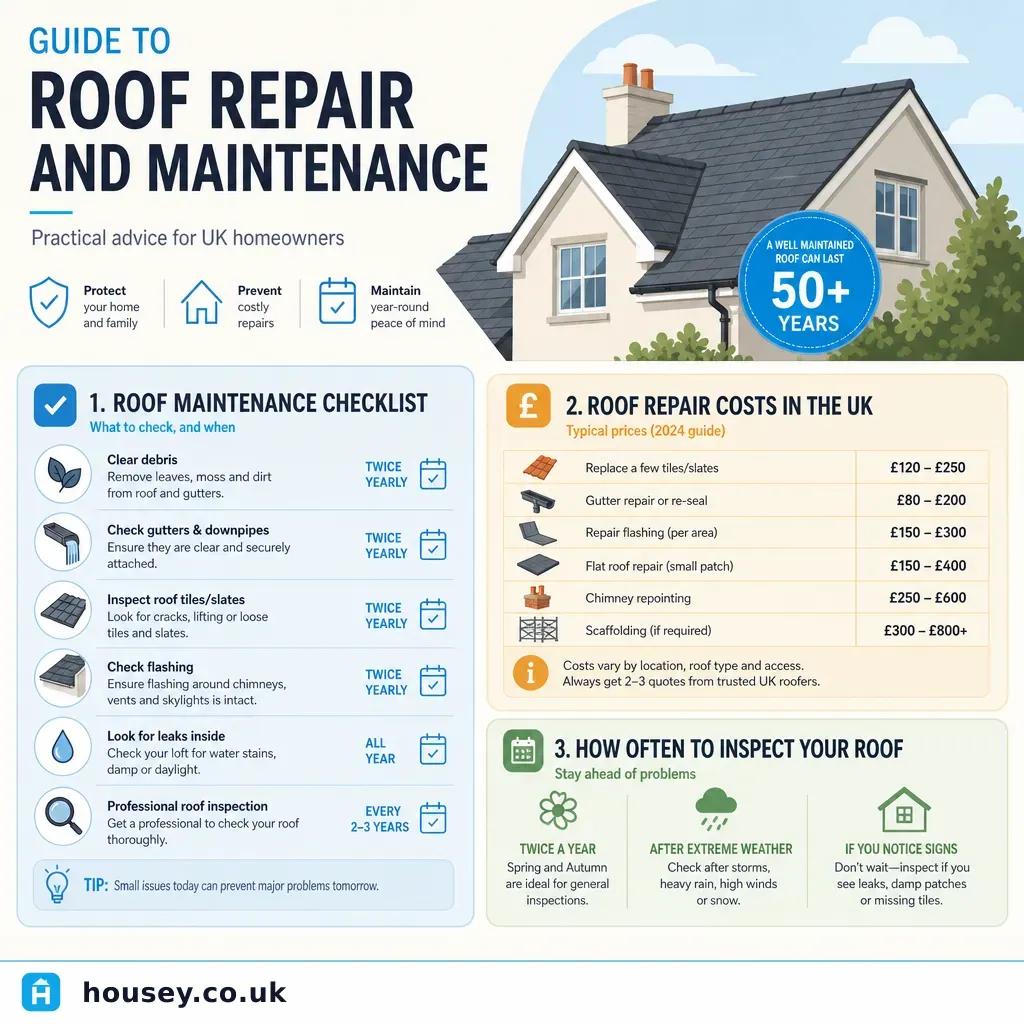
Guide to Roof Repair and Maintenance
Regular roof inspections every 3–5 years, prompt repair of damaged tiles and failed flashings, and annual gutter clearance are the core of effective UK roof maintenance.
 Improvement & Build
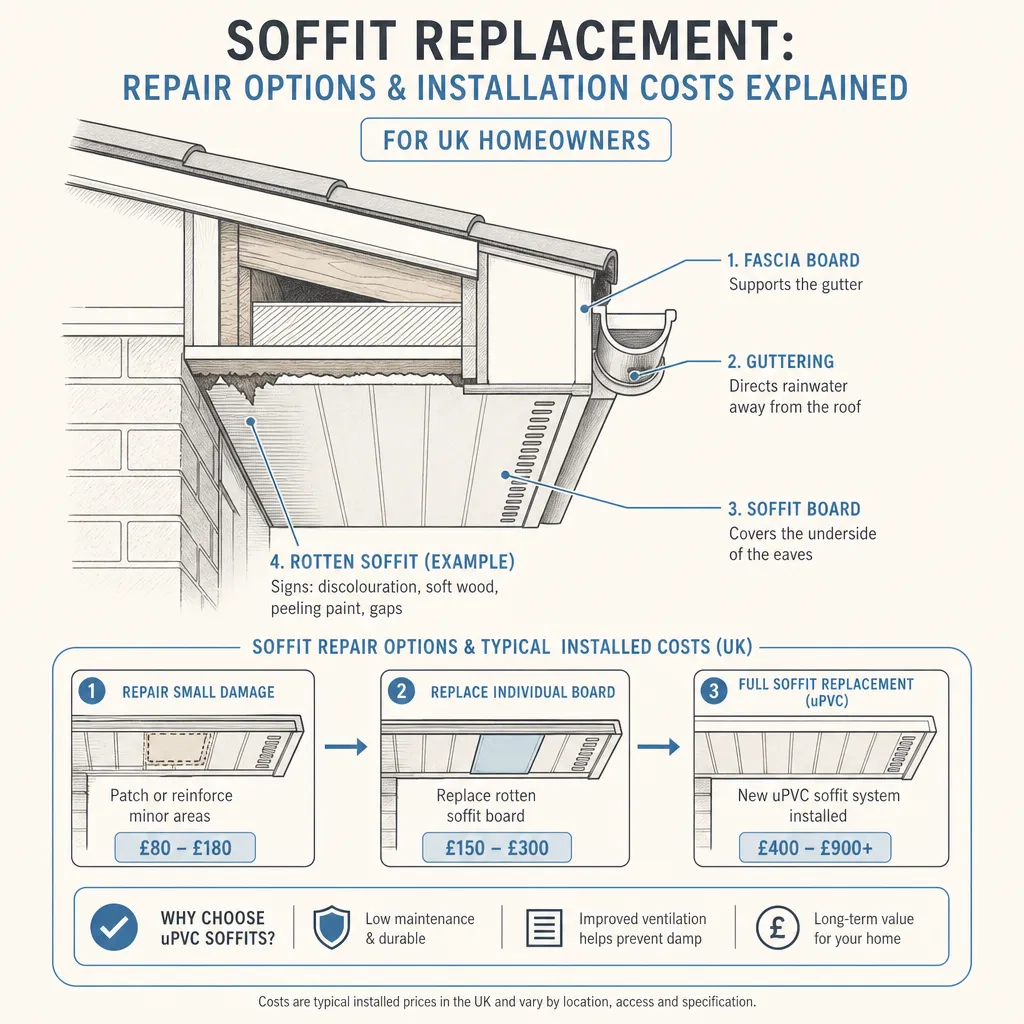
Soffit replacement: repair options and installation costs explained
Soffit replacement typically costs £500–£1,200 for a semi-detached home in the UK, depending on material choice and the extent of work.
 Improvement & Build
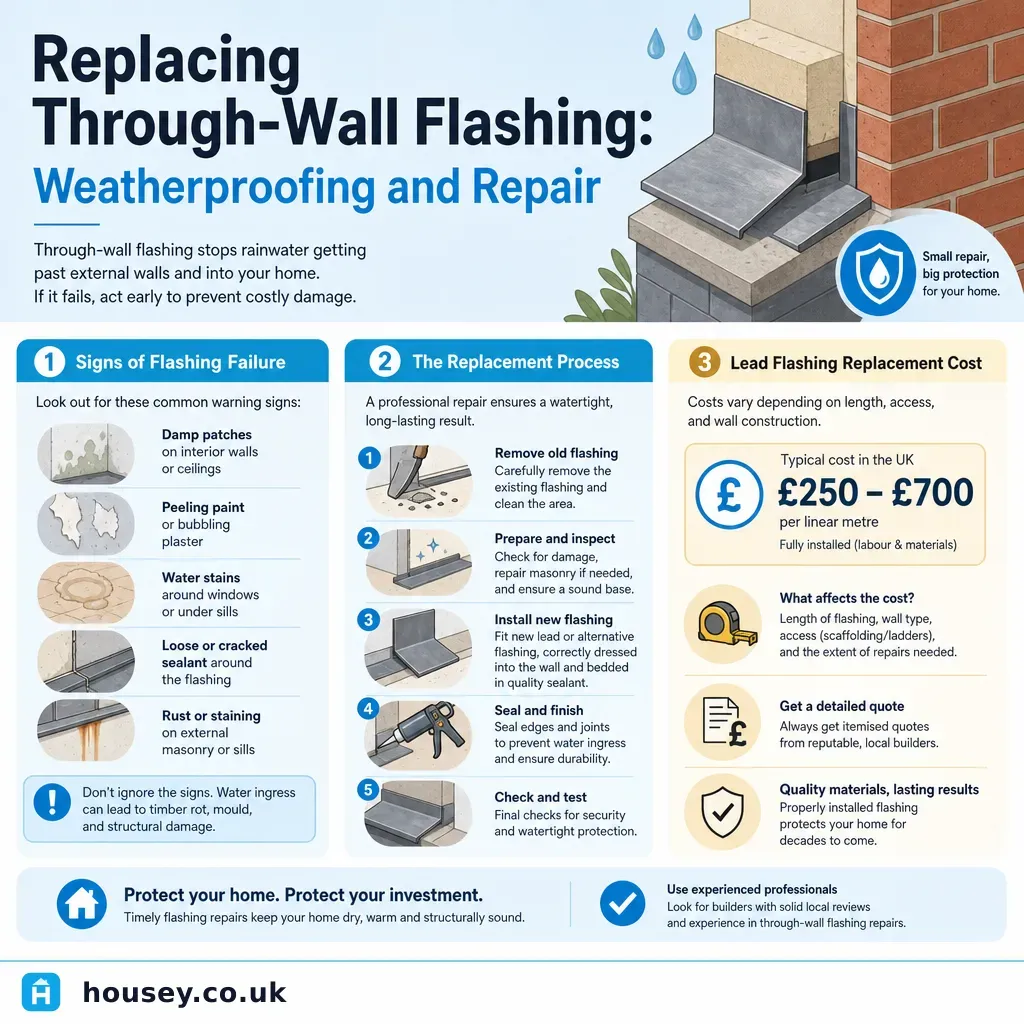
Replacing Through-Wall Flashing: Weatherproofing and Repair
Through-wall flashing is a damp-proof membrane embedded in masonry at roof-to-wall junctions, chimney bases, and above windows or doors.
 Improvement & Build
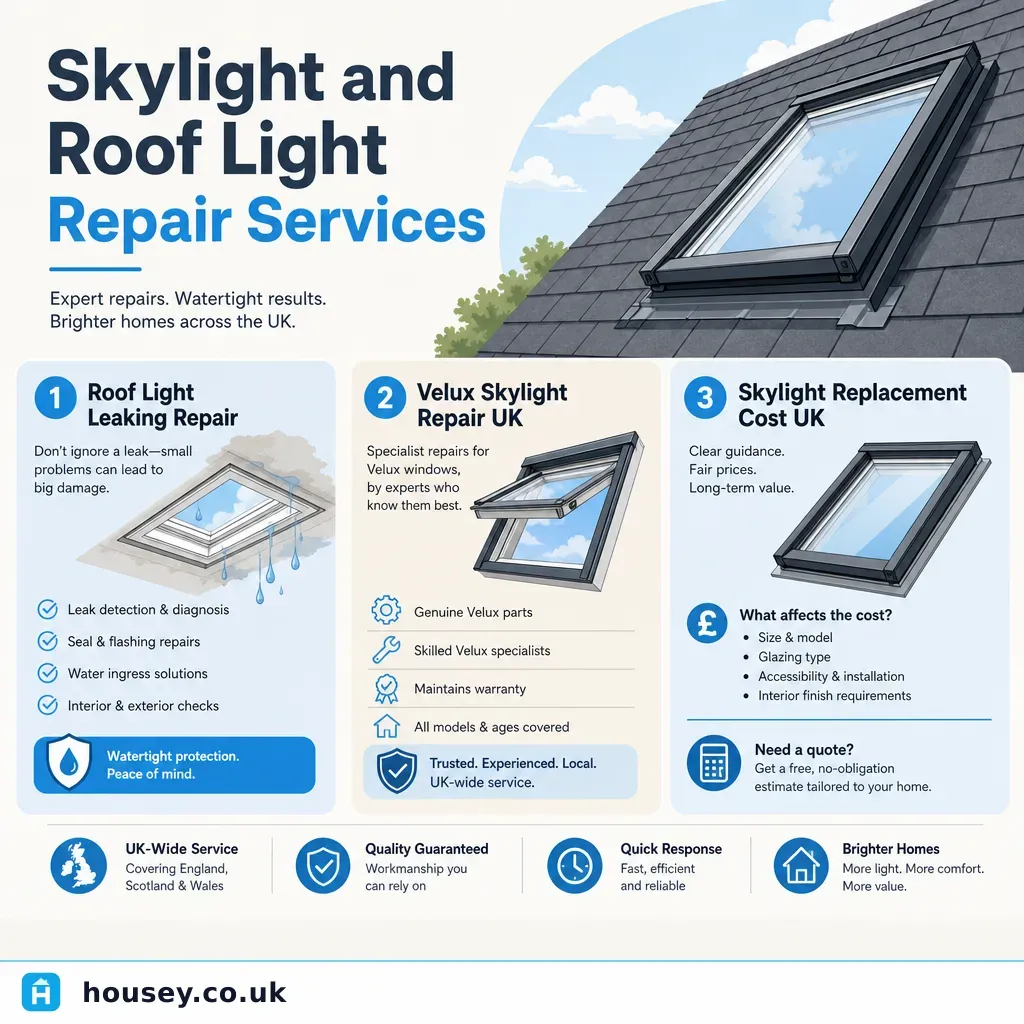
Skylight and Roof Light Repair Services
Skylight and roof light repairs typically cover resealing, glass replacement, frame repairs, or flashing fixes.