Roof Maintenance and Repairs: Professional Services in Your Area
By Housey · Last reviewed 24th of May 2026
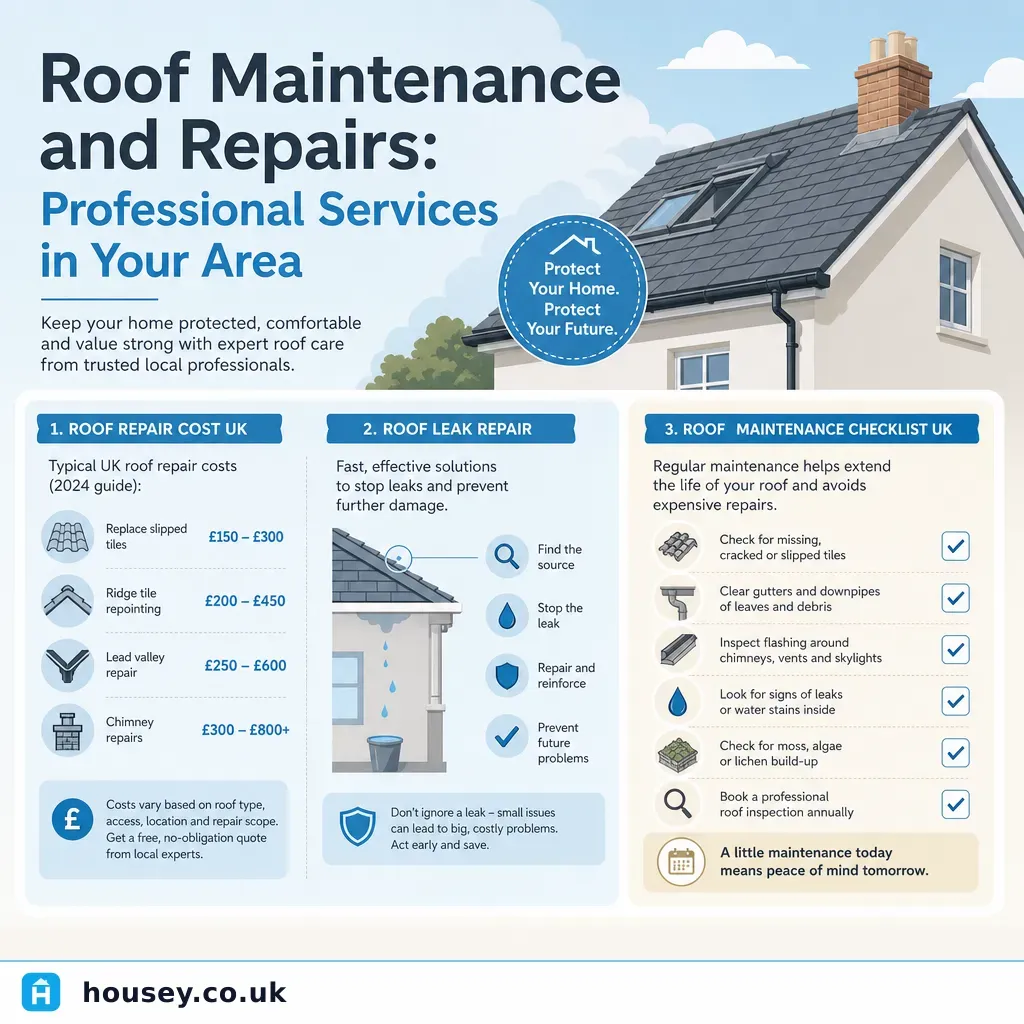
Roof Maintenance and Repairs: Professional Services in Your Area
The roof is the primary barrier between a UK home and the weather, and it is one of the easiest structural elements to overlook until a problem becomes apparent — usually as a damp patch on an upstairs ceiling or mould forming on an internal wall. Most roof repairs, caught early, are modest in cost and straightforward for an experienced roofer; left too long, water ingress can compromise roof timbers, loft insulation, ceilings, and internal wall fabric.
Key points
- RICS guidance recommends a professional roof inspection at least every 2–3 years and following any significant storm event.
- Working at height above 2 m requires appropriate equipment and competence; homeowners should not access a pitched roof without proper scaffolding or a secured roof ladder — the Work at Height Regulations 2005 set out legal duties for contractors carrying out such work.
- Ridge tile repointing is one of the most common maintenance tasks on UK homes built before 1990 and should use a flexible mortar compound rather than rigid cement to allow for thermal movement.
- A flat roof typically has a shorter lifespan than a pitched roof — EPDM and GRP (fibreglass) flat roofs last 20–30 years; older felt-covered flat roofs may need replacement every 10–15 years.
- Building Regulations Approved Document L (Conservation of Fuel and Power) may apply if a roof covering is substantially replaced, requiring minimum insulation standards to be met.
What does routine roof maintenance cover?
Roof maintenance divides into tasks a professional roofer should carry out on a planned basis, and observations a homeowner can make safely from ground level.
Professional maintenance tasks:
- Inspection of all roof coverings — tiles, slates, GRP, EPDM, or felt — for slippage, cracking, or deterioration.
- Repointing of ridge and hip tiles using flexible mortar or dry-fix systems compliant with BS 5534.
- Inspection and replacement of lead, aluminium, or felt flashings at abutments, valleys, and around chimney stacks.
- Inspection of roof timbers in the loft for signs of water ingress, rot, or woodworm activity.
- Clearing of valleys and checking that all drainage paths are unobstructed.
Homeowner ground-level observations:
- Visible slipped, cracked, or missing tiles or slates.
- Sagging, overflowing, or separated gutters and downpipes.
- Moss or lichen growth (indicates moisture retention and potential tile surface degradation).
- Daylight visible into the loft space — an immediate concern.
- Damp patches or staining on upstairs ceilings or upper wall surfaces.
Common UK roof repairs: what to expect
Problem | Typical repair | When to act | Risk if delayed |
|---|---|---|---|
Slipped or missing tile or slate | Replace individual tile; check battens | As soon as identified | Water ingress, roof deck and insulation damage |
Loose or fallen ridge tile | Repoint or rebed with flexible mortar or dry-fix | Before winter | Wind damage, water entry at ridge |
Flashing failure at chimney or valley | Replace lead or repair with appropriate flashing system | Promptly | Persistent localised leak, timber damage |
Flat roof blistering or splits | Patch, recoat, or overlay depending on extent | Before standing water forms | Membrane failure, structural deck damage |
Moss and lichen build-up | Chemical biocide treatment then clearance | Biannually | Tile surface deterioration, blocked gutters |
Gutter separation or overflow | Reseal joints; replace damaged sections | Autumn, before heavy rain | Damp penetration to external walls and foundations |
Red flags that need urgent attention
The following signs suggest a roofing problem that requires prompt professional inspection rather than a watch-and-wait approach:
- Daylight visible through the roof boards or tiles from inside the loft. This indicates an immediate water ingress risk.
- Multiple slipped or missing tiles across the roof slope after a storm, particularly on a steep pitch.
- A sagging or bowed roof line visible from outside the property. This may indicate rafter, purlin, or ridge board failure — a structural issue that goes beyond a roofer's scope alone.
- Persistent damp patches on upper ceilings despite gutters being clear and recently cleaned.
- Lead flashing pulling away from a chimney stack or parapet wall over a flat roof.
- Soft or deflecting areas on a flat roof with ponding water that does not drain.
If a sagging roof line is present, instruct a chartered structural engineer or RICS surveyor rather than a roofer alone — the underlying cause may be structural rather than a simple covering failure.
Which professional do you need?
Situation | Professional to instruct |
|---|---|
Tile or slate replacement, ridge repointing, gutter repair | Roofing contractor |
Flat roof replacement (GRP, EPDM, or torch-on felt) | Specialist flat roofer |
Chimney rebuild or significant brickwork repairs at height | Roofing contractor with masonry experience, or specialist |
Sagging roof line or suspected rafter or purlin failure | RICS surveyor or structural engineer first; roofer to carry out works once cause is diagnosed |
New roof on an extension or significant enlargement | Roofing contractor; building control notification may apply under Approved Document L |
Listed building or thatched roof | Specialist contractor; likely requires listed building consent from the local planning authority |
What to ask before hiring a roofer
Before accepting a quotation, ask the following:
- Are you experienced with this roof type and covering (clay, concrete, natural slate, GRP, EPDM)?
- Will you work from scaffolding or a secured roof ladder, and is the cost of this included in the quotation?
- Is VAT included in this price?
- What guarantee do you offer on materials and workmanship, and is this provided in writing?
- Are you insured for public liability and working at height?
- Will you provide photographs of the condition before and after the works?
- Are you registered with a recognised trade body such as the National Federation of Roofing Contractors (NFRC) or TrustMark?
How much do roof repairs cost?
Costs vary by roof type, location, extent of damage, and whether scaffolding is required. As a general guide (Indicative UK costs, last reviewed 2026-05-24):
- Replacing individual tiles: £100–£300 per call-out including minor repairs.
- Ridge tile repointing on a typical semi-detached: £300–£800.
- Flashing replacement at a chimney stack: £200–£600 depending on size and material.
- Full flat roof replacement for approximately 30 m² in GRP: £3,000–£6,000.
- Scaffolding (typically required for pitched roof access on a semi-detached): £600–£1,500.
Always obtain at least three written quotes. Scaffolding is charged separately on most pitched roof jobs — check whether it is included before comparing prices.
When to get professional help
Never attempt to work on a pitched roof without appropriate scaffolding or a securely footed roof ladder — the Health and Safety Executive is clear that working at height above 2 m carries serious risk of fatal injury. If you notice any of the red flags listed above, or if an interior damp problem is not resolving, instruct a roofing contractor to carry out a full inspection. Some home insurers may require evidence of regular maintenance if you make a claim related to gradual roof deterioration.
How Housey can help
Housey connects homeowners with vetted local roofers who can carry out everything from minor tile repairs to complete roof replacements. Submit your job, compare quotes, and read reviews from verified homeowners in your area before committing to any works.
Frequently asked questions
How often should I have my roof inspected?
Most roofing contractors and RICS surveyors recommend a professional inspection every 2–3 years for pitched roofs, and annually for flat roofs. You should also arrange an inspection after any significant storm, particularly if tiles are visible from ground level or you notice new damp patches on internal ceilings or walls.
Does roof repair require planning permission?
Like-for-like repairs — replacing tiles with the same material, repointing ridges — do not normally require planning permission. However, if your property is listed or in a conservation area, any material change to the roof covering or structure may need listed building consent or prior approval. Check with your local planning authority before proceeding.
Should I use wet mortar or dry fix for ridge tiles?
Traditional wet mortar was the standard for decades, but flexible mortar compounds and proprietary dry-fix systems are now widely used and generally preferred. Dry-fix systems from manufacturers such as Redland or Marley comply with BS 5534 and offer a more durable, wind-resistant solution. Your roofer should advise on the most appropriate system for your roof type.
How do I know if my flat roof needs replacing or just repairing?
A flat roof with localised blistering, minor splits, or ponding in one area may be repairable with a patch or recoat. If more than 25–30% of the surface is affected, or if the deck beneath the membrane feels soft or is visibly deflecting, a full replacement is usually more cost-effective. A specialist flat roofer should inspect and advise.
Sources and further reading
- Work at Height Regulations 2005 — legislation.gov.uk
- Approved Document L: Conservation of fuel and power — GOV.UK
- National Federation of Roofing Contractors (NFRC) — NFRC
- HSE: working at height — a brief guide — Health and Safety Executive
- TrustMark: find a trusted tradesperson — TrustMark
Useful next reads
 Improvement & Build
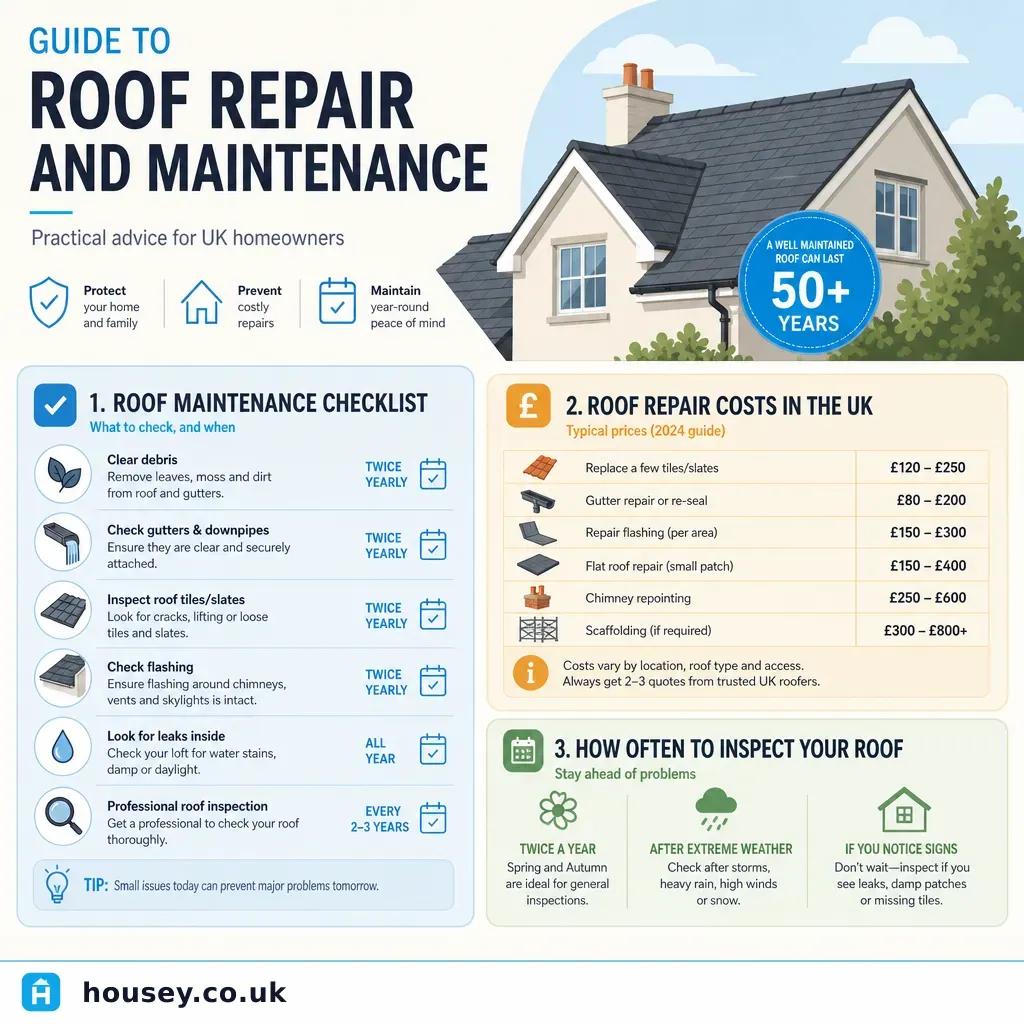
Guide to Roof Repair and Maintenance
Regular roof inspections every 3–5 years, prompt repair of damaged tiles and failed flashings, and annual gutter clearance are the core of effective UK roof maintenance.
 Improvement & Build
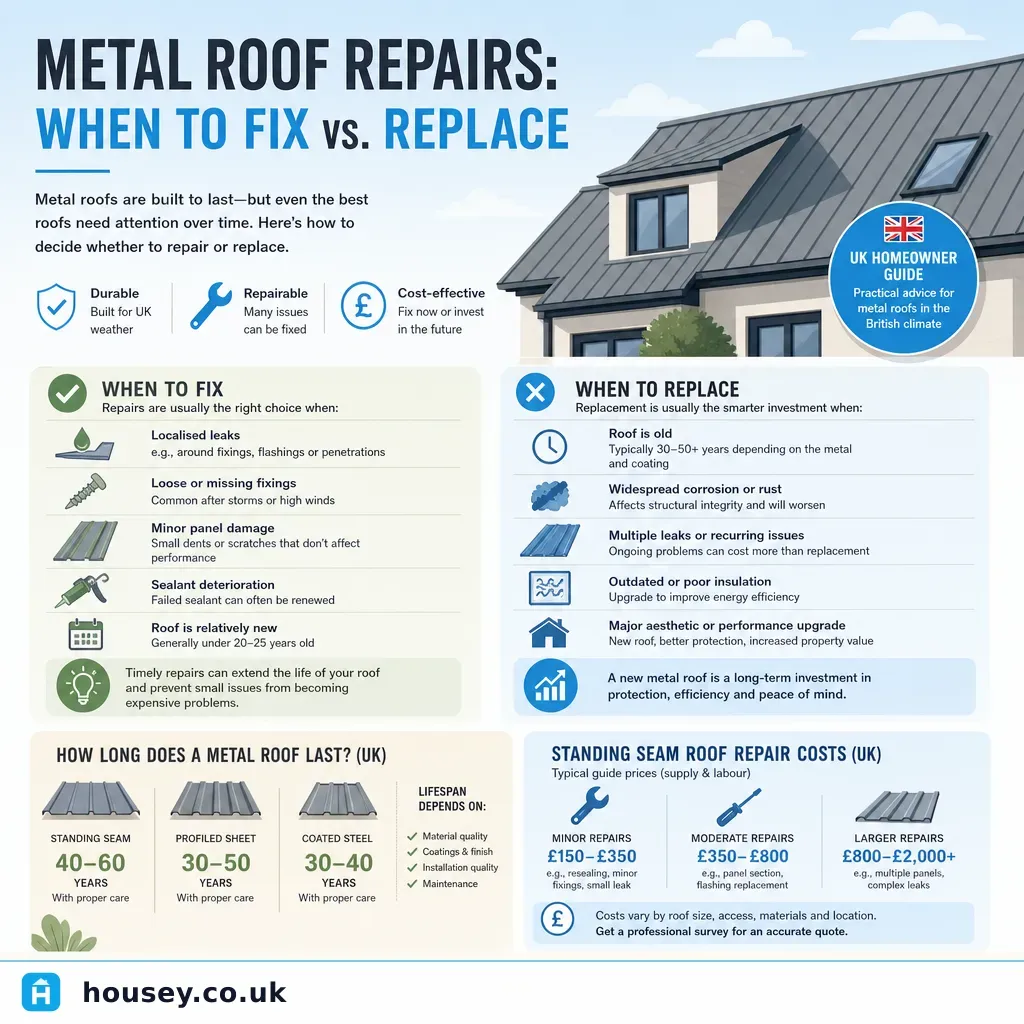
Metal Roof Repairs: When to Fix vs. Replace
For a metal roof, repair is usually right when damage is localised — a failed flashing, isolated corrosion, or one or two damaged panels.
 Improvement & Build
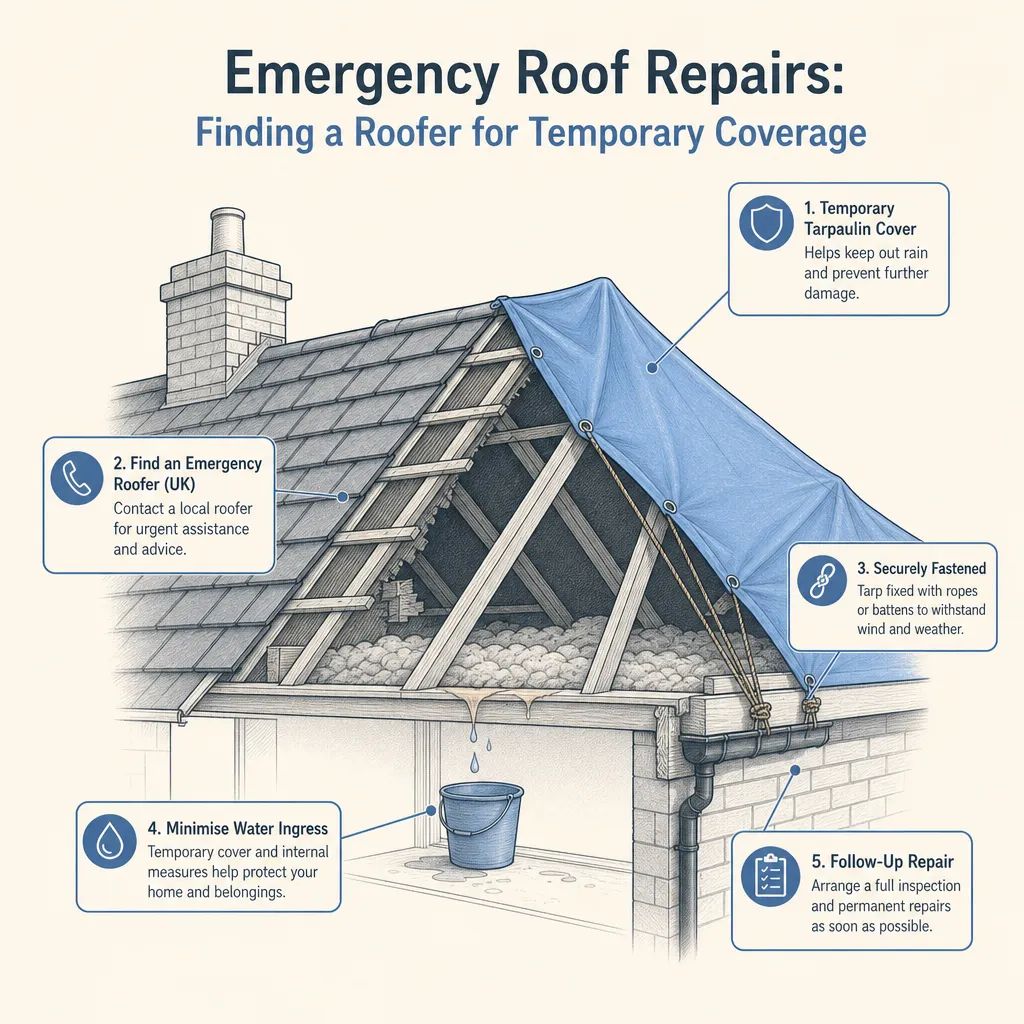
Emergency Roof Repairs: Finding a Roofer for Temporary Coverage
After storm or impact damage, the immediate priority is weatherproofing, not a permanent repair.
 Improvement & Build
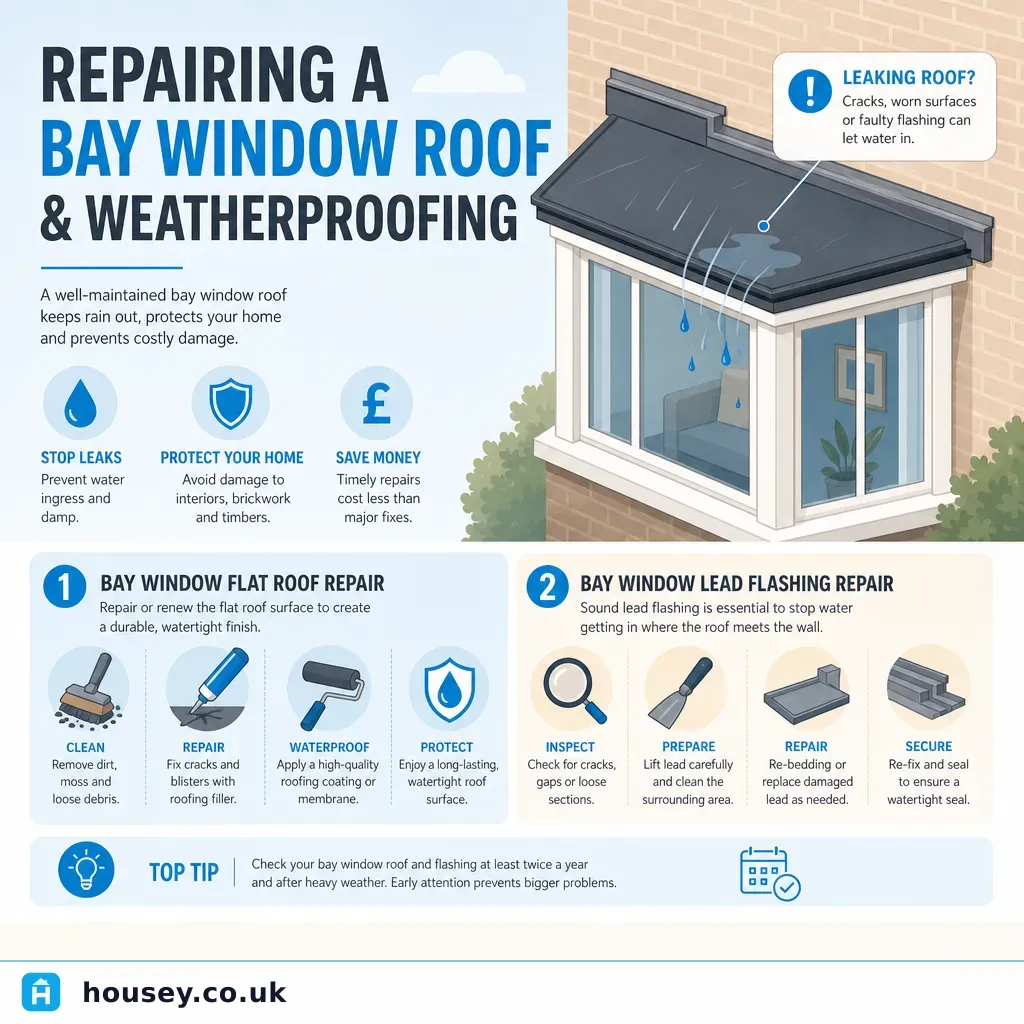
Repairing a Bay Window Roof and Weatherproofing
A bay window roof typically uses felt, lead, or EPDM rubber as its waterproof covering.
 Improvement & Build
Why incorrect roof repairs lead to masonry water damage
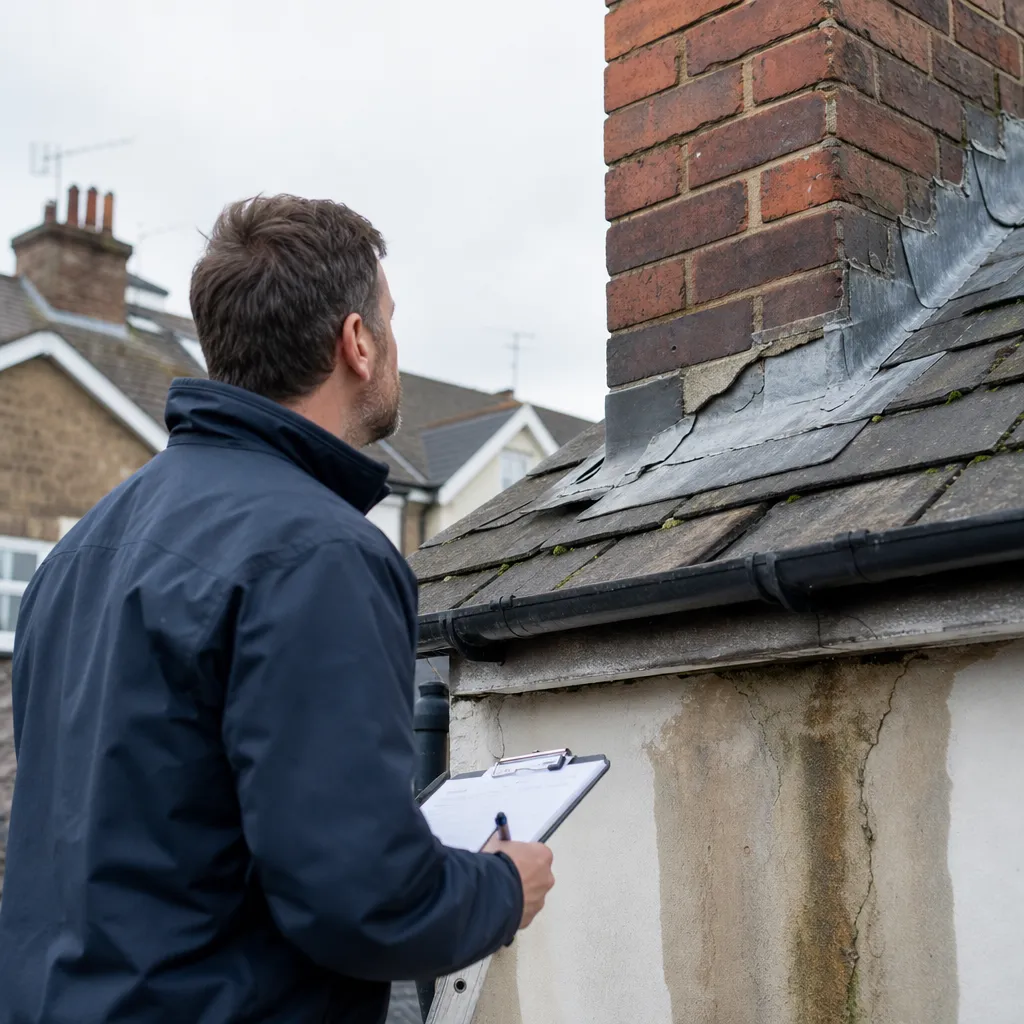
Poorly executed roof repairs — including failed flashing, incorrect mortar on chimney stacks, and unrestored weathering details — allow water to track behind masonry, causing damp patches, spalling, and timber decay, often months after the original work.