Impact of Weather Damage on Roof Longevity and Safety
By Housey · Last reviewed 11th of May 2026
Impact of Weather Damage on Roof Longevity and Safety
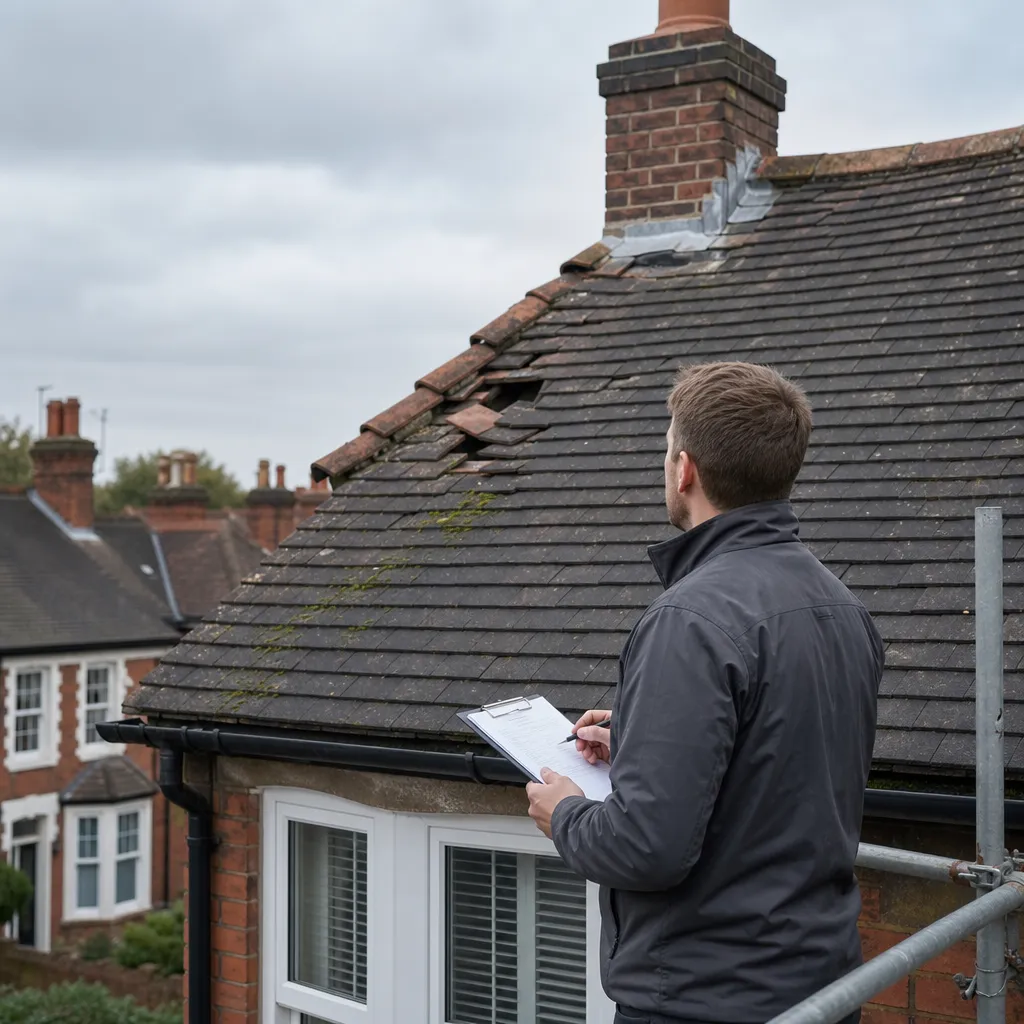
UK roofs face a relentless combination of weather stresses — driving rain, freeze-thaw cycles, strong winds, UV degradation, and occasional severe hail — that steadily shorten the working life of roofing materials and, if left unmanaged, lead to structural damage and safety risks indoors. Most homeowners remain unaware of accumulating roof deterioration until a leak appears inside the property, by which point secondary damage to ceilings, timbers, and insulation is often already underway. Understanding how UK weather affects different roofing systems, what warning signs are visible from ground level, and when to commission a professional inspection is one of the most practical steps a homeowner can take to protect both their property and the people inside it.
Key points
- Met Office data shows peak wind events exceeding gale force (Beaufort scale 8, 62–74 km/h) affect most UK regions at least once annually — capable of lifting loose ridge tiles, displacing flashings, and detaching sections of flat-roof membrane.
- Freeze-thaw action is the principal cause of tile and mortar failure in the UK: water expands by approximately 9% on freezing, cracking porous tiles, spalling masonry, and progressively widening mortar joints over repeated winter cycles.
- NHBC Standards specify minimum tile lap and batten gauge for different wind exposure zones across the UK — properties in high-exposure zones (coastal, elevated, northern and western regions) require closer-nailed tiles than standard inland specifications.
- Flat roofs using felt membrane have an indicative lifespan of 10–15 years; EPDM rubber membranes typically 20–30 years; built-up felt and mastic asphalt up to 25–30 years with maintenance — weather damage accelerates deterioration in all systems.
- Building Regulations Approved Document A (Structure) requires that any structural roof repair affecting load-bearing elements must comply with current structural standards and may require building control notification.
How UK weather affects different roofing systems
Different roofing materials respond differently to the same weather events. Understanding the specific vulnerabilities of your roof type helps prioritise inspection and maintenance decisions.
Pitched roofs (clay and concrete tiles, natural slate)
- Wind damage: Clay and concrete tiles can be dislodged when ridge and hip mortar deteriorates. Once one tile lifts, wind can enter the roof void and exert upward pressure, potentially removing further tiles or, in severe events, larger sections of the roof covering.
- Freeze-thaw: Porous or aged clay tiles absorb water; repeated freezing cycles cause surface spalling and eventually structural fracturing. Mortar bedding for ridge and hip tiles softens over time, allowing tiles to shift progressively out of position.
- Moss and lichen: Common across UK pitched roofs, particularly in wetter regions of Wales, Scotland, and the west of England. Moss retains moisture against tile surfaces, accelerating freeze-thaw deterioration and, over time, physically lifting tiles as the organic mass thickens beneath them.
Flat roofs (felt, EPDM, mastic asphalt, GRP)
- UV degradation: All flat-roof membranes are vulnerable to ultraviolet degradation, which causes surface cracking and embrittlement over time. In the UK this is less severe than in southern European climates, but it is nonetheless significant over a 10–20 year period without protective coatings.
- Ponding water: Poor drainage causes water to pond on flat-roof surfaces, dramatically accelerating membrane breakdown and placing additional load stress on the roof structure below.
- Hail: Although severe hail events are less common in the UK than in continental Europe, large hailstones (above 20 mm diameter) can puncture EPDM membranes, crack GRP, and cause surface bruising on asphalt that becomes a water-entry point.
Chimneys and flashings
Lead, aluminium, or mortar flashings at chimney bases, roof abutments, and valley junctions are disproportionately vulnerable to UK weather. Flashing failure accounts for a substantial proportion of domestic roof leaks. Wind and thermal expansion cause lead flashing to lift and crack mortar pointing, while frost progressively loosens lead soakers over multiple winters.
Comparison: weather damage impact by roof type
Roof type | Principal UK weather risk | Typical failure mode | Indicative maintained lifespan | Ground-level warning sign |
|---|---|---|---|---|
Clay or concrete tile | Wind, freeze-thaw, moss | Dislodged or cracked tiles, failed ridge mortar | 40–80 years (tiles); 10–20 years (mortar) | Missing or shifted tiles visible from street |
Natural slate | Wind, nail corrosion | Slipped slates (nail sickness) | 60–100+ years | Slates at lower courses or in guttering |
EPDM flat roof | UV, ponding, hail | Membrane cracking, seam failure | 20–30 years | Pooling on roof surface after rain |
Felt flat roof | UV, ponding, frost | Blistering, cracking, seam lifting | 10–15 years | Interior damp patches on ceiling below |
Lead or mortar flashing | Frost, thermal expansion | Cracking, lifting, mortar failure | 25–50 years (lead); shorter for mortar | Staining or damp at chimney breast or walls |
GRP fibreglass flat roof | UV, hail | Surface crazing, delamination | 25–30 years | Hairline cracks visible on flat surface |
Indicative UK lifespans, last reviewed 2026-05-11. Actual lifespan depends on installation quality, maintenance, and local exposure.
Seasonal weather damage checklist for homeowners
Carry out this ground-level inspection after significant weather events and at the start of each season:
Red flags requiring immediate professional attention
Do not delay instructing a professional roof inspection if you observe any of the following:
- Water staining or active dripping inside the property following rainfall.
- Visible sagging of the roof line or ridgeline — this may indicate rafter failure or rotten structural timbers requiring urgent structural assessment.
- More than two or three missing tiles or slates following a weather event.
- A leaning or cracked chimney stack, particularly if accompanied by damp at the chimney breast.
- Moss growth so extensive that tile surfaces are no longer visible from ground level.
- A flat roof that has retained standing water for more than 24–48 hours after rainfall ceases.
- Brown or orange staining on ceilings in rooms directly below the roof void.
Important limitations
This article provides general information about how UK weather affects domestic roofing and does not constitute structural or building engineering advice. Roof safety and structural integrity depend on the specific construction, age, condition, and maintenance history of the individual property. The guidance here is a starting point for awareness — not a substitute for a professional inspection. The Health and Safety Executive (HSE) is clear that working at height above 2 metres requires appropriate fall-protection measures; never attempt to access a pitched or flat roof without professional training and equipment. Always instruct a qualified roofing contractor or chartered surveyor to carry out any roof inspection or repair.
What to ask a qualified professional
Before instructing a roofer or surveyor to inspect or repair weather-related roof damage, ask:
- Are you a member of the National Federation of Roofing Contractors (NFRC) or an equivalent trade body?
- Are you covered by public liability insurance, and what is the level of cover?
- Will you provide a written report identifying all damage found, supported by photographs?
- Does your quote cover like-for-like replacement of materials — natural slate where natural slate was originally used, for example?
- If structural timbers are found to be damaged or rotten, is remediation within your scope or will a separate structural engineer be required?
- Will the work require building control notification under Building Regulations Approved Document A?
- Does your quote include removal and disposal of old materials, scaffolding erection, and making-good of flashings and abutments?
When to get professional help
Roof inspection and repair should always be carried out by a qualified professional — never attempt access yourself. Commission a professional roof inspection:
- After any storm that causes visible damage to your immediate neighbourhood (trees down, tiles visible in roads or gardens).
- Before purchasing a property — a roof survey is a cost-effective way to identify defects before exchange of contracts.
- If your property is over 30 years old and has not had a formal roof inspection in the past five years.
- If your buildings insurer has declined cover, applied an exclusion, or significantly increased your premium without explanation — a roof condition report may be required.
How Housey can help
Housey connects UK homeowners with vetted roofers for post-storm inspection, tile or slate repair, flat-roof replacement, flashing renewal, and full roof renovation. If you need a formal written condition report — for insurance purposes, before purchasing a property, or to establish the extent of weather damage — roof survey professionals are also available through the platform. Where significant damage has raised concerns about structural timbers or rafter integrity, a structural survey may also be appropriate.
Frequently asked questions
How long do UK roofs typically last?
Lifespan varies considerably by material. Natural Welsh slate can last 100 years or more; clay tiles typically 50–80 years; concrete interlocking tiles 30–50 years; felt flat roofs 10–20 years; and EPDM rubber flat roofs 20–30 years. Regular maintenance — clearing moss, repointing ridges, maintaining flashings — extends the effective lifespan of all roofing types considerably.
Is weather-related roof damage covered by home insurance?
Most standard UK buildings insurance policies cover sudden, unforeseen weather damage including storm damage to tiles, flashings, and gutters. Gradual deterioration and wear and tear are typically excluded. Always report damage promptly, take reasonable steps to prevent further loss such as temporary weatherproofing, and check your policy excess and any requirement to use an insurer-approved contractor.
Can I repair a few slipped or missing tiles myself?
Working on a roof involves working at height, which the HSE considers a significant risk. Accessing a pitched roof without professional training and appropriate fall-arrest equipment is dangerous. For any tile replacement or repair above approximately 2 metres, always instruct a qualified roofing contractor. Some homeowners use binoculars or CCTV inspection drones to assess damage safely from ground level.
What is nail sickness in a natural slate roof?
Nail sickness is the gradual corrosion and failure of the iron or steel nails used to fix natural slate tiles, typically affecting Victorian and Edwardian properties. As nails weaken, slates begin to slip — particularly during wind events. Widespread nail sickness usually requires full re-slating. A professional roof survey can confirm whether targeted repairs are viable or full re-slating is the appropriate course of action.
Sources and further reading
- Building Regulations Approved Document A — Structure — GOV.UK
- HSE guidance on working at height — Health and Safety Executive
- National Federation of Roofing Contractors — NFRC
- Met Office UK climate and storm data — Met Office
- NHBC Standards Chapter 7 — Roofs — NHBC
Useful next reads
 Improvement & Build
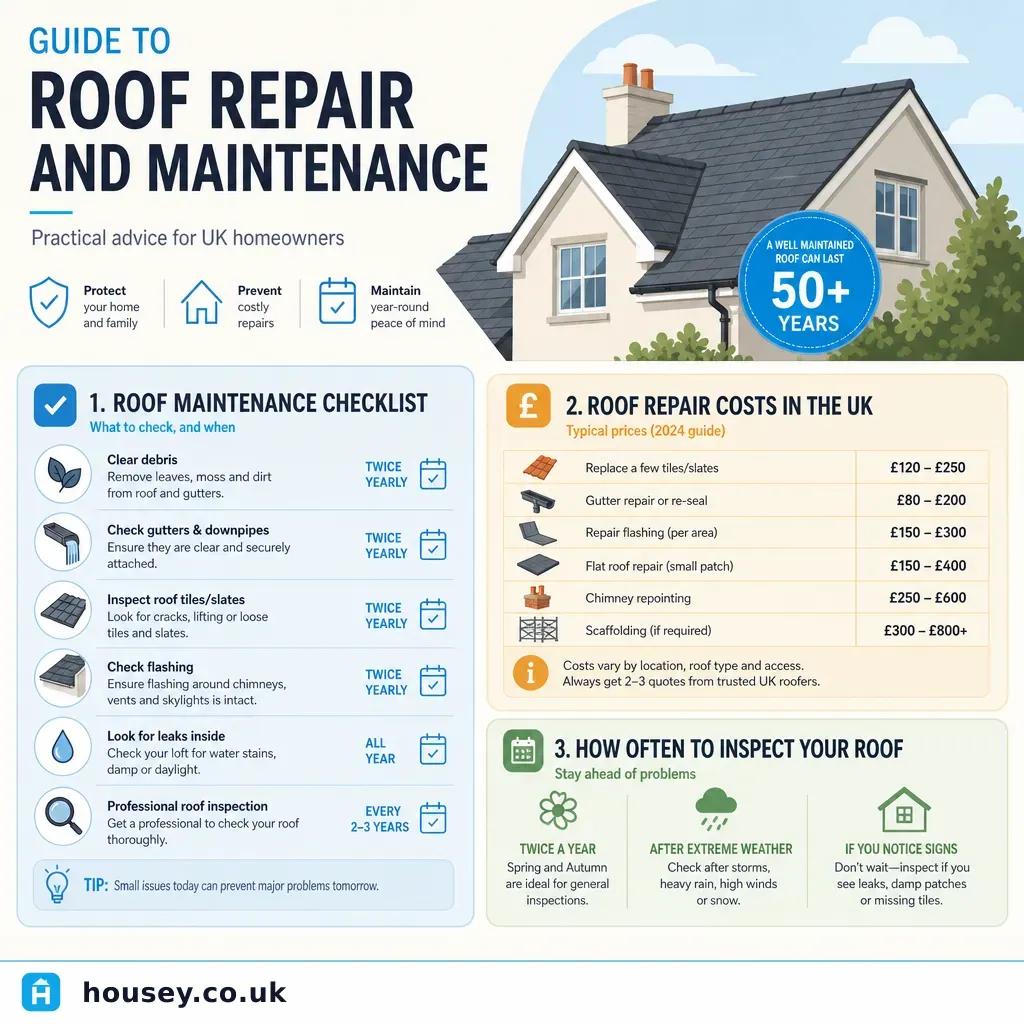
Guide to Roof Repair and Maintenance
Regular roof inspections every 3–5 years, prompt repair of damaged tiles and failed flashings, and annual gutter clearance are the core of effective UK roof maintenance.
 Improvement & Build
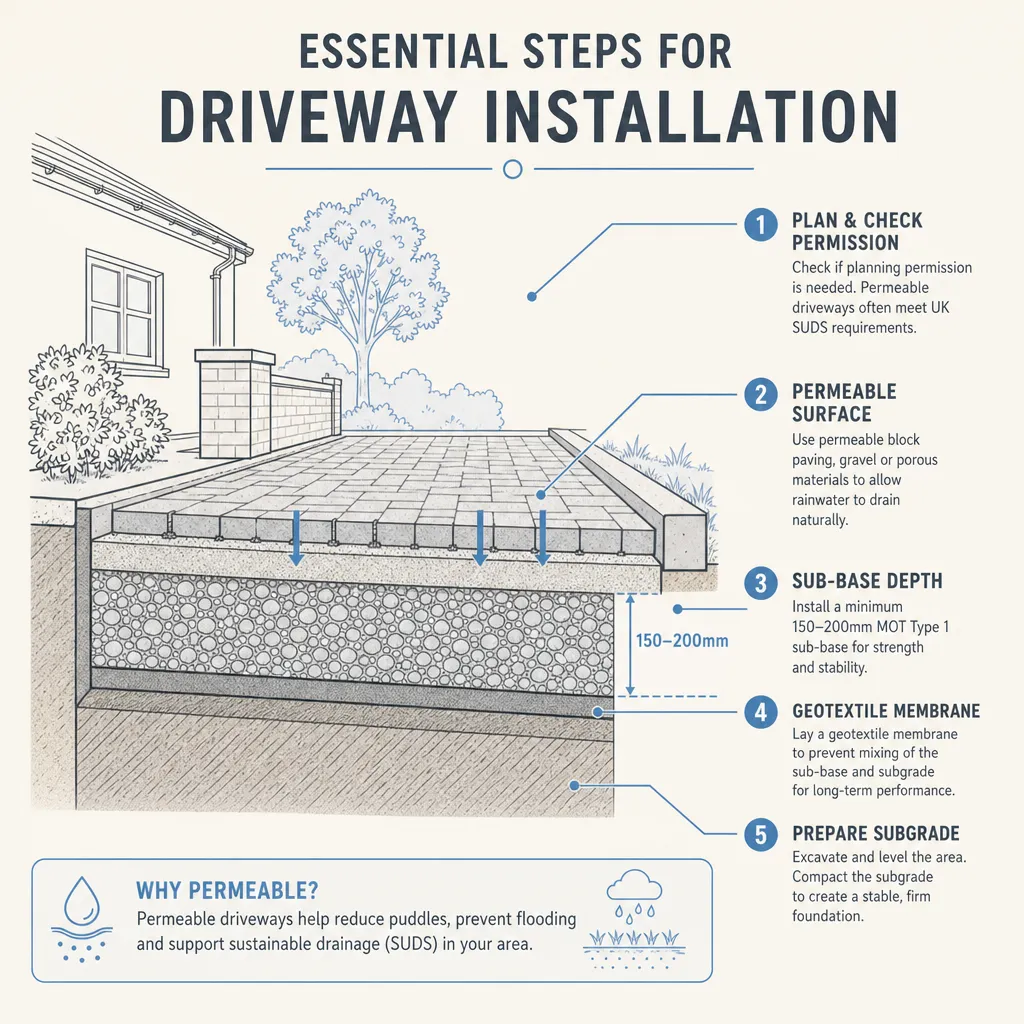
Essential Steps for Driveway Installation
Installing a driveway in England requires planning permission only when using an impermeable surface (standard tarmac, concrete, or block paving) on a front garden area over 5 m².
 Improvement & Build
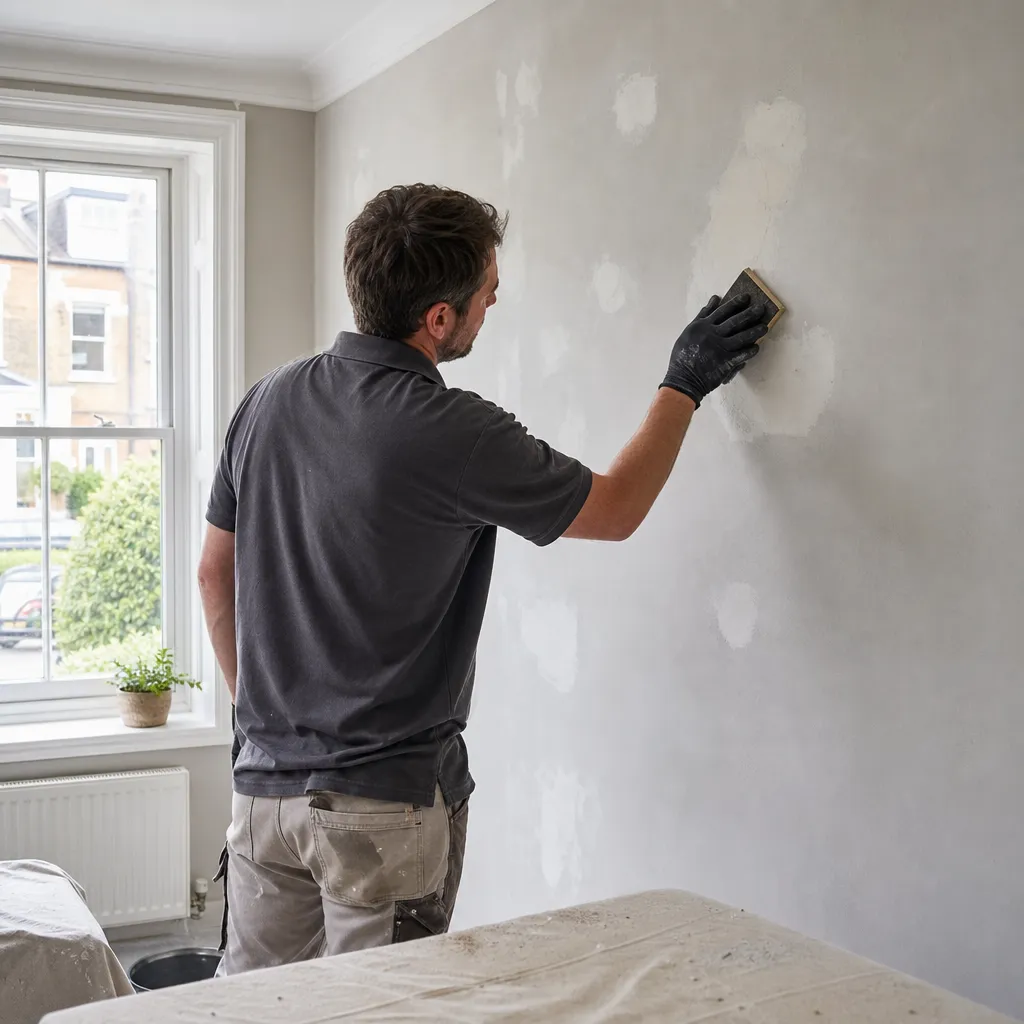
Preparing Walls for Patching: Surface Preparation Best Practice
Durable wall patching starts with removing all loose material, cutting back to a clean and stable edge, cleaning the substrate, and priming with a construction-grade PVA bonding agent before applying any filler or plaster.
 Improvement & Build
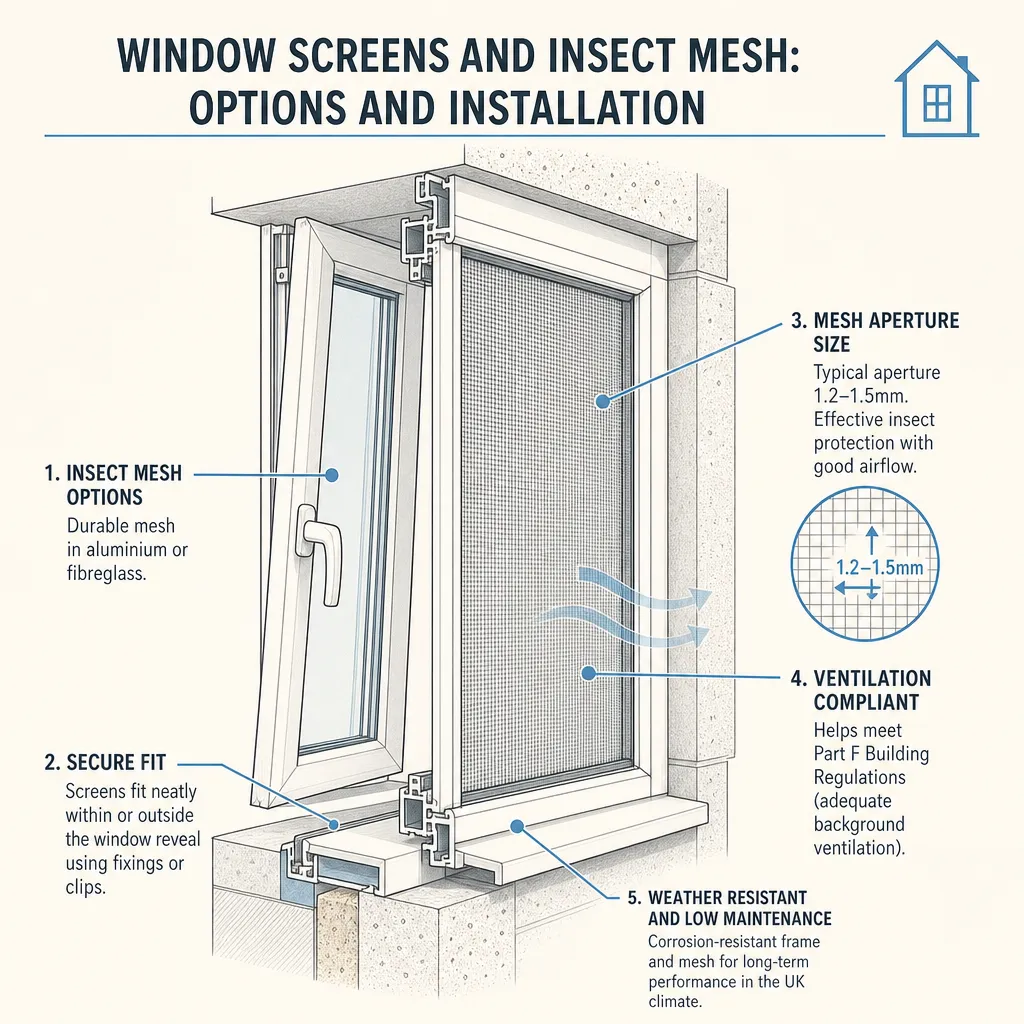
Window Screens and Insect Mesh: Options and Installation
UK window screens fall into four main types: fixed frame, roller retractable, pleated folding, and magnetic snap-fit.
 Improvement & Build
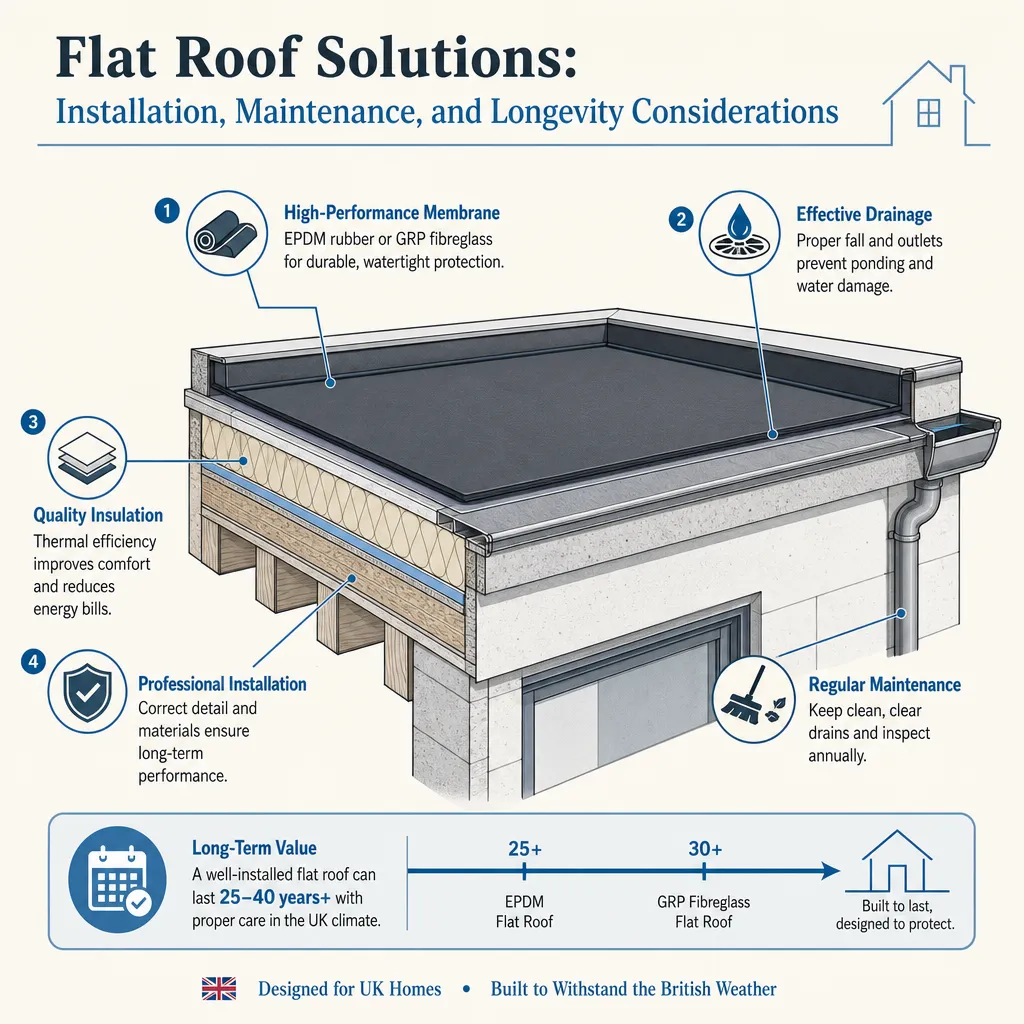
Flat Roof Solutions: Installation, Maintenance, and Longevity Considerations
Flat roofs use several waterproofing systems — EPDM rubber, GRP fibreglass, liquid-applied coatings, modified bitumen felt, lead, and zinc — each with different lifespans and installation requirements.