Guide to Window Types for Your Home
By Housey · Last reviewed 19th of May 2026
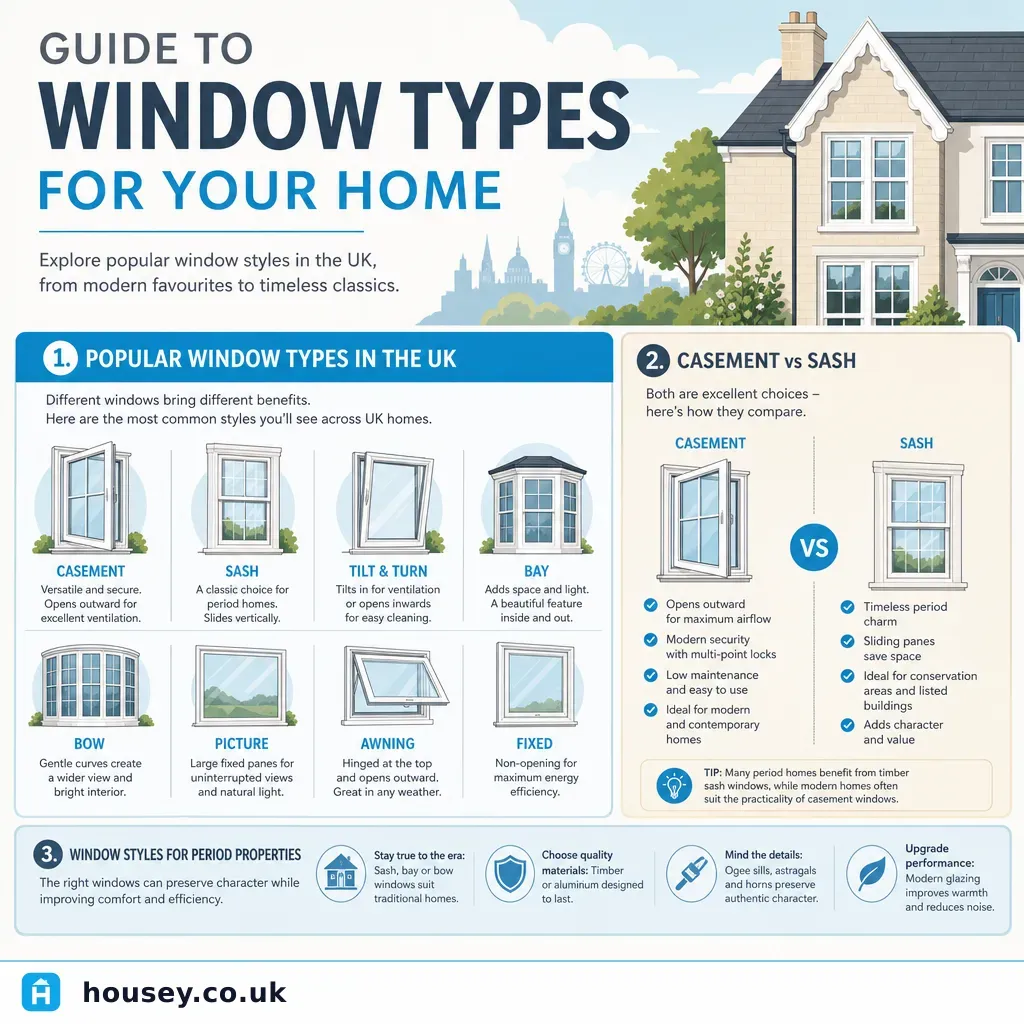
Guide to Window Types for Your Home
Choosing the right window style for a UK property involves more than aesthetics. The decision touches on planning permission, Building Regulations compliance, thermal performance, ventilation, security, and the character of the building — all of which carry different weight depending on whether the property is a 1930s semi, an Edwardian terrace, a listed cottage, or a modern flat. With window replacement being one of the more lasting home improvements, understanding the main options before approaching suppliers or installers is time well spent.
Key points
- Casement windows are the most widely installed type in UK new-build and replacement markets, offering versatility, affordability, and straightforward compliance with Building Regulations.
- All replacement windows in a dwelling in England must achieve a minimum whole-window U-value of 1.4 W/m²K under Building Regulations Part L (current Approved Document L, 2022 edition).
- In conservation areas and listed buildings, planning permission or listed building consent may be required even for like-for-like window replacement; always check with your local planning authority before ordering.
- Sash windows are a protected character feature in many conservation areas and cannot legally be replaced with casements without consent.
- All replacement glazing must be registered through a competent person scheme — FENSA or CERTASS — or notified via local authority building control.
The main window types in UK homes
Casement windows
The most common window type in UK residential properties. Side-hung casements account for the majority of new-build and replacement installations — the sash opens on hinges at the side, much like a door. Top-hung casements (awning windows) are common in kitchens and bathrooms where a restricted-opening secure vent is useful. Available in uPVC, aluminium, timber, and timber-aluminium composite.
Vertical sliding sash windows
The defining window of Victorian, Edwardian, and Georgian terraced and semi-detached housing across the UK. The traditional box-frame design uses counterweights on sash cords inside the frame; modern equivalents use spiral balances or spring mechanisms. Available in timber, engineered timber, uPVC, and aluminium. The double-hung configuration — where both sashes move — is most common in UK properties.
Tilt-and-turn windows
A single sash that tilts inward from the top for secure ventilation, or turns fully inward like a casement for cleaning and emergency egress. Common in continental European housing and increasingly used in UK flats and apartments. The inward-opening turn function allows cleaning without external access — a practical advantage in multi-storey buildings.
Bay and bow windows
Bay windows project from the external wall on an angled or square plan; bow windows project on a gentle curve using multiple narrow lights. Both are structurally complex, requiring a structural beam over the full projection width. Common in Victorian, Edwardian, and 1930s properties, they add floor area and maximise natural light in living rooms and front bedrooms.
Fixed (picture) windows
Non-opening glazed panels, used to maximise light and views where ventilation is provided by other means. Building Regulations Part F requires adequate ventilation in habitable rooms — a fixed window cannot be the sole glazing in a room unless other compliant openings are present. Part B requirements for emergency egress must also be checked when a fixed window replaces an openable one on accessible storeys.
Roof windows and skylights
Installed in the plane of a pitched or flat roof rather than a vertical wall. Hinged roof windows (the Velux-pattern type) require a minimum roof pitch of approximately 15°. Flat-roof lights sit in a kerb-mounted frame and can be fixed or opening. Used primarily in loft conversions and single-storey rear extensions. Permitted development rules apply to rooflights — check current limits with your local planning authority before installation.
Bi-fold and large sliding windows
Large-span configurations that fold or slide away to create a wide aperture between interior and garden. More commonly specified as doors, but available in window form for open-plan extensions. Predominantly found in contemporary architectural styles; often face planning scrutiny in conservation areas.
Comparison table: UK window types at a glance
Window type | Typical UK use | Planning sensitivity | Ventilation | Cleaning access | Relative supply cost |
|---|---|---|---|---|---|
Side-hung casement | Universal | Low | Good | Good — opens outward | £ |
Top-hung casement | Kitchens, bathrooms | Low | Good (secure vent) | Good | £ |
Vertical sash | Period and conservation-area properties | High in conservation areas | Moderate | Moderate | ££ |
Tilt-and-turn | Flats, modern homes | Low | Good | Excellent — cleans internally | ££ |
Bay (angled or square) | Living rooms, front elevations | Medium to High | Via inner window type | Dependent on inner window | £££ |
Fixed/picture | Extensions, structural glazing | Medium | None — other openings required | Good | £–££ |
Roof window | Loft conversions, flat-roof extensions | Medium (PD rules apply) | Good | Good — most pivot to clean | ££ |
Bi-fold/large sliding | Extensions, garden rooms | High in conservation areas | Excellent when open | Good | ££££ |
£ = most affordable, ££££ = premium. Supply costs only; installation, structural work, and any planning fees are additional. Indicative, last reviewed 2026-05-19.
Which window type should you choose?
Use this decision guide before approaching suppliers or requesting quotes.
- Choose a side-hung casement if you want a cost-effective, widely available window for a modern or standard UK property with no conservation or planning restrictions.
- Choose a vertical sash if the property is in a conservation area, is listed, or the existing windows are a defining architectural feature you want to retain.
- Choose a tilt-and-turn if the window is above ground floor with limited external access for cleaning, or if you are fitting to a flat where internal cleaning is a priority.
- Choose a roof window if you are converting a loft or adding a flat-roof extension and need overhead daylight.
- Specify a fixed window only where Building Regulations Part F ventilation requirements are met by other openings, and only after checking Part B escape requirements for the floor level.
- Check with your local planning authority before ordering if the property is in a conservation area, is listed, or is in an Article 4 Direction area that removes permitted development rights for window alterations.
- Consult a FENSA-registered installer or a qualified architect if you are unsure whether a proposed change requires planning permission or listed building consent.
Materials: uPVC, aluminium, timber, and composite
Material choice has a direct bearing on cost, maintenance, planning acceptability, and thermal performance.
uPVC is the most cost-effective and lowest-maintenance material for standard casements and sashes. Standard white uPVC is often not acceptable in conservation areas or for listed buildings. Coloured foil-wrapped uPVC is available but may still face planning objections — check locally.
Aluminium (powder-coated) offers slim sightlines, durability, and a wide colour range. Accepted by some local authorities in conservation areas where overall character is retained. Typically 15–25% more expensive than equivalent uPVC.
Timber (softwood, hardwood, or engineered timber) is required or strongly preferred for period and listed properties. Higher maintenance requirements than uPVC; regular painting or preservative treatment is needed. Generally the most expensive common option, but the most sympathetic for traditional elevations.
Timber-aluminium composite uses a timber internal frame with an aluminium external cladding — the internal appearance of timber with minimal external maintenance. Priced at a premium.
Building Regulations and planning: what you need to know
All replacement windows in England must meet the minimum thermal performance under Building Regulations Part L (whole-window U-value ≤ 1.4 W/m²K under the current Approved Document L; verify the current standard as requirements evolve). They must also meet security requirements under Building Regulations Part Q for windows on accessible storeys, and be registered via FENSA, CERTASS, or a local authority building control notice.
Wales, Scotland, and Northern Ireland operate their own building regulations with differing thermal performance standards; verify requirements through the relevant authority. In conservation areas, replacing windows may require planning permission even on a like-for-like basis if an Article 4 Direction is in place. In listed buildings, listed building consent is always required. Check Planning Portal guidance on windows and doors and contact your local planning authority before ordering.
When to get professional help
Consult a professional if:
- The property is listed or in a conservation area and you are unsure whether consent is needed.
- You are specifying windows for a new or widened structural opening in a masonry wall.
- You need compliance confirmation for a loft conversion (Part B egress, Part F ventilation, Part L thermal performance).
- You want to verify that competing specifications from different installers are genuinely equivalent before accepting a quote.
How Housey can help
Housey connects you with experienced window and door installers who can advise on the most appropriate window type for your property, provide FENSA-registered installation, and help navigate conservation area or planning constraints.
Frequently asked questions
Do I need planning permission to replace windows in the UK?
Usually not — replacing windows in a similar style and material is normally permitted development for most houses. However, properties in conservation areas, listed buildings, or Article 4 Direction areas may need planning permission or listed building consent. Always confirm with your local planning authority before ordering, as requirements vary significantly by area and property type.
What is the minimum energy performance for replacement windows in England?
Under the current Building Regulations Approved Document L (2022 edition), replacement windows in England must achieve a whole-window U-value of no more than 1.4 W/m²K. Requirements differ in Wales, Scotland, and Northern Ireland. Your FENSA or CERTASS installer should confirm compliance as part of the installation process.
What is the difference between a casement and a sash window?
A casement window opens on a hinge — usually at the side — like a door. A sash window has one or two panels that slide vertically within the frame. Sash windows are characteristic of pre-1914 UK housing; casements are the standard choice in post-war and modern properties. The two types are not interchangeable in conservation areas without consent.
Are tilt-and-turn windows suitable for a period property?
Generally not on appearance grounds — the hardware profile and inward-opening mechanism are associated with continental and contemporary architecture rather than traditional UK styles. In conservation areas, tilt-and-turn windows frequently attract planning objections on character grounds. For period properties, a traditional sash or casement is usually the more appropriate and compliant choice.
Sources and further reading
- Building Regulations Approved Document L: Conservation of fuel and power — GOV.UK / MHCLG
- Building Regulations Approved Document Q: Security — GOV.UK / MHCLG
- Planning Portal: Windows and doors — permitted development — Planning Portal
- Historic England: Windows in Historic Buildings — Historic England
- FENSA: replacement glazing registration — FENSA
- Energy Saving Trust: double glazing guidance — Energy Saving Trust
Useful next reads
 Improvement & Build
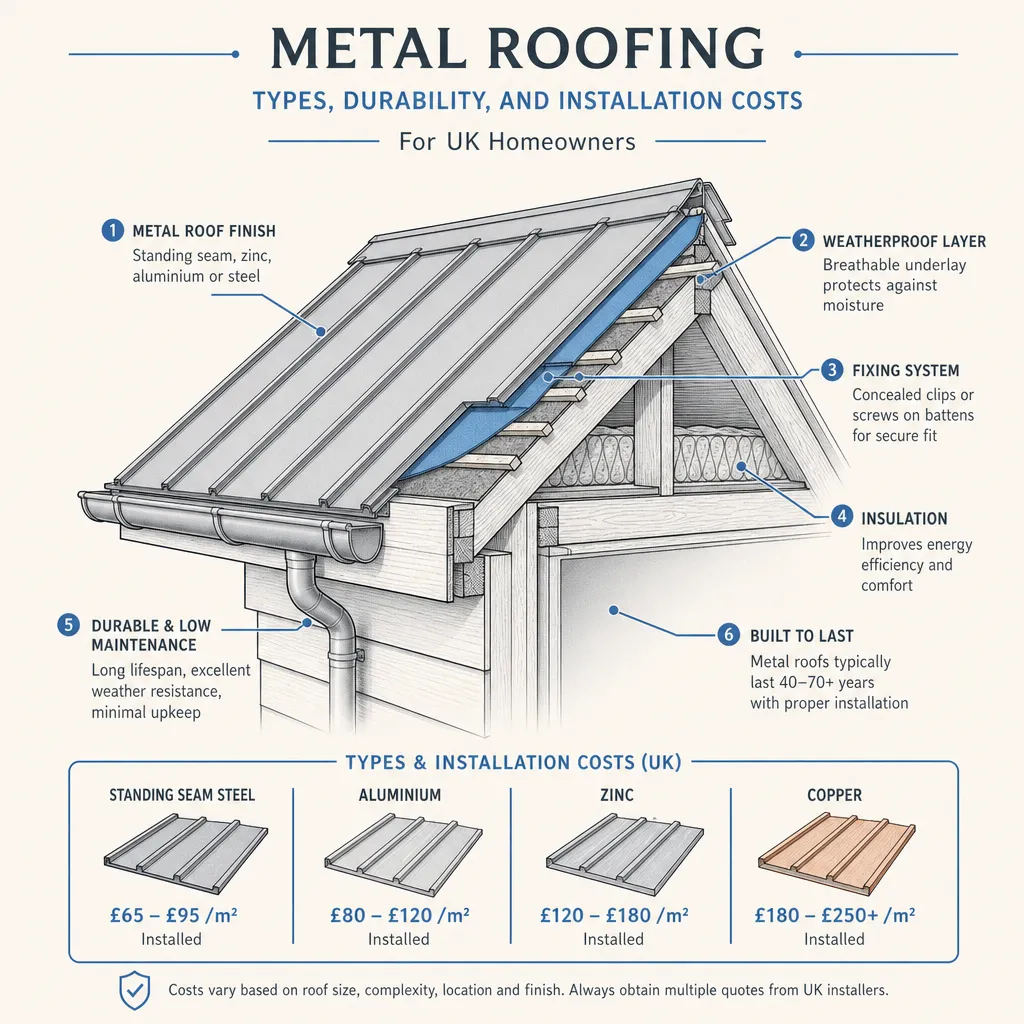
Metal Roofing: Types, Durability, and Installation Costs
Metal roofing in the UK includes standing seam, corrugated sheet, and metal tile systems in steel, aluminium, zinc, or copper.
 Improvement & Build
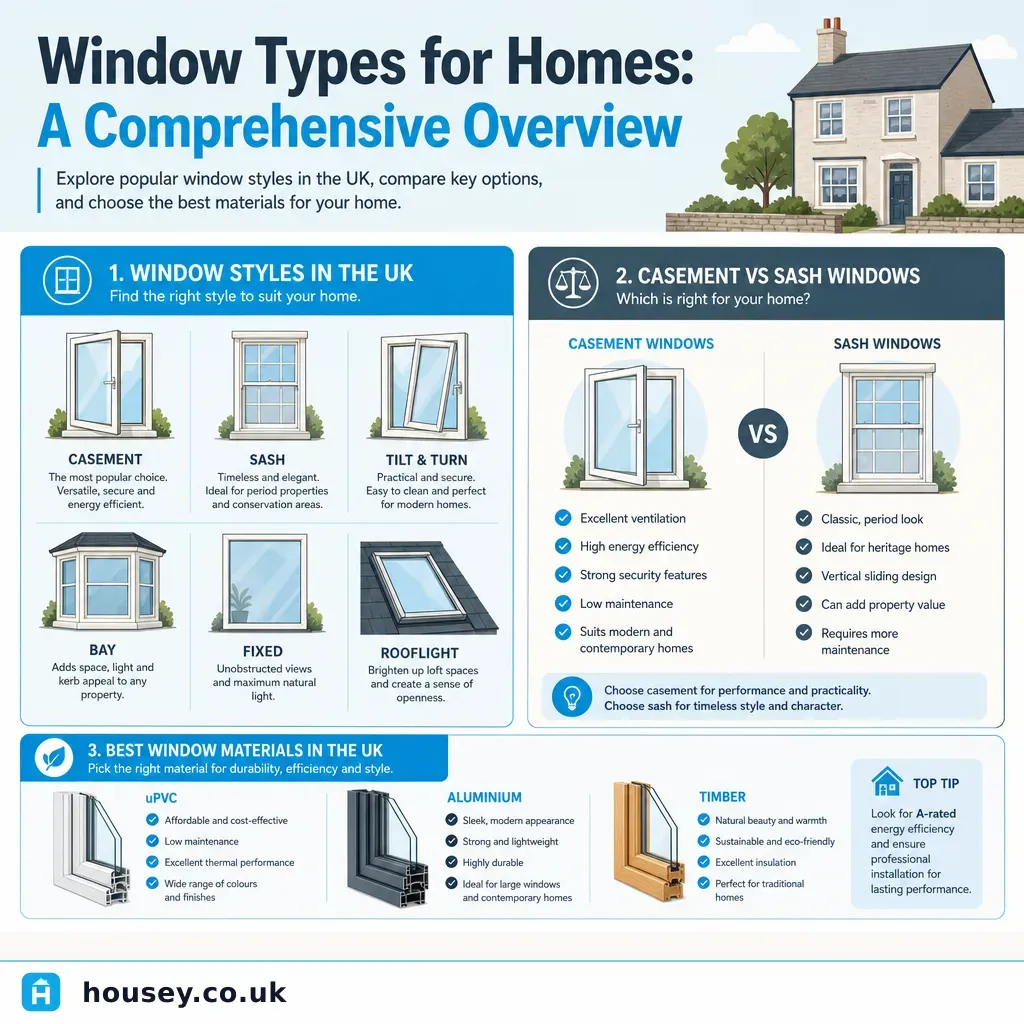
Window Types for Homes: A Comprehensive Overview
UK homes use several main window styles: casement (outward-swinging), sash (vertically sliding), tilt-and-turn, fixed light, and bay or bow.
 Improvement & Build
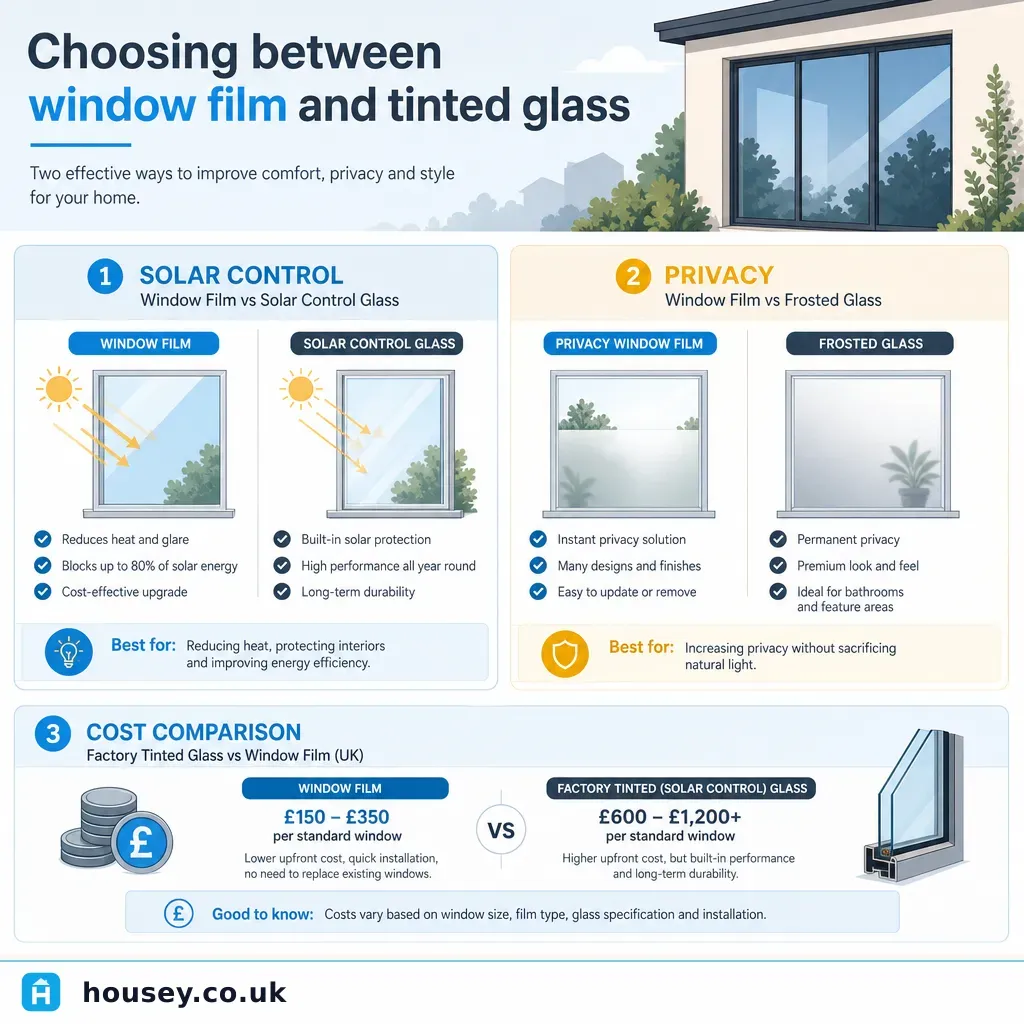
Choosing between window film and tinted glass
Window film is a retrofittable adhesive layer applied to existing glass — cheaper and reversible; factory-tinted or solar-control glass is manufactured with the tint integral to the pane, offering better durability and consistent performance.
 Improvement & Build
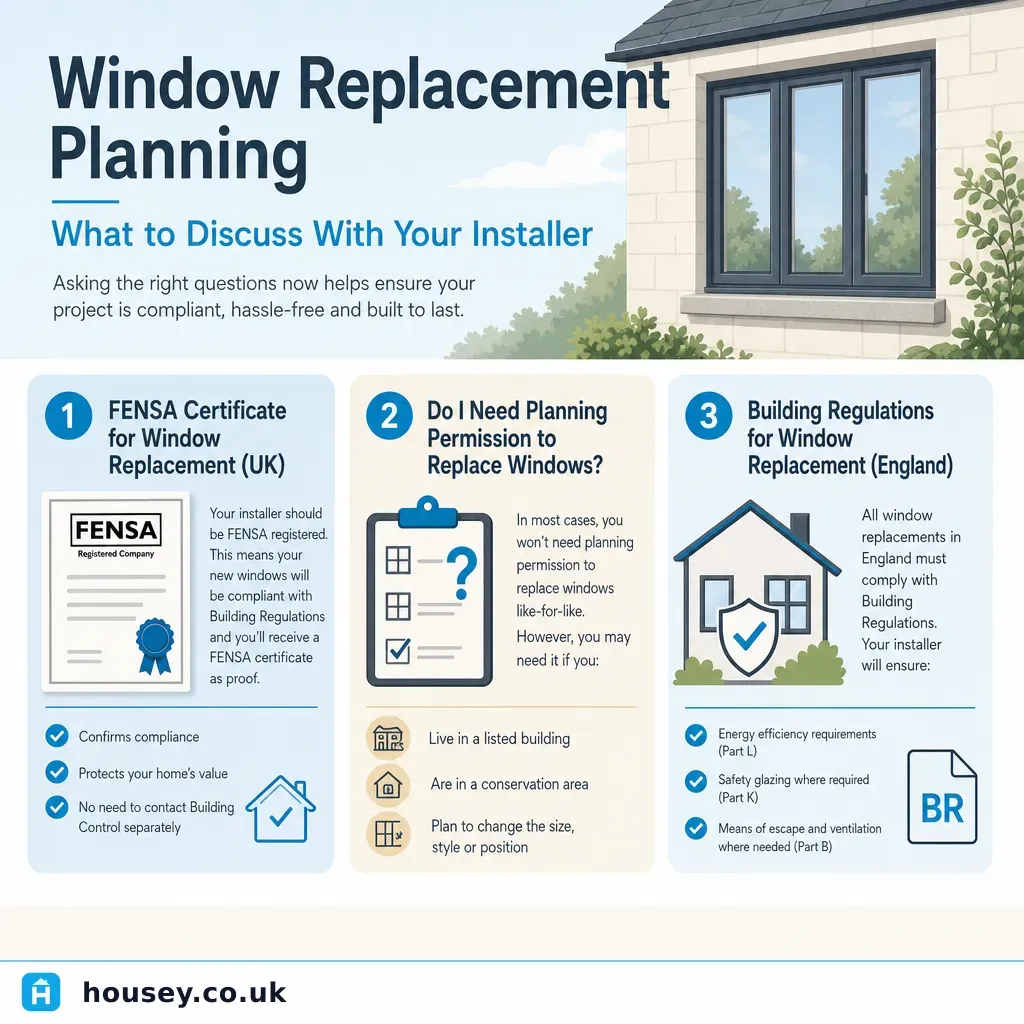
Window Replacement Planning: What to Discuss With Your Installer
Most window replacements in England fall under permitted development rights and do not require planning permission, but they must comply with Building Regulations Part L and Part K.
 Improvement & Build
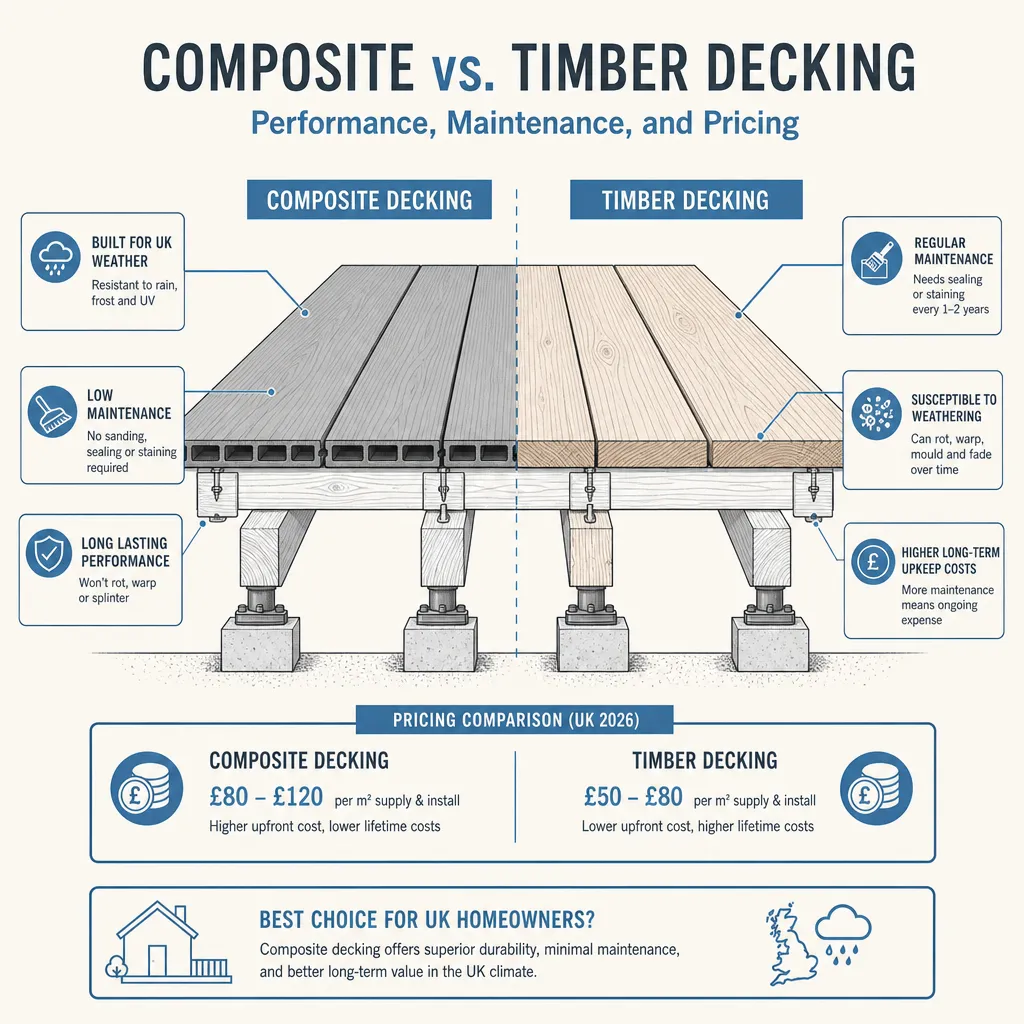
Composite vs. Timber Decking: Performance, Maintenance, and Pricing
Composite decking costs more upfront — typically £120–£220 per m² installed versus £80–£150 for treated softwood — but requires far less maintenance and carries a 25-year warranty.