Choosing between window film and tinted glass
By Housey · Last reviewed 19th of May 2026
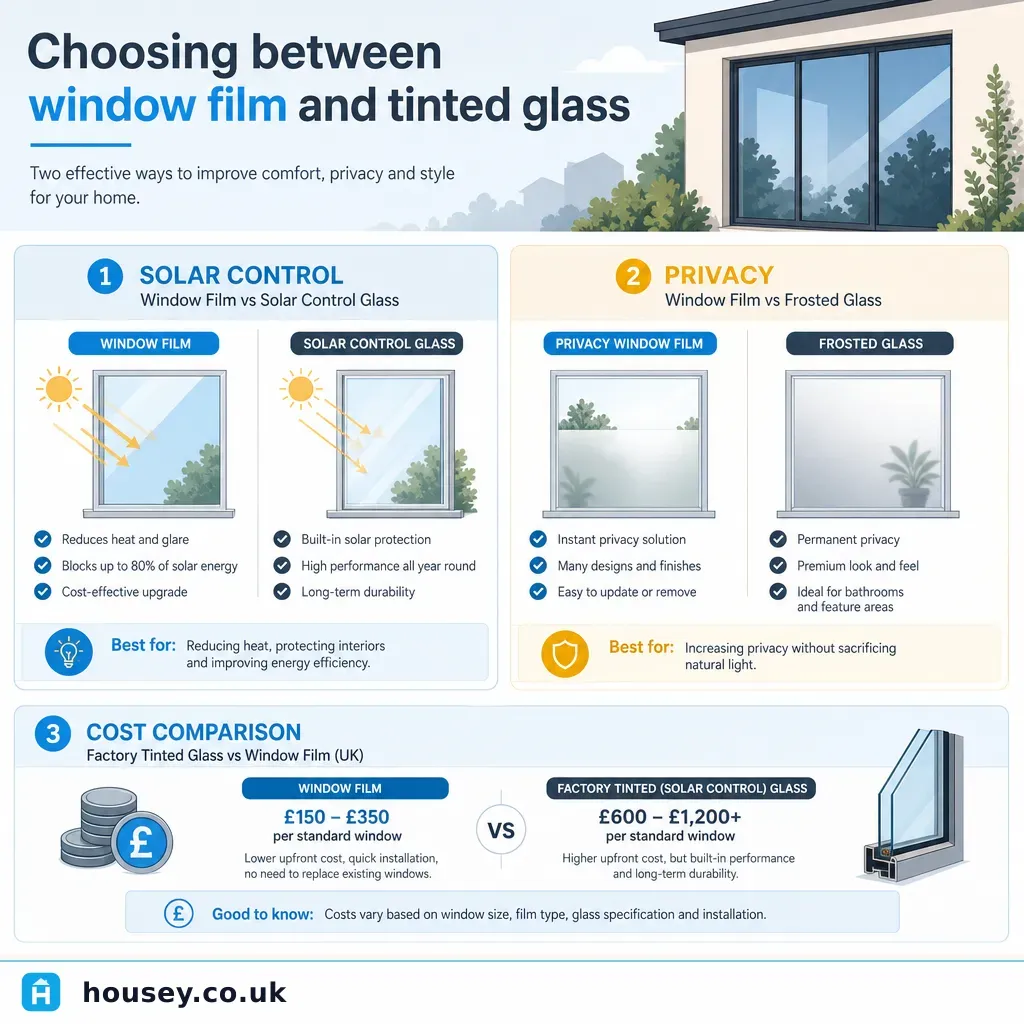
Choosing between window film and tinted glass
When homeowners want to reduce glare, improve privacy, or control heat on a sunny elevation, two main options arise: adhesive window film fitted to the existing glass, and factory-tinted or solar-control glass specified when ordering new or replacement units. The decision has real implications for cost, long-term performance, and planning consent — and the right answer usually depends on whether you are retrofitting or replacing.
Key points
- Window film materials typically cost £10–£40 per m²; professional installation adds £3–£10 per m² depending on glass size and access.
- Replacing a sealed unit with factory solar-control glass typically costs £80–£350 per unit for the glass alone, before fitting — a significantly higher upfront commitment.
- Low-E coatings on modern double-glazed units can conflict with high-absorption window films, potentially causing thermal stress fractures and voiding the unit warranty.
- Tinted glass manufactured to BS EN 572 or incorporated into sealed units under BS EN 1279 maintains its colour for the life of the glass; dyed window film may shift colour within 3–7 years.
- Replacement glazing in England and Wales must comply with Building Regulations Part L (thermal performance) and Part Q (security); window film applied to existing glass sits outside this regulatory scope.
What window film is — and is not
Window film is a thin polyester laminate, typically 50–300 microns thick, with a pressure-sensitive adhesive on one side. It is applied to the interior (or occasionally exterior) surface of existing glass. It does not alter the glass itself and can be removed without damaging the pane if done carefully.
Common types available to UK homeowners:
- Solar-control or tinted films — reduce visible light transmission and solar heat gain
- Privacy films — frosted, etched, or one-way mirror effects
- Security films — thicker laminates (typically 175 microns or above) that hold shattered glass together on impact
- Decorative films — patterns and manifestations used on glazed screens, shower enclosures, and internal partitions
Film is a retrofit solution. It adds a functional layer to glass that is already installed and is fully reversible.
What factory-tinted and solar-control glass is
Factory-tinted glass is produced by adding metal oxides — iron, cobalt, or selenium compounds — to the molten glass batch, creating a colour change throughout the full depth of the pane. This cannot be changed without replacing the glass.
Solar-control glazing goes further. It incorporates a metallic or metal oxide coating applied to the glass surface during manufacture, which selectively reflects solar radiation while allowing a higher proportion of visible light through than a simply tinted glass. Products such as Pilkington Suncool, Saint-Gobain SGG COOL-LITE, and Guardian SunGuard are widely specified in UK new builds and commercial refurbishment projects.
Both options require ordering a new sealed unit. They cannot be retrofitted to a pane already installed in an existing frame.
Comparison: window film vs factory-tinted or solar-control glass
Factor | Window film | Factory-tinted or solar-control glass |
|---|---|---|
Upfront cost | Lower — materials £10–£40/m² plus fitting | Higher — full sealed unit replacement required |
Reversibility | Fully removable and replaceable | Permanent — glass must be replaced to change |
Colour stability over time | Dyed films fade; metalled or ceramic films remain stable | Colour integral to glass; consistent for its lifetime |
Solar heat rejection | Good with quality ceramic films; moderate with dyed films | Excellent with spectrally selective coatings |
Security performance | Security film adds tear resistance; glass still breaks | Laminated tinted glass offers structural integrity |
Compatibility risk | High-absorption films may damage Low-E glass | Replaces unit entirely; no compatibility issue |
Building Regulations | Generally outside scope for existing glass | Part L and Part Q apply to all replacement units |
Best suited to | Existing windows in good condition; rental or leasehold; reversible changes | New builds, full refurbishments, high-performance specifications |
Not ideal for | Applications needing long-term permanence or maximum solar performance | Budget retrofits; situations where the change needs to be temporary or reversible |
Which professional do I need?
Task | Professional | What to check |
|---|---|---|
Fitting film to existing glass | Window film installer | Experience with your glass type; confirmed compatibility for Low-E units |
Ordering solar-control glazing for replacement units | Glazing or window installer | FENSA or CERTASS registered if replacing regulated glazing in England or Wales |
Replacing sealed units in existing frames | Glazier or window installer | Unit to BS EN 1279; U-value and solar factor documented |
Listed building — any change to glazing | Conservation specialist glazier + local planning authority | Listed building consent may be required before work starts |
Which option should you choose?
- Choose window film if your window frames are in good structural condition, you are not planning to replace the windows within the next five years, budget is tight, or you need a reversible change — for example on a rental property or leasehold flat where the freeholder's consent is conditional on reversibility.
- Choose factory-tinted or solar-control glass if you are already replacing windows or sealed units for other reasons, you want maximum solar performance and long-term colour consistency, or you are specifying glazing for a new build or extension from scratch.
- Ask a glazing professional if your existing double-glazed units have a Low-E coating and you are unsure whether a specific film specification will be thermally compatible — incompatibility can fracture the glass.
- Check your local planning authority if the property is listed or in a conservation area, and any change would affect the external appearance of the glazing.
Privacy and aesthetic considerations
Both options can deliver privacy, but the approach and results differ:
- Frosted window film is less expensive and reversible, but can look applied rather than integral — quality varies considerably between budget and premium products.
- Obscure glass (specified at manufacture, such as standard patterned obscure or Pilkington Satiné) is integral to the pane and is the standard approach for new bathroom and WC glazing under Building Regulations guidance.
- One-way or reflective film works only when the exterior is brighter than the interior — it does not provide privacy at night or in low-light conditions when interior lighting is on.
- Manifestation film (dot or line patterns on fully-glazed screens and doors) may be required under Building Regulations Part M on certain glazed elements in communal residential and commercial spaces.
When to get professional help
Consider involving a professional glazier or window installer rather than applying film yourself if:
- The glass pane is over approximately 1.5 m² — large panes are very difficult to film without bubbles or creases without specialist fitting tools
- The existing unit has a Low-E coating (look for a small etched mark in the corner of the spacer bar) — confirm film compatibility before purchasing
- You want security film — correct edge-sealing to the frame matters for performance and should be completed by an installer familiar with the product
- You are replacing units in England or Wales — FENSA or CERTASS registration is required by mortgage lenders and conveyancers, and demonstrates compliance with Building Regulations
How Housey can help
Whether you are fitting solar-control window film to existing glass or specifying factory-tinted replacement units for a refurbishment, connecting with the right professional saves time and avoids costly specification mistakes. Find vetted window and door installers through Housey to receive and compare quotes from local professionals.
Frequently asked questions
Does window film reduce heat in a room?
Solar-control films, particularly metalled and ceramic types, can reject 30–60% of incoming solar energy, measurably reducing heat gain on south- and west-facing glazing. Dyed films offer lower performance. Factory solar-control glass with spectrally selective coatings offers higher performance — products such as Pilkington Suncool combine high visible light transmission with substantial solar heat rejection.
Can I use window film on a leasehold flat?
Check your lease before making any change to the glazing. Many residential leases define glazing as part of the building structure, requiring written consent from the freeholder or management company. Films that alter the external appearance of windows are particularly likely to need approval. Confirm in writing before ordering or fitting any film.
Will factory-tinted glass make my rooms too dark?
Well-specified solar-control glass balances solar heat rejection with visible light transmission. High-performance products can transmit 60–70% of daylight while blocking a large proportion of solar heat. A glazing installer or manufacturer's technical datasheet can show the visible light transmission figure for any specific product, allowing you to choose accordingly.
Do I need planning permission to fit window film?
Applying film to the internal face of an existing window does not normally require planning permission. However, if the property is listed or in a conservation area, any change affecting the external appearance — including external-facing reflective or tinted film — may require listed building consent or conservation area consent from the local planning authority.
Sources and further reading
Useful next reads
 Improvement & Build
Bay Windows: Design Options and Installation Considerations
Bay windows project beyond the main wall of a house, increasing floor area and natural light.
 Improvement & Build
Comparing Wood and Vinyl Windows for UK Homes
Timber windows typically cost more upfront than uPVC but can last twice as long with regular maintenance.
 Improvement & Build
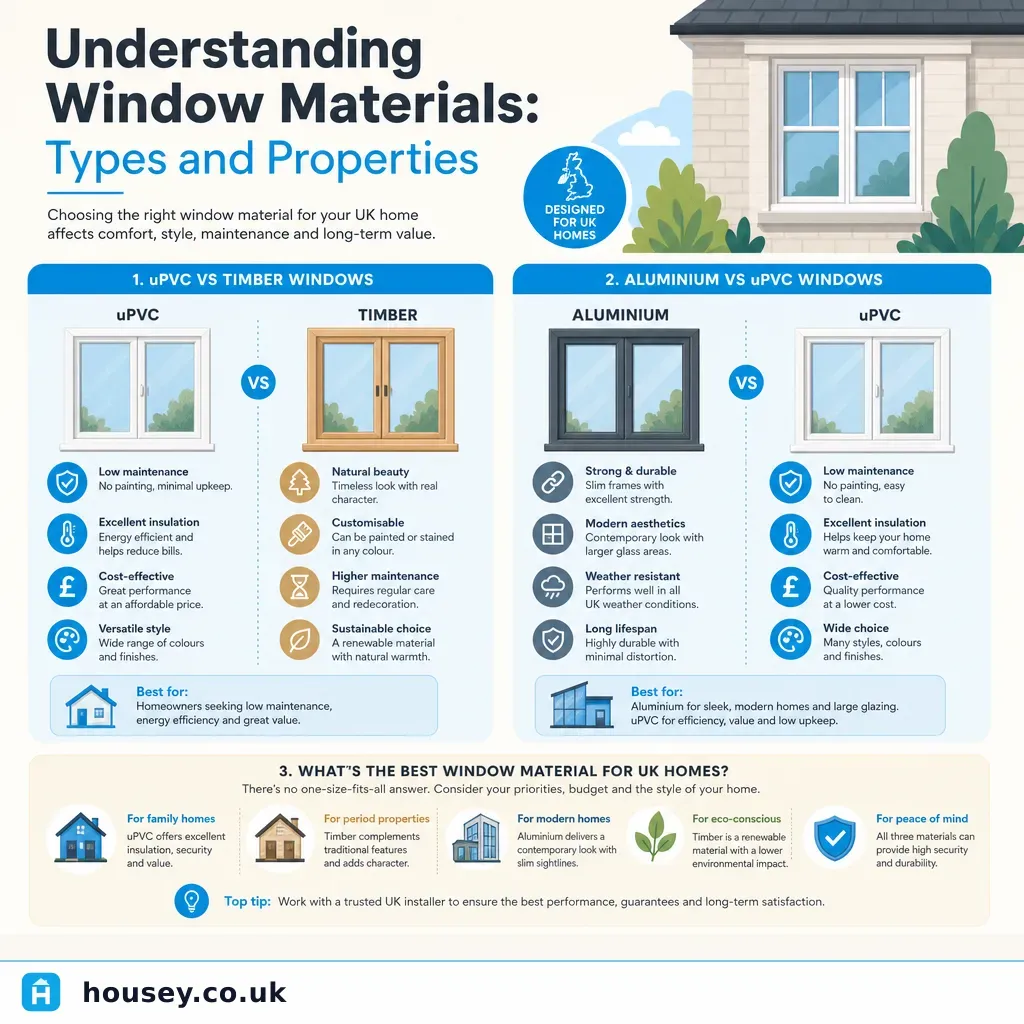
Understanding Window Materials: Types and Properties
uPVC is the most common UK window material, offering low maintenance and adequate thermal performance at a lower cost.
 Improvement & Build
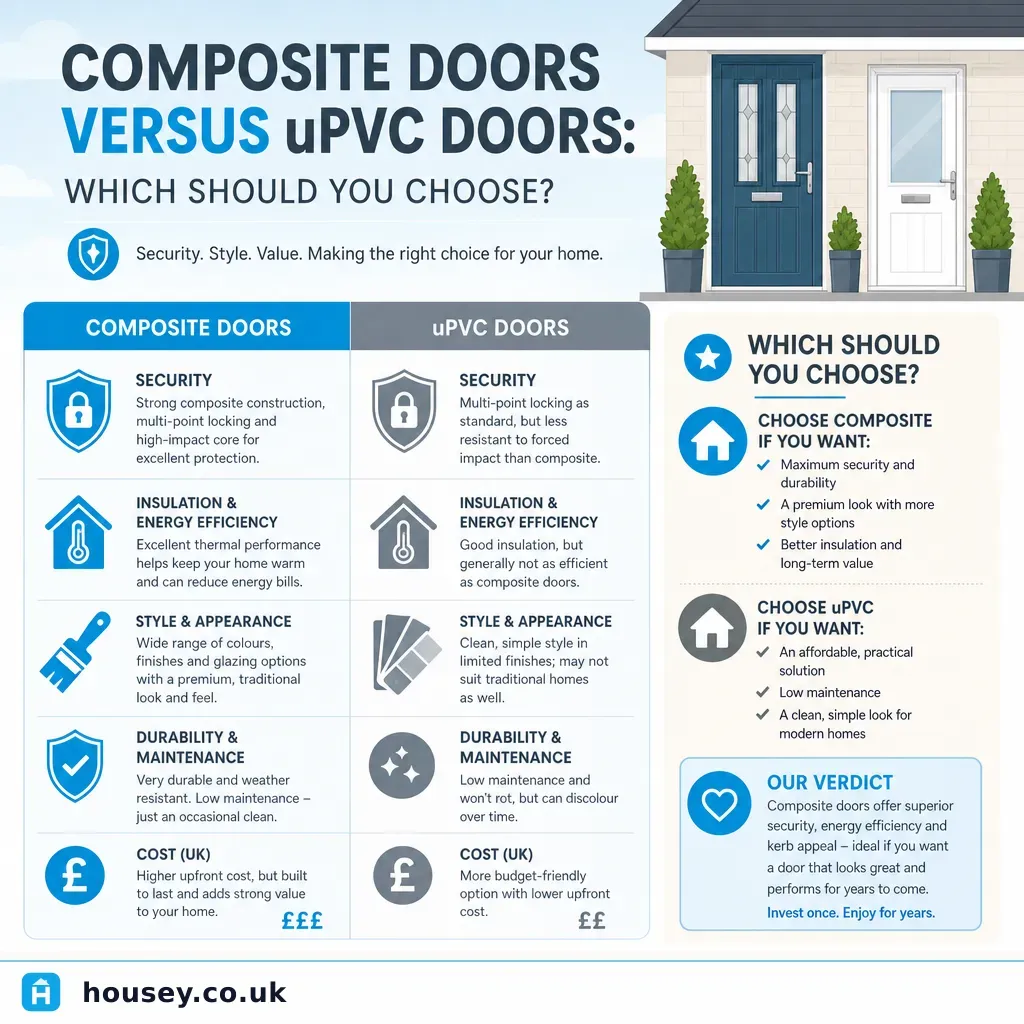
Composite doors versus uPVC doors: which should you choose?
Composite doors have a solid GRP-skinned core, stronger security credentials, and a typical lifespan of 35-plus years, but cost more than uPVC.
 Improvement & Build
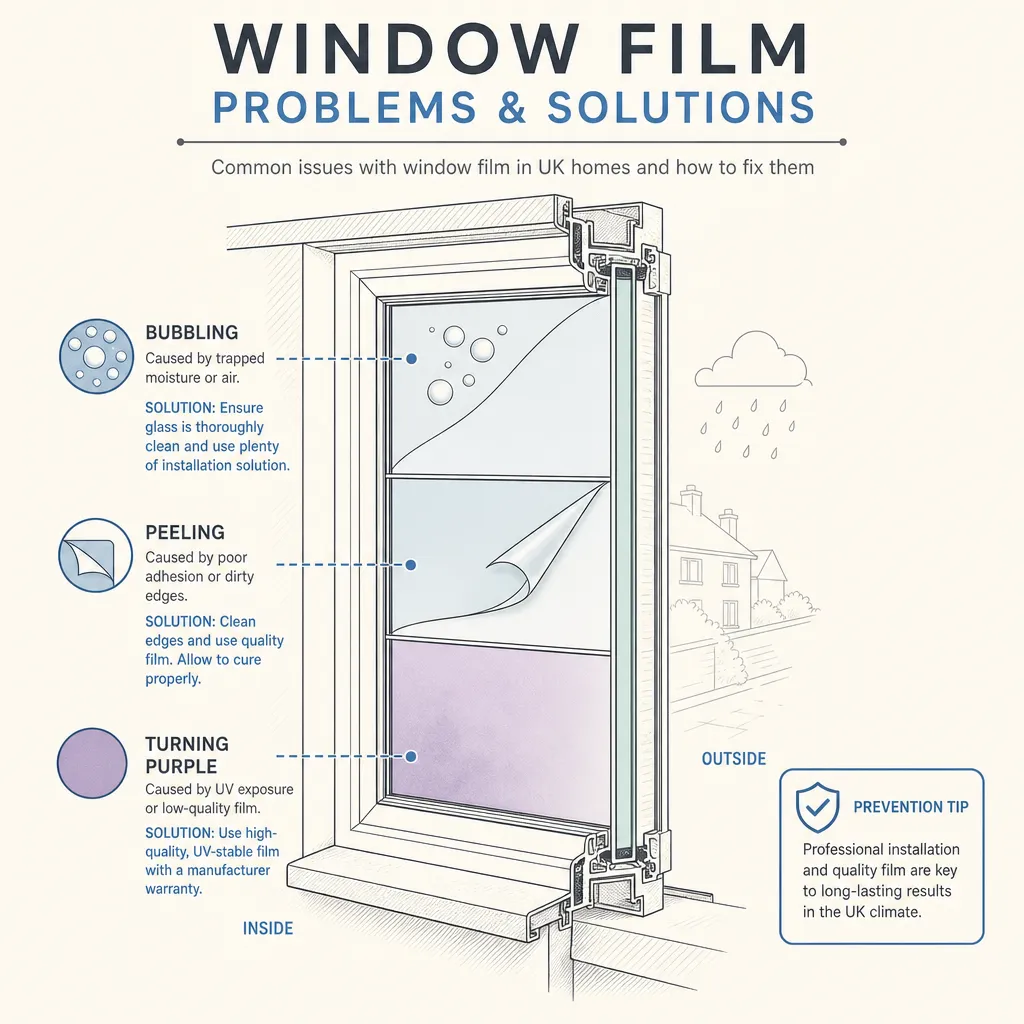
Window film problems and solutions
Window film can develop bubbles, peeling edges, discolouration, and adhesive failure — most problems stem from poor surface preparation, an incompatible film type, or DIY installation errors.