Gutter Installation: Flush-Edge vs Extended-Soffit Configuration
By Housey · Last reviewed 1st of June 2026
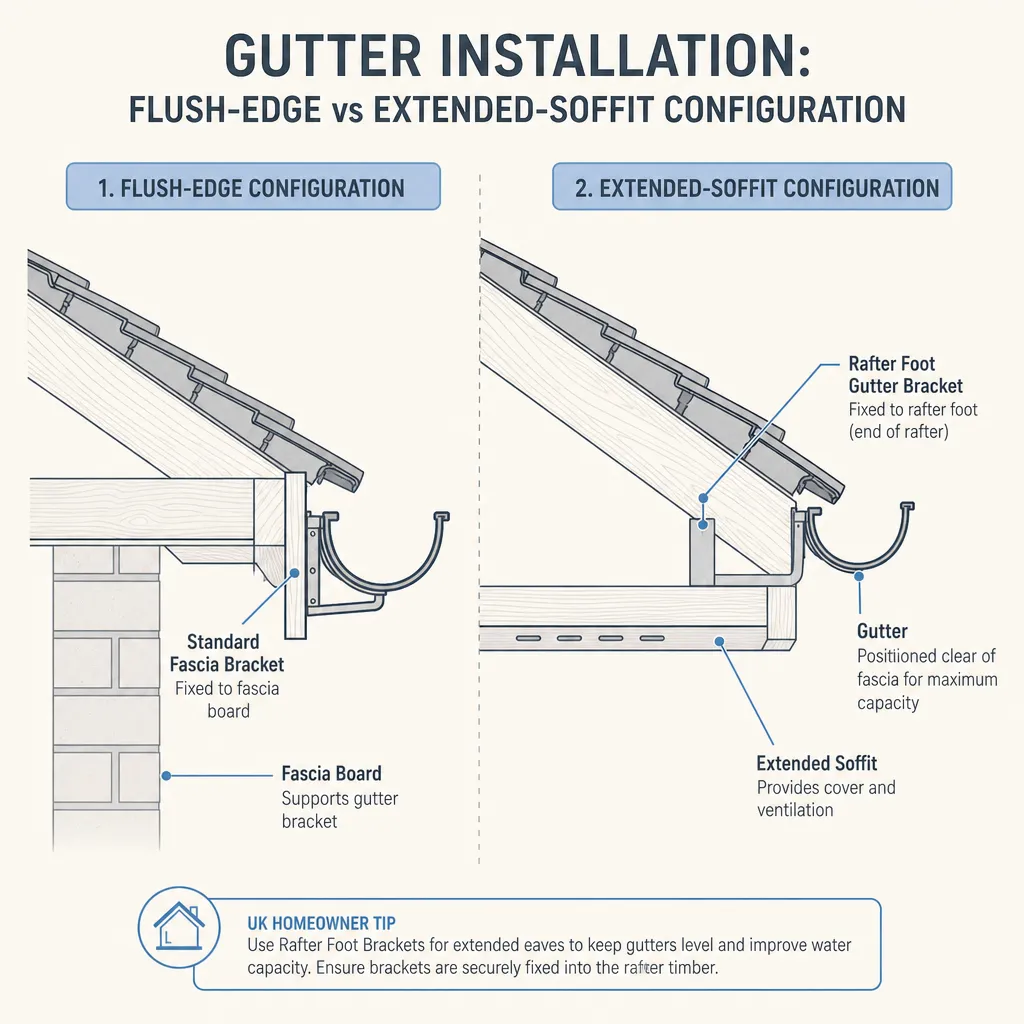
Gutter Installation: Flush-Edge vs Extended-Soffit Configuration
The eaves detail of your roof — specifically whether the fascia board sits flush with the roof edge or is set back beneath a projecting soffit overhang — determines which gutter bracket system will work, how far the bracket must reach, and what adjustments a roofer needs to make on site. Getting this wrong leads to overshooting water, pooling against the fascia, and premature rot or timber decay. Homeowners replacing gutters on 1930s semis or adding gutters to flat-roof extensions often encounter this distinction for the first time when requesting quotes.
Key points
- The drip edge of the lowest roof tile or slate should overhang into the inner third of the gutter — not beyond the centreline — to prevent water overshoot in heavy rain.
- BS EN 12056-3:2000 specifies the recommended gutter fall of 1:600 (approximately 1.7 mm per metre run) for gravity drainage systems.
- Flush-edge eaves use standard fascia brackets (typically 50–90 mm projection); extended-soffit eaves typically need long-arm fascia brackets, rafter-foot brackets, or rise-and-fall brackets (100–200 mm projection) to reach the drip edge.
- uPVC half-round and ogee profiles are standard for UK residential properties; aluminium or cast iron should be specified for listed buildings or conservation areas where material appearance is controlled.
- Surface water from gutters must discharge to an appropriate drainage system under Building Regulations Approved Document H; connecting directly to a soakaway, surface water drain, or watercourse is permissible depending on site conditions.
What flush-edge and extended-soffit mean
Flush-edge eaves occur where the fascia board is fixed at or very close to the outer edge of the roof structure, with little or no horizontal soffit overhang. The drip edge of the lowest tile or slate projects only slightly beyond the fascia line. This configuration is common on:
- Post-1970s properties with uPVC fascia-and-soffit cladding systems
- Flat-roof extensions and contemporary lean-tos
- Properties where original timber eaves have been cut back and re-clad in uPVC
Extended-soffit eaves occur where the rafter feet project further outward, creating a wide horizontal soffit board running beneath the overhang before meeting the fascia. The fascia is set back from the roof's outermost edge. This is typical on:
- 1930s semi-detached and detached houses with generous eaves projections
- Edwardian and Victorian properties with deep overhangs
- Some new-build homes designed with wide eaves for aesthetic or thermal performance reasons
The practical consequence is that on an extended-soffit eave, a standard fascia bracket may position the gutter too far from the tile drip edge, causing overshooting in heavy rain. A longer bracket or a rafter-foot bracket is needed to bridge the gap.
Configuration comparison
Feature | Flush-edge eave | Extended-soffit eave |
|---|---|---|
Fascia position | At the roof's outer edge | Set back behind the soffit overhang |
Typical bracket type | Standard fascia bracket (50–90 mm projection) | Long-arm fascia bracket, rafter-foot or rise-and-fall bracket (100–200 mm) |
Common property type | Post-war estate houses, flat-roof extensions | 1930s semis, Edwardian terraces, deep-eaves new builds |
Main installation challenge | Achieving consistent fall along a long fascia run | Reaching the drip edge without overloading the soffit board |
Can soffit board carry gutter load? | N/A | No — load must transfer to fascia or rafter, not the soffit sheet |
Typical gutter profiles | Half-round, ogee, square-line uPVC | Half-round, ogee; cast iron on period properties |
How bracket selection affects performance
Standard fascia brackets typically project 50–90 mm — sufficient for a flush-edge eave where the drip edge is close to the fascia. When a soffit extends further outward, a standard bracket fixed to the fascia leaves the gutter too far back from where water actually falls.
Long-arm brackets extend the reach of the fascia fixing point. They are only appropriate where the fascia board is sound and thick enough to carry the increased lever load — rotted or undersized fascia boards must be replaced before long-arm brackets can be used safely.
Rafter-foot brackets fix directly to the exposed ends of the rafters at the outer edge of the overhang, bypassing the fascia entirely. These suit properties with a very wide soffit or where the fascia is being replaced separately as part of the same job.
Rise-and-fall brackets allow the gutter height relative to the bracket body to be adjusted on site. This is particularly useful when fine-tuning the 1:600 fall across a long run, or when the fascia board is not perfectly level.
One rule applies across all bracket types: never fix gutter brackets to the soffit board itself. Soffit boards — typically 9 mm uPVC or thin plywood — are not structural elements and will bow, crack, or detach under the weight of a water-filled and debris-laden gutter.
Positioning the gutter correctly under the drip edge
Regardless of eaves configuration, the rules for gutter positioning are consistent:
- The rear of the gutter should sit close to, but not touching, the fascia board.
- The outer edge of the lowest tile or slate should overhang into the inner half — ideally the inner third — of the gutter width.
- The gutter must slope continuously toward the downpipe outlet at no less than 1:600.
- Where one long run is served by two downpipes, the run should slope from the centre toward both outlets.
- Expansion joints should be included in uPVC runs longer than approximately 6 m to accommodate thermal movement between summer and winter temperatures.
On flush-edge installations this positioning is relatively straightforward because the drip edge is close to the fascia. On extended-soffit installations, the installer should measure the horizontal distance from the fascia to the outer edge of the last tile before selecting a bracket projection length.
Material choices and their implications
Material | Typical use | Weight | Approximate lifespan | Notes |
|---|---|---|---|---|
uPVC (half-round, ogee, square-line) | Standard residential | Light | 20–30 years | Most common in UK; easy to install; not appropriate for listed buildings |
Aluminium (sectional or seamless) | Period-look or long runs | Moderate | 30–50 years | Can be formed seamless on site; good for wide-span runs |
Cast iron | Listed buildings, conservation areas | Heavy | 50+ years with maintenance | Traditional appearance; requires robust fixings and periodic repainting |
Steel (galvanised or powder-coated) | Agricultural, commercial | Heavy | 20–40 years | Less common in residential settings |
Indicative material guidance, last reviewed 2026-06-01. For conservation areas or listed buildings, consult your local planning authority or conservation officer before specifying a replacement material; aluminium painted to replicate cast iron profiles is sometimes an acceptable alternative.
What to ask a roofer or guttering installer before work begins
Before accepting a quote, ask:
- Have you measured the horizontal distance from the fascia to the tile drip edge, and what bracket projection does this require?
- Will brackets be fixed to the fascia, the rafter feet, or both — and why?
- Is the fascia board in sound enough condition to carry the gutter load, or does it need replacing first?
- What fall are you specifying along the run, and how will you achieve it if the fascia is not level?
- How many downpipe outlets do you recommend for this run length, and where will they discharge?
- Is the proposed material appropriate for this property, including any conservation area or listed building constraints?
- Does the quote include removal and disposal of existing guttering, and is VAT included?
When to get professional help
Most domestic gutter replacement is straightforward for an experienced roofer or specialist guttering installer. However, professional assessment is especially important when:
- The fascia board or rafter feet show signs of rot — replacing gutters on defective timbers is a false economy and may void any installer guarantee.
- The property is listed or sits within a conservation area — material specifications may require approval from the local planning authority before work begins.
- The roof pitch is steep or access is restricted — safe working-at-height provisions are required under the Work at Height Regulations 2005.
- Water is pooling against the wall or entering the building — this may indicate a drainage capacity problem or defect that a like-for-like gutter replacement will not resolve.
How Housey can help
Housey connects homeowners with verified local roofers who can assess your eaves detail, specify the correct bracket type and gutter configuration, and provide itemised quotes. Submit a single request to receive responses from checked professionals in your area.
Frequently asked questions
Can I use the same gutters when moving from flush-edge to extended-soffit eaves?
Yes — the gutter profile itself (half-round, ogee, square) is not configuration-specific. What changes is the bracket type and projection length. If you are replacing a fascia and soffit system at the same time, the installer should reassess bracket reach before ordering materials to avoid mismatched projection.
Does gutter replacement require building regulations approval?
Like-for-like gutter replacement does not normally require building regulations approval. However, if you are changing the drainage route — for example, redirecting downpipes to a new surface water drain — you may need to notify building control under Approved Document H. Check with your local authority if you are altering the drainage outfall.
Why is water overshooting my gutters in heavy rain?
Overshooting is usually caused by the gutter being positioned too far back from the tile drip edge, the gutter profile being too small for the roof area it serves, or insufficient fall causing water to pool and spill. A roofer can assess which applies and whether adjustment, upsizing, or repositioning is needed.
How long does a domestic gutter replacement typically take?
For a standard three-bedroom semi-detached house, a like-for-like gutter replacement — removing old gutters, fitting new brackets and gutters, and connecting downpipes — typically takes half a day to a full day. Properties with complex rooflines or requiring fascia board replacement alongside will take longer.
Sources and further reading
- Approved Document H — Drainage and Waste Disposal — GOV.UK
- Work at Height Regulations 2005 — legislation.gov.uk
- Historic England — Repairs to Traditional Buildings — Historic England
- Planning Portal — Permitted Development for Householders — Planning Portal
Useful next reads
 Improvement & Build
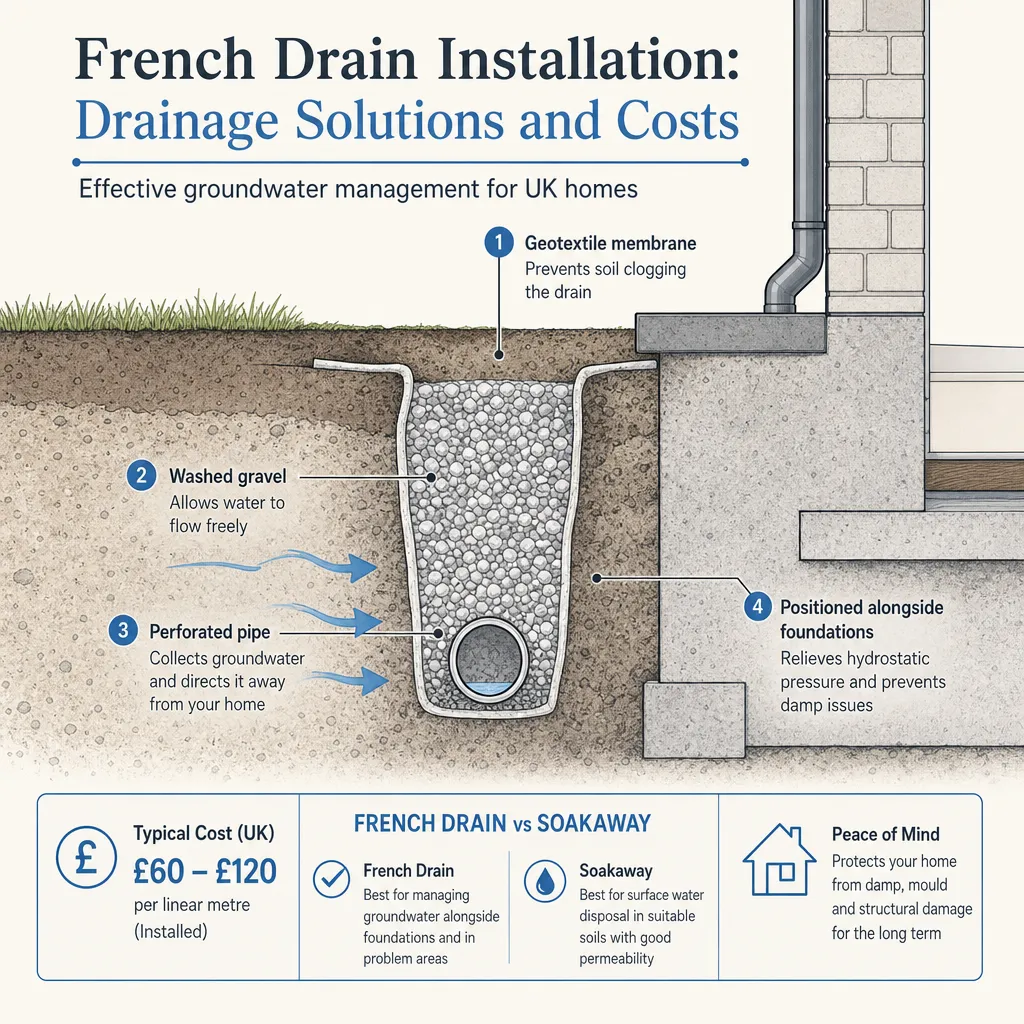
French Drain Installation: Drainage Solutions and Costs
A French drain is a gravel-filled trench containing a perforated pipe that channels subsurface water away from problem areas.
 Improvement & Build
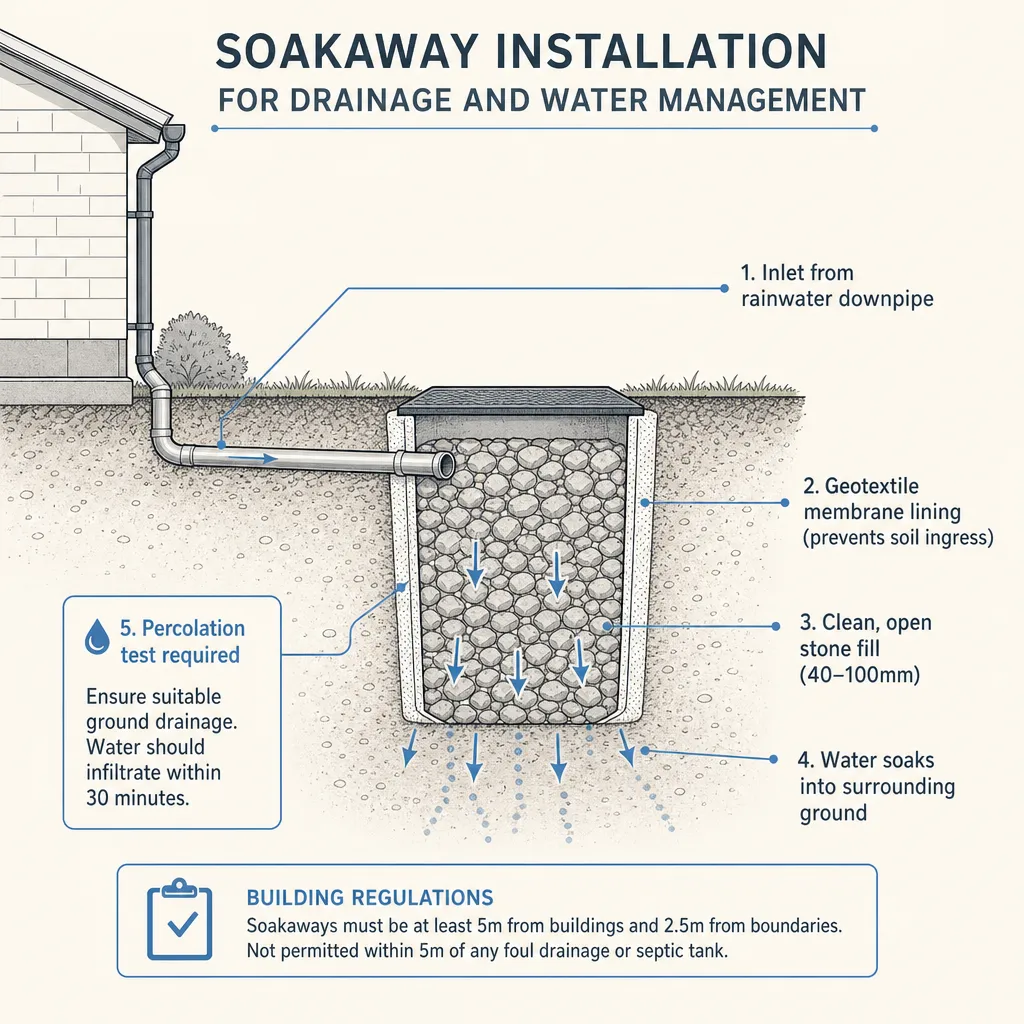
Soakaway Installation for Drainage and Water Management
A soakaway collects surface water or roof drainage and allows it to disperse slowly into the surrounding ground.
 Improvement & Build
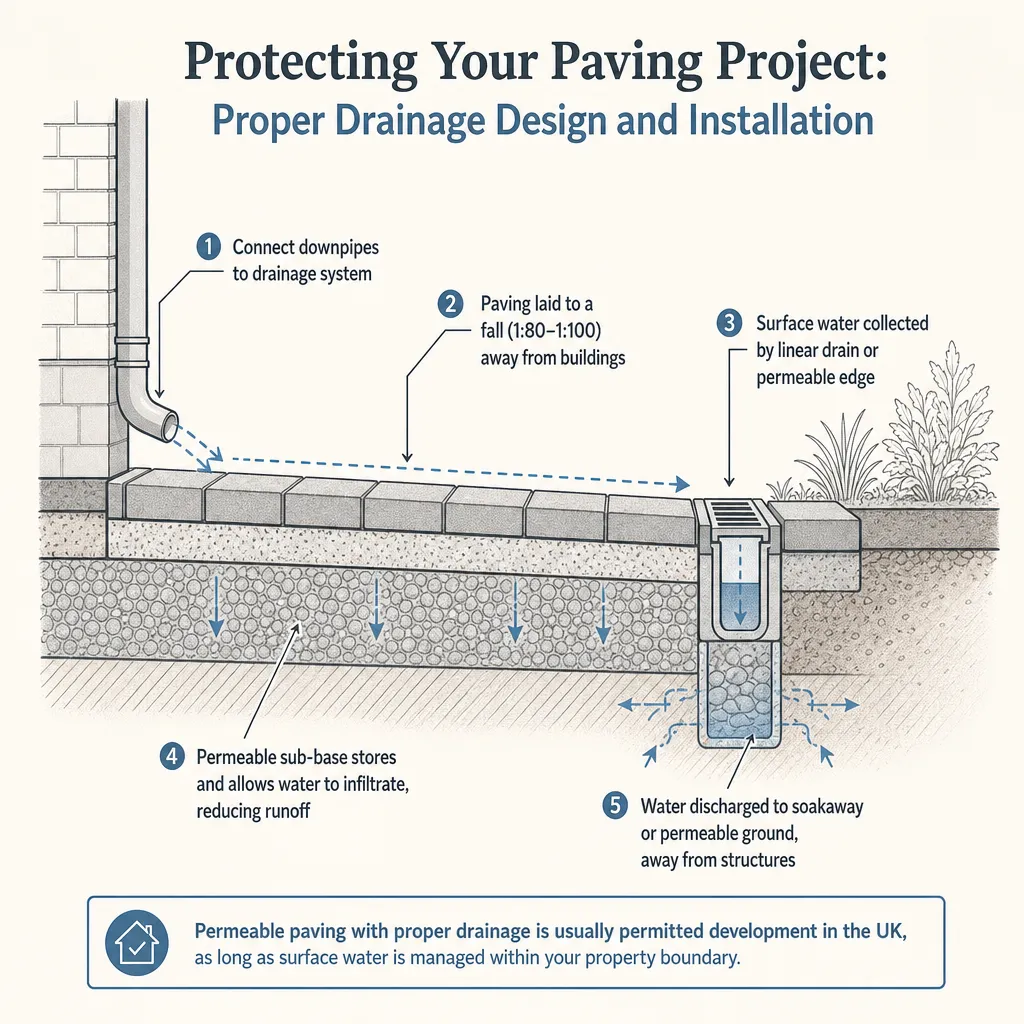
Protecting Your Paving Project: Proper Drainage Design and Installation
Good paving drainage starts with a minimum fall of 1:60 to 1:80 away from buildings, a correctly specified sub-base, and a clear outlet for surface water.
 Improvement & Build
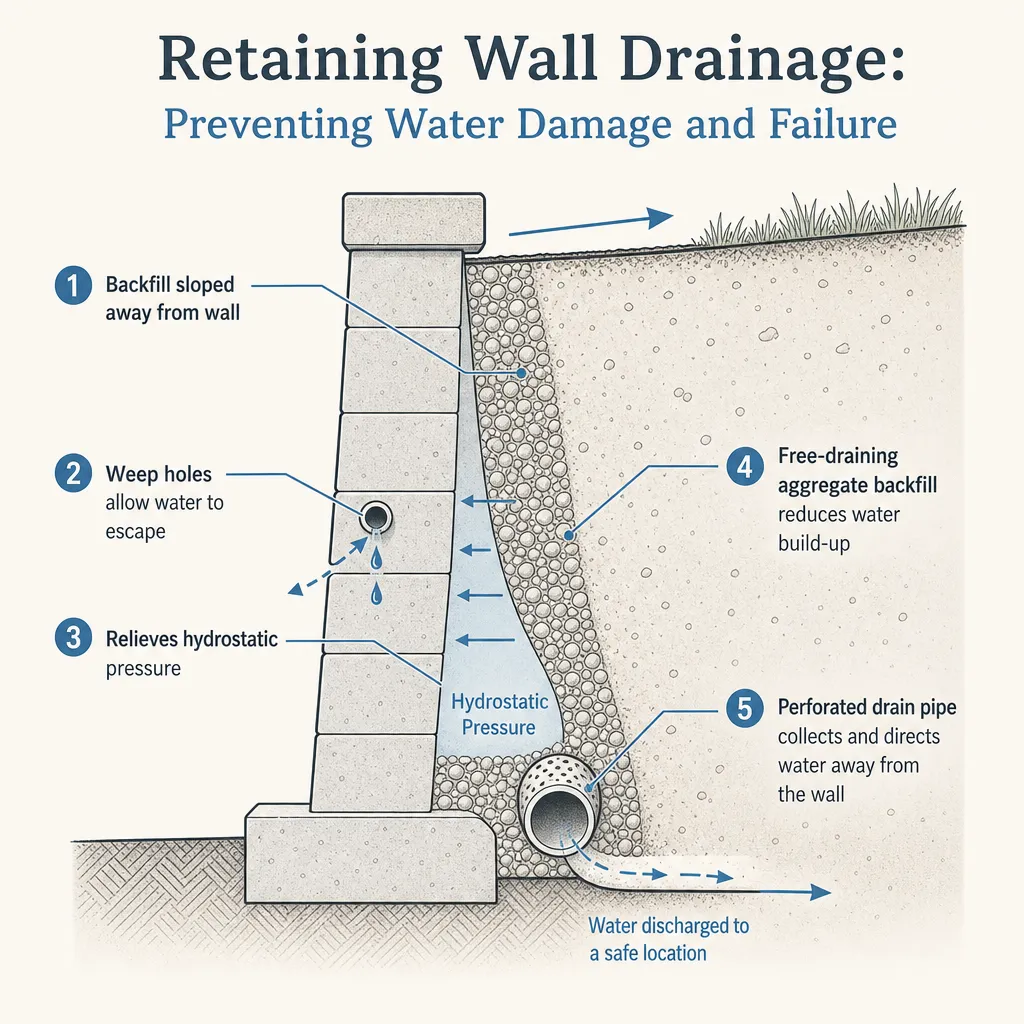
Retaining Wall Drainage: Preventing Water Damage and Failure
Retaining wall drainage fails when hydrostatic pressure builds behind the structure due to poor drainage layers, blocked weep holes, or impermeable backfill.
 Improvement & Build
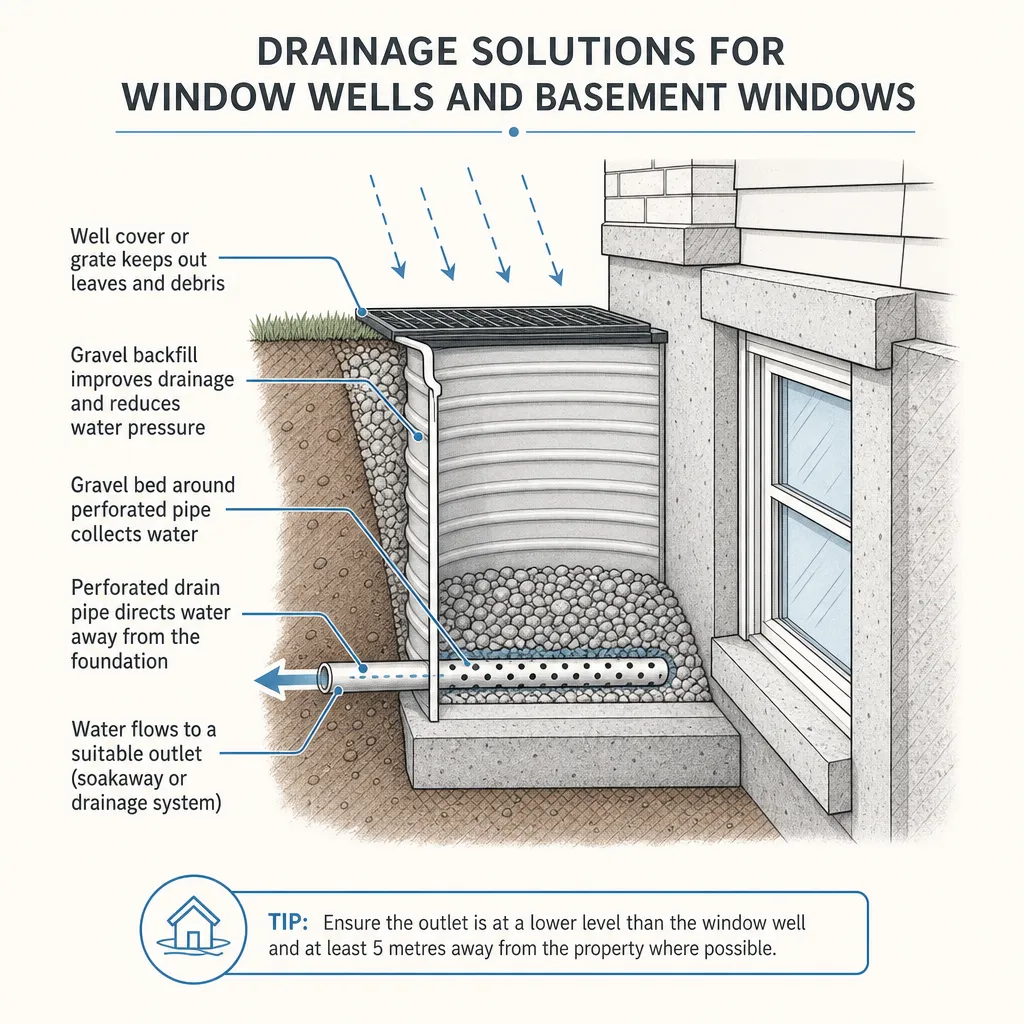
Drainage solutions for window wells and basement windows
Most UK window wells manage water through a gravel-filled sump at least 200 mm deep or a plastic liner fitted with a drain outlet connected to a soakaway or drainage system.