Gutter Repair and Damage: Restoration Costs and Solutions
By Housey · Last reviewed 7th of May 2026
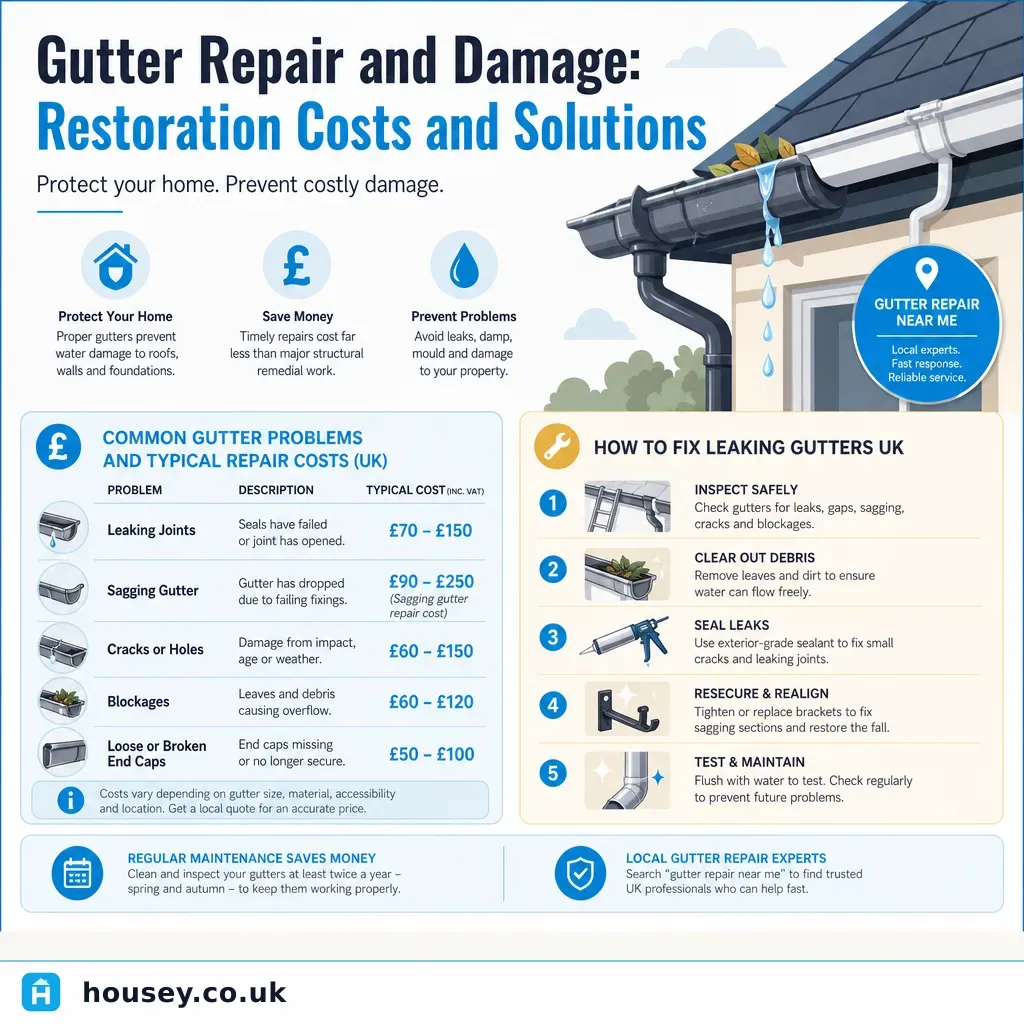
Gutter Repair and Damage: Restoration Costs and Solutions
Gutters are easy to overlook until a leak, drip, or damp patch makes the problem impossible to ignore. For UK homeowners, failing gutters are one of the most common causes of preventable damp, fascia rot, and foundation saturation — yet repair is usually straightforward and affordable when caught early. Whether you have noticed a sagging joint, water cascading over the front edge of the gutter, or green algae streaking down your masonry, understanding what type of damage you have and what it costs to fix can help you act before minor maintenance becomes a major bill.
Key points
- Most minor gutter repairs — re-sealing joints, clearing blockages, refixing brackets — cost between £80 and £250 including labour, depending on access height and fault type.
- uPVC gutters, the most common type in UK homes built after the mid-1970s, can usually be repaired with specialist sealant or replacement sections; cast iron gutters on older or period properties require different treatment.
- Working safely above single-storey level typically requires a proper scaffold or tower setup; do not attempt repairs above 2m without appropriate access equipment or a qualified contractor.
- Blocked gutters are the most frequently overlooked fault: a twice-yearly clean in autumn and spring prevents the majority of overflow and joint failures.
- Left unrepaired, leaking gutters can cause damp penetration, fascia rot, and in severe cases water ingress into the property — all significantly more expensive to remediate than the original gutter repair.
What types of gutter damage are most common?
UK gutters fail in predictable ways, most of which are visible from the ground or during a careful ladder inspection at single-storey height.
Leaking joints and unions are the most frequent fault on uPVC systems. The rubber seals within push-fit joints dry out and shrink over time, allowing water to drip down the fascia board and stain the masonry below.
Sagging sections result from broken or corroded brackets. A section that holds standing water develops algae, freezes in winter, and eventually cracks or pulls away from the fascia entirely.
Cracks and splits in uPVC guttering are usually caused by UV degradation, frost damage, or physical impact. A crack in the middle of a run typically requires section replacement rather than patching.
Blocked downpipes are often misdiagnosed as leaking gutters. If the gutter overflows only at the downpipe junction, the pipe itself — not the gutter — is likely the cause.
Detached or corroded fascia fixings can cause an entire run to pull away from the roofline, particularly on older properties where the fascia board has rotted behind the bracket.
Fault type | Typical cause | DIY-possible? | Likely fix |
|---|---|---|---|
Leaking joint or union | Failed rubber seal | Possibly (ground floor only) | Re-seal with gutter sealant or replace union |
Sagging section | Broken bracket | Yes (single-storey) | Replace bracket, re-pitch section |
Crack or split | UV or frost damage | No — section replacement needed | Replace gutter section |
Blocked downpipe | Debris accumulation | Yes | Rod or flush downpipe |
Detached fascia fixing | Rotted fascia board | No — fascia repair needed first | Fascia replacement then re-fix gutter |
How much does gutter repair cost in the UK?
Indicative UK costs, last reviewed 2026-05-07. Costs vary by region, property height, access difficulty, and contractor. Obtain at least three written quotes before instructing.
Repair type | Typical cost range | Notes |
|---|---|---|
Gutter clearing and unblocking | £50–£150 | Single-storey; usually includes a basic inspection |
Joint re-seal | £80–£180 | Per repair point; scaffold may add cost on two-storey |
Bracket replacement | £80–£200 | Depends on number of brackets and access height |
Single uPVC section replacement | £100–£300 | Material plus labour; ground-floor run |
Downpipe repair or replacement | £80–£250 | Like-for-like uPVC, single section |
Full clean, inspect, and minor repairs | £150–£400 | Common end-of-autumn package from roofers |
For two-storey properties or complex rooflines, scaffold or tower hire typically adds £300–£600 for short-duration access. Many contractors include this in their quote; always confirm whether scaffold is covered before accepting a price.
Cast iron gutter repair is more involved. Joints on cast iron systems are traditionally lead-caulked or sealed with putty, and individual sections can weigh 15–20 kg. Specialist repair typically costs £200–£500 per repair point, and finding a contractor with cast iron experience matters — a poor repair accelerates corrosion rather than containing it.
Do you need planning permission or building regulations approval?
Like-for-like gutter repair does not normally require planning permission or Building Regulations approval in England and Wales. However:
- If your property is in a conservation area or is listed, replacing cast iron or ogee-profile guttering with uPVC may require Listed Building Consent or conservation area notification. Check with your local planning authority before replacing heritage guttering.
- If the repair involves structural fascia work, your contractor should advise on whether any building control notification applies.
For further guidance, see the Planning Portal's permitted development guidance on guttering and drains.
Homeowner inspection checklist
Before calling a contractor, inspect your gutters from the ground and note what you observe. A clear description helps you compare quotes and verify that the proposed work addresses the actual fault.
Photograph what you can safely from the ground or a stable ladder below 2m. This reduces call-out time and helps you verify that the quoted work matches the problem you reported.
Red flags — when a gutter repair is actually something bigger
Sometimes what looks like a gutter problem is a symptom of a more serious underlying issue. Be alert to these warning signs:
- Rising damp or internal water staining that persists after the gutter is repaired may indicate a separate water ingress route such as failing pointing, cracked render, or roof damage.
- Multiple sections failing simultaneously — if a significant proportion of the gutters on the house are cracking or sagging, a full replacement is usually more cost-effective than piecemeal repair.
- Repeatedly blocking downpipes — persistent moss or tile debris in gutters may indicate the roof covering itself needs attention.
- Fascia rot extending more than 300mm — refixing gutters to a rotted fascia creates a short-term repair only; the fascia should be replaced first.
- Visible structural movement at the roofline — cracked or displaced soffits accompanied by brick movement should be assessed by a chartered surveyor or structural engineer before any roofing contractor is instructed.
When to get professional help
Most gutter repairs at ground-floor level are accessible to a competent homeowner with the right sealant and a stable ladder. Call a professional when:
- The gutter run is above single-storey and proper scaffold or tower access is required.
- The fascia or soffit boards need replacement alongside the gutters.
- The property has cast iron guttering requiring specialist knowledge and tools.
- The repair is connected to suspected roof damage, damp, or structural movement.
- You are a leaseholder or managing agent and the repair affects shared or managed building fabric.
Always check that a contractor carries appropriate public liability insurance and works in accordance with the Working at Height Regulations 2005 and HSE guidance on safe ladder and scaffold use.
How Housey can help
If you need a qualified roofer to inspect, repair, or advise on your gutters, Housey makes it straightforward to request quotes from roofers near you and compare prices from local contractors.
Frequently asked questions
How long do uPVC gutters last in the UK?
uPVC gutters typically last 20–30 years in the UK, though this depends on quality, sun exposure, and maintenance frequency. Joints and brackets often fail before the gutter body itself. Regular cleaning and prompt joint re-sealing can extend the effective life of a system significantly.
Can I repair a cracked uPVC gutter myself?
Minor cracks in a ground-floor gutter can be sealed with specialist gutter sealant or repair tape as a short-term fix. However, a crack in a mid-run section usually indicates the profile is brittle and further cracking is likely; section replacement is more reliable. Never attempt repairs above 2m without proper access equipment.
Does home insurance cover gutter repair?
Most standard UK home insurance policies treat gutters as a maintenance item and do not cover routine repair or wear-and-tear. Damage caused by a sudden insured event such as a storm may be covered — check your policy wording and contact your insurer before making a claim.
Why does my gutter overflow even though it is not blocked?
A gutter that overflows in heavy rain despite being clear may be incorrectly pitched, undersized for the roof area it drains, or have a downpipe that is too small. A roofer or drainage specialist can re-pitch the run or install an additional downpipe to resolve the problem.
What is the difference between a fascia and a soffit?
The fascia is the vertical board at the roofline to which gutters are fixed. The soffit is the horizontal board beneath it, closing the gap between the wall and roof edge. Both can rot if gutters leak persistently. Replacing rotten fascia or soffit boards typically costs £60–£150 per metre including fitting, and is often done as part of a full gutter re-run.
Sources and further reading
- Working at Height Regulations 2005 — legislation.gov.uk
- Planning Portal: Guttering and Drains — Planning Portal
- Working at Height: A Brief Guide (INDG401) — Health and Safety Executive
- Gutter Repair Cost Guide — Checkatrade
Useful next reads
 Improvement & Build
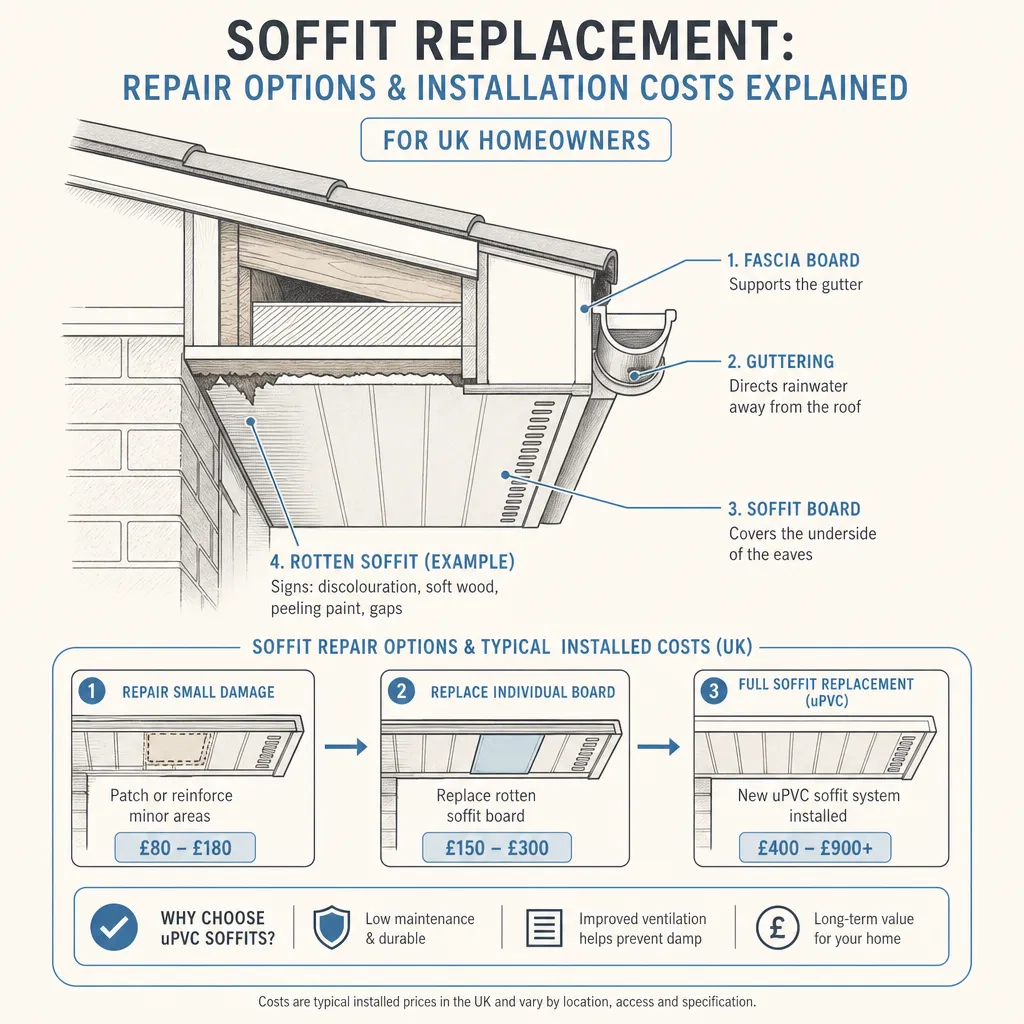
Soffit replacement: repair options and installation costs explained
Soffit replacement typically costs £500–£1,200 for a semi-detached home in the UK, depending on material choice and the extent of work.
 Improvement & Build
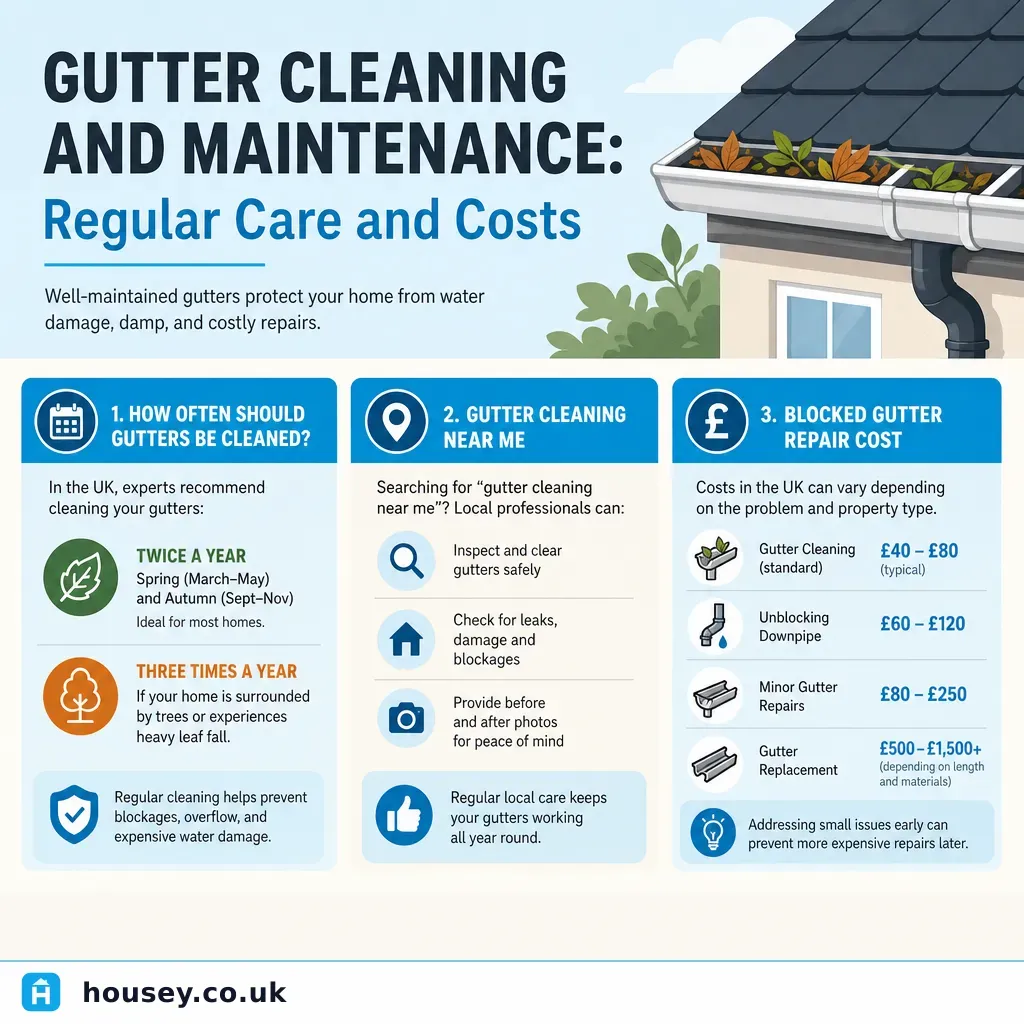
Gutter Cleaning and Maintenance: Regular Care and Costs
Gutters should be cleaned at least twice a year — in late autumn after leaf fall and again in spring.
 Improvement & Build
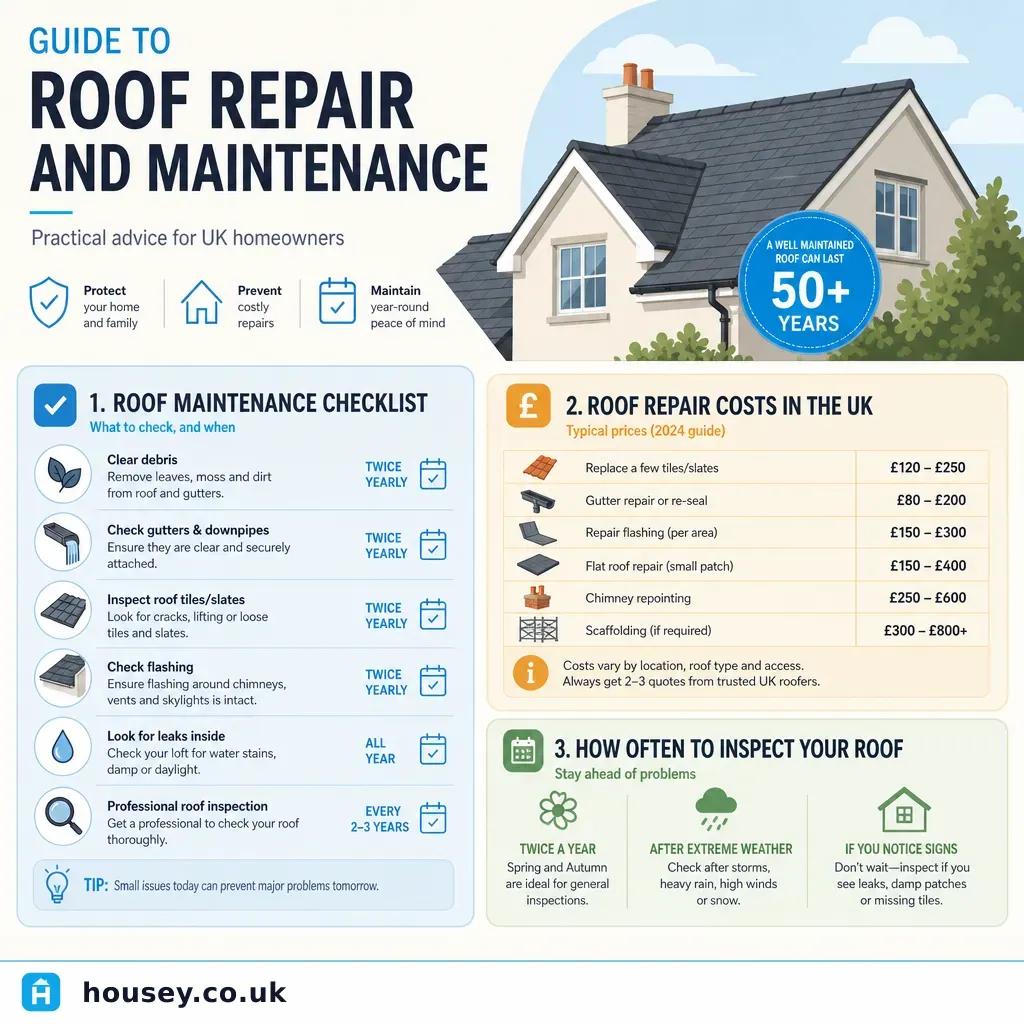
Guide to Roof Repair and Maintenance
Regular roof inspections every 3–5 years, prompt repair of damaged tiles and failed flashings, and annual gutter clearance are the core of effective UK roof maintenance.
 Improvement & Build
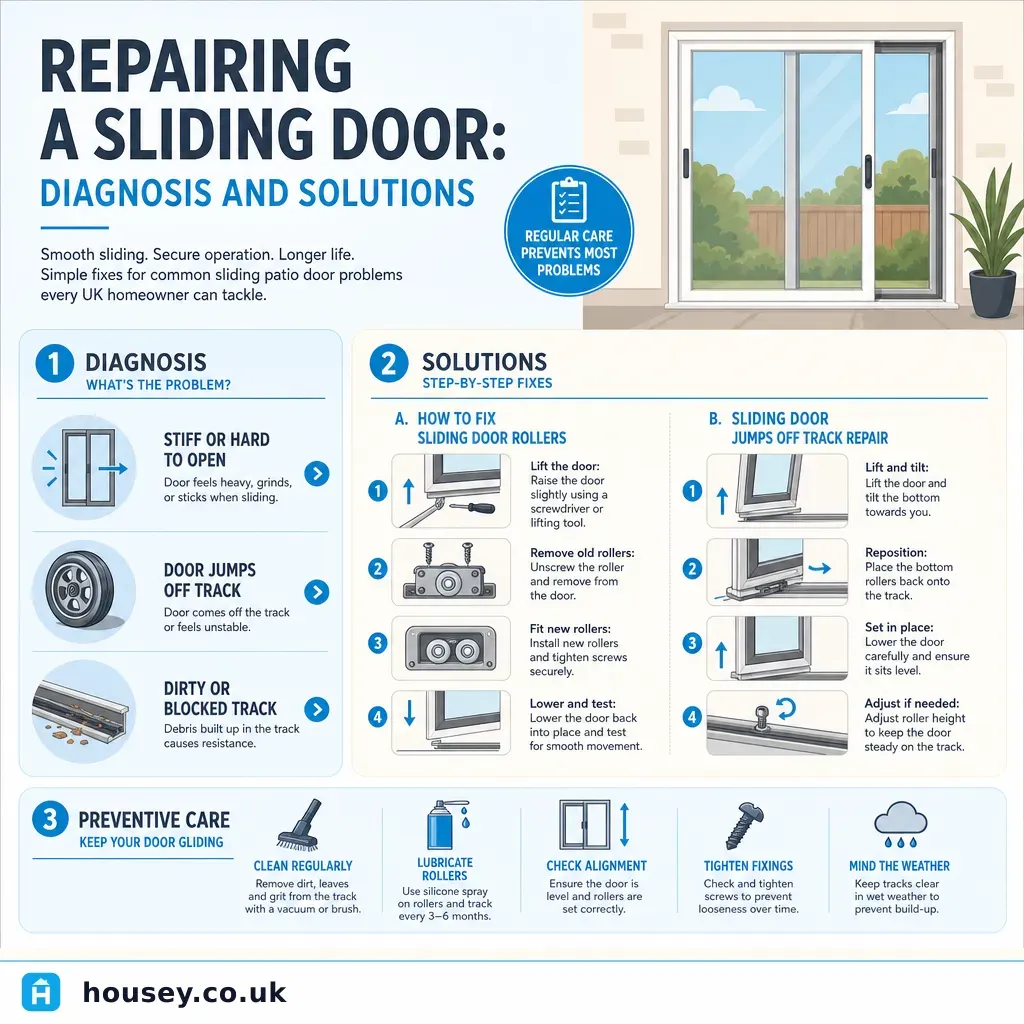
Repairing a Sliding Door: Diagnosis and Solutions
Most sliding door problems — stiffness, jumping off track, or draughts — are caused by dirty tracks, worn rollers, or misaligned guides.
 Improvement & Build
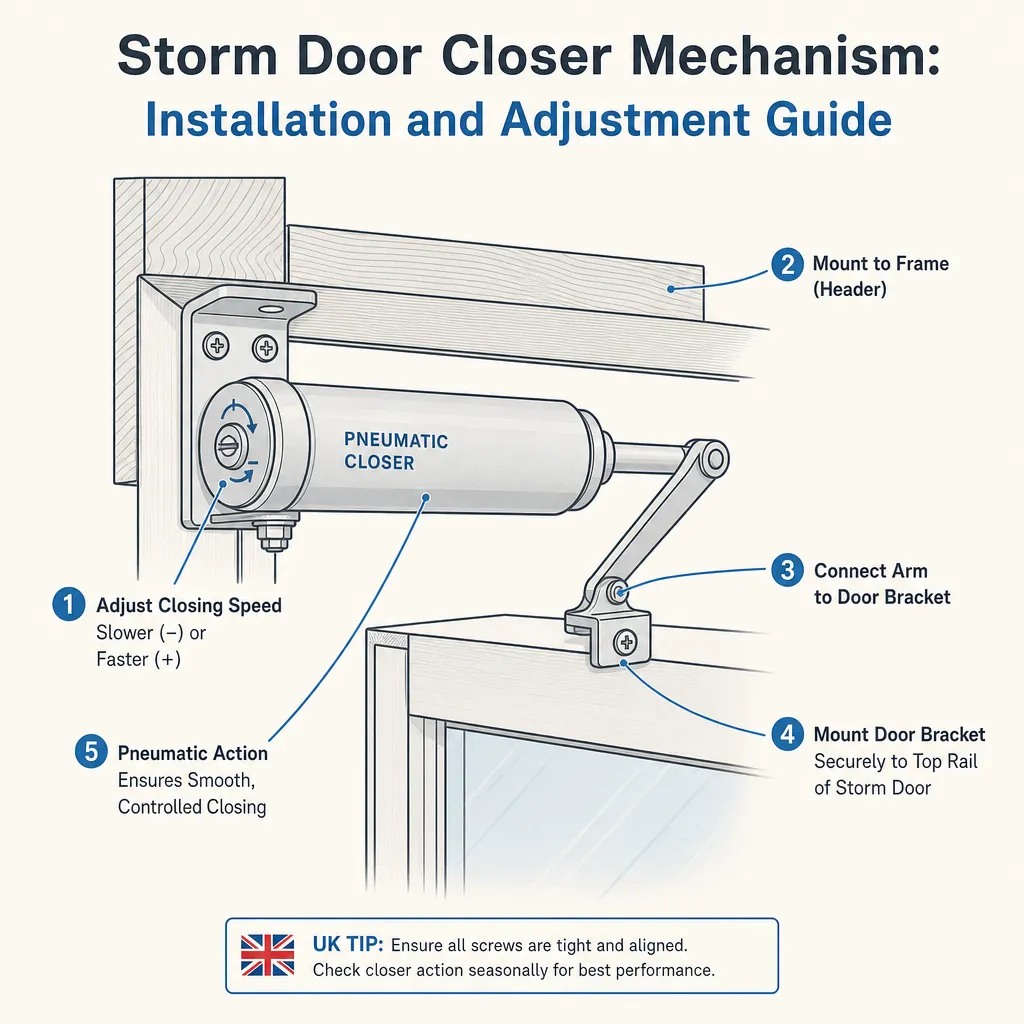
Storm Door Closer Mechanism: Installation and Adjustment Guide
Storm door closers are adjusted via a small screw at the end of the cylinder — clockwise slows the door, anticlockwise speeds it up.