Soffit replacement: repair options and installation costs explained
By Housey · Last reviewed 31st of May 2026
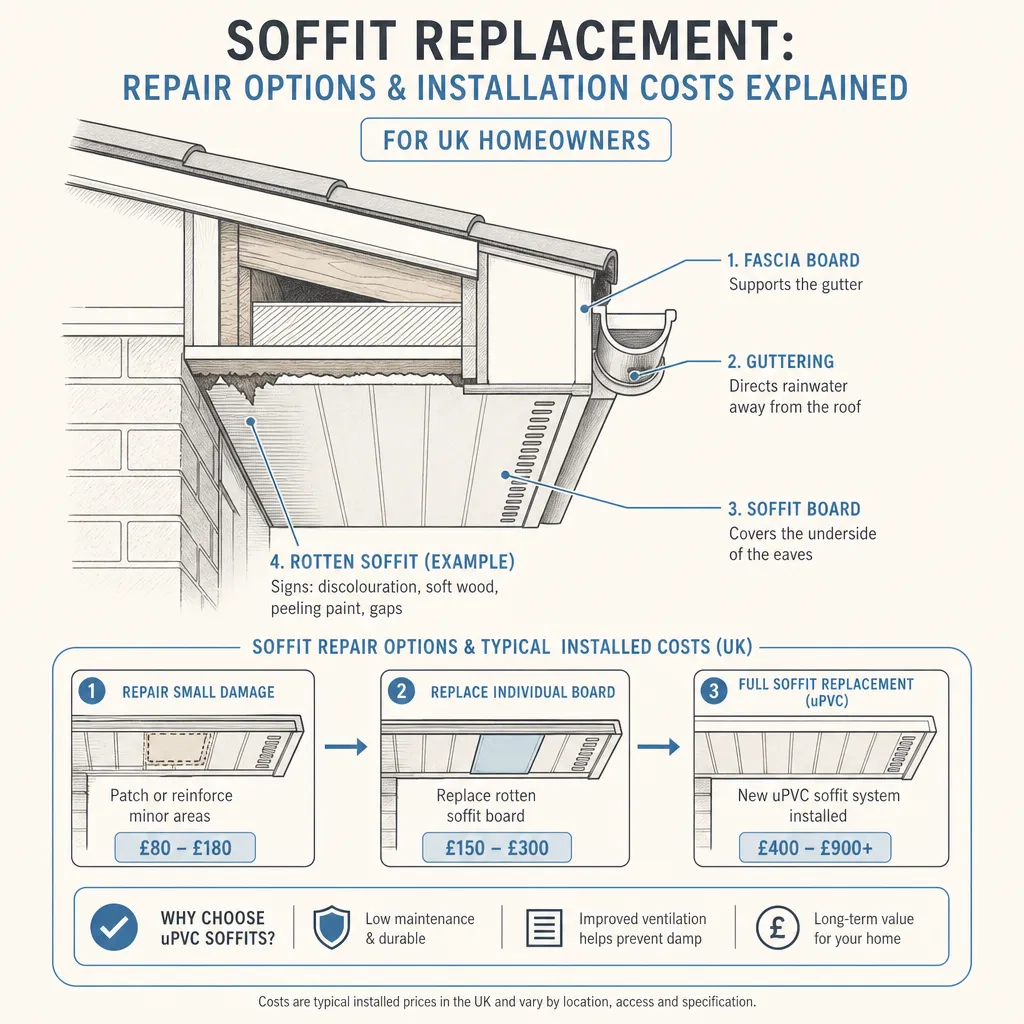
Soffit replacement: repair options and installation costs explained
Soffits — the horizontal boards that run beneath the roof overhang — are often overlooked until visible rot, staining, or pest activity forces the issue. They tend to come to a homeowner's attention during a roof inspection, when painting the exterior, or after a survey flags them as a concern. Failure to address deteriorating soffits can allow water to reach the roof structure and loft insulation, and provides a common entry point for birds and squirrels.
Key points
- uPVC soffits are the most common replacement material in the UK, offering 20–40 years of service life with very low maintenance compared to original timber boards.
- Soffit boards are typically 100–300mm in width; 9mm to 10mm thick uPVC is the standard specification for most residential properties.
- FENSA registration is not required for soffit replacement in England and Wales, but Building Regulations may apply if structural roof timbers are also being repaired or replaced.
- Soffit replacement is most cost-effective when combined with fascia and guttering work, as scaffold or access-platform hire represents a significant proportion of total project cost.
- Rotten or damaged soffits are a common finding in RICS Level 2 and Level 3 Home Surveys, particularly on properties built before 1980 with original timber soffits.
What are soffits and why do they matter?
The soffit sits between the outer face of the fascia board and the wall, covering the underside of the roof overhang (the eave). Together with fascias and bargeboards, soffits form part of the roofline system that protects the roof structure from weather.
Soffits serve three practical functions:
- Weather protection: They seal the eave against wind-driven rain, reducing the risk of water tracking back into the roof space.
- Ventilation: Vented soffits allow air circulation into the roof void, reducing condensation risk — a requirement under Building Regulations Approved Document F for many roof types.
- Pest exclusion: Intact soffits prevent birds, bats, squirrels, and wasps from nesting in the roof void.
Soffit materials: options compared
Material | Lifespan | Maintenance | Approx. cost per metre (boards only) | Best for | Not ideal for |
|---|---|---|---|---|---|
uPVC | 20–40 years | Very low | £3–£8 | Most residential properties | Listed buildings, conservation areas |
Timber (treated softwood) | 10–20 years | Annual painting | £4–£10 | Traditional look, conservation areas | Damp-prone eaves |
Composite (wood fibre) | 20–30 years | Low | £6–£12 | Mid-range look with low upkeep | Budget projects |
Aluminium | 30–50 years | Very low | £8–£15 | Contemporary builds | Cost-sensitive projects |
Material costs only, last reviewed 2026-05-31. Installation and scaffold costs are additional.
For most UK terraced, semi-detached, and detached homes built between 1945 and 1990, uPVC is the standard replacement choice. Listed buildings and properties in conservation areas may require matching timber materials — check with your local planning authority before specifying.
Soffit replacement costs
Indicative UK costs, last reviewed 2026-05-31. Costs vary by property size, access requirements, and extent of damage. Obtain at least two written quotes from qualified roofers.
Property type | Typical installed cost range |
|---|---|
Mid-terrace (one roofline elevation) | £300–£600 |
Semi-detached (two elevations) | £500–£1,200 |
Detached house (full perimeter) | £900–£2,500 |
Including fascia and guttering replacement | Add £500–£1,500 |
Scaffold or tower hire typically adds £200–£600 to a project. Because access equipment is a significant cost, most roofers recommend combining soffit replacement with fascia and guttering work to maximise the value of the setup.
Repair versus replacement: which is right?
Not all soffit problems require full replacement:
- Localised rot or cracks: If damage is confined to one or two boards with no spread to the fascia or rafters, individual boards can sometimes be replaced without full perimeter works.
- Peeling paint on timber soffits: If the board is structurally sound, repainting with a quality exterior woodcare product may extend life by five to ten years. However, if moisture has penetrated and the wood is soft to the touch, replacement is usually more cost-effective.
- Minor gaps at joints: A flexible exterior sealant can serve as a short-term measure, but replacement is needed if the underlying board is deteriorating.
- Full perimeter replacement: Where timber soffits are original and more than 20 years old, wholesale replacement with uPVC is usually more cost-effective than repeated patching, as scaffold costs apply to each revisit.
Red flags that indicate soffit replacement is needed
The following signs suggest urgent investigation or a professional assessment:
- Visible water staining on the soffit face or the wall below the eave — indicates water is finding a path into the roof void or behind the fascia
- Soft or spongy texture when pressing the board — indicates rot has compromised structural integrity
- Daylight visible from the loft through the eave — indicates gaps allowing pest access and heat loss
- Evidence of bird or pest activity around the eave — birds nesting in the roof void can cause significant damage to insulation and roof timbers
- Moss, lichen, or algae growth on the soffit face — indicates persistent moisture, often linked to blocked or overflowing gutters
- Blistering or flaking paint combined with discolouration of the wall below — indicates moisture tracking down the external wall
If any of these signs are present, arrange a roof survey before instructing replacement works — underlying drainage or structural problems should be identified first.
What to ask before accepting a roofer's quote
- What materials are specified, and are they BS EN or CE marked where applicable?
- Is scaffold or tower access included in the price, or costed separately?
- Will the fascia boards and guttering be inspected and replaced if damaged?
- What happens if rotten timber is found behind the soffit boards — is remedial work included in the quoted price or charged separately?
- Will the eave ventilation be maintained or improved as part of the works?
- Is VAT included in the quoted price?
- Do you carry public liability insurance, and can I see the certificate?
- Will you provide a written guarantee on materials and workmanship, and for how long?
When to get professional help
A competent roofer or roofline specialist should carry out soffit replacement — working at height requires appropriate equipment and training. Seek professional assessment if:
- Any structural timber (rafter feet, wall plates) appears to be affected by rot or insect damage
- You are unsure whether planning consent or listed building consent is required for your property
- The roof covering itself appears damaged alongside the soffit and fascia
Do not attempt to work at height beyond 2m without appropriate equipment and training.
How Housey can help
Our roofers can provide quotes for soffit and fascia replacement across the UK. If you are unsure of the extent of works required, begin with a roof survey to get a professional assessment before committing to any replacement.
Frequently asked questions
Do I need planning permission to replace soffits?
Replacing like-for-like soffits is generally permitted development in England and does not require planning permission. However, if your property is listed or in a conservation area, or if you are changing the material or colour significantly, check with your local planning authority first. Listed building consent may be required before any external works.
How long does soffit replacement take?
A standard semi-detached house with uPVC soffit and fascia replacement typically takes one to two days once scaffold or access equipment is in place. Larger properties or those with extensive rot requiring remedial timber work may take three to four days. Weather can affect scheduling, particularly in winter months.
Can uPVC soffits be painted?
uPVC soffits are manufactured in white as standard and can be repainted with specialist uPVC paint, though this adds ongoing maintenance requirements. Most homeowners leave white uPVC unpainted. Coloured uPVC boards in anthracite grey, black, and wood-effect finishes are available to special order from most roofline suppliers.
What is the difference between a soffit and a fascia?
The fascia is the vertical board fixed to the rafter feet at the edge of the roof, to which guttering is attached. The soffit is the horizontal board beneath it, closing off the underside of the eave and providing ventilation. They are usually replaced together because they share the same scaffold access and often deteriorate at a similar rate.
Sources and further reading
- Permitted development rights for householders: technical guidance — HM Government
- Approved Document F: Ventilation — HM Government
- Repairs and alterations to listed buildings — Historic England
Useful next reads
 Improvement & Build
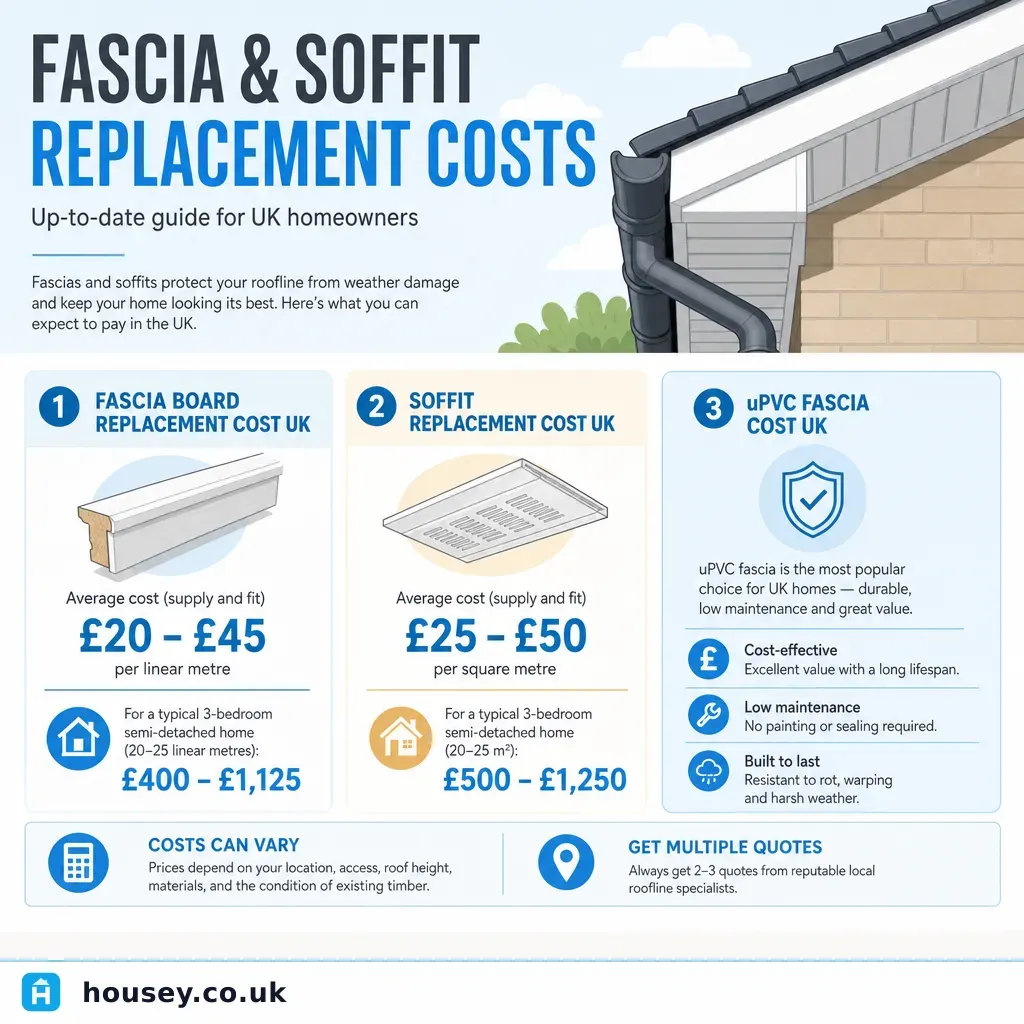
Fascia and Soffit Replacement Costs
Fascia and soffit replacement for a semi-detached house in the UK typically costs £1,800–£4,500 for uPVC boards and new guttering.
 Improvement & Build
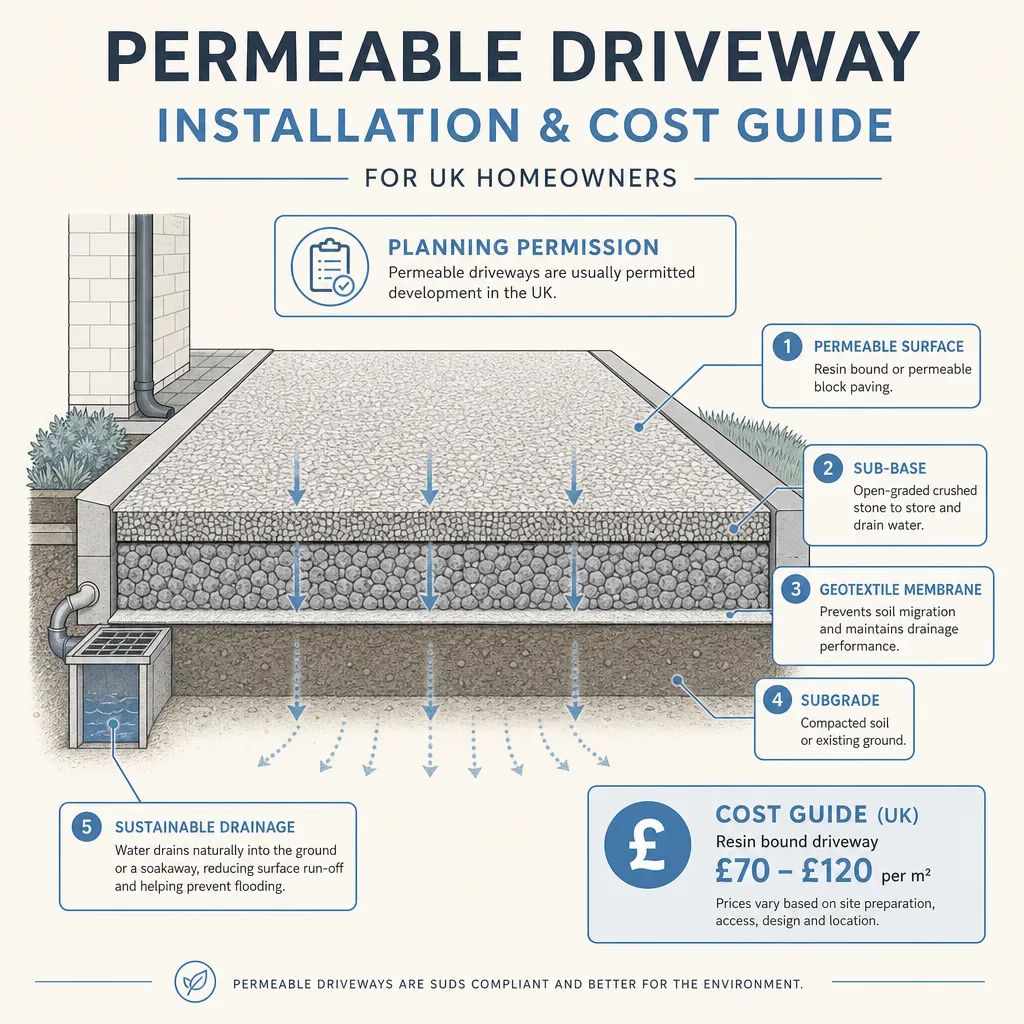
Permeable Driveway Installation and Cost Guide
A permeable driveway lets rainwater drain through or around the surface rather than running off into the road or drainage system.
 Improvement & Build
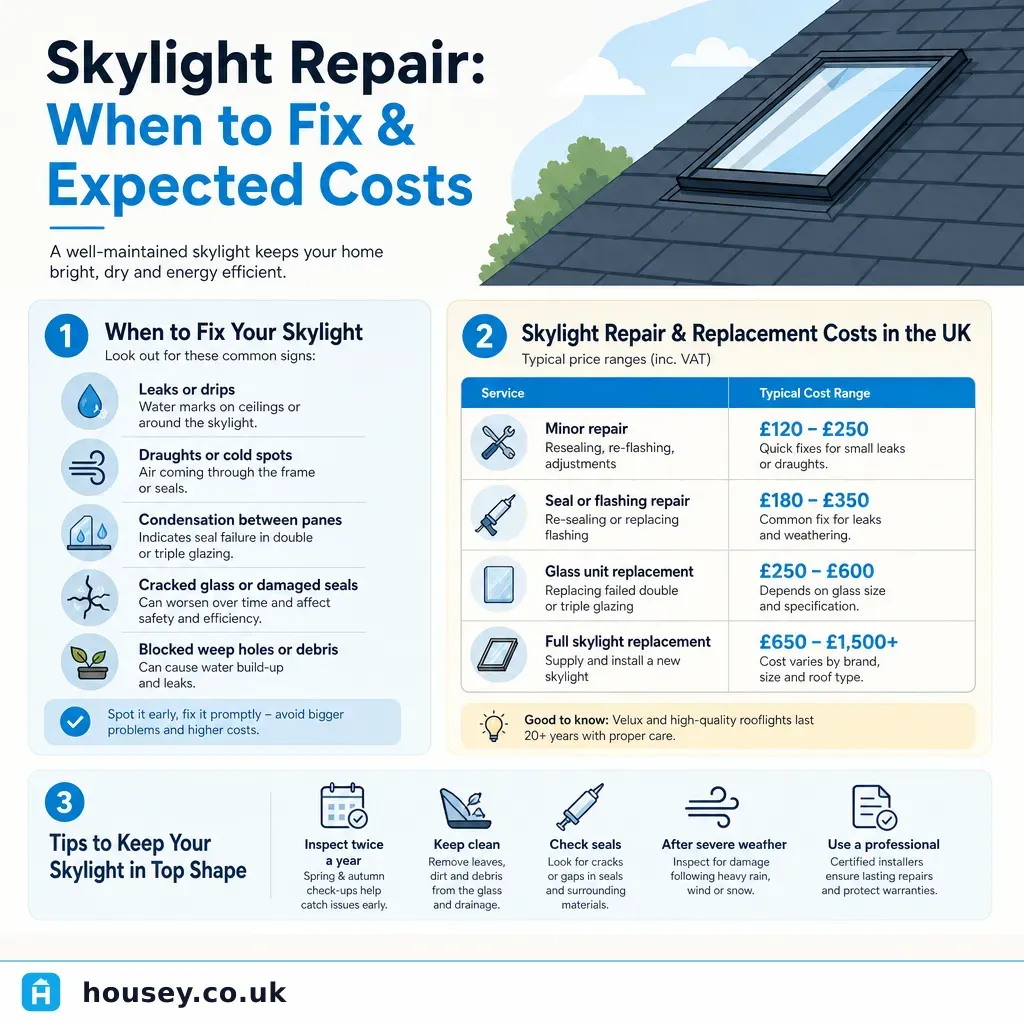
Skylight repair: when to fix and expected costs
Skylight repairs in the UK typically cost £150–£800 depending on the fault, while full replacement usually runs £500–£2,500.
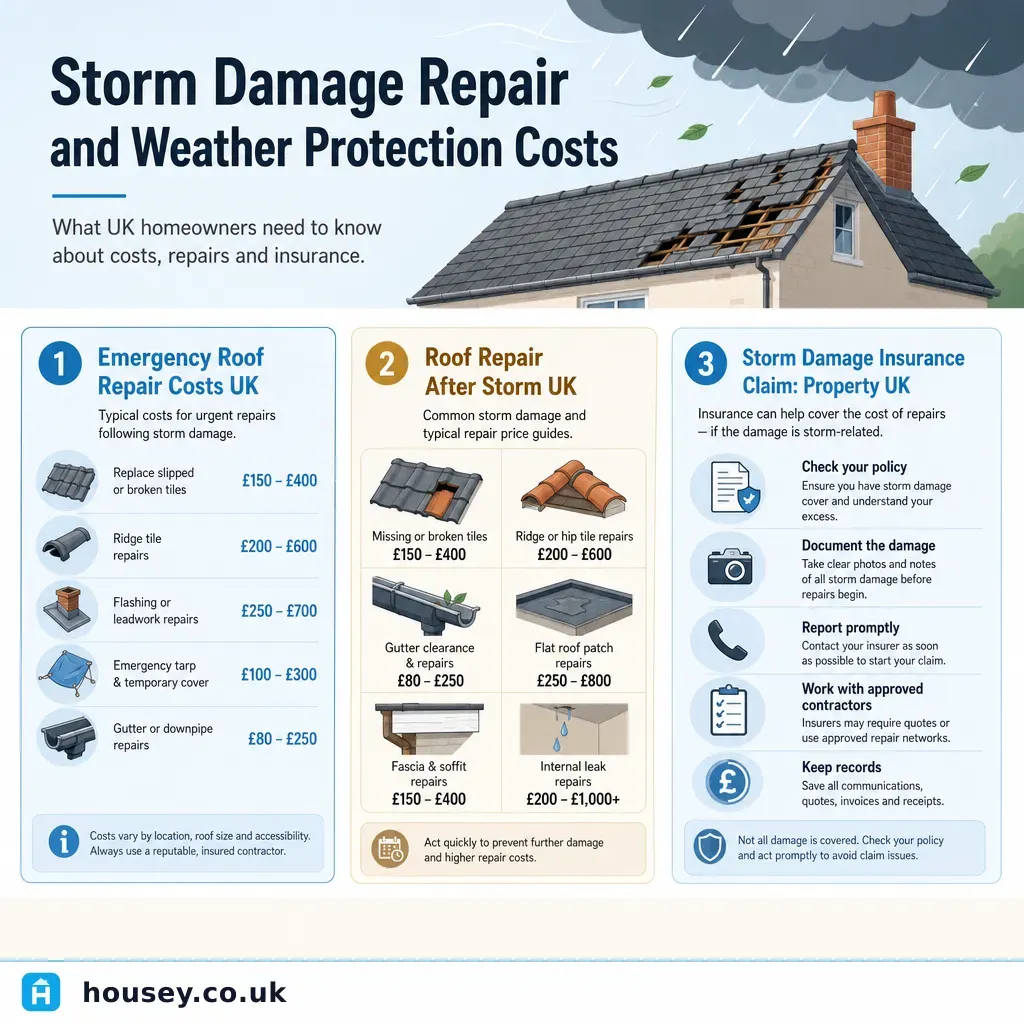 Improvement & Build
Storm Damage Repair and Weather Protection Costs
Storm damage repair costs in the UK range from around £200–£600 for emergency weatherproofing to £3,000–£15,000 or more for full roof reinstatement.
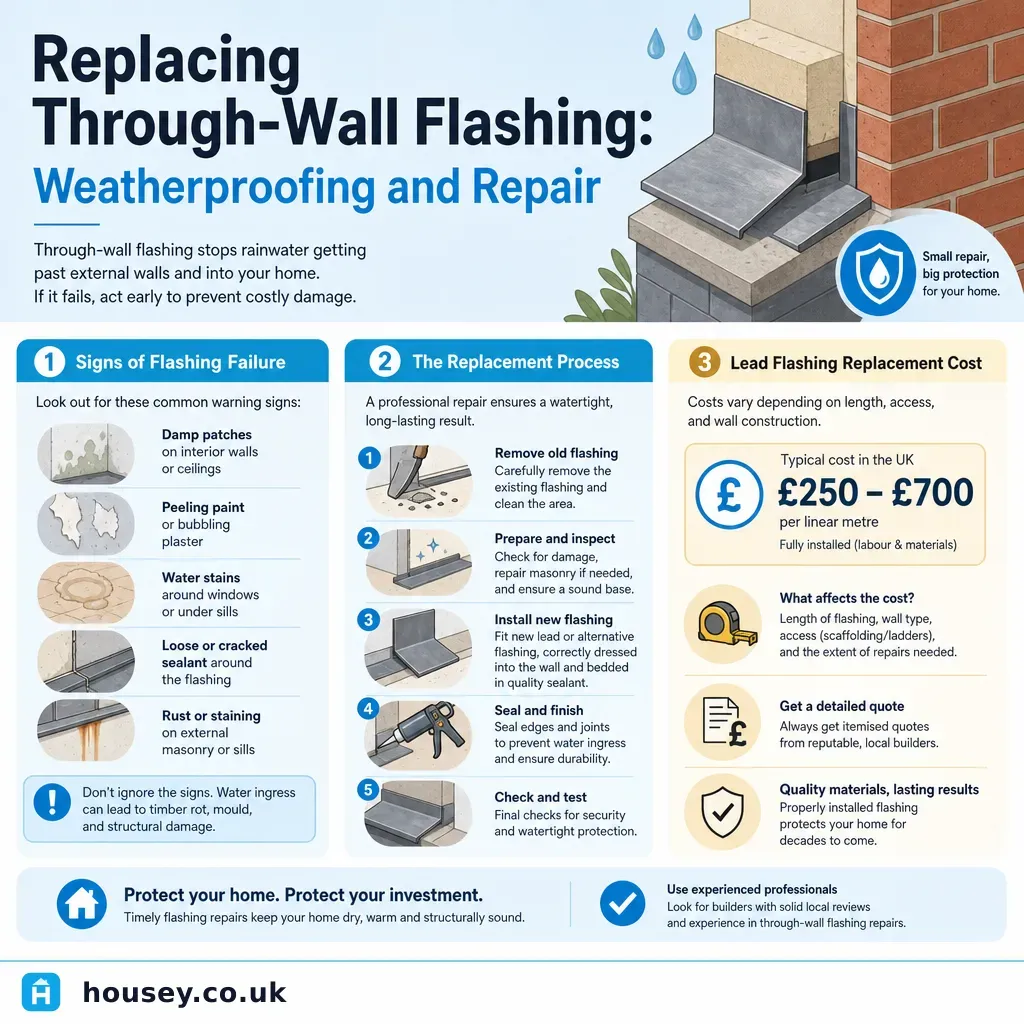 Improvement & Build
Replacing Through-Wall Flashing: Weatherproofing and Repair
Through-wall flashing is a damp-proof membrane embedded in masonry at roof-to-wall junctions, chimney bases, and above windows or doors.