How to Create a Healthy Home: Indoor Air Quality, Ventilation and Energy Efficiency
By Housey · Last reviewed 9th of May 2026
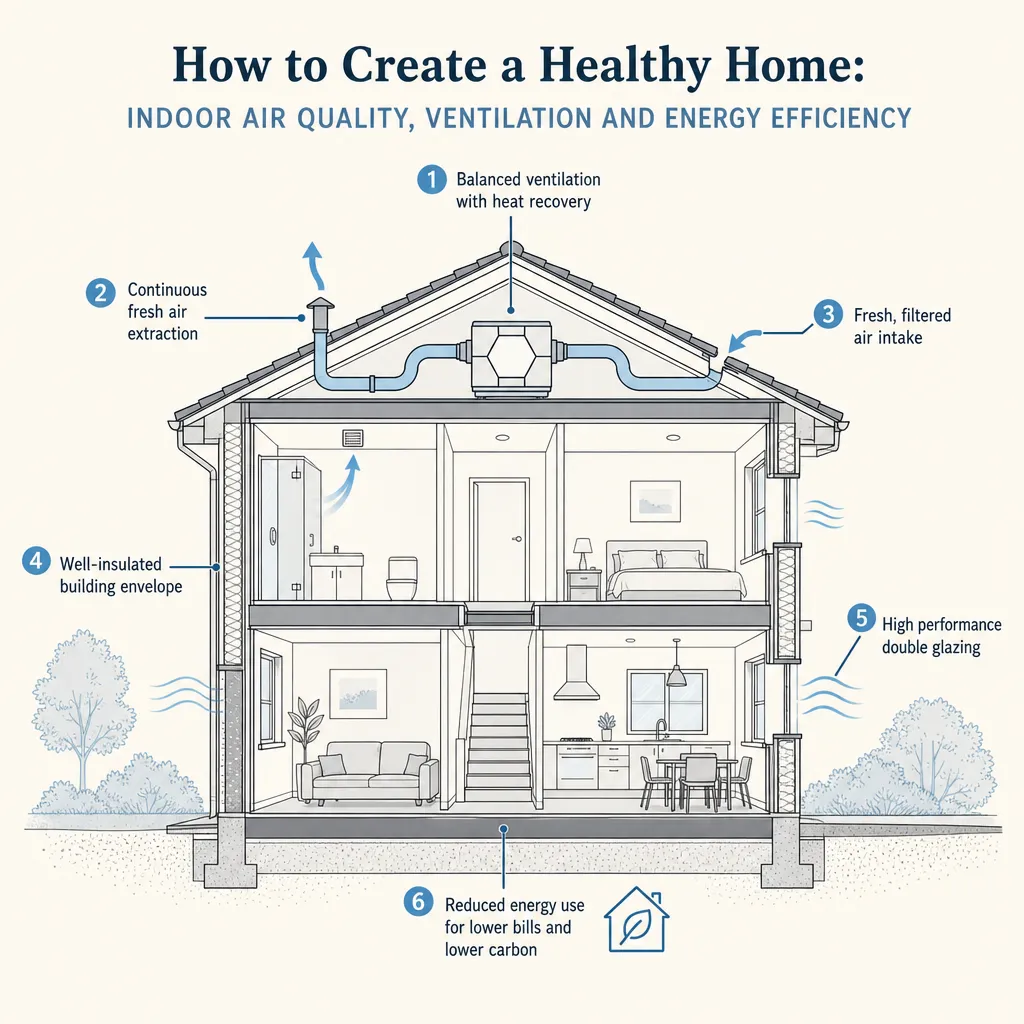
How to Create a Healthy Home: Indoor Air Quality, Ventilation and Energy Efficiency
For UK homeowners, the relationship between how a building performs and the health of its occupants has moved from specialist concern to everyday priority. Poor indoor air quality, inadequate ventilation, and moisture-related problems affect a significant proportion of UK housing stock — particularly older properties where well-intentioned energy upgrades have been applied without considering how the building breathes.
Key points
- Building Regulations Approved Document F sets minimum ventilation rates for new builds and notifiable refurbishments; most existing UK homes are not automatically required to comply but should meet equivalent standards in practice.
- PAS 2035, the UK standard for domestic retrofit, mandates a Retrofit Assessment before energy upgrades are installed, specifically to identify moisture and ventilation risks that insulation or draught-sealing could create.
- The UK Health Security Agency identifies indoor air quality as a significant public health concern; concentrations of some pollutants can be higher indoors than outdoors in sealed homes.
- Volatile organic compounds (VOCs) from paints, adhesives, and new flooring are a common source of indoor air pollution; Low-VOC products are now widely available from UK suppliers.
- A home with an EPC rating of D or below is more likely to suffer from cold bridging, condensation, and damp — all of which affect both occupant health and long-term structural integrity.
What makes a home unhealthy?
Indoor air quality problems in UK homes typically arise from three overlapping issues: inadequate ventilation, moisture and damp, and chemical pollutants. These often interact — blocking trickle vents to reduce draughts and then adding insulation without a corresponding ventilation strategy, for example, can create condensation problems that were not present before the works.
Common sources of indoor pollutants in UK homes include:
- Combustion gases from gas hobs, open fires, and wood-burning stoves
- Radon — a naturally occurring radioactive gas present at elevated levels in parts of Cornwall, Devon, Northamptonshire, and Derbyshire
- VOCs from new carpets, MDF furniture, paints, and cleaning products
- Particulate matter from older solid fuel appliances
- Carbon dioxide build-up in well-sealed rooms without controlled ventilation
- Mould spores from condensation damp, particularly on poorly insulated external walls and in unheated rooms
Ventilation: the most commonly overlooked factor
Ventilation is the mechanism by which a home exchanges stale, humid indoor air for fresh outdoor air. In older UK homes built before the 1990s, this happened naturally through gaps in the building fabric. As homes become more airtight — through double glazing, loft insulation, and draught-proofing — natural ventilation is reduced and must be replaced by a managed system.
Ventilation type | Best for | How it works | Key considerations |
|---|---|---|---|
Trickle vents | Most homes; low cost | Small openings in window frames allow a constant low airflow | Often blocked by occupants; should remain open at all times |
Intermittent extract fans | Kitchens and bathrooms | Fan extracts air from wet rooms when in use | Should be humidity-controlled; check Approved Document F extraction rates |
Mechanical Ventilation with Heat Recovery (MVHR) | New builds and deep retrofits | Extracts stale air and recovers heat before supplying fresh air | High upfront cost; requires commissioning by a qualified installer and regular filter cleaning |
Positive Input Ventilation (PIV) | Homes with condensation problems | Draws filtered air from the loft and distributes it through the home | Lower cost; may not suit flats or homes without a loft space |
Insulation and moisture: getting the balance right
Adding insulation is often the first energy upgrade homeowners consider, but applied without proper assessment it can create moisture problems in older properties. In solid-wall and pre-1919 homes, insulation that restricts moisture movement within the wall structure can cause interstitial condensation — moisture forming inside the wall, leading to timber decay and mould without being visible from inside.
What not to assume about insulation
- Do not assume that more insulation is always better. Vapour-permeable (breathable) materials are often more appropriate for solid-wall and older brick homes than impermeable synthetic foam products.
- Do not assume internal wall insulation has no effect on condensation risk. It changes the wall's thermal profile, which can shift the dew point into the wall structure where moisture may then condense.
- Do not assume a retrofitted home will ventilate itself. A well-insulated, draught-proofed home without controlled ventilation may have higher CO₂ and humidity levels than an older, draughty property.
- Do not assume insulation improvements are automatically captured in your EPC. Changes should be documented and lodged through a TrustMark-registered or MCS-accredited provider to count towards your property's official rating.
Energy performance and health: where they overlap
A high EPC rating and a healthy indoor environment are related but not identical. A home can score well on predicted energy use while still having poor air quality if ventilation has not been properly designed or chemical pollutants are present.
The principle at the heart of PAS 2035 is that retrofit measures should be planned as a coordinated package — a whole-house retrofit plan — rather than individual measures applied without considering how they interact. A TrustMark-registered Retrofit Coordinator oversees this process for funded or PAS-compliant upgrades.
For homeowners not undertaking a formal PAS 2035 retrofit, the practical equivalent is to assess ventilation, moisture management, and insulation together before making changes to the building fabric, rather than addressing each in isolation.
Red flags: signs your home may have indoor air quality problems
- Persistent condensation on windows each morning in rooms beyond kitchens and bathrooms
- Black mould on external walls, around window frames, or in room corners that returns after cleaning
- A musty smell that persists even after the room has been aired
- Occupants experiencing unexplained respiratory symptoms, headaches, or fatigue that improve when away from the property
- A gas appliance that has not been serviced by a Gas Safe registered engineer in the past 12 months
- A wood-burning stove or open fireplace in a room without a working carbon monoxide alarm
- Trickle vents that are absent, blocked, or taped shut
Healthy home checklist: practical steps for UK homeowners
When to get professional help
Some healthy-home interventions can make problems worse if applied without a proper diagnosis. Seek professional assessment if:
- Mould on external walls returns after surface treatment — this usually indicates an underlying moisture, insulation, or ventilation problem
- You plan to insulate a solid-wall, timber-framed, or other non-standard construction property
- You are installing a log-burning stove or biomass boiler (a competent person is required under Building Regulations Approved Document J)
- A gas appliance or open flue has not been recently inspected by a Gas Safe registered engineer
- You suspect elevated radon levels — a specialist radon measurement and, if confirmed, professional remediation may be required
How Housey can help
Housey connects you with qualified professionals across energy and retrofit services. You can compare quotes from energy-efficiency consultants who can assess your home's overall performance, specialists offering ventilation and condensation assessments to diagnose air quality issues, and surveyors providing insulation assessments to identify what is appropriate for your construction type and condition.
Frequently asked questions
Is mould in a rented home a legal issue for landlords?
In rented properties, the Homes (Fitness for Human Habitation) Act 2018 requires landlords to ensure homes are free from serious damp and mould. Where mould results from a defect in the building fabric — failed pointing, missing insulation, or inadequate ventilation — a landlord may be required to remedy it. Owner-occupiers should treat persistent mould as a symptom of an underlying moisture problem and arrange a professional diagnosis before applying surface treatments.
What is the difference between condensation damp and penetrating damp?
Condensation damp occurs when warm, moist indoor air meets cold surfaces and water vapour condenses — typically on external walls and in room corners. It is related to ventilation, insulation, and heating patterns. Penetrating damp enters from outside through defects such as failed pointing, cracked render, or blocked guttering. The causes and remedies are different; a damp and timber survey can diagnose the type accurately before any works are carried out.
Do I need MVHR in my existing home?
Mechanical Ventilation with Heat Recovery (MVHR) is most suited to highly airtight new builds and deep retrofits, typically below 3 m³/h/m² at 50 Pa air permeability. For most existing UK homes, improving trickle vents, fitting humidity-controlled extract fans in wet rooms, and ensuring continuous background ventilation is more practical and cost-effective. A ventilation assessment will identify the most appropriate strategy for your specific property and construction type.
How can I improve indoor air quality on a limited budget?
The most cost-effective steps are: keeping trickle vents open and unblocked; fitting a humidity-controlled extract fan in the kitchen and bathroom; ventilating rooms after cooking and showering; having gas appliances serviced annually by a Gas Safe registered engineer; using Low-VOC products when decorating; and checking carbon monoxide alarms are working. A ventilation assessment can identify the highest-impact improvements specific to your home.
Sources and further reading
- Building Regulations Approved Document F: Ventilation — GOV.UK
- PAS 2035: Retrofitting dwellings for improved energy efficiency — BSI / TrustMark
- UK radon maps and postcode checker — UK Radon Association
- Indoor air quality: guidance and research — UK Health Security Agency
- Home insulation: types and costs — Energy Saving Trust
- Gas Safe Register: find a registered engineer — Gas Safe Register
Useful next reads
 Energy & Retrofit
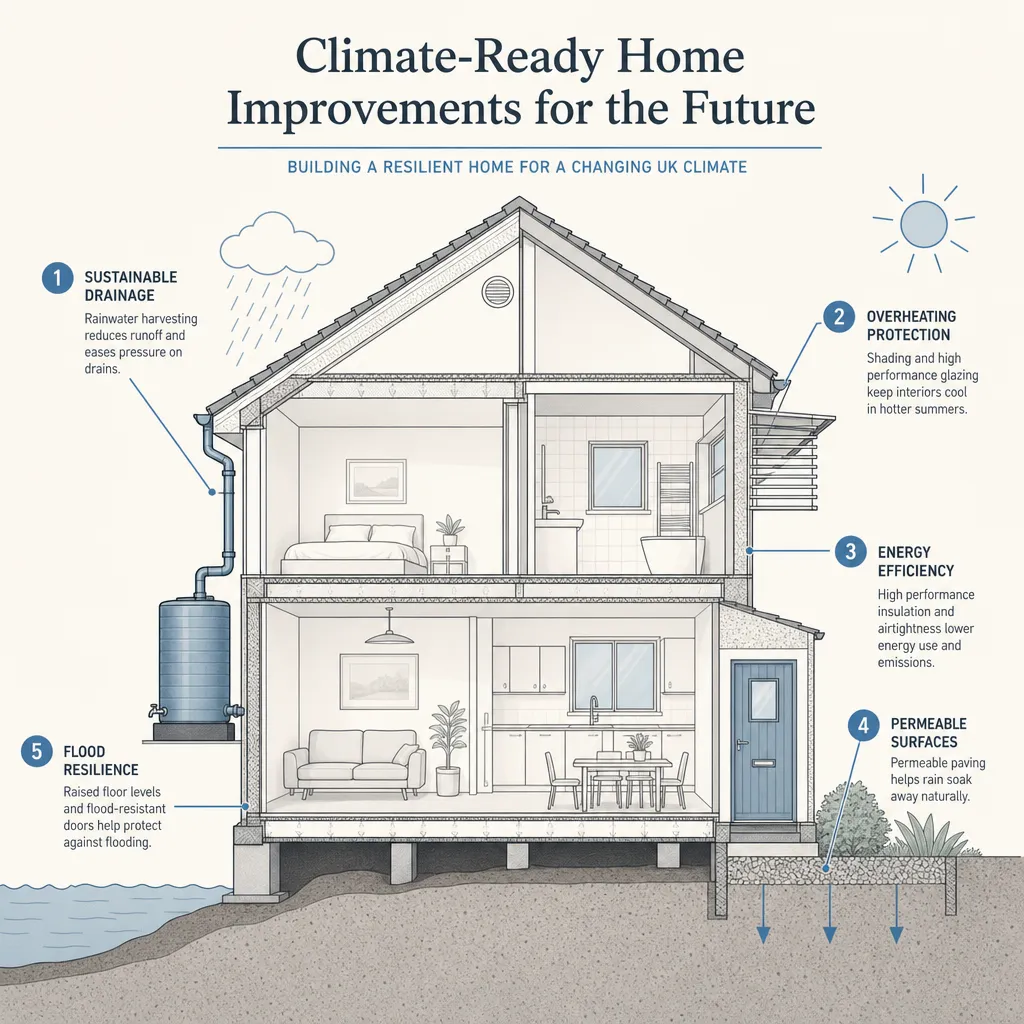
Climate-Ready Home Improvements for the Future
Climate-ready home improvements tackle four main risks for UK properties: overheating, increased rainfall and flooding, storm damage, and energy cost volatility.
 Energy & Retrofit
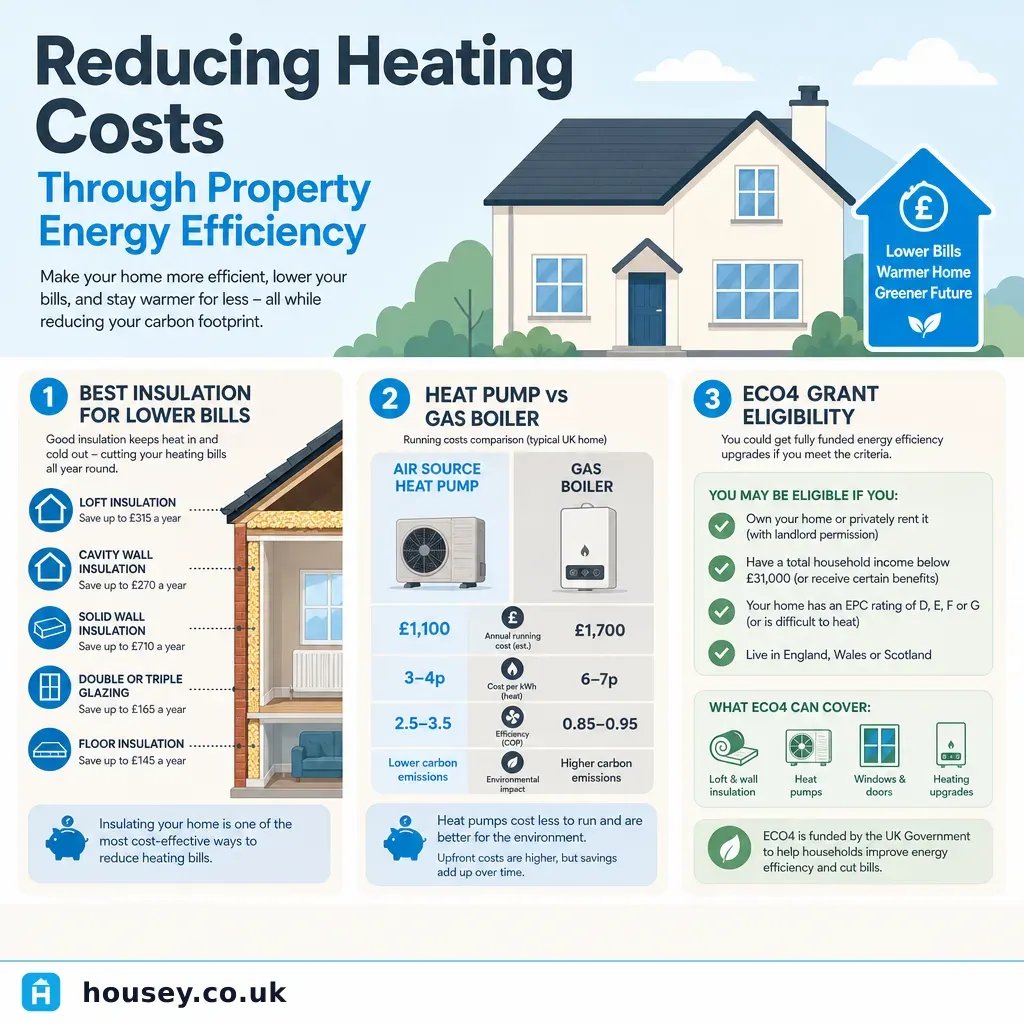
Reducing Heating Costs Through Property Energy Efficiency
Reducing heating costs starts with identifying where heat is lost — typically walls (30–35%), roof (20–25%), and windows.
 Energy & Retrofit
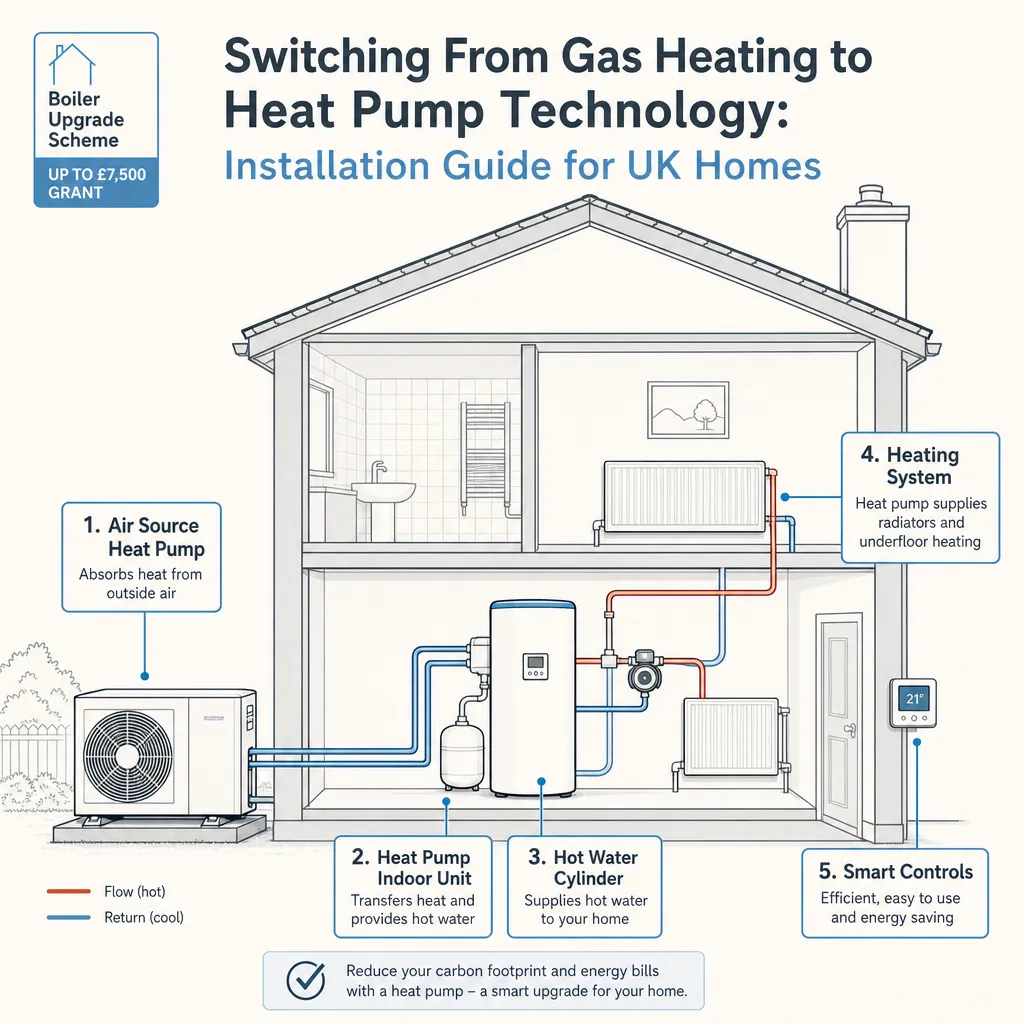
Switching From Gas Heating to Heat Pump Technology: Installation Guide
Switching from gas to a heat pump requires a heat loss calculation, correctly sized equipment, and often radiator upgrades before installation.
 Energy & Retrofit
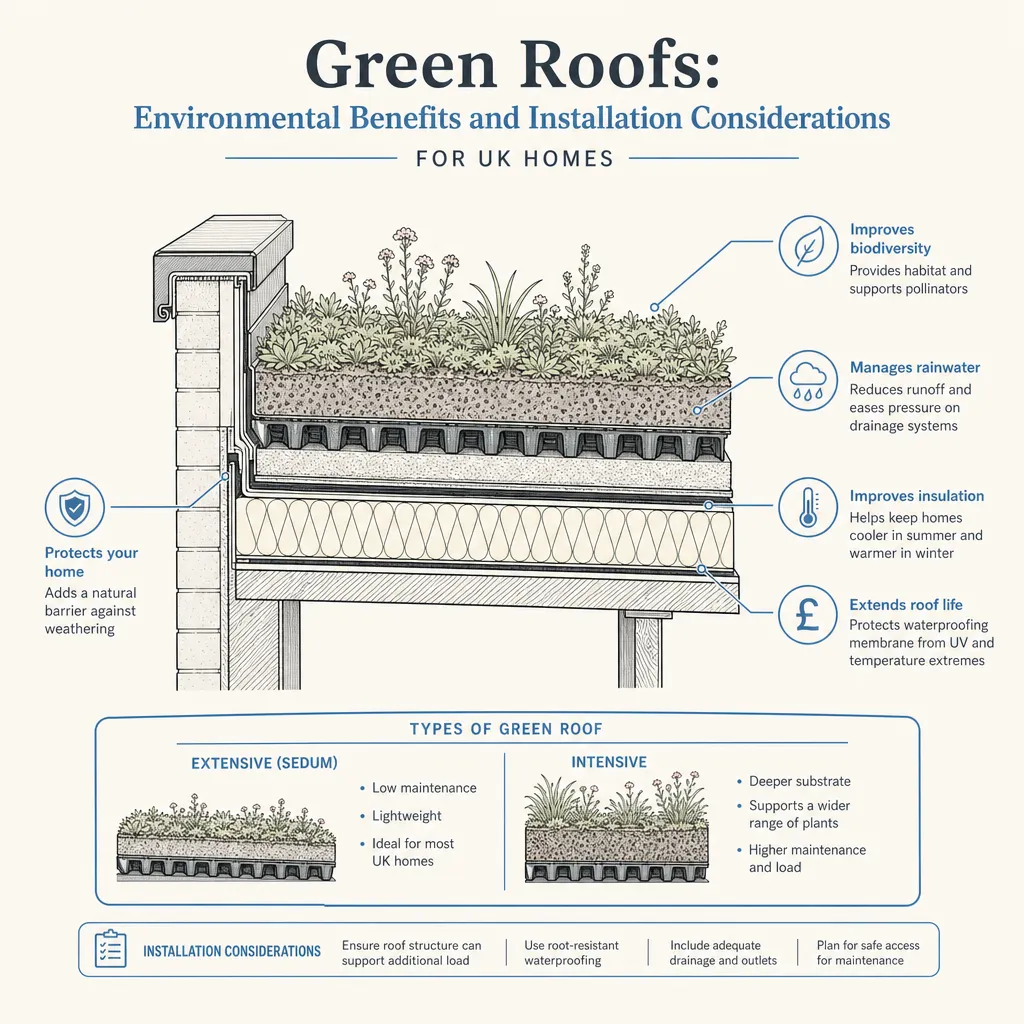
Green Roofs: Environmental Benefits and Installation Considerations
A green roof supports vegetation on a waterproof membrane above your building.
 Energy & Retrofit
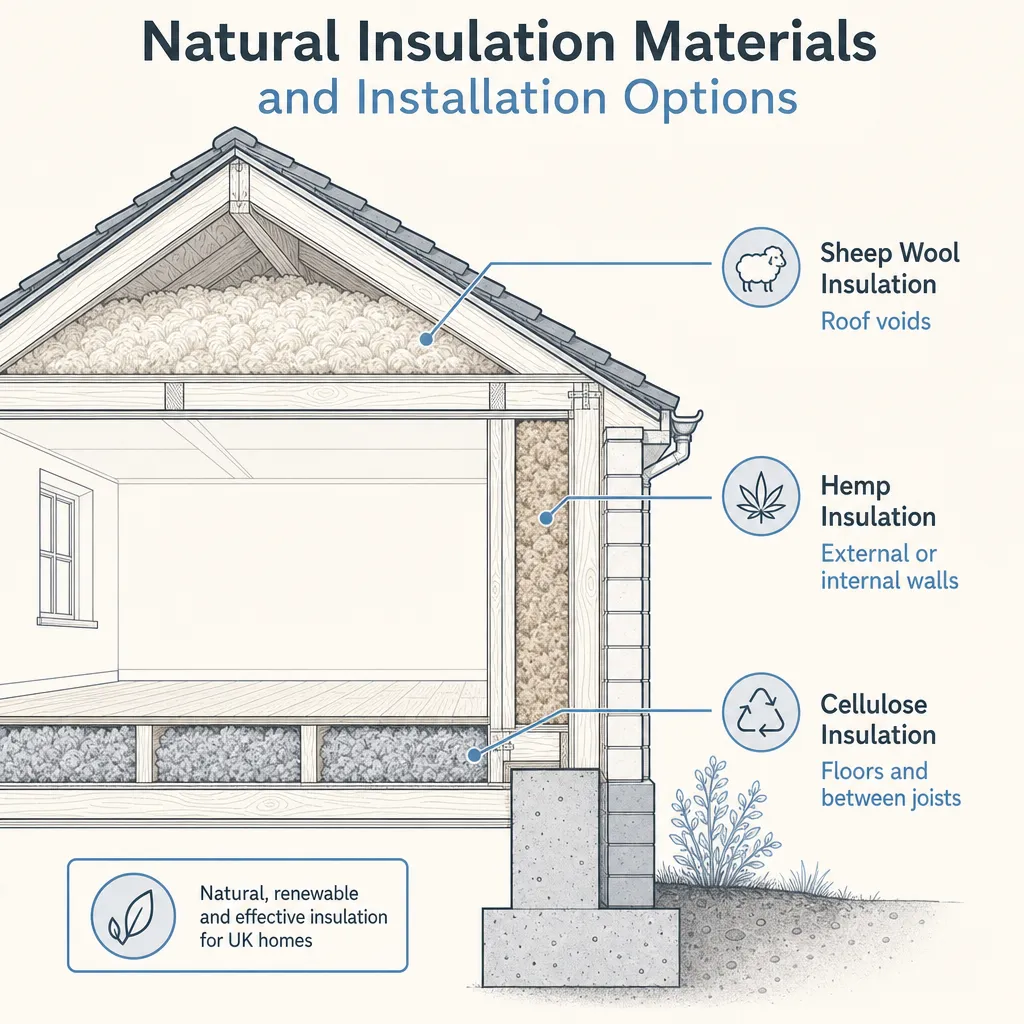
Natural Insulation Materials and Installation Options
Natural insulation materials such as sheep wool, hemp, cellulose, wood fibre, and cork can match mineral wool for thermal performance and offer additional benefits including moisture buffering and lower embodied carbon.