Heat pump heating and cooling systems explained for homeowners
By Housey · Last reviewed 1st of June 2026
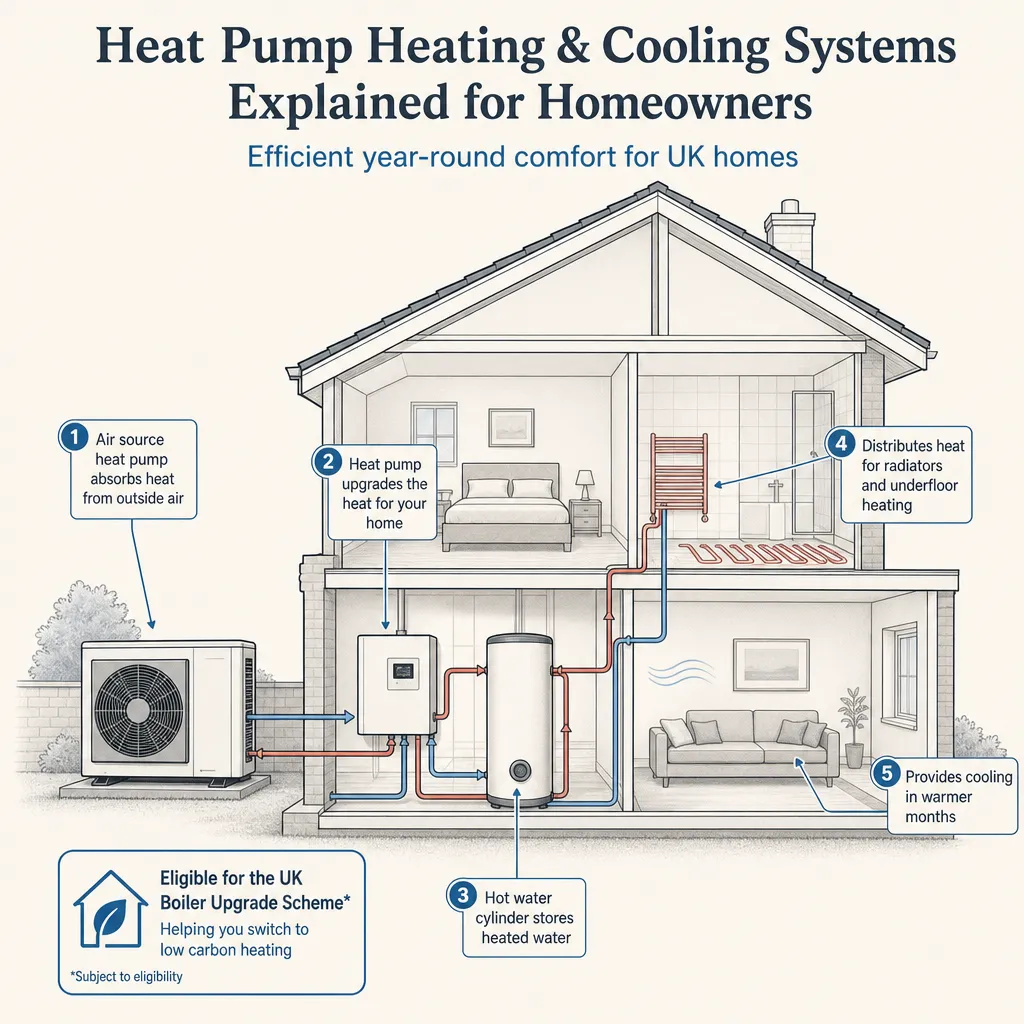
Heat pump heating and cooling systems explained for homeowners
Heat pumps have become one of the most discussed heating technologies for UK homeowners, but understanding how they actually work — and whether one suits your property — can feel complicated. The question typically arises during boiler replacement, an EPC-led retrofit assessment, or when considering whether to apply for available grant funding. Getting the system type, sizing, and installation right has a direct bearing on running costs, comfort, and long-term carbon reduction.
Key points
- Air source heat pumps (ASHPs) extract heat from outside air and are the most common type installed in UK homes; ground source heat pumps (GSHPs) extract heat from the ground via buried pipes and typically require significantly more land and upfront cost.
- The Boiler Upgrade Scheme (BUS) currently offers a £7,500 grant towards an ASHP or GSHP in England and Wales — check GOV.UK for current figures as scheme rules and amounts can change.
- Heat pumps work most efficiently at lower flow temperatures (35–45°C), meaning homes with older, undersized radiators or poor insulation may need upgrades before installation.
- A correctly sized heat pump should achieve a Coefficient of Performance (COP) of 2.5 or above — delivering 2.5 units of heat for every 1 unit of electricity consumed.
- Under MCS (Microgeneration Certification Scheme) requirements, installations must be carried out by an MCS-certified contractor for the Boiler Upgrade Scheme grant to apply.
How do heat pumps work?
A heat pump does not generate heat by burning fuel — it moves heat from one place to another using a refrigerant cycle, in the same way a refrigerator transfers heat from inside the cabinet to the room. In heating mode, the pump extracts low-grade heat from an external source (air or ground), compresses it to a higher temperature, and transfers it to your home's heating circuit.
Because heat is moved rather than generated, a heat pump can deliver more energy as heat than it consumes as electricity. This ratio is the Coefficient of Performance (COP): a COP of 3.0 means 3 kWh of heat delivered for every 1 kWh of electricity consumed.
Heat pumps connect to a wet central heating system — radiators, underfloor heating (UFH), or a combination — and heat domestic hot water via a dedicated cylinder. They do not replace a combi boiler on a like-for-like basis; the system around the heat pump usually needs to be designed or upgraded as part of the installation.
Air source vs ground source: which type suits your home?
Feature | Air source heat pump (ASHP) | Ground source heat pump (GSHP) |
|---|---|---|
Heat source | Outdoor air | Ground-loop trenches or borehole |
Space needed | External unit with good airflow clearance | Large garden (horizontal loop) or borehole drilling |
Typical installed cost | £10,000–£18,000 before grants | £20,000–£45,000+ before grants |
Seasonal efficiency | Slightly lower in very cold weather | More stable year-round |
Planning permission | Usually permitted development | Usually permitted development for loops; boreholes may need assessment |
Best for | Most detached, semi-detached, or terraced homes | Rural properties with large plots or suitable ground conditions |
BUS grant (England & Wales) | Yes — £7,500 | Yes — £7,500 |
Noise | Fan unit produces some noise; site carefully | Very quiet once installed |
Indicative UK costs, last reviewed 2026-06-01. Quotes vary significantly by property size, system complexity, and installer.
Hybrid heat pump systems
A hybrid heat pump pairs an ASHP with an existing gas or oil boiler. The heat pump handles the majority of space heating; the boiler provides top-up heat on the coldest days. This can be a practical interim solution for homes where full radiator replacement or insulation upgrades are not yet feasible. Grant eligibility for hybrid systems differs from full replacements — verify current terms on GOV.UK before committing.
Can a heat pump cool my home?
Some heat pumps — particularly reversible ASHPs — can run in reverse to provide active cooling in summer. This is more common in systems that include fan-coil units or dedicated air-handling units rather than standard radiators, which cannot carry cooling effectively.
Underfloor heating pipework can carry cooled water for passive radiant cooling, but this typically reduces floor-surface temperatures modestly rather than providing air-conditioning levels of cooling. If summer cooling is a priority for your household, discuss it explicitly with your system designer before installation — retrofitting cooling capability afterwards may not be straightforward or cost-effective.
Is my home suitable for a heat pump?
Use this checklist before commissioning a heat pump survey:
- Insulation: Loft insulation of at least 270 mm and cavity or solid-wall insulation in place (or planned). Poor insulation forces the pump to work harder and reduces efficiency significantly.
- Radiator sizing: Existing radiators may be undersized for lower flow temperatures. A heat loss calculation will identify which rooms need larger or additional radiators.
- Hot water cylinder: A heat pump requires a large unvented cylinder — typically 200–300 litres. Homes currently on a combi boiler will need one added.
- Outdoor space: ASHPs need an accessible external location with good airflow and at least 1 metre clearance from property boundaries (check permitted development rules for your specific property).
- Electricity supply: Heat pumps require a dedicated circuit. Properties with older wiring may need an electrician's assessment first.
- Property type: Flats and terraced homes can accommodate ASHPs, but shared walls, planning constraints (conservation areas, listed buildings), and lease terms may affect installation options.
Decision guide: which path should you take?
- Choose an ASHP if you have outdoor space for an external unit, reasonable insulation, and want the most cost-effective route to a heat pump.
- Choose a GSHP if you have a large plot, high heating demand, and the drilling or trenching cost is justified by long-term efficiency gains.
- Consider a hybrid system if your radiators are undersized and full replacement is not immediately practical.
- Improve insulation first if your EPC rating is E or below — a heat pump in a poorly insulated home will underperform and run expensive.
- Ask an MCS-certified designer if you are unsure — a proper heat loss calculation to BS EN 12831 is required before any reputable installer will quote.
How much does a heat pump cost to install?
Installed costs in the UK vary considerably by property size, system complexity, and any required upgrades to radiators, pipework, or hot water cylinders.
Property type | Indicative ASHP cost (before grants) | Indicative GSHP cost (before grants) |
|---|---|---|
2-bed terraced | £10,000–£14,000 | Rarely cost-effective at this scale |
3-bed semi-detached | £12,000–£18,000 | £22,000–£35,000 |
4-bed detached | £15,000–£22,000 | £28,000–£45,000+ |
Indicative UK costs, last reviewed 2026-06-01. Always obtain at least three quotes from MCS-certified installers.
The Boiler Upgrade Scheme grant of £7,500 (as of June 2026) reduces these figures for eligible properties in England and Wales. Scotland has separate funding available through Home Energy Scotland. Running costs depend heavily on electricity tariffs — heat pumps are most economical on a dedicated heat pump tariff or Economy 7. Check Ofgem's energy tariff guidance for current information.
Important limitations
This article provides general information only. Heat pump suitability, sizing, and performance depend on specific property conditions including construction type, insulation levels, heating demand, ground conditions, and local planning constraints. A professional heat loss calculation under BS EN 12831 is required before any heat pump is specified. Costs quoted are indicative and vary significantly by location, installer, and required system upgrades. Grant eligibility is subject to change — always verify current terms on GOV.UK.
What to ask a qualified professional
Before instructing an MCS-certified heat pump installer or assessor, ask:
- Can you provide a full heat loss calculation for my property under BS EN 12831?
- Which rooms will need larger radiators, and what is the cost of those upgrades?
- Will I need a new hot water cylinder, and what size is appropriate?
- Does my property need insulation improvements before the heat pump will perform efficiently?
- Is this system sized to achieve a Seasonal Coefficient of Performance (SCOP) of at least 2.5?
- Will this installation qualify for the Boiler Upgrade Scheme grant, and will you apply on my behalf?
- Are you MCS certified, and can I verify this on the MCS installer database?
- What planned maintenance does the system require, and what warranty do you offer?
When to get professional help
A heat pump is not a drop-in replacement for a gas boiler, and incorrect sizing can result in poor performance and higher running costs. You should commission a professional heat pump survey before purchasing any equipment. Seek expert help if:
- You have received a quote without a site visit or heat loss calculation — this is a significant red flag.
- Your home has solid walls, unusual construction, or a listed building designation that complicates installation.
- You are applying for grant funding and need MCS certification confirmed before works begin.
- You are unsure whether your current radiators, pipework, or hot water cylinder are compatible with lower flow temperatures.
- You want cooling capability and need to understand which system configurations can support this.
How Housey can help
Housey connects you with local, qualified professionals who can carry out a thorough heat pump survey for your property — assessing insulation levels, heating demand, outdoor space, and system options before you commit to any purchase. An independent survey is the most reliable way to ensure you choose the right heat pump type and size for your home and budget.
Frequently asked questions
Do heat pumps work in old UK homes?
Heat pumps can work in older homes, but they often require insulation improvements and radiator upgrades first. A pre-installation heat loss calculation will identify what changes are needed. Victorian and Edwardian terraces are not automatically unsuitable — many have been successfully retrofitted — but the specification work is more involved than for a modern build.
Will a heat pump heat my home as quickly as a gas boiler?
Heat pumps are designed to run at lower flow temperatures over longer periods, rather than providing sharp temperature spikes. Most households adopt a steady thermostat setting rather than turning heating on and off frequently. This feels different at first but typically maintains comfortable temperatures throughout the day.
Does a heat pump qualify for the Boiler Upgrade Scheme?
Yes, provided the property is in England or Wales, has a valid EPC with no outstanding recommendations for loft or cavity wall insulation, and the installation is carried out by an MCS-certified contractor. Check current scheme rules on GOV.UK, as eligibility criteria and grant amounts can be updated by government.
How noisy is an air source heat pump?
Modern ASHPs typically operate at 40–60 dB at one metre — broadly comparable to a quiet conversation or a refrigerator. Permitted development rules in England require the unit to be at least one metre from a property boundary. Careful siting and orientation can reduce noise impact on neighbours.
How long does a heat pump last?
A well-maintained heat pump typically has a lifespan of 15–25 years. Manufacturers usually provide warranties of 5–10 years, with extended cover available. Annual servicing is recommended to maintain efficiency, performance, and warranty validity.
Sources and further reading
- Boiler Upgrade Scheme guidance — GOV.UK
- MCS certified installer database — Microgeneration Certification Scheme
- Heat pumps explained — Energy Saving Trust
- Home Energy Scotland heat pump support — Home Energy Scotland
- Approved Document L: Conservation of fuel and power — GOV.UK
- Ofgem energy tariff guidance — Ofgem
Useful next reads
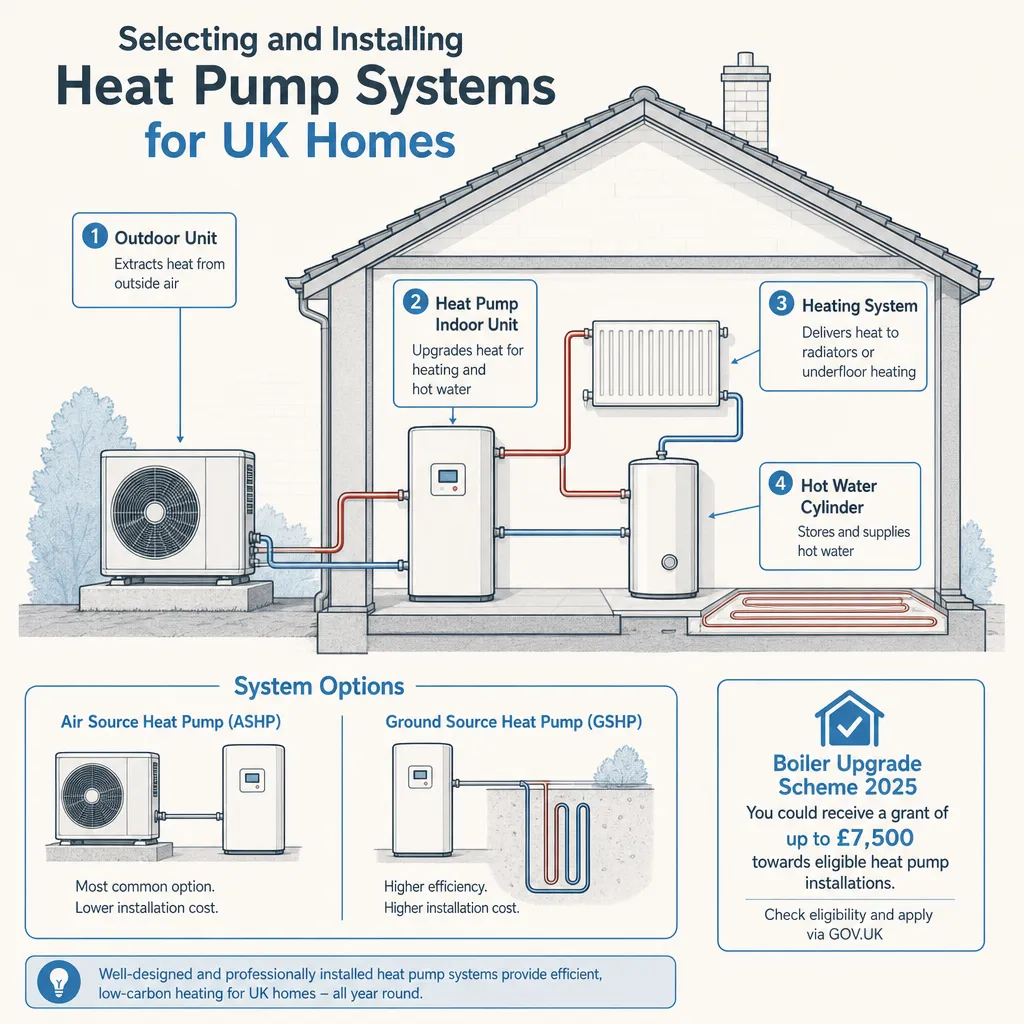 Energy & Retrofit
Selecting and Installing Heat Pump Systems for UK Homes
Selecting a heat pump for a UK home requires a site-specific heat loss calculation, an assessment of existing heat emitters, and a check on fabric insulation before any system is chosen.
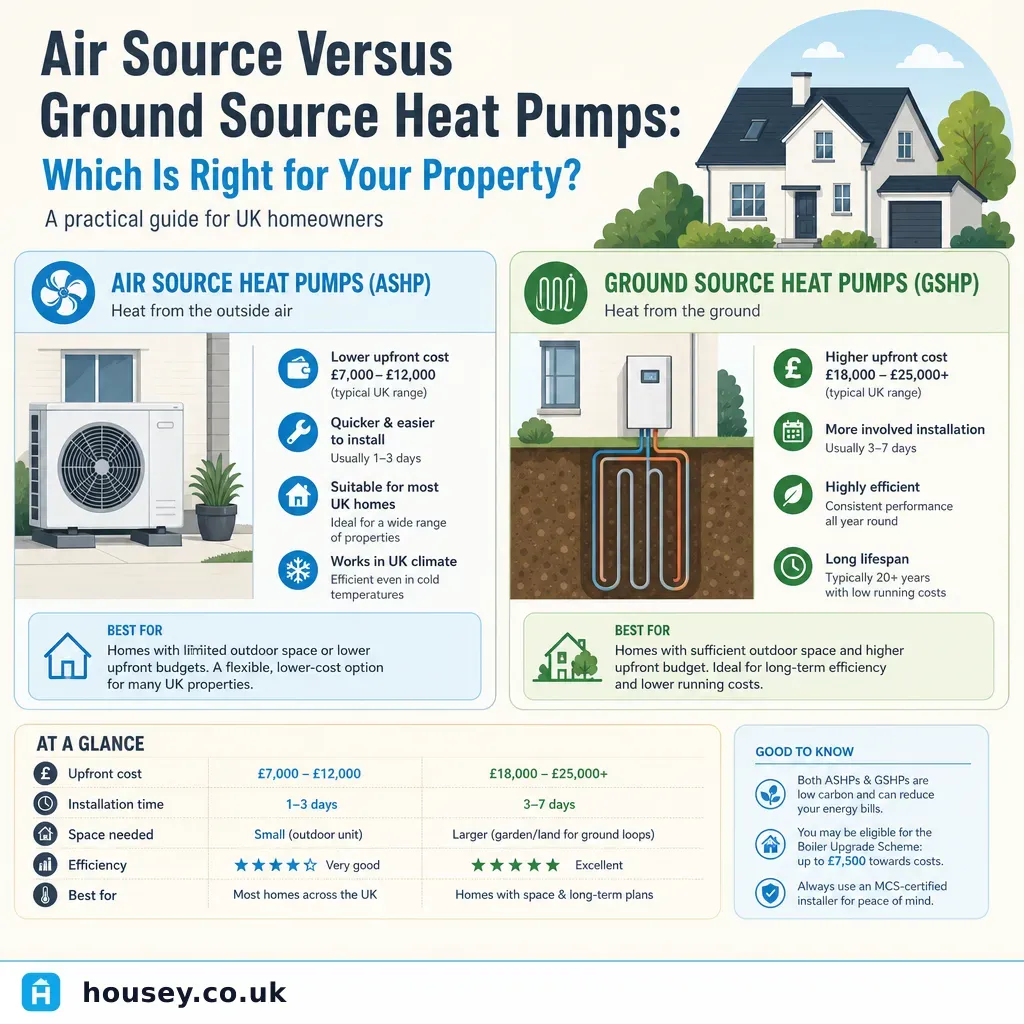 Energy & Retrofit
Air Source Versus Ground Source Heat Pumps: Which Is Right for Your Property?
Air source heat pumps (ASHPs) suit most UK properties with modest land requirements and faster installation, while ground source heat pumps (GSHPs) offer higher year-round efficiency but need significant land or borehole drilling and cost considerably more.
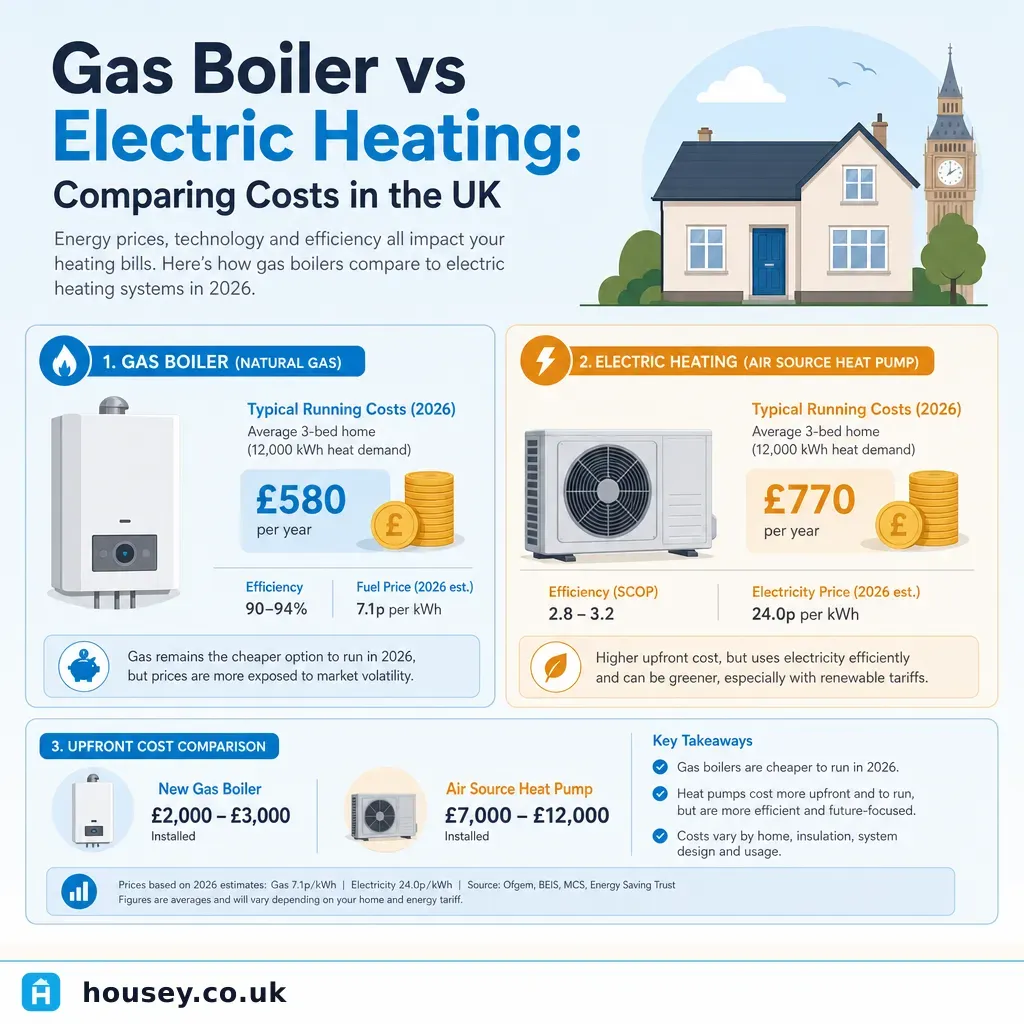 Energy & Retrofit
Gas Boiler vs Electric Heating: Comparing Costs in the UK
Gas boilers currently cost around 6.
 Energy & Retrofit
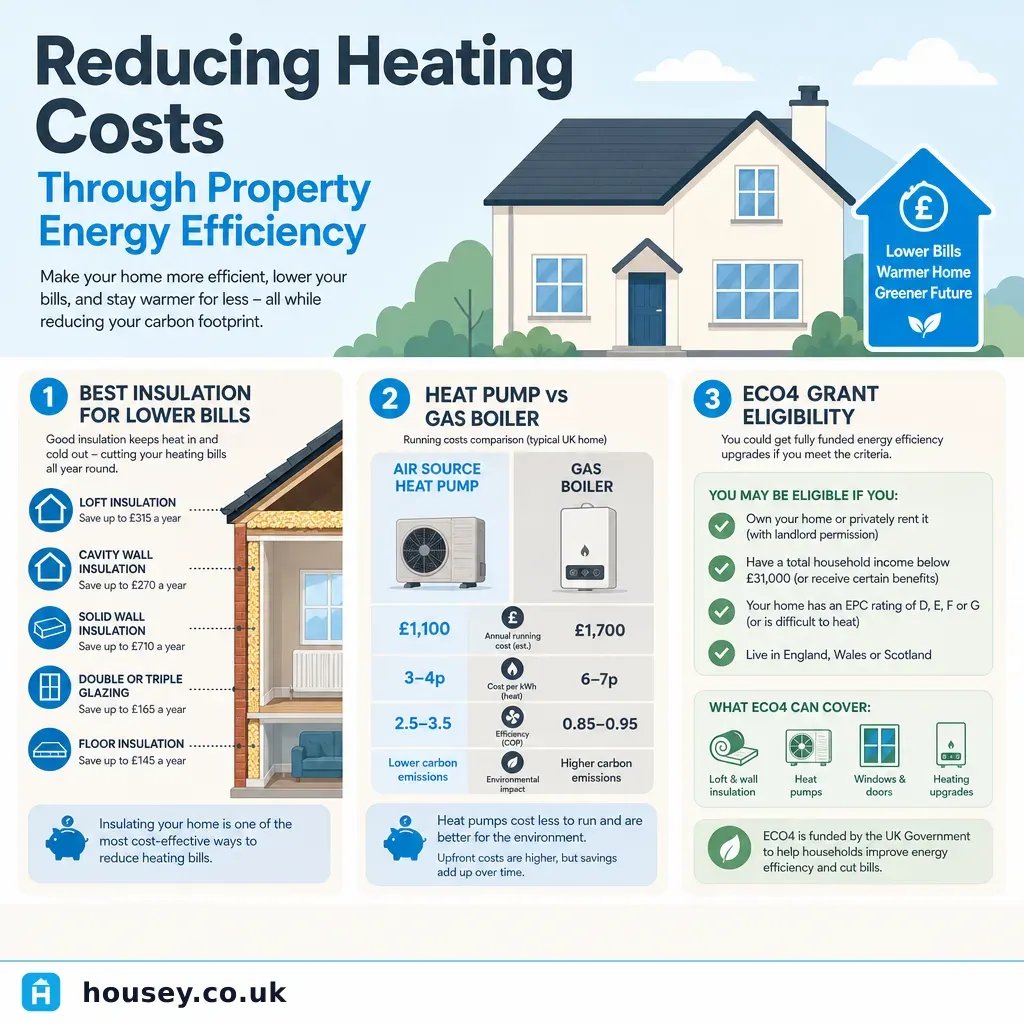
Reducing Heating Costs Through Property Energy Efficiency
Reducing heating costs starts with identifying where heat is lost — typically walls (30–35%), roof (20–25%), and windows.
 Energy & Retrofit
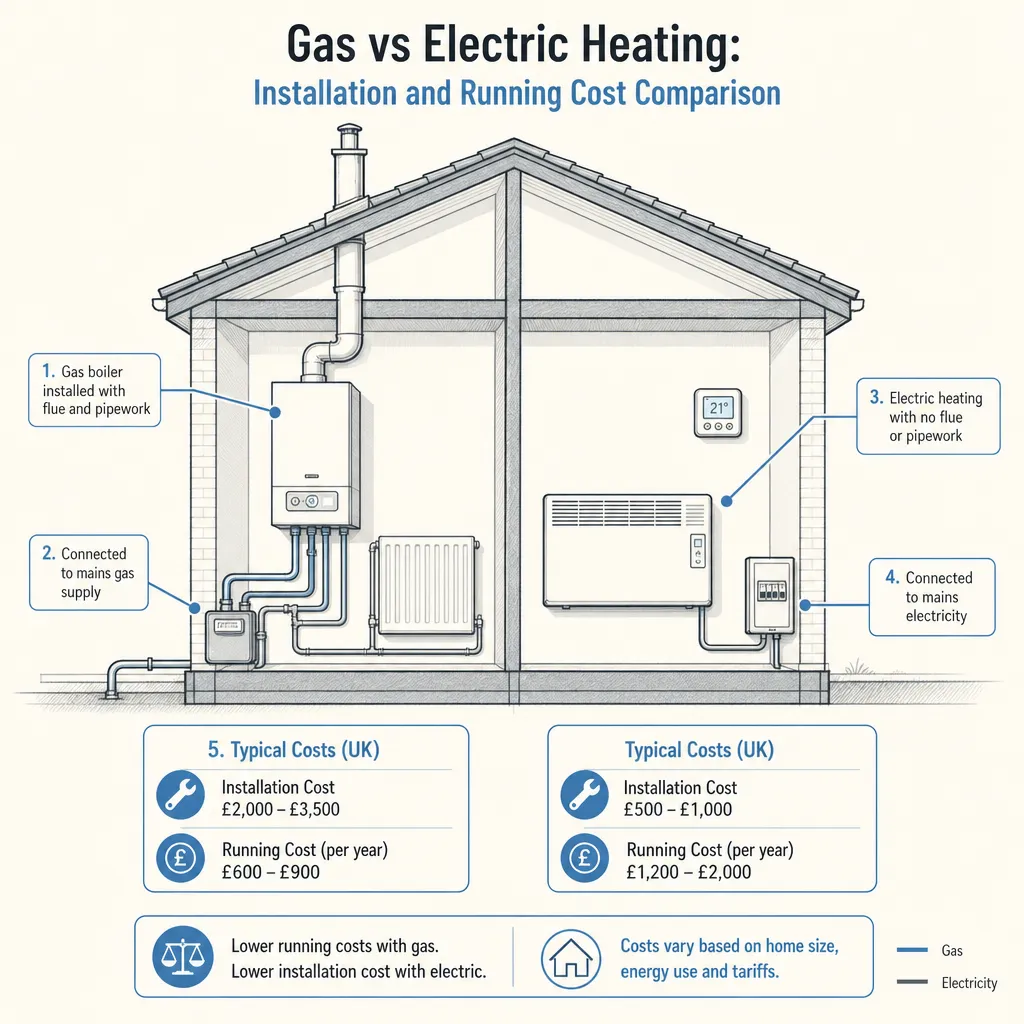
Gas vs Electric Heating: Installation and Running Cost Comparison
Gas central heating usually has lower running costs per kWh than direct electric heating in the UK, though heat pumps can change that equation.