Heat Pumps for Summer Cooling: Performance and Suitability
By Housey · Last reviewed 19th of May 2026
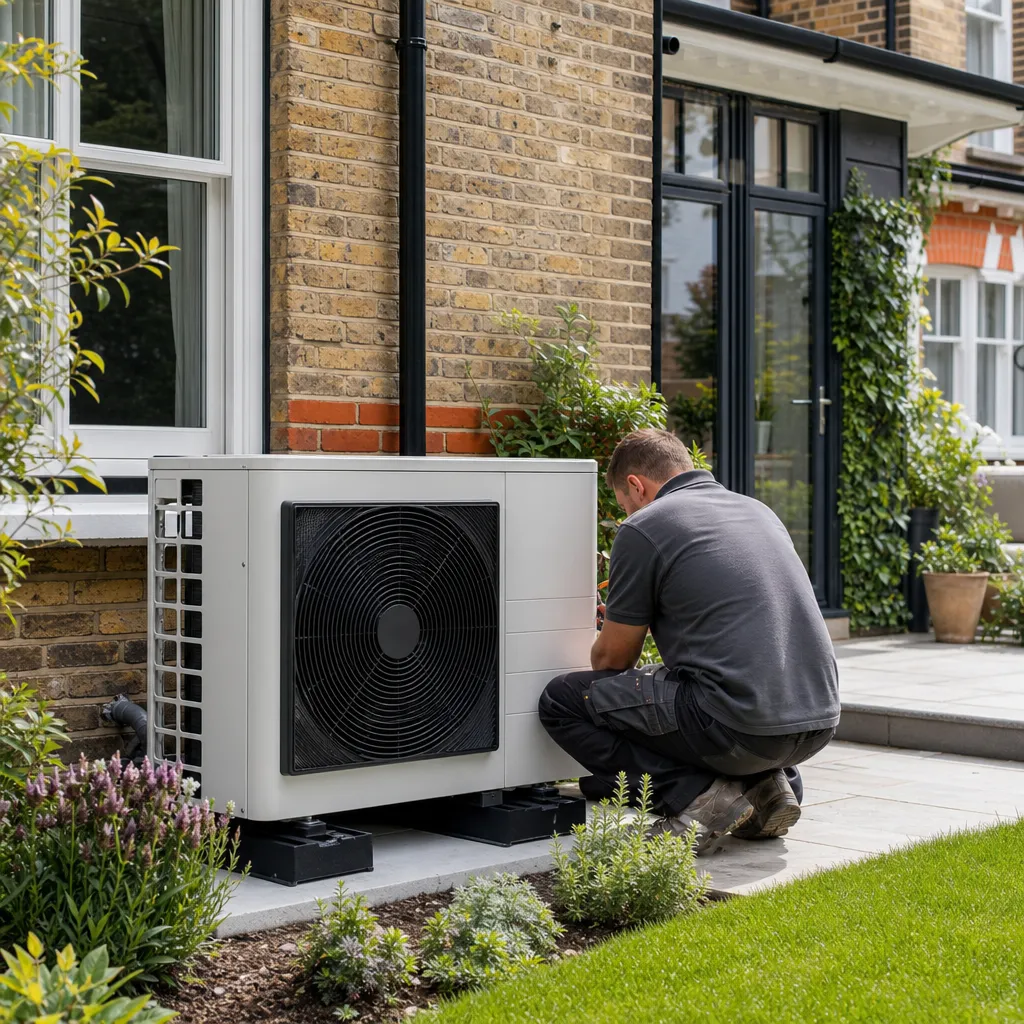
Heat Pumps for Summer Cooling: Performance and Suitability
More UK homeowners are asking whether a heat pump can replace a separate air conditioning unit as summers grow warmer. The question matters most at two moments: when designing a new heat pump installation and deciding whether to specify cooling capability, and when an existing system is already fitted and you want to understand what it can realistically do. Getting this wrong at the design stage is expensive to correct later.
Key points
- Most air-to-water heat pumps installed under the Boiler Upgrade Scheme (BUS) in the UK are specified for heating only; active cooling requires a reversible model with compatible emitters, designed in from the outset.
- Air-to-air heat pumps — including wall-mounted split systems — provide cooling as standard but do not currently qualify for the Boiler Upgrade Scheme £7,500 grant.
- Summer cooling efficiency is measured by the Energy Efficiency Ratio (EER) or Seasonal Energy Efficiency Ratio (SEER), not the Coefficient of Performance (COP) used for heating.
- MCS-certified installers must confirm that cooling is within the approved system specification; adding it retrospectively may require a new design assessment.
- UK Building Regulations Approved Document L requires that fixed cooling systems in dwellings meet minimum energy-efficiency standards.
Can a heat pump cool your home?
A heat pump moves heat rather than generating it, so the refrigerant circuit can — in principle — be run in reverse: absorbing heat from inside the building and discharging it outdoors. Whether your specific heat pump can do this depends on the type of system and how it was specified.
Air-to-air systems (similar to the split-unit air conditioning common in offices) cool the air directly and are generally reversible as standard. Air-to-water systems — the most common type installed in UK homes — heat water that flows through radiators or underfloor heating. Some models can also run in reverse to circulate chilled water, but this requires:
- A reversible heat pump unit (not all models support it).
- Emitters that can handle cooling — underfloor heating can work in passive cooling mode, while conventional radiators cannot effectively deliver cooling.
- A design that accounts for condensation risk on cool surfaces (dew-point control).
Which type of heat pump provides cooling?
Heat pump type | Active cooling available? | Best suited to cooling | UK grant eligibility (BUS) | Typical emitter |
|---|---|---|---|---|
Air-to-air (split system) | Yes — standard | Yes | Not eligible | Wall-mounted air handler |
Air-to-water (reversible) | Yes — if specified | Partial — with fan coils or UFH | Eligible (if MCS-certified) | Underfloor heating or fan coils |
Air-to-water (heating only) | No | No | Eligible | Radiators or UFH |
Ground source (reversible) | Yes — passive or active | Yes — stable ground temperature helps | Eligible (if MCS-certified) | Underfloor heating preferred |
BUS eligibility correct as of May 2026. Check GOV.UK for current grant rates.
How effective is heat pump cooling in a UK home?
The UK climate is heating-dominated. Most homes spend far more energy staying warm in winter than staying cool in summer, and UK houses are often built with this in mind — lower ceilings in some eras, less cross-ventilation than southern European homes, and significant thermal mass in older solid-wall properties.
This means active cooling from a heat pump is typically effective in well-insulated modern homes or those with air-to-air systems, but less so in draughty Victorian terraces or homes where the heat pump was not sized or specified with cooling in mind. An air-to-water system in passive cooling mode (using the ground or outdoor air as a heat sink without running the compressor) can take the edge off summer overheating in a well-insulated property without significant electricity use, but it will not replicate the output of a dedicated air conditioning unit.
Which option should you choose?
- Choose an air-to-air system if cooling is your primary goal and you do not need wet (hydronic) heating circuits.
- Choose a reversible air-to-water system if you want both heating and cooling integrated with underfloor heating or fan coils, and you are willing to pay the additional design and commissioning cost.
- Choose a heating-only air-to-water system if your home has good passive cooling (shading, ventilation) and you do not expect regular summer overheating.
- Ask an MCS-certified heat pump designer if you are uncertain about your home's suitability — passive cooling, dew-point risk, and emitter compatibility all require a professional assessment.
- Check Building Regulations Approved Document L and your local planning authority before installing any fixed cooling system in a listed building or conservation area.
Important limitations
This article provides general information only. Heat pump system design — including any cooling specification — must be carried out by a qualified, MCS-certified installer or heat pump designer who can assess your specific property, insulation levels, existing emitters, and local climate conditions. Rules regarding BUS grant eligibility, Building Regulations compliance, and MCS requirements can change; always verify current requirements with the official sources cited below.
Cooling added to an existing system without proper assessment can cause condensation damage, void manufacturer warranties, or create Building Regulations non-compliance.
When to get professional help
Seek advice from an MCS-certified installer or a CIBSE-qualified building services engineer if:
- Your existing heat pump was installed without a cooling specification and you want to add it retrospectively.
- You are experiencing summer overheating and are unsure whether your system can help.
- You want to compare the whole-life cost and performance of a reversible heat pump against a dedicated air conditioning unit.
- Your property is listed or in a conservation area, where permitted development rights for external units may be restricted.
- You are uncertain about condensation risk on chilled emitters.
What to ask a qualified professional
Before instructing an MCS-certified installer or heat pump designer, ask:
- Is my current (or proposed) heat pump unit capable of operating in cooling mode, and is this within its MCS certification?
- What EER or SEER rating should I expect in cooling mode for my home?
- Are my current emitters (radiators, underfloor heating) compatible with cooling? If not, what would replacement or supplementary fan coils cost?
- How will dew-point control be managed to prevent condensation?
- Will adding cooling affect my BUS grant compliance or MCS installation certificate?
- What are the planning implications for any additional external equipment?
- What is the indicative additional cost to specify cooling compared with heating only?
How Housey can help
A qualified heat pump surveyor can assess your property, confirm system compatibility, and advise on whether cooling can be added to an existing installation. Housey connects you with heat pump surveyors and energy-efficiency consultants who can review your home's suitability and help you make an informed decision before committing to any specification changes. If you are planning a whole-house upgrade, a retrofit assessment can put heat pump cooling in the context of your home's overall energy performance.
Frequently asked questions
Does my existing heat pump automatically have cooling capability?
Not necessarily. Most air-to-water heat pumps installed in UK homes under the Boiler Upgrade Scheme are heating-only models. Check your installation certificate, system documentation, or contact the original installer to confirm whether your unit is a reversible model. Do not assume the system can cool without professional verification.
Will using a heat pump for cooling significantly increase my electricity bills?
In passive cooling mode — where some ground source systems circulate chilled water without running the compressor at full load — electricity consumption is modest. Active cooling uses the compressor and can add meaningfully to your electricity use, though typically less than a standalone air conditioning unit of equivalent output. Your installer can provide estimated seasonal energy consumption figures.
Can underfloor heating circuits be used for cooling?
Yes, underfloor heating is often used for passive cooling in well-insulated homes — the cool slab absorbs heat from the room. However, dew-point control is essential to prevent condensation forming on floor surfaces, and the system must be specifically designed to manage this risk. Conventional radiators cannot effectively deliver cooling.
Do I need planning permission to add cooling to my heat pump system?
Air source heat pump installations often fall under permitted development in England, subject to conditions in the Town and Country Planning (General Permitted Development) (England) Order 2015. However, additional external units, listed buildings, conservation areas, and flats are common exceptions. Always check with your local planning authority before installation.
Sources and further reading
- Boiler Upgrade Scheme guidance — GOV.UK
- MCS heat pump installation standards — Microgeneration Certification Scheme
- Approved Document L: Conservation of fuel and power — GOV.UK / DLUHC
- Heat pump guidance — Energy Saving Trust
- CIBSE Heat Pump Group — Chartered Institution of Building Services Engineers
Useful next reads
 Energy & Retrofit
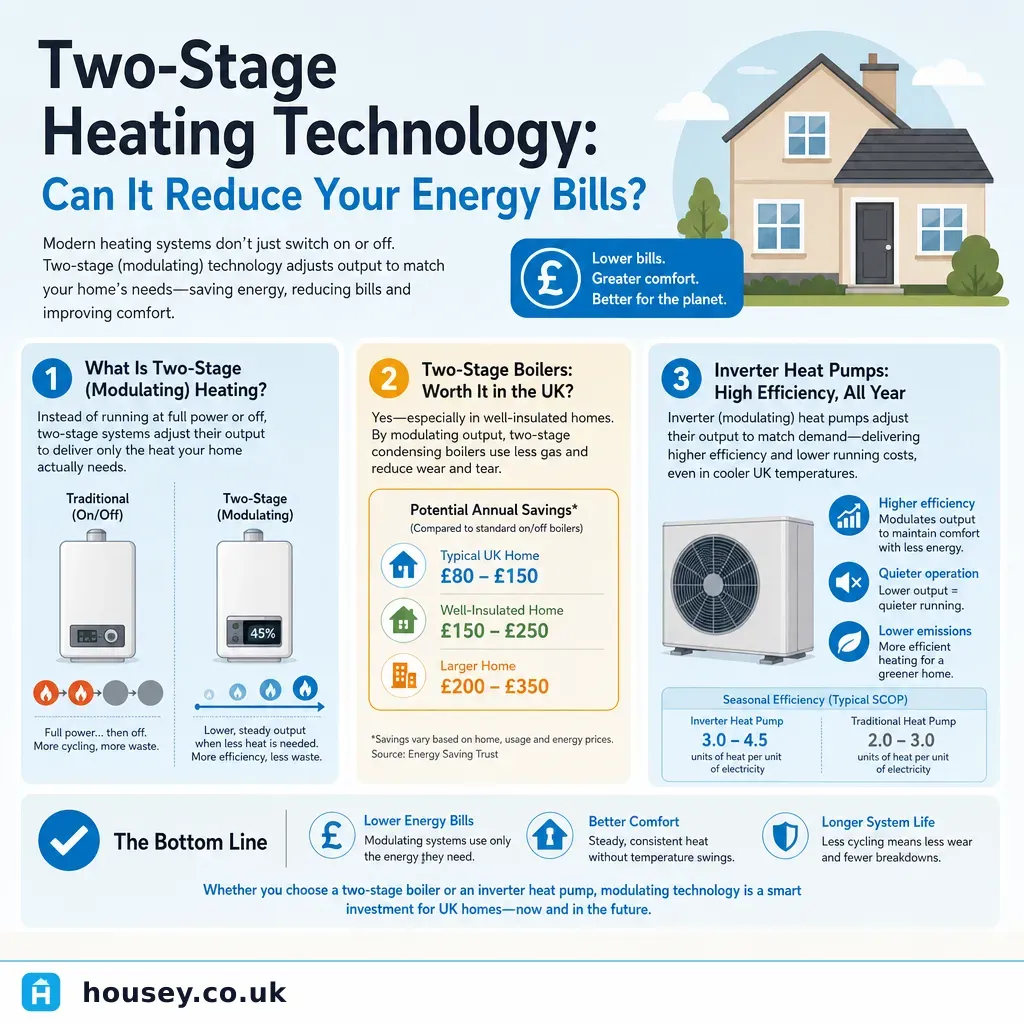
Two-Stage Heating Technology: Can It Reduce Your Energy Bills?
In UK homes, two-stage or modulating heating technology refers to modulating condensing gas boilers and inverter-driven heat pumps, not the forced-air furnaces common in North America.
 Energy & Retrofit
Renewable Energy Solutions: Solar, Heat Pumps, and Home Battery Storage
UK homeowners can reduce energy bills and carbon emissions by combining solar PV panels, air source heat pumps, and home battery storage.
 Energy & Retrofit
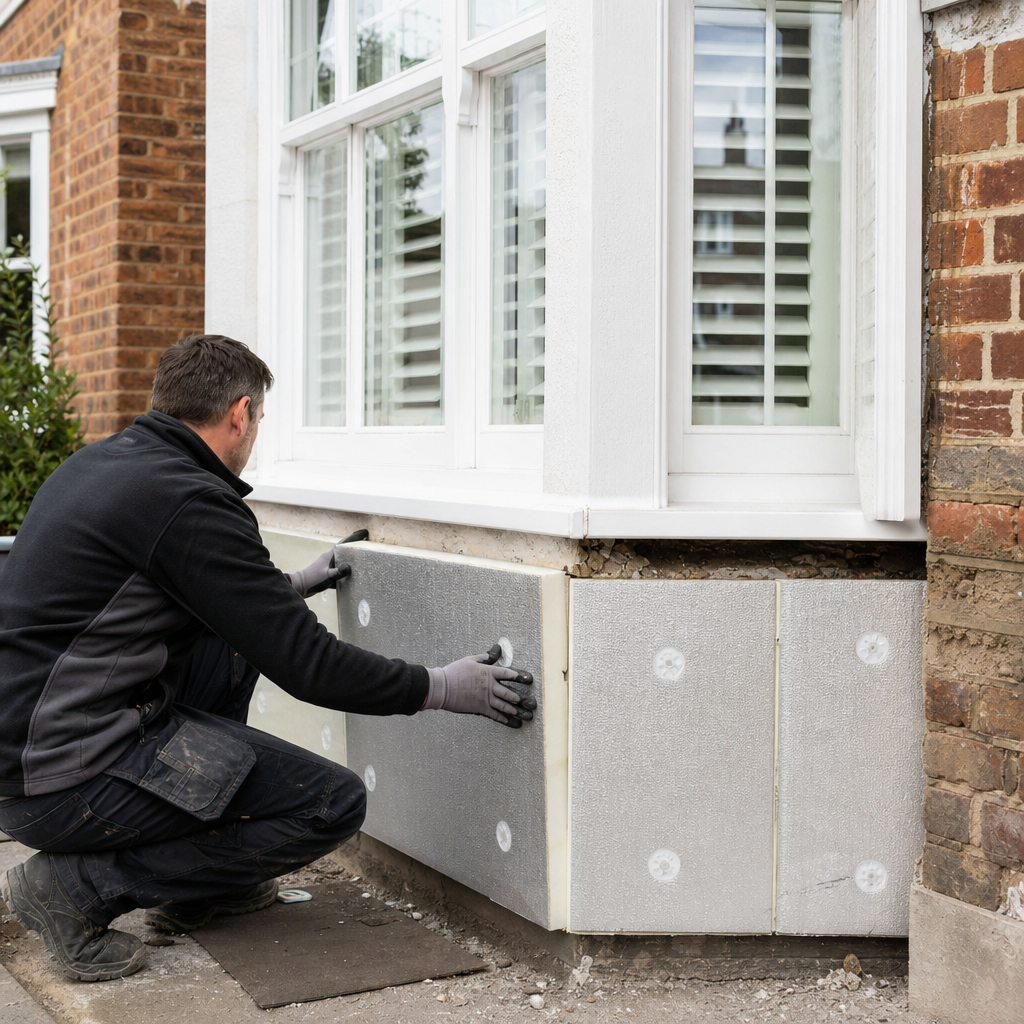
Insulating Solid Masonry Walls Under Bay Windows: Technical Guidance
Insulating solid masonry walls under bay windows requires specialist detailing at angled wall faces, window reveals, and the bay floor and ceiling junctions.
 Energy & Retrofit
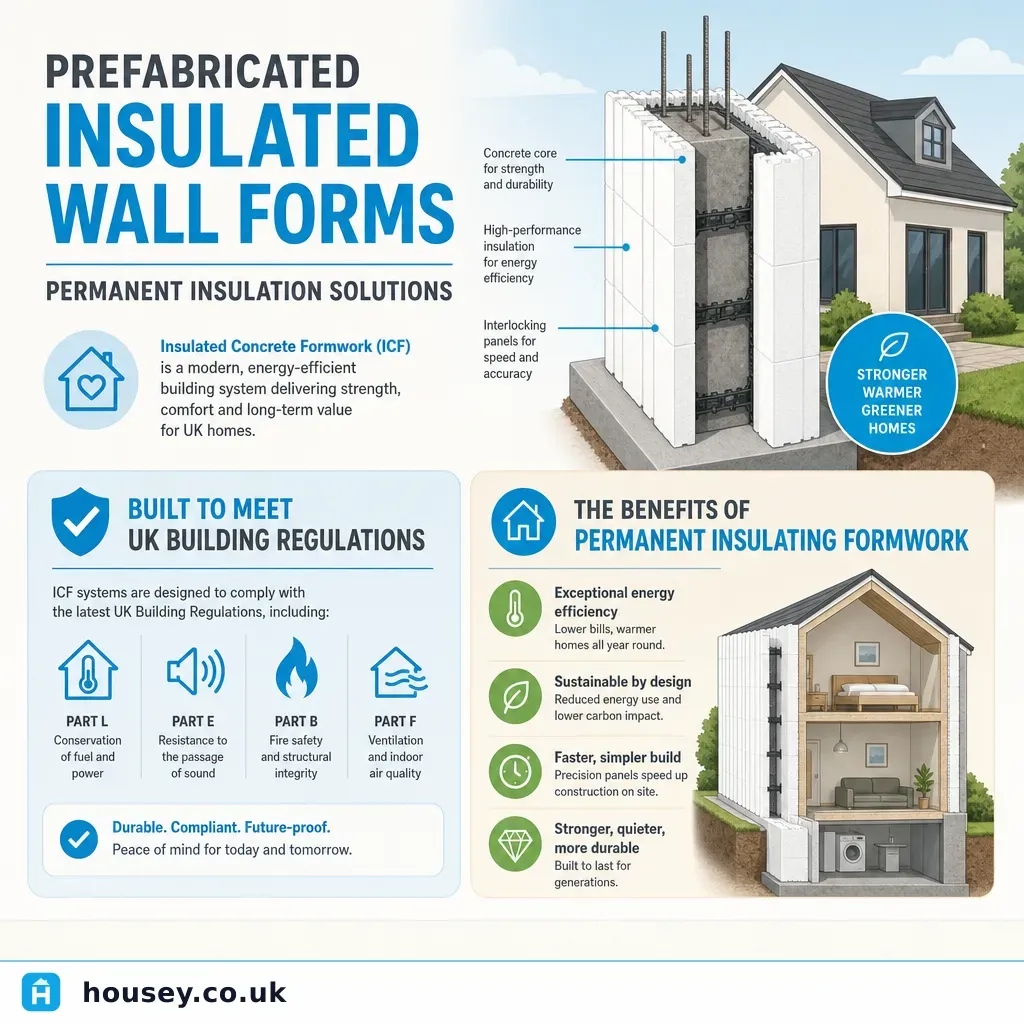
Prefabricated Insulated Wall Forms: Permanent Insulation Solutions
Prefabricated insulated wall forms — including ICF and SIPs systems — deliver high thermal performance by combining permanent insulation with structural concrete or timber in a single wall assembly.
 Energy & Retrofit
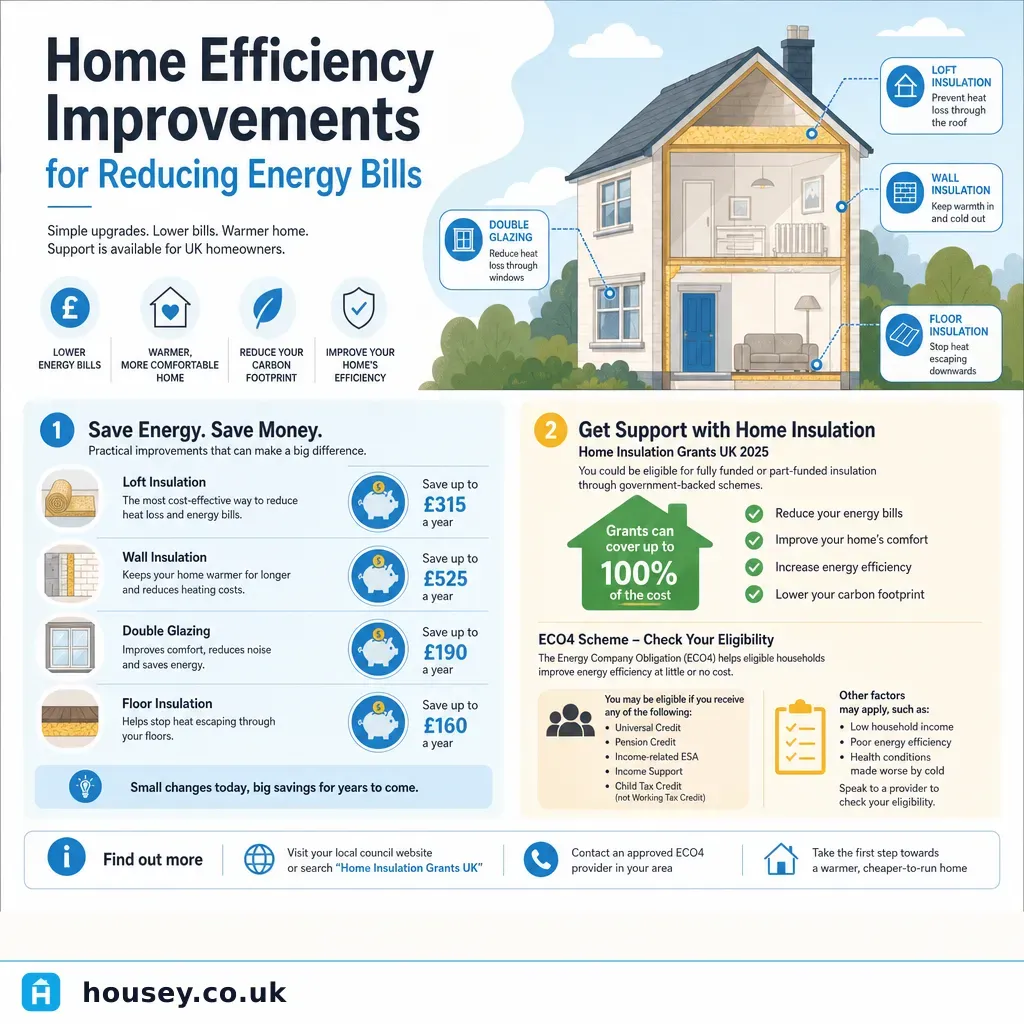
Home Efficiency Improvements for Reducing Energy Bills
The most cost-effective UK home efficiency improvements are usually loft insulation, cavity wall insulation, draught-proofing, and upgrading heating controls.