Heated Driveway Systems: Installation and Operating Costs
By Housey · Last reviewed 7th of May 2026
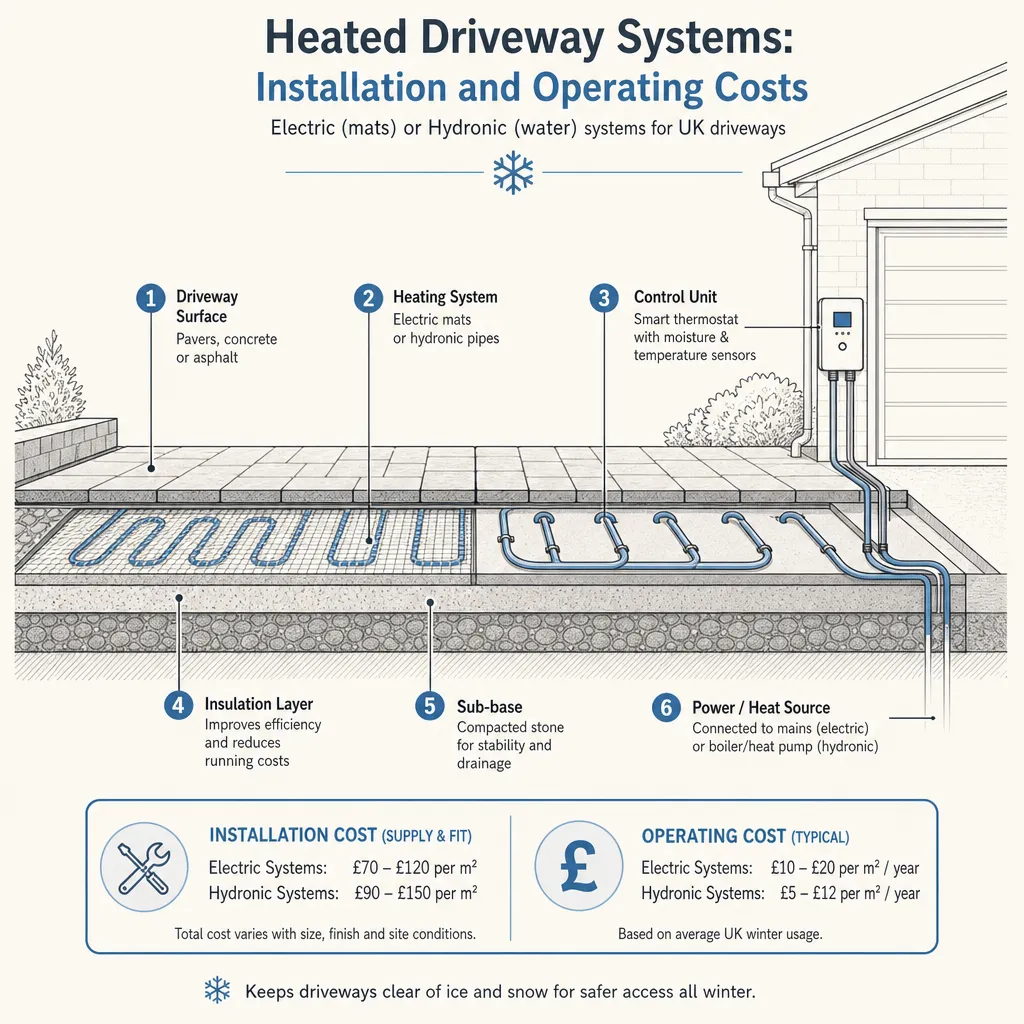
Heated Driveway Systems: Installation and Operating Costs
A heated driveway eliminates the need to manually de-ice or clear snow in winter, but the technology involves significant upfront cost and ongoing energy use. The decision typically arises during a full driveway replacement, a new self-build, or a renovation project where excavation is already planned — retrofitting into an existing finished surface is rarely cost-effective. Understanding the two main system types, realistic cost ranges, and running cost implications helps homeowners decide whether the investment makes sense for their property.
Key points
- Two main system types exist: electric resistive cable systems and hydronic (water/glycol) pipe systems — they differ substantially in upfront cost, running cost, and heat source flexibility.
- Indicative installed costs range from approximately £100–£250/m² for electric systems and £150–£350/m² for hydronic systems, depending on area, surface material, and heat source complexity (Indicative UK costs, last reviewed 2026-05-07).
- A typical double driveway of approximately 40 m² would cost roughly £4,000–£10,000 installed — complexity, access conditions, and surface specification all affect the final figure significantly.
- Under England's permitted development rules, an impermeable front driveway surface that drains directly to the highway requires planning permission if it exceeds 5 m²; using permeable materials such as resin-bound aggregate or permeable block paving — both compatible with heated systems — avoids this requirement.
- Running costs for electric systems are typically £2–6/m² per season of active use; smart frost-detection sensors significantly reduce unnecessary operation by activating the system only when surface temperatures approach freezing.
How heated driveway systems work
Heated driveways use embedded electric cables or hydronic pipe loops to warm the surface to a temperature — typically around 5°C — that prevents ice formation and melts light snowfall. The heating elements sit beneath the finished surface material, embedded in the bedding layer or screed above the sub-base.
Electric systems use resistive heating cables laid in a grid pattern, connected to a dedicated mains circuit and controlled by a frost thermostat and ground-surface temperature sensor. They heat relatively quickly and are simpler to install, making them the more common choice for residential driveways up to around 50 m².
Hydronic systems circulate a heated water-and-glycol mixture through pipework connected to a boiler, heat pump, or dedicated heat exchanger. They have lower running costs at larger scales because they can use gas, heat pump electricity, or biomass as the heat source, but they require more complex installation and a plant room or boiler cupboard connection.
System type comparison
Feature | Electric (resistive cable) | Hydronic (water/glycol pipe) |
|---|---|---|
Indicative installed cost | £100–£250/m² | £150–£350/m² |
Running cost | Higher (electricity at market rate) | Lower at scale (flexible heat source) |
Installation complexity | Simpler; no plant room needed | Complex; requires boiler or heat pump connection |
Best driveway size | Up to ~50 m² | 50 m² and above |
Heat-up speed | Fast (30–60 minutes) | Slower; may need pre-warming |
Compatible surfaces | Block paving, resin-bound, concrete | Block paving, resin-bound, concrete |
Maintenance requirement | Low (no moving parts in cables) | Higher (annual fluid checks, pump servicing) |
Typical system lifespan | 20–30 years (cables) | Pipework 20–25 years; pumps 10–15 years |
Installation: what the process involves
Heated driveway installation is almost always carried out as part of a full driveway replacement, since the heating elements must be embedded in the sub-base or bedding layer below the finished surface. Attempting to retrofit cables beneath an existing finished driveway is rarely practical — the cost of lifting and reinstating the surface typically equals or exceeds a full replacement.
The typical installation sequence:
- Excavation: the existing surface and sub-base are removed to appropriate depth — typically 150–300 mm depending on surface type and ground conditions. A groundworker handles this stage.
- Sub-base preparation: compacted hardcore or MOT Type 1 aggregate is laid and levelled.
- Heating element installation: resistive cables are fixed to a mesh or channel system above the sub-base, maintaining consistent spacing — usually 100–150 mm centres for cables. Hydronic pipework is laid similarly and connected to manifolds.
- Electrical or plumbing connections: cables are wired to a dedicated circuit via a frost-stat controller and surface-temperature sensor; hydronic pipes are connected to the heat source.
- Surface reinstatement: the chosen surface material — block paving, resin-bound aggregate, or concrete — is laid by a specialist driveway installer.
- Controls commissioning: thermostat, frost sensor, and timer are programmed and tested.
A dedicated electrical circuit is required for electric systems. Depending on your existing consumer unit capacity, an electrical upgrade may be needed — this should be factored into your overall budget. The electrical installation must comply with Building Regulations Part P (electrical safety in dwellings) and be carried out by, or notified through, an NICEIC or NAPIT registered electrician.
Running costs and energy use
Running costs depend on system type, local climate, surface area, controls specification, and current electricity or fuel prices. The figures below are illustrative and will vary by location and usage pattern.
Electric system indicative running costs (Indicative UK costs, last reviewed 2026-05-07):
- Typical cable power density: 200–300 W/m²
- A 40 m² driveway at 250 W/m² = 10 kW electrical load when active
- Estimated active operating hours in a UK winter season: 100–300 hours (south-east England vs northern Scotland)
- Cost at 24p/kWh: approximately £240–£720 per season for a 40 m² driveway
Practical ways to reduce running costs:
- Install a frost detector and ground-surface temperature sensor — the system runs only when the surface temperature approaches 0°C, avoiding unnecessary operation on mild days.
- Use a smart energy tariff with overnight off-peak rates; programme the system to pre-warm the surface during the cheaper period.
- Zone the heating to cover only high-priority areas — the pedestrian path and the section of driveway in front of the garage door — rather than heating the entire area.
Planning and building regulations considerations
For most residential driveways, planning permission is not required for the heating system itself. However, the choice of surface material has planning implications that interact with your heating system specification.
Permeable surfacing rules (England): Under permitted development rights for dwellings in England, an impermeable front driveway surface that drains to the public highway requires planning permission if the area exceeds 5 m². Using a permeable surface — such as permeable block paving, resin-bound aggregate, or porous concrete — or directing drainage to a soakaway or planted area avoids this requirement and is fully compatible with both electric and hydronic heated systems. See GOV.UK guidance on when planning permission is required.
Listed buildings and conservation areas: Additional consent from your local planning authority (LPA) may be required regardless of driveway size or surface type. Check with your LPA before proceeding.
Building Regulations Part P: The dedicated electrical circuit for an electric heated driveway must be installed by an electrician registered under a competent persons scheme (NICEIC or NAPIT) or the work must be notified to Building Control as a formal Building Regulations application.
Building Regulations Part H: Surface water drainage from the driveway must comply with Part H; directing run-off to a soakaway or permeable lawn is generally preferred over connecting to the public sewer.
Homeowner checklist: before you commission a heated driveway
Red flags when reviewing quotes
Be cautious if a quote or installer does the following:
- Does not specify cable wattage density (W/m²) or pipe spacing — these figures determine heating performance and running cost and should be stated explicitly.
- Proposes installing cables on top of an existing finished surface without full excavation and reinstatement.
- Makes no mention of a frost-detection sensor or programmable thermostat controls.
- Does not reference Part P electrical compliance or NICEIC/NAPIT registration.
- Provides a significantly lower price with no explanation of what has been excluded from scope.
- Cannot provide a reference installation or evidence of previous heated driveway projects.
When to get professional help
A heated driveway is a permanent embedded installation — faults in the cables or pipework after the surface is laid are expensive and disruptive to rectify. Involve a specialist if:
- You are unsure which system type suits your driveway size, budget, and available heat source.
- The driveway is in a conservation area or the property is listed.
- Your consumer unit may not have spare capacity for the additional electrical load.
- The driveway exceeds 100 m² and a hydronic system connected to an existing boiler or heat pump is being considered — hydraulic balancing and heat source sizing require engineering input.
- You want to combine the heated driveway with EV charging infrastructure on the same circuit upgrade.
How Housey can help
Housey connects homeowners with experienced driveway installers and groundworkers across the UK. Request quotes from multiple vetted providers to compare system specifications, surface options, controls packages, and guarantees before committing to a heated driveway installation.
Frequently asked questions
Can a heated driveway be installed under existing block paving?
It is technically possible but rarely practical or cost-effective. The blocks must be lifted, the sub-base excavated to the correct depth, heating elements installed and connected, and the surface fully reinstated. In most cases the labour and disruption cost is comparable to a complete new installation. Always obtain a specific quote for the retrofit scenario before assuming it will be significantly cheaper than starting from scratch.
How long do heated driveway cables last?
Good-quality resistive heating cables are typically rated for 20 to 30 years when installed correctly and not damaged during surfacing works. The controls — thermostat, frost sensor, and timer — may need replacement sooner, usually every 10 to 15 years depending on the quality of components specified. Ask your installer for the cable manufacturer's warranty documentation before work begins.
Does a heated driveway add value to my property?
There is no established UK evidence base for a specific value uplift from a heated driveway. A well-designed, well-surfaced driveway generally adds kerb appeal and can make a property more attractive to buyers, particularly in colder parts of the UK. However, the high installation cost means a heated system is unlikely to represent a straightforward return on investment, and most homeowners install them primarily for convenience and safety rather than resale value.
What surfaces can a heated driveway be installed under?
Block paving, resin-bound aggregate, exposed aggregate concrete, and standard concrete are all suitable. Loose gravel and other unbound permeable fill materials are not compatible — the surface must be fixed and in direct thermal contact with the heating elements to transfer heat effectively. Confirm surface compatibility with your installer before specifying materials, particularly if permeable surfacing is required for planning purposes.
Do I need planning permission for a heated driveway?
Planning permission is not usually required for the heating system itself. However, under England's permitted development rules, an impermeable front driveway surface that drains directly to the highway requires a planning application if the area exceeds 5 m². Using a permeable surface such as resin-bound aggregate or permeable block paving — both fully compatible with heated systems — avoids this requirement. Check with your local planning authority if the property is listed or in a conservation area.
Sources and further reading
- When is permission required? (driveways and hard standing) — GOV.UK
- Approved Document P: Electrical safety in dwellings — GOV.UK / Building Regulations
- NICEIC registered electrician search — NICEIC
- Sustainable drainage guidance for driveways and hard standing — CIRIA SusDrain
Useful next reads
 Improvement & Build
Heated Driveways: Is the Investment Worth Considering?
A heated driveway uses electric resistance cables or hydronic water pipes beneath the surface to prevent ice and snow build-up.
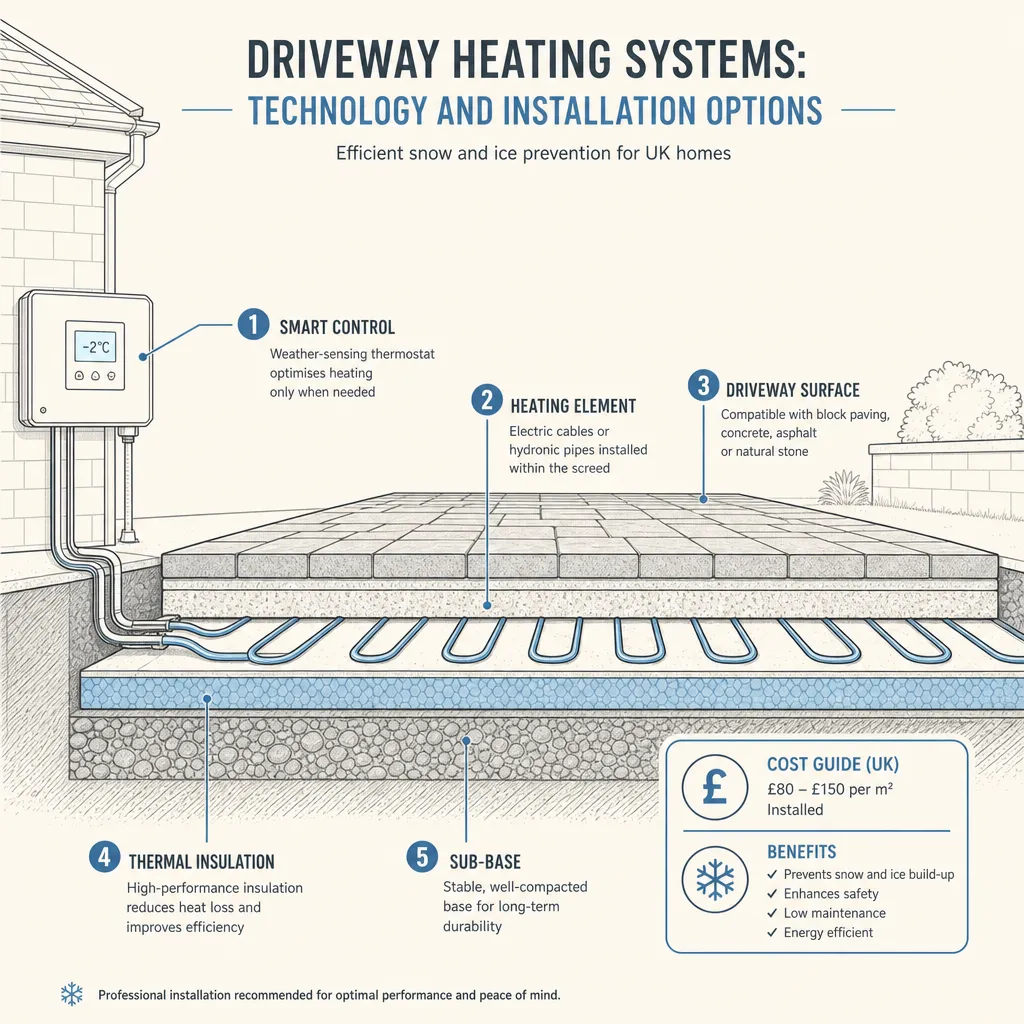 Improvement & Build
Driveway Heating Systems: Technology and Installation Options
UK driveway heating systems fall into two main types: electric resistance cable and hydronic water-pipe systems.
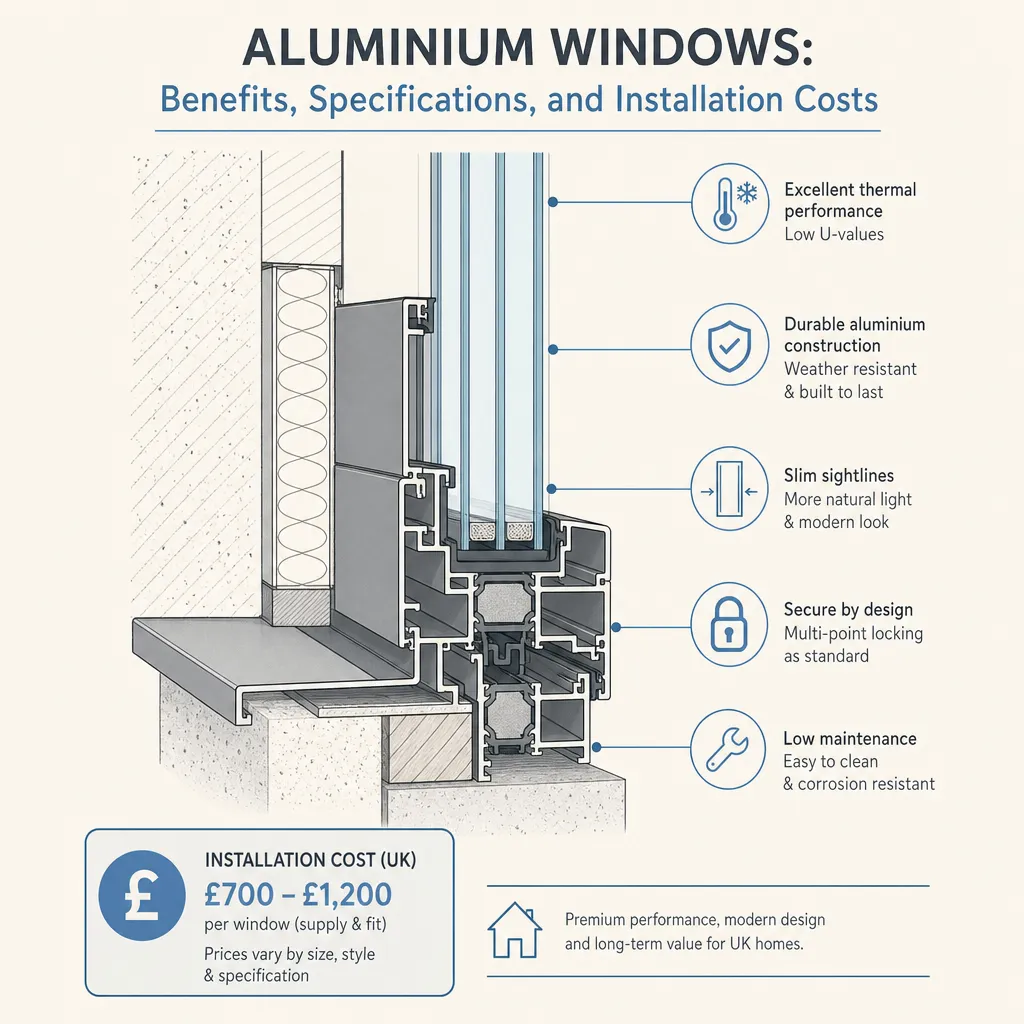 Improvement & Build
Aluminium Windows: Benefits, Specifications, and Installation Costs
Aluminium windows typically cost £600–£1,800 per window installed in the UK, depending on size and specification.
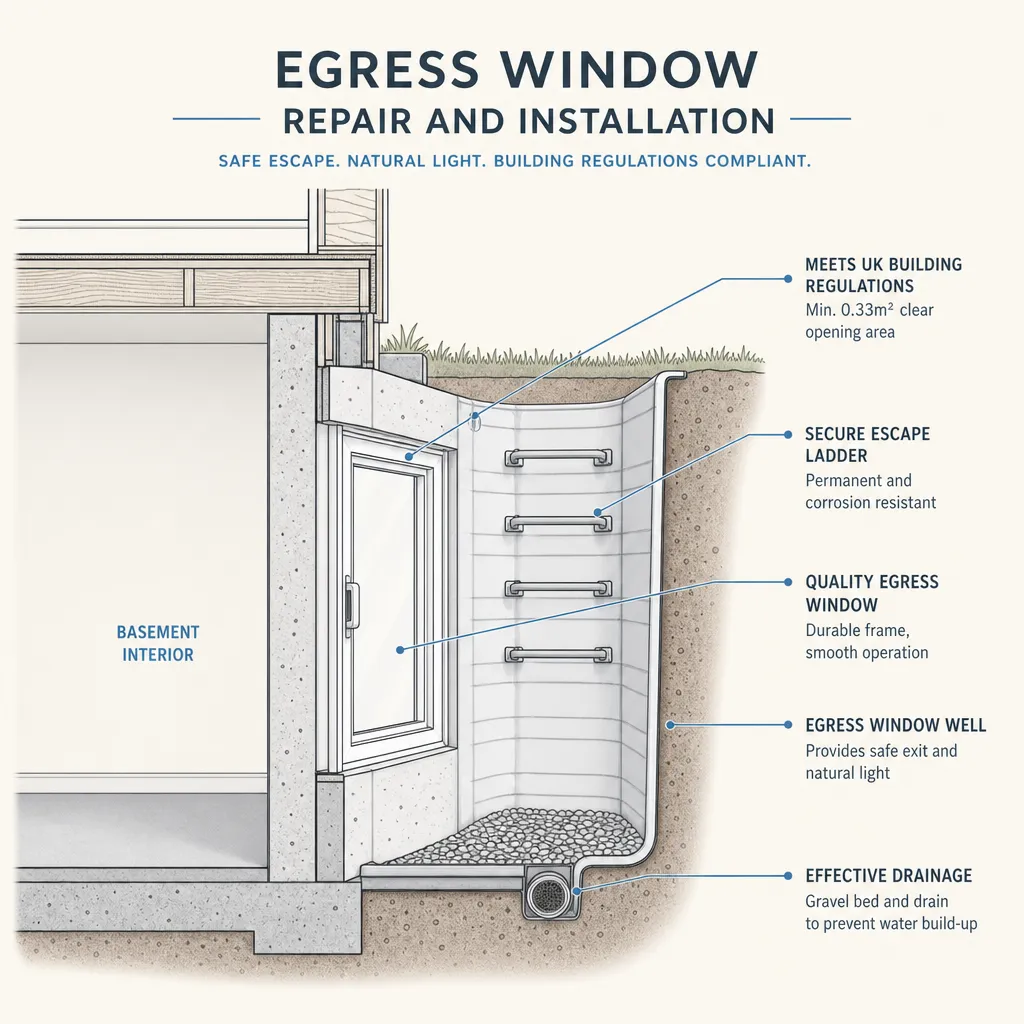 Improvement & Build
Egress Window Repair and Installation
An egress window is a window large enough to serve as an emergency escape route from a habitable room.
 Improvement & Build
Porch Screening: Options and Professional Installation Costs
Porch screening ranges from simple insect mesh on a timber frame to bespoke aluminium-framed glazed enclosures.