Heated Driveways: Is the Investment Worth Considering?
By Housey · Last reviewed 30th of May 2026

Heated Driveways: Is the Investment Worth Considering?
Icy driveways are a genuine hazard in UK winters, and for homeowners with sloped approaches, mobility limitations, or parking for multiple vehicles, the inconvenience of manual gritting can be considerable. Heated driveways — systems embedded beneath the surface to prevent ice and snow accumulation — attract growing interest, yet they represent a meaningful upfront cost and ongoing energy commitment. Understanding how the systems work, what installation involves, and where they make genuine sense helps you decide whether this is a worthwhile upgrade for your property.
Key points
- Electric resistance cable systems typically cost £100–£150 per square metre installed; hydronic (water-pipe) systems often range from £150–£300 per square metre, depending on complexity and heat source.
- A typical double driveway of around 40 m² could cost £4,000–£12,000 installed, depending on system type, surface material, and groundwork requirements.
- Most systems are controlled by ground-temperature sensors that activate automatically when the surface temperature approaches 0 °C, reducing unnecessary running time.
- Hydronic systems generally have lower running costs than electric systems but require a boiler or heat-source connection, adding to installation complexity and upfront cost.
- Planning permission is not usually required for the heating system itself, but surface material and drainage can trigger permitted development conditions under the Town and Country Planning (General Permitted Development) (England) Order 2015.
Indicative UK costs throughout, last reviewed 2026-05-30. Costs vary by region, contractor, and groundwork requirements — obtain at least three quotes.
How do heated driveway systems work?
Two main technologies are available in the UK.
Electric resistance systems use heating cables embedded in a screed or mortar bed beneath the driveway surface. The cables connect to your mains supply and are controlled by a thermostat or ground-sensor controller. They are simpler to install than hydronic systems and better suited to retrofitting onto an existing driveway, though they typically carry higher running costs per hour.
Hydronic (wet) systems circulate heated water through polyethylene or cross-linked polyethylene (PEX) pipes beneath the surface. The heat source is usually a gas boiler, heat pump, or dedicated boiler unit. Running costs are lower per hour, but installation is more complex and requires a compatible heat source — making hydronic systems more practical for new-build or major-renovation projects where groundwork is already under way.
Feature | Electric cable system | Hydronic (water pipe) system |
|---|---|---|
Installation cost | Lower | Higher |
Running cost | Higher (mains electricity) | Lower (if connected to efficient heat source) |
Best for | Retrofits, smaller areas | New builds, larger driveways with compatible heat source |
Installation disruption | Moderate | Higher — pipework, manifold, heat source required |
Maintenance | Low | Moderate — annual system check recommended |
Typical system life | 20–25 years (cables) | 20–30 years (pipes) |
What does installation involve?
For either system type, the process generally involves lifting or breaking out the existing driveway surface, installing the heating element in a suitable bed, backfilling, and relaying the surface. A controller and sensor are typically mounted near the entrance.
Key factors that affect cost and complexity:
- Existing surface: Removing block paving is less disruptive than breaking out concrete. Resin-bound surfaces can be relaid more readily over the heating element.
- Driveway size and shape: Larger or irregular driveways require more cable or pipework and proportionally more labour.
- Power supply: Electric systems require a dedicated circuit from the consumer unit, installed by a Part P-registered electrician and notified to building control under Building Regulations.
- Drainage: Melted snow must drain away. If your driveway discharges surface water to the public highway, rules under the Flood and Water Management Act 2010 may apply — permeable surfaces are often the preferable solution.
- Heat source for hydronic systems: A new boiler or heat pump connection requires Gas Safe-registered or MCS-accredited installation respectively, adding to overall project cost and programme.
Should you install a heated driveway? A decision guide
- Choose electric if you are retrofitting, the driveway is under 50 m², and you want simpler installation without changes to your heating system.
- Choose hydronic if major groundwork is already planned, you have a compatible heat pump or efficient boiler, and the driveway is large enough that running-cost savings justify the higher upfront investment.
- Reconsider carefully if your driveway rarely freezes, is flat and straightforward to grit, or if you plan to sell within a few years — return on investment may be limited.
- Seek energy-efficiency advice if you are unsure whether a heat pump-connected hydronic system would integrate well with your existing setup.
- Check with your local planning authority if your property is in a conservation area or is listed — even changes to surface material can require consent.
What are the running costs?
Running costs depend on system type, surface area, annual activation hours, and prevailing energy prices.
- Electric systems: A 40 m² driveway running for approximately 200 hours per winter might consume 2,000–3,000 kWh, costing roughly £500–£750 at typical domestic electricity rates. Check the current Ofgem price cap for accurate unit rates at the time of installation.
- Hydronic systems: Costs depend heavily on the heat source. A heat pump-connected system can be significantly cheaper per kWh than gas or direct-electric alternatives, particularly as electricity-to-heat efficiency improves with a high-performing heat pump.
Ground-temperature sensors help limit unnecessary operation, but heated driveways remain more energy-intensive than gritting. If sustainability is a primary concern, consider whether permeable surfaces, anti-slip coatings, or other winter maintenance approaches address your needs more efficiently.
What to ask before accepting a quote
- Is the installer experienced with both electric and hydronic systems, or only one type?
- Will the electrical work be carried out by a Part P-registered electrician and notified to building control?
- What warranty does the heating element carry, and who is responsible if the surface is damaged during future works?
- Is VAT included in the quoted price?
- What drainage solution is proposed, and does it comply with local surface water discharge rules?
- What controller and sensor are included — can the system be managed remotely?
- What happens if the heating element is damaged during installation — is remediation included in the contract?
When to get professional help
Heated driveway installation involves multiple trades: groundwork, electrical connection, and potentially plumbing or heat pump integration. Even where the groundwork contractor is experienced, the electrical circuit must be installed by a registered electrician and notified to your local building control authority under Part P of the Building Regulations.
Seek professional advice if:
- Your driveway drains to a soakaway or watercourse — a drainage assessment may be required before work proceeds.
- Your property is listed or in a conservation area — speak to your local planning authority before changing surfaces or materials.
- You are considering a hydronic system connected to a heat pump — professional modelling of running costs and compatibility is worthwhile before you commit.
- The installation involves cutting into your consumer unit or adding a new supply — a Part P-qualified electrician must be part of the team.
How Housey can help
Housey connects you with experienced driveway installers and groundworkers who can assess your driveway, recommend the right system type, and manage installation from surface removal to relay. If you are considering a hydronic system connected to a heat pump, an energy-efficiency consultant can help model running costs and check compatibility with your existing heating setup before you commit to a system type.
Frequently asked questions
Do I need planning permission for a heated driveway?
Planning permission is not usually required for the heating system itself. However, in England, new driveway surfaces over 5 m² must be permeable or drain to a permeable area — otherwise planning permission is needed. Properties in conservation areas or that are listed may face additional restrictions. Always check with your local planning authority before work begins.
Will a heated driveway add value to my home?
There is no reliable UK data showing a consistent uplift in property value from a heated driveway. Value is most likely added where the feature is highly practical — steep driveways, northern locations with frequent snowfall, or properties suited to buyers with accessibility requirements. For most UK homes, it is unlikely to return its full installation cost at resale.
How long does a heated driveway last?
Electric resistance cables typically carry manufacturer warranties of 10–25 years. Hydronic pipe systems can last 25–30 years or more if correctly installed and maintained. The surface material above the system determines the overall driveway lifespan. Damage to the heating element usually requires localised excavation to repair, making quality installation by an experienced contractor important.
Can a heated driveway be installed under any surface material?
Most common driveway surfaces are compatible: block paving, resin-bound aggregate, tarmac, concrete, and natural stone flags. The heating element is embedded in a screed, mortar bed, or sand-laying course beneath the surface. Some thin natural stone may require specific installation guidance from the manufacturer to prevent cracking from thermal expansion.
Sources and further reading
- Planning permission for driveways — Planning Portal
- Energy price cap guidance — Ofgem
- Approved Document P: Electrical safety in dwellings — GOV.UK
- Flood and Water Management Act 2010 — legislation.gov.uk
- Town and Country Planning (General Permitted Development) (England) Order 2015 — legislation.gov.uk
Useful next reads
 Improvement & Build
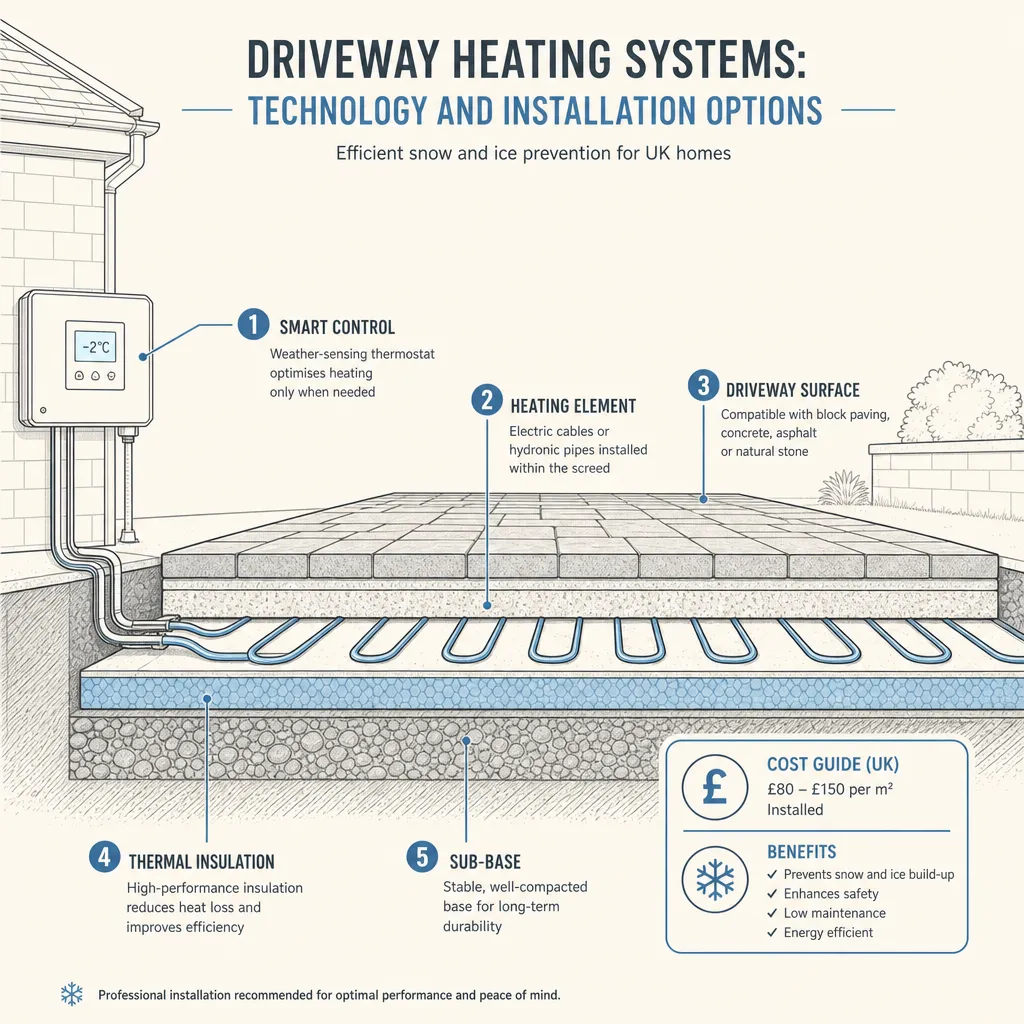
Driveway Heating Systems: Technology and Installation Options
UK driveway heating systems fall into two main types: electric resistance cable and hydronic water-pipe systems.
 Improvement & Build
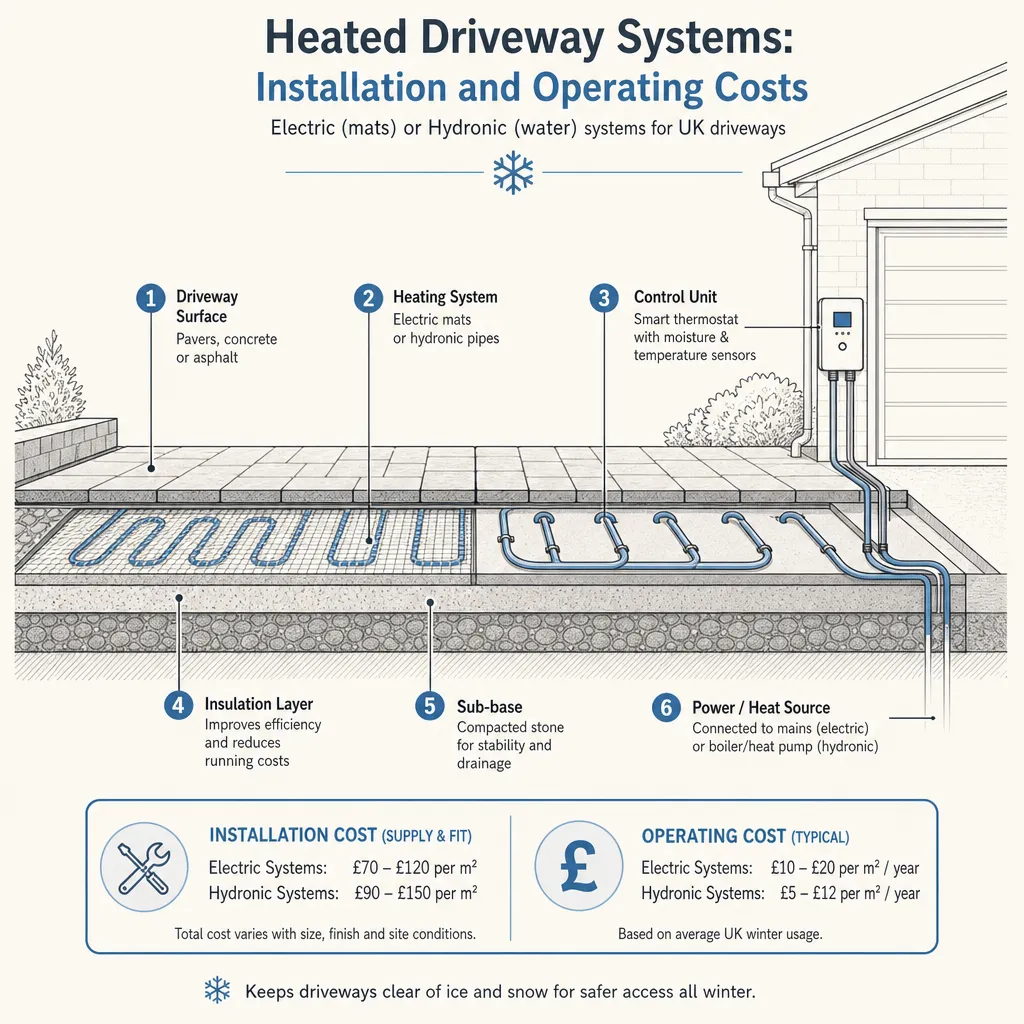
Heated Driveway Systems: Installation and Operating Costs
Heated driveways embed electric cables or hydronic pipes beneath the surface to prevent ice and melt snow.
 Improvement & Build
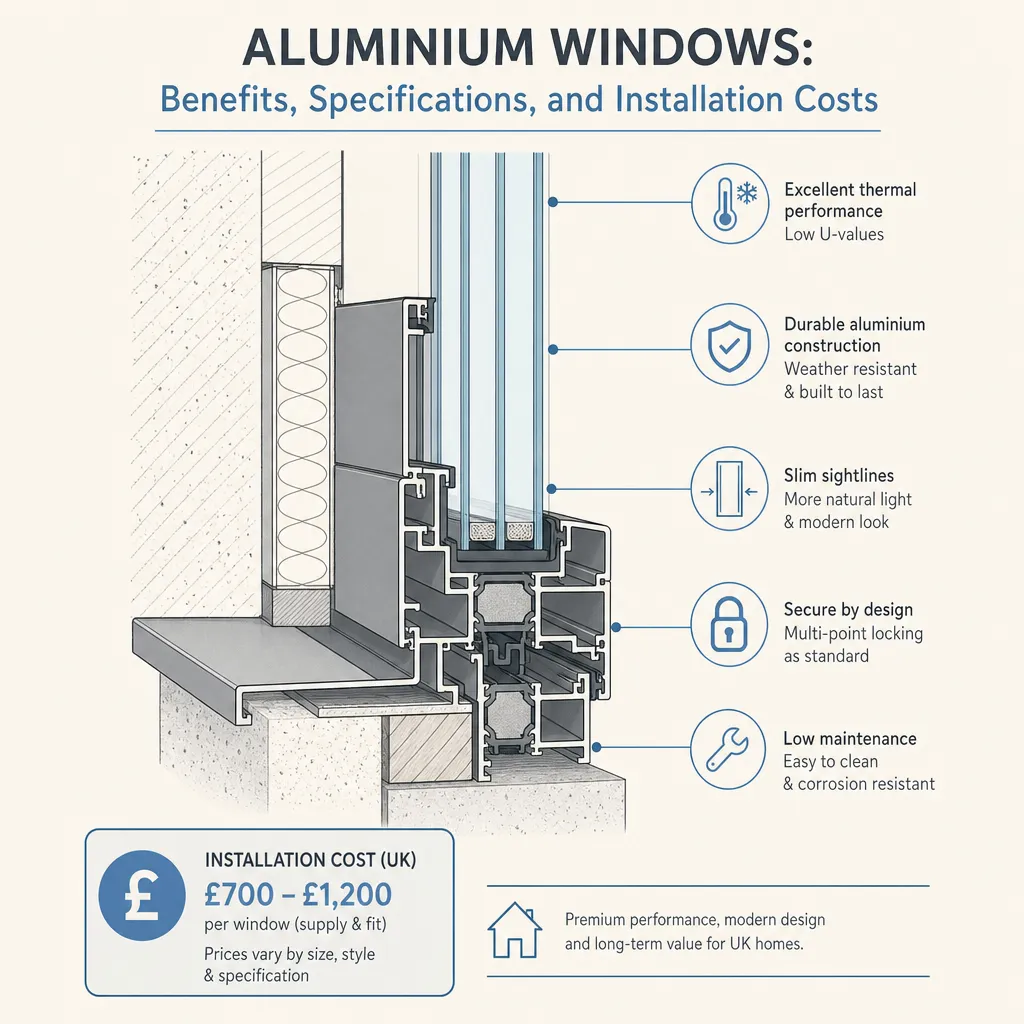
Aluminium Windows: Benefits, Specifications, and Installation Costs
Aluminium windows typically cost £600–£1,800 per window installed in the UK, depending on size and specification.
 Improvement & Build
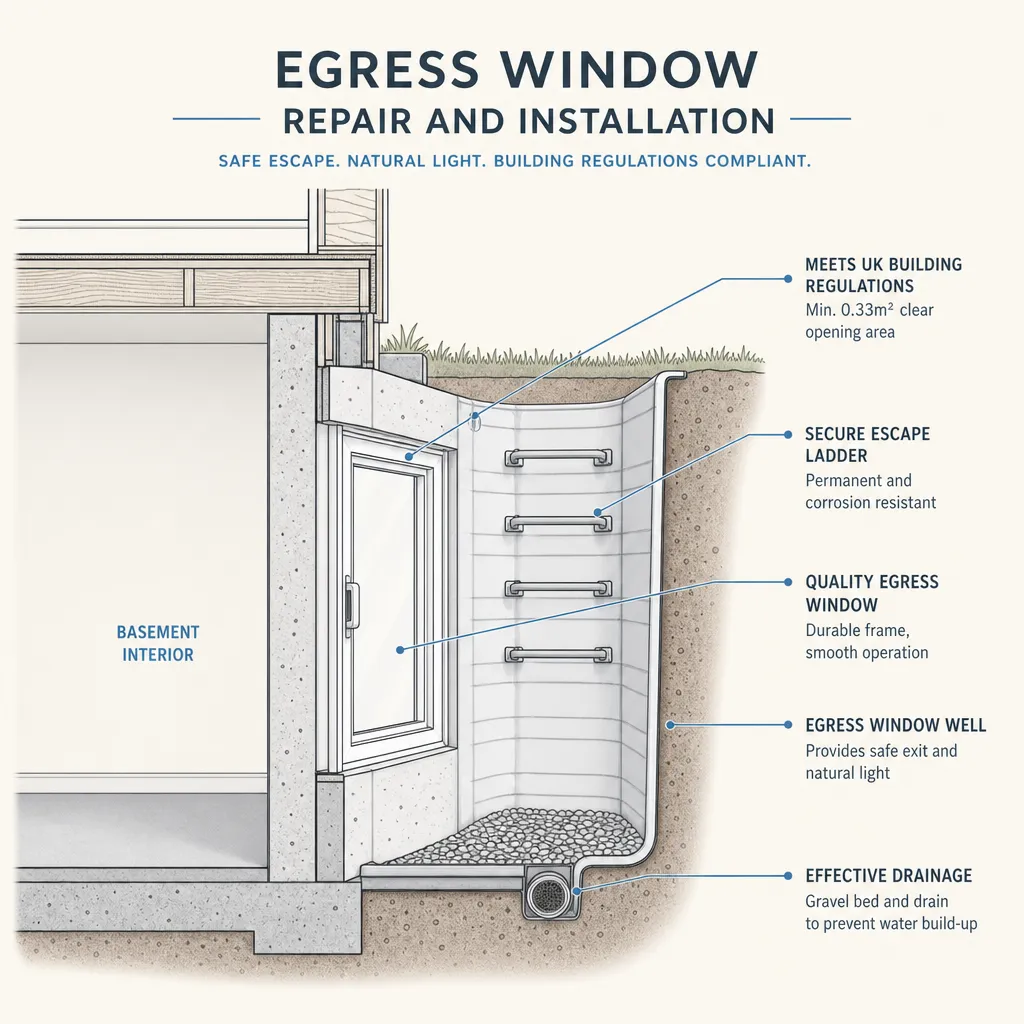
Egress Window Repair and Installation
An egress window is a window large enough to serve as an emergency escape route from a habitable room.
 Improvement & Build
Porch Screening: Options and Professional Installation Costs
Porch screening ranges from simple insect mesh on a timber frame to bespoke aluminium-framed glazed enclosures.