Planning Permission Requirements for Landscape Garden Modifications
By Housey · Last reviewed 11th of May 2026
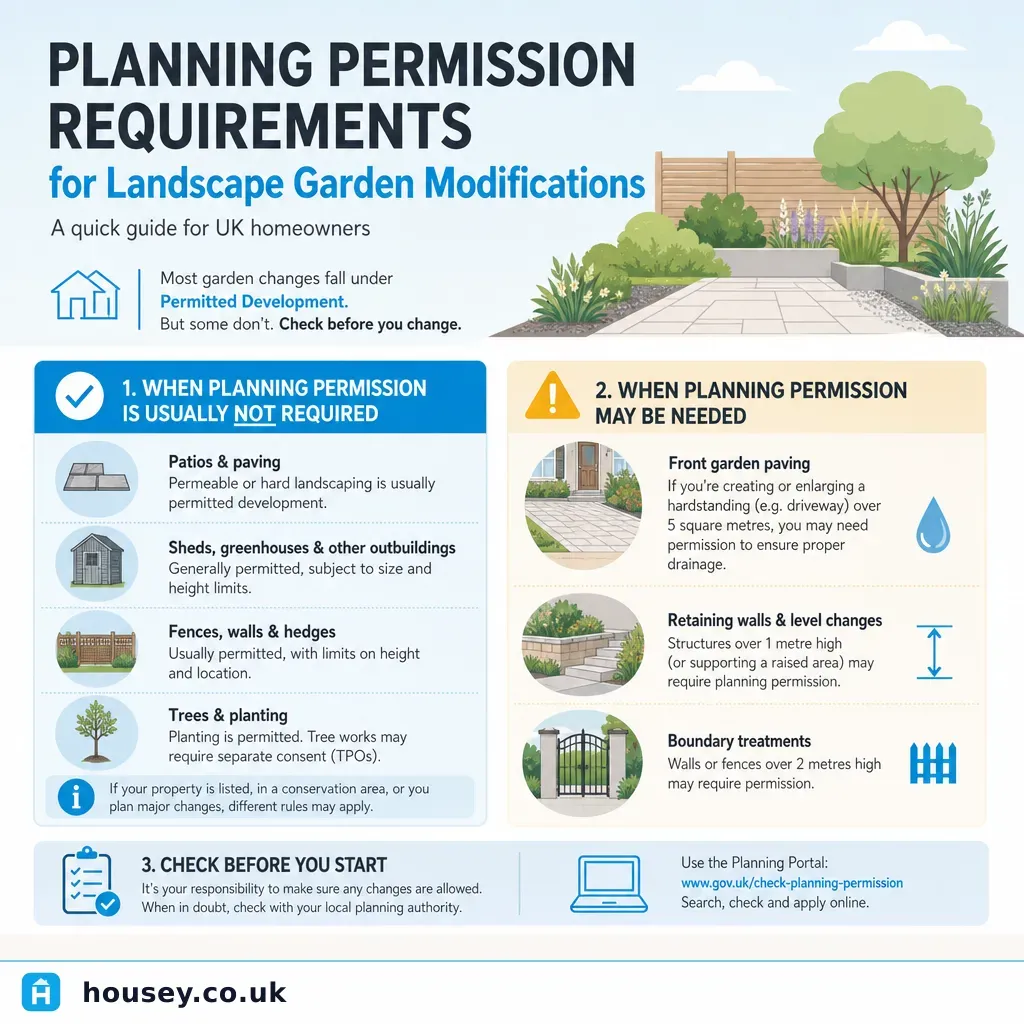
Planning Permission Requirements for Landscape Garden Modifications
Landscaping projects — from laying a new patio to terracing a sloping rear garden — rarely feel like planning matters to most homeowners. Yet certain garden changes do fall within the scope of planning permission or building consent, and getting it wrong can result in enforcement action or complications at the point of sale. The rules are spread across permitted development rights, the General Permitted Development Order (GPDO), and local restrictions that can vary significantly depending on where you live, the type of property, and whether it is subject to any planning history.
Key points
- Most standard soft landscaping — lawns, planting beds, and kitchen gardens — requires no planning consent, but hard landscaping and engineered earthworks can trigger obligations under the GPDO.
- Front garden surfaces larger than 5 m² must use permeable materials or channel run-off to a soakaway; otherwise a householder planning application is required. This rule was introduced in England in 2008.
- Raised decking more than 30 cm above ground level is not permitted development under Class E of Schedule 2 to the GPDO and usually requires planning permission.
- Trees with a Tree Preservation Order (TPO) cannot be pruned, topped, or removed without prior written consent from the local planning authority (LPA).
- Article 4 Directions can remove permitted development rights entirely — common in conservation areas, Areas of Outstanding Natural Beauty (AONBs), and some urban regeneration zones.
Does garden landscaping need planning permission?
Usually not, but it depends on what you are doing and where. The Town and Country Planning Act 1990 and the GPDO grant permitted development rights that allow many minor works without a full application. However, these rights have clear limits, and the details matter.
Hard landscaping
Patios, paths, and driveways at the rear of a property generally do not need planning permission if they sit at ground level and do not significantly alter drainage. At the front, the 5 m² permeable surfacing rule applies. If you are planning a front driveway using concrete, tarmac, or dense block paving over 5 m², you must either use a permeable product or direct run-off to a lawned or planted area. Failing this, a householder planning application is required before work begins.
Retaining walls, earthworks, and level changes
Significant changes in ground level — such as terracing a steeply sloping garden, or constructing retaining walls over approximately 1 m adjacent to a highway or over 2 m elsewhere — may require planning permission. These thresholds are set out in the GPDO. Even where planning consent is not needed, building regulations may apply if the work is close to a building's foundations or materially affects drainage to neighbouring land.
Decking and raised structures
Decking platforms higher than 30 cm above original ground level are not permitted development under Class E of Schedule 2 to the GPDO. The same class also limits all garden buildings and structures combined to no more than 50% of the curtilage, excluding the footprint of the original dwelling. If your decking would exceed either limit, planning permission is required before construction.
Trees
Any tree subject to a TPO requires written council consent before any work, including pruning. In conservation areas, all trees with a stem diameter of 75 mm or more at 1.5 m height must receive six weeks' prior notice to the LPA before cutting or removal — even without a specific TPO in place. Contact your council's tree officer and check the council's online TPO map before engaging an arborist.
Which works usually do not need permission?
- Laying a lawn, creating planting beds, or establishing a kitchen garden.
- Installing a garden pond (unless it requires excavation that materially alters drainage to neighbouring land).
- Erecting fences up to 1 m adjacent to a highway, or up to 2 m elsewhere, subject to no existing planning conditions restricting boundary treatments.
- Adding low-level garden lighting (note: mains electrical work still requires a Part P certified electrician).
- Laying a permeable hard surface in the front garden, regardless of area.
Decision tree: do you need planning permission?
- Permission is likely not required if your project involves soft landscaping only, or you are laying a permeable hard surface anywhere in the garden, or your decking will sit at ground level, or your retaining walls will remain below the GPDO height thresholds.
- Permission is likely required if you are paving the front garden with impermeable material over 5 m², or your decking will exceed 30 cm above original ground level, or retaining walls will exceed 1 m adjacent to a highway or 2 m elsewhere, or works will affect the curtilage of a listed building or a scheduled monument.
- Check with the local planning authority before proceeding if your property is in a conservation area, an AONB, or subject to an Article 4 Direction, or if there are conditions attached to a previous planning consent on the property.
- Contact a council tree officer or a qualified arborist if there are trees on or near the site — check for TPOs on the council's online map before any tree work is commissioned.
- Seek planning advice if the project involves significant cut-and-fill earthworks, a change to the street scene, or drainage implications for neighbouring properties.
Comparison: common landscaping works and consent status
Work | Usually permitted development? | When permission is needed | Notes |
|---|---|---|---|
Lawn and planting | Yes | Rarely | No GPDO restrictions apply |
Rear patio at ground level | Yes | Not usually | Drainage implications near buildings worth checking |
Front hard surface ≤5 m² (permeable) | Yes | No | Must be permeable or drain to soakaway |
Front hard surface >5 m² (impermeable) | No | Yes | Householder application required |
Rear decking ≤30 cm high | Yes | No | Must not exceed 50% curtilage combined with other structures |
Rear decking >30 cm high | No | Yes | Class E restriction applies |
Retaining wall ≤1 m (highway) or ≤2 m (elsewhere) | Yes | No | Structural advice recommended near foundations |
Retaining wall >1 m (highway) or >2 m (elsewhere) | No | Yes | Highways and drainage consultation likely needed |
Work to a TPO tree | No | Yes — council consent required | Separate TPO application to the LPA |
Tree work in conservation area | No | Six weeks' prior notice to LPA | Applies to trees over 75 mm diameter even without a TPO |
When to get professional help
Most residential garden projects are straightforward, but professional input is important in the following situations:
- Your property is listed, in a conservation area, or within an AONB — permitted development rights are often restricted or removed entirely and the consequences of non-compliance are more serious.
- The works involve significant earthworks near your home's foundations or adjacent to a neighbour's boundary.
- You need to remove or substantially alter a tree — particularly where a TPO may apply or the property is in a conservation area.
- A neighbour has raised an objection or the council has queried your proposed works.
- You want to construct a substantial garden structure — a studio, swim enclosure, or large outbuilding — that could approach or exceed the 50% curtilage limit.
How Housey can help
If you are unsure whether your project requires consent, a planning consultancy professional can advise you before you commit to materials or a contractor. For the design and build itself, landscapers and garden designers with practical planning knowledge can help shape a scheme that stays within permitted development limits — or manage a householder application if one is needed.
Frequently asked questions
Do I need planning permission to lay a patio in my back garden?
Generally, no. Paving at the rear of a house at ground level is usually permitted development. However, if the patio significantly raises ground level near the building, or if a previous planning consent placed conditions on the property, check with your local planning authority before work starts to confirm your specific position.
Is decking permitted development in the UK?
Decking is permitted development under Class E of the GPDO provided it sits no more than 30 cm above original ground level and the total footprint of all garden structures does not exceed 50% of the curtilage, excluding the original dwelling's footprint. Decking above 30 cm typically requires a householder planning application.
Can I build a retaining wall without planning permission?
Retaining walls are generally permitted development up to 1 m in height where they adjoin a highway, or up to 2 m elsewhere. Walls exceeding these thresholds require planning permission. Even where consent is not needed, structural and drainage advice is recommended if the wall sits close to a building's foundations or a property boundary.
What happens if I carry out landscaping without the required planning permission?
The local planning authority can issue an enforcement notice requiring reinstatement of original conditions. Unresolved planning breaches also complicate property sales, as conveyancing solicitors routinely check for compliance. Acting quickly to regularise works — via a retrospective application where the council may accept one — is usually the most practical course of action.
Sources and further reading
Useful next reads
 Planning & Pre-Build
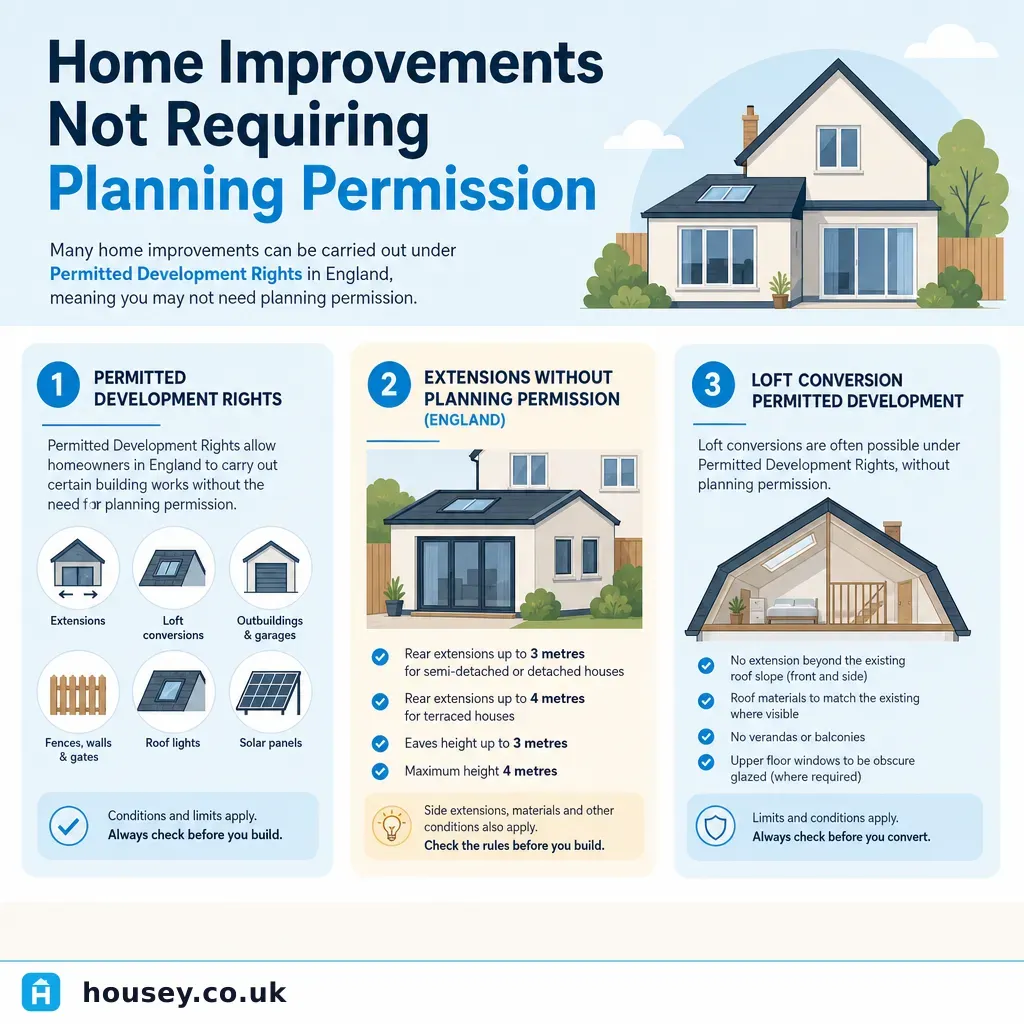
Home Improvements Not Requiring Planning Permission
Many common home improvements in England fall under Permitted Development Rights and do not require a planning application.
 Planning & Pre-Build
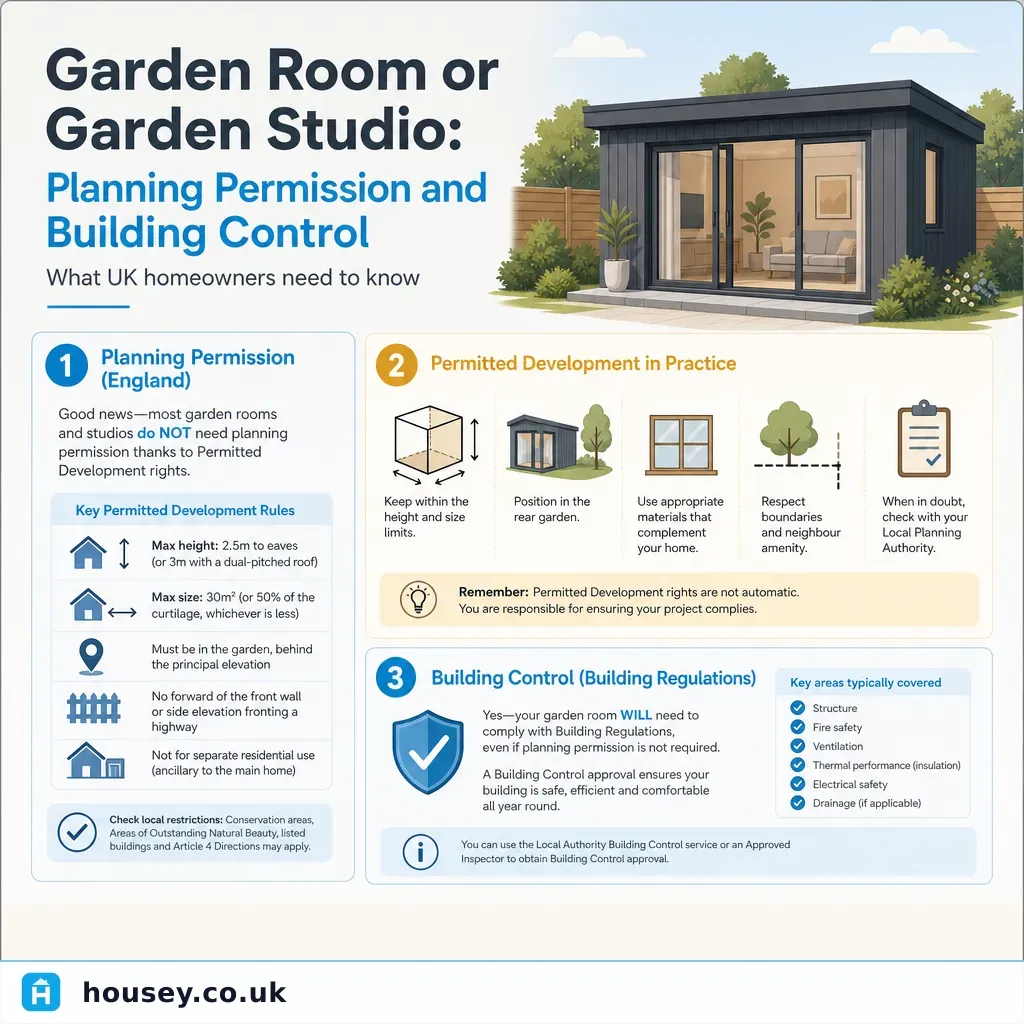
Garden Room or Garden Studio: Planning Permission and Building Control
A garden room or studio often qualifies as permitted development in England, meaning no planning application is needed — provided it occupies no more than 50% of the total curtilage, sits within height limits, and is not used as a separate dwelling.
 Planning & Pre-Build
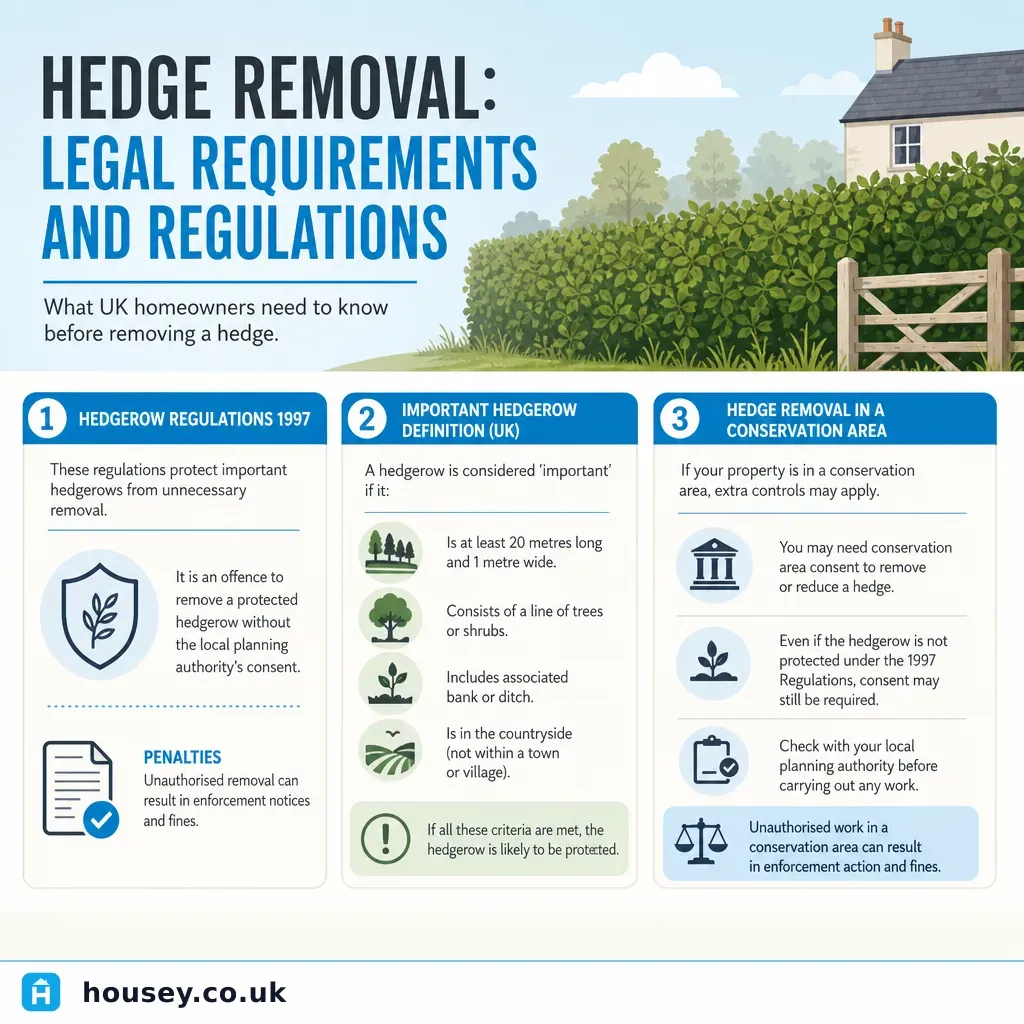
Hedge Removal: Legal Requirements and Regulations
Whether you need permission to remove a hedge in the UK depends on its location, age, and what it contains.
 Planning & Pre-Build
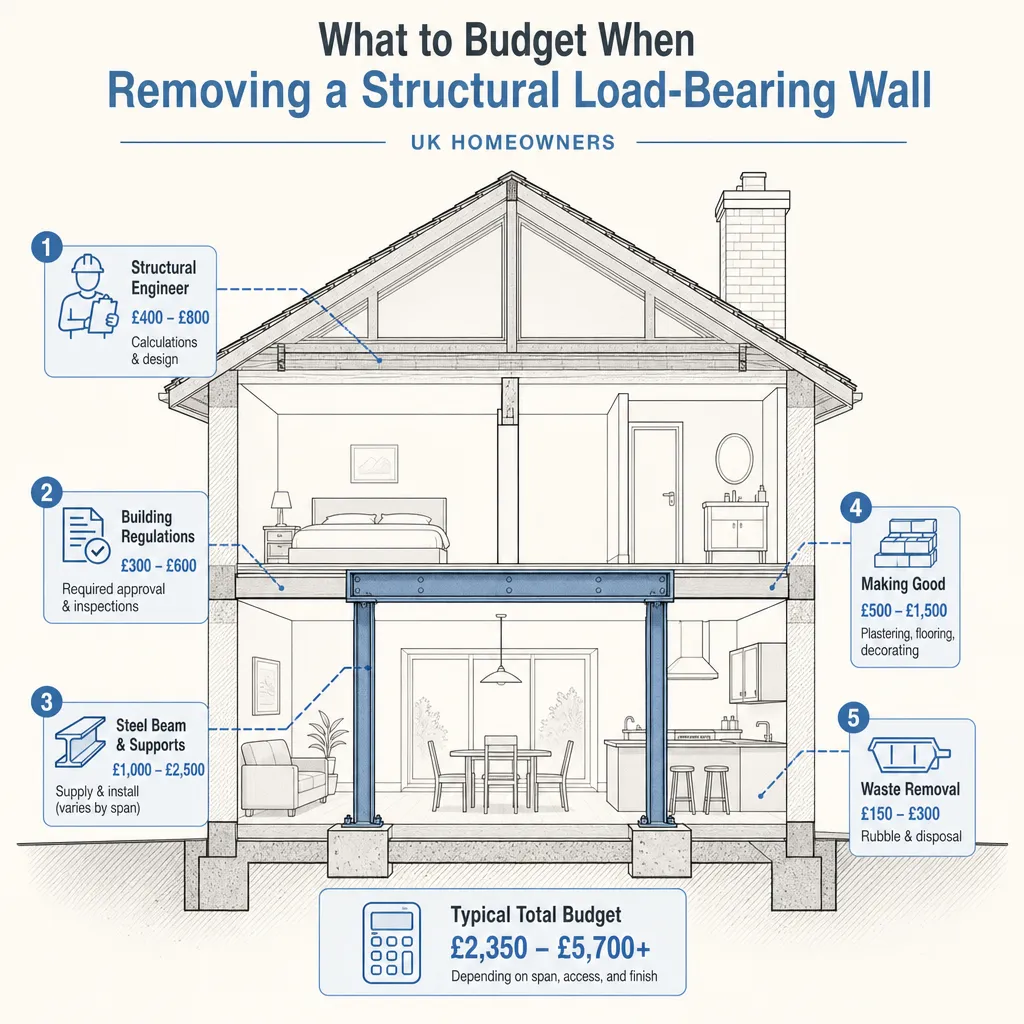
What to Budget When Removing a Structural Load-Bearing Wall
Removing a load-bearing wall in a typical UK home costs £2,500–£8,000 or more in total, covering a structural engineer's calculations, Building Regulations approval, the steel beam, builder's labour, and replastering.
 Planning & Pre-Build
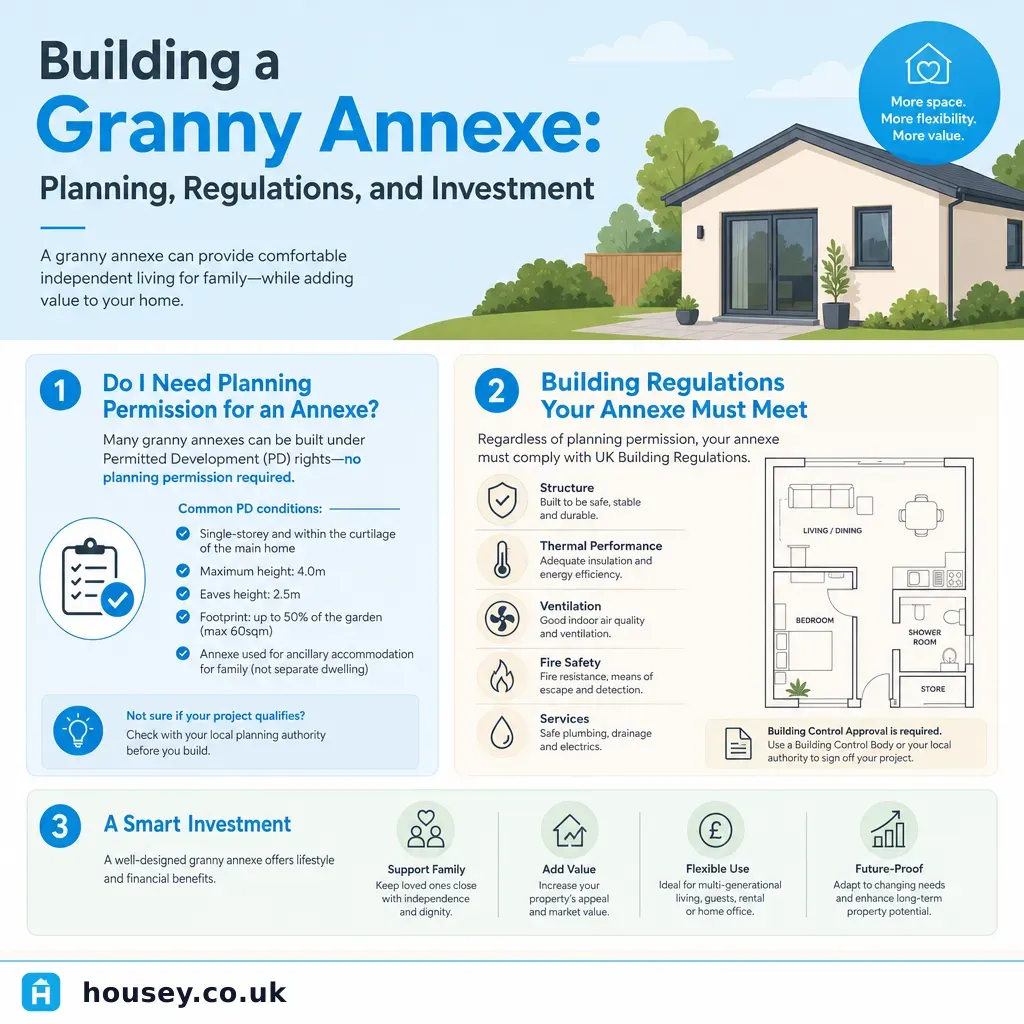
Building a Granny Annexe: Planning, Regulations, and Investment
A granny annexe in the UK may or may not need planning permission depending on whether it is classed as incidental to the main house or as a separate dwelling.