Installing Helifix Crack Bars: Duration, Installation Method, and Cost Factors
By Housey · Last reviewed 5th of May 2026
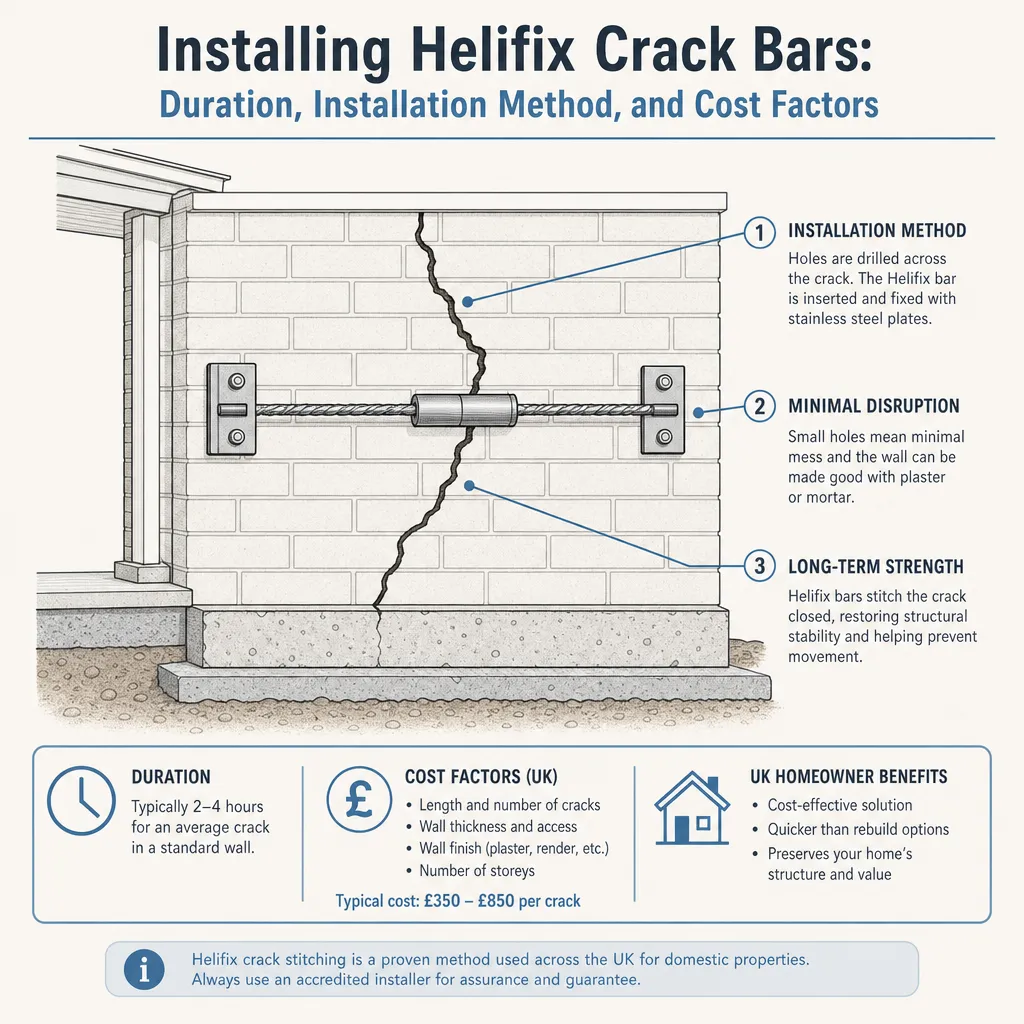
Installing Helifix Crack Bars: Duration, Installation Method, and Cost Factors
Helifix crack stitching bars are among the most widely specified methods for stabilising masonry cracks in UK residential properties, from Victorian terraces with stepped diagonal cracking to 1980s semi-detached houses where differential settlement has created movement at window openings. Homeowners typically encounter this repair method after a structural survey or engineer's report identifies crack activity and recommends stitching as part of a remediation programme. Understanding what installation involves, how long it takes, and what drives cost helps you assess contractor quotes accurately and ask the right questions before instructing a specialist.
Key points
- Helifix StitchBars are helical stainless-steel rods resin-grouted into slots cut across masonry cracks to restore tensile strength within the wall leaf itself.
- Installation on a single elevation typically takes one to three days; multi-elevation or complex properties may require three to five days including scaffold erection and making good.
- Indicative UK costs range from approximately £800 to £3,500 for standard domestic crack stitching, depending on scope, access, and region (Indicative UK costs, last reviewed 2026-05-05 — obtain at least three quotes, as prices vary significantly).
- Work must be specified by a structural engineer or suitably qualified surveyor — Helifix and similar helical bar systems are not self-specifying repairs that a contractor can define without professional input.
- The Helifix system holds a BBA Certificate (British Board of Agrément) and is manufactured to BS EN ISO 9001, supporting acceptance by UK mortgage lenders and buildings insurers when installed to specification.
What are Helifix crack bars and how do they work?
Helifix StitchBars are thin-diameter, helical stainless-steel bars. They are inserted into horizontal slots cut across the line of a crack in brickwork or blockwork, then locked in place using a two-part cementitious or epoxy resin grout.
The helical profile creates a mechanical bond with the grout and the surrounding masonry, stitching the two sides of a crack together and redistributing tensile forces across a wider area. Unlike surface-applied fillers or cosmetic repair mortars, the bars restore structural continuity within the masonry itself.
Helifix crack stitching is typically specified for:
- Stepped diagonal cracks in brickwork, often from differential settlement or subsidence
- Vertical cracks at window and door openings, often caused by lintel movement or thermal expansion
- Cracks at structural junctions such as where a bay window meets the main wall
- Stabilisation following underpinning, where the structure has been re-stabilised but residual cracks remain
It is not a standalone remedy for active movement. If the underlying cause — such as tree root action, drain failure, or inadequate foundations — has not been resolved, stitching bars alone will not prevent further cracking.
How long does Helifix installation take?
Duration depends on several variables:
Factor | Effect on duration |
|---|---|
Number and length of cracks | Each bar position takes 20–60 minutes to cut, grout, and finish |
Number of wall faces affected | Multi-elevation work multiplies access and setup time |
Scaffold or access requirements | Erecting and striking scaffold typically adds one to two days |
Substrate hardness | Hard engineering bricks slow cutting; softer fletton or common bricks are faster |
Grout cure time | Two-part resins reach working strength within 2–4 hours; full cure at 24 hours |
Making good and repointing | Re-finishing mortar joints to match existing adds time, often quoted separately |
For a typical semi-detached with two or three crack runs on a single elevation, expect active installation to take one to two days. A Victorian terrace with stepped cracking on both a front and a side elevation, or a property requiring 20 or more bar positions, may take three to five days including scaffold, installation, and making good.
Helifix versus alternative crack repair methods
Method | Best for | Not ideal for | Typical specialist | Main risk if wrong choice |
|---|---|---|---|---|
Helifix StitchBars | Masonry cracks needing tensile stitching; lender and insurer acceptance | Active movement; timber-frame construction | Structural repair contractor | Recurrence if underlying cause unresolved |
Resin injection | Fine hairline cracks; waterproofing combined with stitching | Wide or actively moving cracks | Specialist injection contractor | Crack reopens; water ingress continues |
Stainless steel wall tie replacement | Wall tie failure; cavity wall delamination | Surface crack stabilisation only | Specialist wall-tie contractor | Cavity wall instability if ties are missed |
Carbon-fibre straps | High-load situations; heritage masonry where slot cutting is restricted | Standard domestic residential | Structural engineer plus specialist installer | Over-engineering cost; potential heritage damage |
Cosmetic filler only | Cracks confirmed inactive for 12+ months and assessed as purely cosmetic | Any structural or active crack | Decorator | False reassurance; mortgage lender refusal |
Worked UK property scenario
Property: 1930s semi-detached in the East Midlands, cavity wall construction, clay subsoil.
Issue identified: A RICS Level 3 Building Survey noted a stepped diagonal crack running from a first-floor window head to the eaves on the front elevation, with a maximum width of approximately 4 mm. A structural engineer was instructed and attributed the crack to historic differential settlement now dormant. The engineer specified Helifix stitching at 450 mm centres across eight bar positions, using a two-part resin grout.
Installation: A specialist contractor installed the bars over one day. Scaffold was already in place for a separate window replacement programme, removing a significant cost item. Total bar positions: eight. Slot cutting and grouting: approximately five hours. Making good with matching lime mortar: three hours the following morning.
Indicative cost breakdown (last reviewed 2026-05-05):
- Structural engineer's assessment and written specification: £350–£600
- Helifix installation (eight bar positions, single elevation, no separate scaffold required): £900–£1,400
- Making good and repointing: included in contractor's quote in this instance
- Total indicative range: £1,250–£2,000
This scenario is illustrative. Actual costs and scope will vary significantly by region, access conditions, and the extent of cracking identified.
What to ask before accepting a quote
- Has the underlying cause of cracking been identified and resolved, or could movement still be active?
- Are you working to a structural engineer's written specification, and may I see it?
- What bar diameter, length, and spacing are you installing, and why is that specification appropriate for this crack?
- What grout product are you using — cementitious or epoxy resin — and what is the cure time before the wall can be loaded?
- Will the installation be documented with a method statement and a completion certificate?
- What making-good work is included, and will the repair be visible after completion?
- Is the work backed by an insurance-backed guarantee or structural warranty acceptable to mortgage lenders?
- Is VAT included in the quoted price, and are scaffold or access platform costs charged separately?
Important limitations
Helifix crack stitching is a structural repair method. This article provides general information only and does not substitute for a structural engineer's assessment of your specific property. Crack causes vary widely — including subsidence, heave, thermal movement, foundation failure, drain damage, and tree root action — and the appropriate repair depends entirely on identifying the cause first. Installing stitching bars without understanding the underlying cause may mask an ongoing structural problem. Always instruct a suitably qualified structural engineer or RICS-accredited surveyor before specifying or procuring crack repair works.
What to ask a qualified professional
When instructing a structural engineer or surveyor to assess your cracking, consider asking:
- Is this cracking active or historic, and how can you tell?
- What is the most likely cause, and has that cause been resolved?
- Do I need crack monitors installed before any repair commences, and if so for how long?
- Is Helifix helical bar stitching the right system for this crack, or is a different repair method more appropriate?
- Do I need building regulations approval or listed building consent for this repair?
- Will a completion certificate be acceptable to my mortgage lender and buildings insurer?
- Should I notify my buildings insurer before work begins, and will it affect my policy?
When to get professional help
Instruct a structural engineer or commission a RICS Level 3 Building Survey before proceeding with any crack repair if:
- Cracks are wider than 5 mm or have visibly widened since you first noticed them.
- Cracks are accompanied by sticking doors or windows, sloping floors, or bowing wall faces.
- You are buying a property with visible cracking that has been flagged by a surveyor.
- Your buildings insurer has requested an engineer's report as a condition of continued cover.
- The property has a history of subsidence insurance claims or sits on shrinkable clay subsoil.
- You are planning to sell and anticipate questions from a buyer's surveyor or mortgage valuer.
How Housey can help
Housey can connect you with qualified professionals at each stage of the crack repair process. Start with a structural survey or a structural engineering assessment to establish the cause of cracking and produce a written specification before instructing a contractor. For properties where damp or timber decay may be contributing to structural deterioration alongside cracking, a damp and timber survey can provide valuable additional diagnostic information.
Frequently asked questions
Do I need planning permission or building regulations approval for Helifix crack stitching?
For most domestic crack stitching repairs, building regulations approval is not required because the work restores the existing structure rather than creating new one. However, if your property is listed or in a conservation area, you may need listed building consent before proceeding. Permitted development rights do not apply to listed buildings. Check with your local planning authority if you are in any doubt.
Will Helifix stitching be accepted by my mortgage lender?
Most major UK mortgage lenders accept Helifix and similar helical bar systems when installed to a structural engineer's specification and supported by a completion certificate or insurance-backed guarantee. Some lenders require a structural engineer's sign-off on completion. Check your lender's specific requirements before instructing a contractor, as requirements vary between institutions.
How long do Helifix bars last?
Helifix StitchBars are manufactured from Type 316 stainless steel and, when correctly installed with the specified grout, have an expected service life exceeding 30 years. The system holds a BBA Certificate (British Board of Agrément), which supports its acceptance by UK mortgage lenders and buildings insurers when installed to the correct specification.
Can I install Helifix bars myself?
DIY installation is not recommended. The specification — bar size, spacing, depth, and grout type — must be designed by a qualified structural engineer for your specific crack. The work also requires specialist slot-cutting tools. DIY installation is unlikely to be accepted by mortgage lenders or insurers, and risks masking an ongoing structural problem without resolving it.
How do I know if my cracks are structural or just cosmetic?
Cracks wider than approximately 1 mm, those stepped through brickwork mortar joints, or those accompanied by sticking doors, sloping floors, or bowing walls are more likely to warrant professional assessment. Fine hairline cracks in render are often caused by thermal movement and may be cosmetic. A RICS Level 3 Building Survey or structural engineer can give you a definitive assessment.
Sources and further reading
- Helifix StitchBar crack stitching system — Helifix Ltd
- RICS professional standards and guidance — RICS
- Assessment of damage in low-rise buildings (BRE Digest 251) — Building Research Establishment
- Listed buildings: planning permission — GOV.UK
Useful next reads
 Surveys & Inspections
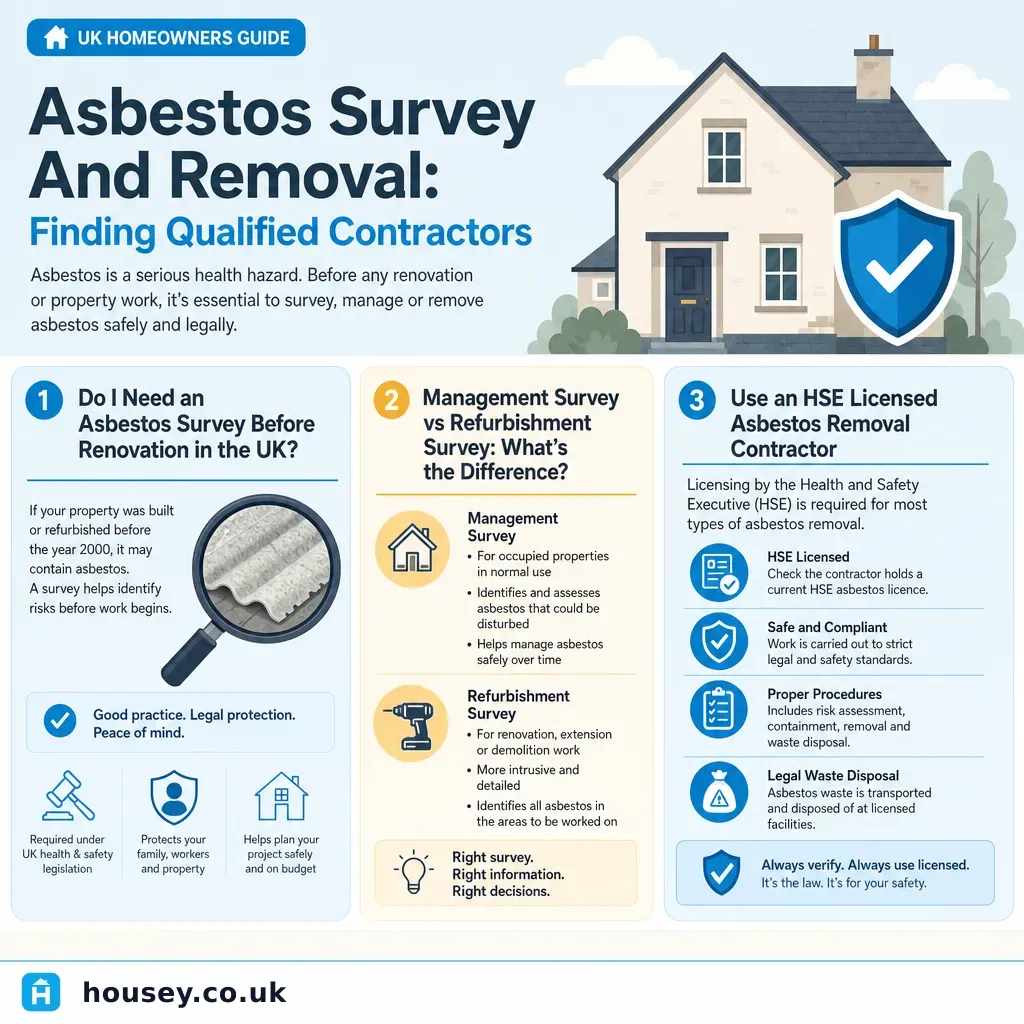
Asbestos Survey And Removal: Finding Qualified Contractors
An asbestos survey establishes whether asbestos-containing materials are present in your property and their condition.
 Surveys & Inspections
Structural Building Survey Costs
A RICS Level 3 Building Survey typically costs £500–£1,500 in the UK, depending on property size, age, and location.
 Surveys & Inspections
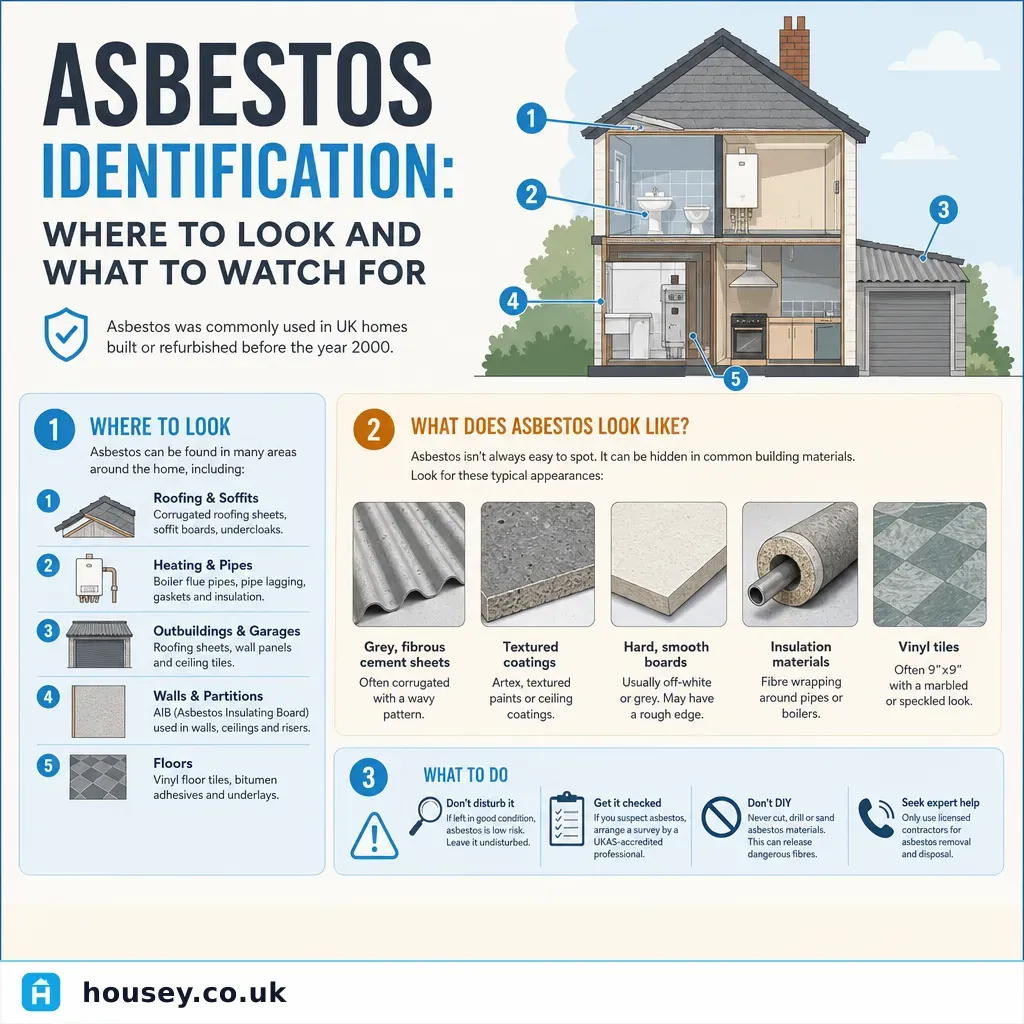
Asbestos Identification: Where to Look and What to Watch For
Asbestos can be present in dozens of locations in UK homes built before 2000, from textured ceiling coatings and floor tiles to pipe lagging and roof panels.
 Surveys & Inspections
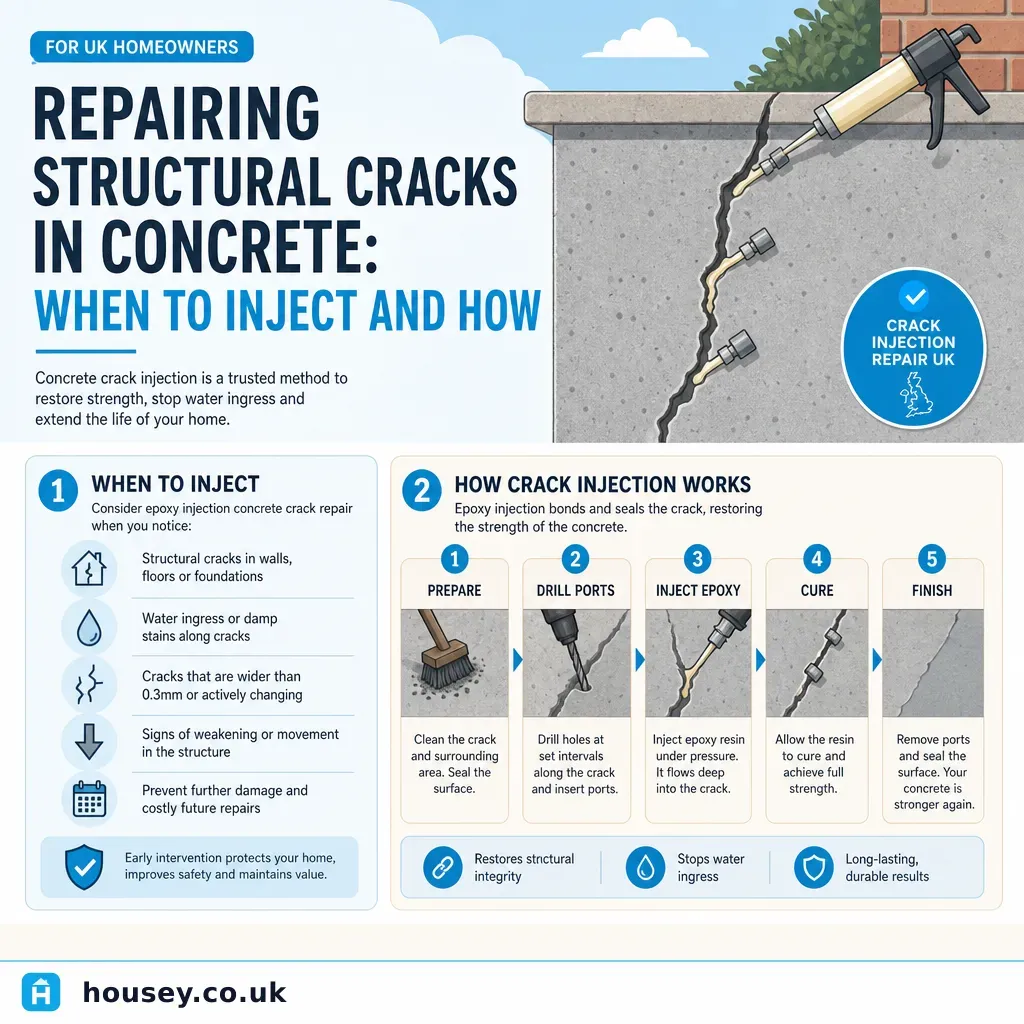
Repairing Structural Cracks in Concrete: When to Inject and How
Concrete crack injection is only appropriate after confirming the crack is inactive.
 Surveys & Inspections
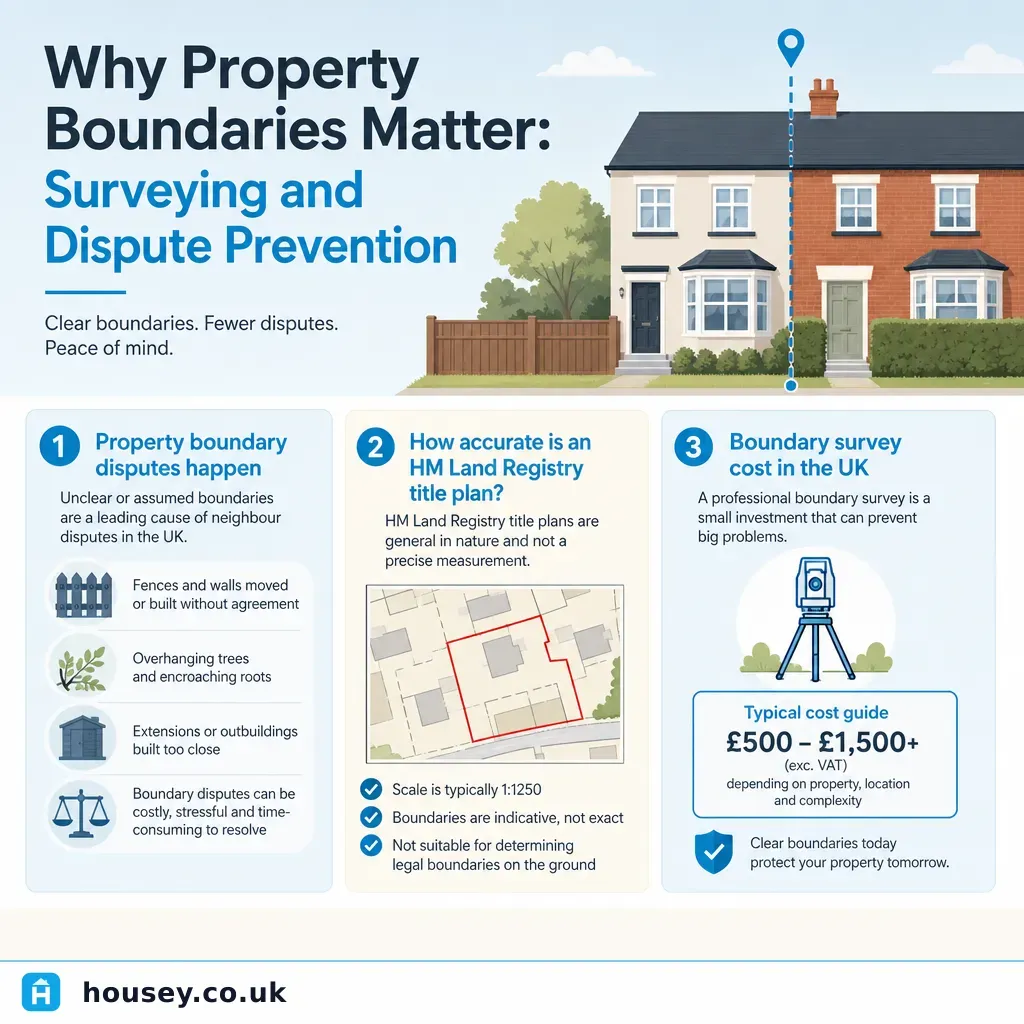
Why Property Boundaries Matter: Surveying and Dispute Prevention
Property boundaries in England and Wales are recorded as general boundaries by HM Land Registry — not precise measurements.