Hidden Costs in Home Renovation: Planning and Budget Management
By Housey · Last reviewed 26th of May 2026
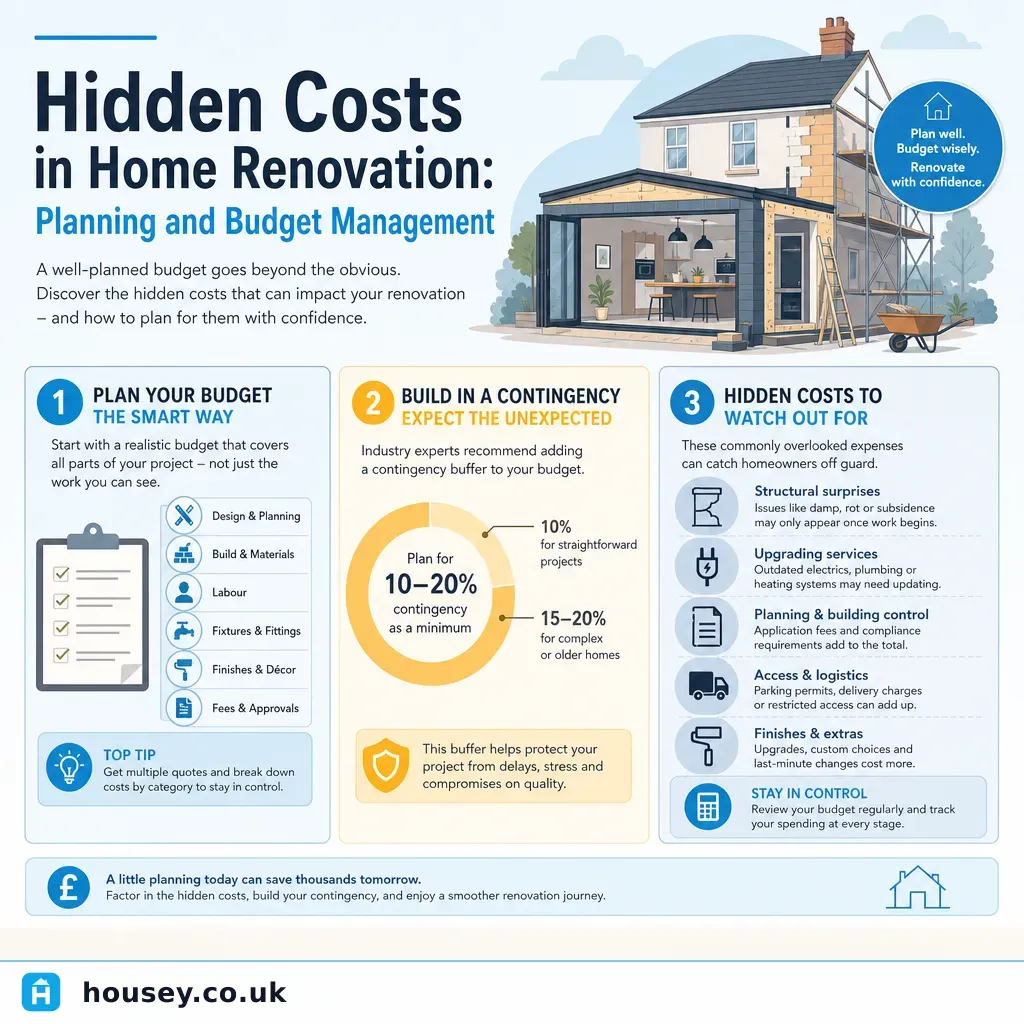
Hidden Costs in Home Renovation: Planning and Budget Management
Renovation projects in the UK have a well-earned reputation for running over budget — not because builders are dishonest or homeowners careless, but because a quote reflects what a contractor can see, not what your walls, floors, and drain runs conceal. Whether you are extending a 1930s semi, converting a Victorian terrace loft, or refurbishing a leasehold flat, the gap between quoted cost and final invoice is where financial stress lives.
Key points
- A 10–20% contingency on top of the contracted build cost is standard industry guidance for UK renovation projects — 20% is more appropriate for older or structurally complex properties.
- VAT at 20% applies to most renovation work; reduced and zero rates apply only in specific circumstances such as approved alterations to listed buildings and the first conversion of non-residential buildings to dwellings.
- Party Wall etc. Act 1996 fees can add £700–£2,500 per adjoining neighbour if they appoint their own surveyor — this cost is borne by the building owner, not the neighbour.
- Building Regulations application fees and inspection charges are frequently absent from early builder estimates; local authority fees vary by application type and project value.
- A pre-renovation structural or specific defect survey can identify hidden issues before contracts are signed, significantly reducing mid-project surprises.
Why renovation budgets fail before work begins
Most budget shortfalls are set in motion during the planning phase. A homeowner receives three quotes, picks the middle one, and assumes that number is what the project will cost. It is not — it is what the contractor expects to charge based on drawings and a site visit.
What quotes typically exclude:
- Professional fees (architect, structural engineer, planning consultant, principal designer)
- Planning application fees (£258 for a householder application in England as of 2026; specialist applications differ — see GOV.UK planning fees guidance)
- Building Regulations fees (full plans application: typically £200–£900+ depending on work value; local authority rates vary)
- Party Wall etc. Act 1996 surveyor fees
- VAT (check whether your contractor is VAT-registered and whether your project qualifies for a reduced rate)
- Temporary accommodation, storage, or skip hire
- Structural surveys or investigations where hidden defects are suspected
Building these costs into your estimate at the planning stage — not when invoices arrive — is the single most effective way to control a renovation budget.
The hidden costs most homeowners miss
Structural surprises
In a Victorian terrace or 1930s semi, opening up walls and floors often reveals inadequate or missing lintels, timber rot or beetle infestation in floor joists, subsidence not visible at inspection, and hidden asbestos-containing materials in homes built before 2000. Each of these can halt a project while specialists are called in and remedial costs agreed. An asbestos refurbishment survey before works begin — typically £150–£400 for a standard property — is money well spent on any pre-2000 home.
Services: drainage, electrics, and plumbing
Existing drainage layouts often do not match original drawings, or no drawings exist at all. Repositioning a soil stack or running new drains across a garden can cost significantly more than projected if ground conditions or layout surprises emerge. Electrical rewiring required to comply with Part P of Building Regulations and current consumer unit specifications is similarly unpredictable in older homes.
Scaffolding and access
Scaffolding is often quoted as a separate line item or omitted from early estimates entirely. For a two-storey extension, expect scaffolding to add £800–£2,500 depending on access, duration, and local licensing requirements. Hire costs increase for longer programmes — budget for re-hires if the build slips.
Planning conditions and Building Control
Even where permitted development rights apply, Building Control will inspect the work and may require changes to comply with Approved Documents. If planning permission is granted with conditions — specified materials, drainage details, landscaping — meeting those conditions costs money and time that is not always captured in early budgets.
Worked UK renovation scenario
A homeowner in Leeds purchases a 1960s three-bedroom semi and plans a single-storey rear extension of approximately 20 m². Their builder quotes £42,000 for structure, finishes, and fit-out.
Cost item | Estimated amount |
|---|---|
Builder's contracted sum | £42,000 |
Architect drawings and specification | £2,800 |
Structural engineer (beam design) | £600 |
Building Regulations full plans fee | £520 |
Party wall agreement (one neighbour) | £1,200 |
Asbestos refurbishment survey | £220 |
VAT at 20% on labour and materials | £8,400 |
Scaffolding (separate hire) | £1,400 |
Kitchen upgrade added to scope mid-build | £4,200 |
Contingency (rot found in existing lintel) | £1,100 |
Total | £62,440 |
The final cost was 49% above the initial builder quote — not because the quote was wrong, but because the homeowner had not included professional fees, statutory fees, VAT, or a contingency at the outset.
Indicative UK costs, last reviewed 2026-05-26. Costs vary by location, contractor, and project complexity.
Homeowner budget checklist
Use this checklist to build a realistic total project cost before committing to works.
Pre-construction
During construction
Contingency and post-construction
Red flags that your budget is undercooked
- Builder's quote contains no VAT line — confirm whether they are VAT-registered
- Quote excludes all professional and statutory fees with no explanation
- No provisional sums for opening-up investigations on an older property
- No mention of the Party Wall Act where works are near a boundary or shared wall
- A start date is promised before a structural engineer has reviewed the drawings
- "Price includes everything" with no detailed specification to back that claim
Comparison: approaches to budgeting a UK renovation
Approach | Cost visibility | Risk of overspend | Best suited to |
|---|---|---|---|
Accept builder quote as total project cost | Low — excludes fees, VAT, contingency | High | Minor cosmetic works only |
Builder quote plus estimated additional fees | Medium | Moderate | Experienced owner-managed projects |
Full cost plan from architect or project manager | High — itemises all cost categories | Low to moderate | Extensions and full refurbishments |
Design-and-build contract (fixed price, detailed spec) | High — single contract sum | Low | Owners prioritising cost certainty |
Self-managed with trade contractors | Variable | High without site experience | Owners with strong project management skills |
When to get professional help
If your renovation involves structural alterations, shared walls, or a property built before 1980, commissioning professional cost planning before agreeing a build contract is worthwhile. Surprises discovered mid-project — a rotten beam, an unlicensed drain, inadequate lintels — are always more expensive to fix once walls are open and contractors are on site.
Consider instructing a project manager or design-and-build firm if:
- The project value exceeds £50,000
- You are managing multiple contractors and cannot be on site regularly
- The property is listed or in a conservation area
- You have had a previous project run significantly over budget
- The scope is likely to change as work progresses
How Housey can help
Housey connects you with vetted extension builders, project managers, and design-and-build firms who provide itemised quotations — making it straightforward to compare costs on a like-for-like basis and build a realistic total project budget before committing to works.
Frequently asked questions
How much contingency should I allow for a home renovation in the UK?
Most UK construction professionals recommend 10–20% of the total contracted build cost as contingency. Use the higher figure (20%) for older properties, projects with suspected hidden defects, or significant structural work. The contingency should be built into your budget from the start — not added later once overspend has already occurred.
Is VAT always charged on home renovation work?
VAT at 20% applies to most renovation work by VAT-registered contractors. Exceptions apply: approved alterations to listed buildings and the first conversion of a non-residential building to a dwelling may be zero-rated. Standard extensions and refurbishments attract the full 20% rate. Always confirm the VAT treatment in writing before signing a contract.
Do I need to notify my neighbour before building an extension?
If works fall within the scope of the Party Wall etc. Act 1996 — work on a shared wall, excavation within 3 metres of a neighbour's building, or a new wall on the boundary — you must serve a Party Wall Notice before starting. If the neighbour objects or does not respond within 14 days, a surveyor must be appointed and the building owner bears the cost.
Why do renovation projects cost more than the original quote?
Quotes reflect what a contractor can assess from drawings and a site visit — not what lies behind walls and under floors. Hidden defects, professional fees, VAT, statutory fees, and scope changes are frequently excluded from early estimates. Building a full cost plan that captures every category from day one is the most reliable way to avoid a surprise.
Sources and further reading
- Planning application fees — GOV.UK
- Party Wall etc. Act 1996 explanatory booklet — GOV.UK
- Building Regulations approval — GOV.UK
- CDM 2015: frequently asked questions — Health and Safety Executive
- VAT Notice 708: buildings and construction — HM Revenue & Customs
Useful next reads
 Improvement & Build
Renovation Investment Strategy: Assessing Properties Before You Buy
Renovation investment properties require more due diligence than a standard home purchase.
 Improvement & Build
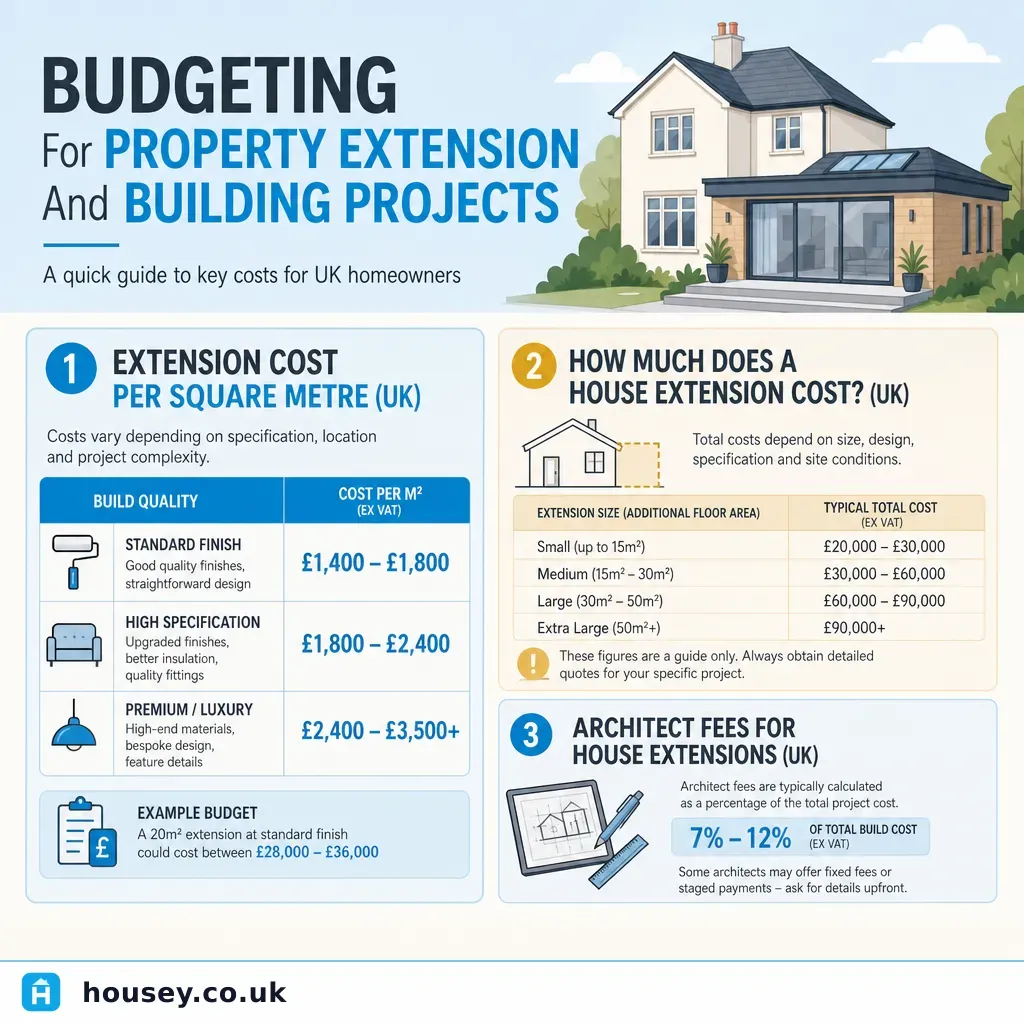
Budgeting For Property Extension And Building Projects
A typical UK single-storey rear extension costs roughly £1,500–£2,500 per square metre to build, before professional fees, planning costs, and VAT.
 Improvement & Build
Small kitchen renovation: budgeting for costs and planning your project
A small kitchen renovation in the UK typically costs £5,000–£15,000 for a full refresh including new units, worktops, tiling, and appliances, though costs vary widely by specification, region, and whether structural changes or rewiring are involved.
 Improvement & Build
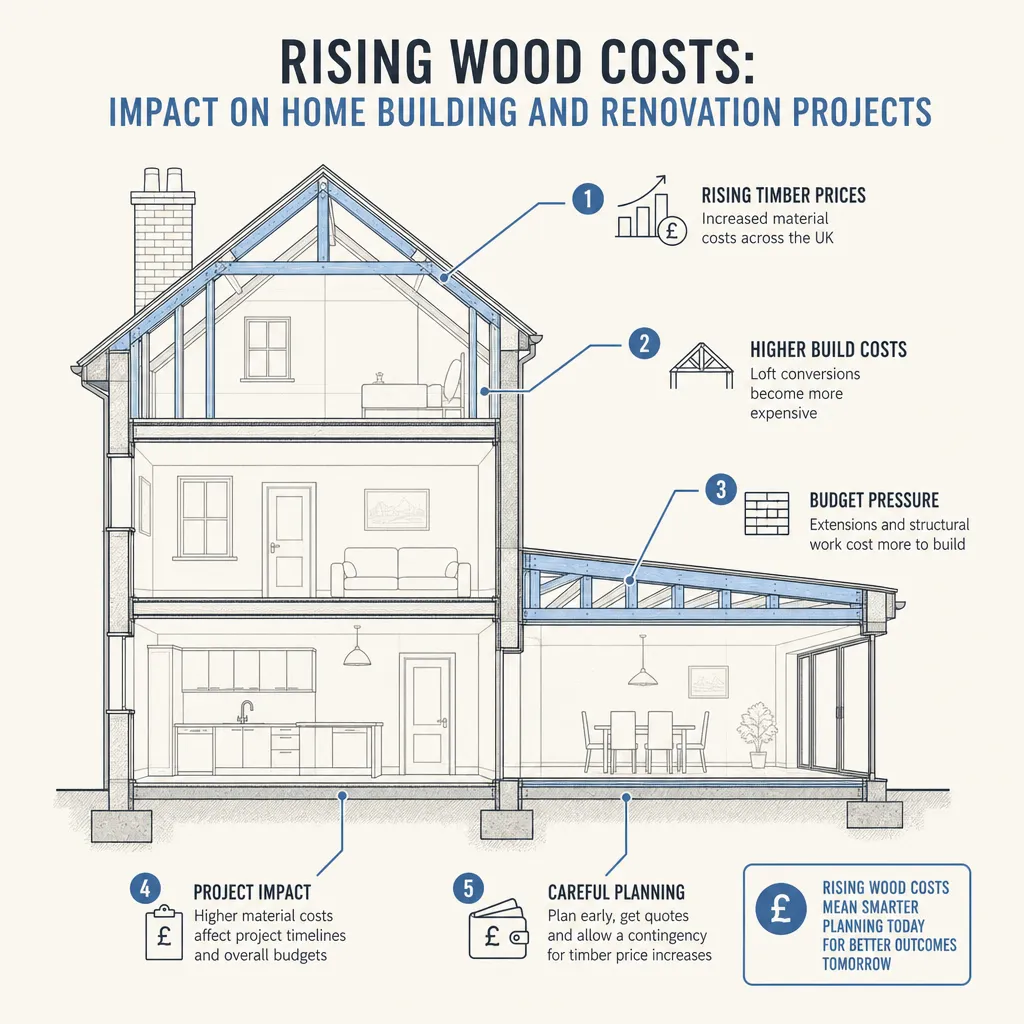
Rising Wood Costs: Impact on Home Building and Renovation Projects
Rising timber prices affect UK home renovation budgets most on timber-frame extensions, loft conversions, and self-builds, where structural wood can account for 15–25% of material costs.
 Improvement & Build
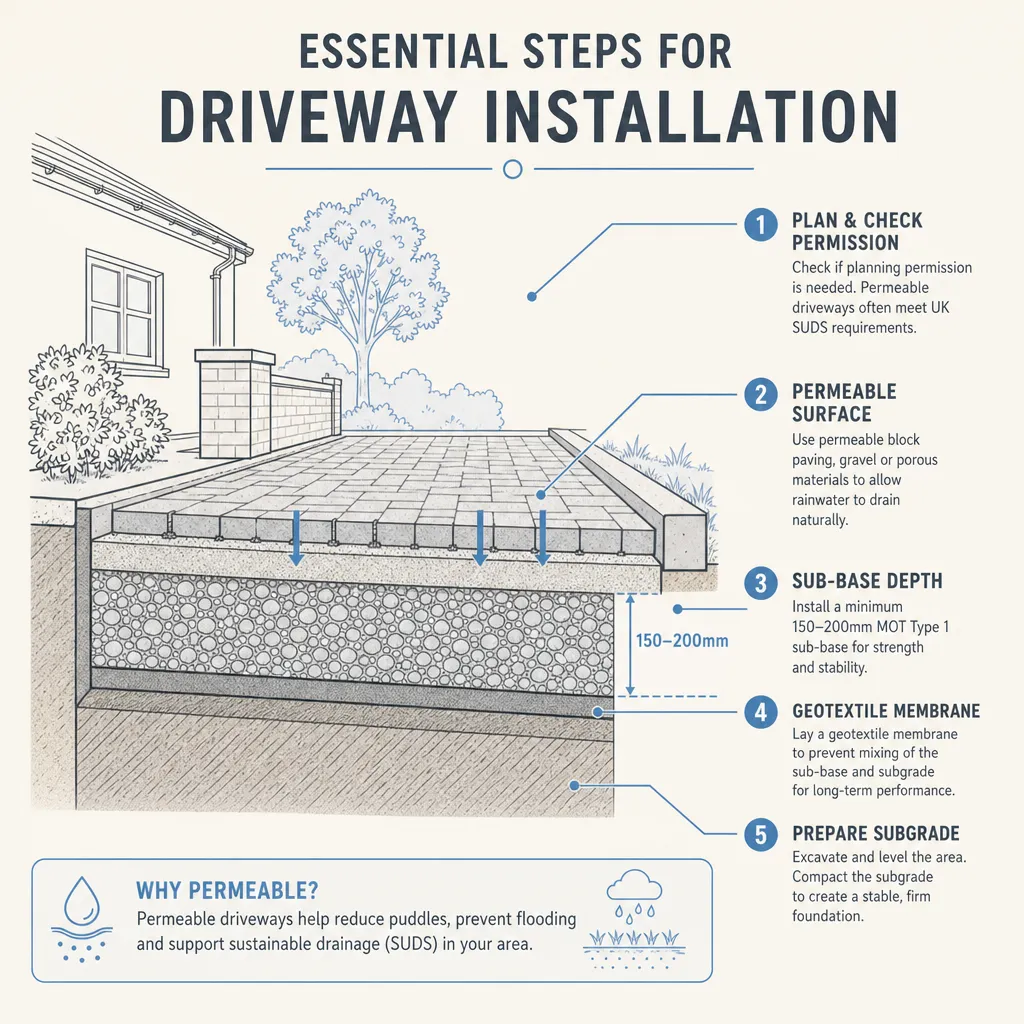
Essential Steps for Driveway Installation
Installing a driveway in England requires planning permission only when using an impermeable surface (standard tarmac, concrete, or block paving) on a front garden area over 5 m².