Hiring a General Contractor: What to Look For and Key Questions to Ask
By Housey · Last reviewed 7th of May 2026
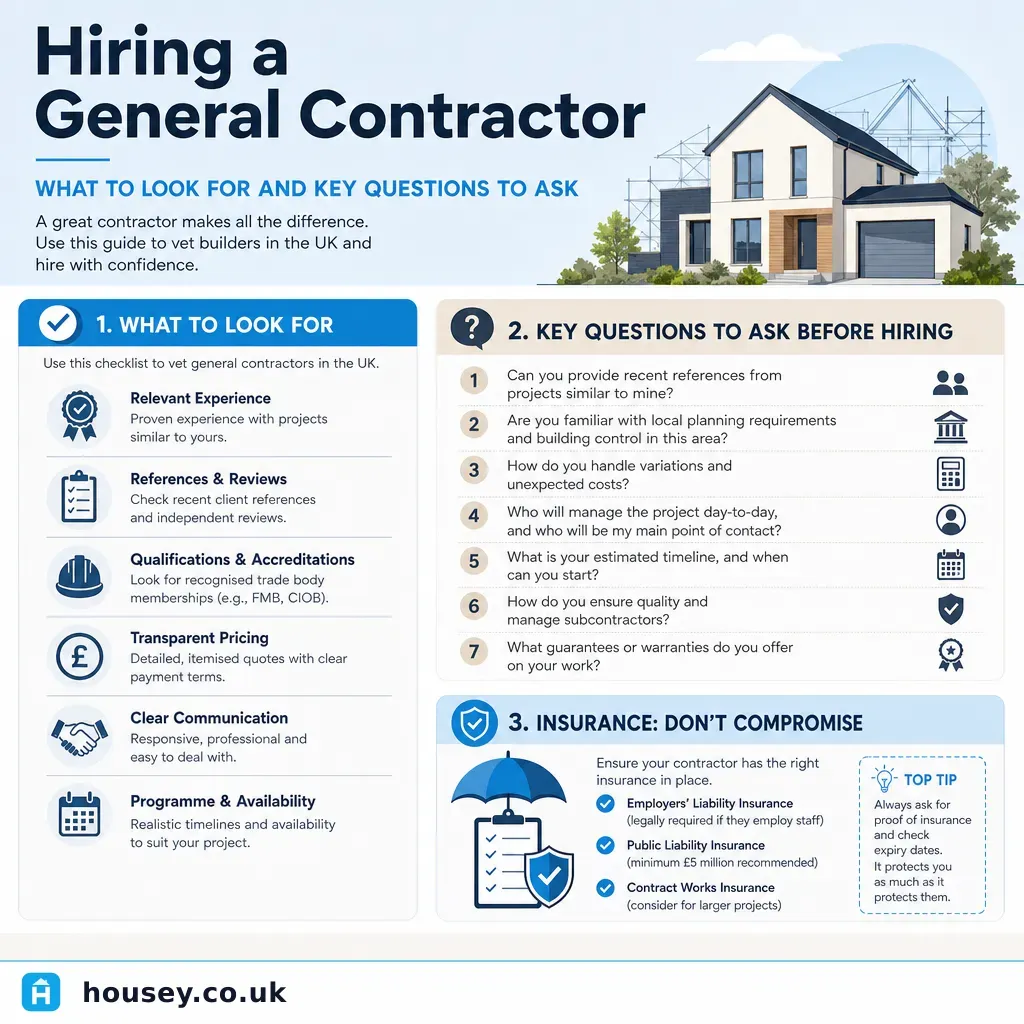
Hiring a General Contractor: What to Look For and Key Questions to Ask
Planning an extension, loft conversion, or significant renovation brings the contractor question to the front quickly. In the UK, a general contractor — also called main contractor — takes overall responsibility for on-site delivery: organising labour, materials, subcontractors, and programme. Choosing poorly is one of the most common and costly homeowner mistakes; choosing well can make the difference between a smooth build and months of dispute.
Key points
- The Federation of Master Builders (FMB) runs a vetted membership scheme; member firms agree to a code of practice and a binding dispute resolution service.
- Public liability insurance of at least £2 million is the minimum most insurers and mortgage lenders expect — always ask for the certificate, not just verbal confirmation.
- A written contract — ideally the JCT Minor Works Building Contract or JCT Homeowner Contract — is legally stronger than a verbal agreement or email exchange.
- Stage payments tied to verified milestones are standard for projects over around £10,000; never pay the full contract sum upfront.
- Under the Employers' Liability (Compulsory Insurance) Act 1969, contractors with employees must hold employers' liability cover of at least £5 million.
General contractor, project manager, or design-and-build firm?
Choosing the right delivery structure before approaching anyone for quotes saves time and avoids engaging the wrong professional for your situation.
Option | Best for | Not ideal for | Typical output | Main risk if wrong |
|---|---|---|---|---|
General contractor | Projects with designs complete; extensions, loft conversions, renovations | Complex projects without a clear specification | Completed works, building control sign-off | Scope creep without independent oversight |
Project manager | Larger or complex builds; clients wanting independent oversight of a main contractor | Small, straightforward projects | Programme management, cost reporting, snagging sign-off | Adds cost without value on simple jobs |
Design-and-build firm | Single-point accountability for design and construction | Clients wanting their own architect and full design control | RIBA-stage drawings plus completed works | Less design independence; harder to compare quotes |
How to vet a contractor
Accreditation: FMB and TrustMark membership require independent vetting. Subcontractors should hold Gas Safe (gas), NICEIC or NAPIT (electrical), or FENSA/CERTASS (windows and doors) registration.
Insurance: Ask for copies — not just verbal confirmation — of public liability insurance (minimum £2 million), employers' liability insurance (minimum £5 million if the contractor employs staff), and professional indemnity insurance if design is included.
References: Request two or three references for comparable recent projects and telephone them. Ask whether works completed on time, to budget, and to the expected quality, and whether the client would use the contractor again.
Companies House: Verify the contractor's registered company is active with filed accounts at the Companies House public register (find-and-update.company-information.service.gov.uk). Check for dissolution notices or winding-up proceedings.
VAT registration: For projects above roughly £10,000, most established contractors are VAT-registered. A sole trader below the VAT threshold is not necessarily a problem, but understand what that means for your invoice trail.
What to ask before accepting a quote
- What is included in the price and what is specifically excluded?
- Who will carry out the work — directly employed staff, subcontractors, or a mix?
- What qualifications and registrations do key trades hold?
- What is the payment schedule and is it tied to verified completion milestones?
- How will variations and unforeseen site conditions be priced — pre-agreed rates or a formal variation process?
- Who notifies building control and obtains statutory sign-off?
- What warranty is offered on completed works and is it backed by an insured scheme?
- Who holds site insurance while works are live?
- Is VAT included in the quoted price?
Red flags to watch for
- Cash only, no VAT invoices — without a documentary paper trail, legal recourse is significantly limited.
- Pressure to sign immediately — legitimate contractors rarely require same-day decisions on significant projects.
- No fixed price, no written contract — 'we will sort it as we go' exposes you to open-ended cost escalation with no basis for dispute.
- Large upfront payment requests — more than 10–15% before work starts is a concern.
- No insurance documents on request — inability to produce current certificates within a working day is a risk indicator.
- Reluctance to allow building control inspections — compliant contractors welcome statutory sign-off at each stage.
- Very low quotes without a written breakdown — an unusually cheap price usually reflects scope gaps rather than genuine efficiency.
Contracts and stage payments
For any project above around £5,000, a written contract is essential. The JCT Minor Works Building Contract suits straightforward projects and includes provisions for extensions of time and formal variation instructions. The JCT Homeowner Contract is a simplified version designed for residential renovation without a supervising professional.
Stage payments should reflect verified progress, not calendar dates. A typical structure for a £30,000 extension: 10% on mobilisation; 25% on groundworks and foundations complete; 25% on structure complete; 25% on plastered shell with first-fix mechanical and electrical installations; 15% on practical completion, with a 2.5–5% retention held for six to twelve months. Agree in writing what triggers retention release before you sign.
When to get professional help
Consider engaging an independent professional if:
- The project involves structural alterations or underpinning — a structural engineer should sign off the design before works begin.
- The project value exceeds £50,000 — an independent project manager or contract-administering architect provides oversight that often pays for itself through tighter variation control and better snagging resolution.
- You have received widely varying quotes and cannot determine which contractor is pricing the full scope.
- Works have started and a dispute is developing — early professional engagement is usually cheaper than resolving problems further down the line.
If a contract dispute escalates, the FMB Dispute Resolution Service, the Centre for Effective Dispute Resolution (CEDR), or the Technology and Construction Court are available routes depending on the sum and complexity involved.
How Housey can help
Housey connects homeowners with vetted UK professionals across the full project lifecycle. If you want single-point accountability for design and construction, design-and-build firms can price the whole project from concept to completion. For larger builds where independent cost and quality oversight matters, project managers can act as your representative on site and administer the contract with your main contractor.
Frequently asked questions
Do I need a contract even for a small job?
For jobs under about £1,000, a written quote accepted by email is often sufficient. For anything larger, a contract specifying scope, price, programme, and payment terms is strongly advisable. Verbal agreements are difficult to enforce and leave you exposed if a dispute arises over quality, cost, or completion.
How many quotes should I get?
At least three comparable quotes, all priced against the same specification or drawings. Fewer makes it difficult to identify scope gaps or outliers. More than five rarely adds value and can be discourteous to contractors who invest time in preparing a detailed price.
Is a contractor responsible for building regulations compliance?
Responsibility sits with the building owner, but many contracts assign the contractor responsibility for notifying building control and obtaining statutory sign-off. Confirm this is explicit before signing — do not assume it applies automatically.
What insurance should my contractor hold?
Public liability insurance (minimum £2 million) and, if the contractor has employees, employers' liability insurance (minimum £5 million, legally required). If design services are included, also ask for professional indemnity insurance.
Can I pay a contractor in cash?
You can, but always obtain a VAT invoice or written receipt for every payment. Cash transactions without documentation give you very limited legal recourse if work is disputed or left incomplete.
Sources and further reading
- Federation of Master Builders — Find a Builder — Federation of Master Builders
- TrustMark — Government-endorsed quality scheme — TrustMark
- JCT Homeowner Contracts — Joint Contracts Tribunal
- Employers' Liability (Compulsory Insurance) Act 1969 — legislation.gov.uk
- Companies House — company search — GOV.UK
Useful next reads
 Planning & Pre-Build
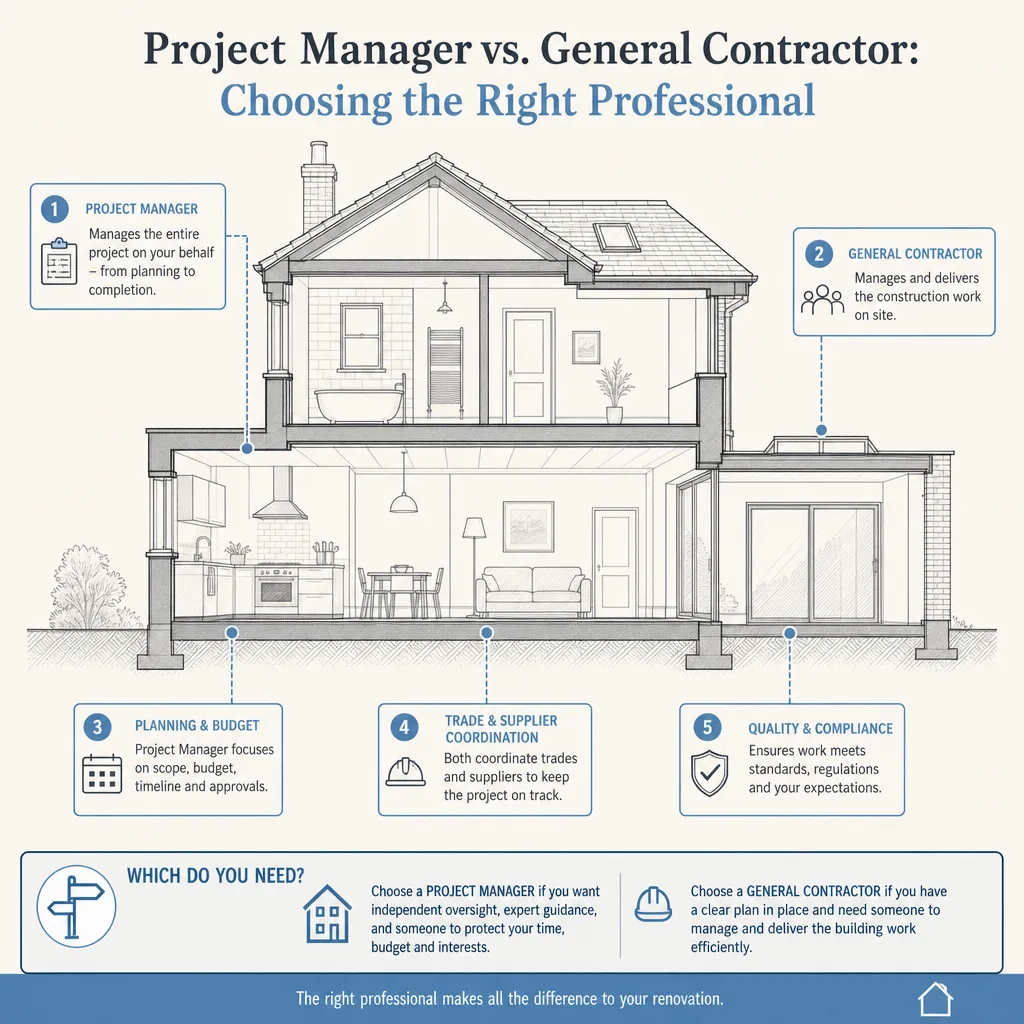
Project Manager vs. General Contractor: Choosing the Right Professional
A project manager works on your behalf to oversee programme, costs, and contractor performance — they do not carry out building work themselves.
 Planning & Pre-Build
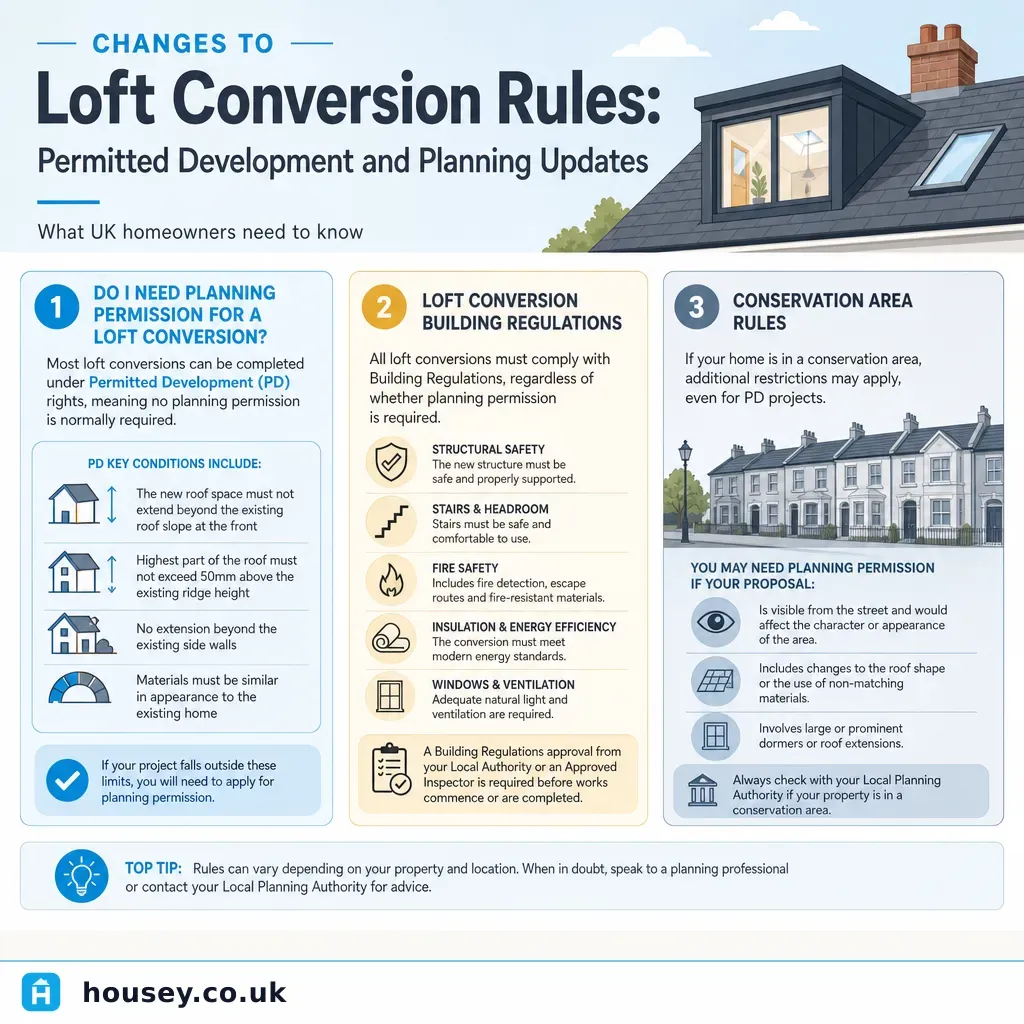
Changes to Loft Conversion Rules: Permitted Development and Planning Updates
In England, most loft conversions on standard houses qualify as Permitted Development under Class B of the GPDO 2015, allowing up to 40 cubic metres (terraced) or 50 cubic metres (detached or semi-detached) without a planning application — if conditions are met.
 Planning & Pre-Build
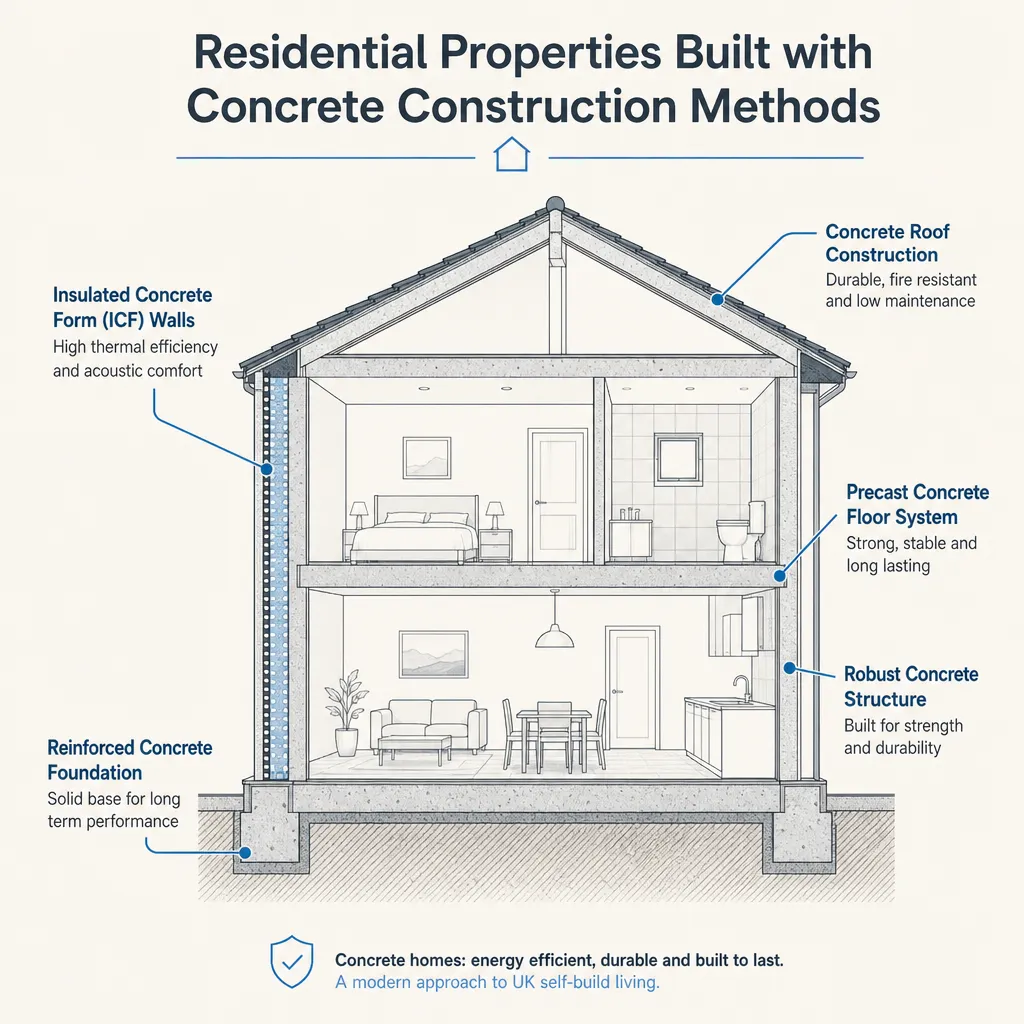
Residential Properties Built with Concrete Construction Methods
UK homes are built using several concrete methods: in-situ cast concrete, precast panel systems, insulating concrete formwork (ICF), and older non-traditional types such as Wimpey No-Fines and Laing Easiform.
 Planning & Pre-Build
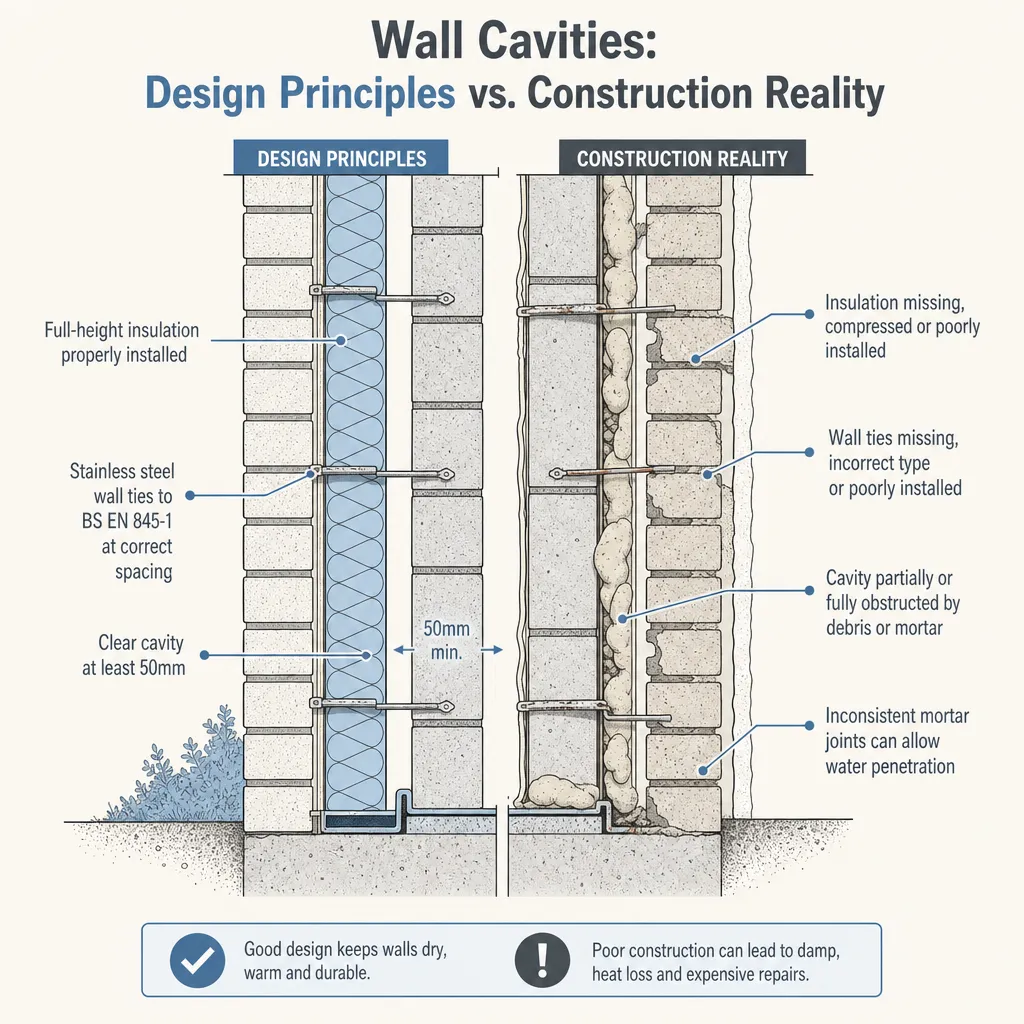
Wall Cavities: Design Principles vs. Construction Reality
A UK cavity wall is designed to resist weather, control heat loss, and structurally link two masonry leaves.
 Planning & Pre-Build
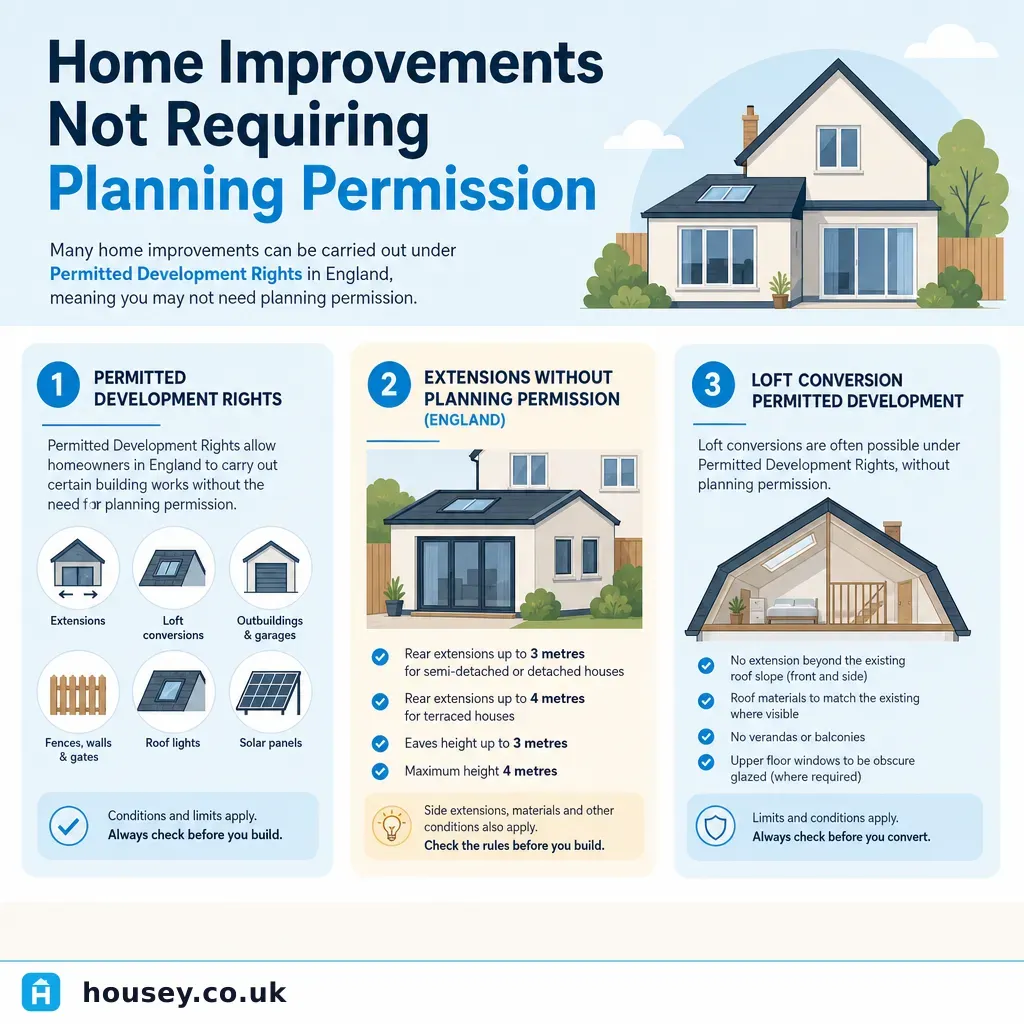
Home Improvements Not Requiring Planning Permission
Many common home improvements in England fall under Permitted Development Rights and do not require a planning application.