Historic and Period Windows: Restoration and Replacement Options
By Housey · Last reviewed 26th of May 2026
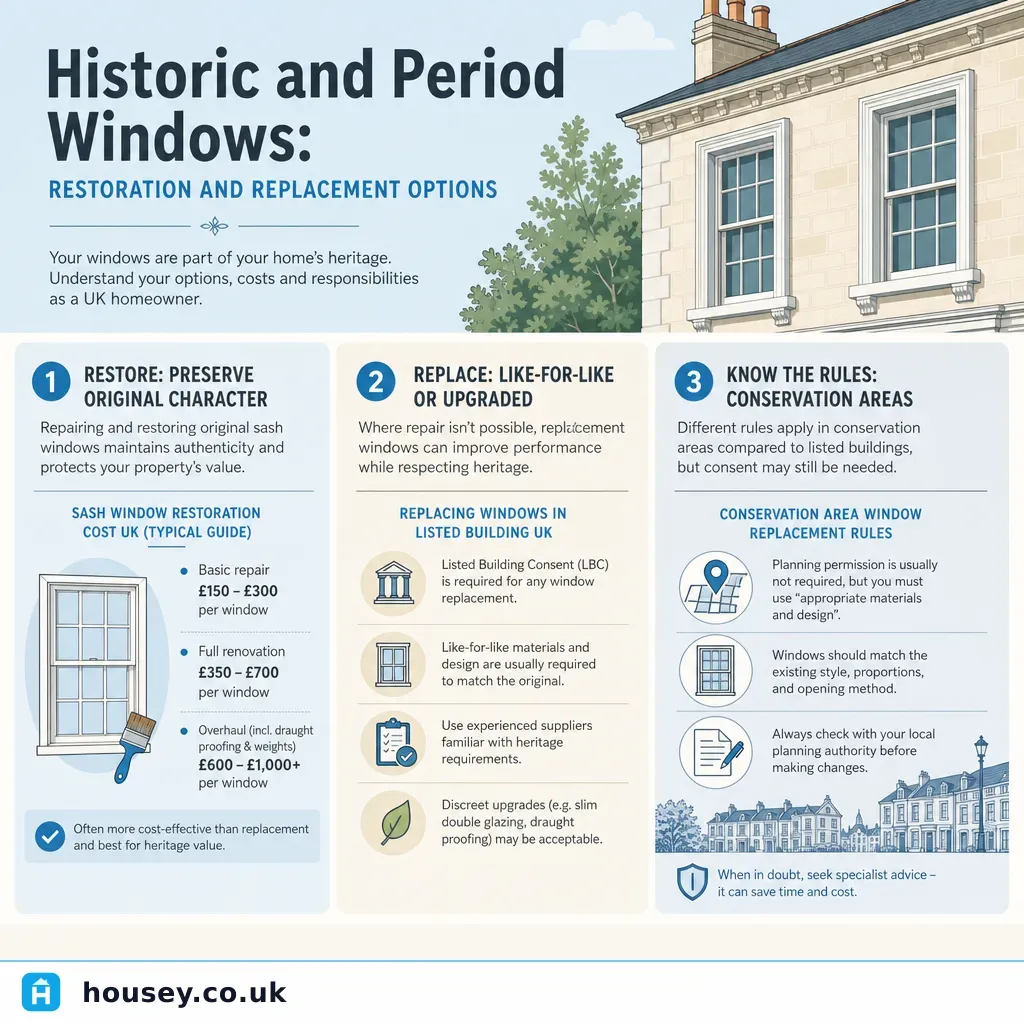
Historic and Period Windows: Restoration and Replacement Options
Period windows — from Georgian sliding sashes to Edwardian casements and Crittall steel lights — are among the most character-defining features of older UK homes. The question of whether to restore or replace them tends to arise when draughts become untenable, rot spreads into the frame, or an energy assessor flags the glazing as a key heat-loss path. For owners of listed buildings or properties within conservation areas, the stakes are considerably higher: the wrong choice, made without the right consents, can result in enforcement action and costly reinstatement work.
Key points
- Listed building consent is a legal requirement before replacing windows in a listed building in England and Wales under the Planning (Listed Buildings and Conservation Areas) Act 1990; works carried out without it may constitute a criminal offence.
- Conservation area properties may also face restrictions: Article 4 directions remove permitted development rights, meaning replacement windows that alter a building's external appearance can require a full planning application.
- Timber sash and casement frames in reasonable structural condition can usually be draught-proofed, reglazed with slim-profile units, and repaired for less than the cost of full replacement.
- Secondary glazing — a separate inner frame fitted behind the original — is widely accepted by local planning authorities in listed building settings because it leaves the historic window entirely untouched.
- Slim-profile double-glazed units (typically 6–14 mm overall thickness) can be retrofitted into original or newly matched timber frames where the rebate depth permits, improving thermal performance without changing the window's external character.
Restoration or replacement: a practical comparison
Choosing between repair, thermal upgrade, and full replacement depends on frame condition, the property's planning status, your thermal and acoustic goals, and your budget. This table sets out the main options.
Approach | Best for | Regulatory position | Indicative cost per window* | Main risk |
|---|---|---|---|---|
Repair and draught-proofing | Sound frames with rattling sashes, minor rot, or failed putty | Generally no consent required | £200–£600 | Ongoing maintenance; limited U-value improvement |
Slim double-glazed unit retrofit | Good timber frames needing thermal improvement | May need listed building consent — always check first | £300–£900 | Unit seal failure; not all frame profiles accommodate the depth |
Secondary glazing | Listed buildings; properties needing thermal or acoustic improvement without exterior change | Widely accepted; usually no consent needed | £350–£950 | Interior appearance; condensation management between panes |
Like-for-like timber replacement | Frames beyond economic repair in conservation or listed settings | Planning permission or listed building consent likely required | £700–£2,500+ | Consent refusal if profile, material, or glazing bar pattern does not match |
Modern uPVC or aluminium (non-listed, non-conservation only) | Standard unlisted properties where appearance is unrestricted | Usually permitted development — check for Article 4 directions | £400–£1,200 | Significant character loss; may affect saleability in period streets |
*Indicative UK costs, last reviewed 2026-05-26. Costs vary by window size, access, and contractor. Obtain at least three quotes.
Understanding listed building consent and conservation area rules
If your home is listed, any works affecting its character — including window replacement — require listed building consent (LBC) from your local planning authority. This applies even if the windows you are changing are not original; later replacement windows may still require consent to alter or remove. The LPA can require full reinstatement at the owner's expense if works are carried out without consent, and there is no time limit on enforcement for listed building breaches.
Conservation areas impose a different set of controls. Most window replacements in conservation areas are covered by permitted development rights, but Article 4 directions — frequently applied by LPAs in historic streets, village centres, and sensitive townscapes — remove these rights. Check your LPA's online mapping or contact the planning department before ordering any new frames. Historic England's guidance on energy efficiency and historic buildings is a useful reference for what LPAs typically consider acceptable.
Traditional materials and heritage glazing options
Where replacement is permitted or required, timber is almost always expected in conservation and listed building settings. Engineered timber — finger-jointed softwood or oak laminate — is durable, dimensionally stable, and generally more acceptable to LPAs than uPVC or standard aluminium.
Glazing options for period properties include:
- Slim double glazing: purpose-made units of 6–14 mm overall thickness, sometimes with warm-edge spacer bars finished to match glazing bars. These can be retrofit into existing or newly matched traditional frames.
- Vacuum-insulated glass (VIG): very thin units (typically 6–8 mm) that closely replicate single-glazing sight lines while achieving centre-pane U-values as low as 0.4 W/m²K. More expensive, but valuable where minimal-thickness profiles are essential.
- Draught-proofing strips: brush or compression seals fitted into the sash box or casement rebate can substantially reduce air leakage without any glazing change — the lowest-cost thermal improvement available.
- Secondary glazing: a slim inner frame, typically powder-coated aluminium, fitted inside the reveal behind the original window. Can achieve acoustic attenuation of 40+ dB and meaningfully reduce heat loss. The original outer window is left completely untouched.
Which professional do you need?
Your situation | Who to instruct |
|---|---|
Assessing whether frames are worth repairing | Joiner or specialist window restoration company |
Listed building consent advice or LPA application | Heritage and conservation consultant or planning consultant |
Secondary glazing supply and installation | Specialist secondary glazing installer |
Full like-for-like sash replacement | Specialist joiner or FENSA-registered window company |
Structural concerns (lintel, reveal, or signs of subsidence) | RICS-accredited surveyor or structural engineer |
Enforcement notice or ongoing LPA dispute | Planning solicitor or independent planning consultant |
Important limitations
This article provides general information only. The rules governing listed buildings, conservation areas, and Article 4 directions vary significantly by local authority, building grade, and individual property history. A qualified professional — typically a heritage and conservation consultant or a planning consultant with experience of your LPA — should assess your specific situation before any works are instructed. Nothing in this article constitutes planning or legal advice.
When this becomes urgent
Seek professional advice promptly if:
- You have already replaced windows in a listed building without consent — the LPA may issue an enforcement notice requiring reinstatement at your expense.
- A planning officer or neighbour has raised concerns about works you have carried out or are planning.
- Rot at the cill, head, or jamb is spreading rapidly, or external sills are becoming structurally detached.
- You are approaching exchange of contracts on a listed property and the window condition or consent history is unclear.
What to ask a qualified professional
Before instructing a window specialist, heritage consultant, or planning consultant, ask:
- Is my property in a conservation area, and has an Article 4 direction been applied that removes permitted development rights for windows?
- Does my planned restoration or replacement require listed building consent or a formal planning application?
- What glazing specification and frame profile would your LPA consider acceptable as a like-for-like replacement in this building?
- Can you provide a condition survey of the existing frames before we decide whether repair or replacement is the right approach?
- Are you experienced in working with LPAs on listed building window applications, and can you provide references from comparable projects?
- What guarantees or warranties come with the work, and do you carry professional indemnity insurance?
- How will you handle unforeseen rot or structural issues discovered during the works?
When to get professional help
Beyond planning and heritage compliance, instruct a specialist if:
- You discover extensive concealed rot when removing paint or putty — decay can extend significantly further than the visible surface, and partial repairs may not last.
- The sash weights, pulleys, or box-sash structure are complex or unfamiliar; incorrect repair can make sashes permanently inoperable.
- The external reveal, lintel, or window board shows signs of movement or cracking alongside frame deterioration — this may indicate a wider structural issue.
- You are planning to change from single to double glazing in a listed or conservation setting — always obtain specialist and planning advice before ordering units.
How Housey can help
Housey connects homeowners with vetted window and door installers experienced in period and heritage properties, as well as heritage and conservation consultants who can advise on listed building consent and liaise with your local planning authority on your behalf. Whether you need a frame condition survey, a consent application, or a specialist joiner, you can compare quotes from qualified local professionals through Housey.
Frequently asked questions
Do I need planning permission to replace windows in a conservation area?
Not always, but often. Permitted development rights allow many like-for-like window replacements in conservation areas, but Article 4 directions — applied by many LPAs in historic streets and sensitive townscapes — remove these rights. Check with your local planning authority before ordering new frames; installing windows without the required permission can lead to enforcement action and a requirement to reinstate the originals at your expense.
Can I fit double glazing in a listed building?
In many cases, yes — but you will almost certainly need listed building consent first. Slim-profile double-glazed units and secondary glazing are the approaches most widely accepted by local planning authorities. The key test is whether works affect the building's character. A heritage consultant can help you prepare a compliant application and engage the LPA on your behalf.
How much does sash window restoration cost?
Repair and draught-proofing of a standard sash window typically costs £200–£600 per window (indicative UK costs, last reviewed 2026-05-26). Costs vary by frame condition, window size, access difficulty, and the specialist used. Full like-for-like replacement in traditional joinery costs considerably more. Always obtain at least three quotes from contractors with demonstrable experience in period properties.
What is secondary glazing and when is it the best option?
Secondary glazing is a separate inner frame — typically slim aluminium — fitted inside the reveal behind an existing window. It leaves the original window completely untouched, making it the most widely accepted improvement in listed buildings. It provides useful acoustic insulation and reduces draughts substantially. It is generally less thermally efficient than full double glazing but significantly better than unimproved single glazing.
What does FENSA registration mean for window installers?
FENSA is a government-authorised Competent Person Scheme that allows registered installers to self-certify that window replacement work complies with Building Regulations Part L. Without FENSA or an equivalent scheme, replacement window installations in England and Wales require a local authority building control application. Always ask for the FENSA certificate or equivalent compliance document on completion.
Sources and further reading
- Planning (Listed Buildings and Conservation Areas) Act 1990 — legislation.gov.uk
- Energy Efficiency and Historic Buildings — Historic England
- Windows: Do I need planning permission? — Planning Portal
- Listed buildings: find and apply for permission — GOV.UK
- FENSA: The Competent Person Scheme for window installers — FENSA
Useful next reads
 Improvement & Build
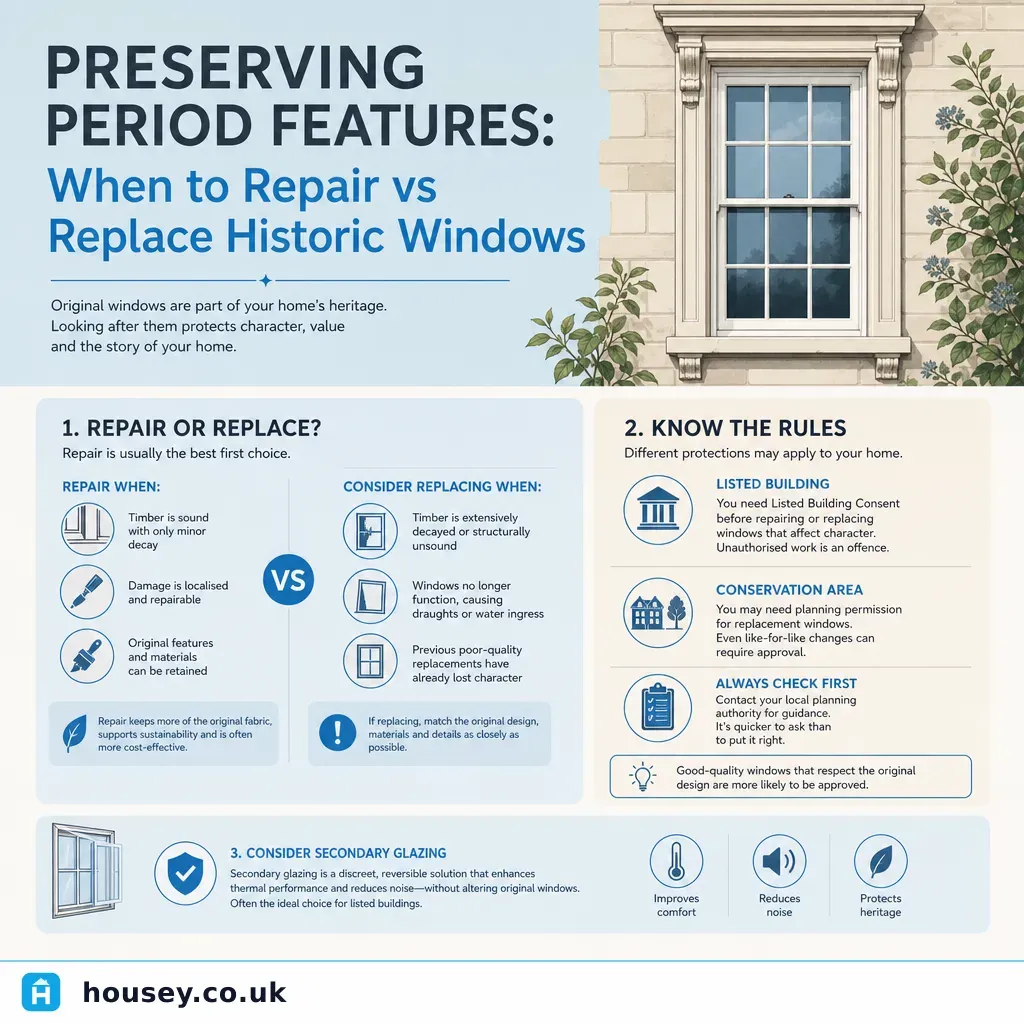
Preserving Period Features: When to Repair vs Replace Historic Windows
For most pre-1919 timber windows in listed buildings or conservation areas, repair and draught-proofing — often combined with secondary glazing — is both more appropriate and more likely to gain consent than full replacement.
 Improvement & Build
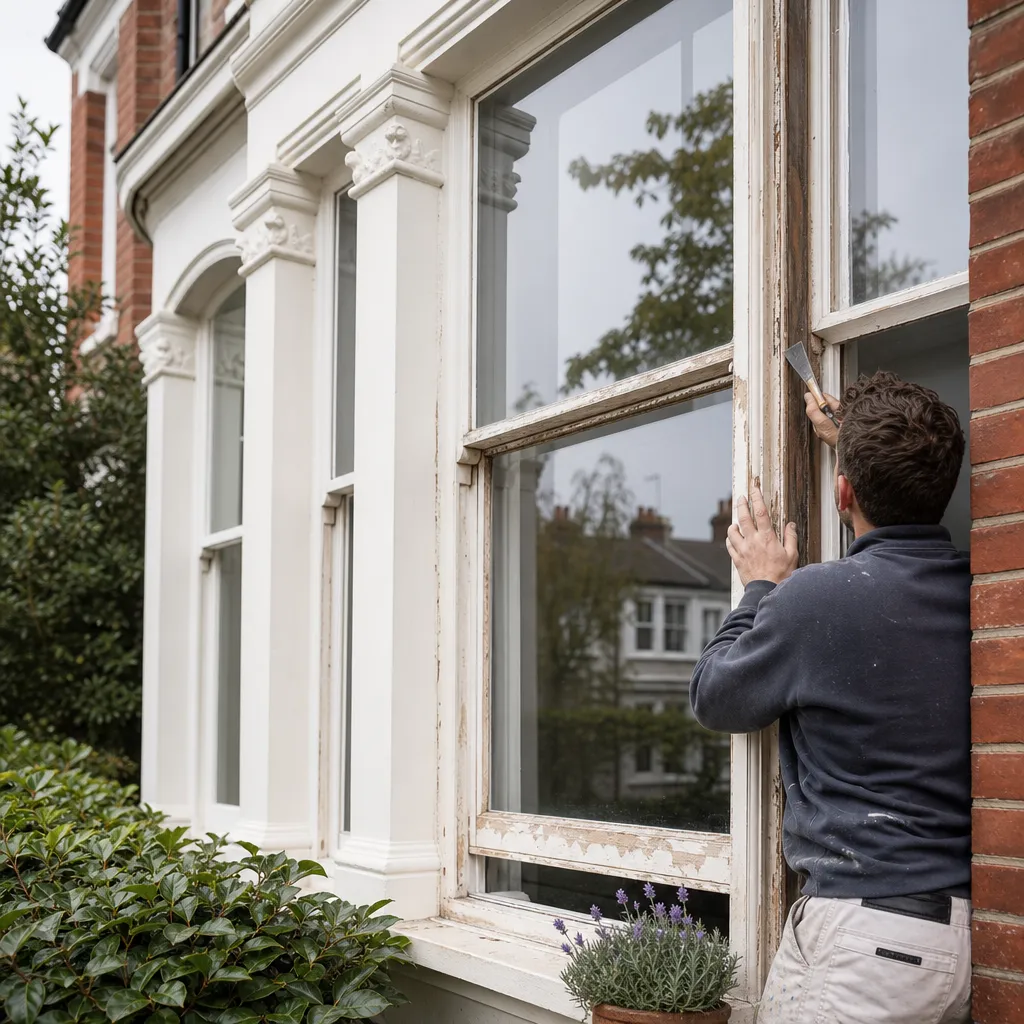
Restoring Historic Windows: Conservation Techniques and Materials
Historic window restoration involves repairing original timber or metal frames using like-for-like materials — often hardwood splices or epoxy consolidant — rather than replacing them outright.
 Improvement & Build
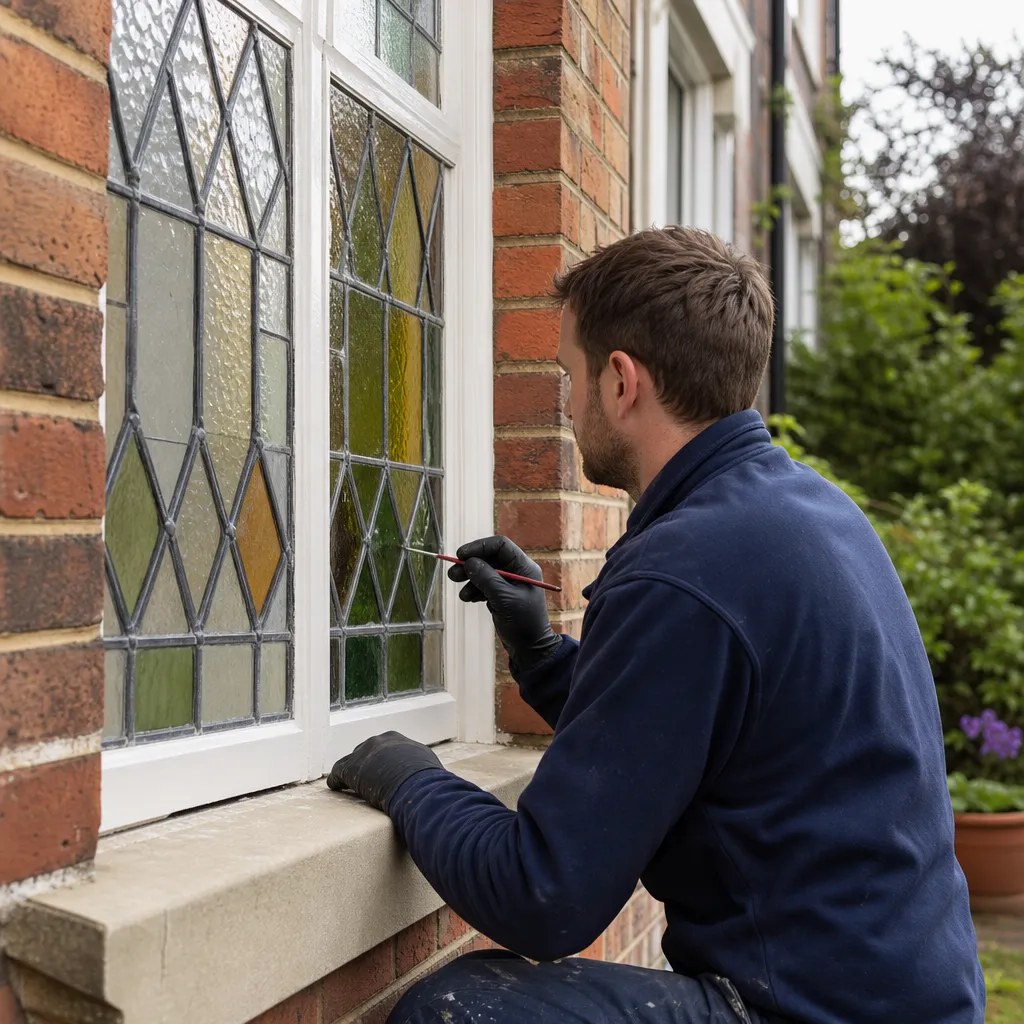
Sealing and Maintaining Historic Leaded Glass Windows: Preservation and Performance
Leaded glass windows are maintained using traditional linseed oil cement — not silicone or modern sealants, which prevent natural movement in the lead came.
 Improvement & Build
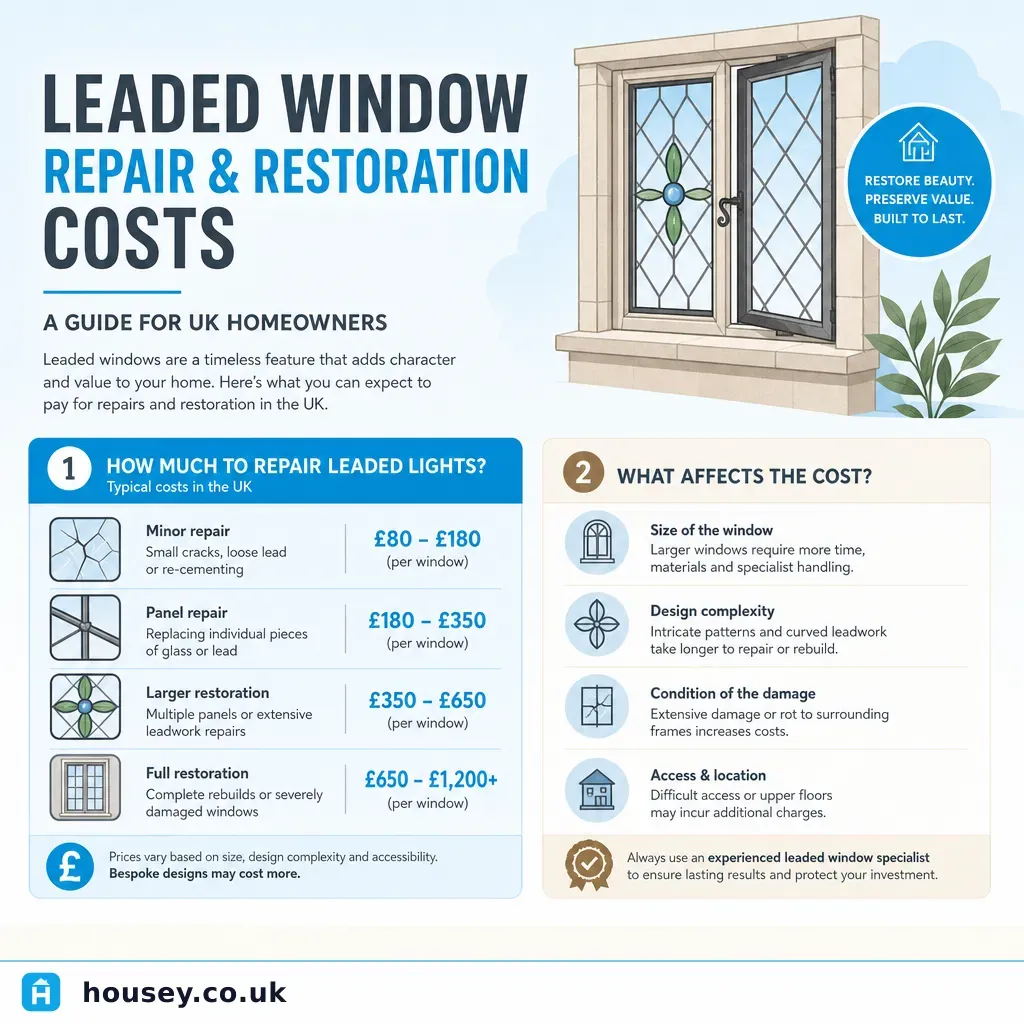
Leaded Window Repair and Restoration Costs
Leaded window repair in the UK typically costs £150–£600 for minor re-soldering or resealing, rising to £800–£2,500+ for full panel removal and restoration.
 Improvement & Build
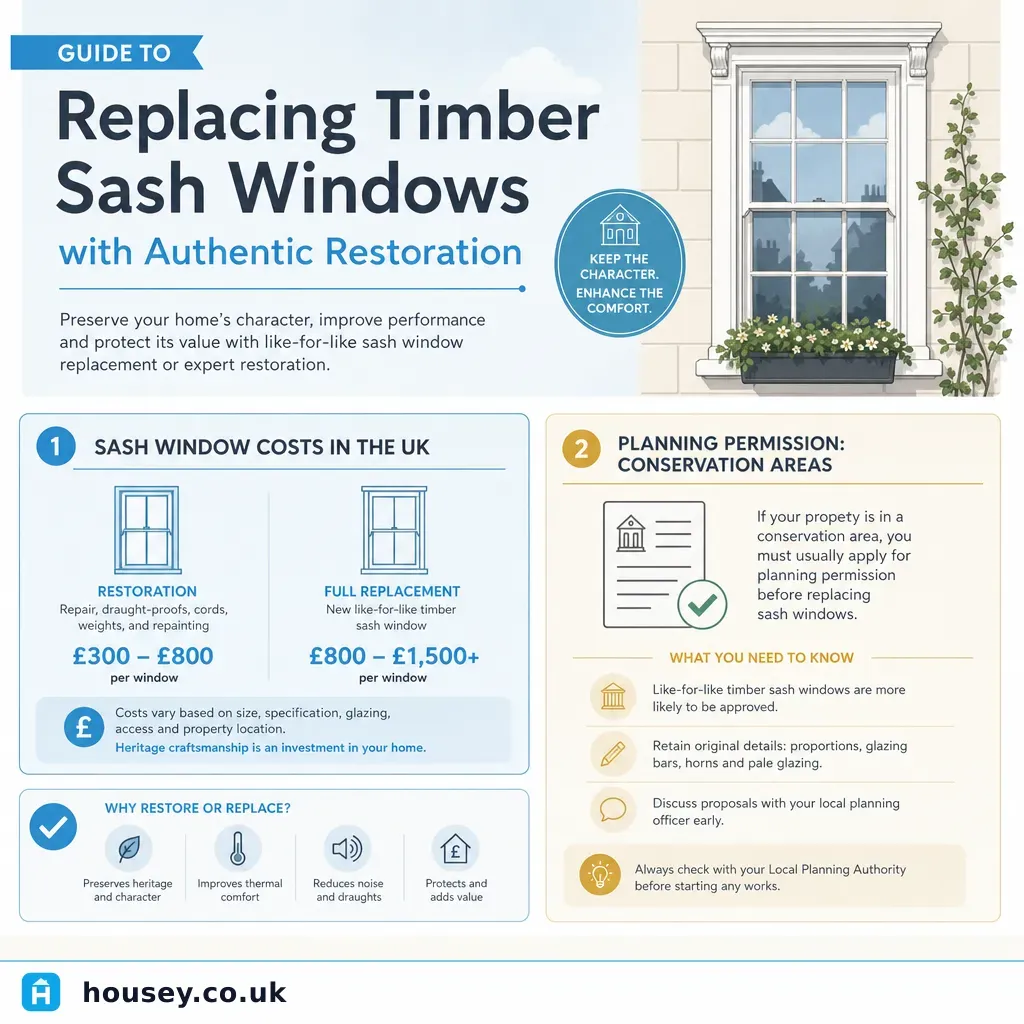
Guide to Replacing Timber Sash Windows with Authentic Restoration
Restoring a timber sash window typically costs £150–£400 per window; full replacement costs £800–£2,500.