Restoring Historic Windows: Conservation Techniques and Materials
By Housey · Last reviewed 18th of May 2026
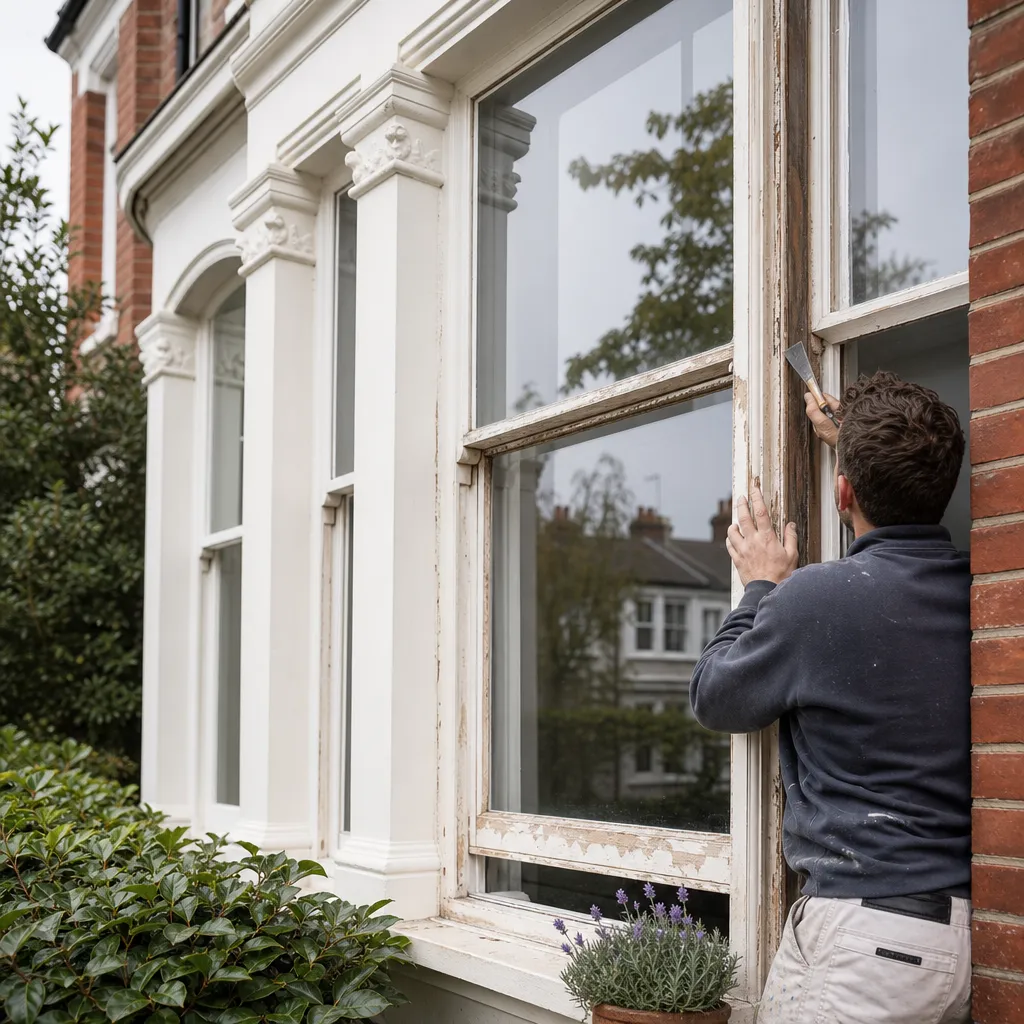
Restoring Historic Windows: Conservation Techniques and Materials
Historic windows are among the most scrutinised elements of a period or listed property. Whether you are dealing with rattling sash windows in a Victorian terrace, corroding Crittall frames in an interwar semi, or casement windows in a pre-1919 solid-wall cottage, the decisions you make about restoration over replacement can affect planning consent, buildings insurance, and the long-term character of the building.
Key points
- Listed building consent is required before altering or replacing windows in a listed building — this applies even to like-for-like replacements in many cases.
- Conservation officers generally favour repair and restoration over replacement; wholesale window replacement is frequently refused in listed and conservation area properties.
- Original timber windows can often be draught-proofed, re-glazed, and restored for significantly less than bespoke replacement double glazing.
- Secondary glazing — a separate inner frame fitted to the window reveal — is the most widely accepted method of improving thermal performance without removing original windows in a listed building.
- Specialist materials such as two-part epoxy consolidants, linseed oil putty, and hardwood splice repairs are the preferred choices in approved restoration schemes.
Do you need consent before starting work?
For listed buildings in England, any work that affects the character of a building of special architectural or historic interest requires listed building consent under the Planning (Listed Buildings and Conservation Areas) Act 1990. Windows are considered a defining feature and are almost always within scope — including, in some cases, internal shutters and original ironmongery.
For unlisted properties within a conservation area, replacing windows with non-traditional materials or styles may require planning permission if an Article 4 direction removes permitted development rights on that street or area. Your local planning authority (LPA) can confirm whether an Article 4 direction applies to your property.
- Listed building (any grade): listed building consent required for any alteration or replacement of windows.
- Conservation area (unlisted): check for Article 4 directions with your LPA before replacing windows.
- Non-listed, outside conservation area: like-for-like repairs generally fall under permitted development; replacement glazing must comply with Building Regulations Approved Document L (conservation of fuel and power) and Approved Document N (glazing safety).
Which restoration technique suits your windows?
The appropriate approach depends on the frame material, the extent of deterioration, and any planning constraints that apply.
Window type | Common problems | Preferred approach | Key materials |
|---|---|---|---|
Timber sash (Victorian/Edwardian) | Rot, broken sash cords, draughts, loose joints | Epoxy consolidant and filler, new cords, draught-proofing | Two-part epoxy; brush-pile or compression draught strips |
Timber casement (pre-1919) | Rot at cill and base rail, failed glazing putty | Splice repairs to sound timber, re-puttying | Linseed oil putty; hardwood splices; stainless steel fixings |
Steel/Crittall (1920s–1960s) | Corrosion, failed glazing seals, stiff hinges | Clean, rust-treat, re-glaze, adjust hinges | Zinc-based primer; compatible putty; replacement gaskets |
Lead light (pre-1900) | Buckled cames, cracked glass, failed solder | Re-leading or saddle bar reinforcement | Lead came; restoration glass; soldering flux |
Timber window restoration: the main techniques in practice
Epoxy consolidants and fillers
For timber frames with surface rot that has not penetrated the full section, a two-part epoxy consolidant (liquid) is applied to harden the remaining fibrous wood. Once cured, a two-part epoxy filler is built up, shaped, and sanded to the original profile before priming and painting. Historic England endorses this approach for sound repairs to original joinery where the structural section is substantially intact.
Do not use this method where a structural section is entirely lost — a conservation joiner should splice in new hardwood to restore full section strength in those cases.
Splicing and piecing-in
Where rot has destroyed a full timber section, a joiner experienced in conservation work will cut out the decayed area and splice in new hardwood — typically European oak or Accoya — using mortise-and-tenon or scarf joints, glued with weatherproof adhesive and pinned with stainless steel dowels. The original profile is preserved, which is almost always more acceptable to conservation officers than wholesale replacement.
Draught-proofing
The draughtiness associated with original sash and casement windows is usually caused by decades of paint build-up and timber shrinkage, not an inherent flaw. Fitting brush-pile or compression seals into rebates by an experienced joiner can dramatically reduce heat loss without altering the window's appearance. Historic England estimates that well-fitted draught-proofing can cut heat loss through windows by up to 50% (Energy Efficiency and Historic Buildings, Historic England, 2012).
Secondary glazing
Where thermal performance is a priority and original glazing must be retained, secondary glazing — a discreet inner frame fixed to the window reveal — is the standard solution for listed buildings. It does not usually require listed building consent (confirm with your LPA), and can reduce heat loss by up to 60% compared to single glazing alone, without altering the exterior appearance of the building.
Red flags: when to stop and seek expert advice
Do not proceed with restoration work until a qualified professional has assessed any of the following:
- Structural movement in the opening: if the window frame is no longer square, or the lintel above shows stepped cracking in brickwork, a structural engineer should inspect before any window work begins.
- Lead paint present: properties built before 1978 are likely to have lead-based paint on windows. Sanding, stripping, or burning off lead paint without appropriate precautions poses a serious health risk — consult HSE guidance on lead paint before starting any preparation work.
- Asbestos rope packing: steel-framed windows from the mid-20th century sometimes have asbestos-containing rope used as draught sealing. Do not disturb this material; arrange an asbestos survey if in doubt.
- Frame beyond viable repair: if more than half the structural timber section is lost and replacement is the only option, LPA approval is required before proceeding if the property is listed or in a conservation area.
Important limitations
This article is general information only. Listed building and conservation area rules vary by local planning authority, property grade, and the specific architectural or historic character of the building. Always obtain written confirmation from your LPA before undertaking any works that may require consent. Undertaking works to a listed building without the required listed building consent is a criminal offence under the Planning (Listed Buildings and Conservation Areas) Act 1990, and enforcement action can require works to be reversed at the owner's expense.
What to ask a qualified professional
Before instructing a joiner or contractor to carry out historic window restoration, ask:
- Are you experienced in conservation joinery, and can you provide examples of comparable listed building work?
- Have you liaised with conservation officers on previous projects, and can you assist with any pre-application discussions or consent process?
- Will you carry out a full condition survey before preparing a specification and cost estimate?
- What timber species and joinery profiles will you use, and how closely will they replicate the originals?
- What priming and painting system do you recommend for long-term durability on exposed timber?
- Do you carry appropriate liability insurance for listed building and conservation work?
When to get professional help
Seek qualified professional input before starting if any of the following apply:
- The property is listed at any grade, or sits within a conservation area.
- You suspect lead paint, asbestos rope seals, or structural movement at the window opening.
- The decay extends to structural timber members such as the cill, frame head, or load-bearing mullions.
- You are uncertain whether listed building consent, planning permission, or building regulations approval is required.
- The windows require bespoke joinery work that exceeds the skills of a general-purpose builder.
How Housey can help
Housey connects homeowners with experienced window and door installers who understand traditional construction methods, as well as heritage and conservation consultants who can advise on consent requirements, material specifications, and conservation officer liaison before work begins.
Frequently asked questions
Can I install double glazing in a listed building?
Rarely without listed building consent, and even then it is usually only approved when slimline double-glazed units closely replicate the original glass character and frame profile. Most conservation officers prefer secondary glazing as the primary thermal upgrade for listed buildings. Always discuss your options with your local planning authority before ordering any units.
Do I need building regulations approval for window repairs?
Like-for-like repairs such as re-puttying, re-cording, and repainting do not generally require building regulations approval. If replacement glazing is being installed, Approved Document L and Approved Document N requirements apply. A FENSA-registered installer can self-certify compliant replacement glazing in non-listed properties, removing the need for a separate building control application.
How long does professional timber window restoration take?
A single sash window with draught-proofing and redecoration typically takes one to two days. Full epoxy consolidation and repainting across a Victorian terrace front elevation may take one to two weeks, depending on the number of windows, paint system drying times between coats, and access requirements for upper-floor windows.
Is window restoration always cheaper than replacement?
For a single original timber window in moderate condition, restoration is almost always less expensive than a purpose-made bespoke replacement. Where decay is extensive and splicing is required across multiple sections, costs can approach those of replacement. Ask for itemised quotes covering both approaches if the extent of deterioration is unclear before committing to a specification.
Sources and further reading
Useful next reads
 Improvement & Build
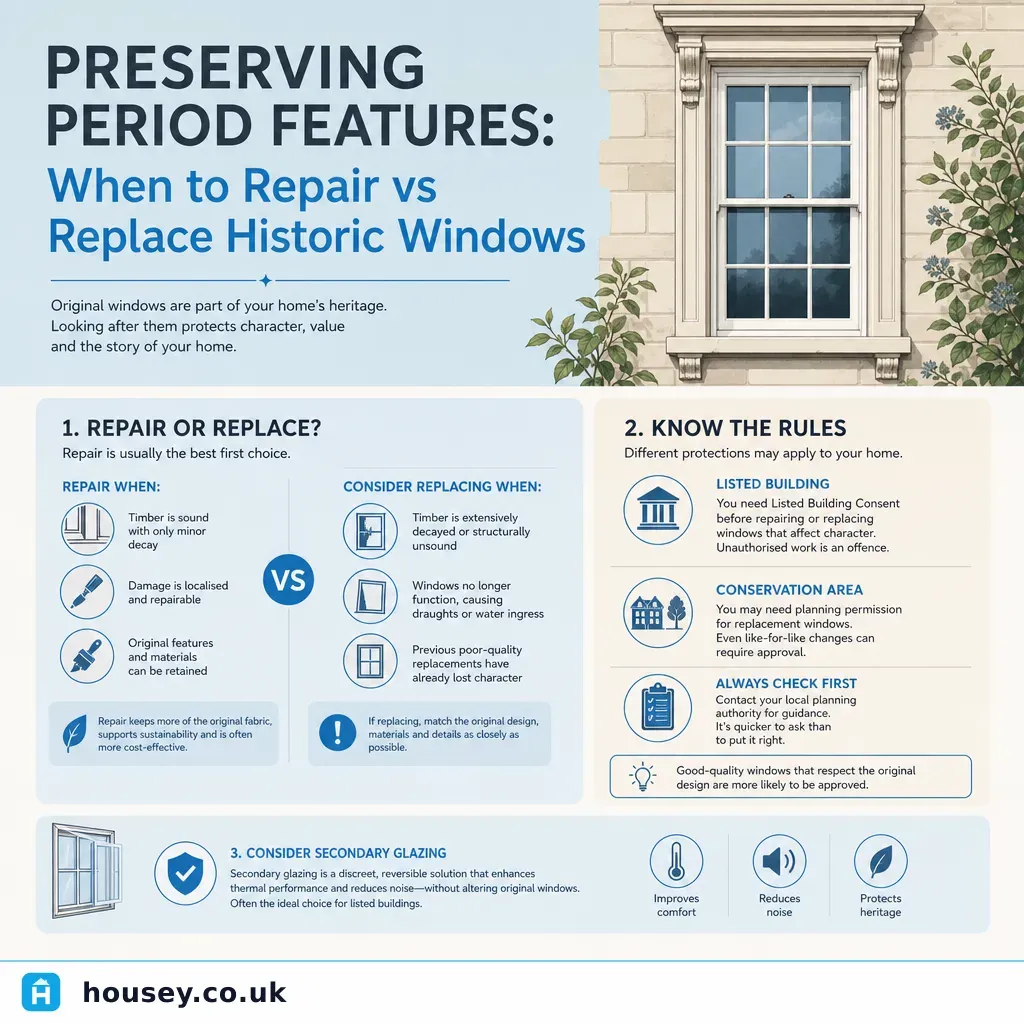
Preserving Period Features: When to Repair vs Replace Historic Windows
For most pre-1919 timber windows in listed buildings or conservation areas, repair and draught-proofing — often combined with secondary glazing — is both more appropriate and more likely to gain consent than full replacement.
 Improvement & Build
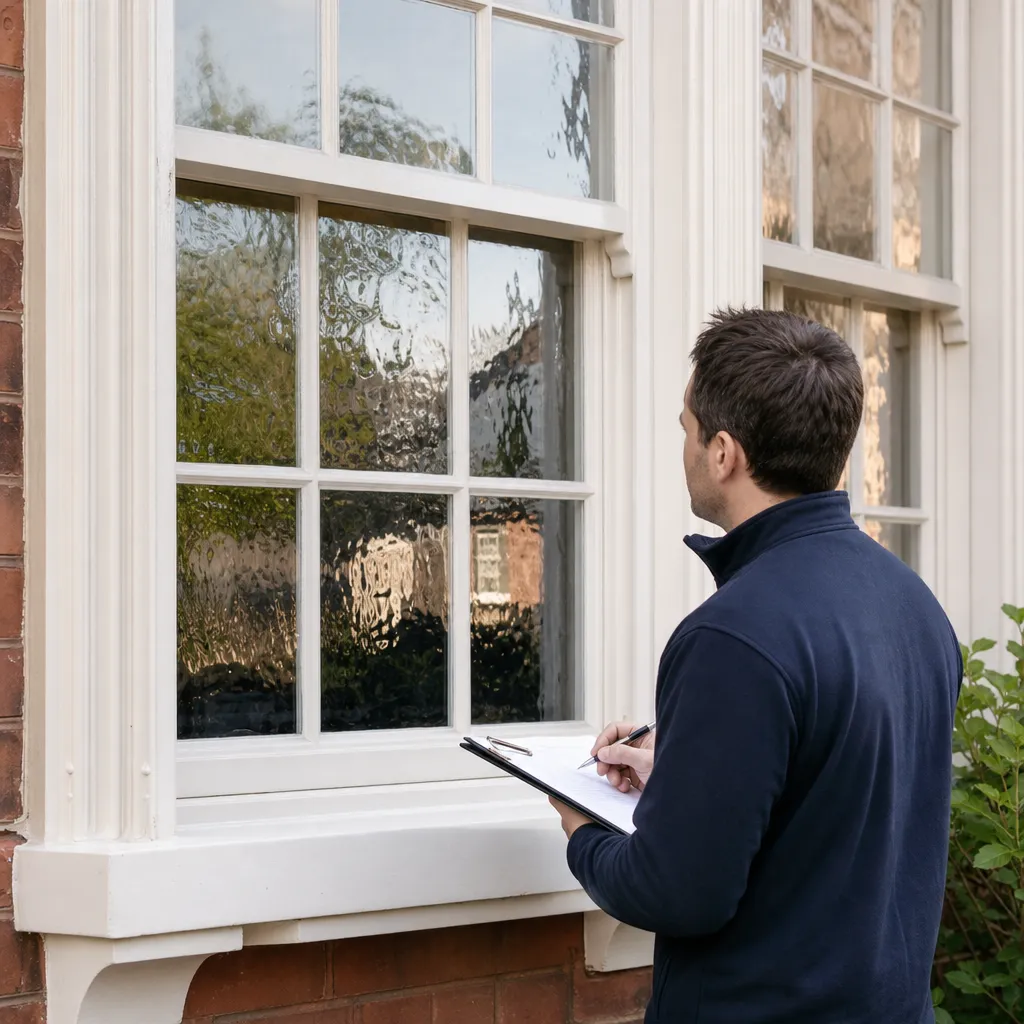
Understanding Wavy Glass in Historic Windows and Modern Replacements
The wavy distortion in old window glass results from the hand-blown manufacturing process — crown or cylinder glass — which produced panes of varying thickness that refract light unevenly.
 Improvement & Build
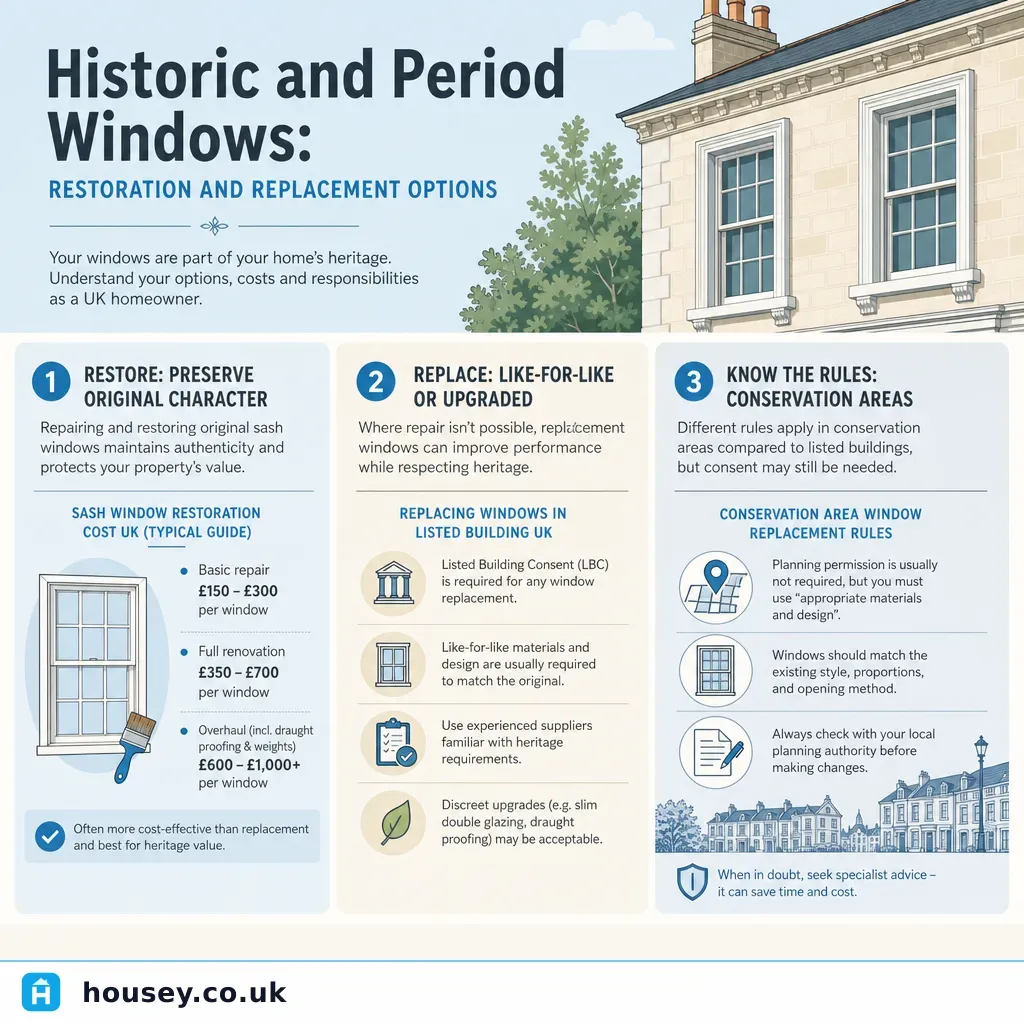
Historic and Period Windows: Restoration and Replacement Options
For period and historic windows, restoration is usually preferable — especially in listed buildings or conservation areas where replacement requires consent.
 Improvement & Build
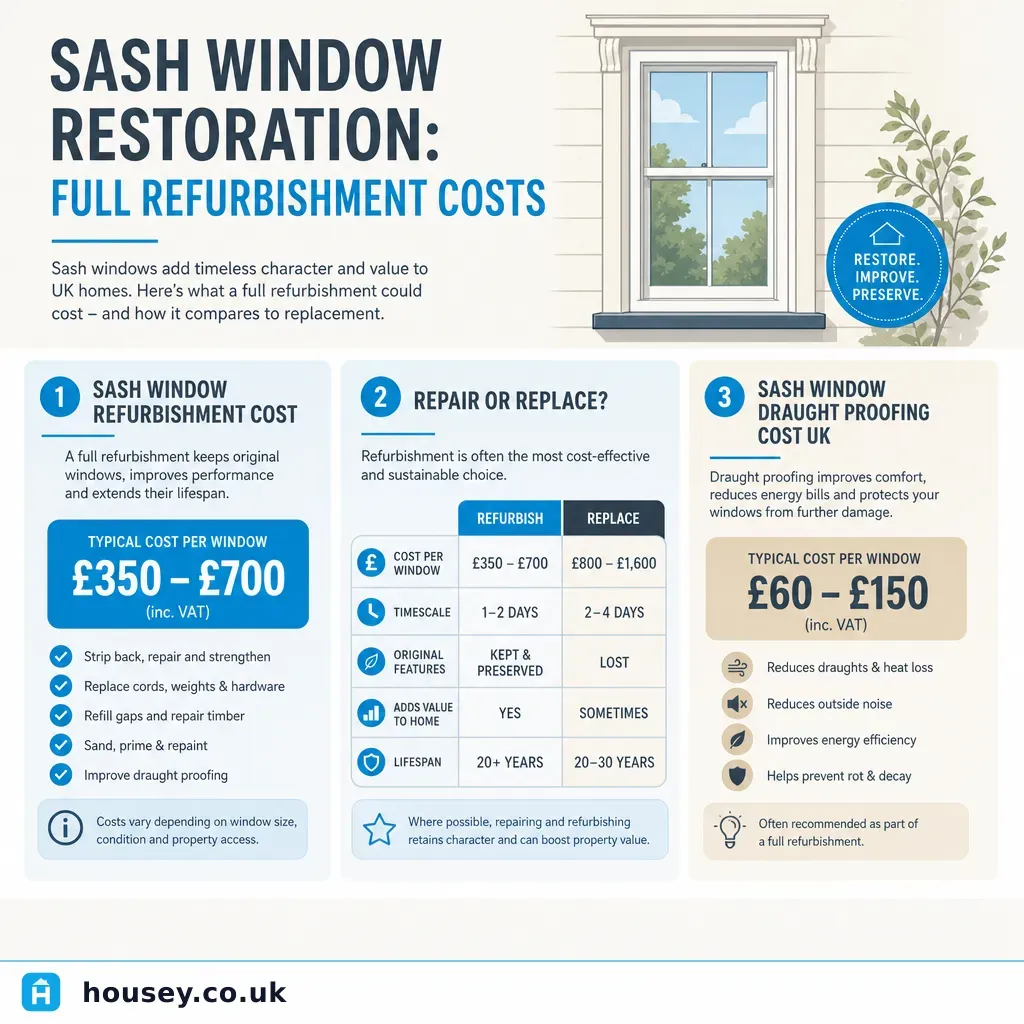
Sash Window Restoration: Full Refurbishment Costs
Sash window restoration typically covers strip, repair, draught-proofing, and redecoration, with full programmes costing roughly £700–£1,500 per window.
 Improvement & Build
Guide to Replacing Timber Sash Windows with Authentic Restoration
Restoring a timber sash window typically costs £150–£400 per window; full replacement costs £800–£2,500.