Home Adaptations for Dementia Care: Modifications and Support
By Housey · Last reviewed 5th of May 2026
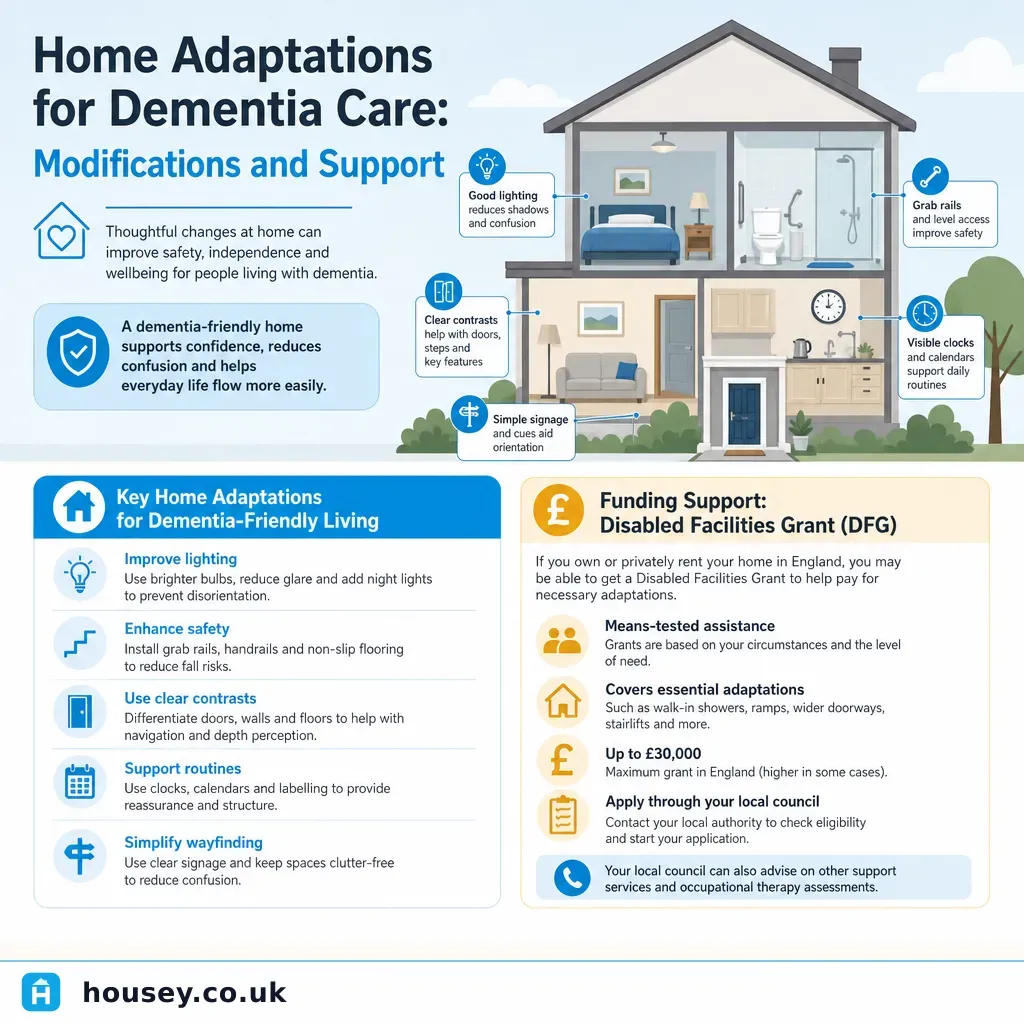
Home Adaptations for Dementia Care: Modifications and Support
Home adaptations for dementia are most often considered when a diagnosis has been made and the person wants to remain in familiar surroundings for as long as possible. Families and carers look for modifications that reduce disorientation, prevent falls, and support daily independence — in homes spanning a wide range of eras, from Victorian terraces to modern bungalows. Getting the right combination of changes can make a meaningful difference to wellbeing and to the sustainability of home-based care.
Key points
- The Disabled Facilities Grant (DFG) provides means-tested funding of up to £30,000 in England (amounts vary in Wales, Scotland, and Northern Ireland) for adaptations helping a disabled person remain at home — dementia qualifies for eligibility purposes.
- An Occupational Therapist (OT) assessment, available through the local authority Adults Services team or via NHS referral, is usually the recommended starting point before any adaptation work begins.
- Approved Document M of the Building Regulations applies if structural changes form part of the adaptation — including ramping, widening doorways to 850mm clear minimum, or installing a level-access wet room.
- High-contrast colours between floors, walls, skirting boards, and doors can significantly aid spatial orientation for people with dementia; this is supported by research from the Design for Dementia programme.
- Dementia UK and the Alzheimer's Society both publish free home environment guides to help families plan modifications before instructing contractors.
What kinds of adaptations help most?
Adaptations for dementia fall into two broad groups: environmental changes that reduce confusion and support orientation, and safety modifications that reduce the risk of accidents.
Orientation and familiarity aids:
- Colour contrasting: high-contrast paint between skirting boards, floors, and walls helps define spaces clearly.
- Signage and labelling: clear, large-print signs on doors — with pictures where helpful — help the person navigate their home with confidence.
- Improved lighting: consistent, shadow-free lighting reduces misperception; sensor-activated night lights reduce falls during nocturnal movement.
- Reduced visual clutter: plain or low-pattern carpets and upholstery reduce perceptual confusion common in mid-to-late stage dementia.
- Prominent clocks: large-face, day-and-date displays placed at eye level help with time and day orientation.
Safety modifications:
- Stair gates and door alarms where unsupervised access to stairs or external doors presents a risk.
- Automatic shut-off devices or induction hobs to reduce fire hazards from unattended cooking.
- Level-access shower or wet room replacing a bath.
- Grab rails on stairs, in the bathroom, and beside the toilet.
- Lever taps and single-lever mixer taps to reduce scalding risk.
- Lockable storage for medication, cleaning products, and sharp tools.
Many of these changes require little or no structural building work and can be arranged through an OT or a local Home Improvement Agency (HIA).
Occupational therapist assessment: why it matters
An OT assessment is usually the recommended first step. OTs evaluate how a person's specific cognitive and physical abilities interact with their home environment, and their written recommendations carry weight when applying for grant funding.
Assessments can be arranged through:
- The local authority Adults Services team (free).
- GP referral to NHS OT services (free, though waiting times vary).
- Private OT practice — indicative UK costs: £100–£300 per assessment, last reviewed 2026-05-05.
The OT's written report typically supports a DFG application and helps contractors scope the correct work. Without an assessment, there is a risk of completing adaptations that do not match the person's needs or that will not qualify for funding.
Disabled Facilities Grant (DFG) and other funding
Funding source | Who provides it | Maximum amount | Key conditions |
|---|---|---|---|
Disabled Facilities Grant (DFG) | Local housing authority | Up to £30,000 (England) | Means-tested; OT assessment needed; must own or have landlord's written consent |
Home Improvement Agencies (HIAs) | Charity or local authority | Varies; may include free practical help | Found via Foundations — the national body for HIAs |
NHS Continuing Healthcare | NHS | Per care package | For those with a primary health need |
Attendance Allowance or PIP | DWP | Weekly benefit (not a grant) | Can be used toward adaptation costs |
Local authority discretionary top-up | Council | Varies by area | Ask Adults Services |
The DFG is the main statutory route. Applications go to the local housing authority. Those in receipt of certain benefits may not need a full means test. Processing times vary — some councils take six months or more, so early application is advisable.
Which adaptations may need building regulations approval?
Most cosmetic changes — paint, lighting, grab rails, signage — do not require building regulations approval. Structural and plumbing modifications often do:
- Installing a ramp to a main entrance.
- Widening doorways to 850mm clear minimum.
- Creating a level-access wet room (requires waterproofing, drainage, and structural checks).
- Adding a through-floor lift (the structural opening may need approval).
- Removing a structural wall to improve circulation space.
If you are unsure whether planned works require sign-off, building control consultants can advise before work begins — which matters particularly for leasehold properties or where adaptations may need to be reversed on sale.
Checklist: planning dementia home adaptations
Red flags: when to seek urgent professional help
- The person with dementia is leaving the house unsafely and is at risk of getting lost.
- Falls or near-misses have already occurred on stairs or in the bathroom.
- Gas appliances, electrical installation, or heating present a safety risk that simple controls cannot address.
- The carer cannot manage manual handling safely, increasing injury risk.
- A contractor proposes structural adaptation work and suggests bypassing building regulations notification.
In any of these situations, act promptly — waiting for grant funding confirmation before addressing essential safety risks may not be appropriate. Speak to an OT or the Adults Services team without delay.
When to get professional help
An occupational therapist should be involved in planning any significant adaptation. For structural work — ramps, wet rooms, doorway widening, or creating accessible ground-floor living space — a builder experienced in accessibility works and formal building control sign-off are both important. If the person with dementia is also a wheelchair user, or if adaptations must meet longer-term progressive care needs, consider a specialist architect or surveyor with experience in accessible housing design.
How Housey can help
If dementia home adaptations involve structural changes requiring building regulations approval, Housey can connect you with experienced building control consultants who can advise on whether formal notification is needed and help ensure the finished work is properly certified.
Frequently asked questions
Do I need planning permission for dementia home adaptations?
Most internal adaptations — grab rails, lighting, wet rooms, stair lifts — do not require planning permission. External ramps or extensions to create ground-floor living may need planning permission depending on size and location, particularly in conservation areas or for listed buildings. Check with your local planning authority before starting any external works.
Can a tenant apply for a Disabled Facilities Grant?
Yes. Tenants can apply for a Disabled Facilities Grant, but they usually need the landlord's written consent before the council will approve the work. Councils sometimes require confirmation the tenancy has sufficient time remaining to justify the investment. If a landlord refuses unreasonably, seek advice from Citizens Advice or a local housing charity.
What if the person with dementia refuses adaptations?
This is a common challenge. A specialist occupational therapist or Admiral Nurse (via Dementia UK) can often help navigate the conversation in a way that respects the person's autonomy. Where there are significant mental capacity questions, decisions should involve a social worker or mental health professional in line with the Mental Capacity Act 2005.
How long does a Disabled Facilities Grant application take?
Timescales vary considerably by local authority. Some councils process applications within 6 to 8 weeks; others take six months or more. Under the Housing Grants, Construction and Regeneration Act 1996, a council must reach a decision within six months of a completed application. If urgent safety risks exist, ask Adults Services about emergency or interim provision.
Can DFG-funded adaptations be reversed when the property is sold?
Councils can include a condition requiring repayment or reversal of grant-funded works if the property is sold within a set period, often 10 years. Check the grant conditions carefully. Some adaptations — grab rails, lever taps, lighting — are straightforward to reverse; structural changes such as wet rooms or ramps are more involved.
Sources and further reading
- Disabled Facilities Grant — GOV.UK
- Home safety and dementia — Alzheimer's Society
- Admiral Nurse helpline — Dementia UK
- Find your local Home Improvement Agency — Foundations
- Approved Document M: Access to and use of buildings — HM Government
Useful next reads
 Improvement & Build
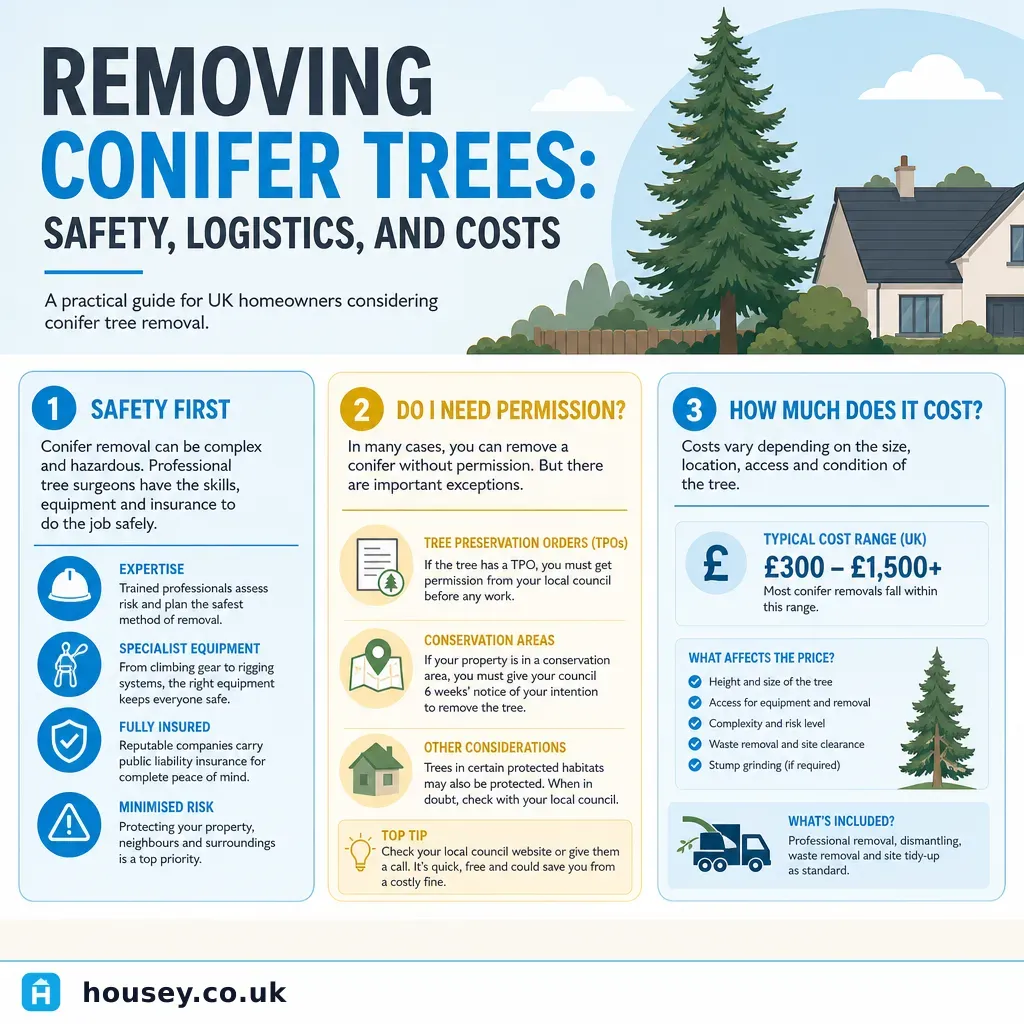
Removing Conifer Trees: Safety, Logistics, and Costs
Removing a conifer tree in the UK usually requires a qualified tree surgeon.
 Improvement & Build
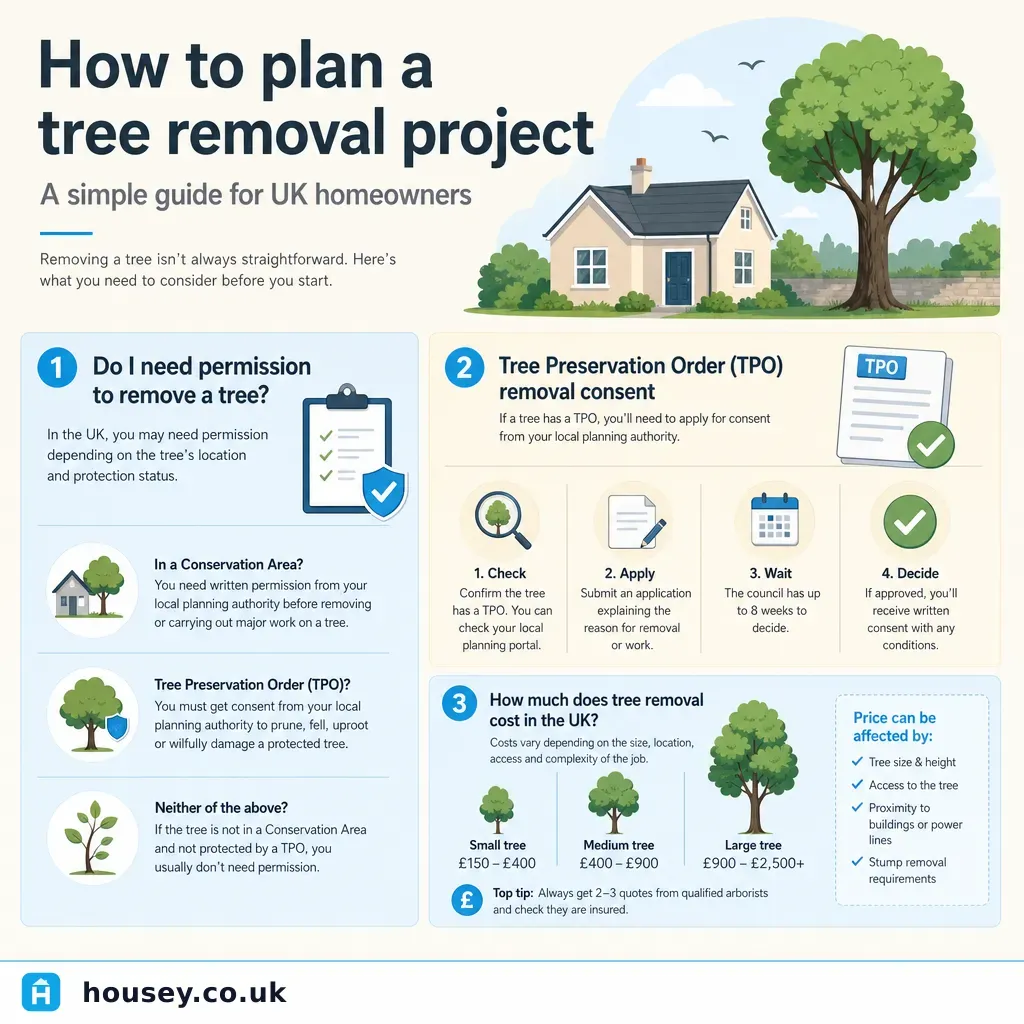
How to plan a tree removal project
Planning a tree removal project starts with checking whether the tree is protected by a Tree Preservation Order or sits in a conservation area, as both require council consent before any work begins.
 Improvement & Build
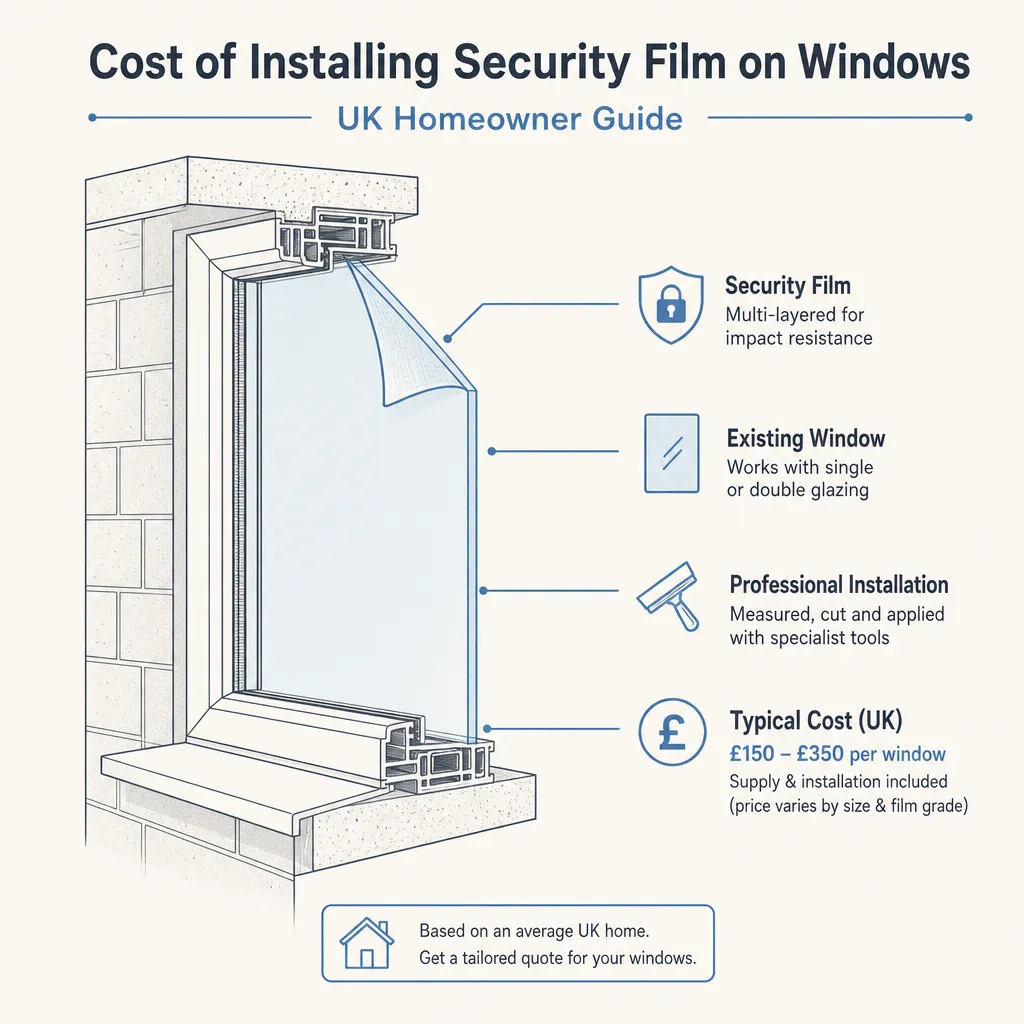
Cost of Installing Security Film on Windows
Security film for windows in the UK typically costs £25–£60 per m² for supply and professional installation, depending on film specification and window count.
 Improvement & Build
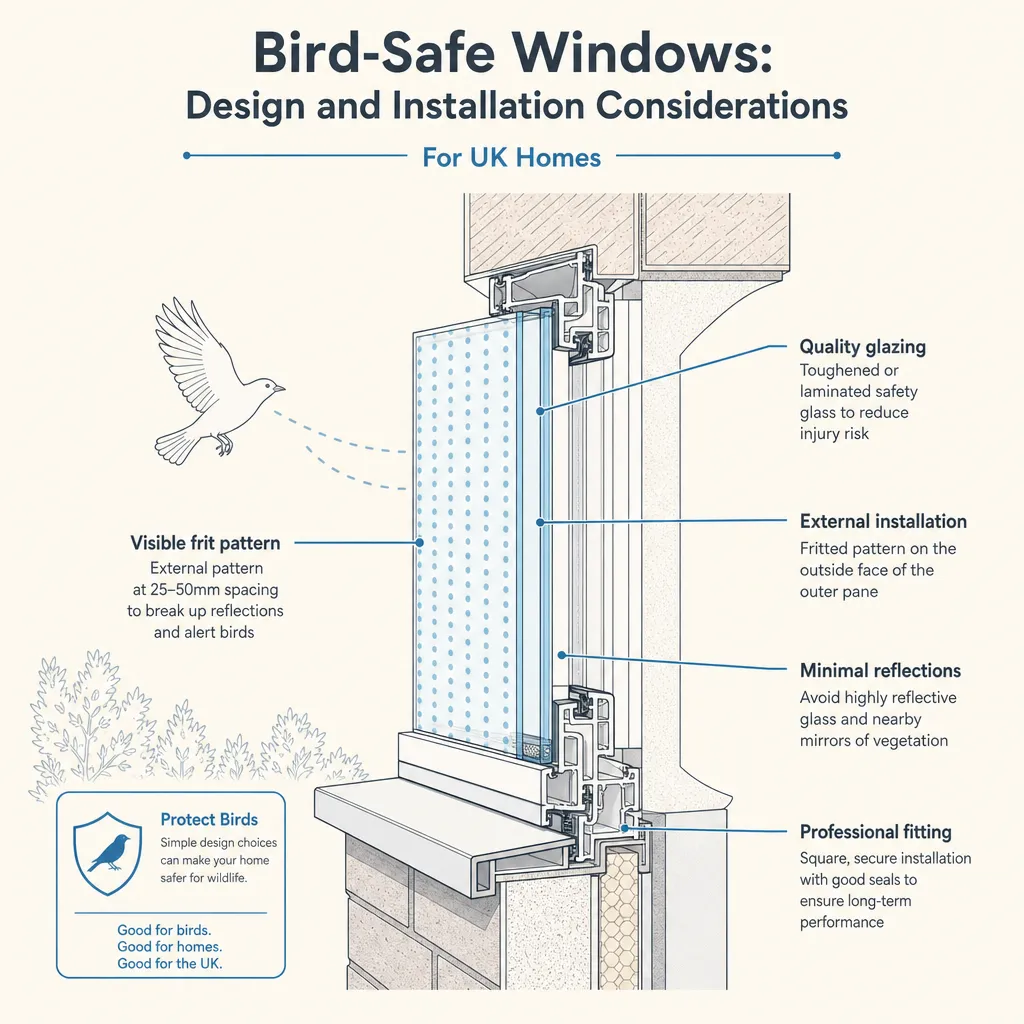
Bird-Safe Windows: Design and Installation Considerations
Bird-safe windows use patterns, coatings, or films on the exterior glazing surface to make glass visible to birds in flight.
 Improvement & Build
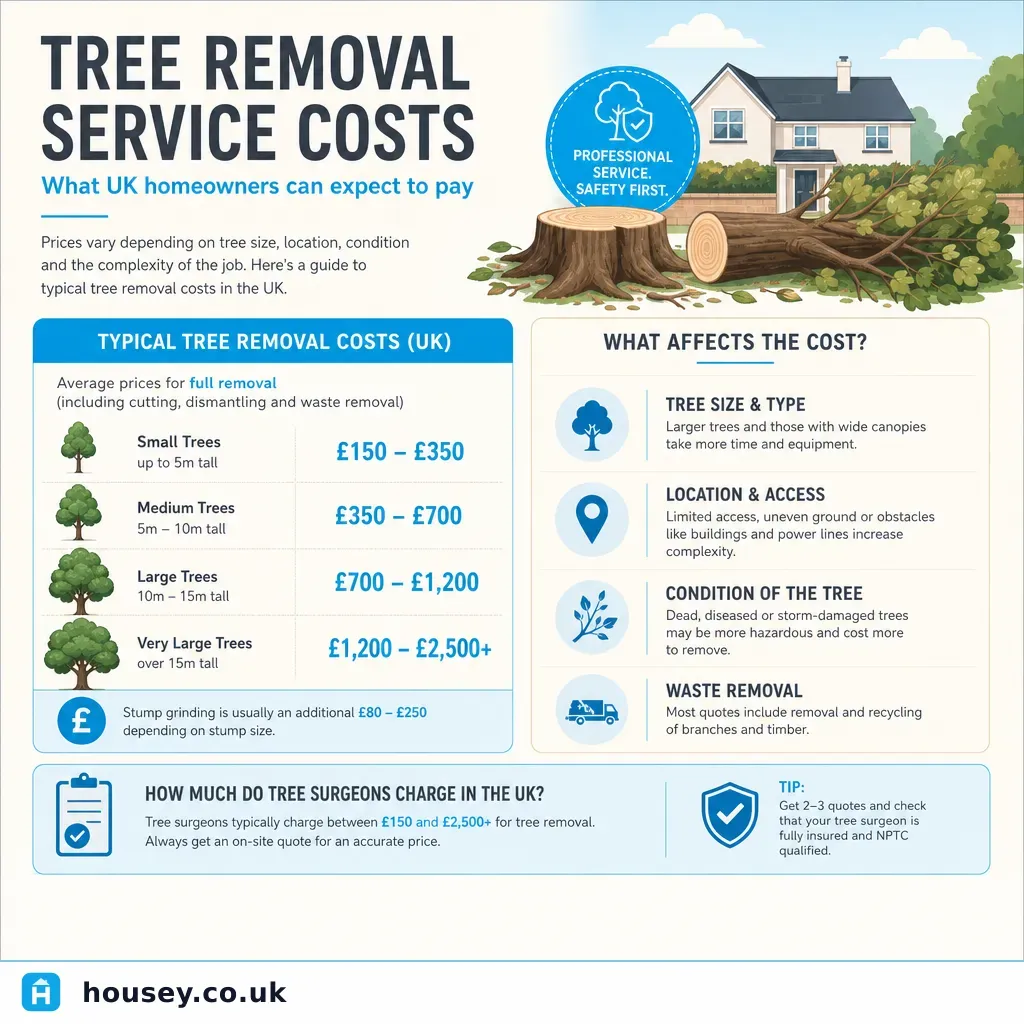
Tree Removal Service Costs
Professional tree removal costs in the UK depend on tree height, access, species, and the scope of work included.