Smart Home Technology That Saves Energy: A Practical Approach To Reducing Bills
By Housey · Last reviewed 31st of May 2026
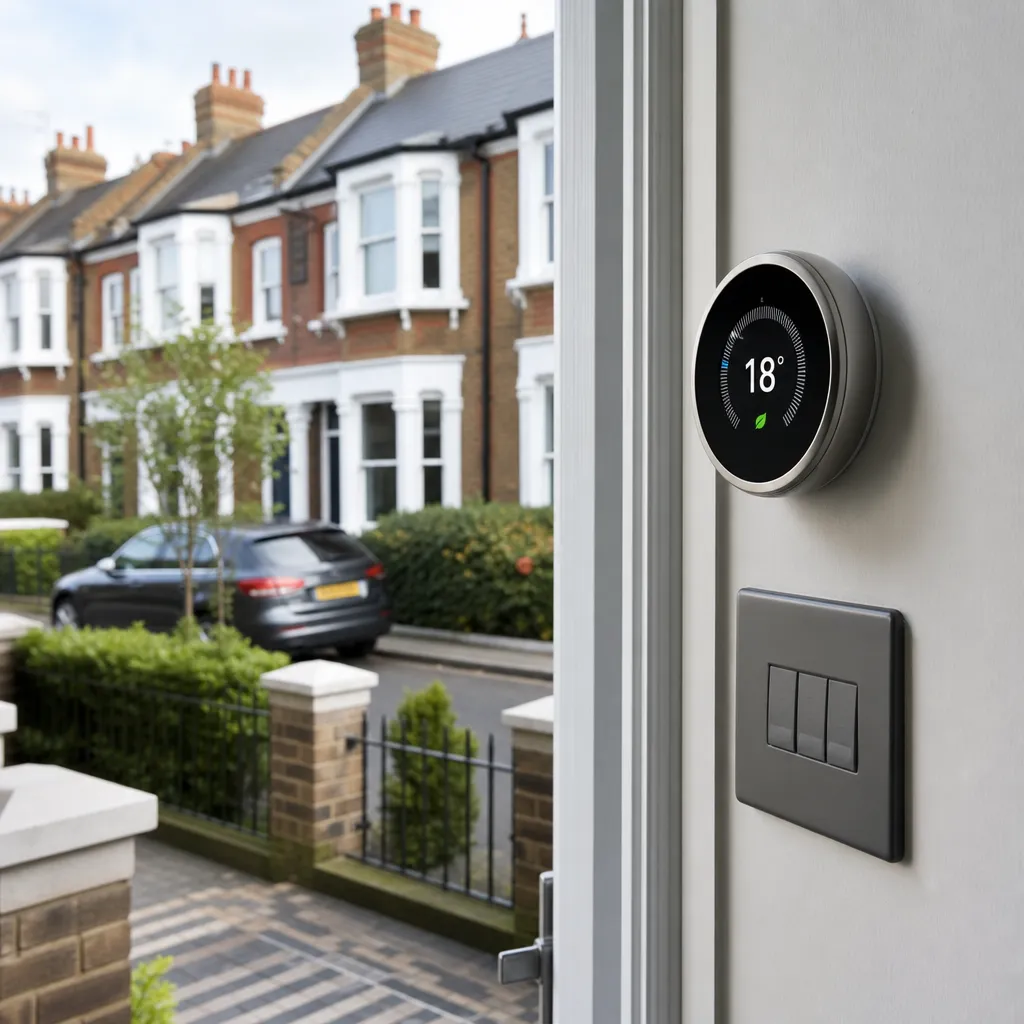
Smart Home Technology That Saves Energy: A Practical Approach To Reducing Bills
Smart home technology has moved from luxury to practical toolkit for UK homeowners facing high energy tariffs. Whether you're in a 1930s semi trying to reduce gas consumption or a new-build flat managing electricity costs, the question of which devices actually save money — and how much — has become a real household concern. Choosing the wrong products, or installing them without a broader energy strategy, can mean spending hundreds of pounds without meaningful bill reductions.
Key points
- Smart thermostats (e.g., Hive, Nest, tado°) typically reduce heating energy use by 10–30%, making them the single most impactful smart device for most UK homes (Energy Saving Trust).
- Smart meters are provided free under the GB Smart Metering Programme and give real-time consumption data — they are distinct from smart thermostats and do not control your heating.
- Standby power accounts for approximately 6% of the average UK electricity bill; smart plugs can eliminate this waste automatically (Energy Saving Trust).
- Time-of-use tariffs such as Octopus Agile allow demand-shifting automation, moving dishwasher and EV-charging loads to cheaper overnight periods.
- Under PAS 2035, smart controls form part of a whole-house retrofit strategy and should complement, not substitute for, insulation and ventilation improvements.
What counts as a smart home energy device?
Smart energy devices connect to your home Wi-Fi or a dedicated hub and allow remote or automated control of heating, lighting, and appliances. The main categories relevant to energy saving are:
Device type | What it controls | Typical payback |
|---|---|---|
Smart thermostat (e.g., Hive, Nest, tado°) | Central heating boiler and hot water | 1–3 years |
Smart radiator TRVs | Individual room temperatures | 2–4 years |
Smart plugs and power strips | Standby appliances | Under 1 year |
Occupancy/motion sensors | Lighting and heating zones | 1–2 years |
Smart LED lighting (e.g., Philips Hue) | Lighting schedules and dimming | 2–5 years |
Home energy monitor (e.g., Hildebrand Glow) | Real-time whole-home electricity use | Immediate insight |
Smart EV charger | Car charging timing | Variable — depends on tariff |
Indicative UK payback estimates, last reviewed 2026-05-31. Actual savings depend on your tariff, household size, and existing controls.
Not every home benefits equally. A well-insulated property with modern controls will see smaller marginal gains than a Victorian terrace relying on a basic dial thermostat.
Smart thermostats: the highest-impact upgrade
For most UK households, central heating accounts for the largest share of energy costs. A smart thermostat replaces a conventional programmer and room thermostat, adding remote control via a smartphone app, geofencing (the heating turns on as you approach home), learning algorithms that adapt schedules to your routine, and integration with smart radiator TRVs for room-by-room temperature control.
The Energy Saving Trust estimates heating energy savings of 10–30%, though real-world results depend heavily on how poorly the existing controls were set up beforehand. A household already running a well-programmed thermostat with good insulation will see smaller gains than one relying on a manual dial.
Compatibility matters: Most smart thermostats work with standard gas combi and system boilers, but check the manufacturer's compatibility tool before buying. Some older boilers require a relay box, usually included in the kit. If you have a heat pump, look specifically for heat-pump-compatible controls such as tado° or Nest's heat pump controller — not all gas-boiler thermostats are suitable.
Lighting, plugs, and appliance control
Lighting accounts for around 11% of the average UK household electricity bill (Energy Saving Trust). Smart LED systems offer automatic scheduling, occupancy-triggered switching, and dimming — dimming to 50% typically reduces a bulb's energy use by around 40%.
Smart plugs (typically £10–£25 each) cut power to televisions, games consoles, and computers automatically during periods of non-use. Eliminating standby waste across several devices can save £50–£80 per year for a typical UK household.
What not to assume: Smart plugs are not appropriate for appliances that must remain powered at all times — fridges, freezers, routers, and intruder alarms should never be controlled by scheduled smart plugs.
Energy monitoring and smart meters
A smart meter is installed free by your energy supplier under the national rollout programme. It replaces your old gas and electricity meters and sends readings automatically. The in-home display (IHD) shows real-time energy use in pounds and pence, useful for spotting energy-hungry behaviour — but it does not control anything in your home.
A home energy monitor such as the Hildebrand Glow clips a CT sensor to your existing electricity meter and integrates with Home Assistant or other smart home platforms. This enables automation rules such as starting the dishwasher automatically when electricity prices fall below a set threshold — useful when combined with a time-of-use tariff.
Time-of-use tariffs and demand shifting
Several UK energy suppliers offer tariffs where the unit price varies throughout the day:
- Octopus Agile — price changes every 30 minutes based on wholesale electricity prices; can go negative during periods of high renewable generation.
- Octopus Go / Intelligent Go — a fixed cheap overnight rate (typically 7–10p/kWh) designed primarily for EV charging.
- Economy 7 and Economy 10 — older off-peak overnight rates still available with some suppliers.
Pairing these tariffs with smart home automation allows you to shift washing machine cycles, dishwasher runs, and EV charging to the cheapest periods automatically. Smart EV chargers such as Ohme or Indra can handle this through direct tariff integration without manual scheduling.
Combining smart technology with a retrofit strategy
Smart controls work best when the building fabric already performs reasonably well. A smart thermostat cannot compensate for an uninsulated loft or single-glazed windows — it will simply run the boiler longer to reach the target temperature.
Decision guide: smart controls or fabric improvements first?
- Choose smart controls first if your home is already well-insulated and glazed but has absent or poorly configured heating controls.
- Choose fabric improvements first (loft insulation, cavity wall fill, draught-proofing) if your home loses heat quickly — these often offer shorter payback periods.
- Consult an energy-efficiency professional if you're planning a heat pump installation or major retrofit, or applying for ECO4 or Great British Insulation Scheme funding.
- Check PAS 2035 requirements if applying for publicly funded measures — a qualified Retrofit Coordinator must produce a whole-house plan within which smart controls play a defined role.
When to get professional help
Smart plugs and bulbs are straightforward DIY upgrades. Consider professional advice or installation when:
- Installing a smart thermostat on an unfamiliar or older boiler system where wiring layout is unclear.
- Wiring new smart light switches into existing circuits — certain locations in a home require compliance with Part P of the Building Regulations in England and Wales.
- Installing home energy monitoring equipment at consumer-unit level — this should be carried out by a qualified and registered electrician.
- Planning smart controls as part of a heat pump installation or a whole-house retrofit under PAS 2035.
- Applying for government funding schemes that require a TrustMark-registered or MCS-certified assessor.
How Housey can help
If you're thinking about smart energy technology as part of a broader home improvement plan, an independent energy-efficiency consultant can help you prioritise measures by payback period, identify relevant grant funding, and produce a whole-house assessment that smart controls can complement. Use Housey to compare quotes from verified local professionals.
Frequently asked questions
Do smart thermostats work with all boilers?
Most smart thermostats are compatible with standard gas combi and system boilers, but not all older models. Check the manufacturer's compatibility tool before purchasing. Heat pumps require specific smart controls — not all thermostats designed for gas boilers are suitable for heat pump systems.
Can I install a smart thermostat myself?
Many smart thermostats are designed for DIY installation and include guides for common boiler types. If your boiler wiring is unusual or unclear, a Gas Safe registered engineer or qualified heating engineer can install it safely. Incorrect wiring can damage the boiler controller.
Are smart home energy devices eligible for VAT relief in the UK?
Some energy-saving products attract 0% VAT under current UK legislation — as of 2026 this covers items such as solar panels, heat pumps, and certain insulation, but not generally smart thermostats or smart plugs. Check current HMRC guidance, as VAT rules on energy products have changed in recent years.
How much does a smart thermostat cost in the UK?
Indicative prices (last reviewed 2026-05-31): entry-level models start at around £100–£150 (e.g., Hive Active Heating); premium models with learning and TRV integration cost £200–£400 or more depending on the number of radiators covered. Professional installation adds approximately £50–£150.
What is the difference between a smart meter and a smart thermostat?
A smart meter measures and automatically transmits your energy consumption — installed free by your energy supplier, it replaces your old utility meter. A smart thermostat is a separate product that controls your heating system. They can complement each other but serve entirely different functions.
Sources and further reading
- Smart thermostats and heating controls — Energy Saving Trust
- Smart meters: how they work — GOV.UK
- PAS 2035 and PAS 2030: what they are and when to use them — GOV.UK
- Saving energy in the home — Energy Saving Trust
- Time of use tariffs — Ofgem
Useful next reads
 Energy & Retrofit
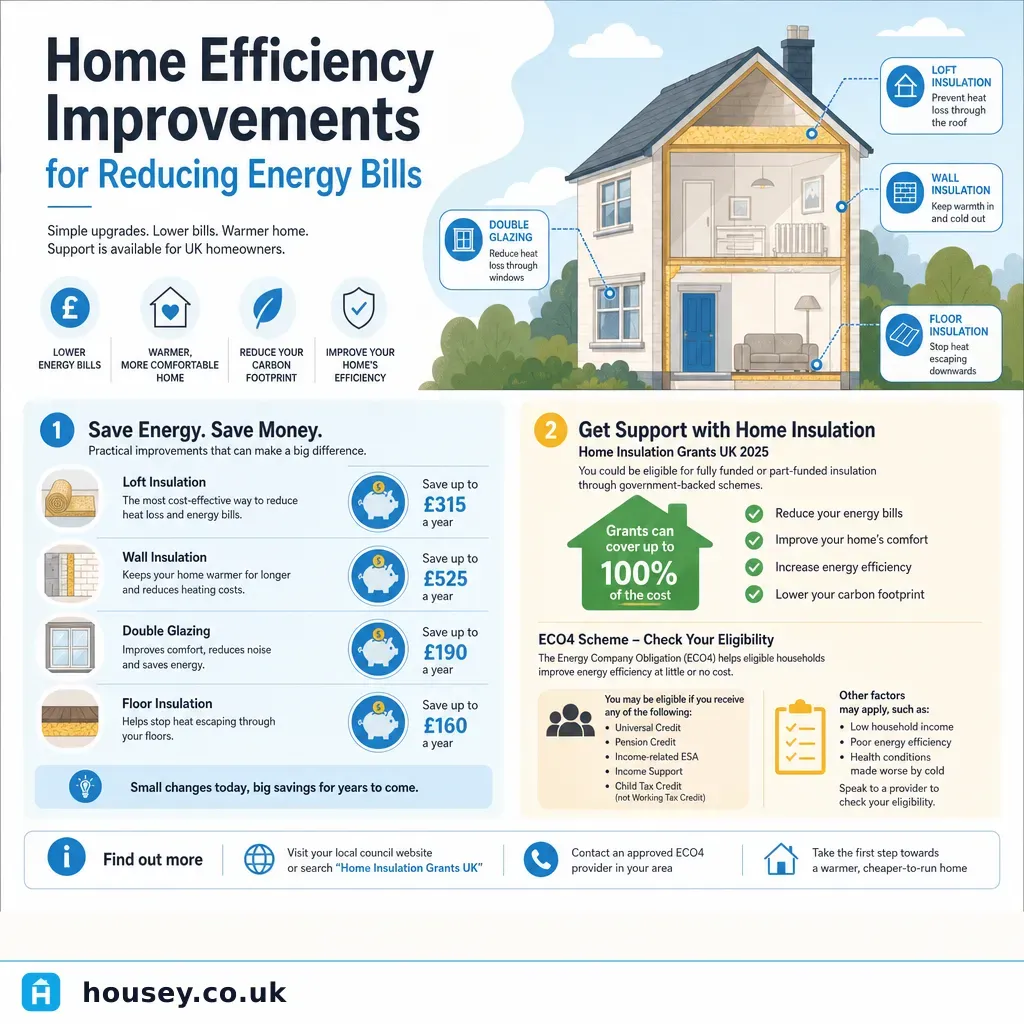
Home Efficiency Improvements for Reducing Energy Bills
The most cost-effective UK home efficiency improvements are usually loft insulation, cavity wall insulation, draught-proofing, and upgrading heating controls.
 Energy & Retrofit
Maximising Energy Efficiency: Smart Tips for UK Homes
Improving energy efficiency in a UK home typically starts with draught-proofing and loft insulation — the measures with the fastest payback — before moving to wall insulation, heating system upgrades, and low-carbon technologies such as heat pumps or solar panels.
 Energy & Retrofit
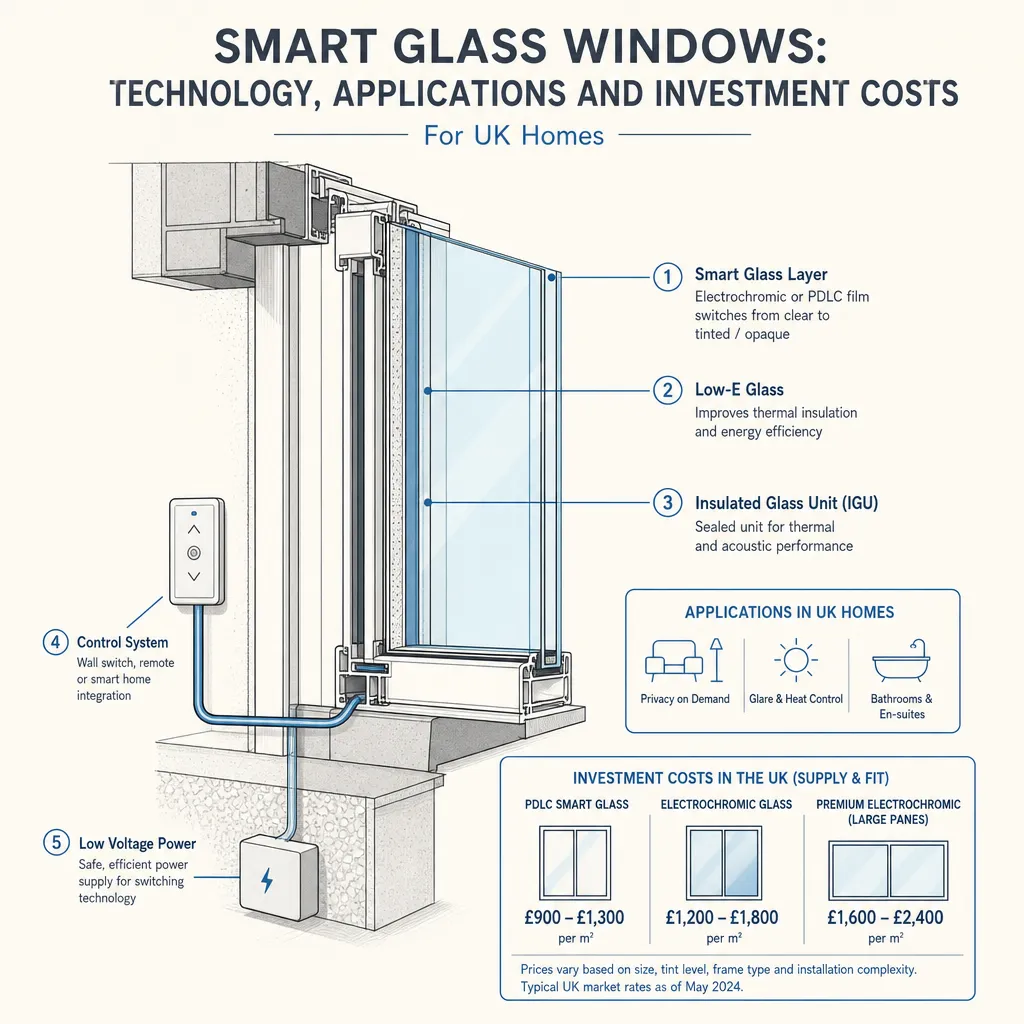
Smart Glass Windows: Technology, Applications and Investment Costs
Smart glass windows switch between transparent, tinted, or opaque states using electrical signals or heat.
 Energy & Retrofit
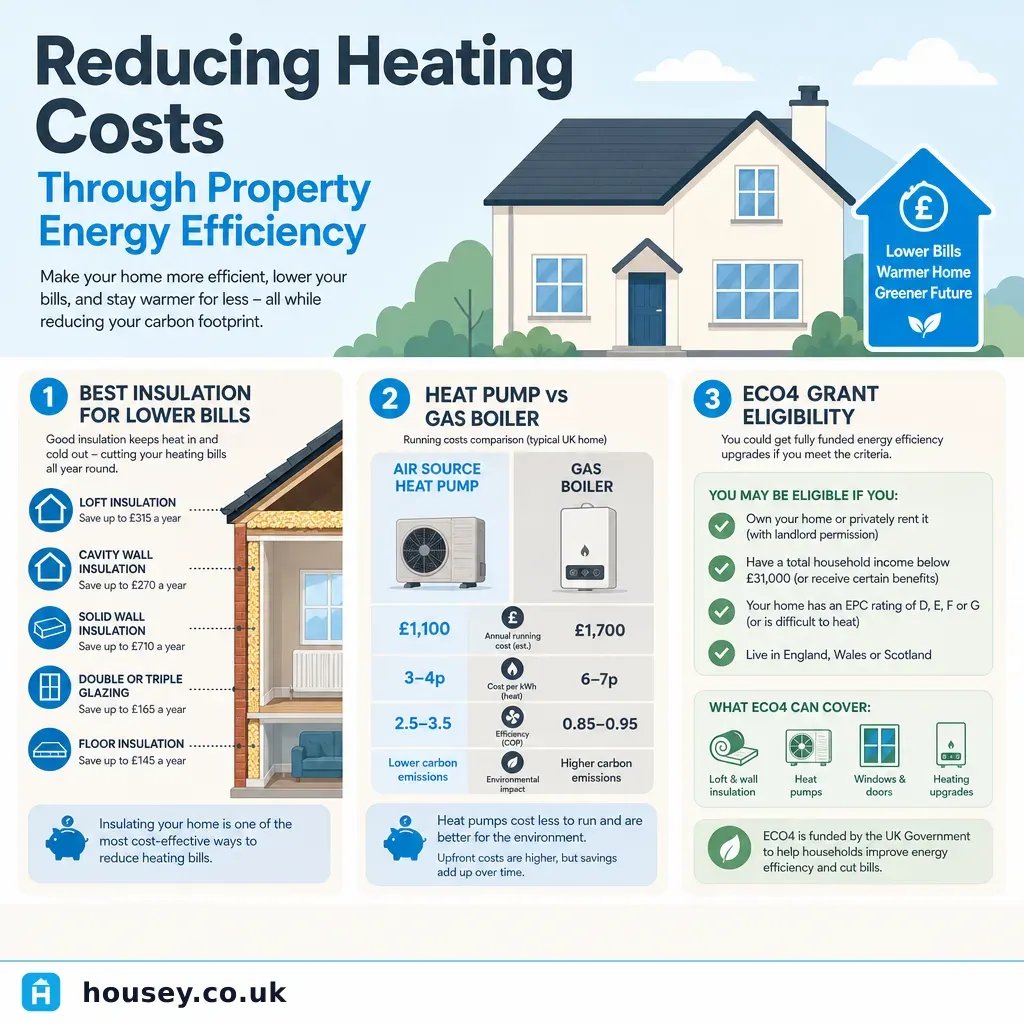
Reducing Heating Costs Through Property Energy Efficiency
Reducing heating costs starts with identifying where heat is lost — typically walls (30–35%), roof (20–25%), and windows.
 Energy & Retrofit
Practical Energy Saving Tips for Homeowners
Most UK households can meaningfully reduce their energy bills by making targeted changes: lowering the thermostat by 1°C, switching to LED lighting, and draught-proofing doors and windows.