Home Energy: Consumption, Efficiency Improvements, and Professional Services
By Housey · Last reviewed 19th of May 2026
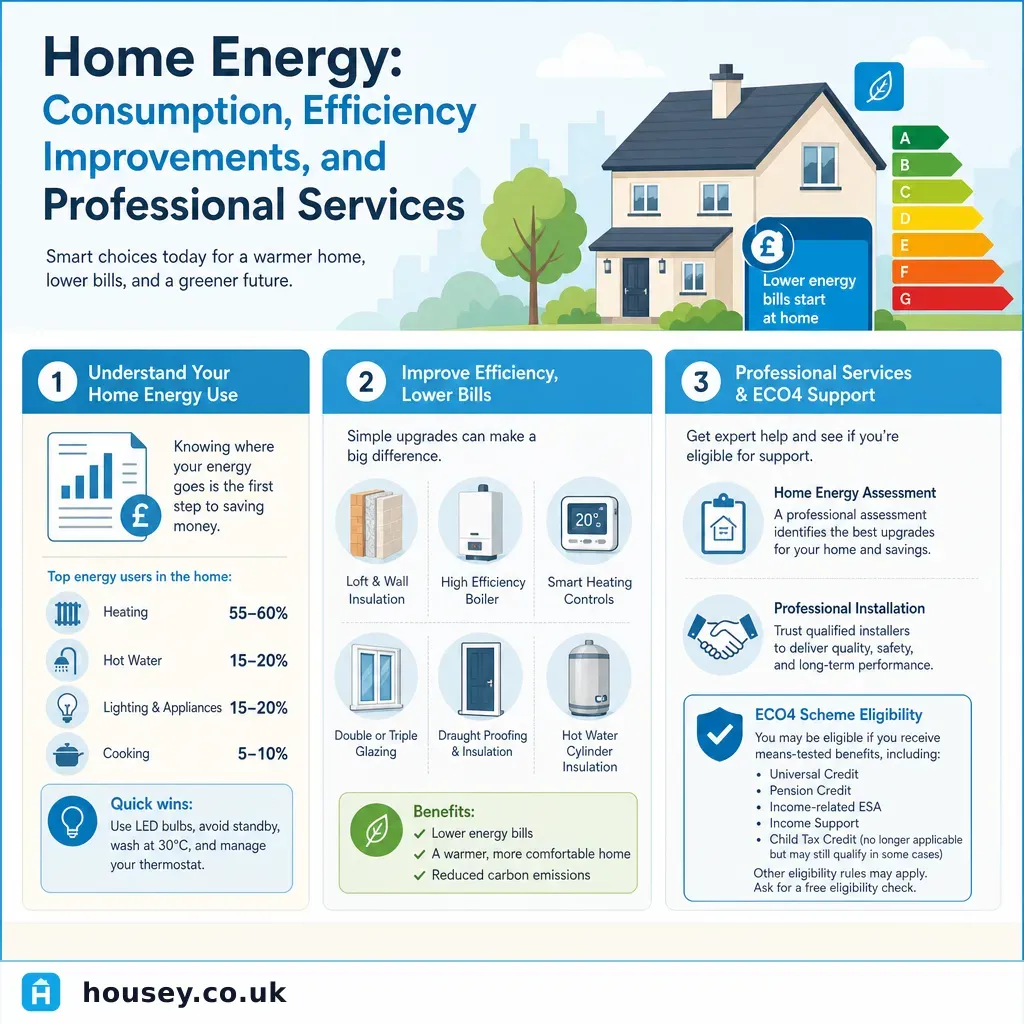
Home Energy: Consumption, Efficiency Improvements, and Professional Services
Energy bills have risen sharply in recent years, and for many UK households a draughty, poorly insulated home is absorbing heat — and money — it does not need to. Whether you own a 1930s semi, a Victorian terrace, or a purpose-built flat, understanding where your energy goes and which upgrades offer the best return is essential before committing to any improvement works.
Key points
- The average UK household spends roughly £1,700–£2,200 per year on energy (Ofgem, 2025 price cap period), with space and water heating accounting for approximately 80% of domestic energy use.
- Properties rated EPC Band E, F, or G cannot legally be let to new tenants in England and Wales without a valid exemption under the Minimum Energy Efficiency Standards (MEES).
- ECO4 (Energy Company Obligation 4) and the Great British Insulation Scheme (GBIS) can fund insulation and heating upgrades at no or reduced cost for eligible households.
- PAS 2035 governs whole-house retrofit in the UK; projects using government grant funding must follow this standard and require a qualified Retrofit Coordinator and Retrofit Assessor.
- Current Building Regulations Part L targets include wall U-values of 0.18 W/m²K and roof U-values of 0.13 W/m²K for new dwellings and extensions — the lower the figure, the better the insulation performance.
Where does your home energy go?
Space heating and hot water together account for approximately 80% of domestic energy use in a typical UK home (Energy Saving Trust). Lighting, cooking, and appliances share the remaining 20%. This means interventions targeting the building fabric — walls, roof, floor, and windows — and the heating system will almost always deliver larger savings than switching to LED bulbs alone.
The breakdown varies by:
- Property age and type. A pre-1930s solid-wall home loses heat roughly twice as fast per square metre as a cavity-wall property from the 1980s.
- Heating fuel. Homes on mains gas are typically cheaper to heat than those on oil, LPG, or direct electric heating.
- Occupancy patterns. A large, under-occupied property heated for extended periods wastes disproportionately more energy.
- Existing insulation. A loft with no insulation can account for around 25% of a home's heat loss.
The most cost-effective efficiency improvements
Not every measure suits every home. The table below gives a broad overview of common improvements, their applicability, and indicative costs.
Measure | Best for | Not ideal for | Indicative installed cost | Typical annual saving |
|---|---|---|---|---|
Loft insulation (270 mm mineral wool) | Most homes with accessible pitched roofs | Flat roofs, already insulated lofts | £300–£600 | £150–£250 |
Cavity wall insulation | 1930s–1990s cavity-wall homes in good condition | Solid-wall or exposed/wet-area properties | £500–£1,500 | £100–£220 |
External wall insulation (EWI) | Solid-wall pre-1930s homes, some flats | Conservation area properties (check PD rights) | £8,000–£20,000 | £300–£500 |
Double or triple glazing | Single-glazed older properties | Modern homes already double-glazed | £3,000–£10,000 (whole house) | £50–£150 |
Smart heating controls | Homes with gas or oil boilers | Homes with direct electric storage heaters | £150–£600 | £75–£200 |
Hot water cylinder insulation jacket | Homes with uninsulated cylinders | Combination boilers (no cylinder) | £15–£30 | £25–£50 |
Air source heat pump | Well-insulated homes off the gas grid | Leaky, under-insulated properties | £8,000–£15,000 (BUS grant available) | Varies widely |
Indicative UK costs, last reviewed 2026-05-19. Quotes vary by property size, location, and contractor. Sources: Energy Saving Trust, DESNZ.
Understanding your EPC
An Energy Performance Certificate (EPC) rates a property from A (most efficient) to G (least efficient) and is required whenever a home is sold, let, or newly built. EPCs are valid for 10 years and must be carried out by an accredited Domestic Energy Assessor (DEA).
The EPC report includes:
- Your property's current and potential energy rating.
- Recommended improvement measures with estimated cost savings.
- Typical energy use figures and CO₂ emissions data.
For landlords in England and Wales, MEES regulations currently require a minimum EPC rating of E for most tenancies. The government has consulted on raising this threshold to C — check GOV.UK guidance on Energy Performance Certificates for the latest requirements, as these are subject to change.
Government grants and funding schemes
Several UK and devolved schemes can reduce or eliminate upfront costs for energy improvements.
ECO4 requires large energy suppliers to fund insulation and heating upgrades for low-income and vulnerable households. Eligibility depends on household income, benefits received, and EPC rating. Apply through your energy supplier or an ECO4-approved installer.
Great British Insulation Scheme (GBIS) is open to households in EPC band D–G (or lower council tax bands A–D in E-band properties). It funds a single insulation measure per property. Check eligibility via GOV.UK — Great British Insulation Scheme.
Boiler Upgrade Scheme (BUS) provides grants of £7,500 towards an air source heat pump and £7,500 towards a ground source heat pump for eligible homes in England and Wales. Installers must hold MCS (Microgeneration Certification Scheme) certification.
Devolved equivalents include Warmer Homes Scotland, Wales's Nest and Optimised Retrofit Programme, and Northern Ireland's Home Energy Conservation Scheme.
Whole-house retrofit vs single measures
Single measures such as loft insulation can deliver quick wins. Improving multiple elements together under a whole-house retrofit plan is usually more cost-effective, avoids unintended consequences such as condensation from increased airtightness, and is required under PAS 2035 for any publicly funded project.
PAS 2035 requires:
- A Retrofit Assessment by a qualified Retrofit Assessor, covering the building fabric, services, and occupant needs.
- A Retrofit Coordinator to manage the project and ensure all measures work together safely.
- An in-use monitoring plan for significant upgrades such as heat pump installations.
Homeowner checklist: before commissioning energy improvements
When to get professional help
An energy-efficiency consultant or Retrofit Assessor adds value when:
- Your home is pre-1930s solid-wall construction and you are unsure which insulation approach is safest for the building fabric.
- You are considering a heat pump or other low-carbon heating system and need accurate heat-loss calculations before sizing equipment.
- You need PAS 2035 compliance to access government grant funding.
- EPC recommendations conflict with what an installer is proposing.
- Condensation, mould, or damp has appeared or worsened after previous insulation work.
Red flags to investigate immediately:
- Mould or condensation appearing after cavity wall insulation is installed — this may indicate failed or incorrectly placed insulation that requires remediation.
- An installer recommending a heat pump without first calculating your home's heat loss.
- A grant-funded contractor who makes no mention of a Retrofit Coordinator.
How Housey can help
Housey connects you with vetted energy-efficiency consultants who can carry out independent whole-house assessments, help you access the right grants, and oversee retrofit projects under PAS 2035. Compare quotes from qualified professionals in your area before committing to any works.
Frequently asked questions
What is an EPC and do I need one?
An Energy Performance Certificate (EPC) rates your home's energy efficiency from A (best) to G (worst). You are legally required to have a valid EPC when selling or letting a property in England, Wales, and Scotland. EPCs are carried out by accredited Domestic Energy Assessors and are valid for 10 years. All current certificates are held on the national EPC register.
Does improving energy efficiency add value to my home?
Research suggests properties in higher EPC bands command a premium over equivalent lower-rated homes. Moving from band D to B or C may add a meaningful percentage to market value, and higher-rated properties can attract better mortgage rates from some lenders. The effect varies significantly by region and property type.
What grants are available for home energy improvements?
In England, the main schemes are ECO4 (for low-income or vulnerable households), the Great British Insulation Scheme, and the Boiler Upgrade Scheme for heat pumps. Scotland, Wales, and Northern Ireland have their own equivalent programmes. Eligibility rules change — always check current GOV.UK guidance before applying.
How long does home insulation take to install?
Loft insulation for a standard semi-detached house can usually be completed in half a day. Cavity wall insulation typically takes one day. External wall insulation is more disruptive and may take 1–3 weeks depending on property size. Any reputable contractor should provide a clear programme of works before starting.
Sources and further reading
- Home insulation guide — Energy Saving Trust
- Great British Insulation Scheme — HM Government
- Boiler Upgrade Scheme — HM Government
- PAS 2035 — Retrofitting dwellings for improved energy efficiency — BSI Group
- Energy Performance Certificates — HM Government
- Energy price cap — Ofgem
Useful next reads
 Energy & Retrofit
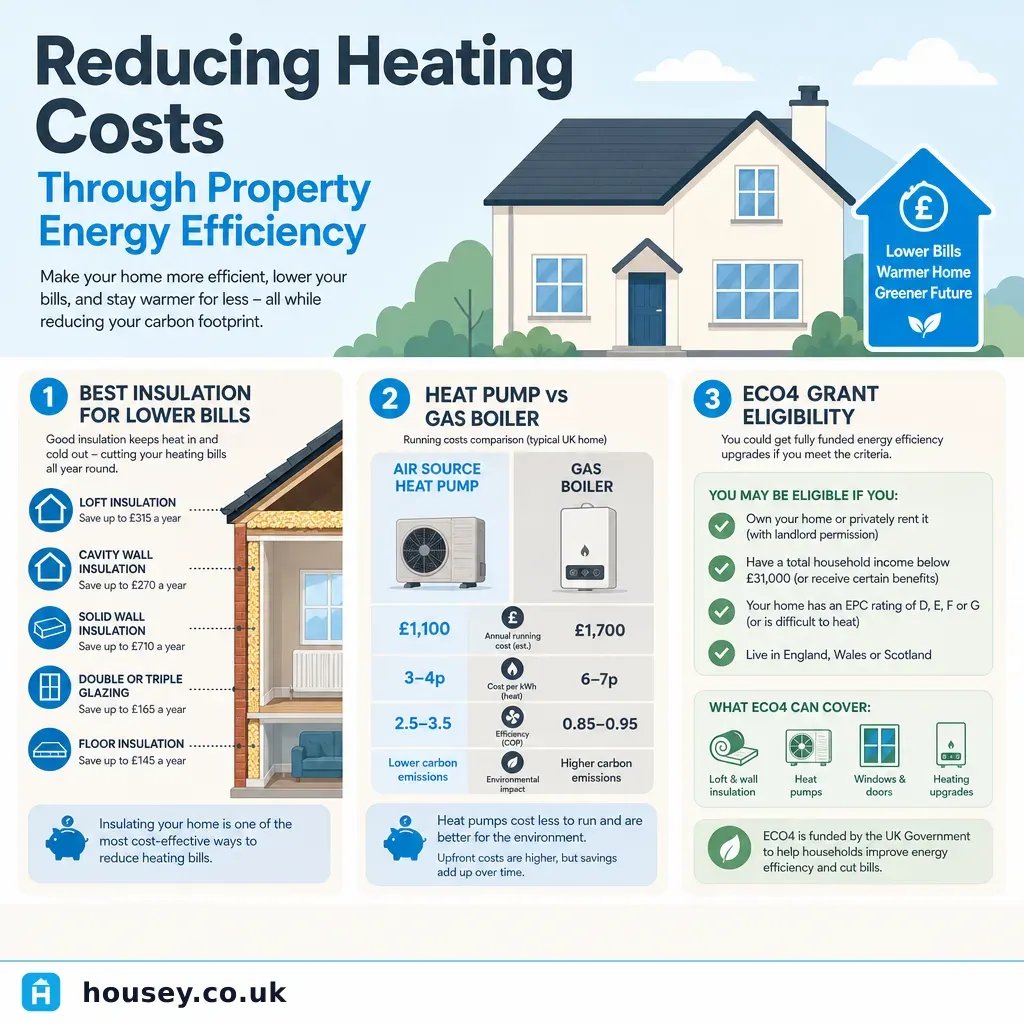
Reducing Heating Costs Through Property Energy Efficiency
Reducing heating costs starts with identifying where heat is lost — typically walls (30–35%), roof (20–25%), and windows.
 Energy & Retrofit
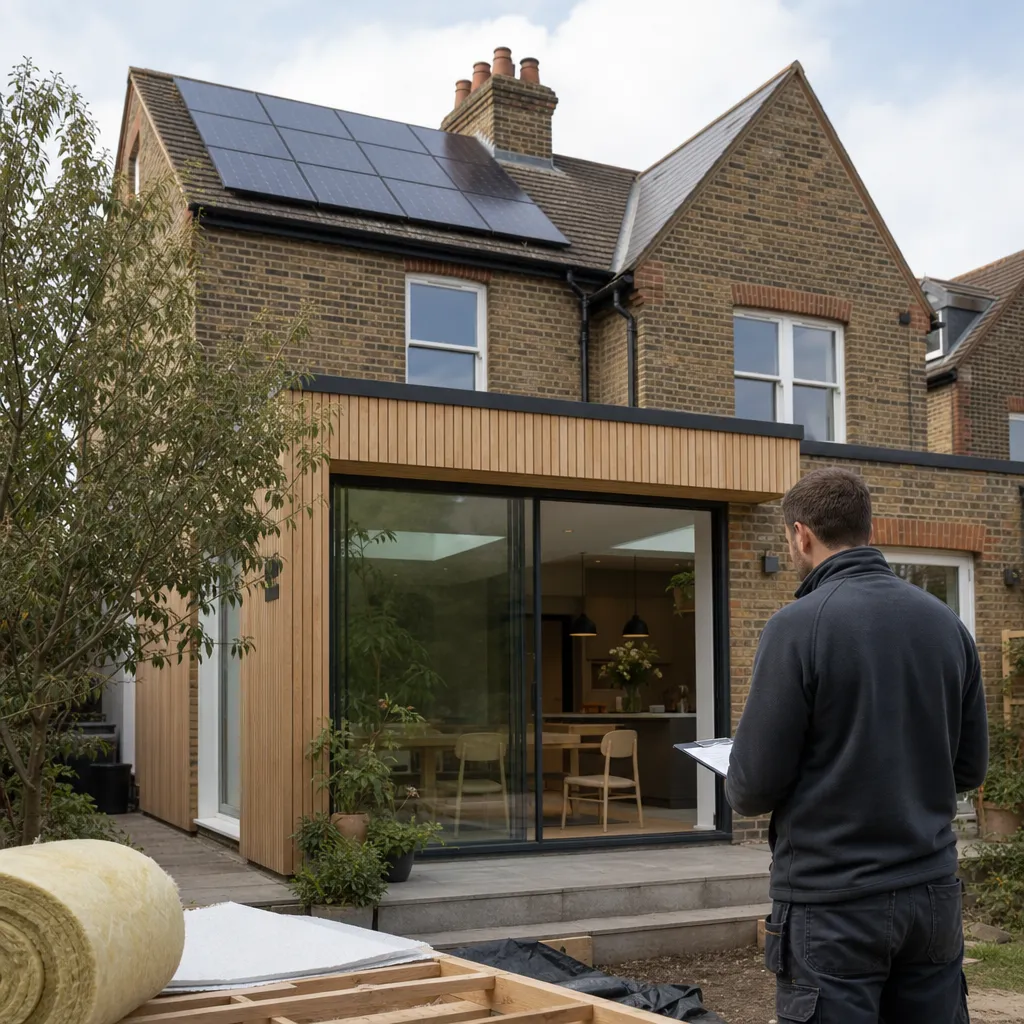
Sustainable Home Upgrades During Renovation
During a renovation, the most effective sustainable upgrades follow a fabric-first sequence: start with loft and wall insulation, improve ventilation, then upgrade heating.
 Energy & Retrofit
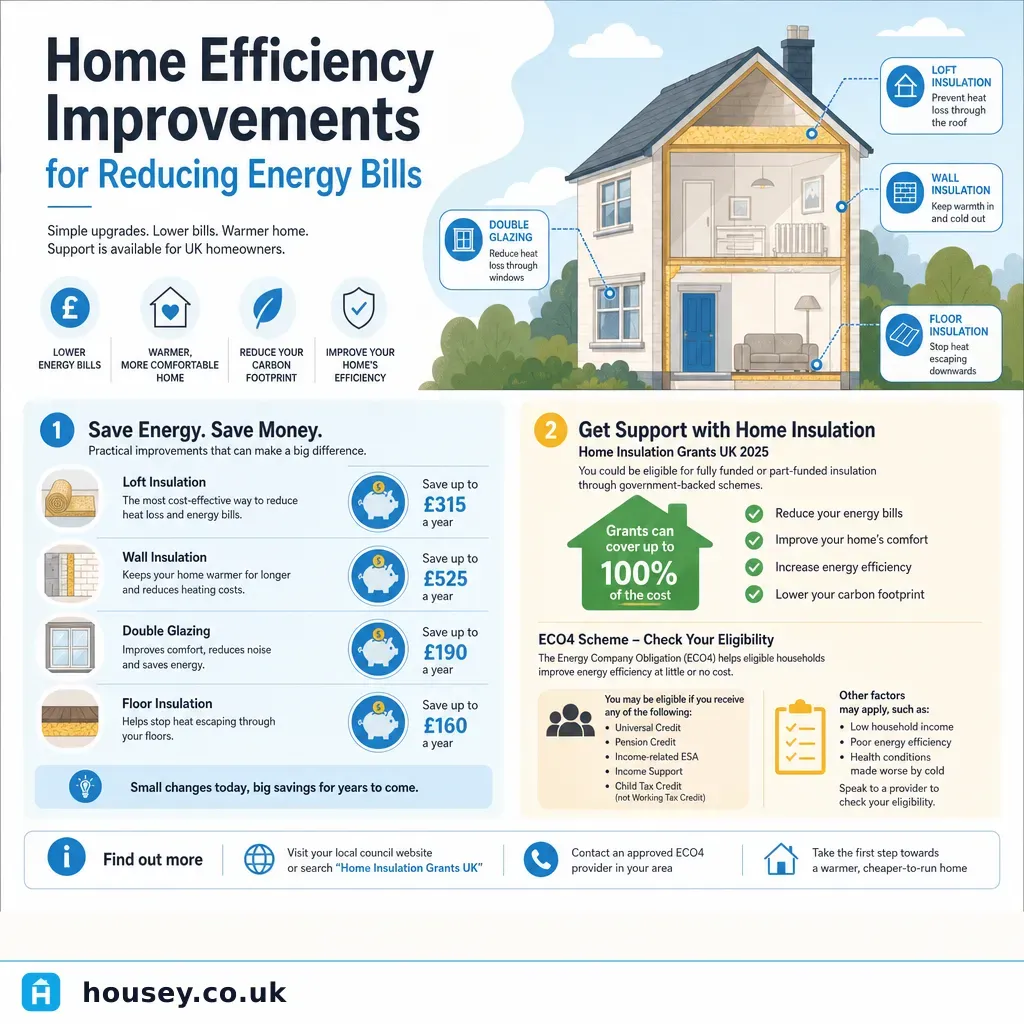
Home Efficiency Improvements for Reducing Energy Bills
The most cost-effective UK home efficiency improvements are usually loft insulation, cavity wall insulation, draught-proofing, and upgrading heating controls.
 Energy & Retrofit
Climate-Ready Home Improvements for the Future
Climate-ready home improvements tackle four main risks for UK properties: overheating, increased rainfall and flooding, storm damage, and energy cost volatility.
 Energy & Retrofit
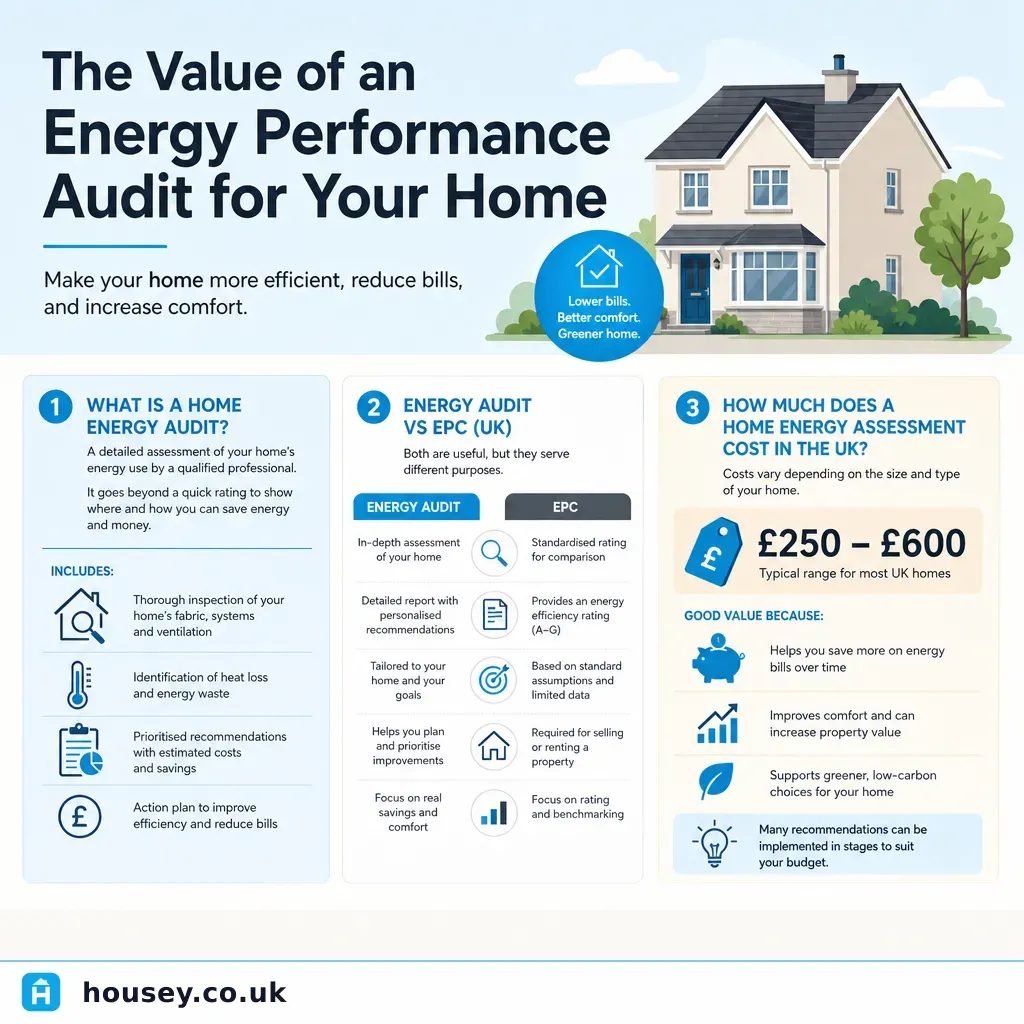
The Value of an Energy Performance Audit for Your Home
A home energy performance audit is a detailed, site-specific assessment of a property's fabric, heating, ventilation, and controls.