Home Improvement Evolution: Trends Across Two Decades of UK Property Enhancement
By Housey · Last reviewed 19th of May 2026
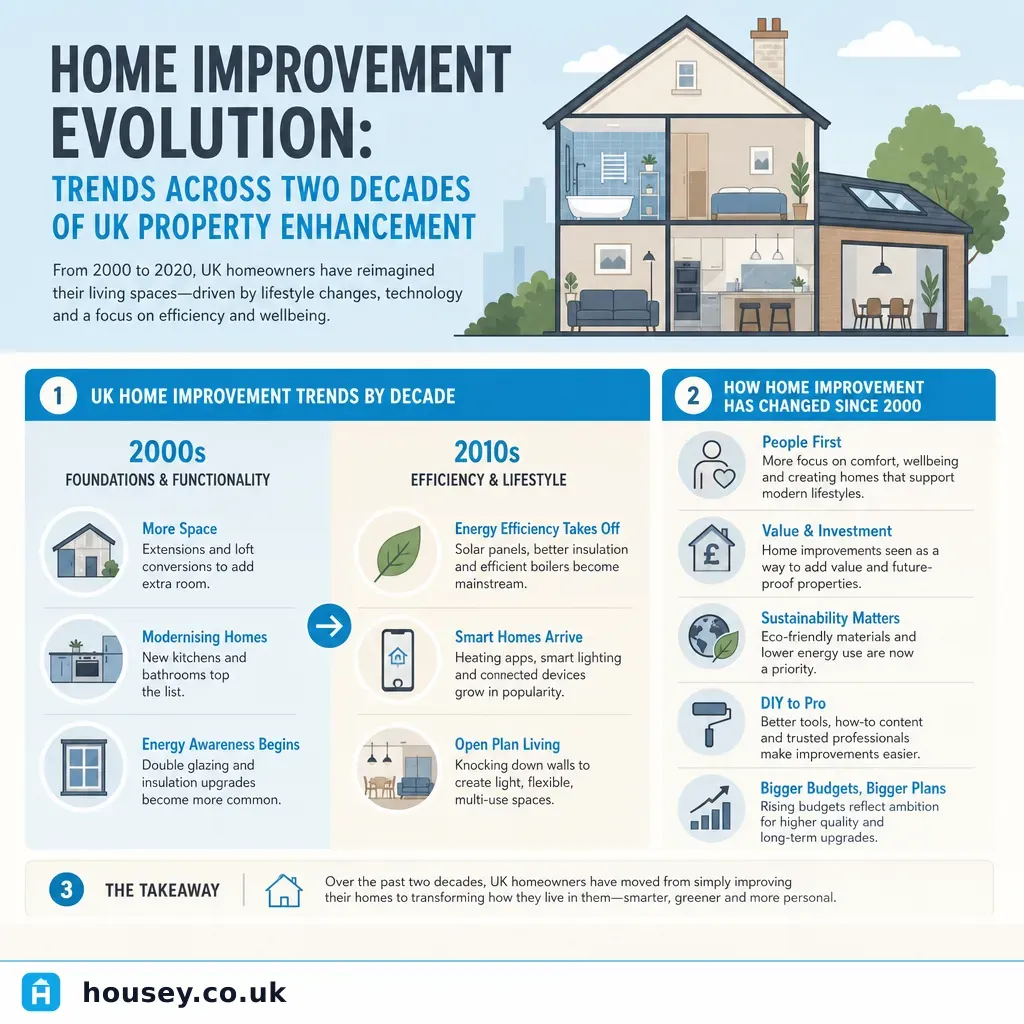
Home Improvement Evolution: Trends Across Two Decades of UK Property Enhancement
The home improvement sector in the UK has been shaped by economic cycles, regulatory shifts, and changing homeowner priorities over the past two decades. Whether you are planning a major renovation or a targeted upgrade, understanding how the market has evolved — and why — can help you make better decisions about where to invest in your property. From the equity-fuelled boom of the early 2000s to today's energy retrofit imperative, the drivers of improvement activity have rarely stood still.
Key points
- Building Regulations Approved Document L, which governs energy efficiency in dwellings and extensions, has been progressively tightened since 2006, with significant updates in 2010, 2013, and 2021/2022 raising performance standards for all new works requiring building control approval.
- Permitted Development Rights were substantially expanded in 2013: the Neighbour Consultation Scheme allowed single-storey rear extensions of up to 8 metres for detached houses (6 metres for semi-detached or terraced) without full planning permission, subject to prior approval conditions.
- The Green Deal home improvement loan scheme launched in January 2013 but attracted take-up far below government targets before its main funding was withdrawn in 2015, illustrating the difficulty of financing retrofit through future bill savings alone.
- The COVID-19 lockdowns of 2020 and 2021 triggered a widely reported surge in home improvement activity, with the Federation of Master Builders recording record consumer demand and significant materials shortages across the sector.
- The Energy Company Obligation (ECO) scheme is now in its fourth iteration — ECO4, running to March 2026 — funding insulation, heating, and energy-efficiency upgrades for low-income and fuel-poor households across the UK.
The early 2000s: extensions, conservatories, and the property boom
Between 2000 and 2007, UK house prices rose strongly across most regions — a period the Halifax House Price Index records as one of the most sustained growth phases in recent history. Rising equity encouraged homeowners to invest: single-storey rear extensions, conservatories, and kitchen refits were among the most commonly undertaken projects.
The prevailing mindset was 'improve, don't move'. Stamp duty land tax made upsizing expensive as property values climbed, and rising equity provided an apparent financial justification for borrowing against the home. Demand for planning applications for householder extensions was robust throughout this period.
Building Regulations Part L required compliance with energy performance standards, but those standards were less stringent than what followed. Double glazing was widespread, but insulation requirements were considerably lower than those that apply today to any new extension or conversion.
2008–2013: recession, repair, and regulatory tightening
The 2008 financial crisis sharply changed the picture. Credit tightened, house prices fell in many areas, and consumer confidence dropped. The discretionary renovation market contracted considerably.
Spending shifted from aspirational extensions towards essential maintenance and repairs. Boiler replacements, re-roofing, and damp-proofing took priority over full kitchen refits. Smaller trades — plumbers, plasterers, and roofers — often reported steadier activity than larger building firms during this period.
Regulatory change continued regardless of market conditions. Part L was updated in 2010, requiring improved energy performance in new dwellings and extensions. The Decent Homes Standard in the social housing sector maintained a baseline of improvement activity and influenced private market standards over time.
The Green Deal launched in January 2013, offering homeowners loans for energy-efficiency improvements repaid through future energy bill savings via the electricity meter. However, official data showed take-up fell far short of government projections before the scheme's main funding was withdrawn in 2015. The limited success underlined that homeowners generally respond more readily to grants than to property-attached loans, and that perceived complexity is a significant barrier.
2014–2019: the permitted development and extensions era
The expansion of Permitted Development Rights in 2013 changed the economics of extending a home. The Neighbour Consultation Scheme — requiring prior approval rather than a full planning application — allowed larger rear extensions: up to 8 metres for detached houses and 6 metres for semi-detached or terraced properties. This reduced cost and delay, and supported a rise in kitchen-diner extensions and garden rooms.
Loft conversions became increasingly popular, particularly in London and the South East, where moving to a larger property had become financially out of reach for many households. Converting an existing loft generally falls within permitted development limits and does not require planning permission in standard cases.
ECO1, ECO2, and ECO3 across this period funded insulation and heating upgrades for eligible lower-income households, building retrofit sector capacity and skills even where individual owner-occupiers were not directly eligible.
The late 2010s also saw smart home technology gain ground: smart thermostats, LED lighting, and connected heating controls became mainstream products. Environmental awareness and energy cost consciousness began connecting more explicitly to improvement decisions, though major fabric upgrades such as external wall insulation or heat pumps remained uncommon outside grant-funded programmes.
Worked example — a 1930s semi-detached in the Midlands
A homeowner with a 1930s semi-detached, purchased in 2005 and still occupied in 2023, might have undertaken the following sequence of works:
- Added a rear extension in 2007 under a full planning application (before the Permitted Development expansion).
- Replaced the gas boiler in 2011 with a new condensing combination boiler, as required under Part L regulations.
- Had loft insulation topped up in 2014 under an ECO2 grant.
- Installed a smart thermostat and LED lighting throughout in 2017.
- Begun researching external wall insulation and a heat pump in 2023, prompted by sustained higher energy bills and the Boiler Upgrade Scheme grant.
This sequence reflects the staged investment pattern that the data suggests many UK homeowners followed across this period.
2020–2022: the COVID home improvement surge
The COVID-19 pandemic and associated lockdowns reshaped how households used their homes. Spare rooms became home offices; gardens became primary outdoor spaces. Demand for dedicated workspaces, improved kitchens, better connectivity, and landscaped gardens all rose sharply.
The Federation of Master Builders' State of Trade Surveys for 2020 and 2021 recorded record levels of consumer demand for builders, alongside materials shortages and extended lead times. Many smaller building firms reported full order books with waiting lists of several months.
The Stamp Duty Land Tax holiday (July 2020 to September 2021) also accelerated property transactions, bringing new buyers into homes they promptly began improving. Supply chain disruptions in 2021 — linked to pandemic logistics and post-Brexit trade changes — pushed material costs for timber, insulation, and structural steel substantially above pre-pandemic levels.
Energy efficiency takes centre stage (2022 onwards)
The energy price shock of 2022 significantly accelerated homeowner interest in energy efficiency. Ofgem's energy price cap for a typical household rose from approximately £1,277 in early 2022 to £3,549 from October 2022, before the Energy Price Guarantee limited typical annual bills to around £2,500 from that date. The gap between energy performance and running costs became tangible for millions of households.
The Boiler Upgrade Scheme, launched in April 2022, offered grants of £5,000 for air source heat pumps and £6,000 for ground source heat pumps. Grant amounts were increased to £7,500 for both technologies in October 2023. PAS 2035 — the publicly available specification for domestic retrofit — and TrustMark quality assurance became important frameworks for externally funded works. Building Regulations Part L, updated for new dwellings and extensions in 2021/2022, continued to raise the energy performance bar for all building control-approved work.
Comparing eras: what changed and why
Era | Dominant project type | Key driver | Regulatory backdrop |
|---|---|---|---|
2000–2007 | Extensions, conservatories, kitchen refits | Rising equity, property boom | Part L less stringent; standard PD limits |
2008–2013 | Maintenance, repairs, boiler replacement | Recession, credit tightening | Part L 2010 update; Green Deal launched |
2014–2019 | Rear extensions, loft conversions, smart tech | Expanded PD rights, high city prices | ECO1–ECO3; PD rights expansion |
2020–2022 | Home offices, gardens, kitchens | COVID lockdowns, homeworking | Stamp duty holiday; materials inflation |
2022 onwards | Energy retrofit, insulation, heat pumps | Energy price shock, EPC obligations | BUS, ECO4, PAS 2035, Part L 2021/22 |
When to get professional help
Most significant home improvement projects benefit from professional input even when the work appears straightforward. Consider seeking expert advice before proceeding if:
- Any extension or structural alteration is planned — Building Regulations approval is required, and a structural engineer or qualified architect should be involved in the design.
- Energy retrofit work involves changes to ventilation, heating, or moisture-sensitive fabric such as internal wall insulation — a Retrofit Coordinator under PAS 2035 should assess the works, particularly in older or solid-wall properties.
- A loft conversion or roof alteration is planned — structural calculations and Building Regulations sign-off are required.
- The property is listed or in a conservation area — different planning rules apply and specialist consent is likely to be needed.
- Any gas or electrical work is involved — Gas Safe Register engineers for gas; NICEIC- or NAPIT-registered contractors for electrical installations.
How Housey can help
Housey connects UK homeowners with vetted local professionals across surveys, planning, energy assessment, and home improvement projects. Whether you are at the early research stage or ready to compare quotes, Housey helps you find qualified professionals so you can make well-informed decisions before committing to any significant investment in your property.
Frequently asked questions
Have permitted development rights changed in the last 20 years?
Yes, significantly. The most notable change came in 2013, when the Neighbour Consultation Scheme raised permitted depths for single-storey rear extensions — up to 8 metres for detached houses and 6 metres for semi-detached or terraced properties. Further adjustments have followed since. Rules vary if you are in a conservation area, a listed building, or an Article 4 direction area, where standard permitted development rights may not apply.
Why did the Green Deal fail to take off?
The Green Deal offered loans repaid through energy bill savings, but take-up was far below government targets. Homeowners generally prefer outright grants to property-attached loans. Interest rates on Green Deal finance were relatively high, and the application process was considered complex. The scheme's main government funding was withdrawn in 2015, though the Green Deal Finance Company continued in a reduced form thereafter.
Is now a good time to invest in energy-efficiency improvements?
Government grant schemes including the Boiler Upgrade Scheme and ECO4 continue to offer support for eligible homeowners. Energy prices remain higher than pre-2022 levels, meaning the payback period on insulation and heating upgrades may be shorter than in earlier decades. Checking current eligibility and available grants via GOV.UK or the Energy Saving Trust is advisable before committing to significant expenditure.
Does building regulations approval cost more than it used to?
Building control fees are set locally by local authorities or registered building control approvers, a designation introduced under the Building Safety Act 2022. Fees have generally increased over time in line with operating costs. For any extension, loft conversion, or structural work, obtaining a fee estimate from your local building control body or a registered approver should be an early step in budgeting.
Sources and further reading
- Halifax House Price Index — Halifax
- Permitted development rights for householders: technical guidance — GOV.UK
- Approved Document L: Conservation of fuel and power — GOV.UK
- Boiler Upgrade Scheme guidance — GOV.UK
- Energy Company Obligation (ECO4) — GOV.UK
- State of Trade Survey — Federation of Master Builders
- Energy Saving Trust: Home heating advice — Energy Saving Trust
Useful next reads
 Improvement & Build
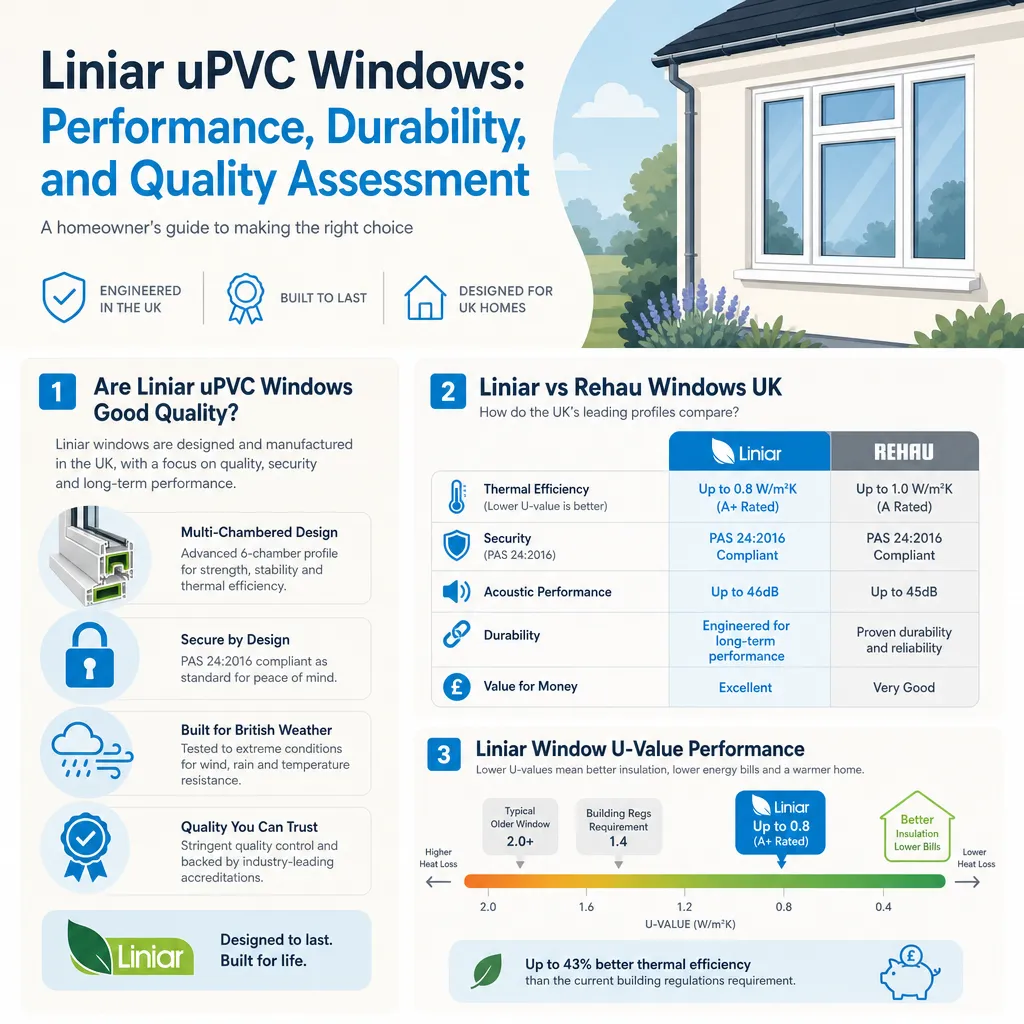
Liniar uPVC Windows: Performance, Durability, and Quality Assessment
Liniar uPVC window profiles are manufactured in the UK using multi-chambered, foamed frames.
 Improvement & Build
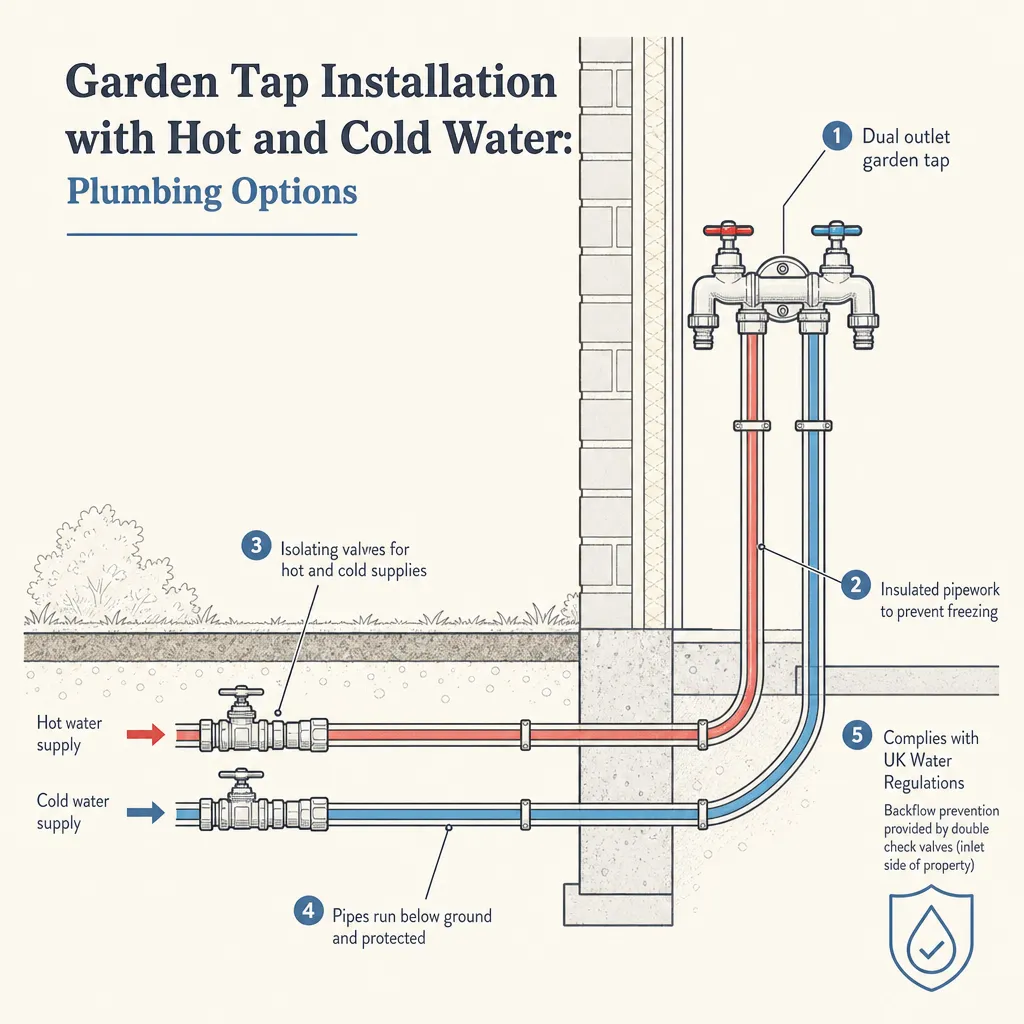
Garden Tap Installation with Hot and Cold Water: Plumbing Options
Adding a cold garden tap is a common DIY project, but routing hot water outdoors requires a plumber to connect to your domestic hot water system and comply with the Water Supply (Water Fittings) Regulations 1999.
 Improvement & Build
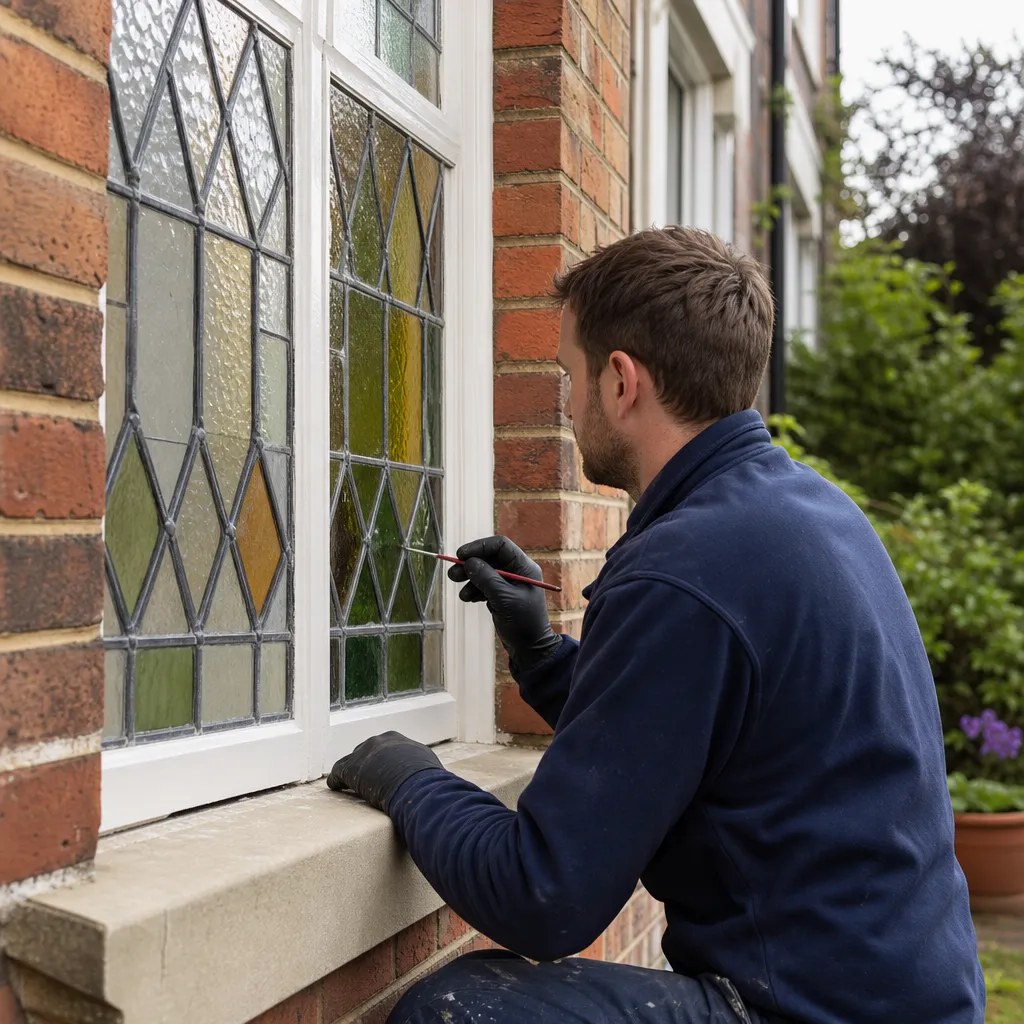
Sealing and Maintaining Historic Leaded Glass Windows: Preservation and Performance
Leaded glass windows are maintained using traditional linseed oil cement — not silicone or modern sealants, which prevent natural movement in the lead came.
 Improvement & Build
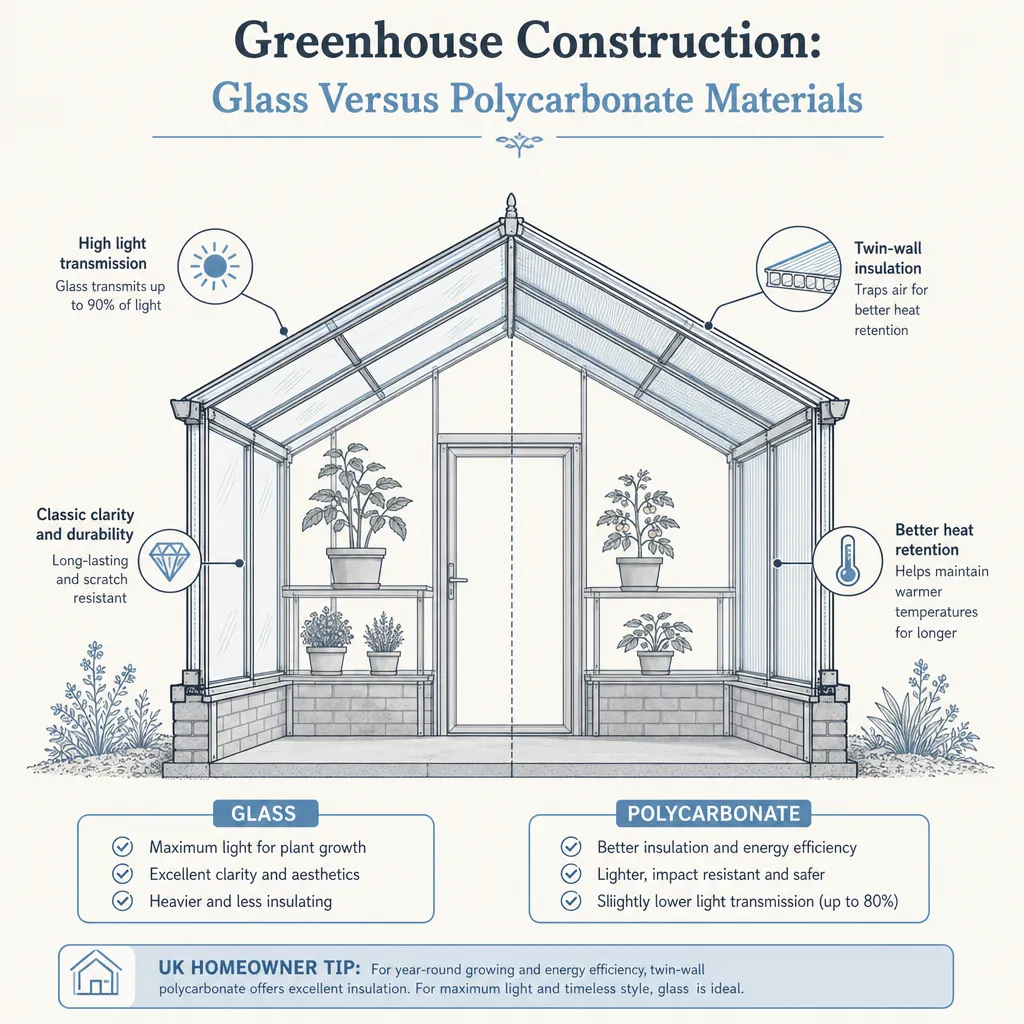
Greenhouse Construction: Glass Versus Polycarbonate Materials
Glass transmits around 90% of available light and lasts indefinitely if unbroken, but insulates poorly and shatters into sharp fragments.
 Improvement & Build
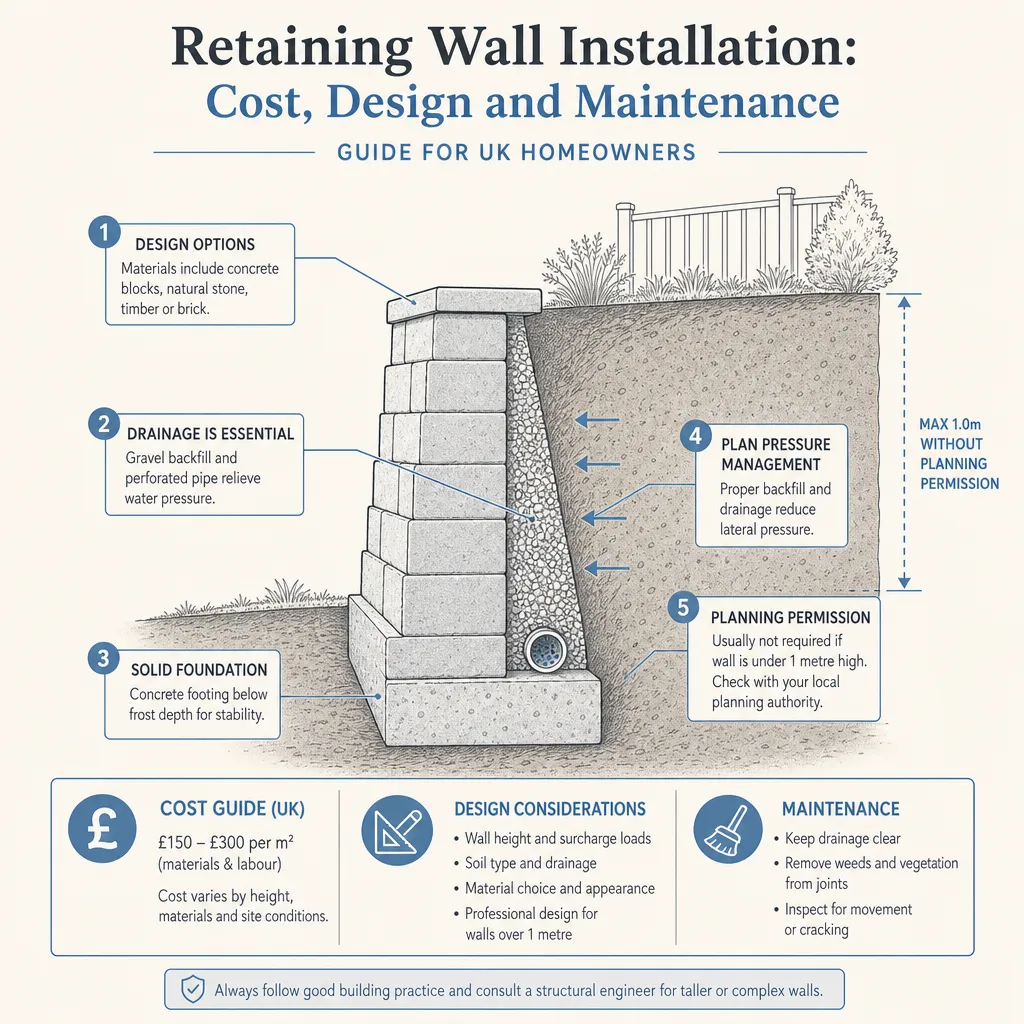
Retaining Wall Installation: Cost, Design and Maintenance
A retaining wall holds back soil on a sloped or banked site.