UK Home Improvement Market Outlook: What Industry Growth Means for Your Project
By Housey · Last reviewed 30th of May 2026
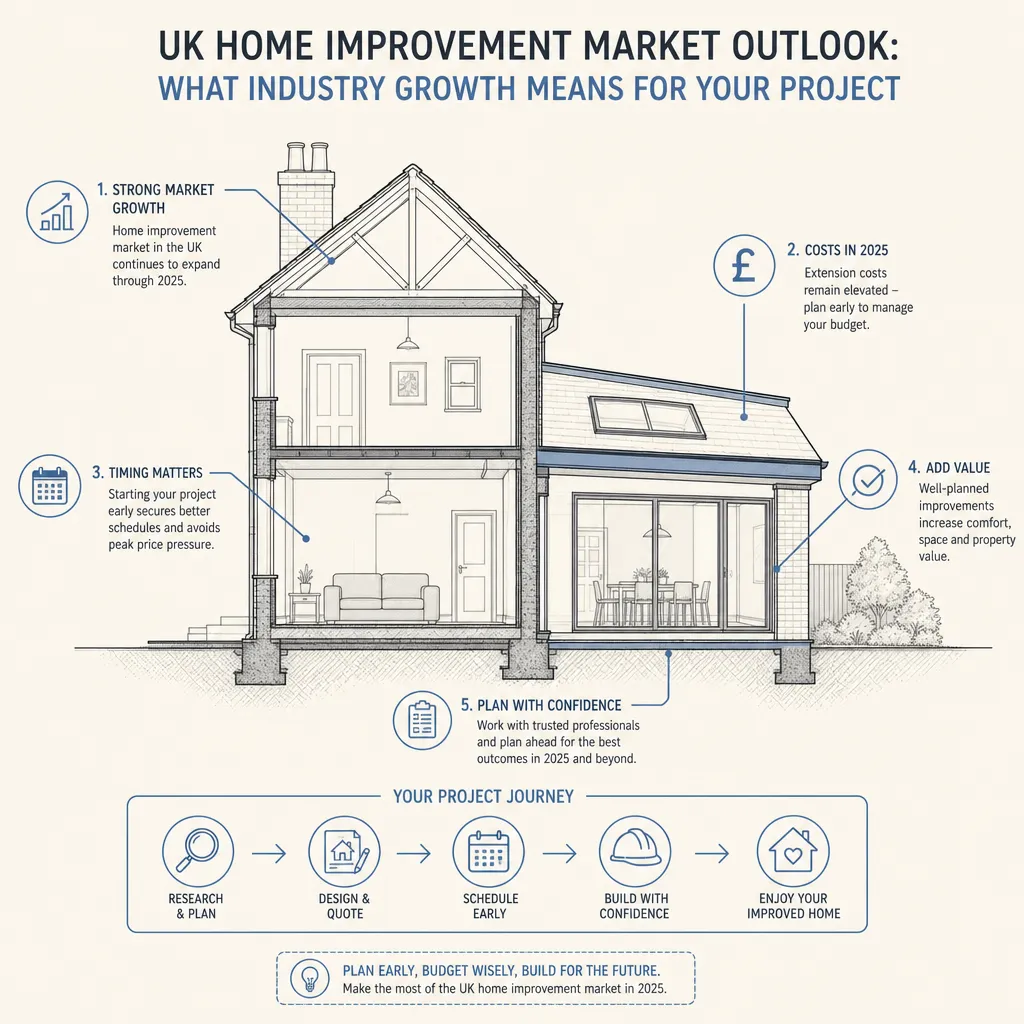
UK Home Improvement Market Outlook: What Industry Growth Means for Your Project
Planning a home extension, loft conversion, or renovation is rarely just a matter of design and permissions — the state of the construction market shapes how long you will wait for contractors, what you will pay, and how much room you have to negotiate. The UK home improvement sector moves in cycles, and homeowners who understand those cycles tend to make better decisions about when to commit, how to budget, and which professionals to involve from the outset.
Key points
- The Federation of Master Builders (FMB) publishes quarterly State of Trade surveys measuring builder workloads, material cost pressures, and labour availability across England, Scotland, Wales, and Northern Ireland.
- The ONS construction output series tracks repair, maintenance and improvement (RMI) separately from new-build; RMI consistently accounts for roughly half of all UK construction activity by value.
- BCIS (Building Cost Information Service) tender price indices indicate that material and labour costs in the domestic improvement sector can increase by 3–8% annually during periods of sustained high demand.
- Single-storey house extensions in the UK typically cost £1,500–£2,500 per square metre; two-storey extensions can reduce the cost per square metre compared with building the same floor area as two separate single-storey phases (Indicative UK costs, last reviewed 2026-05-30).
- The Building Regulations 2010 (as amended) apply to most structural building work — including extensions, loft conversions, and garage conversions — separately from, and in addition to, any planning permission requirement.
Understanding the UK home improvement market cycle
The UK home improvement market tends to follow a recognisable cycle influenced by house price trends, mortgage rates, consumer confidence, seasonal patterns, and wider economic conditions. When house prices are rising and households choose to improve rather than move — particularly when stamp duty and moving costs make relocation expensive — demand for building and renovation services increases significantly.
Key indicators that industry professionals and informed homeowners track:
- FMB State of Trade Survey: a quarterly snapshot of builder workloads, material costs, and staffing availability across UK regions. When workloads are high and material costs are rising simultaneously, it signals a sellers' market for building services.
- RICS UK Construction Monitor: tracks activity levels across sectors and regions, useful for understanding where capacity pressures are most acute.
- ONS Monthly Construction Output: sustained increases in RMI output indicate elevated market demand across the UK.
- Mortgage and transaction volumes: lower transaction numbers often coincide with increased improvement activity, as households invest in existing properties rather than trading up.
What industry growth means for your project planning
Market condition | What it means for you | Recommended approach |
|---|---|---|
Low activity (buyer's market) | More contractors available; competitive pricing; shorter lead times | Obtain multiple quotes; negotiate on scope and programme |
Rising activity | Lead times extending; material costs rising; fewer contractors tendering | Book early; secure written fixed-price quotes; allow for cost escalation |
High activity (seller's market) | Long waits of 6–12 months or more; limited tender responses; upward price pressure | Plan 12+ months ahead; phase works if possible; avoid cutting specification to reduce short-term cost |
Post-peak normalisation | Prices stabilise; contractors actively seeking work again | A useful window for planned works; review quotes carefully and compare specifications |
How market conditions affect your project budget
During periods of high demand, several cost pressures combine to increase the cost of building work:
- Labour shortages push day rates up. Skilled tradespeople — bricklayers, structural carpenters, electricians, and plumbers — are in short supply during construction booms, and their rates reflect this scarcity.
- Material price volatility affects structural timber, insulation, steel lintels, facing bricks, and roofing materials. The BCIS All-in Tender Price Index tracks these movements and is used by quantity surveyors to adjust project budgets.
- Contractor selectivity: busy builders become more selective about which projects they tender for. Small or complex projects with incomplete designs or missing planning consents often receive fewer responses, and sometimes none at all.
- Extended procurement lead times: structural steel, bespoke joinery, some insulation products, and specialist windows carry manufacturing or supply lead times that can add weeks or months to a construction programme.
Building a contingency of 10–15% into your budget is the standard industry recommendation; on older properties or during periods of high material price volatility, 15–20% is more prudent.
Homeowner checklist: preparing for a building project
Use this checklist before approaching contractors for quotes:
What to ask before accepting a quote
Before signing a contract for any significant building work, ask:
- What is included and excluded from the specification?
- Who will carry out each trade element, and what qualifications or accreditations do they hold?
- Is the price fixed, or can it vary if materials costs change during the project?
- What planning and Building Regulations applications have you allowed for in your programme?
- What is the construction programme, and how do you manage and communicate delays?
- Is VAT included, and at what rate? Reduced-rate VAT of 5% may apply to certain energy retrofit and qualifying renovation works — ask your contractor to confirm.
- What happens if unexpected structural issues, hidden services, or ground conditions are found during work?
- What warranties, guarantees, and completion certificates will I receive on completion?
When to get professional help
For straightforward cosmetic improvements — redecoration, kitchen fitting, or bathroom replacement without structural changes — a reputable sole trader or small firm is often entirely appropriate. For structural work — extensions, loft conversions, chimney removals, or garage conversions with structural alterations — engage a RIBA-chartered architect or CIAT-chartered architectural technologist to manage design, planning, Building Regulations, and the tendering process. A quantity surveyor or independent project manager can protect your interests on larger contracts where cost control and programme management are critical to the outcome.
How Housey can help
Whether you are planning a single-storey extension, a full renovation, or standalone trades work, Housey connects you with verified, accredited professionals. Explore extension builders, design-and-build firms, and roofers on the platform to compare quotes from local contractors and check credentials before committing.
Frequently asked questions
When is the best time of year to start a home improvement project in the UK?
Autumn and winter are typically quieter for external work, and some contractors offer better availability. However, groundworks and brickwork are weather-dependent and best avoided in freezing or very wet conditions. For internal works such as kitchen or bathroom fit-outs, time of year matters less. In a high-demand market, the best time is when you are properly prepared rather than waiting for an elusive quiet period.
Does a growing construction market mean I should rush to book a contractor?
Not necessarily. Booking before you have a clear scope, planning approval, or Building Regulations consent can waste deposit money and create disputes if the project stalls. A busy market should prompt you to begin the preparation process earlier — not to skip due diligence. Reputable contractors prefer well-prepared clients with confirmed permissions over rushed starts with incomplete designs.
How much contingency should I build into my home improvement budget?
The standard industry recommendation is 10–15% of the total build cost for most domestic projects. On older properties where hidden defects are more likely, or during periods of material price volatility, 15–20% is more appropriate. Contingency is reserved for genuinely unforeseen costs — do not confuse it with a design change fund or a negotiating buffer with your contractor.
What is the difference between permitted development and planning permission for home extensions?
Permitted development rights allow certain extensions to proceed without a formal planning application, subject to size and location limits in the Town and Country Planning (General Permitted Development) (England) Order 2015. These rights can be removed by Article 4 directions in conservation areas or on some new-build estates, and do not apply to listed buildings. When limits are exceeded, a full planning application is required. Apply for a Lawful Development Certificate from your local planning authority for certainty.
Sources and further reading
- Federation of Master Builders – State of Trade Survey — quarterly builder workload, material cost, and labour availability data
- ONS Construction Output – Repair, Maintenance and Improvement — official UK construction output statistics
- BCIS Building Cost Information Service — tender price indices and material cost movement data
- GOV.UK: Planning permission — permitted development and full planning application guidance
- GOV.UK: Building Regulations approval — Building Regulations approval types and how to apply
Useful next reads
 Improvement & Build
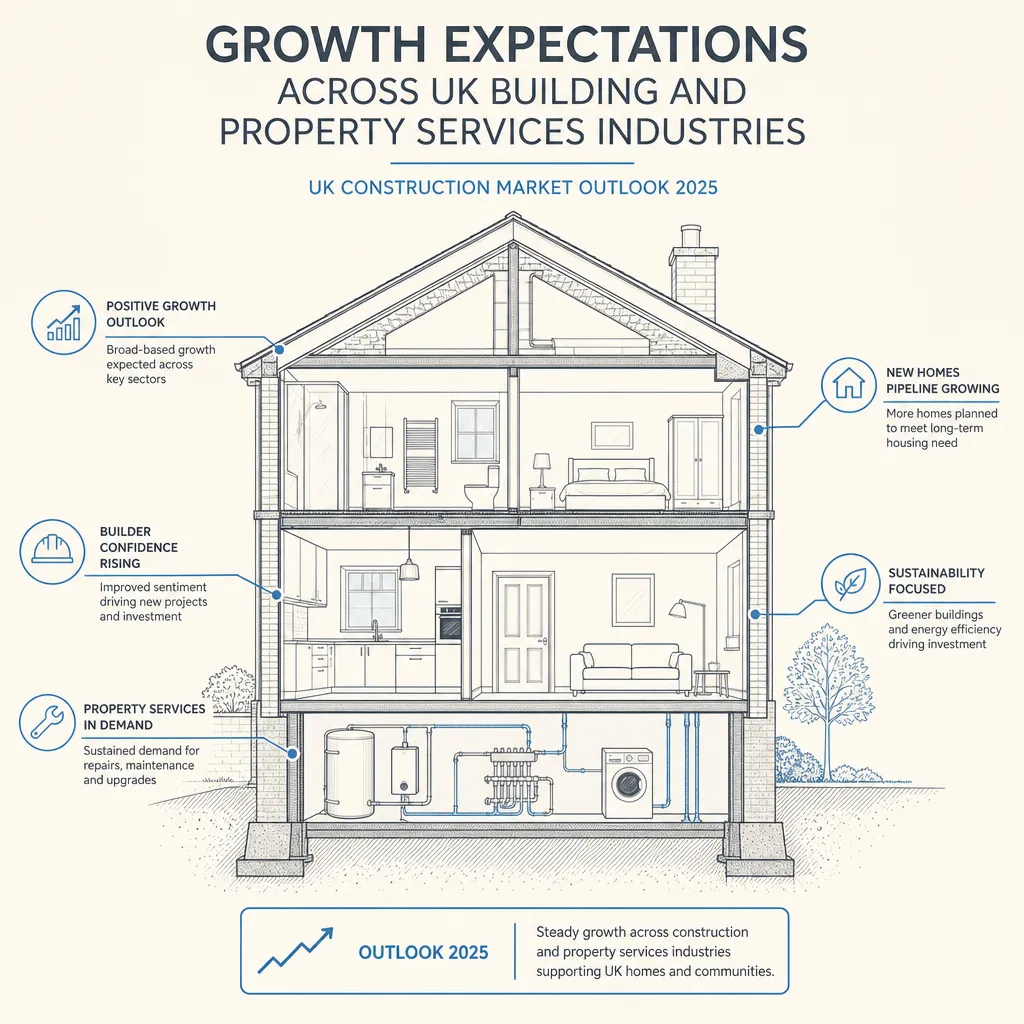
Growth Expectations Across UK Building and Property Services Industries
UK building and property services cover several distinct market segments — from new housing to repair and maintenance — that respond differently to economic conditions.
 Improvement & Build
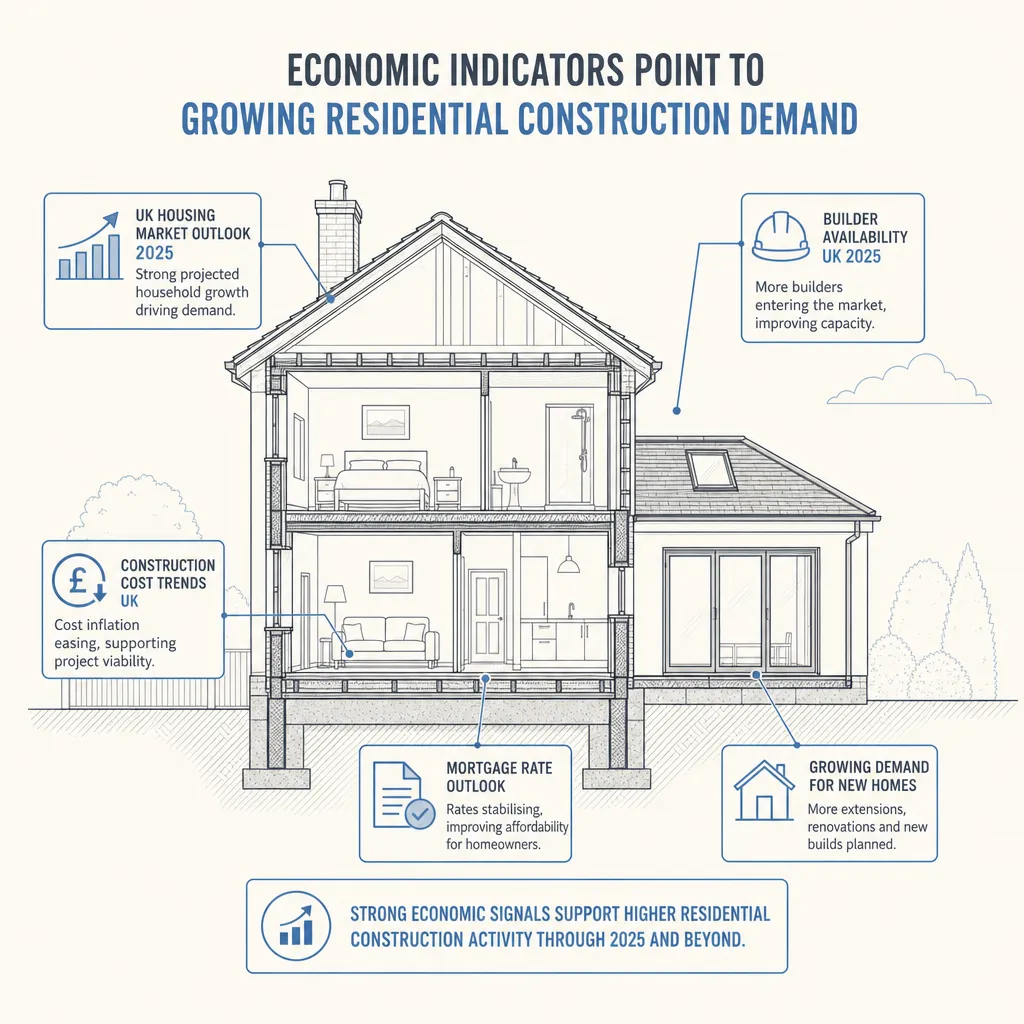
Economic Indicators Point to Growing Residential Construction Demand
Falling interest rates, the government's 1.
 Improvement & Build
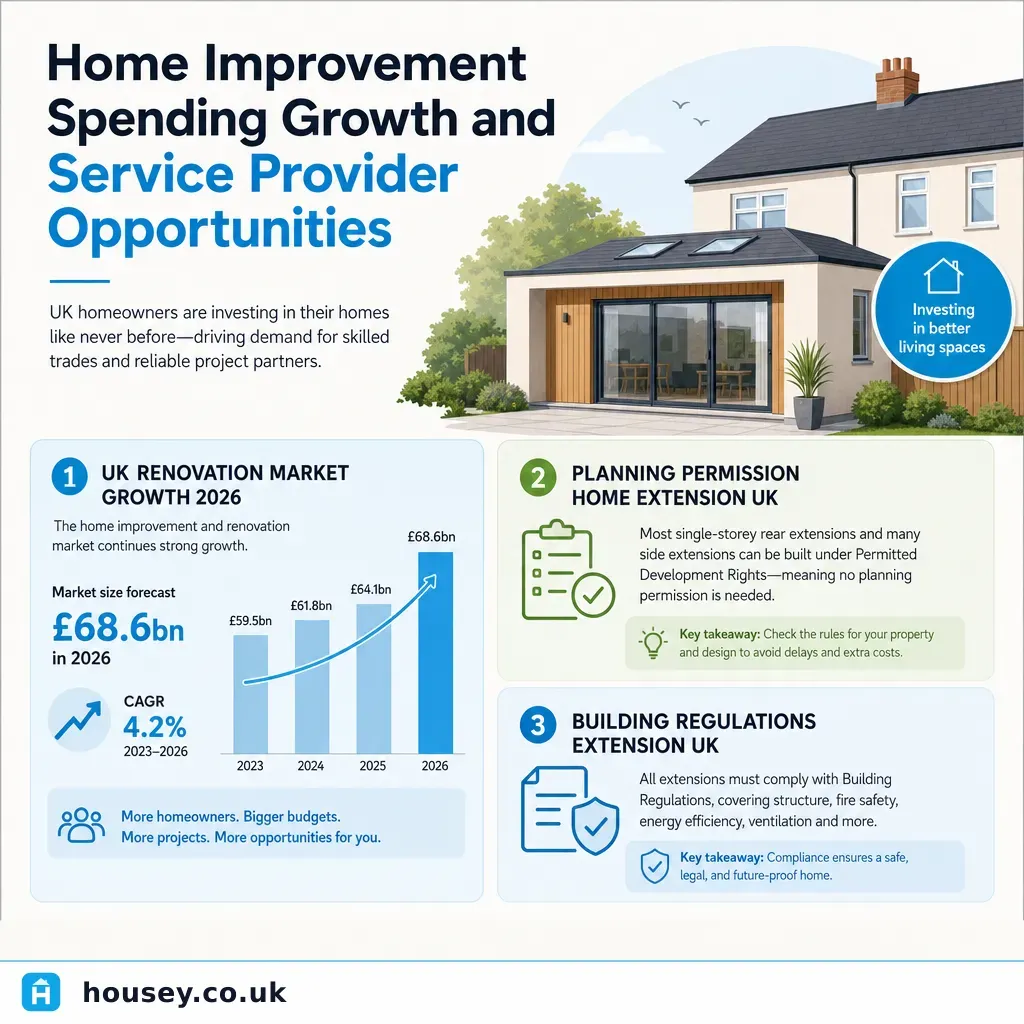
Home Improvement Spending Growth and Service Provider Opportunities
UK home improvement spending has remained elevated as subdued housing transactions push homeowners to invest in their existing properties.
 Improvement & Build
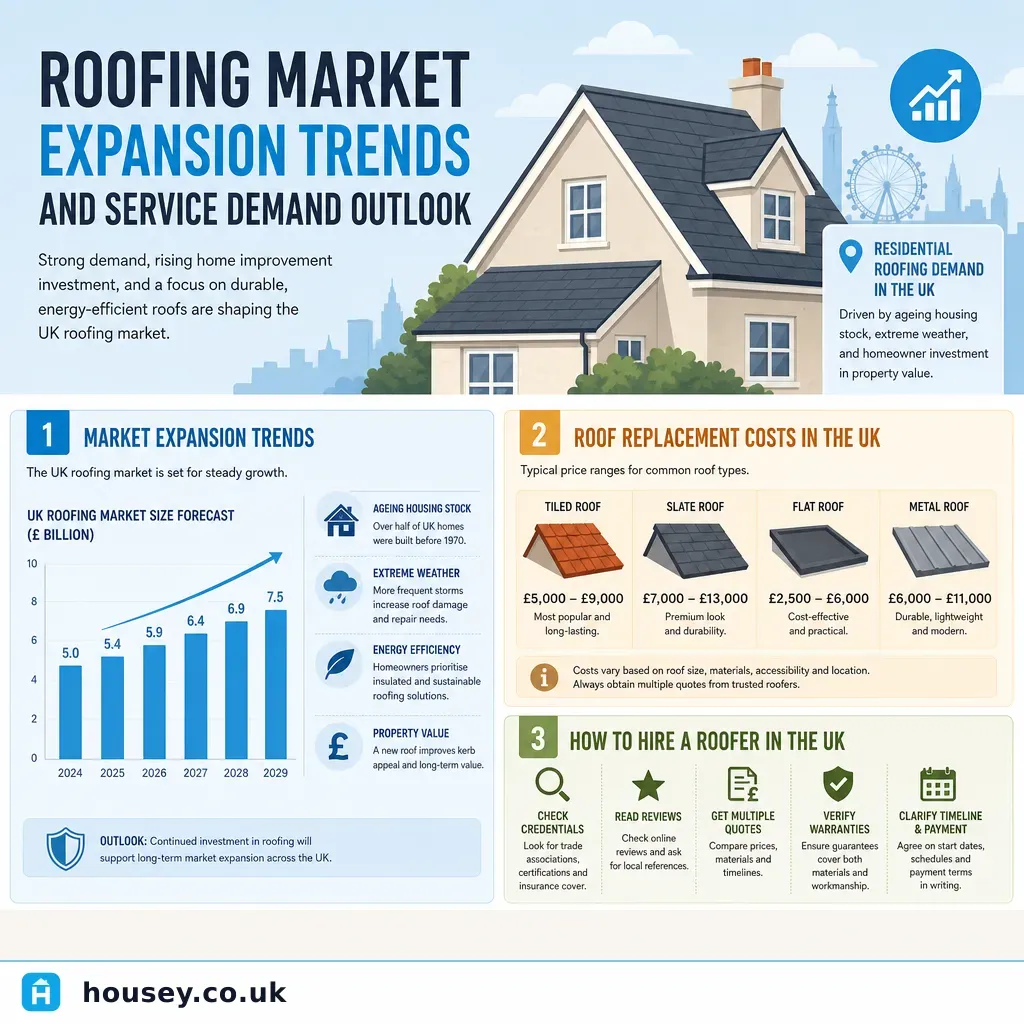
Roofing Market Expansion Trends and Service Demand Outlook
UK roofing demand remains strong and growing, driven by an ageing housing stock, energy efficiency requirements under Approved Document L, and increasing storm-related damage.
 Improvement & Build
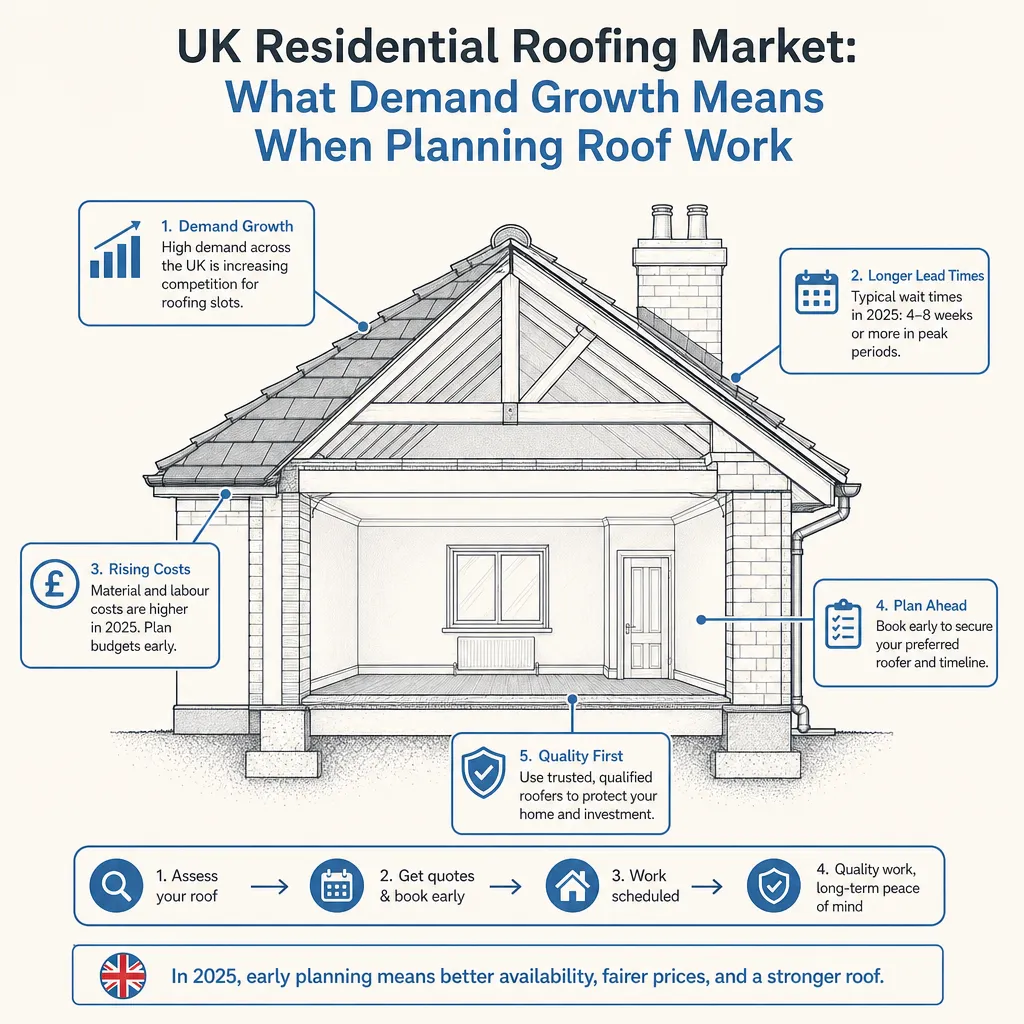
UK Residential Roofing Market: What Demand Growth Means When Planning Roof Work
Rising demand in the UK roofing market typically extends lead times from 4–8 weeks to 3–6 months and puts upward pressure on costs.