Home Improvement Tips: What Works and What to Avoid
By Housey · Last reviewed 10th of May 2026
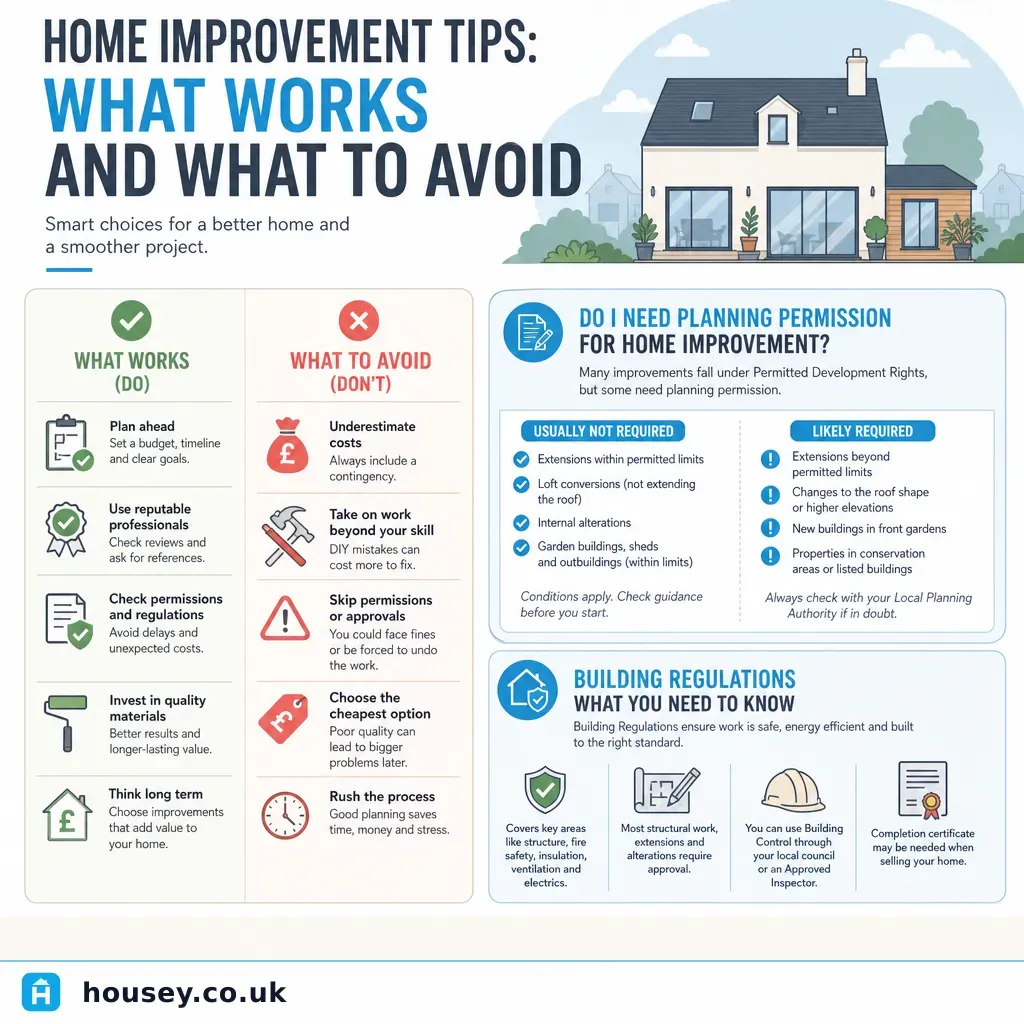
Home Improvement Tips: What Works and What to Avoid
UK homeowners invest heavily in improving their properties each year, yet many projects run over budget, hit regulatory hurdles, or fail to add the value expected. Whether you are planning a kitchen remodel, a rear extension, or a loft conversion, the difference between a project that pays off and one that causes lasting problems often comes down to decisions made before a single brick is laid.
Key points
- Permitted development rights in England allow rear single-storey extensions up to 3m (terraced and semi-detached) or 4m (detached) without planning permission, but conditions apply including height limits and materials restrictions.
- Building Regulations approval is required for all structural work, new electrical circuits, gas installations, and most extensions — this is an entirely separate process from planning permission.
- Replacement windows and doors must be installed by a FENSA or CERTASS registered installer, or signed off by local building control, to comply with Building Regulations Part L.
- Most home improvement labour attracts 20% VAT; approved energy-saving measures — including certain insulation and heat pump installations — may qualify for the reduced 5% rate.
- Skipping a structural engineer's input on load-bearing wall removals is one of the most commonly cited causes of serious defects in UK home improvement projects.
Planning permission and building regulations: know the difference
Many homeowners confuse planning permission with building regulations approval. They are entirely separate processes with different triggers, different application routes, and different consequences for non-compliance.
Planning permission controls what you can build and where — its purpose is to manage land use and the appearance of the built environment. Many common projects fall under permitted development rights, meaning formal permission is not needed, though specific conditions must still be met.
Building Regulations control how you build — structural safety, fire resistance, energy efficiency, ventilation, drainage, and more. Building control approval is required for most structural, electrical, gas, or significant thermal works, regardless of whether planning permission was needed.
A common and costly mistake: homeowners obtain planning permission for an extension but assume building regulations are covered automatically. They are not. Both processes must be followed independently, often running in parallel.
Permitted development quick reference (England)
Work type | Typical permitted development limit | Key conditions |
|---|---|---|
Rear single-storey extension | 3m (terraced/semi-detached), 4m (detached) | Max 4m eaves height; materials to match existing |
Loft conversion (rear dormer) | Up to 40m³ (terraced), 50m³ (detached/semi) | No front roof alterations; no balconies |
Garage conversion | Usually permitted | Must not reduce parking below what is needed |
Side extension | Single storey in most cases | Max 50% of original house width |
Outbuilding | Up to 15m² (no foundations) or 30m² (with foundations) | Not forward of principal elevation; not used as a dwelling |
Permitted development rights can be removed by Article 4 Directions in conservation areas, or by planning conditions attached to your specific property. Always verify with your local planning authority before starting work.
What works: the habits of successful improvement projects
Get the right professionals involved early
The most common reason UK improvement projects overrun or go wrong is that specialists are brought in too late. For an extension, a structural engineer should be involved before detailed drawings are produced — not after. For a loft conversion, a party wall surveyor may be needed before work begins if you share walls or a roof structure with a neighbour.
Which professional for which job:
Job type | Who you need |
|---|---|
Extension design | Architect or architectural technologist and structural engineer |
Loft conversion | Architect or technologist; structural engineer; party wall surveyor if applicable |
Roof replacement or alteration | Qualified roofers; structural engineer if changing roof form |
Load-bearing wall removal | Structural engineer for beam design; building control sign-off required |
New electrical circuits | NICEIC or NAPIT registered electrician |
Gas appliances or boiler | Gas Safe registered engineer — a legal requirement |
Landscaping and new driveways | Landscapers; check SuDS requirements for permeable surfacing |
Major extension or conversion | Extension builders with verifiable experience in similar scope |
Use the Party Wall etc. Act 1996 correctly
If your project affects a shared wall, boundary wall, or involves excavations within 3–6m of a neighbour's foundations, you are likely covered by the Party Wall etc. Act 1996. You must serve written notice on affected neighbours before work begins — typically two months in advance for party wall work, one month for excavations.
Ignoring the Act does not make the obligation disappear. Courts have ordered homeowners to undo completed work where the Act was not followed, and disputes can delay projects significantly.
Get multiple quotes in writing
A verbal quote is not a contract. Always request written, itemised quotes that cover what is included and excluded, materials specification, a programme of works with a start date, a payment schedule, whether VAT is included, and what happens if unexpected issues arise during the project.
What not to assume
- Do not assume building regulations approval is covered by your planning consent. They are separate processes run by different parts of your local authority.
- Do not assume a builder's public liability insurance covers structural defects. Ask specifically about structural warranty cover for new build elements.
- Do not assume a quote includes skip hire, scaffolding, or building control fees. Request a fully itemised breakdown.
- Do not assume permitted development rights apply if your home is a flat, a listed building, or in a conservation area. Rights are often reduced or removed entirely in these circumstances.
- Do not assume work that does not need planning permission also does not need building regulations approval. Many projects require building control but not planning consent.
What to avoid: common home improvement mistakes
Starting work without building control notification
Failure to obtain building control approval can prevent you from selling your home. Buyers' solicitors routinely request completion certificates, and missing paperwork commonly causes delays or collapsed sales. Retrospective regularisation applications are possible but more expensive and are not guaranteed to succeed for all work types.
Removing load-bearing elements without a structural engineer
Internal walls can be load-bearing regardless of the direction they run or their apparent weight. Without a structural engineer's assessment and a correctly specified beam, removing a wall can cause progressive structural failure affecting the entire property. This is not a situation where cutting professional fees represents a sensible saving.
Choosing on price alone
The lowest quote is often low because of thinner materials, less experienced labour, or planned non-compliance with specification. When comparing quotes, ask each contractor to price the same specification document — not an open brief — so you are comparing like with like rather than different scopes.
Paying too much upfront
A reputable contractor will not require more than 25–30% as a deposit. Large upfront payments reduce your leverage if work quality is poor or the contractor fails to complete the project as agreed.
Red flags when hiring a contractor
- No verifiable business address or Companies House registration number
- Unable to provide examples of similar completed work with contactable references
- Pressure to start work immediately without a written contract
- Requires full payment or more than 30% upfront before work begins
- Cannot provide a public liability insurance certificate on request
- Offers a cash-only discount (possible VAT evasion; may also affect your home insurance)
- Dismisses the need for building control notification or planning advice
- Cannot name the trade body or scheme they are registered with
Homeowner checklist before work starts
When to get professional help
Most home improvement projects of any scale benefit from professional input at the design and planning stage, before costs are committed. Seek professional advice when:
- Any walls, columns, or foundations are to be altered or removed
- The project involves gas, drainage, or new electrical installations or circuits
- You share a wall, roof, or boundary with a neighbour
- The property is listed, in a conservation area, or subject to prior planning conditions
- You are unsure whether permitted development rights apply to your specific property
- Quotes received from different contractors vary by more than 20–30% without a clear explanation
How Housey can help
Housey connects UK homeowners with vetted local professionals for improvement and build projects of all scales. Whether you need extension builders for a major structural addition, roofers for a replacement or repair, or landscapers to redesign your outdoor space, you can request and compare quotes from qualified contractors in one place.
Frequently asked questions
Do I always need planning permission for a home extension in the UK?
Not always. Many extensions fall within permitted development rights and do not require a formal planning application. The limits depend on size, position, height, materials, and whether the property has had prior extensions, is listed, or is in a conservation area. Always verify with your local planning authority or obtain a Lawful Development Certificate before building.
What is a Lawful Development Certificate and do I need one?
A Lawful Development Certificate (LDC) is a formal document from your local planning authority confirming that a proposed or completed development is lawful without requiring planning permission. It is not legally required for permitted development work, but is strongly recommended before selling, protecting against future disputes and reassuring buyers' solicitors that no enforcement risk exists.
Can I remove an internal wall myself?
You can undertake minor DIY, but removing a load-bearing wall requires a structural engineer's calculation, a correctly specified steel beam, and building control approval. Attempting this without professional input is dangerous, may constitute a building regulations breach, and can affect your ability to sell the property and the validity of your home insurance cover.
How do I check if a contractor is legitimate?
Check their company registration number on Companies House, request their public liability insurance certificate, verify relevant trade scheme memberships such as Gas Safe, NICEIC, or FENSA, and ask for references from similar recently completed projects. Membership of TrustMark or the Federation of Master Builders provides an additional layer of independent verification.
Does home improvement work affect my home insurance?
It can. Notify your insurer before starting significant works. Some policies suspend cover during structural alterations or require a specific works-in-progress extension to your policy. Failure to notify could invalidate a claim made during or after the project, so confirm your cover position in writing before work begins.
Sources and further reading
- When is permission required? — GOV.UK
- Building regulations approval — GOV.UK
- Party Wall etc. Act 1996 — legislation.gov.uk
- FENSA — competent person scheme for windows and doors — FENSA
- TrustMark — government-endorsed quality scheme — TrustMark
- Gas Safe Register — find a registered engineer — Gas Safe Register
Useful next reads
 Improvement & Build
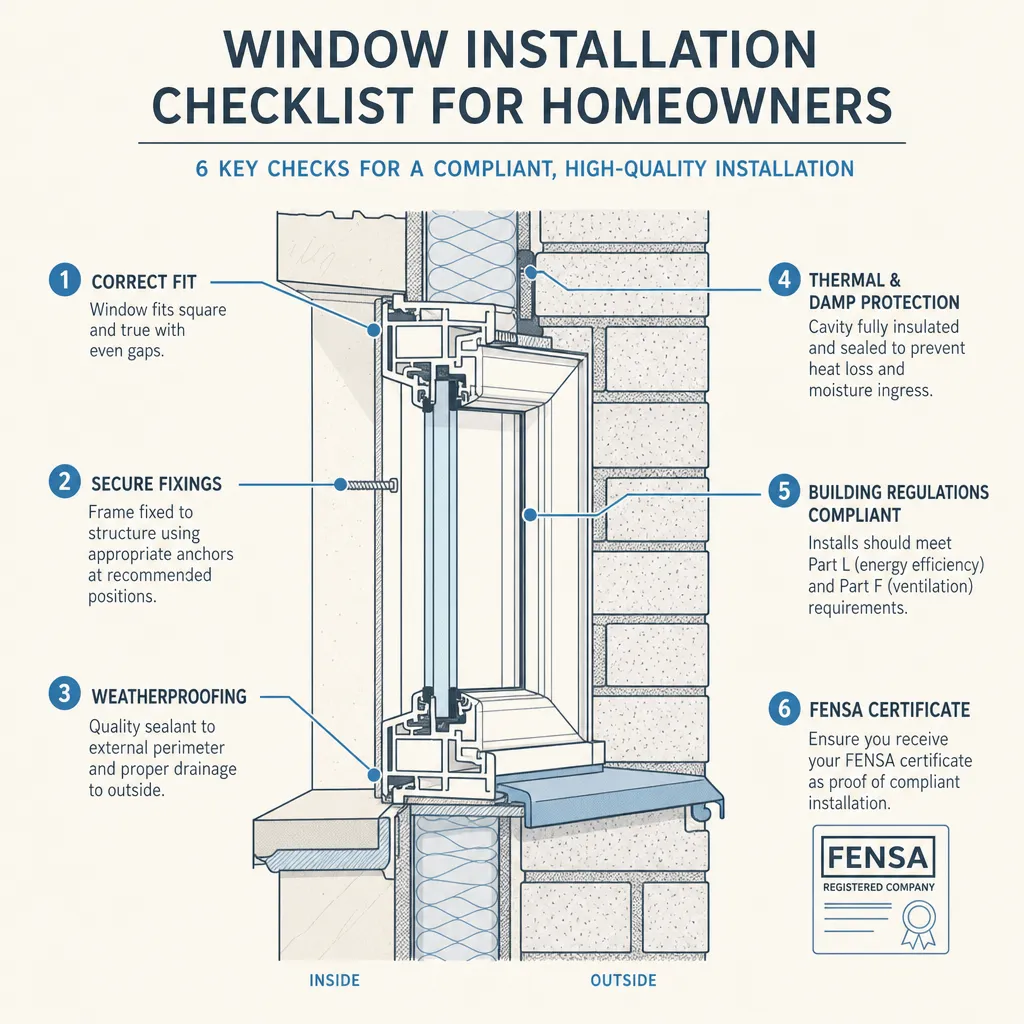
Window installation checklist for homeowners
Before installation, confirm your installer is registered with FENSA or CERTASS and can self-certify Building Regulations compliance.
 Improvement & Build
Renovation Expertise: Professional Tips for Successful Home Transformation
Successful UK home renovation depends on understanding when planning permission or Building Regulations approval is required, choosing accredited contractors, using a written contract, and arranging the right insurance.
 Improvement & Build
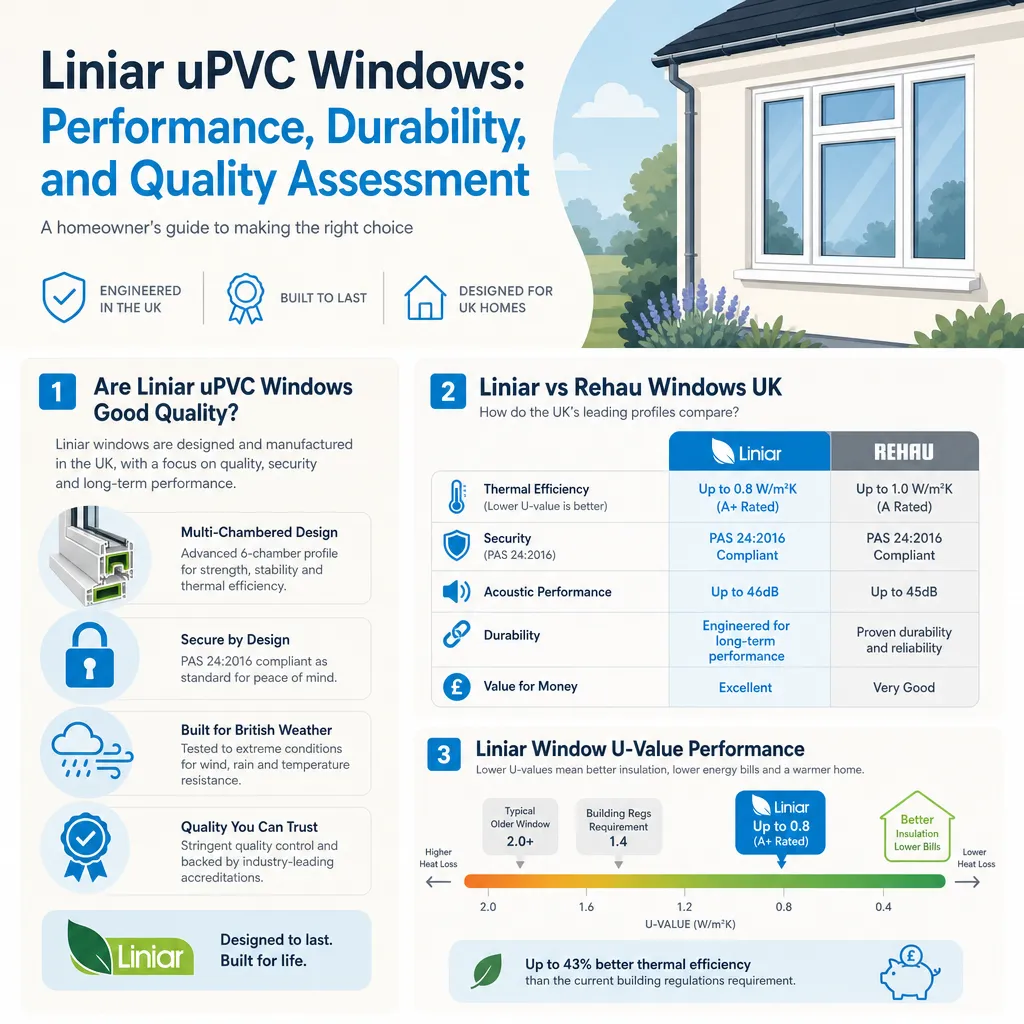
Liniar uPVC Windows: Performance, Durability, and Quality Assessment
Liniar uPVC window profiles are manufactured in the UK using multi-chambered, foamed frames.
 Improvement & Build
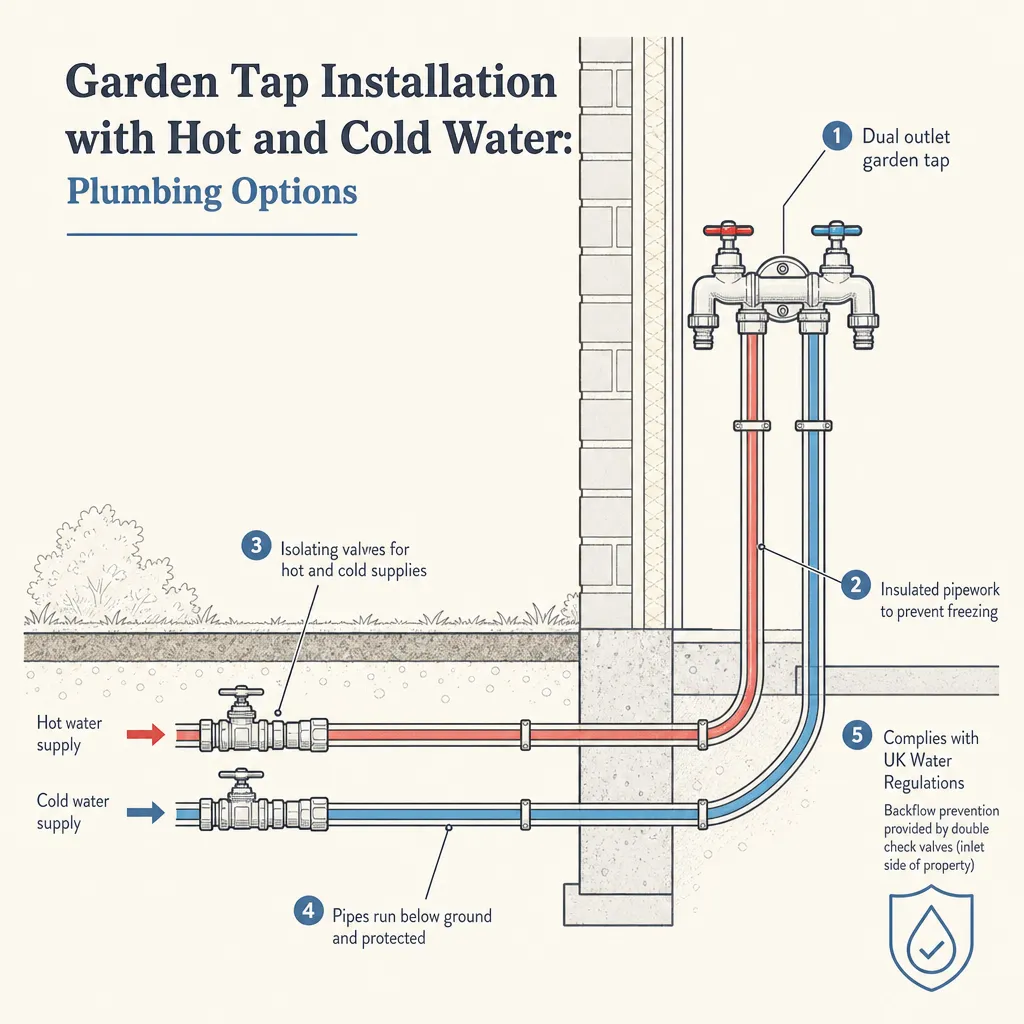
Garden Tap Installation with Hot and Cold Water: Plumbing Options
Adding a cold garden tap is a common DIY project, but routing hot water outdoors requires a plumber to connect to your domestic hot water system and comply with the Water Supply (Water Fittings) Regulations 1999.
 Improvement & Build
Sealing and Maintaining Historic Leaded Glass Windows: Preservation and Performance
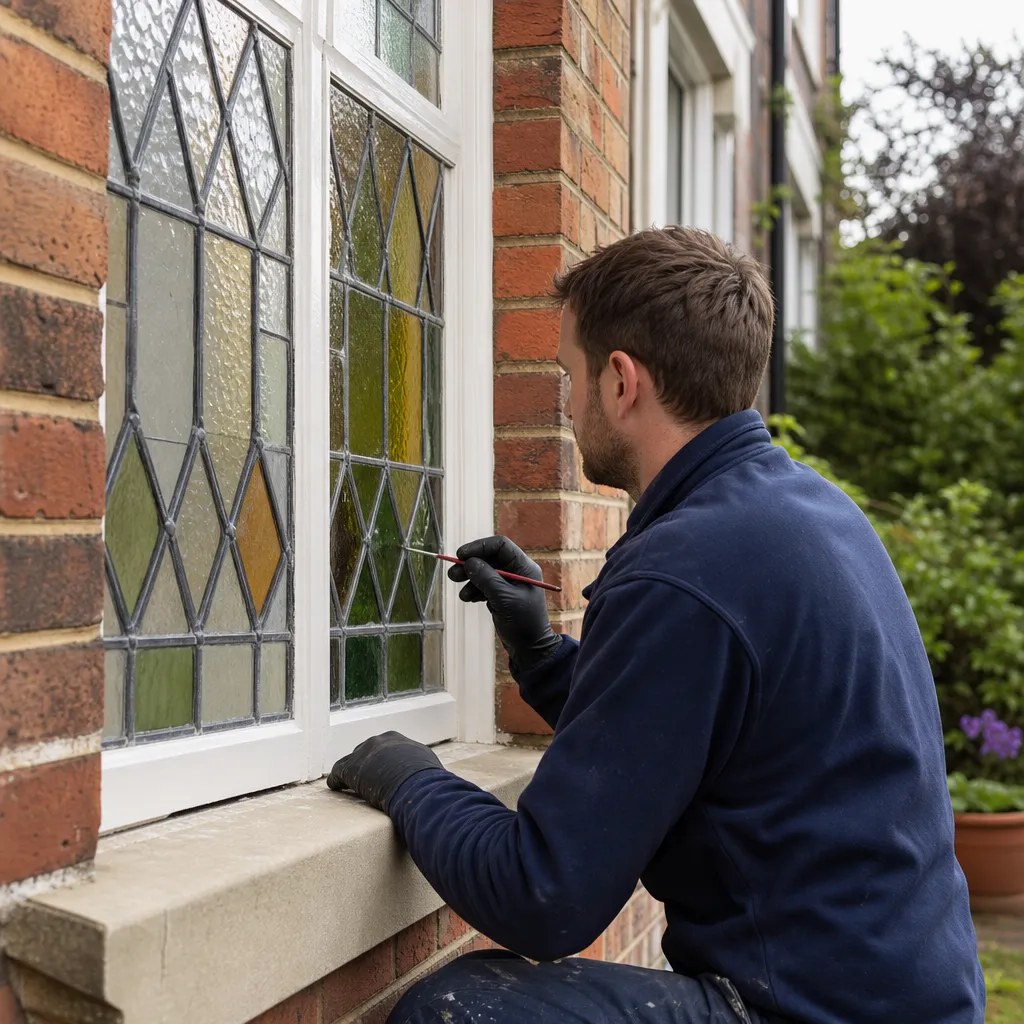
Leaded glass windows are maintained using traditional linseed oil cement — not silicone or modern sealants, which prevent natural movement in the lead came.