Home improvements for selling: investments that increase your property value
By Housey · Last reviewed 7th of May 2026
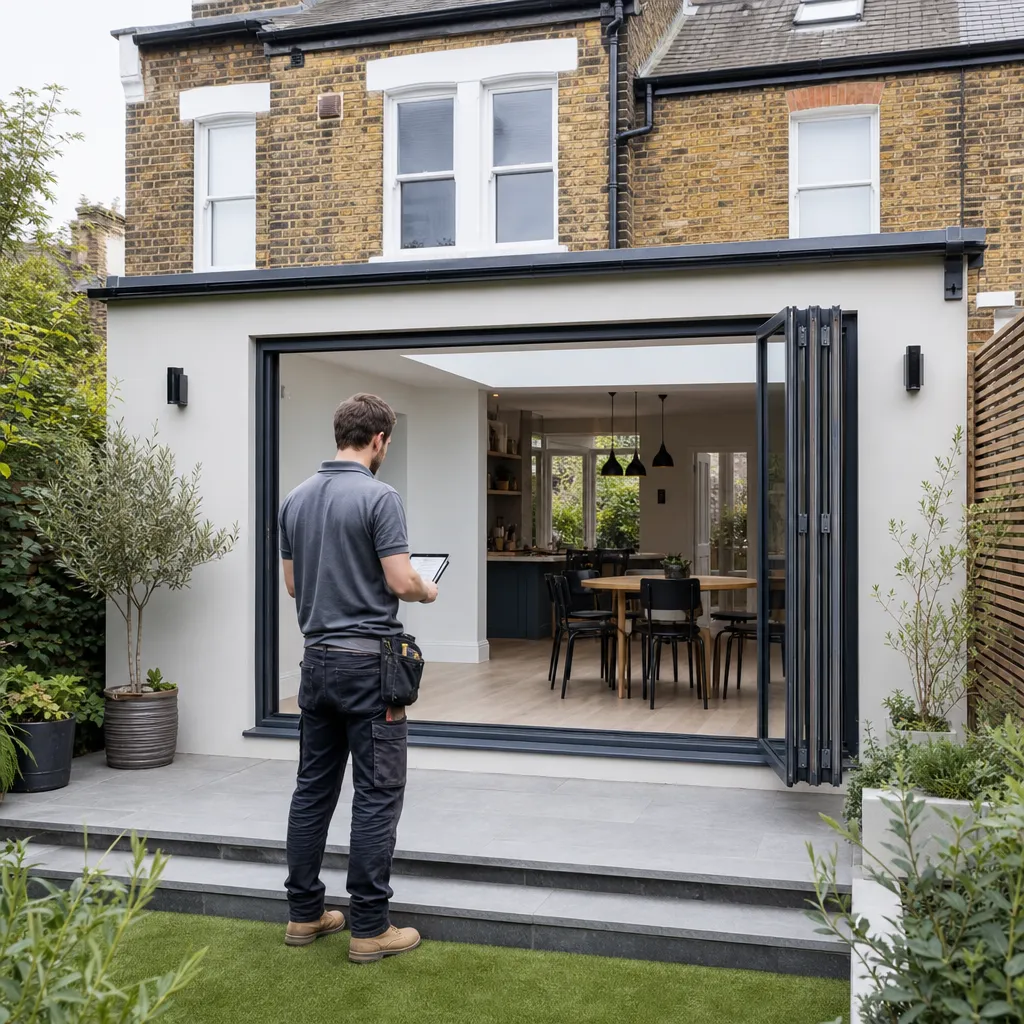
Home improvements for selling: investments that increase your property value
Most sellers consider home improvements in the weeks or months before listing, often prompted by an estate agent's valuation feedback or a desire to compete with better-presented neighbouring properties. The difficulty lies in distinguishing improvements that UK buyers will pay a premium for from those that spend money without meaningfully affecting the sale price or speed. Getting the sequence wrong — spending on a new kitchen while the roof leaks — is a common and costly mistake that a structured approach can avoid.
Key points
- Nationwide Building Society research indicates a loft conversion adding a double bedroom and bathroom can add approximately 20% to a property's value, though this varies significantly by location and property type.
- A RICS homebuyer survey flagging active damp, roof defects, or structural movement will typically prompt a buyer to renegotiate; resolving these issues before listing protects value more reliably than cosmetic upgrades.
- A new kitchen typically recoups 50–70% of its cost in added value, and an updated bathroom 40–60%, according to HomeOwners Alliance guidance; overspending relative to the local market reduces return on investment.
- An Energy Performance Certificate (EPC) rating of C or above broadens the buyer pool, particularly for buyers relying on mortgage lending, as many lenders now factor energy efficiency ratings into their lending decisions.
- FENSA registration is required for replacement windows and doors; missing certificates will be raised during conveyancing and may delay or complicate your sale.
Which improvements add the most value?
Not all improvements return their cost when selling. The right priorities depend on your property type, local market conditions, current condition, and available budget. The table below summarises common pre-sale improvements by likely return on investment.
Improvement | Typical value uplift | Indicative cost | Best suited to | Watch out for |
|---|---|---|---|---|
Loft conversion (bedroom + bathroom) | Up to 20% | £20,000–£60,000+ | Houses with unused loft space; family buyer market | Permitted development limits; structural implications |
Single-storey extension | 5–15% | £20,000–£50,000+ | Properties where living space is limited vs comparables | Planning permission required; build time vs sale timeline |
Kitchen refresh (not full replacement) | 3–8% | £2,000–£10,000 | Properties with dated but functional kitchens | Risk of over-specifying for the local market |
Bathroom update | 2–5% | £3,000–£8,000 | Properties with one tired bathroom | Avoid bespoke finishes; keep neutral |
New windows and doors | 2–5% | £5,000–£15,000 | Properties with single glazing or deteriorating frames | FENSA certificate required for all replacement glazing |
New driveway or off-street parking | 2–5% | £3,000–£10,000 | Urban properties where parking is scarce | Planning permission needed for some hard surface materials |
EPC improvement (insulation, heating) | Variable | £1,000–£15,000 | Homes rated D, E, or below | Requires proper energy assessment before works begin |
Roof repair or replacement | Preserves value; prevents renegotiation | £5,000–£15,000 | Properties with visible defects or ageing roof coverings | Essential to avoid survey-triggered price reduction |
Damp proofing | Preserves value; prevents renegotiation | £500–£5,000+ | Properties with rising or penetrating damp | Independent diagnosis before treatment is essential |
Indicative UK costs, last reviewed 2026-05-07. Costs vary considerably by region, property size, and specification. Obtain at least three itemised quotes before committing to any significant works.
Improvements that protect value rather than add it
Some improvements are not about adding value — they are about preventing a reduction. These should almost always be addressed before cosmetic work begins.
Roof condition is one of the most commonly flagged issues in homebuyer survey reports. A surveyor noting that roof coverings are at or near the end of their serviceable life, or that water ingress is evident, will nearly always prompt a buyer to renegotiate. A roofer inspection and targeted repair — or replacement if the roof is genuinely at end of life — removes this as a buyer negotiating point before listing.
Damp and timber issues are similarly survey-sensitive. Rising damp, penetrating damp, or wet rot in structural timber will appear in any competent homebuyer survey and often result in price reductions of several thousand pounds. An independent survey from a specialist is essential before committing to any treatment: some companies diagnose more treatment than is genuinely required. Damp proofing specialists can provide treatment once the cause has been properly and independently identified.
The guiding principle: resolve defects before improving aesthetics. A freshly painted kitchen will not prevent a buyer's surveyor from flagging a roof or damp problem that prompts renegotiation.
Cosmetic vs structural: what to prioritise
Address first if present:
- Active damp, roof defects, or failed guttering and flashings.
- Structural movement — cracked lintels, bowing walls, stepped cracking in brickwork.
- Failing or single-glazed windows and doors.
- Out-of-date electrical condition reports (EICR) or gas safety certificates where legally required.
High value for money (low cost, widely noticed by buyers):
- Repainting throughout in neutral tones.
- New carpet or hard flooring in worn or heavily stained areas.
- Updated light fittings and switch plates.
- Deep clean, declutter, and garden tidy.
Higher spend, variable return (justify with local market data first):
- New or refreshed kitchen.
- Updated bathroom.
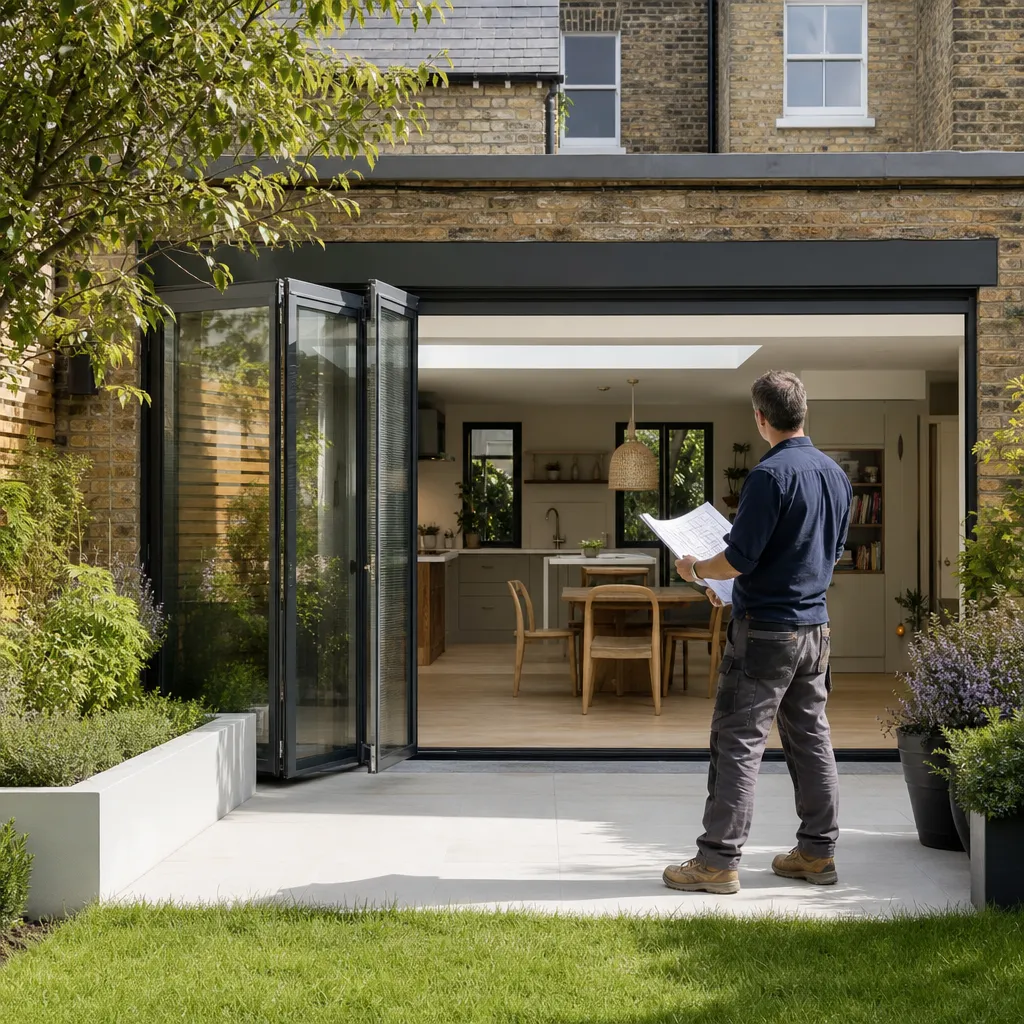
- Loft conversion or rear extension.
- New driveway.
Often not worth doing before selling:
- Highly personalised renovation or bespoke finishes unlikely to appeal to the general buyer market.
- Premium specification markedly out of step with comparable properties on the street.
- Starting large works without sufficient time to complete and sign off before listing.
Kerb appeal: low-cost, high-impact changes
Estate agents consistently report that buyers form a strong first impression before they set foot inside a property. Low-cost kerb appeal improvements include:
- Repainting or replacing the front door.
- Jet-washing the driveway, paths, and any brick or render frontage.
- Replacing or cleaning exterior light fittings.
- Trimming hedges, mowing the lawn, and clearing weeds from borders and paths.
- Repairing or repainting gates and boundary fencing.
A new driveway may be worth investing in if the current surface is cracked, subsided, or creates a genuinely poor first impression — particularly for urban properties where off-street parking is a selling point. Note that replacing a front garden with a hard surface larger than 5 m² may require planning permission depending on the material used; check with your local planning authority before starting.
Extensions and loft conversions before selling: worth it?
Larger projects such as extensions and loft conversions can add significant value, but carry real risks when undertaken primarily to sell:
- Build time: A single-storey extension typically takes 3–5 months on site plus 4–12 weeks for planning. If you plan to list within six months, this is often not viable.
- Return uncertainty: In active markets, a loft conversion may return close to its full cost; in slower or more rural markets, the return may be 50–70% of spend at best.
- Buyer preference: Some buyers prefer to manage improvements to their own specification. Unfinished work at point of sale is almost always counterproductive and may reduce rather than increase offers.
Get a realistic before-and-after valuation from a local estate agent before committing to large-scale work with extension builders.
Homeowner checklist: pre-sale improvements in priority order
Red flags: improvements that may not be worth doing before selling
- Replacing a functioning kitchen or bathroom — buyers often prefer to upgrade to their own taste, and the full cost is rarely recouped in the sale price.
- Starting an extension without planning permission — unauthorised work creates legal complications during conveyancing and may need to be regularised or removed at your expense.
- Using a damp treatment company to both diagnose and treat — always obtain an independent survey first to avoid unnecessary or ineffective treatment.
- Overpaying for premium specification — a high-end bespoke kitchen in a street of modestly priced semis will not return its full cost.
- Rushing large works to completion just before listing — newly completed work without building regulations sign-off will be raised in solicitors' enquiries and may delay or jeopardise your sale.
- Installing windows and doors without ensuring FENSA registration — missing certificates are a common and avoidable conveyancing issue.
When to get professional help
Before making any significant pre-sale investment, seek professional input:
- Ask a local estate agent for a realistic before-and-after valuation estimate before committing to an extension, loft conversion, or other major works.
- Instruct an independent RICS-registered surveyor if you have any doubts about structural condition, damp, or roof — before spending money on cosmetic improvements.
- Always use accredited contractors: FENSA-registered installers for replacement glazing; Gas Safe-registered engineers for boiler work; NICEIC or NAPIT-registered electricians for electrical work.
How Housey can help
Housey can connect you with qualified contractors for pre-sale improvements, from roofers and damp proofing specialists to driveway installers and window and door installers. Request and compare quotes from multiple providers before committing to any work.
Frequently asked questions
Does a loft conversion always add value?
A loft conversion typically adds value — Nationwide estimates up to 20% for a double bedroom and bathroom — but the actual uplift depends on the local market, quality of the conversion, and whether the room type is in demand for your buyer profile. In some markets the premium may be lower. Always get a local estate agent's view and a structural assessment from a qualified professional before committing.
Should I replace my kitchen before selling?
Not necessarily. A full kitchen replacement rarely recoups its full cost in a higher sale price. A thorough clean, fresh paint, updated cabinet handles, and new worktops if heavily worn often deliver more value per pound than a full replacement. If the kitchen is genuinely dysfunctional or very dated relative to comparable nearby properties, a mid-market refresh may be worthwhile — but avoid over-specifying for the local market.
Do I need planning permission for home improvements before selling?
This depends on the type of work. Extensions beyond certain size thresholds require planning permission; loft conversions may be permitted development but have restrictions. Replacing windows and doors does not require planning permission but does require FENSA registration or a building regulations application. Any unauthorised past works must be disclosed during conveyancing, so check before listing to avoid complications.
How important is an EPC rating to buyers?
Increasingly important. From 2025, many lenders are factoring EPC ratings into mortgage decisions, and buyers are more aware of likely energy bills. A property rated F or G may face a smaller buyer pool. Improving from E to C can broaden buyer interest, but the cost-benefit should be assessed with a qualified energy assessor before committing to significant works.
Does a new roof add value?
A new roof rarely adds value above what buyers already expect — they assume the roof is functioning. Its real impact is preventing a reduction: a survey report noting roof defects almost always leads to renegotiation. Repairing or replacing a failing roof before listing removes this as a negotiating point for buyers and avoids the stress of price reductions after survey.
Sources and further reading
- UK House Price Index and Nationwide House Price Methodology — Nationwide Building Society
- Adding value to your home — HomeOwners Alliance
- Energy Performance Certificates: guidance for homeowners — GOV.UK
- Minimum Energy Efficiency Standards (MEES): landlord guidance — GOV.UK
- FENSA: replacement windows and doors guidance — FENSA
Useful next reads
 Improvement & Build
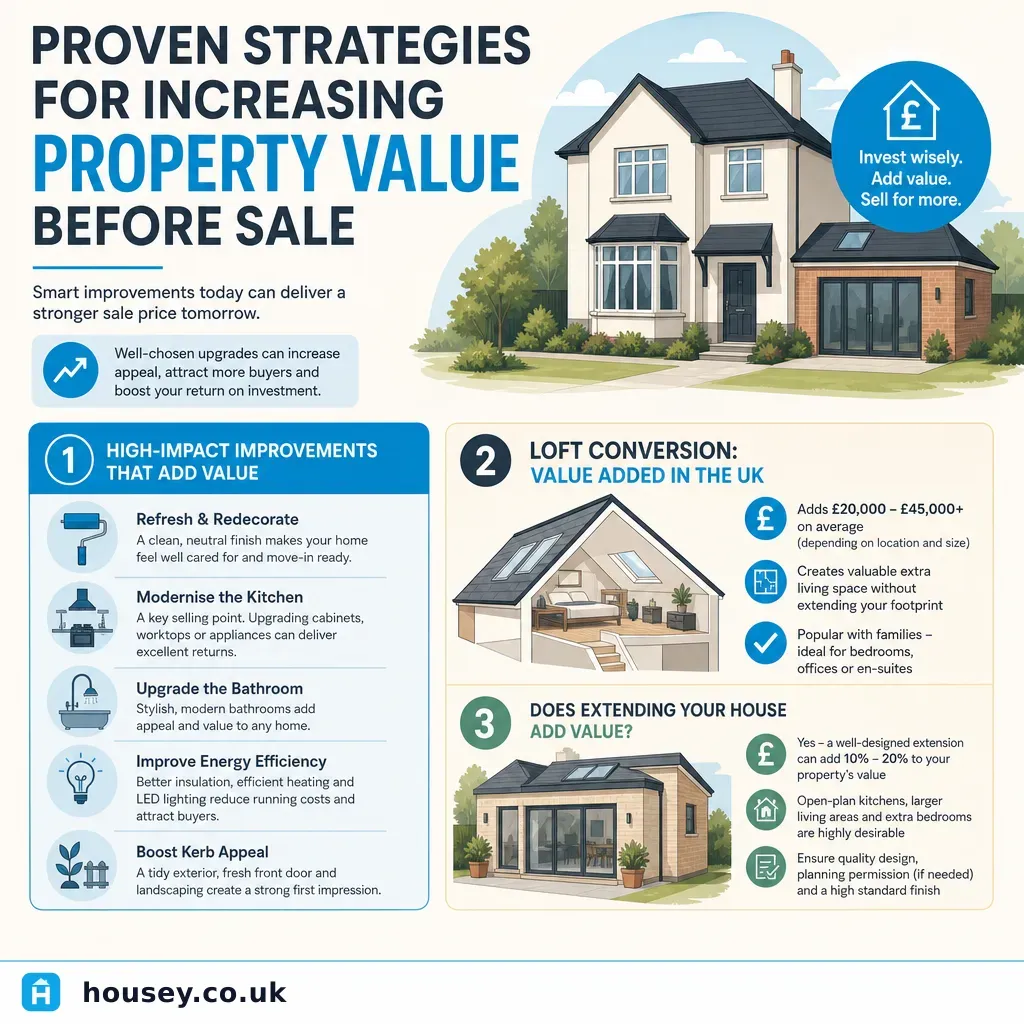
Proven Strategies for Increasing Property Value Before Sale
The improvements most consistently linked to value uplift in UK property are loft conversions (15–20%), rear extensions (5–15%), and EPC improvements.
 Improvement & Build
Maximising Value Through Strategic Home Improvement Projects
In the UK, loft conversions and kitchen extensions tend to deliver the strongest return on investment, with loft conversions potentially adding around 20% to property value according to Nationwide data.
 Improvement & Build
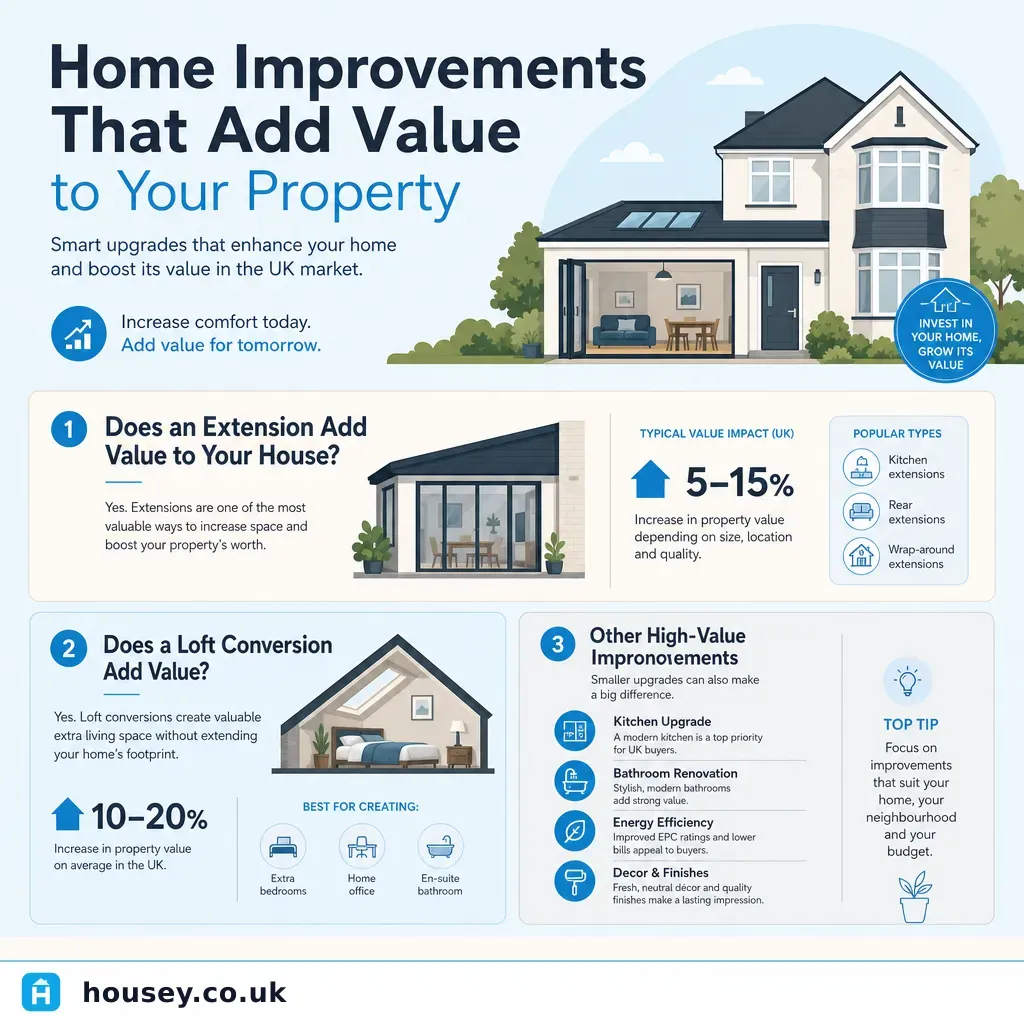
Home Improvements That Add Value to Your Property
The home improvements most likely to add value in the UK are those that add usable floor space — loft conversions and extensions — or improve EPC ratings.
 Improvement & Build
Home Improvement Projects That Add Value to Your Property
Loft conversions, rear extensions, and kitchen refurbishments typically offer the strongest return on investment for UK homeowners.
 Improvement & Build
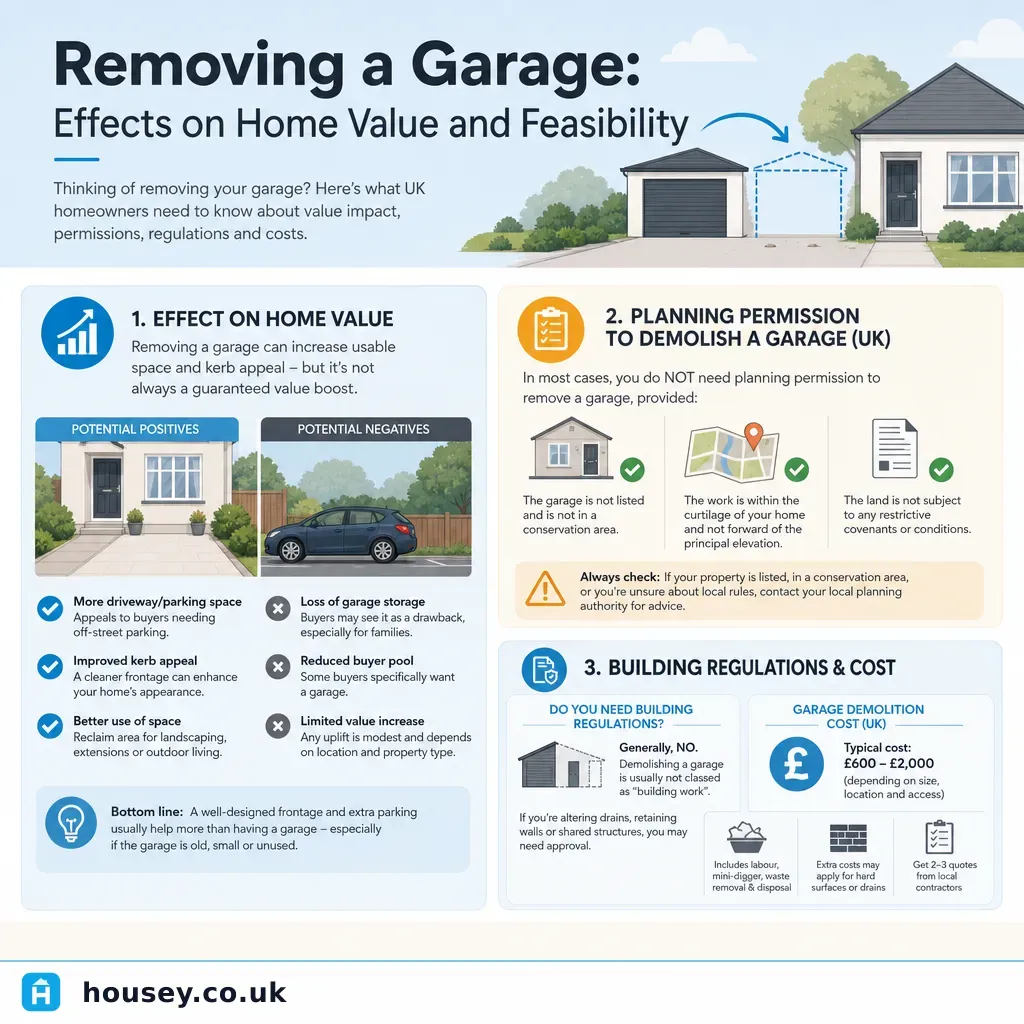
Removing a Garage: Effects on Home Value and Feasibility
Demolishing a garage in England may require prior notification to the local planning authority, and structural or building regulations assessments are often needed if the garage is attached to or integral with the house.