Keeping Your Home Cool During Heat Waves and Warm Weather
By Housey · Last reviewed 30th of May 2026
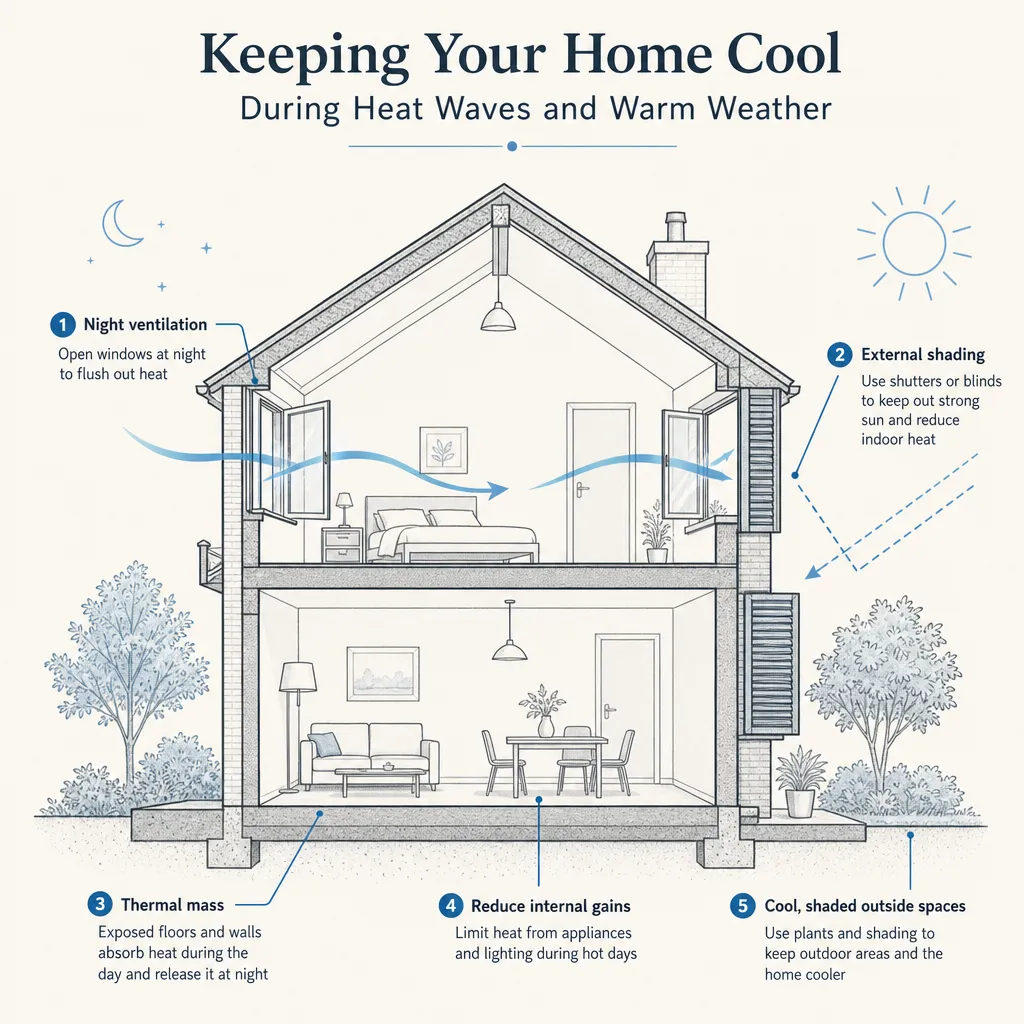
Keeping Your Home Cool During Heat Waves and Warm Weather
UK homes were largely designed to retain heat, not to shed it — a practical reality during our traditionally mild summers but increasingly problematic as heatwaves become more frequent and intense. Overheating is now recognised as a regulatory concern: Building Regulations Part O (Overheating), which came into force for new residential buildings in England in June 2022, reflects that keeping homes cool is no longer purely a comfort question for UK homeowners.
Key points
- Building Regulations Part O (England, in force from June 2022) requires new residential buildings to limit solar gains and provide adequate ventilation to prevent overheating — existing homes are not subject to Part O but can apply the same technical principles.
- CIBSE TM59 defines overheating in occupied bedrooms as indoor temperatures exceeding 26°C for more than 1% of occupied hours annually — a widely used design benchmark for assessing risk.
- External shading (shutters, awnings, brise soleil) reduces solar heat gain far more effectively than internal blinds or curtains, because it intercepts solar radiation before it passes through the glass.
- Adequate loft insulation at a minimum depth of 270mm (mineral wool) slows heat transfer in both directions — reducing winter heat loss and limiting summer solar heat gain through the roof into rooms below.
- Cross-ventilation using cooler night air — opening windows on opposite sides of the home once outdoor temperature falls below indoor temperature, typically after 10–11 pm during a heatwave — is the most effective free cooling strategy for most UK homes.
Why UK homes overheat
Most UK housing stock was designed around a heating-dominated climate. Characteristics that work against summer comfort include:
- South- and west-facing glazing without external shading, common in 1980s–2000s housing
- Poor ventilation paths — no through-draft, trickle vents too small or inadvertently closed
- Lightweight construction: modern cavity wall and timber frame homes heat and cool quickly, offering little thermal mass to buffer daytime temperature peaks
- Dark roof coverings that absorb solar radiation efficiently
- Settled or patchy loft insulation that allows heat to radiate down into upper rooms
Older Victorian and Edwardian terraces — with their solid brick walls, higher ceilings, and sash windows — often provide more thermal mass, buffering afternoon heat peaks. However, they also tend to lack controlled ventilation and may have been refitted with double-glazed units that do not open as freely as the original sash design.
Passive cooling strategies
Night-time cross-ventilation
Opening windows on the windward side of the house and on the opposite side creates a cross-draft that flushes warm air out and draws cooler night air in. This works best when:
- Outdoor temperatures fall at least 3–4°C below indoor temperatures, usually after 10 pm during UK heatwaves
- Internal doors are left open to create a clear airflow path through the building
- Windows on upper floors are opened, since warm air rises and exits more readily at height
Close windows and external shades before indoor temperature exceeds outdoor temperature in the morning — typically around 8–10 am on a hot day — to trap the cooler night air inside for the day.
External shading options compared
Indicative UK costs, last reviewed 2026-05-30. Quotes vary by size, material, and installer.
Shading type | Effectiveness at reducing heat gain | Best suited to | Indicative cost per opening |
|---|---|---|---|
Adjustable external awning | High | South/west-facing French doors, bifolds, large windows | £400–£1,500 |
Fixed brise soleil or canopy | High for south-facing glazing at correct angle | New builds or extensions where designed in from the outset | Varies with construction |
External roller shutters | Very high — also provides security and blackout | Any orientation | £600–£2,000 |
Internal blinds or curtains | Low to moderate — radiation already inside the glass | Any orientation (better than no shading) | £50–£500 |
Solar control window film | Low to moderate — reduces glare and some solar gain | Existing glazing where external shading is impractical | £200–£600 |
Insulation and thermal mass
- Loft insulation topped up to at least 270mm (mineral wool) limits solar heat gain through the roof in summer as well as reducing winter heat loss. If existing insulation has settled below 150mm, a top-up is one of the most cost-effective energy improvements available.
- Solid or internal wall insulation can help regulate temperature swings in lightweight modern homes by adding effective thermal mass.
- Older solid-walled homes — Victorian and Edwardian brick — absorb and re-radiate heat slowly, moderating peak afternoon temperatures through inherent thermal mass.
Decision tree: which cooling approach suits your home?
- Start with night-time cross-ventilation — it is free, effective, and requires only a change to when you open and close windows.
- Add external shading if you have significant south- or west-facing glazing that creates uncomfortable hot spots in afternoon rooms.
- Top up loft insulation if it is below 270mm or patchy — this is usually the highest-value improvement for both winter and summer comfort.
- Upgrade glazing if you have single-glazed or early double-glazed units without a low solar factor (low g-value) coating — better glazing specification reduces radiant discomfort near windows and limits solar gain.
- Consult a ventilation specialist if your home is well-insulated and airtight (such as a modern new-build or deep-retrofit property) and opening windows provides insufficient air change — mechanical ventilation with heat recovery (MVHR) may need adjustment or recommissioning.
- Arrange a whole-house assessment before installing air conditioning — cooling a poorly insulated, poorly shaded home is expensive and energy-intensive, and may not deliver comfortable results.
Homeowner checklist for heatwave preparation
What not to assume
Air conditioning is the only answer. Installing a split-unit air conditioner in a poorly insulated, poorly shaded home addresses symptoms rather than causes, drives up electricity bills, and adds waste heat to the surrounding area. Address insulation and shading first, then assess whether cooling equipment is still needed.
South-facing is always better. South-facing is optimal for solar panels. For room temperature in summer, south-facing rooms without external shading can become the most uncomfortable in the house by mid-afternoon.
Standard double glazing keeps heat out. Standard double glazing does not significantly reduce solar heat gain unless it includes a low solar factor coating (g-value below 0.35). Check your window specification before assuming new glazing will resolve overheating.
A loft conversion will always make my home hotter. A well-insulated and ventilated loft conversion built to Building Regulations should not materially increase overheating risk. A poorly insulated or inadequately ventilated one will — and this is worth checking before any loft works begin.
When to get professional help
Consider a professional overheating or retrofit assessment if:
- Your home regularly reaches temperatures above 28°C in bedrooms during warm weather despite basic measures
- You are planning a loft conversion, extension, or significant glazing upgrade and want to assess overheating risk in advance
- You are retrofitting insulation to a historic or listed building where moisture management must be considered alongside thermal performance
- You have a new-build home with MVHR and are experiencing poor summer performance — the system may need balancing or recommissioning by a specialist
Retrofit coordinators working to PAS 2035 are trained to consider overheating risk as part of a whole-house energy assessment, particularly when adding insulation measures that increase airtightness.
How Housey can help
The most durable cooling improvements often start with better insulation and better glazing. Housey connects you with insulation installers who can assess your loft, wall, and floor specification, and window and door installers who can advise on glazing specifications that reduce solar heat gain without sacrificing natural light.
Frequently asked questions
Does opening windows always cool a house down?
Opening windows helps only when outdoor temperature is lower than indoor temperature. On a hot afternoon, opening windows on a sunny elevation can bring warmer air in rather than cooling the space. The effective strategy is to ventilate thoroughly at night when outdoor air has cooled, then close up in the morning to trap the cooler air before outdoor temperatures rise again.
Is air conditioning safe to use in UK homes?
Portable and split-unit air conditioning systems are safe when correctly installed and maintained. Split-unit systems require a refrigerant engineer for installation. Portable units must vent hot air outside effectively; a poorly vented portable unit recirculates warm air and adds humidity. Air conditioning is often best reserved for specific rooms such as bedrooms, rather than whole-house cooling.
Can I claim grants for cooling improvements?
Most UK grant schemes — including ECO4 and the Great British Insulation Scheme — focus on heating and insulation rather than cooling specifically. However, loft insulation and wall insulation improvements funded through these schemes also reduce summer overheating as a co-benefit. Check eligibility with the Energy Saving Trust or your local authority for current scheme availability.
What is Part O and does it apply to my existing home?
Building Regulations Part O (Overheating) applies to new residential buildings in England where planning applications were submitted from 15 June 2022. It does not apply retrospectively to existing homes. However, its technical principles — limiting solar gains and providing adequate ventilation paths — are a useful practical framework for improving any home's summer performance.
Sources and further reading
Useful next reads
 Energy & Retrofit
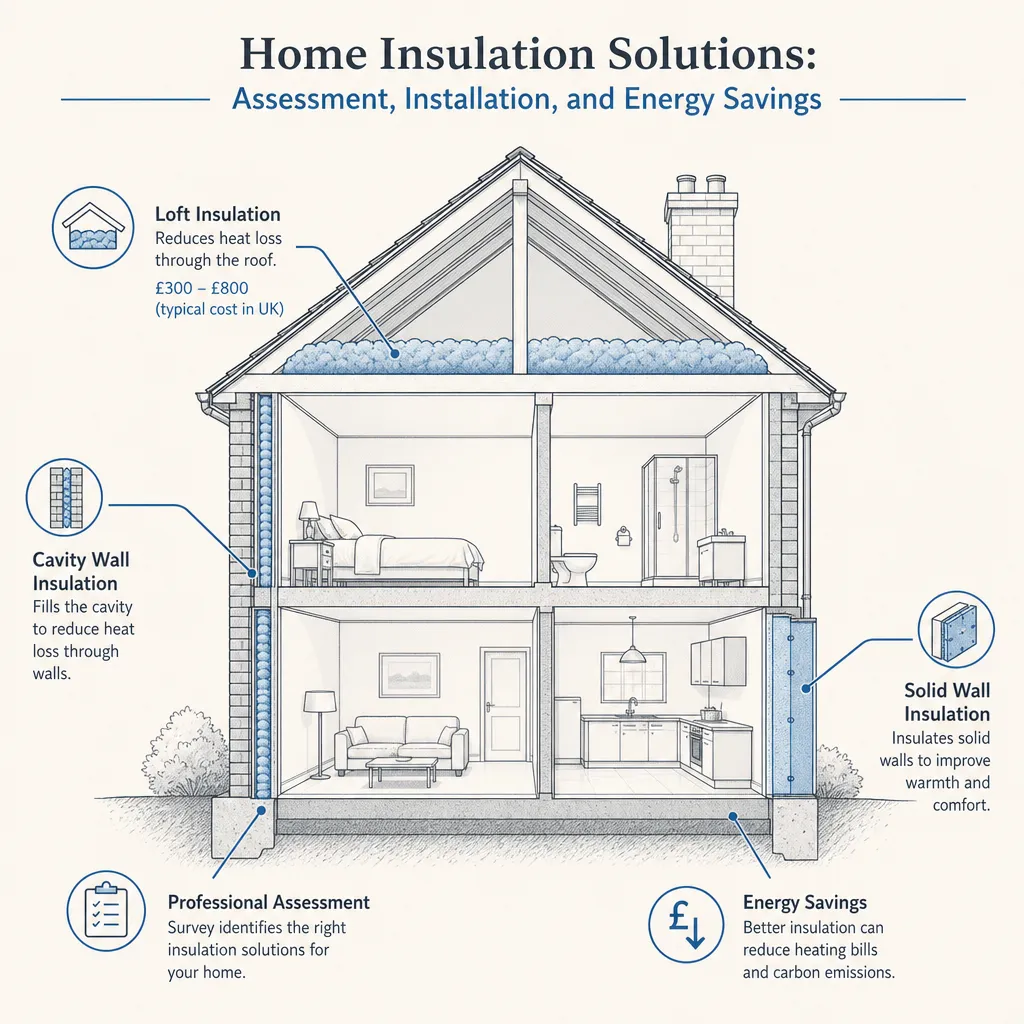
Home Insulation Solutions: Assessment, Installation, and Energy Savings
Home insulation in the UK covers loft, cavity wall, solid wall, and floor insulation.
 Energy & Retrofit
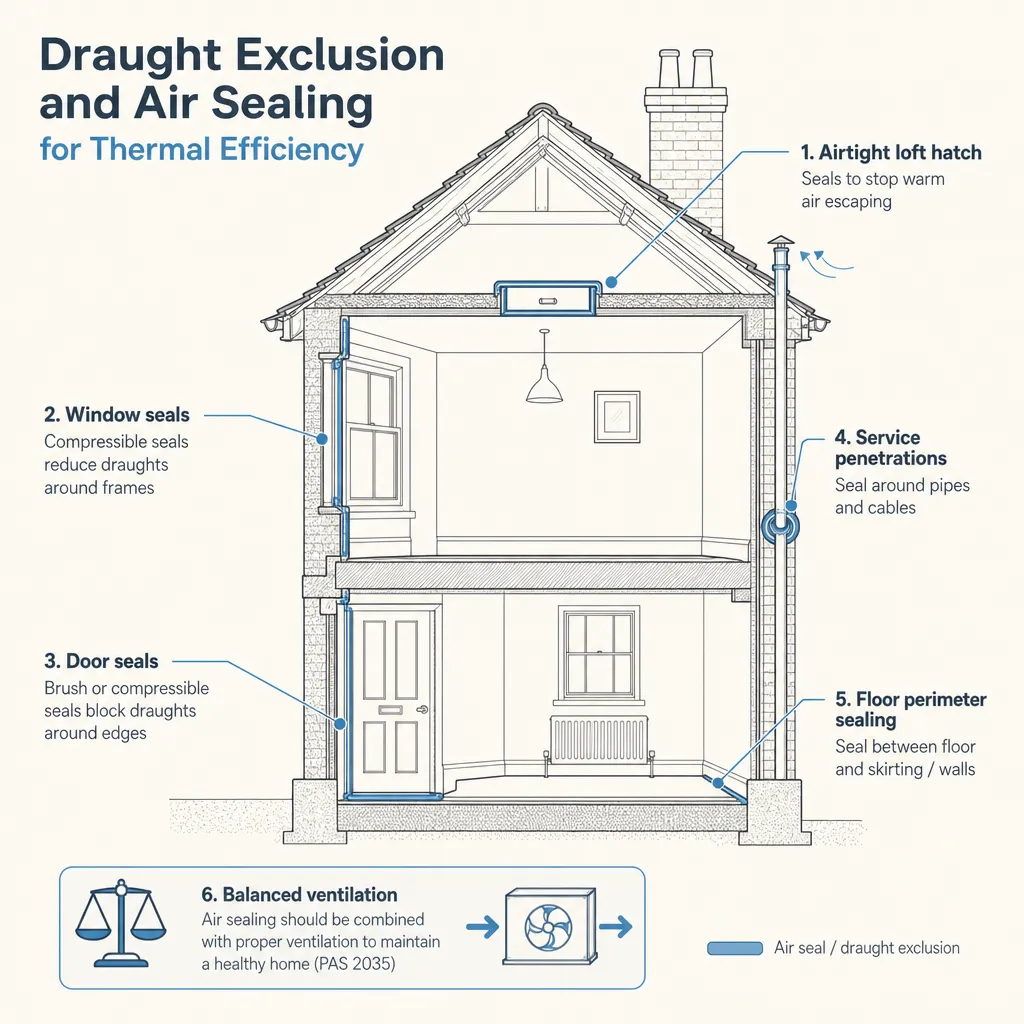
Draught Exclusion and Air Sealing for Thermal Efficiency
Draught proofing and air sealing can cut uncontrolled heat loss by 15–25% in a typical UK home, but sealing a building too tightly without reviewing ventilation risks condensation, mould, and poor air quality.
 Energy & Retrofit
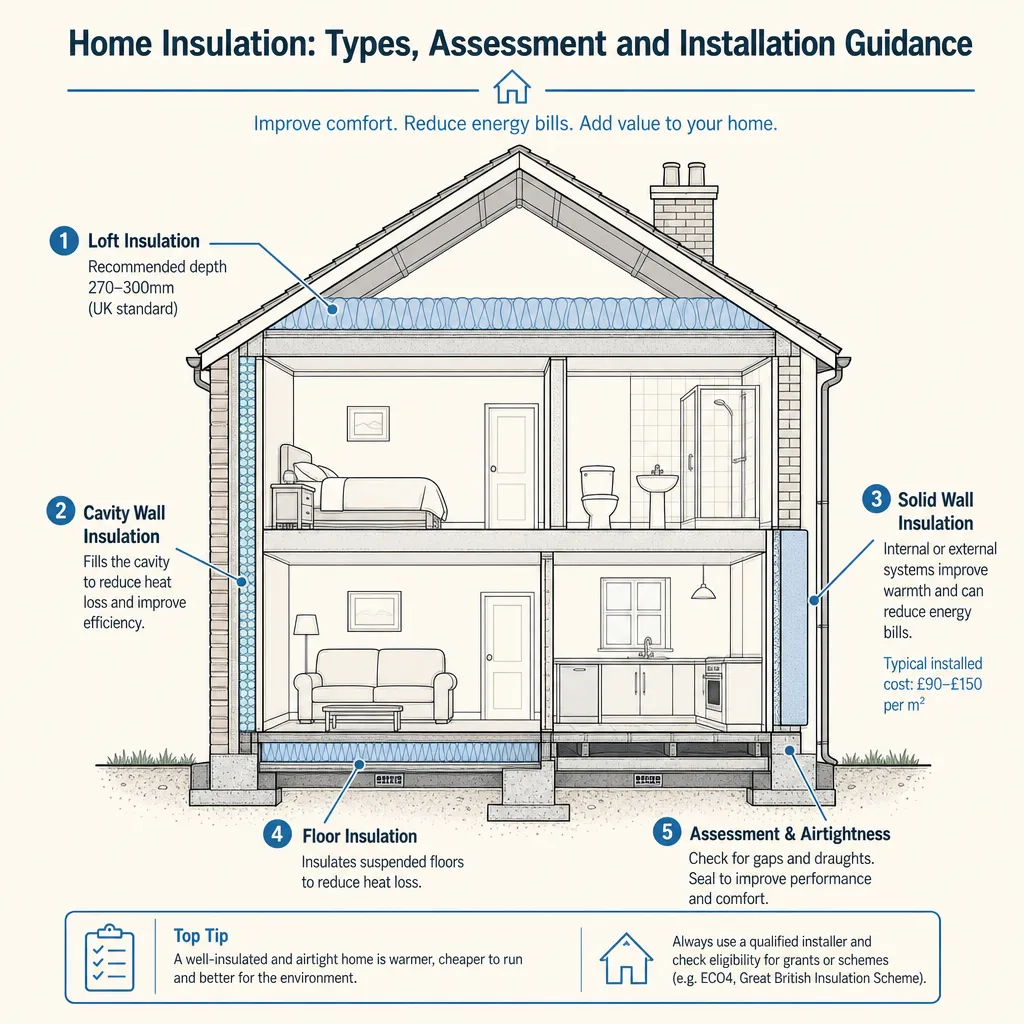
Home Insulation: Types, Assessment and Installation Guidance
Home insulation reduces heat loss through walls, roofs, and floors.
 Energy & Retrofit
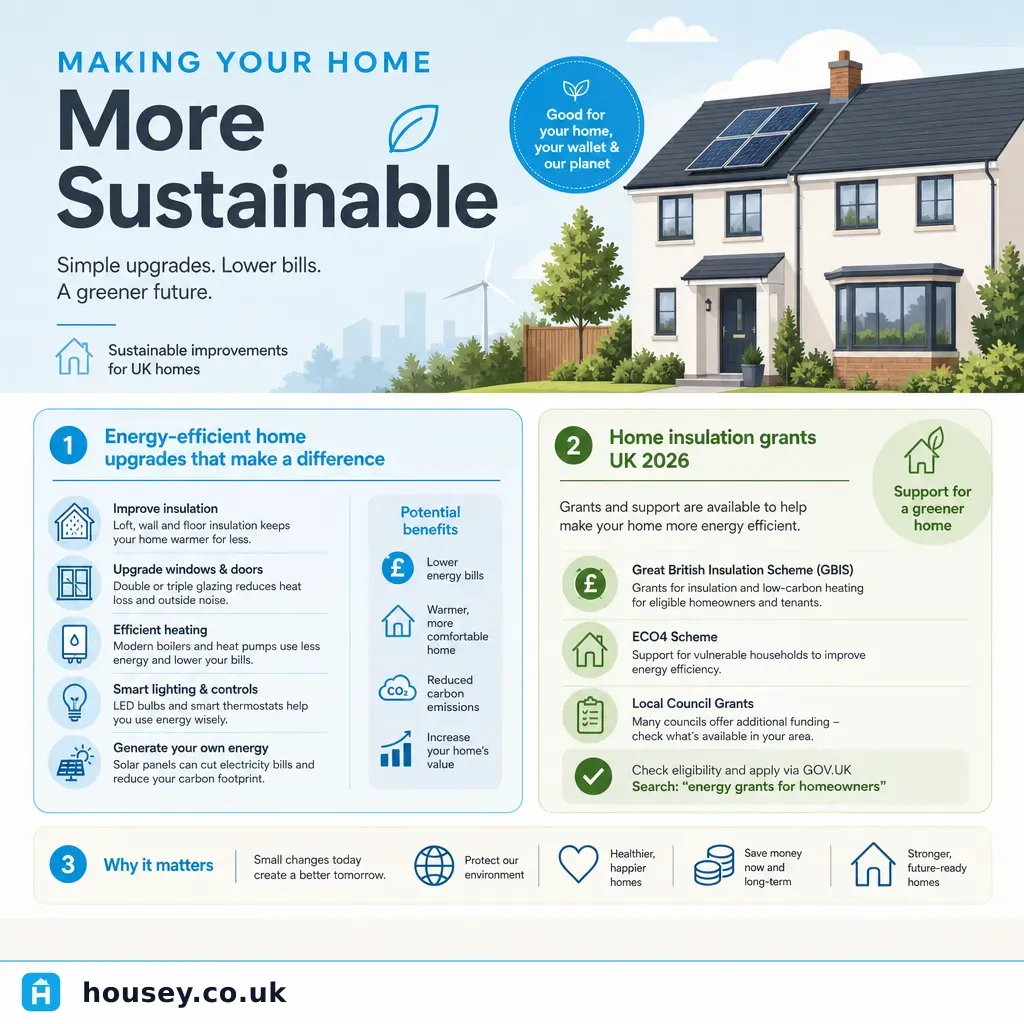
Making your home more sustainable
Making a UK home more sustainable usually starts with fabric-first improvements such as insulation, draught-proofing, and efficient glazing before adding renewable energy systems like solar panels or a heat pump.
 Energy & Retrofit
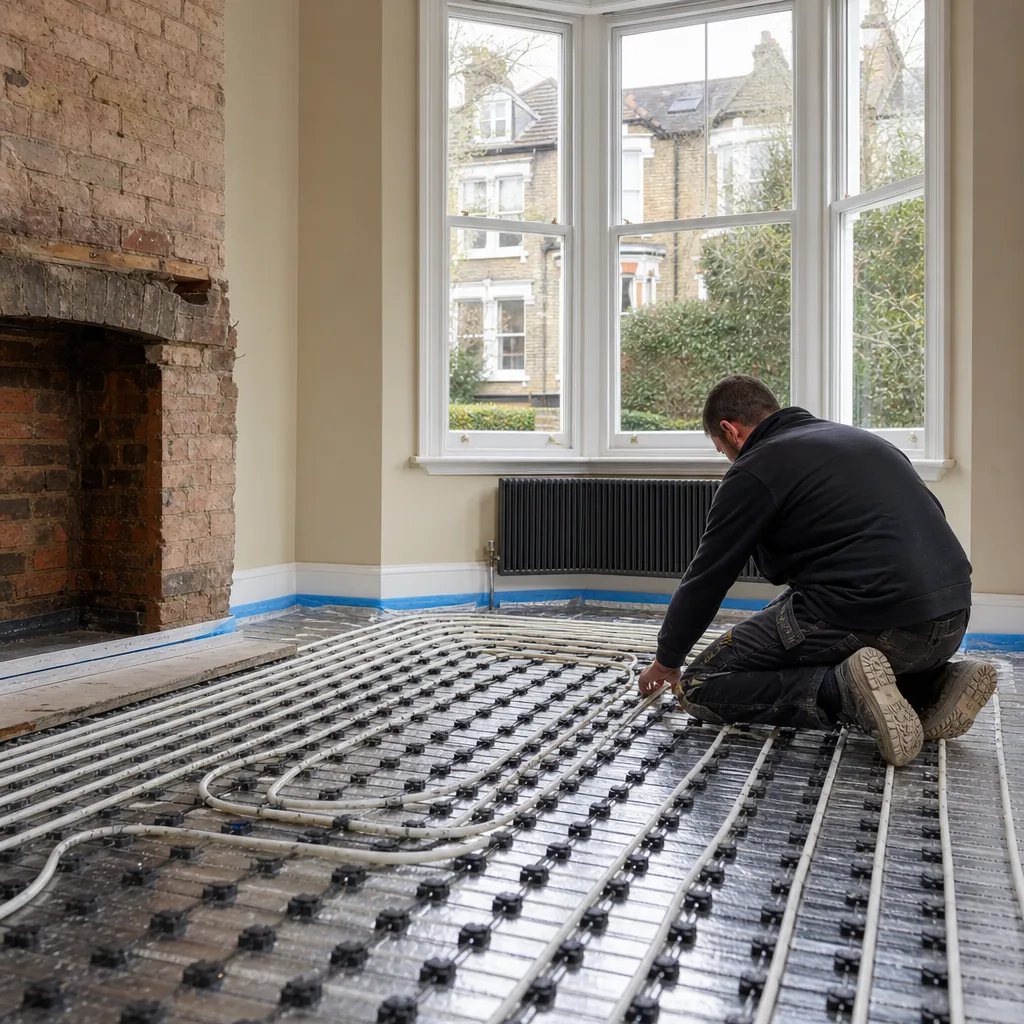
Heating Elements and Radiant Systems in Concrete Floors
Underfloor heating embedded in a concrete floor or screed delivers radiant heat at low flow temperatures (35–50°C), making it highly compatible with heat pumps.