Home Pride Index 2022: UK Homeowner Sentiment and Property Investment
By Housey · Last reviewed 19th of May 2026
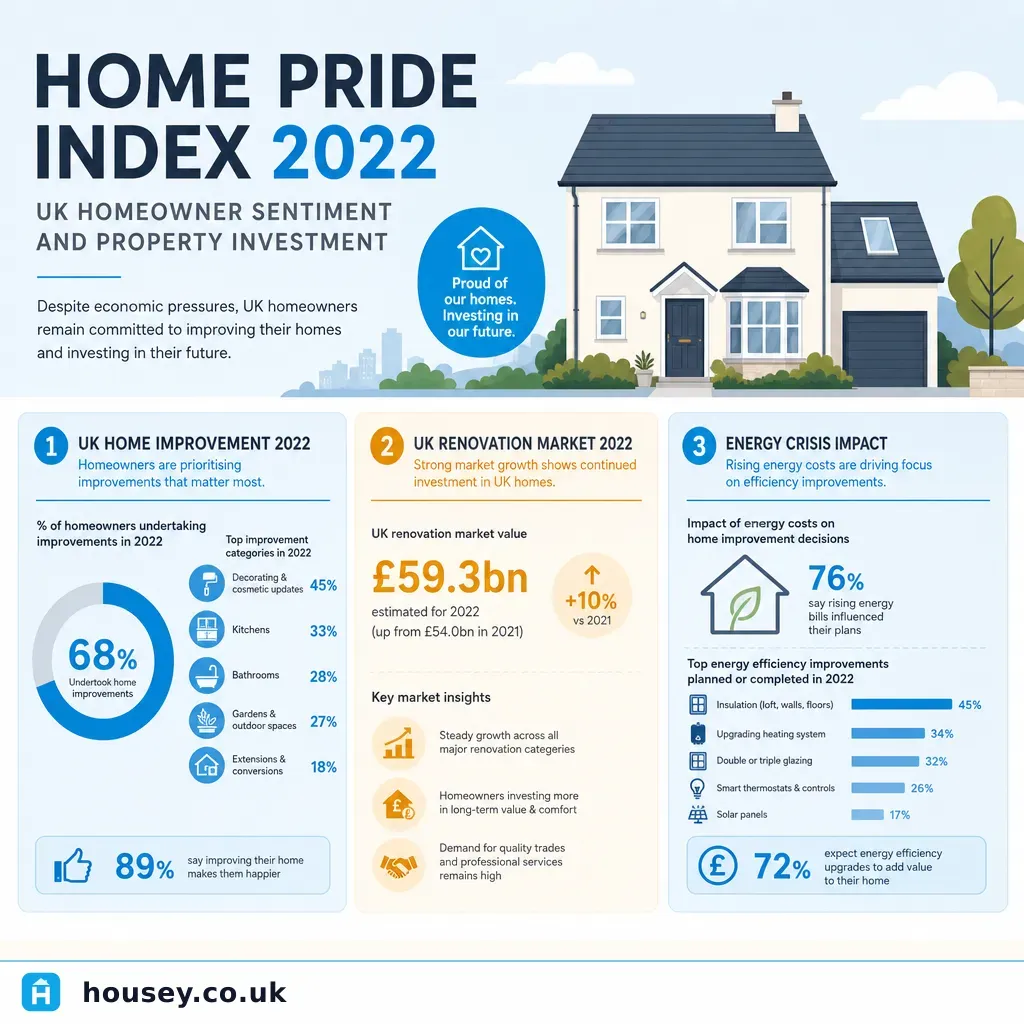
Home Pride Index 2022: UK Homeowner Sentiment and Property Investment
2022 was one of the most turbulent years in recent UK homeowner history. The post-COVID renovation enthusiasm of 2020 and 2021 collided with the sharpest energy price rises in living memory, a dramatic tightening of monetary policy, and a cost of living crisis that affected household budgets across all income levels. For many UK homeowners, 2022 demanded a fundamental reassessment of what to prioritise, what to delay, and where home investment still made sense.
Key points
- Ofgem's energy price cap for a typical household rose from approximately £1,277 at the start of 2022 to £1,971 in April, then to £3,549 from October 2022 — before the Energy Price Guarantee capped typical annual household bills at around £2,500 from the same month.
- The Bank of England base rate rose from 0.25% in January 2022 to 3.5% by December 2022 — the fastest pace of monetary tightening in decades — affecting mortgage costs and remortgaging decisions for millions of UK homeowners.
- The Boiler Upgrade Scheme launched in April 2022, offering grants of £5,000 for air source heat pumps and £6,000 for ground source heat pumps to eligible homeowners in England and Wales replacing fossil fuel heating systems.
- ONS data confirmed UK consumer price inflation peaked at 11.1% in October 2022 — the highest rate in over 40 years — applying significant pressure on household disposable income.
- EPC ratings moved from a largely administrative requirement to an active homeowner concern as the link between energy performance and running costs became tangible for millions of households.
The energy crisis reshapes renovation priorities
The scale of the 2022 energy price shock had no modern precedent. Homeowners who had rarely consulted their Energy Performance Certificate began requesting assessments; demand for loft insulation and cavity wall insulation increased; and interest in heat pumps — still rare in UK homes — grew substantially. The launch of the Boiler Upgrade Scheme in April 2022 created a financial incentive to transition away from gas heating, though installer capacity remained a practical constraint throughout the year.
For many households, the calculation shifted from 'can we afford to improve?' to 'can we afford not to?' Insulating a loft or cavity wall ceased to be a lifestyle upgrade and became a running-cost reduction strategy. Energy Saving Trust guidance during this period consistently identified energy bills as the primary driver of retrofit enquiries — a marked shift from earlier years when comfort and sustainability were more commonly cited motivations.
Cost of living pressure and renovation budgets
Broader cost of living pressures squeezed household disposable income through 2022. With inflation peaking at 11.1% in October and rising mortgage costs affecting homeowners on tracker or variable-rate deals as well as those remortgaging onto higher fixed rates, the budget available for discretionary improvement narrowed for many households.
Materials costs remained elevated throughout 2022 — timber, insulation, and structural materials were significantly more expensive than 2019 levels, a legacy of pandemic supply chain disruptions. Labour costs also rose, with skilled tradespeople remaining in strong demand relative to supply across most UK regions.
The result was a bifurcated homeowner landscape: those with equity or savings who pressed ahead (sometimes re-scoping projects to manage budgets), and those who paused or cancelled discretionary works in response to financial pressure.
What homeowners invested in during 2022
Trade association data and sector reports from 2022 consistently identified these project categories as most active:
- Essential repairs and maintenance — roof repairs, boiler replacements, and damp remediation, where deferral carried clear cost or safety risks.
- Energy efficiency improvements — loft and cavity wall insulation, draught-proofing, and glazing upgrades, driven directly by the energy price context.
- Scaled-down kitchen and bathroom refreshes — new fixtures, retiling, and resurfacing rather than full rip-out-and-replace projects.
- Outdoor and garden improvements — momentum from the COVID years continued, though at a reduced rate given budget pressures.
Larger structural projects — extensions and loft conversions — showed greater volatility. Higher material and labour costs pushed some projects beyond budget; others were re-scoped or paused pending greater economic certainty.
The EPC effect: from paperwork to priority
Before 2022, the Energy Performance Certificate was familiar to most homeowners as a document required on sale or letting but rarely consulted afterwards. The energy crisis changed this. An EPC rating of D or E shifted from being an administrative fact to a practical cost indicator.
For landlords, the pressure was particular: private rented properties must already achieve a minimum EPC rating of E to be legally let. Ongoing policy discussions about raising the minimum to EPC C kept the issue current throughout 2022, and many landlords acted to improve their properties' ratings ahead of anticipated regulatory change.
For owner-occupiers, the EPC's recommendations section — previously often ignored — became a starting point for retrofit planning and conversations with energy assessors.
Homeowner priorities: what changed in 2022
Priority | Pre-2022 typical direction | 2022 shift | Primary driver |
|---|---|---|---|
Energy cost reduction | Lower | Much higher | Energy price cap rises |
Extensions and structural projects | High | Moderated | Materials and labour cost inflation |
Kitchen and bathroom refit | High | Stable at lower cost points | Demand maintained; scope reduced |
Garden and outdoor spaces | High post-COVID peak | Slight reduction | Budget pressure |
EPC rating improvement | Low | Significantly higher | Energy bills; landlord regulation |
Smart home technology | Growing | Stable | Interest maintained; budget constrained |
What not to assume in 2022
Several widespread assumptions in 2022 were either misleading or simply did not hold for many households:
- That high energy costs made heat pump installation automatically worthwhile. A heat pump retrofit requires adequate building fabric insulation to perform well. Fitting a heat pump to a poorly insulated home often underperforms expectations. A fabric-first approach — addressing insulation before changing the heating system — is generally the correct sequence and is central to the PAS 2035 framework.
- That any MCS installer could quickly process a Boiler Upgrade Scheme application. Heat pump installers were in high demand in 2022 and waiting times were often significant. Researching and securing an installer early was advisable.
- That the Energy Price Guarantee meant energy-efficiency investment became less urgent. Bills remained substantially higher than 2019 levels even with the EPG in place. The financial case for insulation and efficient heating remained intact.
- That remortgaging remained a cheap source of renovation finance. As the Bank of England base rate rose steeply through 2022, additional borrowing became considerably more expensive. Homeowners expecting to fund works via remortgaging found the economics markedly different from 2020–2021.
When to get professional help
Energy efficiency improvements — particularly in older properties — can have unintended consequences if not properly assessed before work begins. Consider seeking professional advice if:
- You are considering internal or external wall insulation in a solid-wall Victorian or Edwardian property — moisture and ventilation risks must be assessed, ideally by a Retrofit Coordinator under PAS 2035.
- You are considering replacing a gas boiler with a heat pump — fabric and heating system compatibility should be checked by a qualified MCS-accredited installer or retrofit assessor before commitment.
- Your property is listed or in a conservation area — energy improvement works may require specialist consent.
- You are a landlord planning works to achieve minimum EPC E compliance — professional assessment ensures the most cost-effective route to compliance.
How Housey can help
Housey helps UK homeowners and landlords find vetted local professionals for energy assessments, retrofit planning, and home improvement projects. Getting multiple quotes from accredited professionals and verifying their credentials is always advisable before committing to significant energy or renovation expenditure.
Frequently asked questions
What was the Boiler Upgrade Scheme in 2022?
The Boiler Upgrade Scheme launched in April 2022, offering capital grants to homeowners in England and Wales who replaced fossil fuel heating with eligible heat pumps or biomass boilers. At launch, grants were £5,000 for air source heat pumps and £6,000 for ground source heat pumps. The scheme was later extended and grant amounts were increased to £7,500 for both technologies in October 2023.
Did the energy crisis cause UK homeowners to delay renovations?
Evidence from trade bodies in 2022 suggests a split response. Necessity-driven and energy-efficiency works proceeded and in some categories grew. Larger discretionary projects — extensions, full kitchen refits — showed more caution, particularly in the second half of the year as interest rates rose and cost of living pressures intensified. Smaller-scale refreshes and essential repairs remained active throughout.
How did rising interest rates in 2022 affect home improvement plans?
Higher mortgage rates increased costs for homeowners on variable or tracker deals and pushed up remortgage costs. This reduced disposable income available for discretionary improvements. Some homeowners who had planned to fund renovation works through remortgaging or further advances found the economics significantly less attractive at higher rates than would have been the case in 2020 or 2021.
Was 2022 a good year to get a builder?
Demand for tradespeople remained high through much of 2022, meaning waiting times for quality contractors were significant. Materials costs remained elevated against pre-pandemic benchmarks. Getting multiple quotes, allowing for longer lead times, and verifying contractor credentials — particularly for energy-related works — was especially important in that market environment.
Sources and further reading
- Ofgem energy price cap — Ofgem
- Boiler Upgrade Scheme — GOV.UK
- Bank of England monetary policy — Bank of England
- Consumer Price Inflation, UK — ONS
- State of Trade Survey — Federation of Master Builders
- Energy Saving Trust home heating advice — Energy Saving Trust
- Private rented sector minimum energy efficiency standards — GOV.UK
Useful next reads
 Improvement & Build
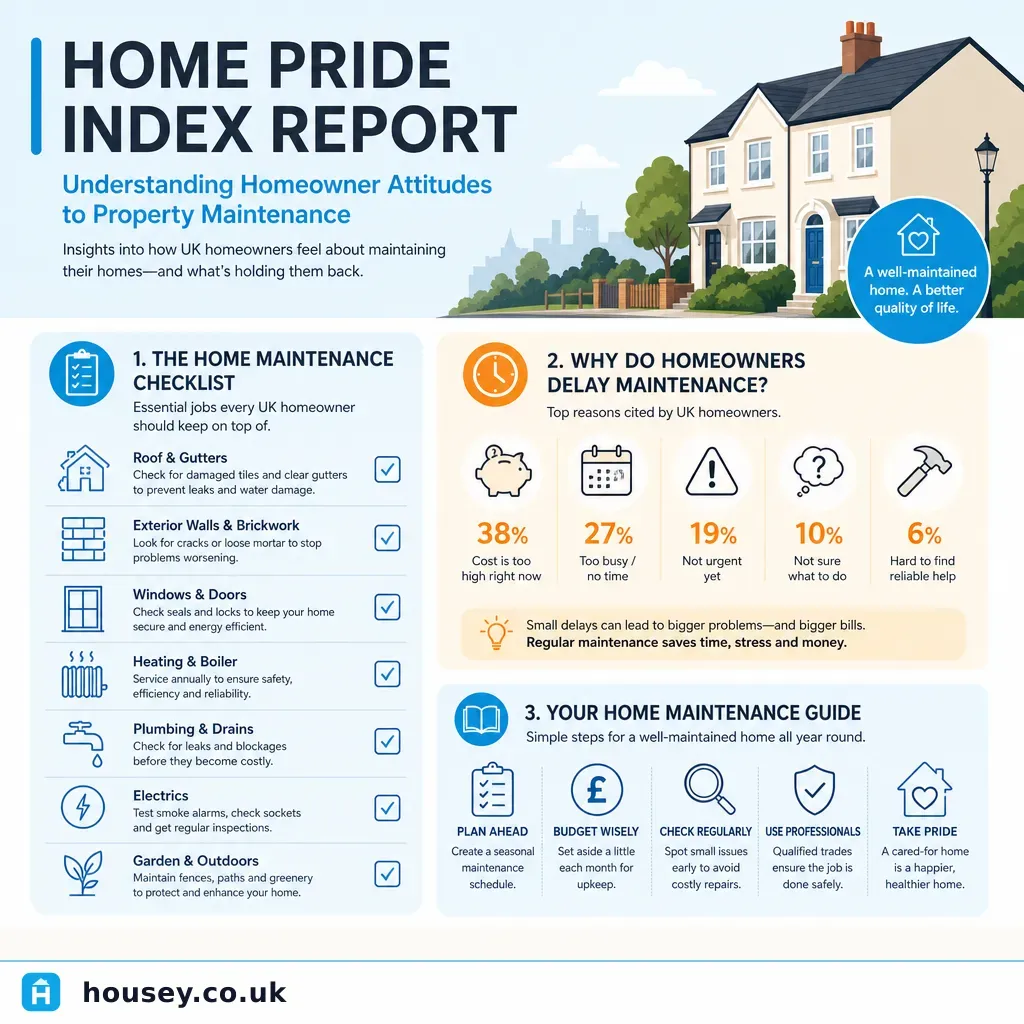
Home Pride Index Report: Understanding Homeowner Attitudes to Property Maintenance
UK homeowners tend to prioritise visible improvements over preventive maintenance, leading to a systematic gap in roof, gutter, and structural upkeep.
 Improvement & Build
Home Pride Index 2023: UK Homeowner Sentiment and Property Investment
In 2023, UK homeowners faced the dual challenge of the highest interest rates since the 2008 financial crisis and the first annual house price falls in over a decade.
 Improvement & Build
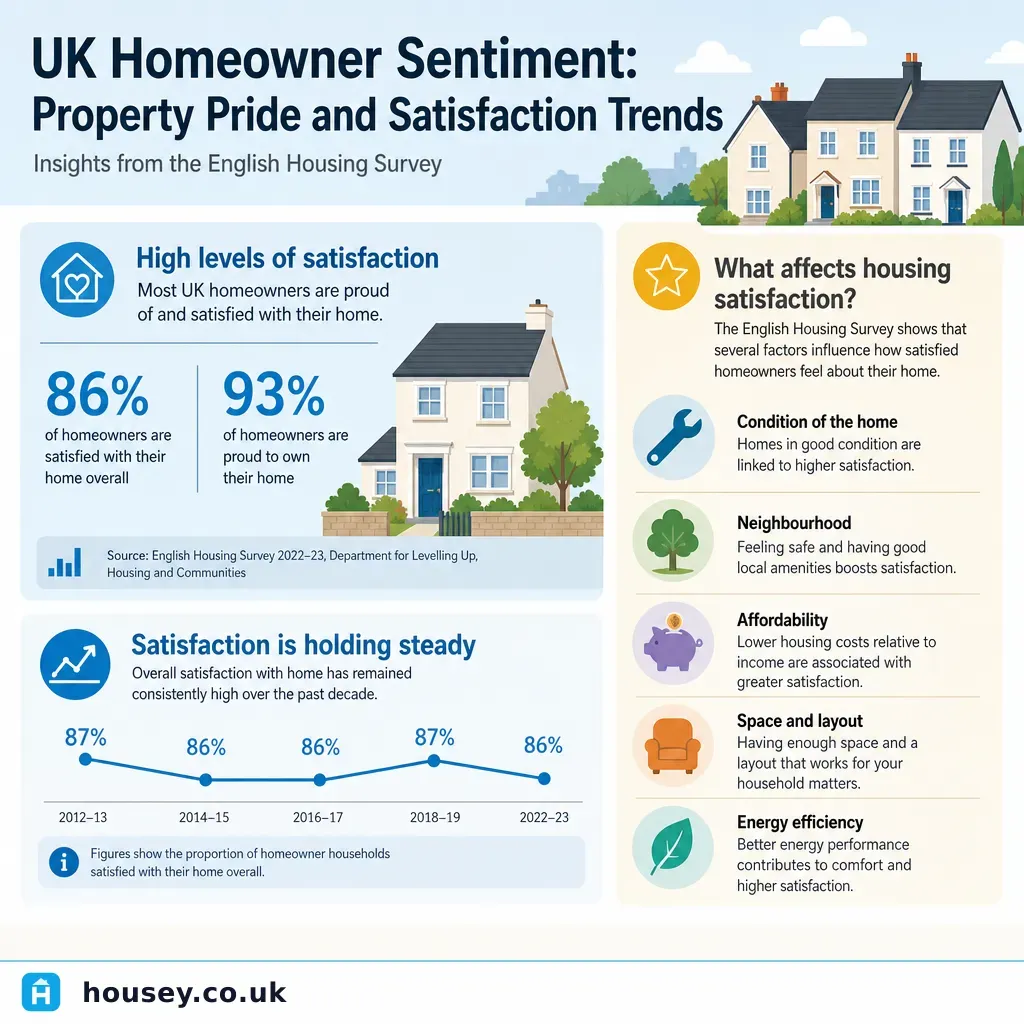
UK Homeowner Sentiment: Property Pride and Satisfaction Trends
UK homeowners generally report higher satisfaction with their housing than renters, according to the English Housing Survey.
 Improvement & Build
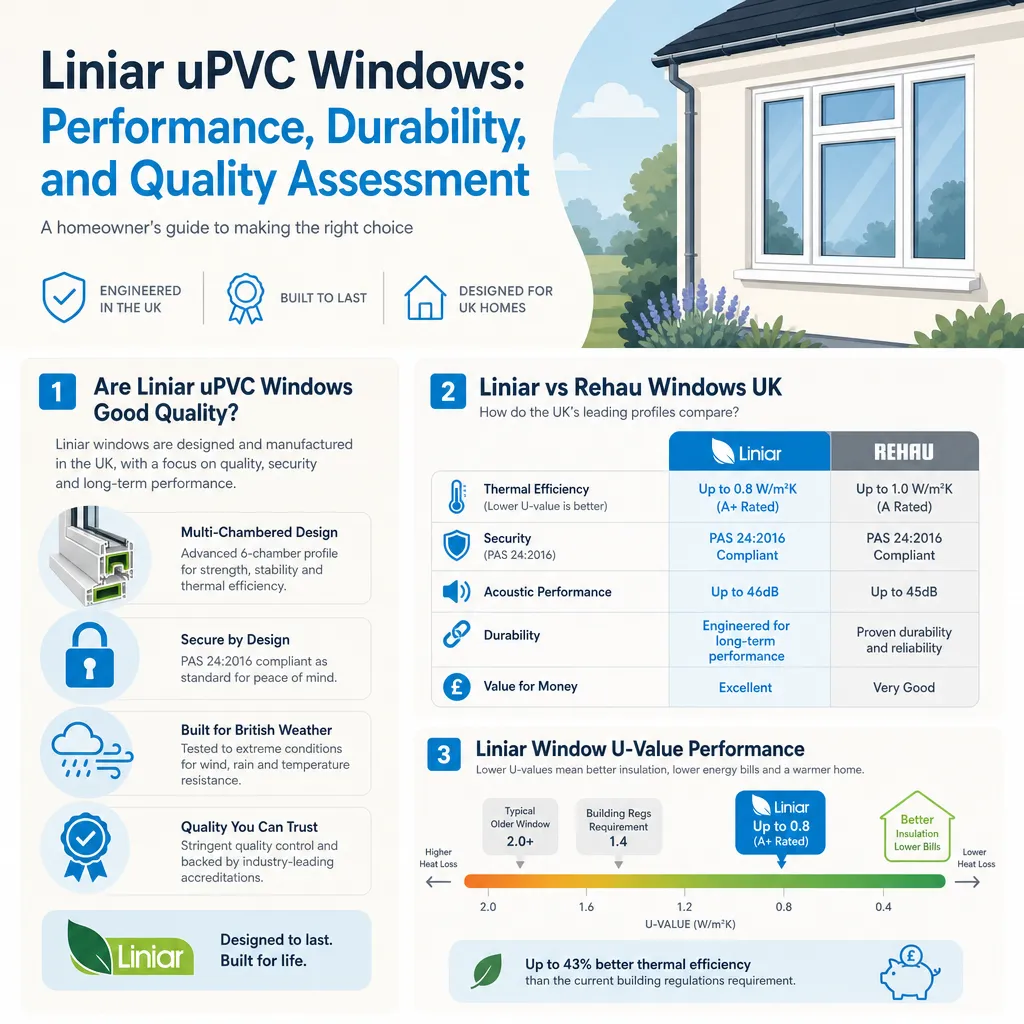
Liniar uPVC Windows: Performance, Durability, and Quality Assessment
Liniar uPVC window profiles are manufactured in the UK using multi-chambered, foamed frames.
 Improvement & Build
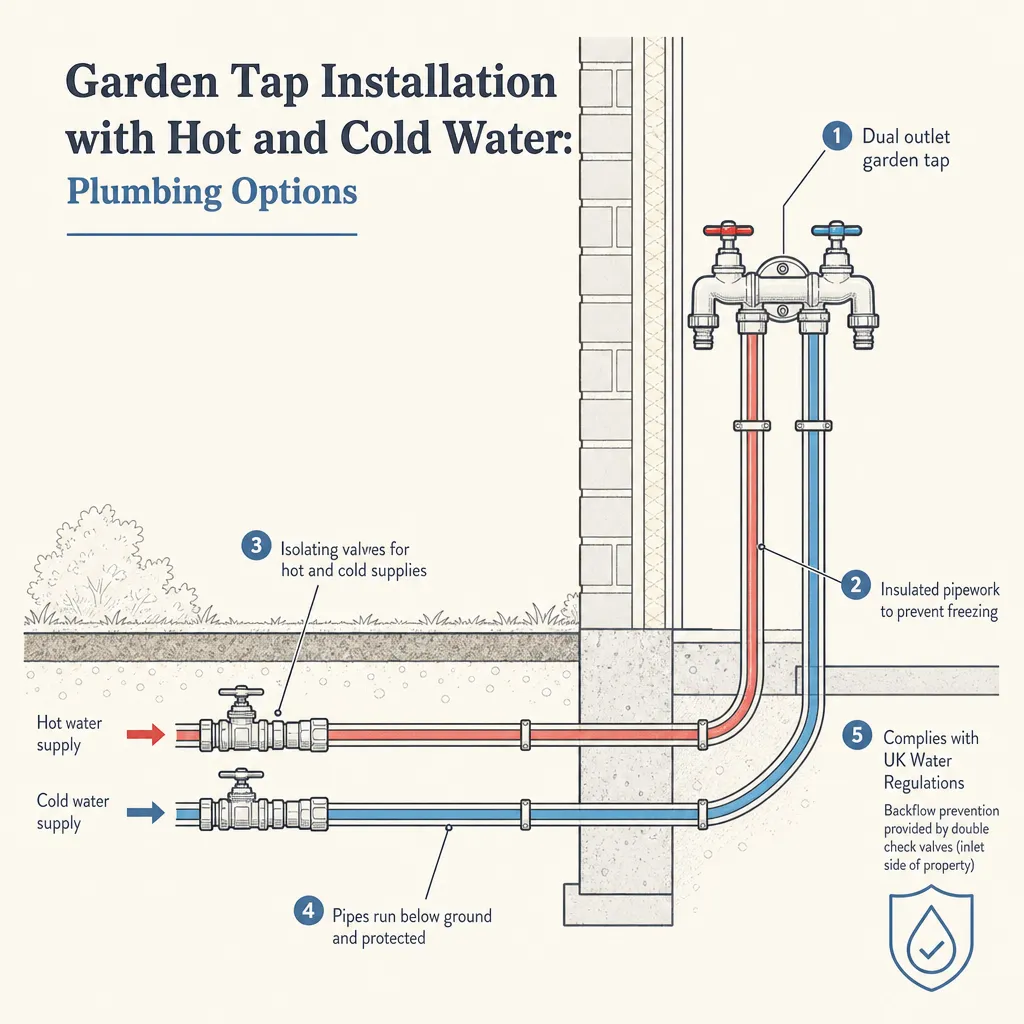
Garden Tap Installation with Hot and Cold Water: Plumbing Options
Adding a cold garden tap is a common DIY project, but routing hot water outdoors requires a plumber to connect to your domestic hot water system and comply with the Water Supply (Water Fittings) Regulations 1999.