Home Pride Index 2023: UK Homeowner Sentiment and Property Investment
By Housey · Last reviewed 19th of May 2026

Home Pride Index 2023: UK Homeowner Sentiment and Property Investment
By 2023, UK homeowners were navigating a fundamentally different financial environment to the one that had defined the preceding decade of low interest rates and accessible mortgage borrowing. Sustained high base rates, the first annual house price falls in over a decade, and continued inflationary pressure on materials and labour created a noticeably more cautious homeowner mood. Yet the underlying commitment to home investment persisted: priorities had shifted, not disappeared.
Key points
- The Bank of England base rate reached 5.25% in August 2023 — its highest level since the 2008 financial crisis — before the Monetary Policy Committee held it steady through the remainder of the year.
- Both Halifax and Nationwide indices recorded annual UK house price falls in 2023, the first such declines in over a decade, though the scale varied considerably by region and property type.
- The Boiler Upgrade Scheme grant for air source heat pumps was increased from £5,000 to £7,500 in October 2023, improving the financial case for heat pump adoption in eligible properties in England and Wales.
- ECO4, the fourth Energy Company Obligation scheme, continued throughout 2023 to deliver insulation, heating, and energy-efficiency upgrades to low-income and fuel-poor households across the UK.
- Building Regulations Part L, updated for new dwellings and extensions in 2021/2022, continued to set higher energy performance standards for any works requiring building control approval.
Mortgage shock and its effect on renovation decisions
A large number of fixed-rate mortgages were due for renewal in 2023, according to UK Finance and Bank of England data. Many homeowners coming off two- or five-year fixed deals arranged in 2019–2021 faced substantially higher monthly costs when remortgaging at prevailing rates. This directly reduced the budget available for discretionary improvements and shaped homeowner priorities throughout the year.
The Federation of Master Builders' 2023 State of Trade Surveys reflected this: while demand for repair and maintenance work remained reasonably steady, new extension and larger project pipelines contracted compared to the COVID-era peaks. The homeowner who a year earlier might have pressed ahead with a kitchen extension often chose instead to re-scope, delay, or redirect funds towards essential maintenance.
For many households, 2023 became a year of consolidation — maintaining and improving what they already had rather than adding significantly to the footprint or specification of their property.
Energy efficiency: from urgent priority to mainstream planning
If 2022 was the year energy efficiency became urgent for UK homeowners, 2023 was the year it became mainstream in renovation planning. With energy bills remaining elevated compared to pre-2022 levels despite falling from their October 2022 peak, appetite for fabric improvements — cavity wall insulation upgrades, loft insulation top-ups, and glazing improvements — continued throughout the year.
The October 2023 increase in the Boiler Upgrade Scheme grant to £7,500 for air source heat pumps was a significant policy development. Heat pump installations grew year-on-year, though they still accounted for a small share of overall heating system replacements, the majority of which remained gas boiler replacements. MCS, the quality mark for renewable and low carbon energy installations, reported growing numbers of certified heat pump installers across the UK.
TrustMark-registered contractors and Retrofit Coordinators qualified under PAS 2035 became more widely understood among homeowners pursuing grant-funded retrofit. The requirement to use accredited professionals for government-funded works drove quality standards in a sector that had historically been less regulated than electrical or gas trades.
The strategic homeowner: doing less, but smarter
A consistent theme in 2023 sector data is that homeowners became more strategic. Rather than undertaking large multi-trade projects, many focused on sequenced improvements: addressing building fabric first, then updating the heating system, then potentially adding renewable generation or storage.
This sequencing approach — central to PAS 2035 but increasingly adopted by homeowners outside the grant-funded sector — reflects a more mature understanding of retrofit. Installing a heat pump in a poorly insulated home typically underperforms and may not reduce bills as expected; addressing insulation first is generally the correct order. The Energy Saving Trust and retrofit professionals consistently reinforced this message during 2023.
Decision tree: deciding what to prioritise in 2023
- If your home has less than 270mm of loft insulation → address loft insulation first; it is typically the most cost-effective single improvement.
- If your home has unfilled cavity walls (check with a surveyor or energy assessor) → cavity wall insulation is usually the next priority after loft insulation.
- If your boiler is over 15 years old or operating inefficiently → consider whether a gas boiler replacement or a heat pump under the Boiler Upgrade Scheme is appropriate for your specific property and fabric.
- If your EPC rating is below D and you are a landlord → seek a Retrofit Coordinator assessment under PAS 2035 before committing to major works.
- If you are unsure where to start → an energy assessment from a qualified professional is the logical first step before any expenditure.
Homeowner sentiment: a comparison of 2022 and 2023
Theme | 2022 | 2023 |
|---|---|---|
Primary financial concern | Energy bills and cost of living | Mortgage costs and remortgaging |
Renovation motivation | Energy crisis urgency | Strategic, longer-term planning |
Heat pump interest | Growing but constrained by grant limits | Increased following BUS grant rise to £7,500 |
Housing market mood | Buoyant early; uncertain in second half | Cautious; first annual price falls in a decade |
Retrofit awareness | EPC ratings became prominent | PAS 2035 and sequencing more widely understood |
Discretionary project activity | Moderated in second half | Generally subdued; repair and maintenance steady |
What not to assume about home improvement in 2023
- That falling house prices make home improvement pointless. A well-maintained, energy-efficient property is likely to hold its relative value and marketability better than a deteriorating one, regardless of market direction.
- That energy bills returning below 2022 peaks reduced the case for energy-efficiency investment. Post-2022 bills remained substantially higher than 2019 levels; the payback case for insulation and efficient heating remained favourable for most property types.
- That the Boiler Upgrade Scheme was unlimited and always available. The scheme operates within an annual budget. Checking current availability and applying early in the scheme year is advisable via GOV.UK.
- That any contractor can carry out grant-funded retrofit work. ECO4 and other funded schemes require TrustMark-registered contractors following the PAS 2035 framework. Checking accreditation before appointing a contractor is essential.
- That lower house prices reduced the value of a well-executed loft conversion or extension. The financial case depends on local market conditions, quality of workmanship, and intended use — advice from a local estate agent and a chartered surveyor is helpful before committing.
When to get professional help
In a year defined by financial caution, getting professional assessment right first time carries particular weight. Seek expert advice before proceeding if:
- You are planning structural work — any extension, loft conversion, or wall removal requires Building Regulations approval, and structural design input from a qualified engineer or architect.
- You are considering external or internal wall insulation in a solid-wall or older property — a Retrofit Coordinator can assess moisture and ventilation risks before works begin.
- Your property has leasehold tenure — some improvement works require freeholder consent or may affect service charges, and legal advice should be sought.
- You are a landlord and your property is below EPC E — professional advice ensures the most cost-effective route to compliance, particularly given possible future tightening of minimum standards.
How Housey can help
Housey connects UK homeowners and landlords with qualified local professionals — from energy assessors and Retrofit Coordinators to architects and building surveyors. Whether you are planning an energy upgrade, a structural project, or simply want to understand your options, finding the right professional early saves time and avoids costly mistakes.
Frequently asked questions
Did house prices fall significantly in 2023?
Both Halifax and Nationwide recorded annual price falls in 2023 — the first since the post-financial-crisis period. The scale varied considerably by region and property type. The Bank of England's sustained high base rate reduced mortgage affordability and dampened transaction volumes. However, prices across most of the UK remained substantially above their 2019 levels despite the correction.
How did the Boiler Upgrade Scheme change in 2023?
In October 2023, the UK Government increased the Boiler Upgrade Scheme grant for air source heat pumps from £5,000 to £7,500, and aligned the ground source heat pump grant at the same level. The aim was to improve cost competitiveness against gas boiler replacement and accelerate uptake. The scheme applies to England and Wales; eligibility conditions and current availability should be checked via GOV.UK before applying.
Is it worth improving a property if you might move soon?
Energy-efficiency improvements in particular can positively affect an EPC rating, which is increasingly relevant to buyers and, in some cases, mortgage lenders. The benefit depends on the cost of the work, the likely time before sale, and local market conditions. A valuation from a local estate agent and advice from a chartered surveyor is a useful starting point before committing to significant pre-sale expenditure.
What is PAS 2035 and why does it matter?
PAS 2035 is the publicly available specification for retrofitting domestic dwellings to improve energy efficiency. It requires a whole-house assessment approach — ensuring, for instance, that insulation is not fitted without first checking ventilation and moisture risk. It is mandatory for works funded through ECO4 and other government schemes, and is considered best practice for any significant retrofit project. A Retrofit Coordinator oversees the assessment and design process.
Sources and further reading
- Bank of England base rate decisions — Bank of England
- Halifax House Price Index — Halifax
- Boiler Upgrade Scheme — GOV.UK
- Energy Company Obligation (ECO4) — GOV.UK
- TrustMark PAS 2035 retrofit framework — TrustMark
- MCS certified installers — MCS
- State of Trade Survey — Federation of Master Builders
Useful next reads
 Improvement & Build
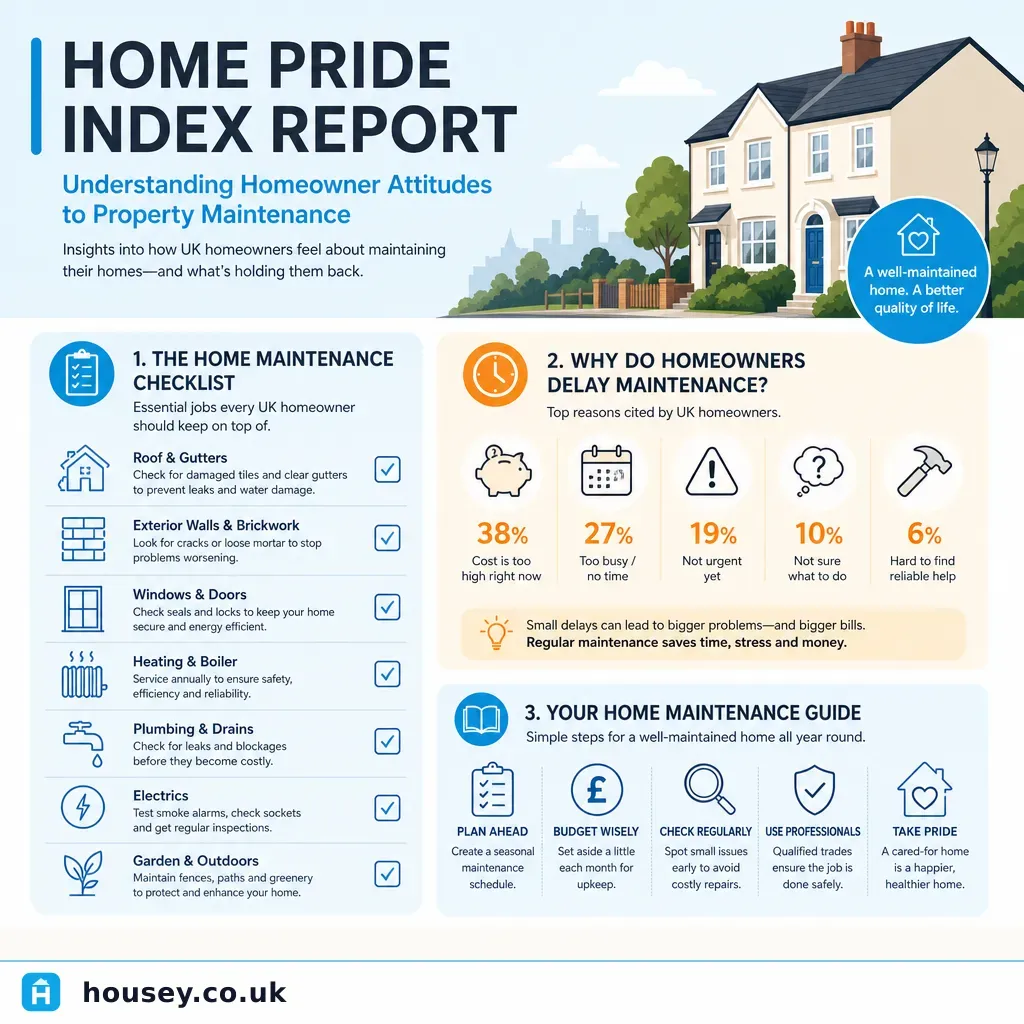
Home Pride Index Report: Understanding Homeowner Attitudes to Property Maintenance
UK homeowners tend to prioritise visible improvements over preventive maintenance, leading to a systematic gap in roof, gutter, and structural upkeep.
 Improvement & Build
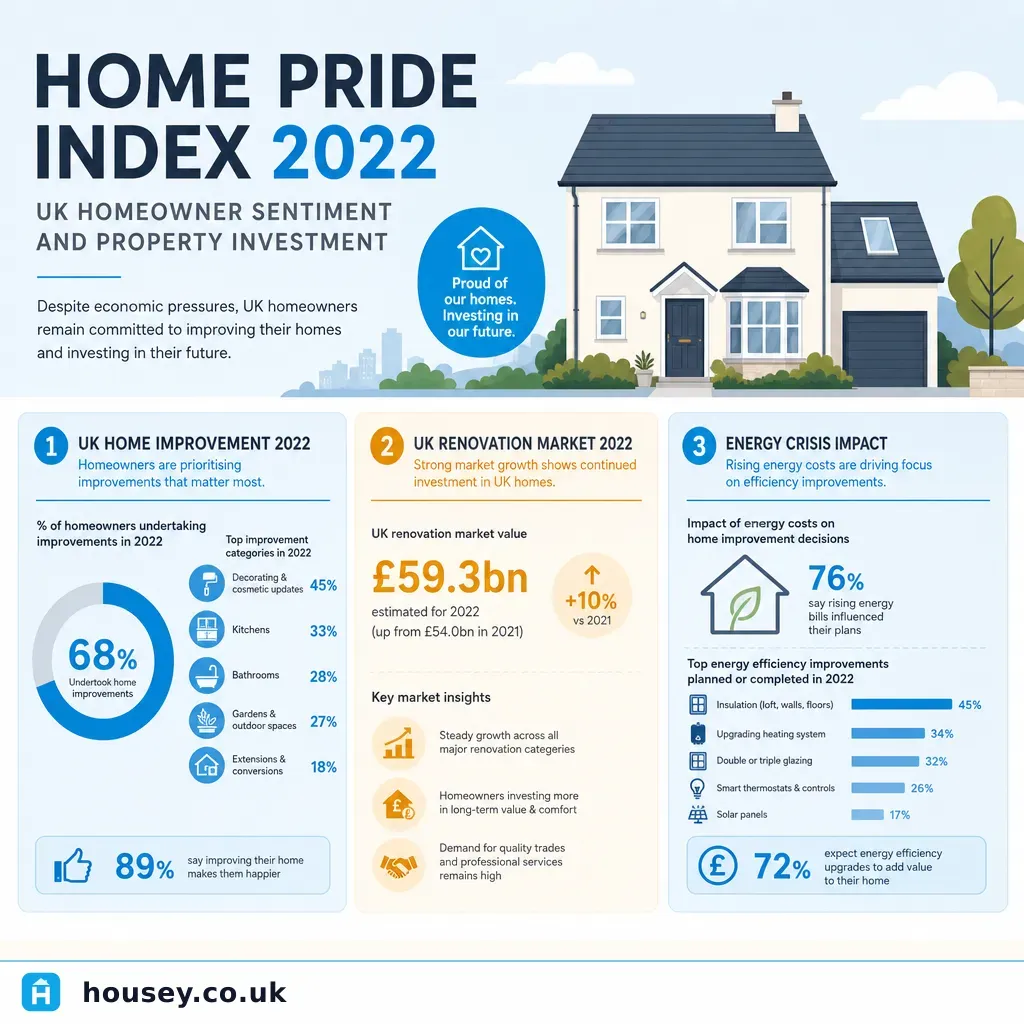
Home Pride Index 2022: UK Homeowner Sentiment and Property Investment
In 2022, UK homeowner sentiment was defined by two competing forces: the post-COVID appetite for home improvement and the sharpest rise in energy prices and interest rates in a generation.
 Improvement & Build
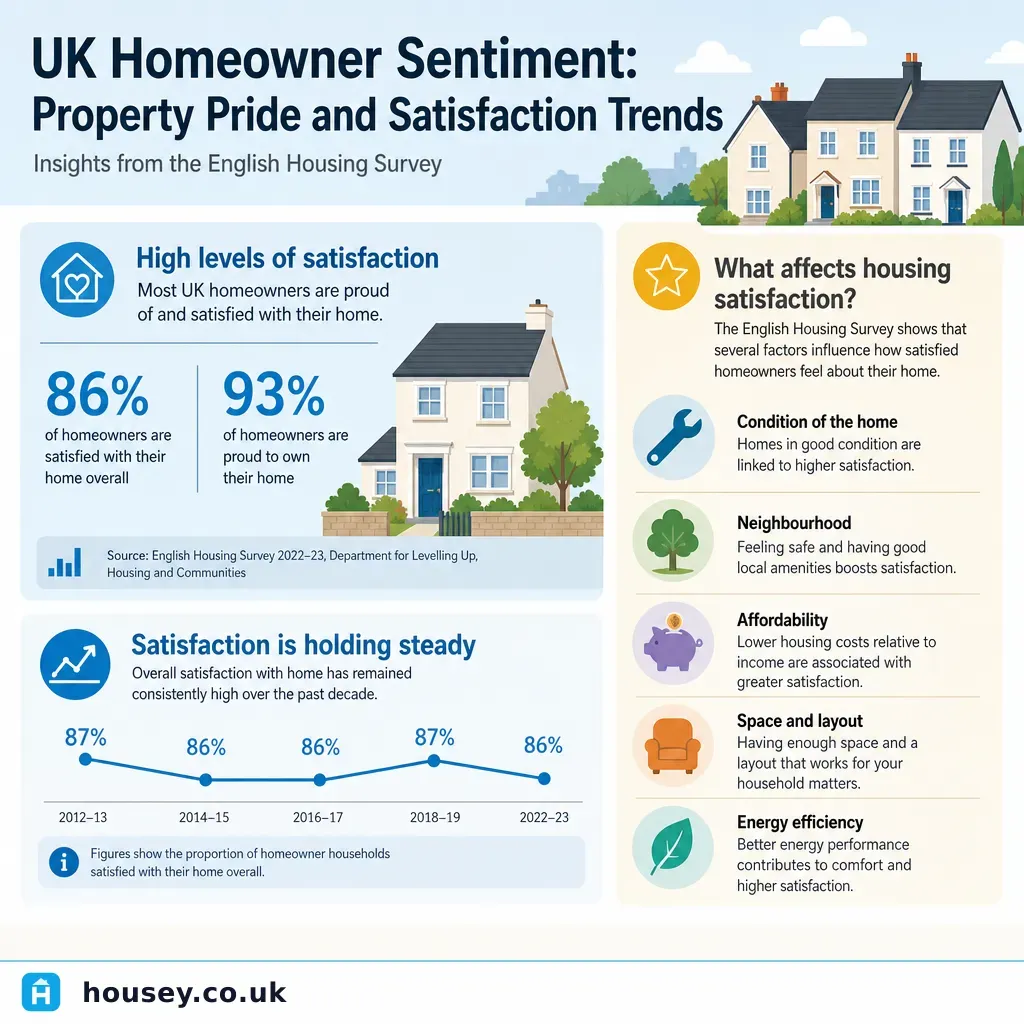
UK Homeowner Sentiment: Property Pride and Satisfaction Trends
UK homeowners generally report higher satisfaction with their housing than renters, according to the English Housing Survey.
 Improvement & Build
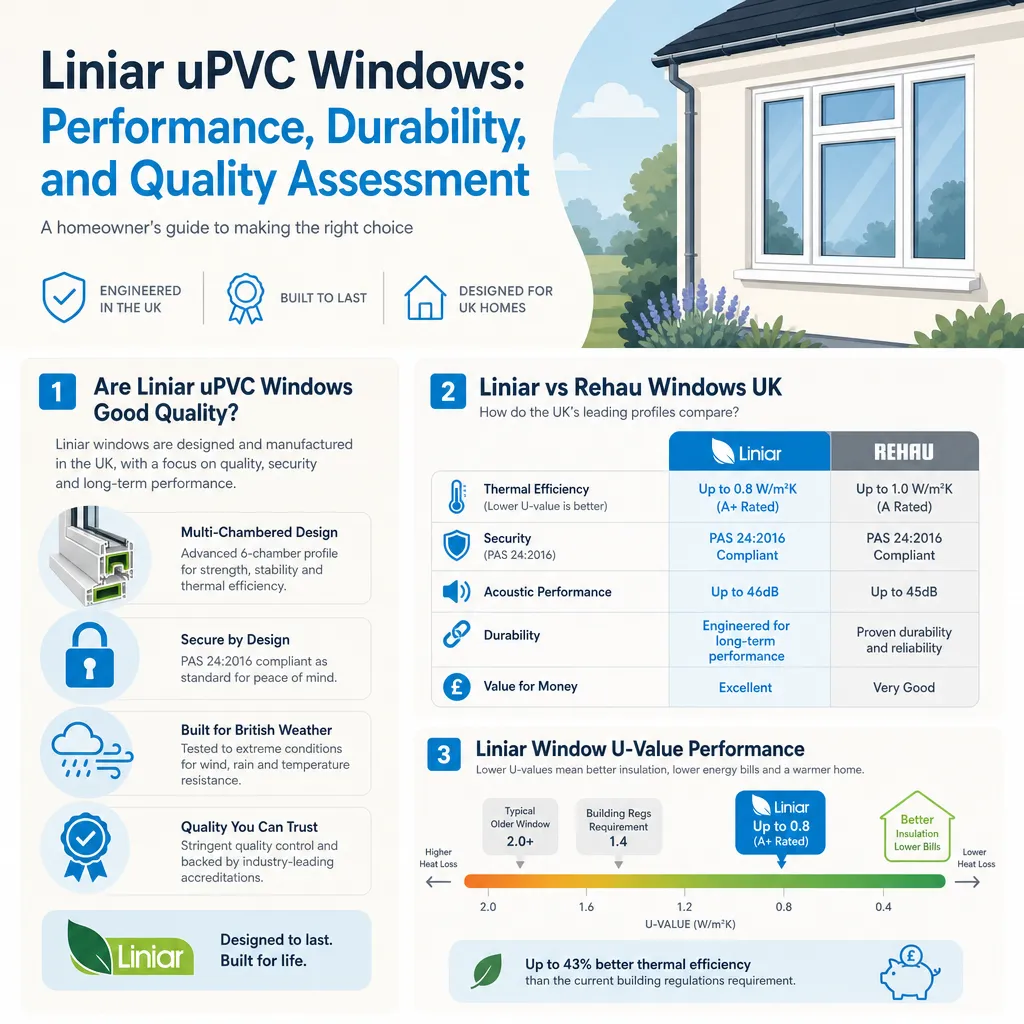
Liniar uPVC Windows: Performance, Durability, and Quality Assessment
Liniar uPVC window profiles are manufactured in the UK using multi-chambered, foamed frames.
 Improvement & Build
Garden Tap Installation with Hot and Cold Water: Plumbing Options
Adding a cold garden tap is a common DIY project, but routing hot water outdoors requires a plumber to connect to your domestic hot water system and comply with the Water Supply (Water Fittings) Regulations 1999.