Home Pride Index Report: Understanding Homeowner Attitudes to Property Maintenance
By Housey · Last reviewed 19th of May 2026
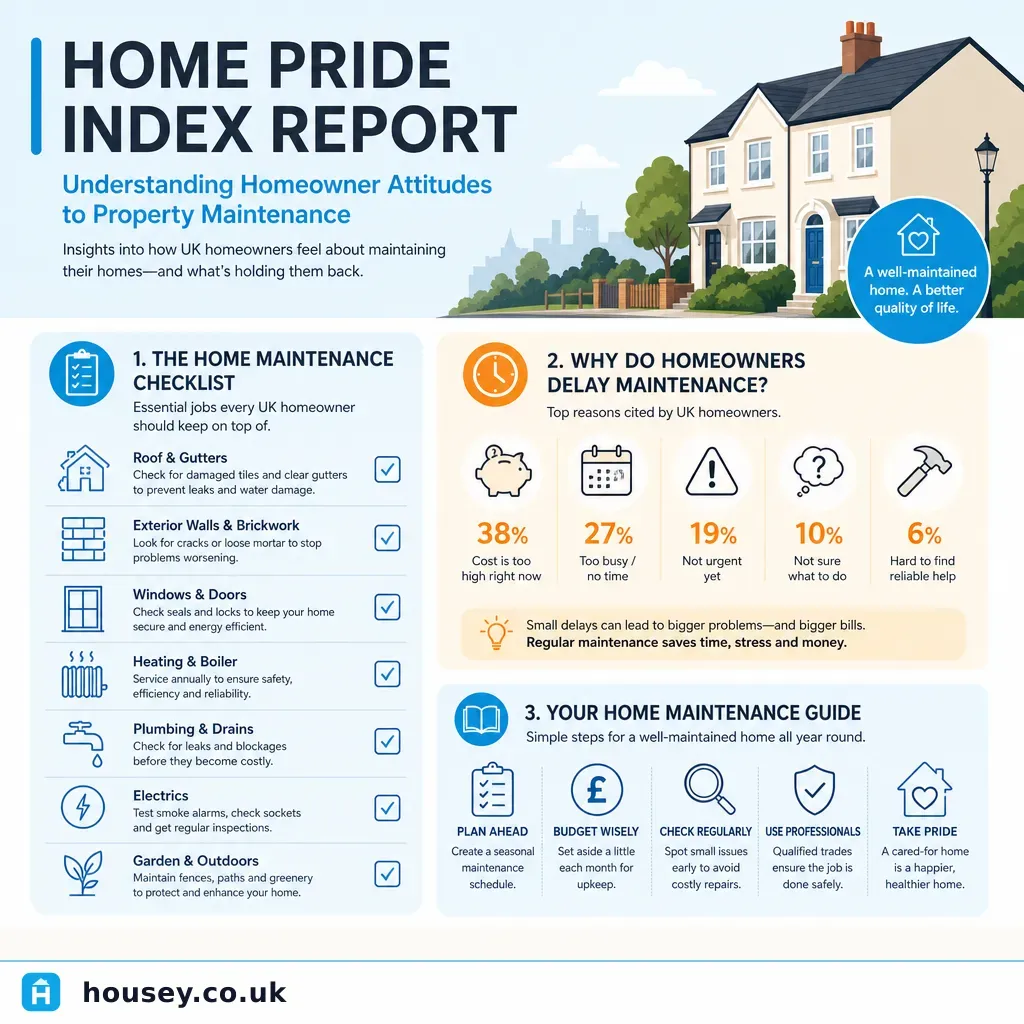
Home Pride Index Report: Understanding Homeowner Attitudes to Property Maintenance
Questions about property upkeep often surface at decision points: when a buyer is weighing up a survey finding, when a landlord faces a compliance deadline, or when a homeowner notices something they have been putting off. Research into how UK homeowners approach — and sometimes avoid — routine maintenance reveals a consistent gap between intention and action, with real consequences for property condition, insurance cover, and resale value.
Key points
- The English Housing Survey (2022–23) found that around 19% of homes in England did not meet the Decent Homes Standard, with disrepair a contributing factor in many cases.
- Deferred maintenance can void buildings insurance — most policies contain a duty of maintenance clause requiring reasonable upkeep as a condition of cover.
- Federation of Master Builders surveys consistently show that small repair jobs (under £1,000) are among the most frequently requested domestic works, suggesting maintenance demand is high but fragmented.
- Homeowners in older properties (pre-1919) face disproportionately higher maintenance costs — Historic England and RICS both note that traditional construction requires regular cyclical upkeep to remain weathertight.
- RICS guidance indicates that homes with clearly maintained exteriors and evidence of recent servicing records tend to achieve more consistent valuations at survey stage.
What research reveals about homeowner maintenance behaviour
Studies of homeowner behaviour consistently identify a cluster of attitudes that shape maintenance decisions.
Pride of ownership vs. cost anxiety. Homeowners generally express strong attachment to their properties, but cost uncertainty is a significant barrier to acting on maintenance concerns. Without clear benchmarks for typical job costs, many delay instructing a tradesperson until a problem escalates.
The invisible maintenance problem. Structural checking, roof inspection, pointing, and drainage clearance are low-visibility tasks — they do not produce the visible transformation that a kitchen or bathroom renovation does. Research from the HomeOwners Alliance suggests that homeowners systematically underinvest in preventive maintenance relative to cosmetic improvement.
Tenure and attitude differences. Owner-occupiers in longer-term residence tend to maintain better than recent movers. Leasehold flat-owners often report confusion about who is responsible for which elements — a distinction the Building Safety Act 2022 has made more significant for taller residential buildings.
Regional variation. ONS household expenditure data shows notable variation in maintenance and repair spend by region, with London households typically spending more in absolute terms but less as a proportion of property value. Rural properties, particularly older stone or timber-frame homes, attract higher cyclical upkeep costs.
Homeowner maintenance attitudes: a comparison
Homeowner profile | Typical maintenance approach | Common blind spots |
|---|---|---|
Recent first-time buyer | Reactive — acts when something breaks | Roof, gutters, pointing, boiler servicing |
Long-term owner-occupier | Variable — habits formed over years | Rewiring intervals, drainage, damp investigation |
Landlord (buy-to-let) | Compliance-led — EICRs, gas safety certificates | Cosmetic decay, structural inspection, fire doors |
Leasehold flat owner | Dependent on managing agent | Understanding service charge scope, sinking fund adequacy |
Listed building owner | Higher awareness of structural fabric | Finding accredited contractors, consent requirements |
What drives maintenance delays?
Several structural factors contribute to deferred upkeep across UK housing.
Cost uncertainty. Without transparent pricing data, homeowners tend to assume the worst and postpone getting quotes. Research from Which? and the Federation of Master Builders consistently identifies cost anxiety as the leading reason for delaying repair work.
Finding reliable tradespeople. The Competent Persons Scheme registers (Gas Safe, FENSA, NAPIT, NICEIC) cover regulated work, but general building maintenance — pointing, roofing, drainage — is unregulated territory. Homeowners often lack confidence in identifying reputable contractors for smaller jobs.
Cognitive load and competing priorities. Home maintenance competes with work, family, and financial pressures. Tasks without an obvious deadline drift on to-do lists indefinitely, particularly when the property shows no outward signs of failure.
Energy retrofit confusion. Since the expansion of PAS 2035 and the Boiler Upgrade Scheme, many homeowners conflate retrofit decisions with routine maintenance, creating decision paralysis when faced with overlapping priorities.
A homeowner maintenance checklist
Use this annually to assess your property's upkeep position.
Exterior and fabric
Mechanical and electrical
Damp and drainage
Documentation
Red flags that suggest deferred maintenance is becoming a risk
- A buyer's surveyor flags a Condition Rating 3 (requiring urgent investigation) on more than one element
- Buildings insurance renewal queries about roof condition, chimney work, or subsidence history
- Mortgage lender's valuation subject to retention pending specified repairs
- Lettable standard notice from a local authority under the Housing Health and Safety Rating System (HHSRS)
- A structural engineer's report citing progressive movement or inadequate maintenance as a contributing cause
When to get professional help
Routine maintenance can often be planned and budgeted independently, but certain situations call for professional assessment:
- Visible cracking — particularly stepped diagonal cracking, horizontal cracks above door lintels, or cracking that recurs after filling — should be assessed by a chartered surveyor or structural engineer
- Any roof that has not been inspected within five years warrants a professional check from an NFRC-registered roofing contractor
- Suspected dampness should be investigated by an independent damp surveyor (not one employed by a remediation company) before remediation is commissioned
- If your property is listed or in a conservation area, even routine maintenance work may require Listed Building Consent; check with your local planning authority before proceeding
How Housey can help
Housey connects UK homeowners with vetted local professionals for surveys, inspections, and improvement work. Whether you need a pre-maintenance assessment to identify priorities or want to compare quotes from qualified tradespeople, the platform helps you find the right professional for your property's specific needs.
Frequently asked questions
How often should a UK homeowner carry out a full property maintenance check?
A comprehensive annual review is generally recommended, covering roof, gutters, pointing, mechanical systems, and documentation currency. More frequent checks — quarterly for exterior elements — are sensible for older properties, those exposed to harsh weather, or where previous defects have been noted by a surveyor.
Does deferred maintenance affect my home insurance?
Potentially, yes. Most UK buildings insurance policies include a duty of maintenance clause. Insurers may reduce or reject a claim if they can show the damage resulted from gradual deterioration that a reasonable owner should have addressed. Check your policy wording and contact your insurer if you are uncertain about specific elements.
What is the Decent Homes Standard?
The Decent Homes Standard is the benchmark used by the English Housing Survey and local authorities to assess housing quality. A property fails if it is in a state of disrepair, lacks modern facilities, has inadequate thermal comfort, or fails to meet the Housing Health and Safety Rating System requirements. It primarily applies to social and rented housing but is a useful reference for owner-occupiers assessing overall condition.
Who regulates building maintenance contractors in the UK?
There is no single licence for general building maintenance in the UK. Regulated trades include gas work (Gas Safe Register), electrical work (NICEIC, NAPIT, or other Part P-approved schemes), glazing (FENSA or CERTASS), and oil heating (OFTEC). For unregulated trades, look for Federation of Master Builders membership or TrustMark registration.
Sources and further reading
- English Housing Survey 2022–23: Headline Report — DLUHC / MHCLG
- Decent Homes Standard: guidance — GOV.UK
- Federation of Master Builders: State of Trade Survey — FMB
- Gas Safe Register: boiler servicing guidance — Gas Safe Register
- Housing Health and Safety Rating System: operating guidance — GOV.UK
Useful next reads
 Improvement & Build
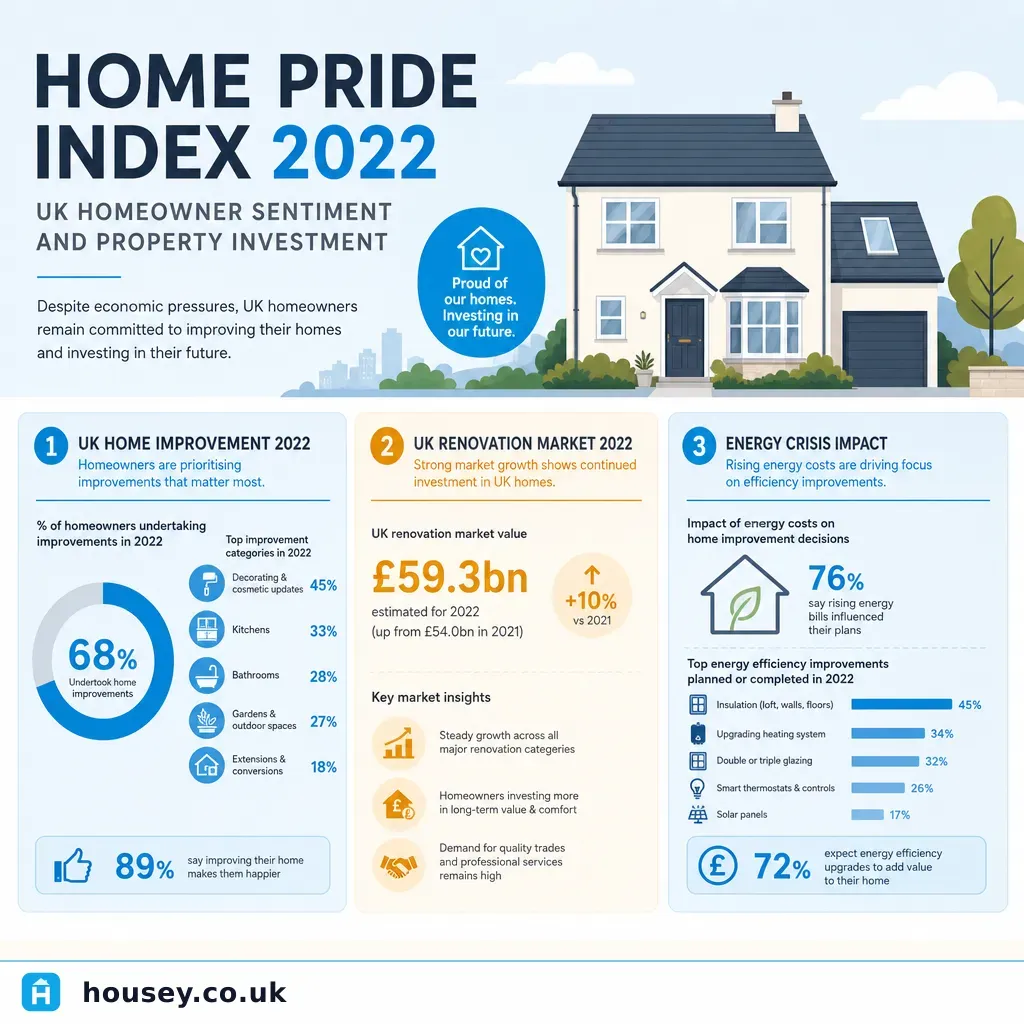
Home Pride Index 2022: UK Homeowner Sentiment and Property Investment
In 2022, UK homeowner sentiment was defined by two competing forces: the post-COVID appetite for home improvement and the sharpest rise in energy prices and interest rates in a generation.
 Improvement & Build
Home Pride Index 2023: UK Homeowner Sentiment and Property Investment
In 2023, UK homeowners faced the dual challenge of the highest interest rates since the 2008 financial crisis and the first annual house price falls in over a decade.
 Improvement & Build
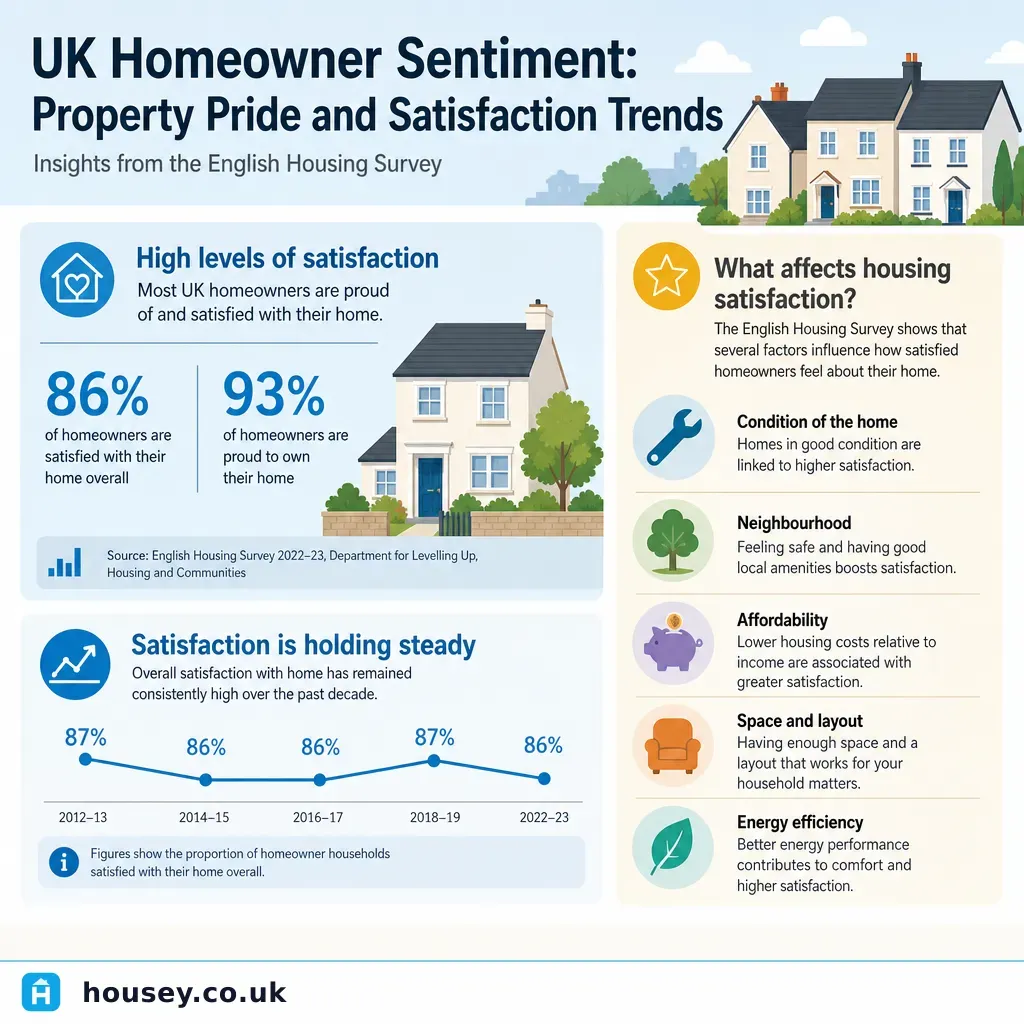
UK Homeowner Sentiment: Property Pride and Satisfaction Trends
UK homeowners generally report higher satisfaction with their housing than renters, according to the English Housing Survey.
 Improvement & Build
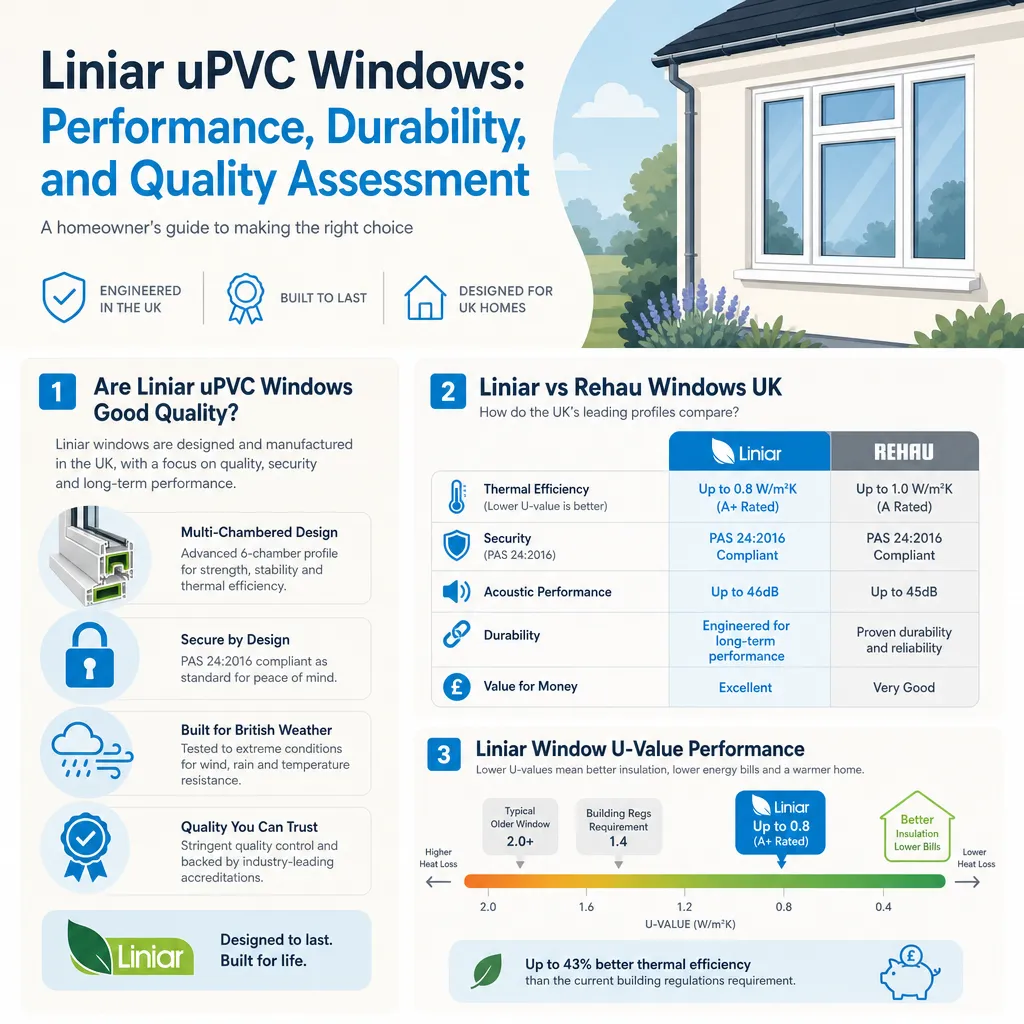
Liniar uPVC Windows: Performance, Durability, and Quality Assessment
Liniar uPVC window profiles are manufactured in the UK using multi-chambered, foamed frames.
 Improvement & Build
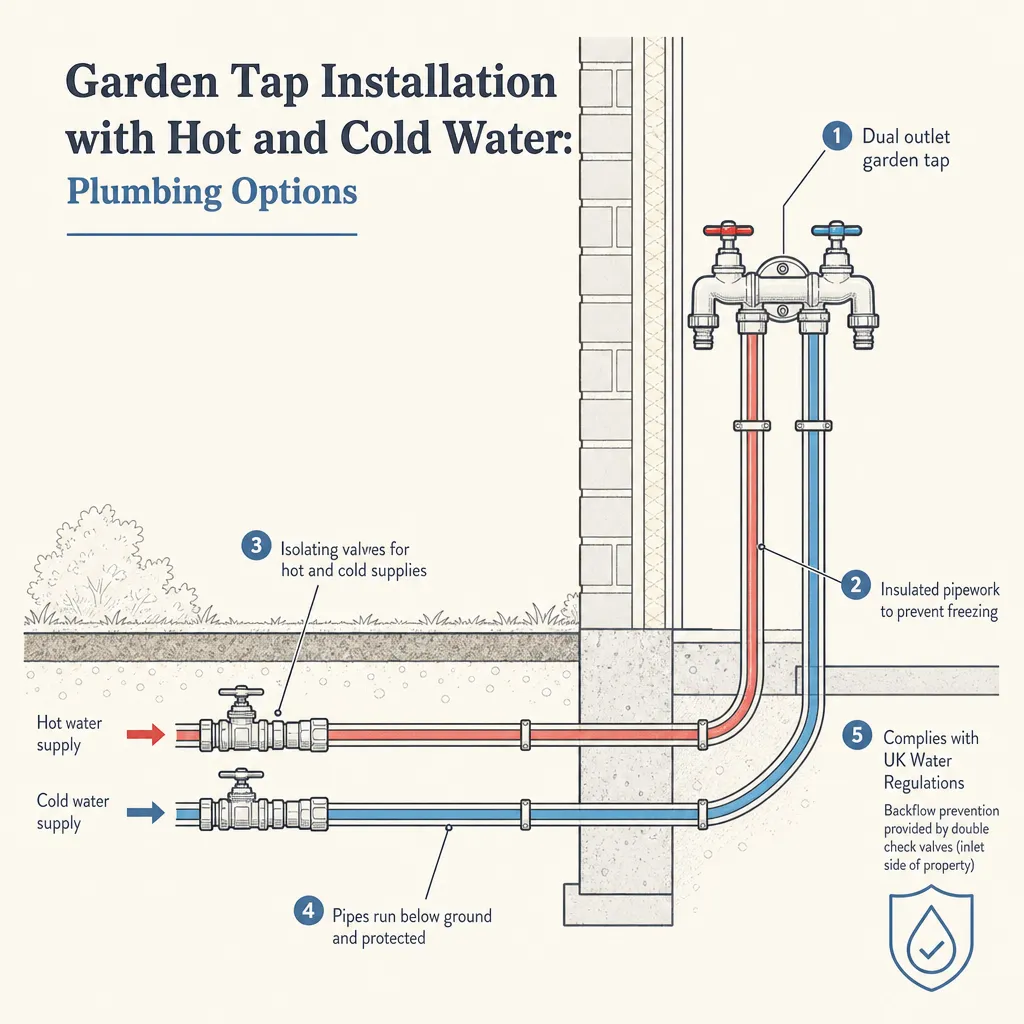
Garden Tap Installation with Hot and Cold Water: Plumbing Options
Adding a cold garden tap is a common DIY project, but routing hot water outdoors requires a plumber to connect to your domestic hot water system and comply with the Water Supply (Water Fittings) Regulations 1999.