UK Homeowner Sentiment: Property Pride and Satisfaction Trends
By Housey · Last reviewed 19th of May 2026
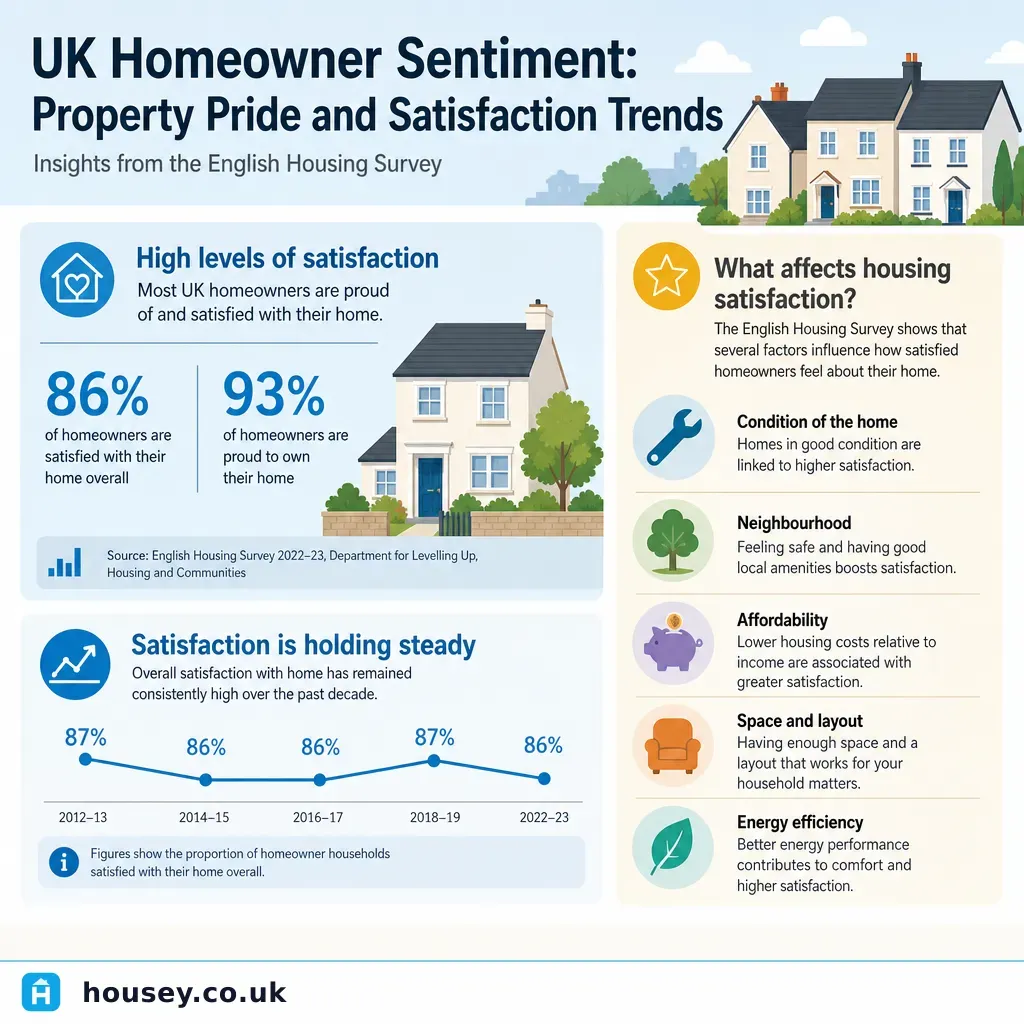
UK Homeowner Sentiment: Property Pride and Satisfaction Trends
Understanding how UK homeowners feel about their properties — beyond the financial investment — has practical implications for maintenance decisions, improvement priorities, and neighbourhood cohesion. The English Housing Survey, published annually by the Ministry of Housing, Communities and Local Government (MHCLG), provides the most comprehensive picture of housing satisfaction in England, while ONS personal well-being data captures how housing affects quality of life more broadly. For homeowners, understanding what the research says can help prioritise the improvements that genuinely matter.
Key points
- The English Housing Survey 2022–23 found that approximately 82% of households in England reported being satisfied with their accommodation, with owner-occupiers consistently recording higher rates than private renters.
- Property condition is the most strongly correlated factor with housing dissatisfaction: households in homes failing the Decent Homes Standard report lower satisfaction across all tenure types.
- Energy costs have become a more prominent satisfaction driver since 2021, with rising fuel bills increasing the salience of EPC ratings and heating system quality.
- Outdoor space increased in importance during and after the COVID-19 pandemic, with households that have access to private garden space reporting notably stronger housing satisfaction.
- The cost of home improvement is the most commonly cited barrier to maintenance and upgrades among owner-occupiers, according to English Housing Survey data — not disengagement or indifference.
What the English Housing Survey tells us
The English Housing Survey (EHS), published annually by MHCLG, is the most authoritative source of data on housing conditions and attitudes in England. Its 2022–23 wave indicates:
- Approximately 82% of all households in England described themselves as satisfied with their accommodation.
- Owner-occupiers reported higher satisfaction than private renters, with social renters falling between the two groups.
- Dissatisfaction correlates strongly with housing condition: households in properties failing the Decent Homes Standard — which assesses thermal comfort, state of repair, modern facilities, and freedom from category 1 hazards under the Housing Health and Safety Rating System (HHSRS) — reported markedly higher dissatisfaction.
- Outdoor space emerged as a particularly valued attribute in the pandemic-era surveys, with those gaining or improving garden access reporting stronger housing satisfaction.
All figures are from the English Housing Survey 2022–23 headline report, published by MHCLG.
What 'property pride' means in practice
Housing satisfaction measures whether residents are content with their current home. Property pride is a related but distinct concept: it refers to the degree to which a homeowner actively takes ownership of their property's condition, appearance, and contribution to the wider street or neighbourhood.
Research on housing maintenance behaviour consistently finds that homeowners who engage regularly with upkeep, make aesthetic improvements, and invest in energy efficiency tend to report stronger feelings of control over their home's trajectory and greater attachment to their neighbourhood. This 'stewardship' orientation — treating the home as something to be cared for over the long term — tends to correlate with lower incidence of deferred defects and higher satisfaction over time.
Property pride is not simply about spending: maintenance culture, knowledge of the property's history, and a sense of continuity all contribute.
Key drivers of homeowner satisfaction
Driver | Impact on satisfaction | Evidence base |
|---|---|---|
Property condition (Decent Homes Standard) | High — strongest correlation with dissatisfaction | English Housing Survey (MHCLG) |
Outdoor space | Significant; weight increased post-2020 | English Housing Survey 2020–21 and 2022–23 |
Neighbourhood quality | Strong; higher weight in urban areas | EHS; ONS personal well-being data |
Energy costs and EPC performance | Increasing; heightened since 2021 | Energy Saving Trust; Ofgem data |
Space relative to household size | Moderate; overcrowding linked to dissatisfaction | EHS |
Value for money | Regional variation; strongest concern in London and the South East | EHS regional breakdowns |
A worked example: satisfaction across three property types
Household A — 1930s semi in the East Midlands, owned outright, recently re-insulated with a new boiler
This household is likely to report high satisfaction: the property is in a decent condition, energy running costs are manageable, and the home is appropriately sized. Regular maintenance investment supports both comfort and a sense of control over the property's future.
Household B — Victorian terraced flat in South London, leasehold, ongoing service charge disputes, dated electrics
Satisfaction is likely more mixed: the location may score well on neighbourhood quality and accessibility, but service charge uncertainty, maintenance deferred by the freeholder, and energy inefficiency create sustained friction. Leasehold complexity is a well-documented source of frustration in English Housing Survey data.
Household C — 1980s detached in the North West, recently purchased, damp problem identified post-move
Post-purchase discovery of defects consistently ranks among the most acute sources of homeowner dissatisfaction. A RICS Level 3 survey prior to exchange might have identified the issue. Satisfaction tends to recover once the defect is properly investigated and remediated — the pathway to resolution matters as much as the outcome.
What not to assume
'Larger homes mean higher satisfaction.' Not reliably. Overcrowded properties score poorly, but beyond adequate space, size is a weak predictor. Property condition and energy running costs matter more.
'New-build owners are the most satisfied.' New-build buyers often report high initial satisfaction, but snagging issues in the first one to two years can erode this significantly. The New Homes Quality Board (NHQB) and NHBC Buildmark warranty scheme address some of these concerns.
'Satisfaction is mainly about location.' Location affects neighbourhood quality scores, but property-level factors — particularly condition and energy performance — are at least as important for day-to-day satisfaction and maintenance motivation.
'Homeowners who defer maintenance are disengaged.' The English Housing Survey identifies cost as the most commonly cited barrier to home improvement for owner-occupiers. Many households want to maintain or improve their homes but face financial or logistical obstacles.
When to get professional help
If declining satisfaction with your home is linked to a specific physical issue — persistent damp, heating system failure, structural concerns, or a post-purchase defect discovery — addressing the root cause is more effective than cosmetic improvement. A RICS-registered surveyor can carry out a targeted defect investigation; an energy assessor accredited under PAS 2035 can identify the most impactful retrofit measures for your specific property type.
How Housey can help
Housey connects UK homeowners with qualified professionals across surveying, energy efficiency, and home improvement. Whether you need a defect investigated, an energy assessment arranged, or a larger renovation planned, the platform makes it straightforward to find and compare verified tradespeople in your area.
Frequently asked questions
What percentage of UK homeowners are satisfied with their homes?
Based on the English Housing Survey 2022–23, approximately 82% of all households in England described themselves as satisfied with their accommodation. Owner-occupiers consistently report higher satisfaction rates than private renters. The survey is published annually by the Ministry of Housing, Communities and Local Government and is the most authoritative UK source on housing satisfaction and conditions.
What factors most affect homeowner satisfaction in the UK?
Property condition is the strongest driver, followed by neighbourhood quality, outdoor space, and energy running costs. Households in homes failing the Decent Homes Standard report notably lower satisfaction regardless of location or tenure. Since 2021, energy costs have become more prominent, with EPC ratings and heating performance increasingly influencing how people feel about their homes.
Why do some homeowners defer property maintenance?
The English Housing Survey identifies cost as the primary barrier for owner-occupiers. Beyond affordability, lack of information about qualified tradespeople, concerns about disruption, and uncertainty about where to start all contribute. Building a simple seasonal checklist and establishing relationships with reliable local professionals are practical first steps for households managing deferred maintenance.
Does property condition affect house prices?
Property condition is strongly associated with both sale price and saleability. Homes with valid maintenance certificates, no significant outstanding defects, and evidence of regular upkeep tend to proceed through conveyancing more smoothly. Deferred maintenance that emerges during a buyer's survey often leads to price renegotiation or can stall a transaction entirely.
Sources and further reading
- English Housing Survey 2022–23 headline report — Ministry of Housing, Communities and Local Government
- Personal well-being in the UK — Office for National Statistics
- New Homes Quality Board — New Homes Quality Board
- NHBC — Buildmark warranty and insurance — NHBC
- Energy Saving Trust — home energy guidance — Energy Saving Trust
Useful next reads
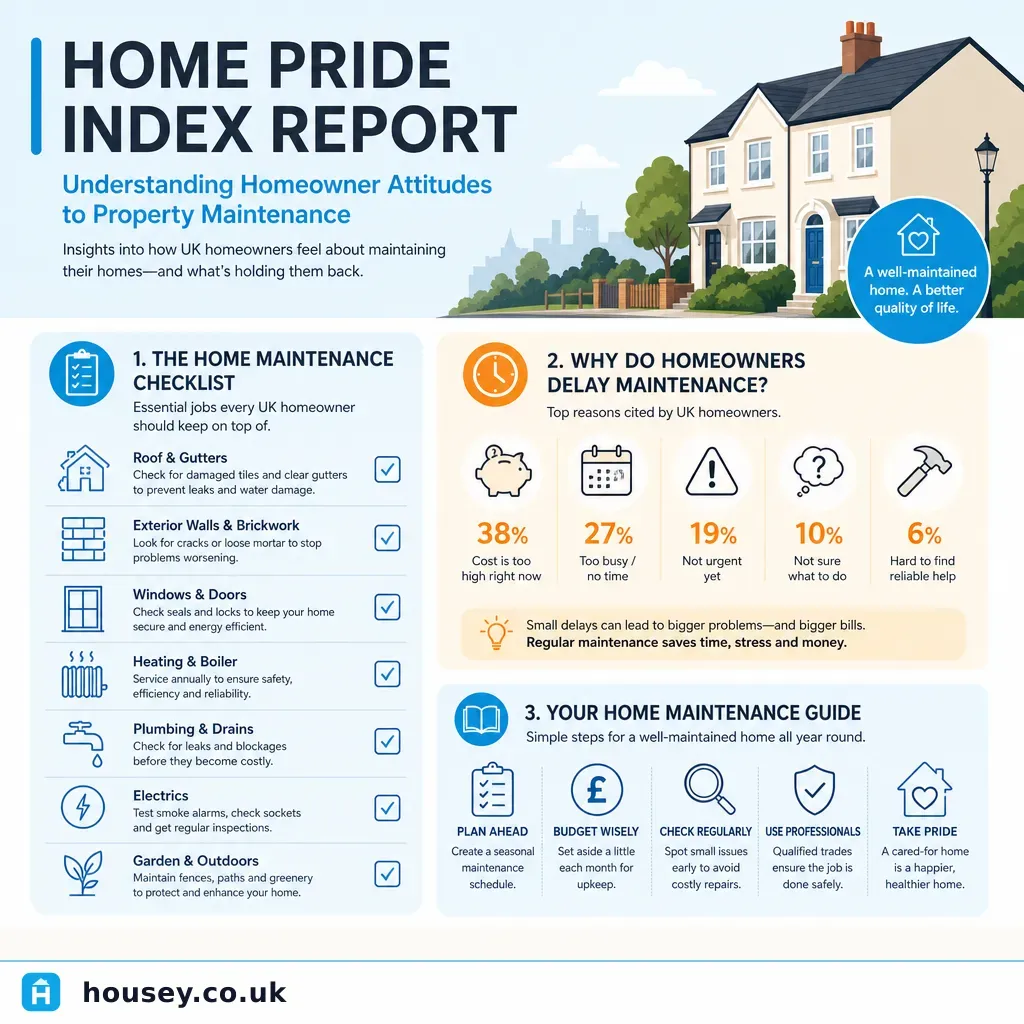 Improvement & Build
Home Pride Index Report: Understanding Homeowner Attitudes to Property Maintenance
UK homeowners tend to prioritise visible improvements over preventive maintenance, leading to a systematic gap in roof, gutter, and structural upkeep.
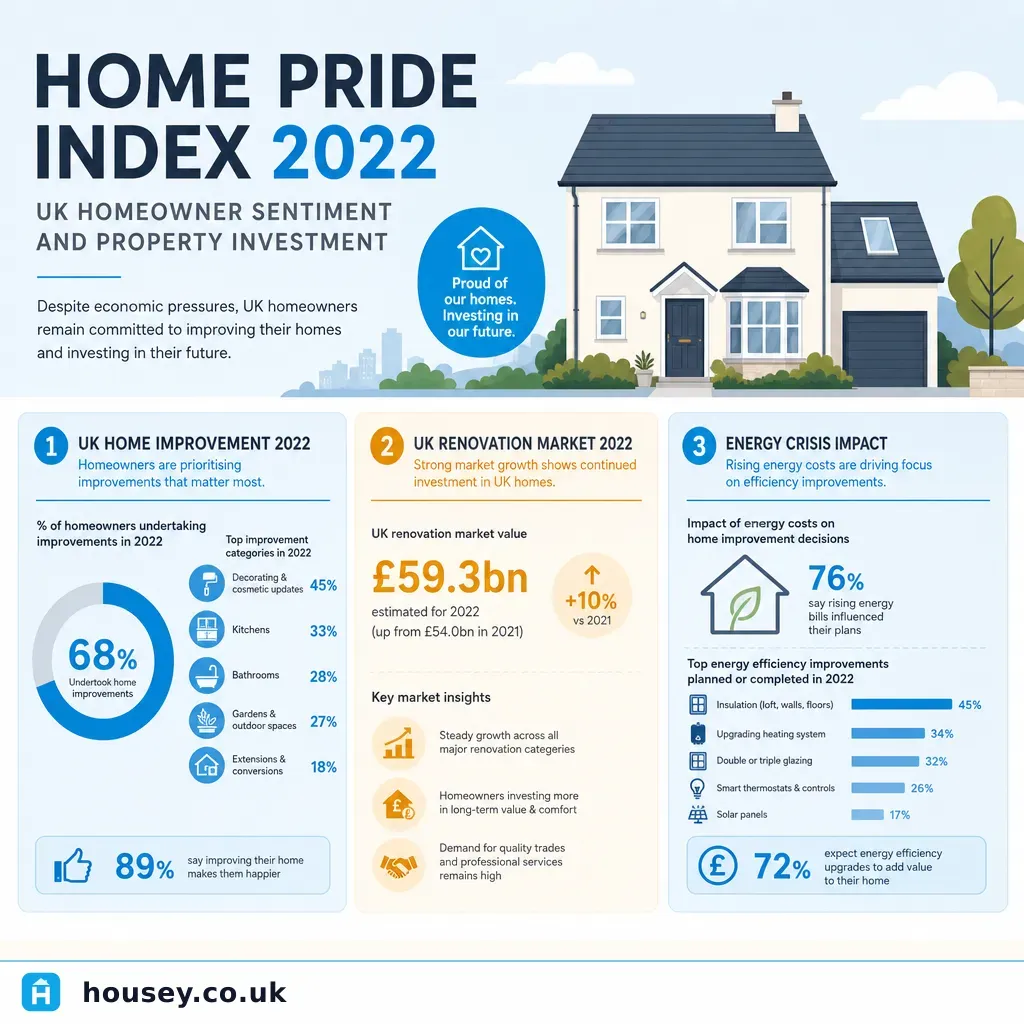 Improvement & Build
Home Pride Index 2022: UK Homeowner Sentiment and Property Investment
In 2022, UK homeowner sentiment was defined by two competing forces: the post-COVID appetite for home improvement and the sharpest rise in energy prices and interest rates in a generation.
 Improvement & Build
Home Pride Index 2023: UK Homeowner Sentiment and Property Investment
In 2023, UK homeowners faced the dual challenge of the highest interest rates since the 2008 financial crisis and the first annual house price falls in over a decade.
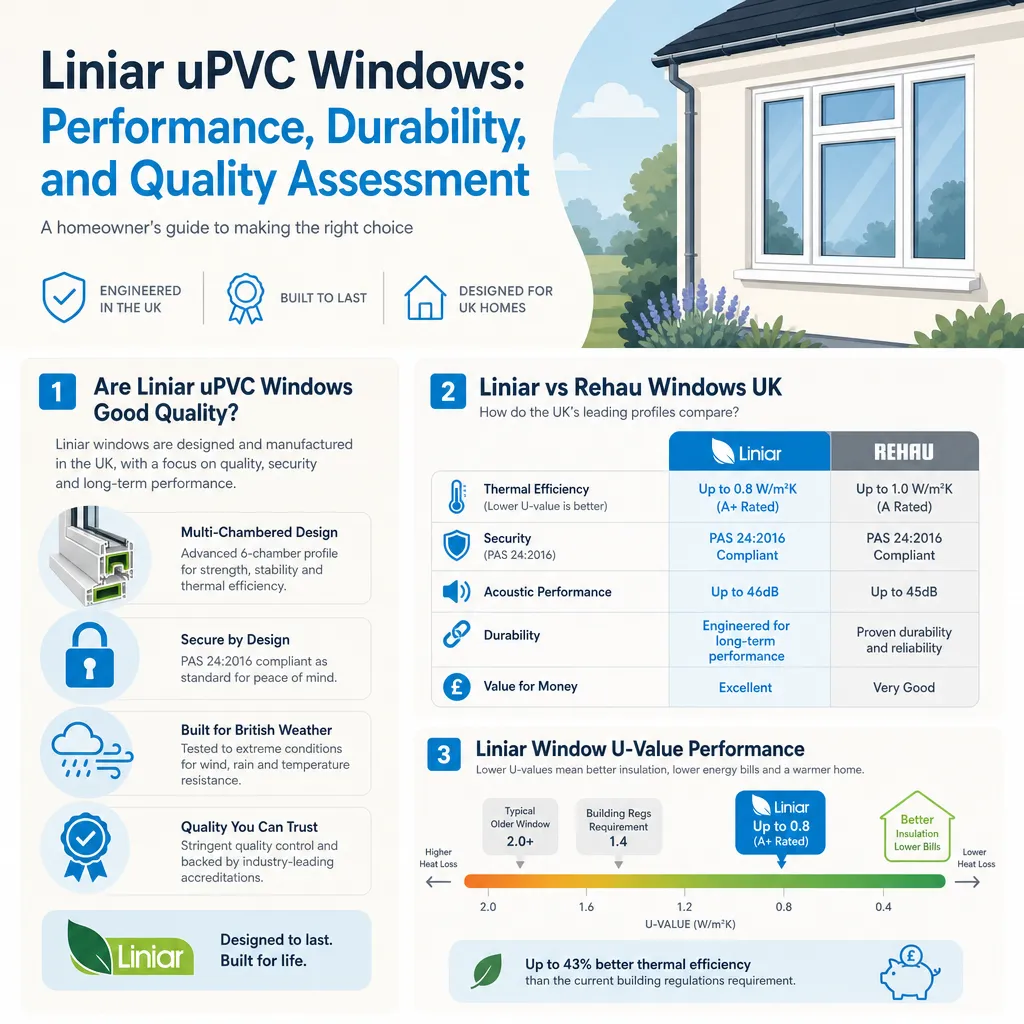 Improvement & Build
Liniar uPVC Windows: Performance, Durability, and Quality Assessment
Liniar uPVC window profiles are manufactured in the UK using multi-chambered, foamed frames.
 Improvement & Build
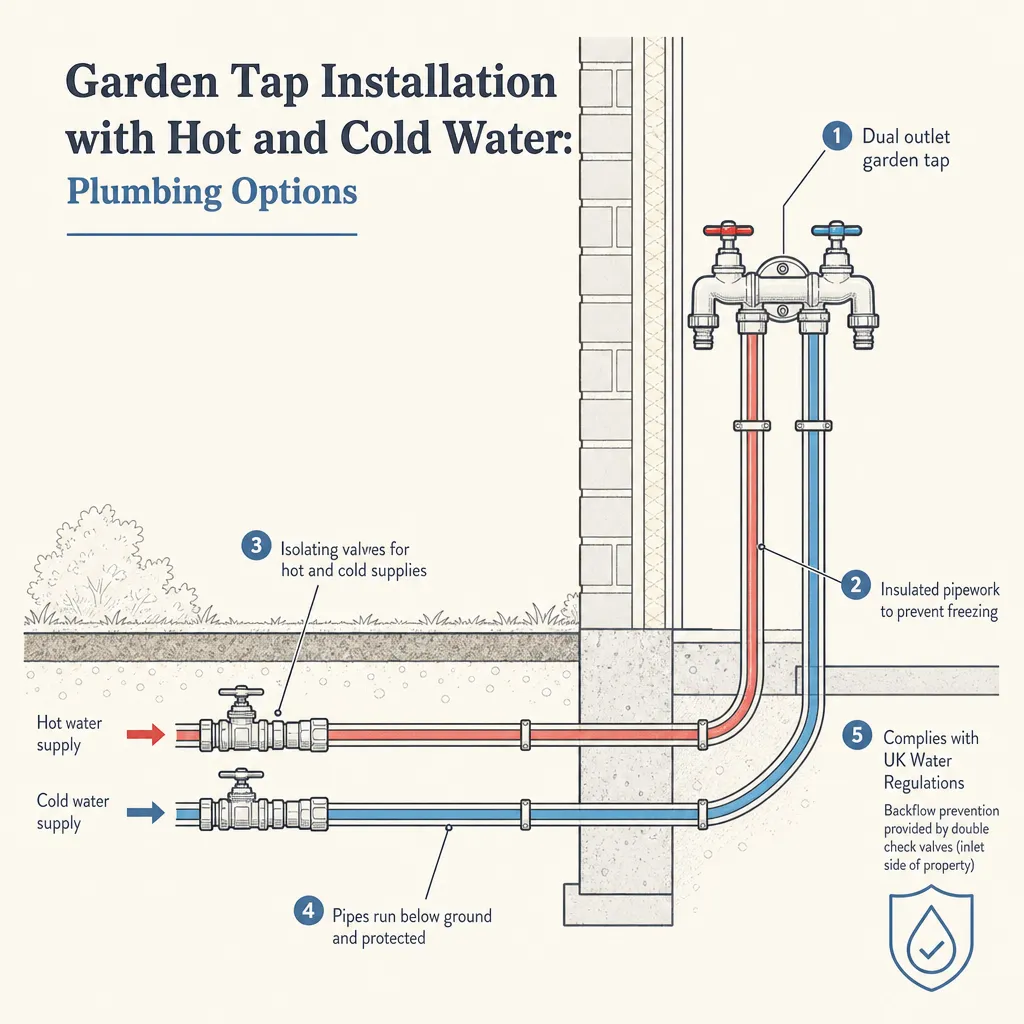
Garden Tap Installation with Hot and Cold Water: Plumbing Options
Adding a cold garden tap is a common DIY project, but routing hot water outdoors requires a plumber to connect to your domestic hot water system and comply with the Water Supply (Water Fittings) Regulations 1999.