Home Renovation Priorities: Where to Spend for the Best Return in the UK
By Housey · Last reviewed 7th of May 2026

Home Renovation Priorities: Where to Spend for the Best Return in the UK
Deciding which home improvements to tackle first — and how much to allocate to each — shapes the financial outcome of owning UK property. Whether you are preparing to sell, improving a recently purchased home, or building long-term equity, spending on the wrong priorities can leave you overcapitalised relative to your street's ceiling price, or with a polished surface concealing unresolved structural problems. The right sequence depends on your property's condition, local market, and tenure.
Key points
- Structural, damp, and roof defects should always be resolved before cosmetic renovation — unresolved Category 3 defects on a RICS Level 2 or Level 3 survey can trigger buyer renegotiation and prevent mortgage approval.
- EPC ratings affect rental legality (minimum EPC E for new private tenancies in England and Wales under the Energy Efficiency (Private Rented Property) Regulations 2015), mortgage eligibility, and buyer perception.
- Kitchen and bathroom renovations consistently attract positive feedback from UK estate agents and RICS valuers, but spend must be proportionate to the property's price bracket to avoid overcapitalisation.
- A well-executed loft conversion may add 10–20% to property value where bedroom count is a limiting factor, but returns are highly postcode-dependent (Indicative UK costs, last reviewed 2026-05-07).
- Overcapitalisation — spending beyond the ceiling price achievable for your street — is one of the most common and costly renovation mistakes UK homeowners make.
Why the best return depends on your situation
There is no universal ROI ranking for UK home improvements. Three variables determine the outcome:
- Your property's current condition — structural, damp, or roof issues will undermine any cosmetic spend.
- Your local market ceiling — the maximum achievable sale price for your postcode regardless of finish quality.
- Your timeframe — sale preparation in 12 months calls for different priorities than a 10-year liveability improvement.
Worked UK property scenario
Property: 1930s three-bedroom semi-detached in the East Midlands. Purchased for £210,000. Comparable properties sell for £230,000–£250,000 in good condition. Current EPC: D. Condition: solid-wall construction, original windows, dated kitchen, one bathroom.
Renovation priority | Reason | Expected outcome |
|---|---|---|
| Structural defect suppresses value and deters buyers | Defect removal, not value addition |
| Move from EPC D to C; aids buyer mortgage eligibility | Green mortgage eligibility; rental compliance readiness |
| Highest-scrutinised room; proportionate spend avoids overcapitalisation | Supports £240,000+ pricing; broad buyer appeal |
| Dated bathrooms suppress offers | Supports pricing at the upper end of comparables |
| Energy performance and EPC contribution | Contributes to EPC improvement; required documentation for sale |
| First impressions affect offers; high impact per pound | Supports confident asking price |
This homeowner should not prioritise a loft conversion or extension — the cost would likely push total investment above the street ceiling, resulting in a net loss.
Structural and maintenance issues come first
UK estate agents and RICS-registered surveyors are consistent on this point: any structural, damp, or roof problem must be resolved before cosmetic renovation begins.
- A RICS Level 2 or Level 3 survey will flag active damp, roof failure, or structural movement. Buyers receiving a report with Category 3 defects will often renegotiate — frequently by more than the remediation cost.
- Lenders may decline to mortgage a property with significant structural defects, shrinking your buyer pool.
- Cosmetic improvements applied over unresolved damp or movement will deteriorate faster and may conceal defects, creating potential legal risk on sale.
If you have not had a recent professional survey, commissioning one before budgeting for renovation can prevent significant misspending.
Energy efficiency: an increasingly material priority
EPC ratings have shifted from a bureaucratic requirement to a commercially significant factor in UK property transactions.
- Rental compliance: Private rented properties in England and Wales must achieve minimum EPC E for new tenancies under the 2015 Regulations. Proposed tightening to C has been consulted upon but is not confirmed in law as of May 2026 — check GOV.UK for the current position.
- Green mortgages: Several UK lenders offer preferential rates for EPC A or B properties. Buyers aware of this may favour better-rated homes.
- Grant funding: The ECO4 scheme and the Great British Insulation Scheme provide funding for insulation and heating improvements in eligible households — check GOV.UK before paying privately.
Energy improvement | Typical EPC impact | Key requirement |
|---|---|---|
Loft insulation top-up to 270mm | Moderate to high | Low cost; accessible lofts may be DIY if no asbestos risk |
Cavity wall insulation | Moderate | Suitability assessment required first; not all construction types qualify |
Solid wall insulation (internal or external) | High | PAS 2030/2035 installer required for grant-funded work |
Double glazing (replacing single) | Moderate | FENSA certificate or building control notification required |
Air source heat pump | High when replacing gas | MCS-certified installer; Boiler Upgrade Scheme grant may apply |
Solar PV | Variable | MCS-certified installer; Smart Export Guarantee for exported electricity |
Kitchen and bathroom: proportionate spend
UK estate agents and valuers frequently cite kitchens and bathrooms as the rooms most likely to justify pre-sale renovation spend — but the budget level must match the price bracket. A £6,000–£15,000 mid-range kitchen update in a £250,000 property is likely to support the asking price and reduce time on market. A £40,000 high-specification kitchen in the same property is unlikely to be recoverable — buyers at that price point expect premium quality throughout the home.
The same principle applies to bathrooms. A clean, modern, functional bathroom outperforms a luxury spa bathroom in most mid-market UK properties, where overcapitalising on one room creates a visible imbalance.
Extensions and loft conversions: when the numbers work
Adding floor space can exceed the cosmetic ceiling, but only where the local market supports it:
- Loft conversions may fall within permitted development rights, subject to volume limits and location — check your local planning authority, particularly in conservation areas and London boroughs.
- Single-storey rear extensions under 4m (detached) or 3m (other dwellings) may qualify under the Prior Approval process for the Larger Home Extension, subject to neighbour consultation.
- Indicative loft conversion costs range from approximately £25,000 to £65,000+ depending on type and location (last reviewed 2026-05-07; obtain at least three local quotes). In high-demand urban postcodes, adding a bedroom can return well above cost; in lower-value areas, it may not cover the build cost.
- Building regulations approval is a legal requirement for structural alterations, electrical work, and changes to means of escape — it is not optional.
What not to assume
- Do not assume a new kitchen adds a fixed sum to value — the return depends on the existing condition, local market, and quality of execution.
- Do not assume permitted development applies — Article 4 directions, conservation area designation, previous extensions, and listed building status can all remove permitted development rights.
- Do not assume a higher EPC always justifies the cost — model the outlay against likely benefit for your specific property before commissioning expensive solid wall insulation.
- Do not assume your builder manages planning and building control — clarify responsibilities in writing before any work starts.
- Do not assume estate agent valuations reflect post-renovation value — ask for a specific explanation of how planned improvements will affect their assessment.
Homeowner renovation checklist
Before committing to a renovation budget:
When to get professional help
Consult a professional before committing significant budget if you are uncertain about your property's structural condition, planning to extend or loft-convert, considering major retrofit on an EPC E or below property, or you want an independent view of what specific improvements will add in value. A RICS-registered valuer or experienced local estate agent can provide realistic guidance on renovation ROI before you commit to costs.
How Housey can help
Housey connects UK homeowners with qualified local professionals for improvement and build projects — from architects and planning consultants through to builders, roofers, and energy assessors. Whether you are prioritising structural repairs, an energy retrofit, or an extension, you can use Housey to request and compare quotes from vetted providers in your area.
Frequently asked questions
Which home improvements add the most value in the UK?
Loft conversions, proportionate kitchen and bathroom updates, and energy efficiency improvements — particularly moving from EPC D to C — are most consistently cited by UK estate agents and RICS valuers. Value added depends heavily on local market ceilings, property type, and quality of execution. Structural and damp remediation, while unglamorous, protects and enables all other improvements.
Does a new kitchen add value to a house in the UK?
A well-executed kitchen renovation can support the asking price, reduce time on market, and improve buyer confidence — but it is rarely a direct pound-for-pound value addition. A mid-range update proportionate to the property's price bracket typically performs better than a high-specification kitchen that overcapitalises the property.
Should I fix structural issues before renovating?
Yes. Structural, damp, and roof issues should always be resolved before cosmetic renovation. A RICS survey identifying Category 3 defects is likely to trigger buyer renegotiation and may prevent mortgage approval. Lenders can decline to mortgage properties with significant active defects, reducing your buyer pool and undermining the return on any cosmetic spend.
How much does a loft conversion add to property value in the UK?
This varies significantly by location, property type, and local demand. Well-executed loft conversions may add 10–20% to property value where bedroom count is a limiting factor (Indicative figure, last reviewed 2026-05-07). Always obtain a local valuation before committing to build costs, as the return is highly postcode-dependent.
Does improving my EPC rating help when selling?
EPC ratings are visible to buyers on Rightmove and Zoopla. A higher rating can improve buyer mortgage eligibility through green mortgage products, reduce perceived running costs, and differentiate a property in competitive markets. Moving from D to C is often the most cost-effective EPC improvement relative to its impact on buyer appeal and future rental compliance.
Sources and further reading
- Building Regulations Approved Documents — GOV.UK
- Energy Performance Certificates for your home — GOV.UK
- The Energy Efficiency (Private Rented Property) (England and Wales) Regulations 2015 — legislation.gov.uk
- Great British Insulation Scheme — GOV.UK
- Boiler Upgrade Scheme — GOV.UK
- Permitted Development Rights for Householders — Planning Portal
Useful next reads
 Improvement & Build
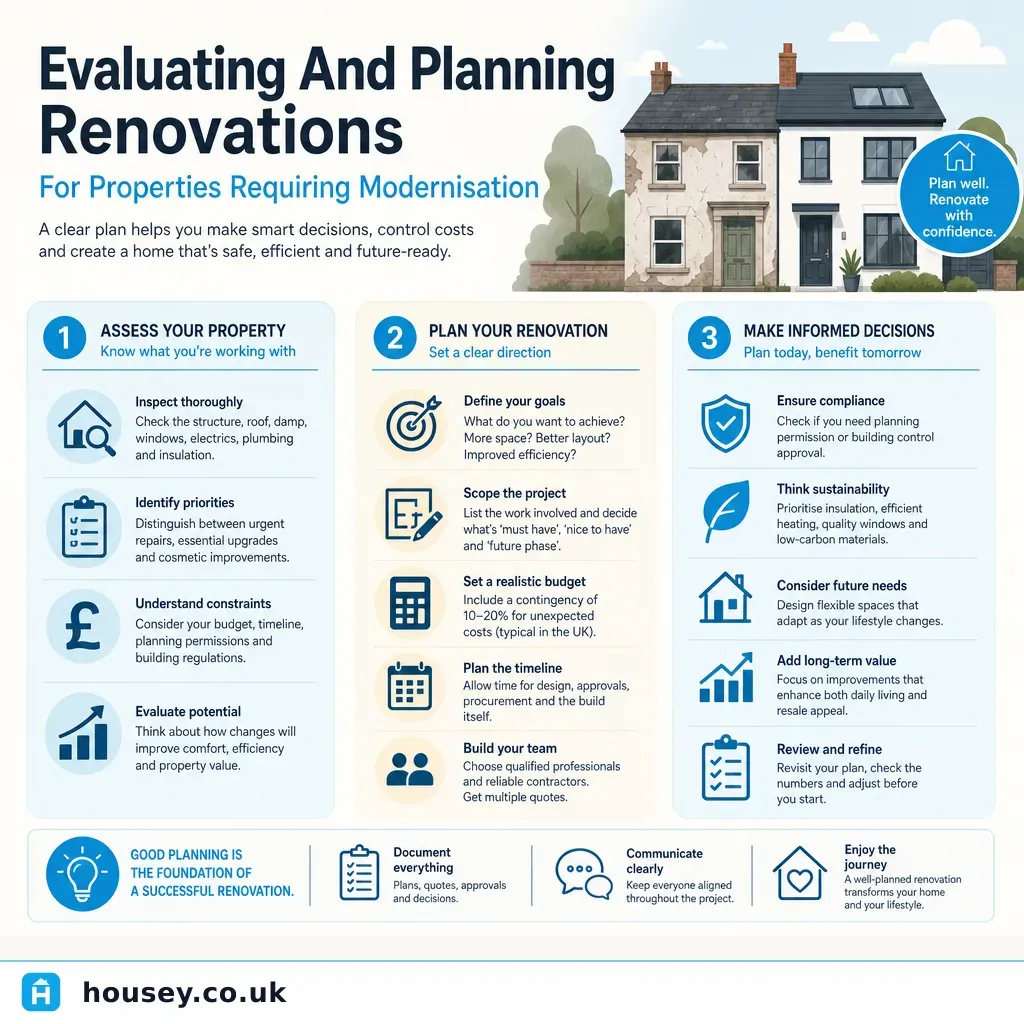
Evaluating And Planning Renovations For Properties Requiring Modernisation
Start by commissioning a condition survey — RICS Level 3 for pre-1919 properties — to identify structural defects, damp, and services issues before finalising a budget.
 Improvement & Build
Home Improvement Projects That Add Value to Your Property
Loft conversions, rear extensions, and kitchen refurbishments typically offer the strongest return on investment for UK homeowners.
 Improvement & Build
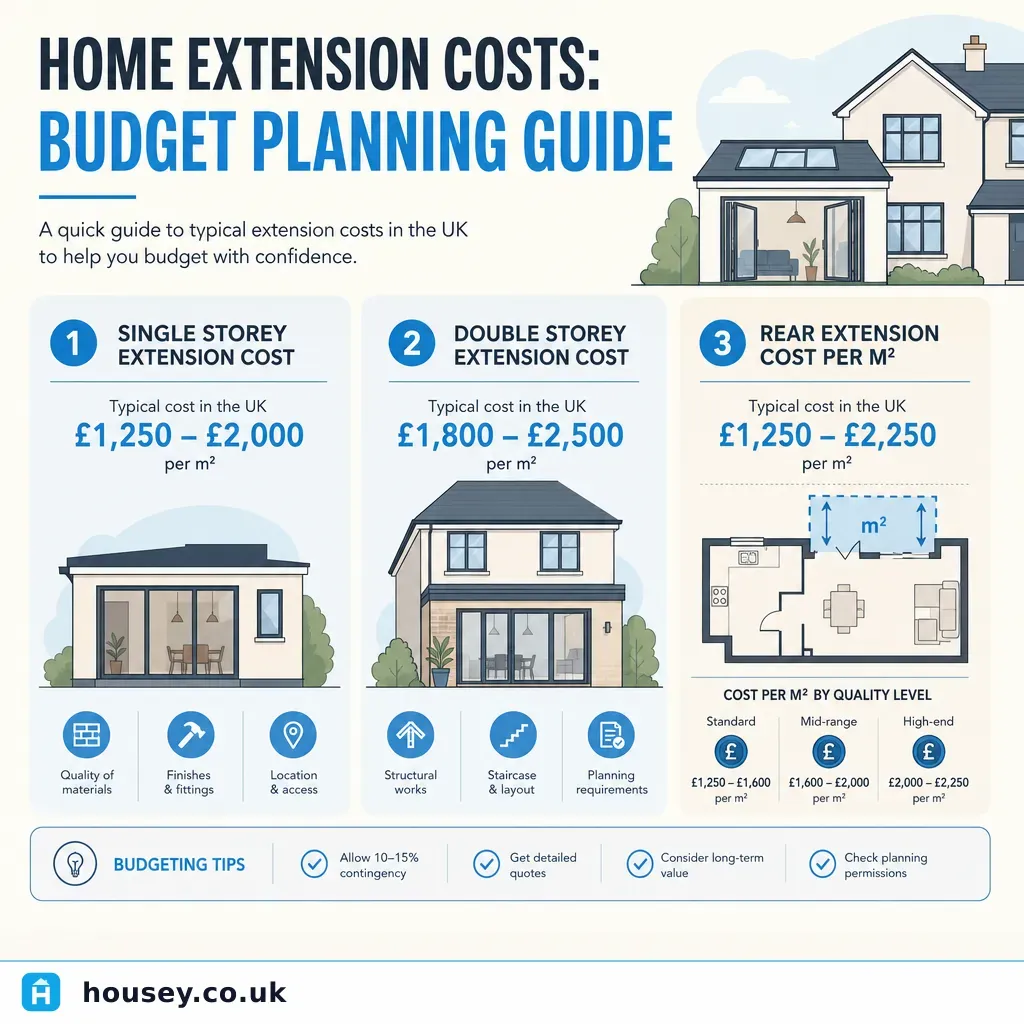
Home Extension Costs: Budget Planning Guide
A single-storey rear extension in the UK typically costs £1,500–£2,500 per square metre to build.
 Improvement & Build
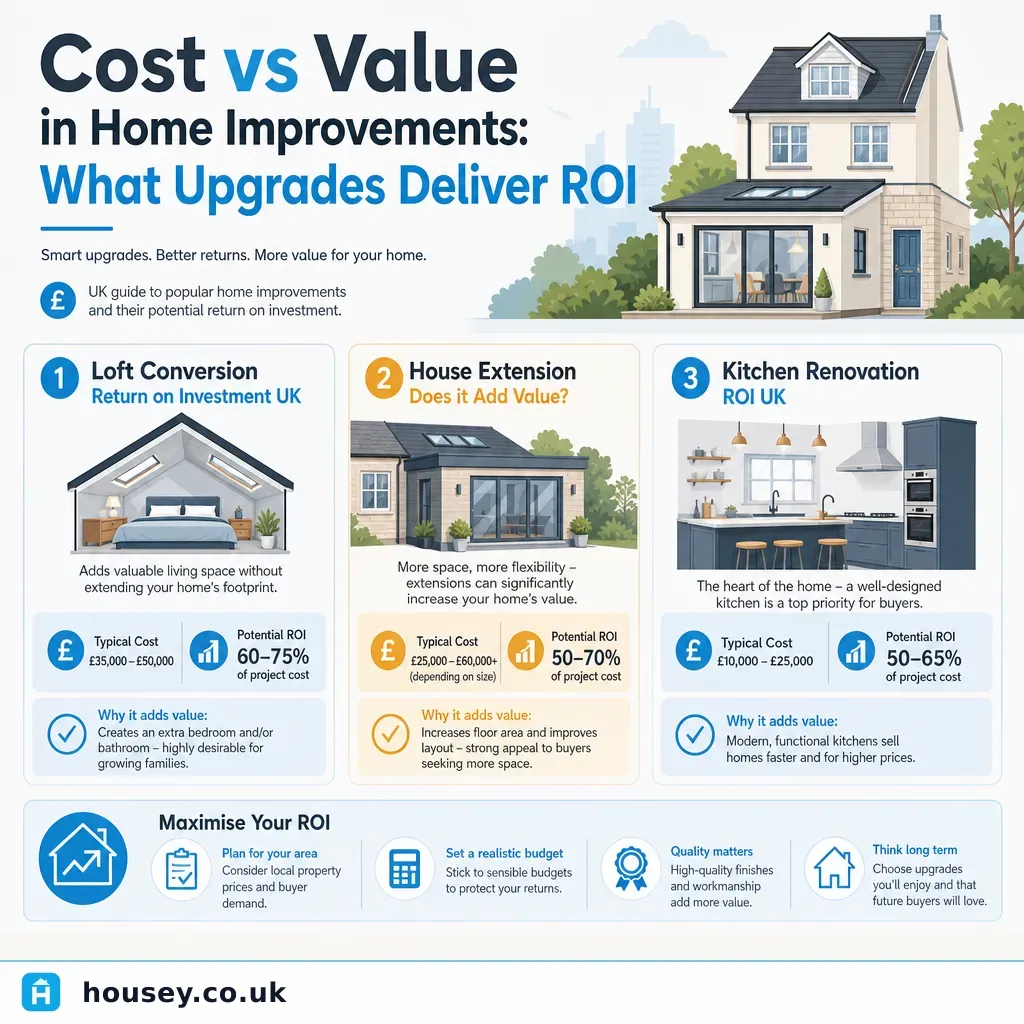
Cost vs Value in Home Improvements: What Upgrades Deliver ROI
Not all home improvements deliver the same return when you sell.
 Improvement & Build
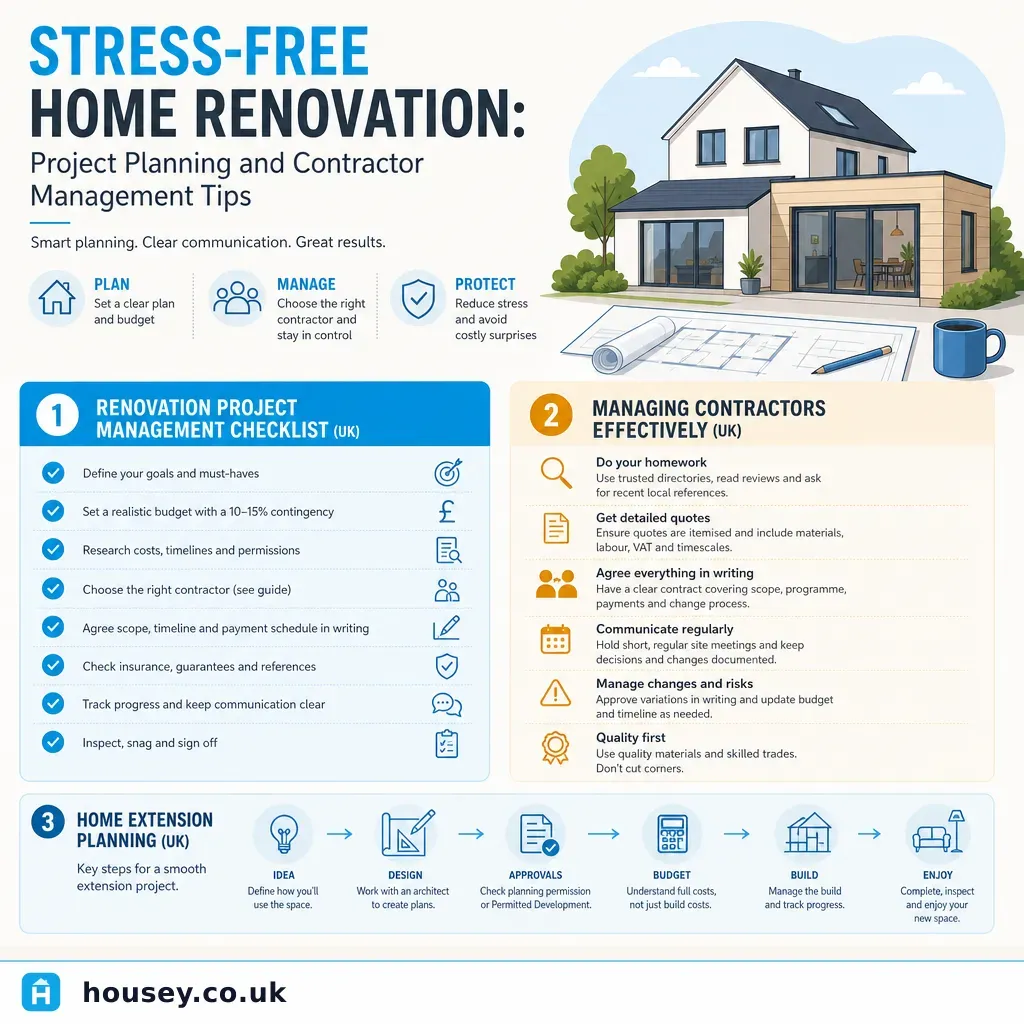
Stress-Free Home Renovation: Project Planning and Contractor Management Tips
The home renovations that stay on budget and on time share one characteristic: clear upfront planning.