Home Salon Studio Conversion and Build Costs
By Housey · Last reviewed 6th of May 2026
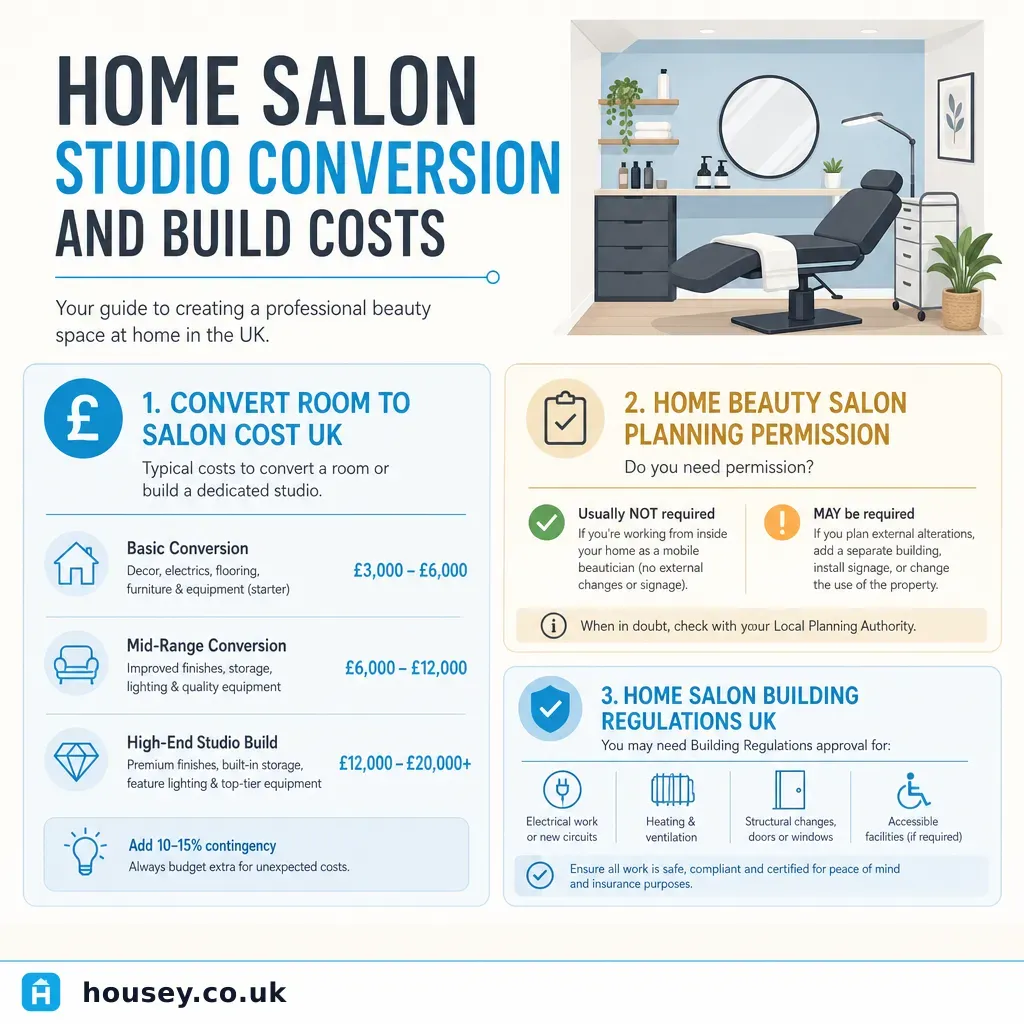
Home Salon Studio Conversion and Build Costs
Whether you are a self-employed hairdresser, beauty therapist, or nail technician, converting part of your home into a professional workspace is a significant undertaking. The right approach — adapting a spare room, converting a garage, adding an extension, or building a garden studio — depends on your budget, client volumes, local planning rules, and the treatments you intend to offer.
Key points
- Planning permission is not always required for a home salon operated as an ancillary business, but regular client visits and dedicated commercial use can trigger a change of use application requirement under the Town and Country Planning Act 1990.
- Building Regulations apply to any new extension, structural conversion, or alteration affecting thermal performance, ventilation, drainage, or structural elements — including garden rooms used as heated commercial workspaces.
- Home-business insurance is legally distinct from standard home contents cover; operating a salon from home without public liability and treatment insurance can invalidate your existing home insurance policy entirely.
- Ventilation for chemical treatments such as colouring, perms, and acrylics may require mechanical extraction meeting HSE guidance, which affects both the build cost and the structural specification from the outset.
- Indicative build or conversion costs range from around £5,000 for a basic room fit-out to £35,000 or more for a new garden studio or extension, depending on scope, specification, and location.
What counts as a home salon?
A home salon is a dedicated workspace — typically a single room or small studio — within or adjacent to a domestic property, used for professional beauty, hair, nail, or related treatments on paying clients. For planning and building regulations purposes, the form of the space matters:
- A room within the main dwelling used occasionally for treatments is often treated as ancillary to the residential use, provided it does not materially alter the character of the property or generate unusual levels of client traffic.
- A dedicated outbuilding, garage conversion, or extension used regularly by clients is more likely to require a change of use or planning application, particularly if it has a separate client entrance.
- A new garden room or studio built specifically as a salon may fall within permitted development thresholds for its size, but will need building regulations compliance if it is heated, plumbed, or used for regular commercial activity.
How much does a home salon conversion cost?
The table below compares the four most common approaches.
Option | Indicative cost (UK) | Planning usually needed? | Building Regs needed? | Best for |
|---|---|---|---|---|
Fit out an existing room | £5,000–£12,000 | Rarely, if use is ancillary | Possibly, if structural or drainage changes are made | Established home; low client volumes |
Convert a garage to a salon | £8,000–£18,000 | Check with LPA — permitted development may apply | Yes — Parts L, A, F, and drainage | Separate client access; existing footprint |
Single-storey extension | £15,000–£35,000+ | Usually, if PD limits are exceeded or change of use applies | Yes — full compliance required | Larger space; flexibility on layout and plumbing |
New garden room or studio | £12,000–£30,000+ | Check size and use against PD thresholds | Yes, if heated and used as a workspace | Client privacy; separation from main home |
Indicative UK costs, last reviewed 2026-05-06. Costs vary significantly by region, specification, and contractor. Request a minimum of three itemised quotes.
What drives the cost?
- Salon fit-out specification: Professional mirrors, lighting rigs, styling chairs, backwash units, and reception furniture add substantially to the base build cost — often £3,000–£8,000 on top of construction.
- Plumbing: A hair salon needs at least one wash basin with hot and cold water and drainage. Adding plumbing to an outbuilding or garden studio involves new supply pipes and a drainage run, typically adding £1,500–£4,000 to the build.
- Ventilation: Chemical treatments require mechanical extraction. HSE guidance on hairdressing salons recommends local exhaust ventilation (LEV) for certain processes. This must be designed into the build, not retrofitted.
- Electrical installation: A dedicated sub-panel or consumer unit, multiple sockets, specialist lighting circuits, and equipment outlets all add to the electrical specification and cost.
- Separate client access: Creating a private entrance for clients — separate from the main front door — may require a new structural opening, door, and accessible path.
- Thermal performance: A detached garden studio used as a heated workspace must meet at least the minimum U-value requirements for walls, roof, and floor under Approved Document L.
Planning permission and change of use
When planning permission is not required
Using a room in your home as a salon, where the residential character of the property is not fundamentally changed, can often proceed without a planning application. The main tests your local planning authority (LPA) will apply are:
- Is the business use ancillary to the main residential use — is the property still primarily a home?
- Is there a material increase in traffic, noise, or parking demand beyond what a normal residence generates?
- Are there external alterations such as signage, a new separate entrance, or a new outbuilding?
If none of these apply, permitted development rules generally allow the business activity to continue without an application.
When a change of use application may be needed
Contact your LPA before starting if any of the following apply:
- The salon is the primary use of a distinct part of the building, not merely a room that also serves a domestic function.
- You employ staff who travel to and from the property regularly.
- The business generates regular, visible client traffic that changes the character of the street.
- The property is a listed building or in a conservation area.
- You intend to display external signage or advertising.
A pre-application enquiry to your LPA is usually straightforward and gives you certainty before committing to a build.
Permitted development limits for extensions and garden rooms
Garden rooms not exceeding 15 m² floor area are generally exempt from building regulations if used only occasionally and not for sleeping. A salon used for regular commercial activity will not meet the 'occasional use' threshold. Standard permitted development limits for rear extensions vary by property type — typically 4 m deep for detached houses or 3 m for semi-detached and terraced houses without prior approval. Flats and listed buildings cannot use permitted development rights.
Building regulations for a home salon
Building Regulations approval is required for:
- All structural work, including new lintels, openings in load-bearing walls, and foundations for extensions.
- Extensions and new outbuildings used as heated, habitable, or commercial workspaces.
- New drainage and plumbing connections (Approved Document H).
- New or significantly altered electrical installations (Approved Document P).
- Changes to thermal performance and insulation (Approved Document L).
- Ventilation provision in rooms where clients are present (Approved Document F).
- Any work affecting fire safety in occupied spaces (Approved Document B).
Your contractor should submit either a building notice or a full plans application to your LABC or an Approved Inspector before work starts. For a new extension or garden studio with salon use, full plans are usually preferable, as they provide a documented approval that is useful when you come to sell or remortgage.
Additional regulatory and legal considerations
Insurance
Standard home insurance does not cover business activities or client visits to your property. Before opening, obtain:
- Public liability insurance — covers clients or visitors injured on your premises.
- Treatment liability insurance — covers claims arising from the treatments you provide.
Notify your home insurer of the business use; non-disclosure can invalidate your policy entirely.
Environmental Health
For salons using chemical products, check with your local council's Environmental Health team regarding disposal of chemical waste, drainage of contaminated wastewater, and ventilation adequacy for the treatments offered. Early contact avoids costly retrospective alterations.
Mortgage and lease conditions
If your property is mortgaged, your lender's terms may require notification of business use — check your mortgage conditions before proceeding. If you are a leaseholder, your lease may prohibit commercial activities; consult your freeholder or a solicitor before starting any works.
Business rates
If part of your property is used wholly for business purposes, the Valuation Office Agency (VOA) may assess that portion for business rates in addition to council tax. Spaces that retain a domestic function alongside business use are less likely to attract a rates liability, but check with the VOA if you are uncertain.
What to ask a builder before accepting a quote
- Does the quote include all building regulations submission fees and LABC or Approved Inspector costs?
- Who will prepare any structural calculations required for new lintels or load-bearing wall openings?
- Is plumbing — including all new drainage connections — included in the price?
- Will the electrical work be certified by a NICEIC or NAPIT registered electrician under Part P?
- What insulation specification and U-values will the walls, floor, and roof achieve under Part L?
- Is mechanical ventilation specified, and does it meet Part F and any relevant HSE guidance for the treatments offered?
- Does the quote include making good externally, including any new client entrance path or door?
- Is VAT included, and will a VAT receipt be provided?
When to get professional help
Consult your LPA's duty planner or a planning consultant if there is any doubt about change of use, permitted development limits, or conservation area rules before committing to a build. Engage a structural engineer for any conversion involving removal of or alterations to a load-bearing wall, or if you are building on ground of unknown bearing capacity. Use a registered electrician (NICEIC or NAPIT) for all new electrical installation work to achieve Part P certification. Consider commissioning an architect or architectural technologist for a full plans building regulations submission if the project involves an extension or structural conversion — typically £1,000–£3,000, but it substantially reduces the risk of costly compliance errors later.
How Housey can help
Housey can connect you with experienced extension builders and design-and-build firms who have delivered home business conversions across the UK. Request quotes, compare detailed proposals, and find a contractor who understands both the build specification and the regulatory framework for a home salon.
Frequently asked questions
Do I need planning permission to run a hair salon from home?
Not necessarily. If the business use is ancillary to the residential use and does not materially alter the property or neighbourhood character, planning permission is usually not required. If the salon becomes a primary use, generates regular client traffic, or involves structural changes, a change of use application may be needed. Check with your local planning authority before starting.
How much does it cost to add a wash basin to a home salon?
Indicatively, plumbing a single salon wash basin with hot and cold water and drainage into an existing room costs £500–£1,500, depending on proximity to the existing plumbing stack. An outbuilding or garden studio will cost more, as new supply and drainage runs must be created. Always use a qualified plumber; gas-heated water supplies require a Gas Safe registered engineer.
Will running a salon from home affect my council tax?
It can. If a portion of your property is used wholly for business, the Valuation Office Agency (VOA) may assess that part for business rates rather than council tax. Using a room that retains a domestic function is less likely to trigger a business rates liability, but check with the VOA to be certain about your specific situation.
How do I make sure a garden room meets building regulations for salon use?
A heated, permanently used garden room with commercial activity must meet Part L (thermal performance), Part F (ventilation), Part P (electrics), and Part B (fire safety) at minimum. Submit a building notice or full plans to your local authority building control before work begins, and ensure your contractor's specification addresses all relevant requirements before agreeing a price.
What insurance do I need to run a beauty salon from home?
At minimum, you need public liability insurance covering clients on your premises and treatment liability insurance for the services you provide. Notify your home insurer of the business use, as standard home insurance does not cover commercial activities or client visits. Some specialist insurers offer combined home salon policies that bundle both into one product.
Sources and further reading
- Working from home: planning guidance — Planning Portal
- Change of use of buildings and land — GOV.UK
- Ventilation guidance for hairdressers — Health and Safety Executive
- Building Regulations Approved Document F (Ventilation) — GOV.UK
- Introduction to business rates — GOV.UK / Valuation Office Agency
- Find a NICEIC registered electrician — NICEIC
Useful next reads
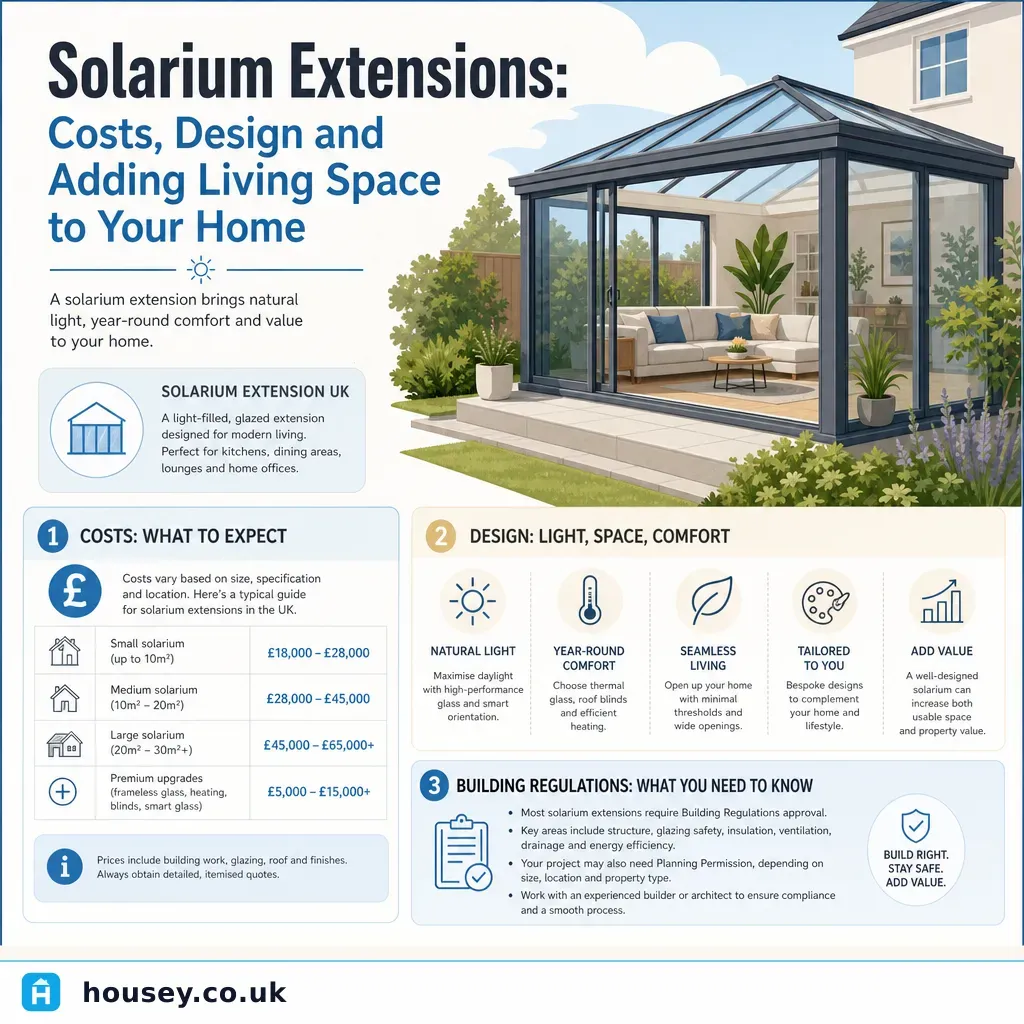 Improvement & Build
Solarium extensions: costs, design and adding living space to your home
A solarium extension is a predominantly glazed room addition with a structural glass roof, typically costing £28,000–£130,000 in the UK depending on size and specification.
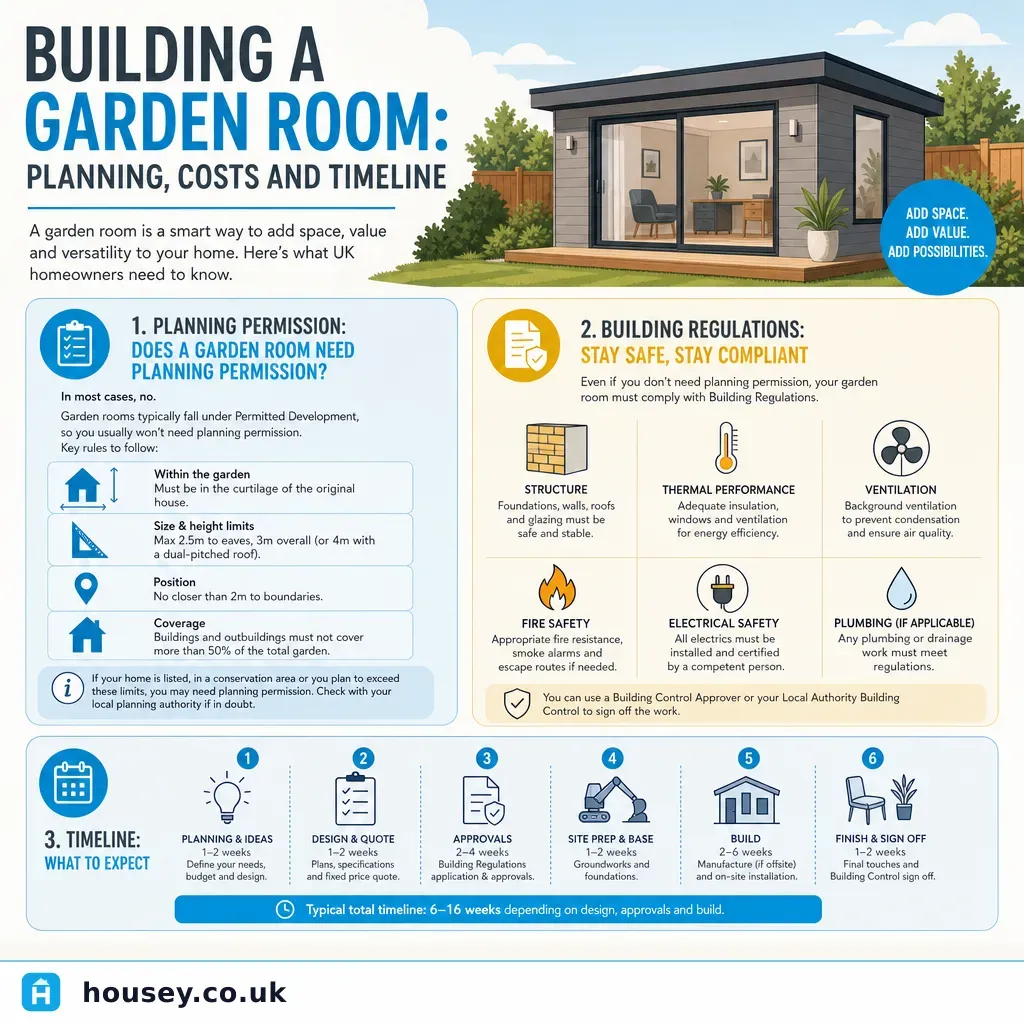 Improvement & Build
Building a Garden Room: Planning, Costs and Timeline
Most garden rooms in England fall under permitted development and don't need planning permission, provided the structure meets height, coverage, and boundary conditions.
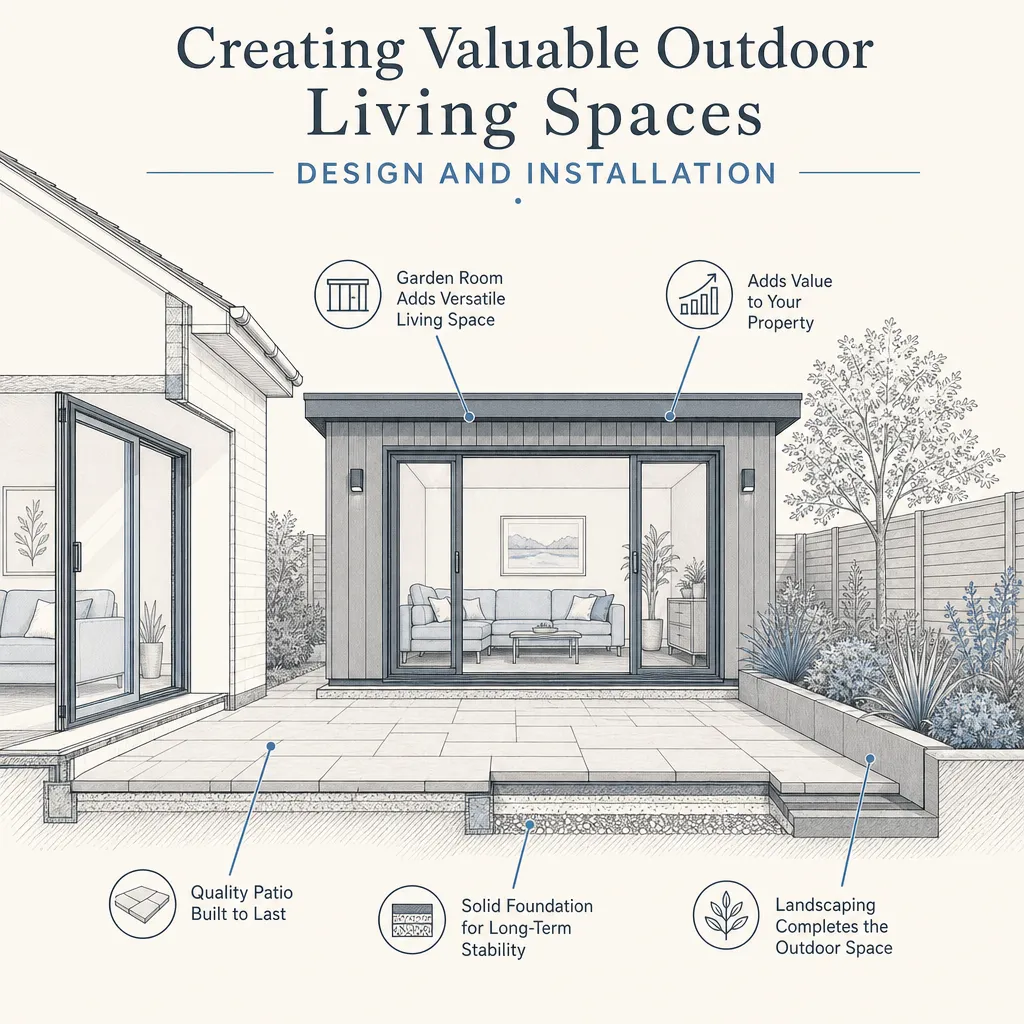 Improvement & Build
Creating Valuable Outdoor Living Spaces: Design and Installation
Creating an outdoor living space — patio, deck, garden room, or landscaped area — can add usable space and kerb appeal to a UK home.
 Improvement & Build
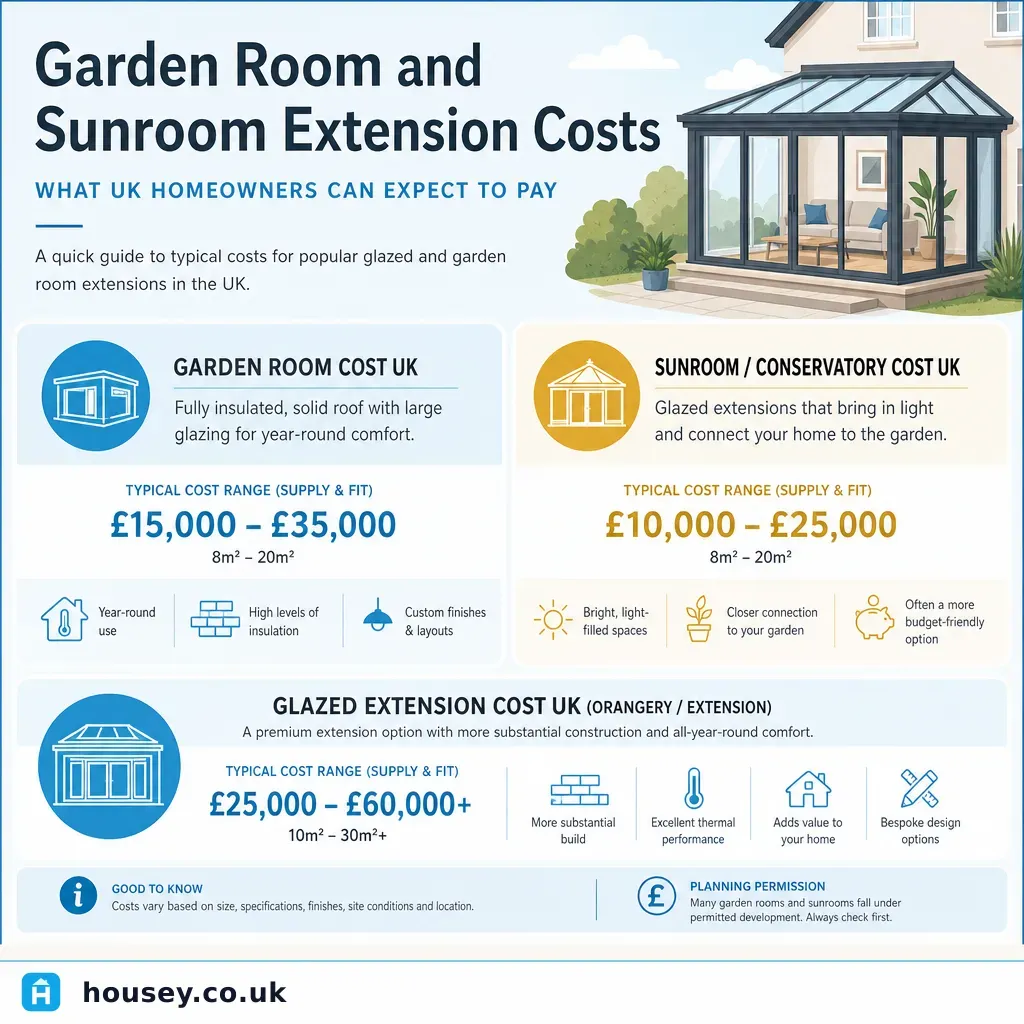
Garden Room and Sunroom Extension Costs
Garden rooms and sunroom extensions cost roughly £10,000–£80,000 installed in the UK depending on type, size, and glazing specification.
 Improvement & Build
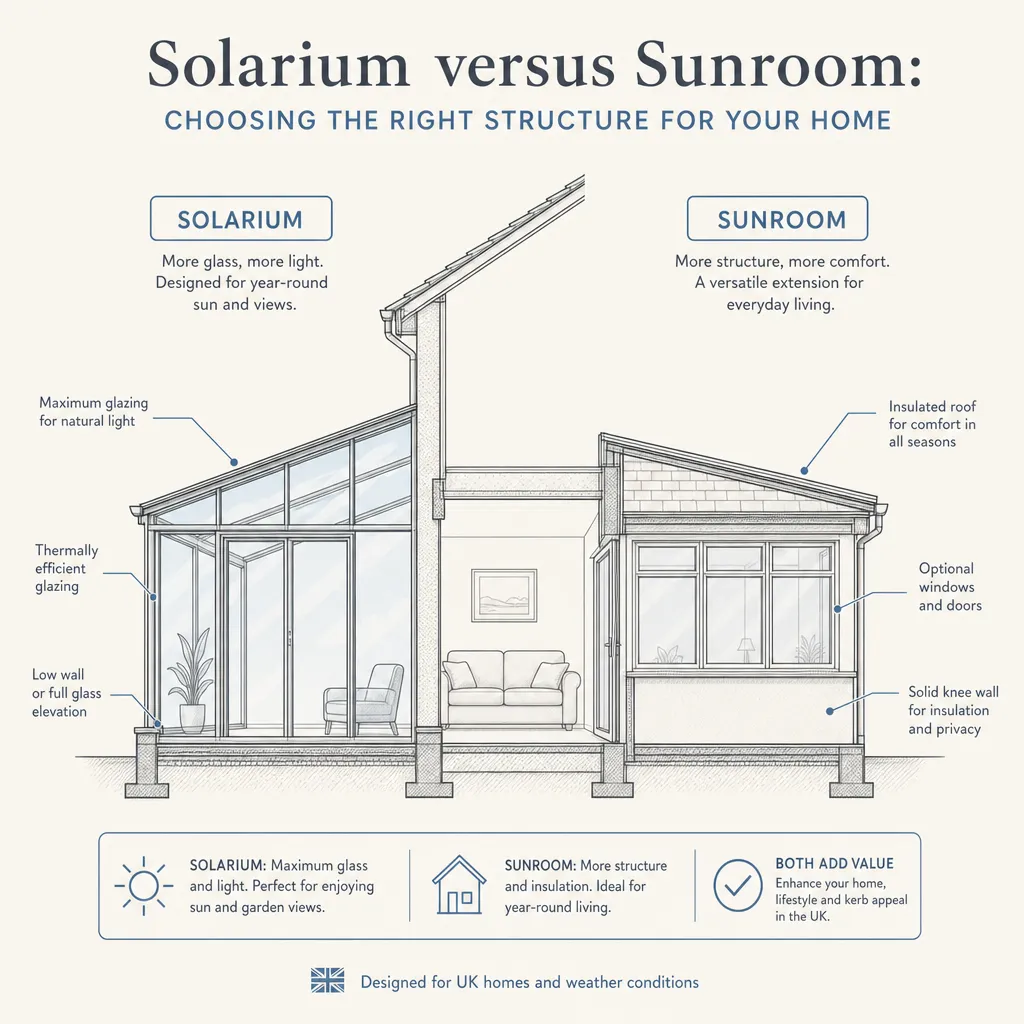
Solarium versus sunroom: choosing the right structure for your home
A solarium is a predominantly glazed structure designed for light and solar connection, best suited to seasonal use.