Home Security Systems and Protective Measures for UK Residential Properties
By Housey · Last reviewed 30th of May 2026
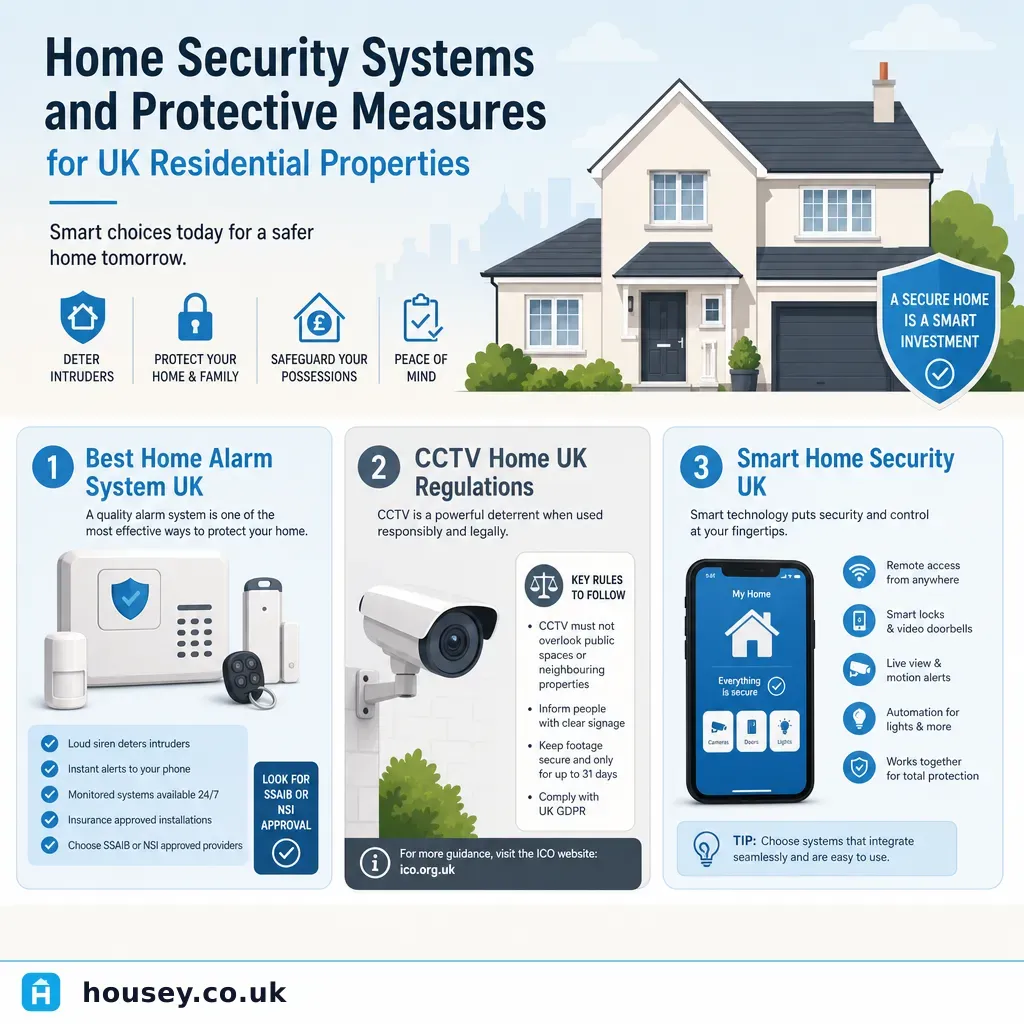
Home Security Systems and Protective Measures for UK Residential Properties
Home security decisions typically arise at key property moments: moving into a new home, following a burglary in the area, renewing home insurance, or upgrading an older property before letting it. The UK has a well-established landscape of standards, accreditation bodies, and product grades — but the volume of available products makes it easy to spend money on measures that deliver limited real-world protection. A structured approach, starting with the specific vulnerabilities of your property type, is more effective than choosing on brand recognition alone.
Key points
- Police-recognised Secured by Design (SBD) accreditation covers both physical products (doors, windows, locks) and alarm installers; SBD-certified products and installers have been assessed against demonstrated security performance criteria.
- Intruder alarm systems in the UK are graded 1–4 under BS EN 50131; Grade 2 is generally appropriate for domestic properties, while Grade 3 is specified for higher-risk or insurer-mandated installations.
- The ICO (Information Commissioner's Office) confirms that domestic CCTV pointing beyond your property boundary — onto a public pavement or a neighbour's garden — may engage UK GDPR obligations.
- NSI (National Security Inspectorate) Gold and SSAIB (Security Systems and Alarms Inspection Board) approval are the principal quality marks for alarm installers in the UK, and are typically required by insurers for a monitored alarm to attract a premium discount.
- ONS Crime Survey for England and Wales data consistently identifies doors as the most common entry point in domestic burglaries — making physical door and lock quality at least as important as electronic detection systems.
The layered approach: why no single measure is sufficient
Security professionals describe domestic security in terms of layers: the more layers an intruder must overcome, the less likely an attempt is to succeed. Police crime prevention advice — from Action Fraud and local crime prevention officers — consistently identifies three factors that deter opportunistic burglars: visibility (the risk of being seen), delay (physical resistance that buys time), and detection (systems that increase the likelihood of identification).
Layer 1 — Physical security (doors, windows, locks): This is the most fundamental layer and often the most cost-effective improvement. A solid-core or composite door with a BS 3621 deadlock and reinforced hinges significantly increases resistance to forced entry. UPVC doors should have internally beaded glass, reinforced frames, and multi-point locking systems that are fully engaged — not just pulled shut — whenever the property is unoccupied.
Layer 2 — Deterrents (lighting, visible alarms, signage): Passive infrared (PIR) security lighting removes the cover of darkness from vulnerable entry points. A visibly mounted alarm bell box — particularly one carrying an NSI or SSAIB sticker — acts as a deterrent even without an active alert. Home Office research has found that visible alarms reduce the probability of an attempt being made at a property.
Layer 3 — Detection (alarms, sensors, CCTV): Intruder alarm systems alert occupants and, if monitored, a response centre. CCTV provides post-event evidence and, with modern motion-detection, can alert you to activity in real time. Smart video doorbells capture caller images at a lower price point but do not offer the same coverage or grade as a full CCTV installation.
Layer 4 — Monitoring and response: Police-response alarms (requiring a Unique Reference Number issued by the local force) require NSI Gold or SSAIB approval and a registered keyholder arrangement. Arc-monitored alarms alert a central station that can dispatch a guard or contact police based on verified detection.
Which security measure should you choose?
- Choose a basic Grade 2 self-monitored alarm if you own or rent a standard flat or house in a low-to-medium crime area and want basic detection without ongoing monitoring costs.
- Choose an arc-monitored Grade 2 alarm if your insurer requires monitored protection, you travel frequently, or you live alone and want a response capability when away.
- Choose a Grade 3 monitored alarm if you have high-value contents, a commercial element in your home, or your property has previously been targeted.
- Add CCTV if your property has multiple entry points not visible from the street, or if you have experienced an attempted intrusion.
- Consult a police crime prevention officer (available free in most UK areas via your local force website) if your property type or location means you are uncertain where your biggest vulnerabilities lie.
- Review door and window hardware first before investing in electronic systems — a BS 3621 deadlock on a reinforced door frame provides more measurable resistance than an alarm mounted on a weak door.
Comparing home security system types
System type | Best for | Approximate UK cost | Key limitation | Approval to look for |
|---|---|---|---|---|
Self-monitored smart alarm | Low–medium risk; DIY-confident owners | £50–£250 equipment | No professional response; relies on you noticing alerts | BS EN 50131 Grade 1–2 product certification |
Professionally installed arc-monitored alarm | Most UK homes; insurer requirements | £300–£700 install + £150–£300/yr monitoring | Ongoing monitoring subscription | NSI Gold or SSAIB |
Police-response (URN) alarm | Higher-risk properties; high-value contents | £400–£900 install + monitoring | Requires keyholder; repeat false alarms may incur police charges | NSI Gold or SSAIB (mandatory for URN) |
CCTV with recorder (HD/4K) | Multiple access points; post-event evidence | £500–£2,000 installed | ICO data obligations if covering public areas | NSI or SSAIB for professional install |
Smart video doorbell | Flats and terraced houses; supplementary monitoring | £80–£250 device | Limited field of view; cloud storage costs; not insurance-grade | None mandatory |
(Indicative UK costs, last reviewed 2026-05-30. Costs vary by property size, number of devices, and installer. Obtain at least three quotes.)
Homeowner security checklist
Use this checklist to audit your property before deciding which measures to prioritise:
CCTV and data protection in the UK
Domestic CCTV is lawful in the UK, but the ICO's guidance on home CCTV use confirms that once a camera captures footage of people in public spaces — including the pavement, road, or a neighbour's driveway — UK GDPR obligations may apply. In practice:
- Position cameras so your own property is the primary field of view.
- Store footage securely and delete it regularly; 30 days is sufficient for most residential purposes.
- If a neighbour raises concerns, the ICO recommends engaging constructively and adjusting camera angles where practicable.
When to get professional help
Most homeowners can fit basic security lighting, door bolts, and window locks without professional assistance. Professional help is advisable when:
- Your insurer requires NSI Gold or SSAIB-approved installation as a condition of cover or as a named security requirement.
- You want a police-response (URN) alarm, which requires professional installation and police registration.
- Your property has weakened door frames — common in Victorian or Edwardian terraces — that need assessment before new locks are fitted.
- Your property is listed, in a conservation area, or has planning restrictions on visible external alterations, as alarm bell boxes and CCTV brackets may need consideration.
How Housey can help
Security is closely linked to broader property safety. Landlords, HMO operators, and homeowners undertaking a comprehensive property safety review often find that combining a security audit with a professional fire risk assessment identifies overlapping vulnerabilities — particularly around entry points, escape routes, and shared areas. Housey connects you with vetted local professionals so you can compare quotes and act on both priorities.
Frequently asked questions
Does a home alarm system reduce my home insurance premium?
Many UK home insurers offer a discount for a professionally installed, monitored alarm carrying NSI Gold or SSAIB approval. The discount varies by insurer and property type — typically in the range of 5–15% — but confirm the required standard with your specific insurer before installation, as not all alarm systems qualify for a premium reduction.
Can I install CCTV pointing at my neighbour's property?
ICO guidance states that domestic CCTV becomes subject to UK GDPR obligations when it captures footage of people beyond your property boundary, including a neighbour's garden, driveway, or a public pavement. This does not make it illegal, but you should take reasonable steps to minimise coverage of others' private areas and handle any footage responsibly.
What is the difference between NSI Gold and NSI Silver?
NSI Gold signifies that an alarm installer meets the highest audit standard against British and European Standards, including BS EN 50131 for alarms and BS EN 62676 for CCTV. NSI Silver covers a lower tier of standards. Most police-response and insurer-approved installations require NSI Gold or an equivalent SSAIB approval.
How do I find a police-registered alarm installer?
NSI-approved companies are listed on the NSI website (nsi.org.uk) and SSAIB-approved installers on the SSAIB website (ssaib.org), both searchable by postcode. You can also ask your insurer for a list of approved companies, or contact your local police crime prevention team for referrals to vetted local installers.
Sources and further reading
- ICO: Domestic CCTV systems guidance — Information Commissioner's Office
- Secured by Design — UK Police
- NSI: National Security Inspectorate — National Security Inspectorate
- SSAIB: Security Systems and Alarms Inspection Board — SSAIB
- ONS Crime Survey for England and Wales — Office for National Statistics
- Action Fraud: Protecting your home and property — Action Fraud
Useful next reads
 Surveys & Inspections
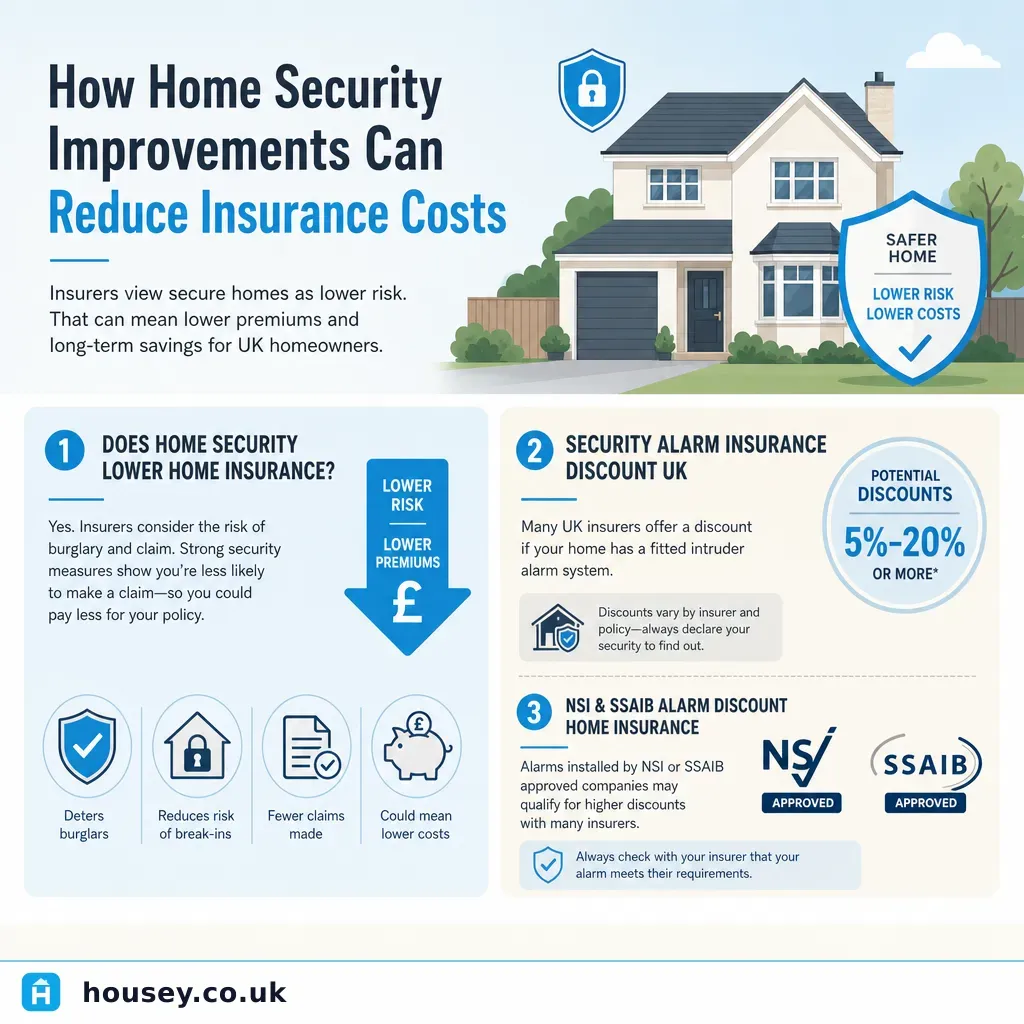
How Home Security Improvements Can Reduce Insurance Costs
Installing NSI or SSAIB-approved intruder alarms, BS 3621 locks, and CCTV can reduce UK home insurance premiums by 5–15% depending on your insurer.
 Surveys & Inspections
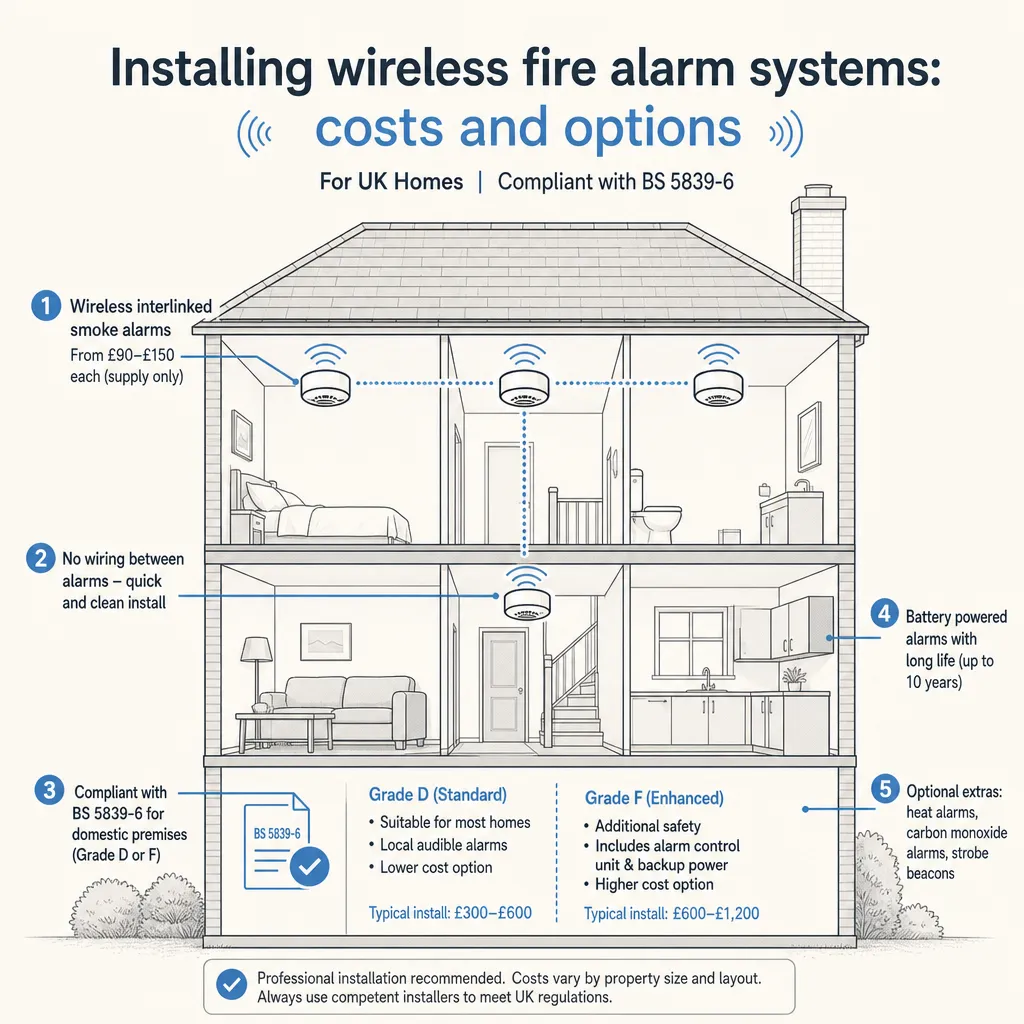
Installing wireless fire alarm systems: costs and options
Wireless interlinked fire alarm systems for a three-bedroom UK home typically cost £200–£600 installed.
 Surveys & Inspections
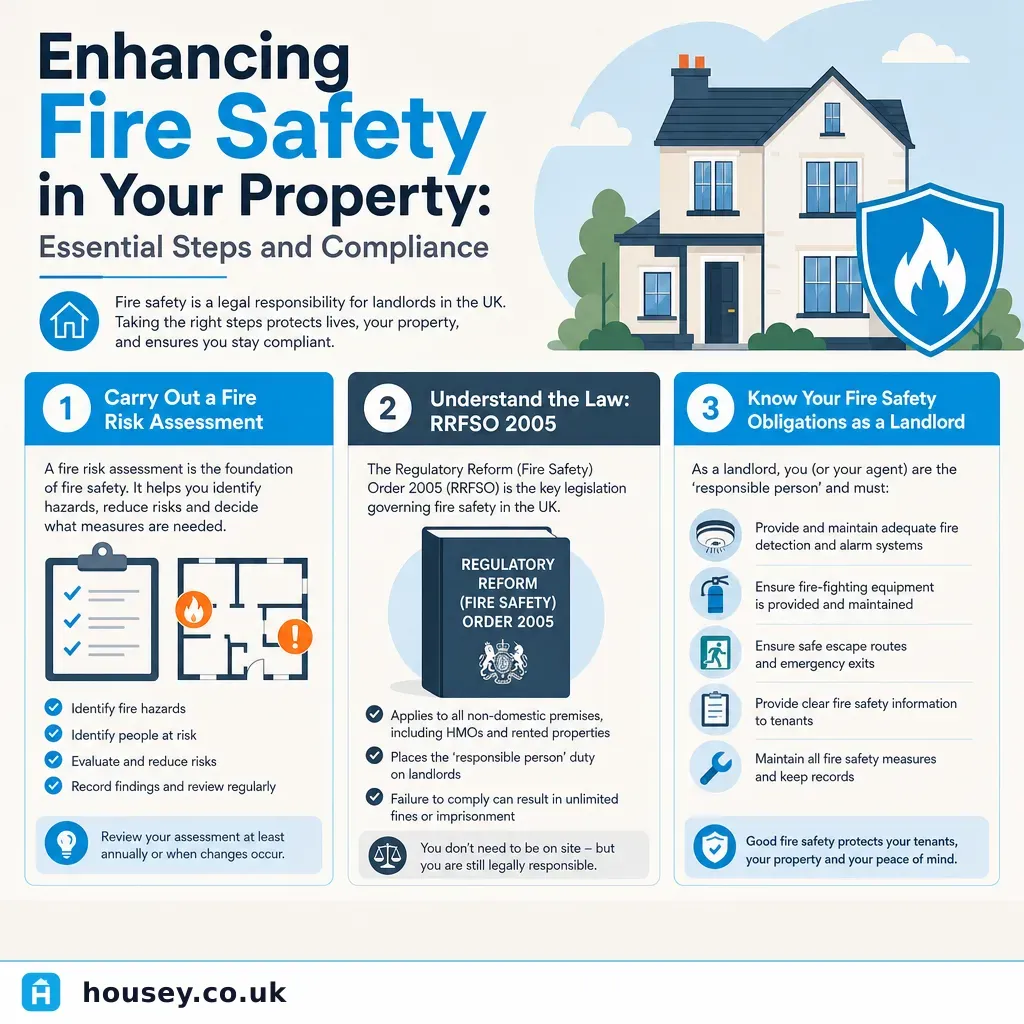
Enhancing Fire Safety in Your Property: Essential Steps and Compliance
Fire safety in UK properties is governed by Building Regulations Approved Document B and, for non-domestic and multi-occupied residential buildings, the Regulatory Reform (Fire Safety) Order 2005.
 Surveys & Inspections
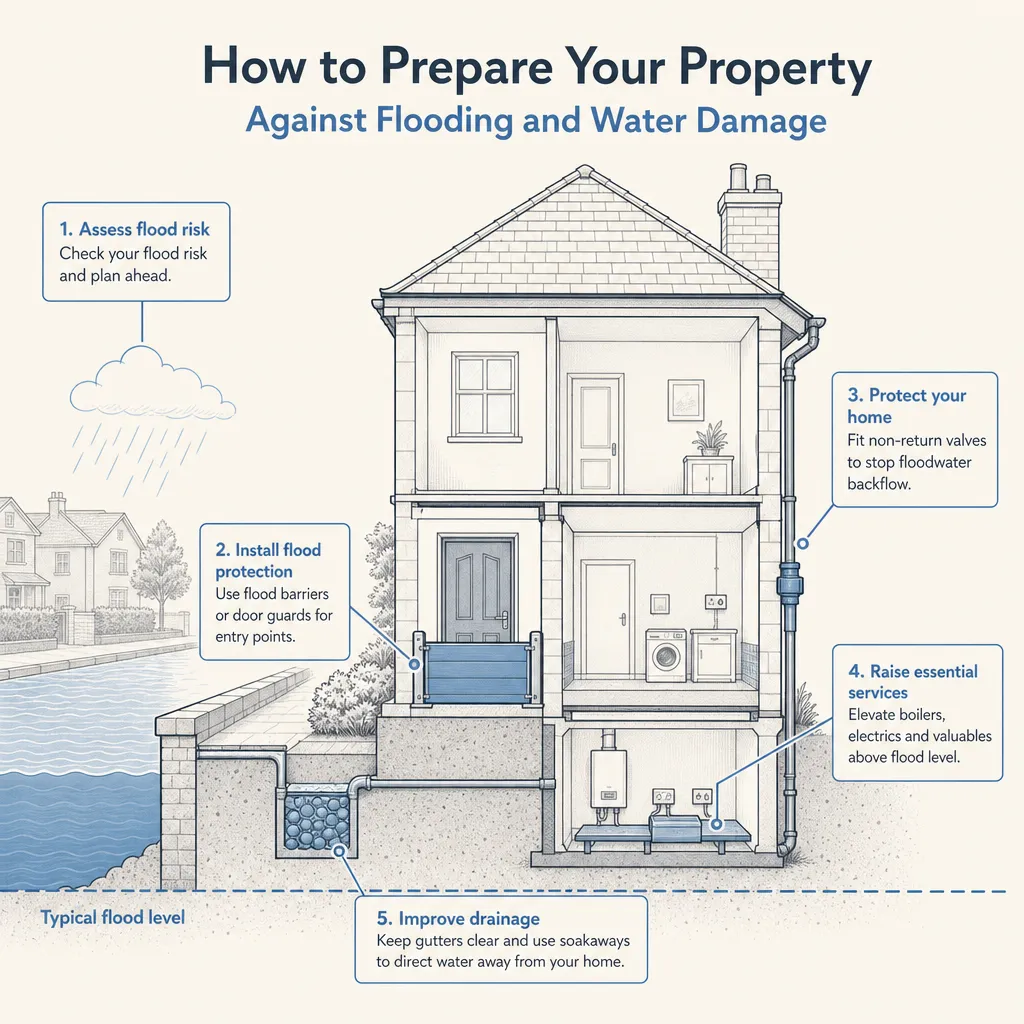
How to Prepare Your Property Against Flooding and Water Damage
Preparing your property against flooding involves checking your flood risk zone, improving drainage, fitting flood barriers and air-brick covers, and reviewing your buildings insurance.
 Surveys & Inspections
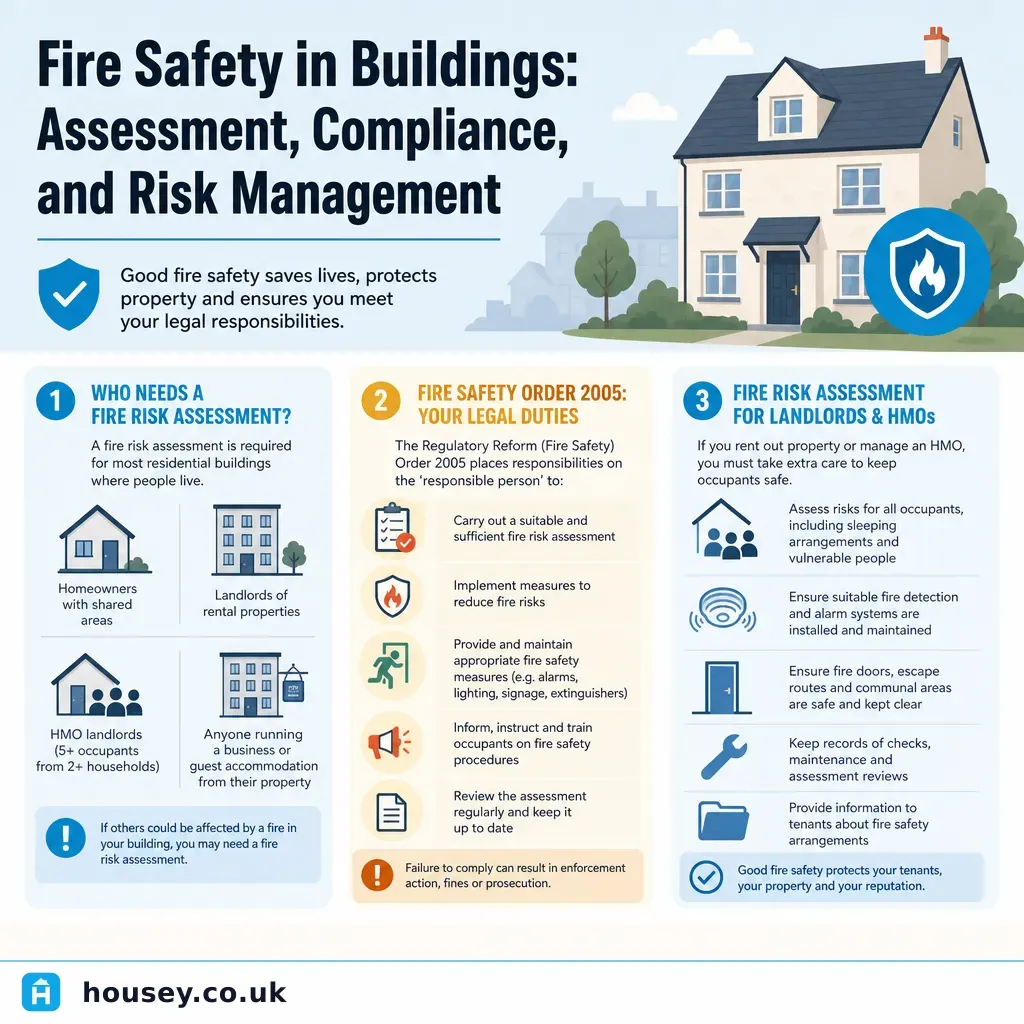
Fire Safety in Buildings: Assessment, Compliance, and Risk Management
The Regulatory Reform (Fire Safety) Order 2005 requires most non-domestic and multi-occupied residential buildings to have a written fire risk assessment carried out by a competent person.