How to Prepare Your Property Against Flooding and Water Damage
By Housey · Last reviewed 6th of May 2026
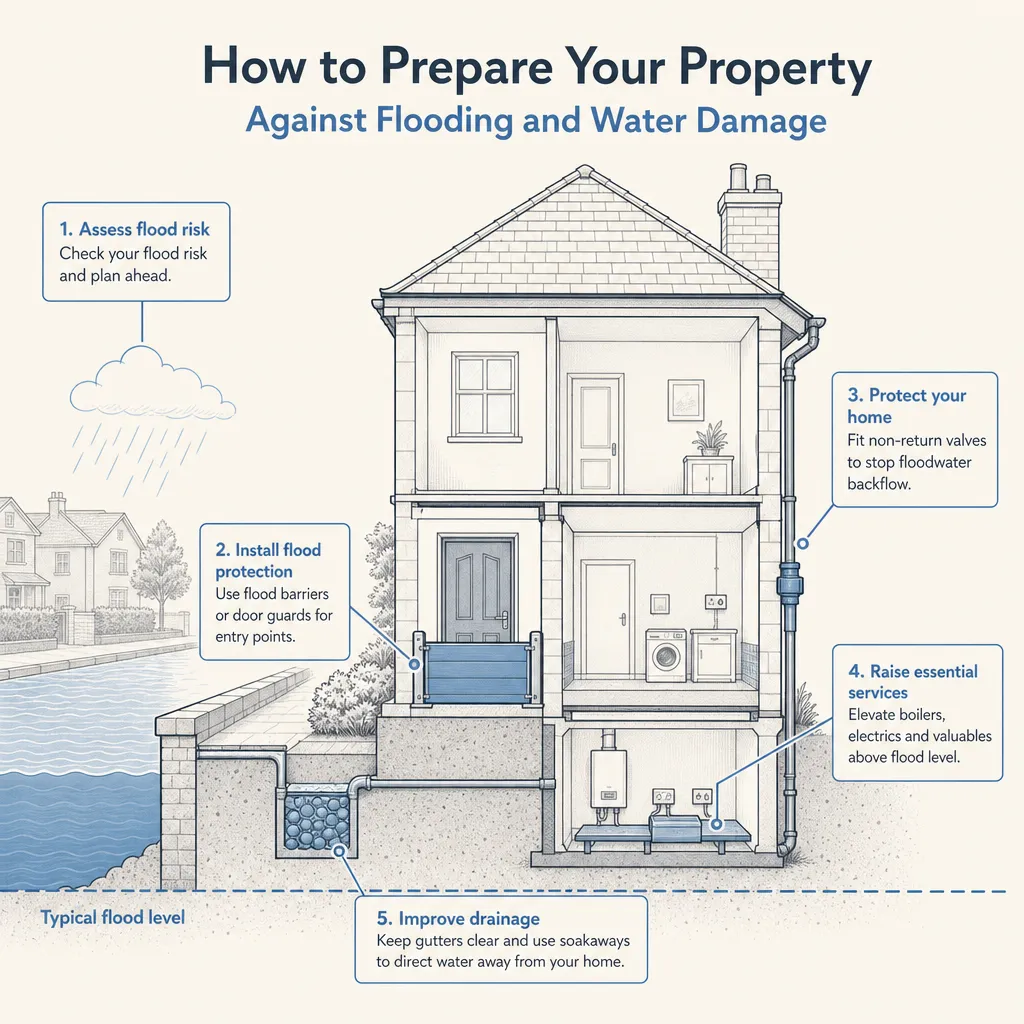
How to Prepare Your Property Against Flooding and Water Damage
Flooding is the most widespread natural hazard affecting homes in England, and the decision to take protective action rarely arrives with much warning. Whether you are buying a property near a watercourse, responding to a damp insurance claim, or reassessing your home's resilience after a wet winter, understanding your flood risk and the practical steps available can meaningfully reduce both the likelihood and the cost of water damage. The Environment Agency estimates that more than 5.2 million properties in England are at risk of flooding from rivers, the sea, or surface water.
Key points
- The Environment Agency's Flood Map for Planning identifies Flood Zone 1 (low risk), Zone 2 (medium risk), and Zone 3 (high risk) for river and tidal flooding in England; surface water risk is shown separately and affects an estimated 3.2 million properties.
- CIRIA's Property Flood Resilience (PFR) Code of Practice (2021) distinguishes flood resistance (keeping water out) from flood resilience (enabling faster recovery when water enters) — both are valid strategies depending on your risk level.
- Many standard buildings insurance policies exclude or heavily restrict flood cover for properties in the highest-risk zones; the Flood Re reinsurance scheme exists to help eligible homeowners access more affordable cover.
- A professional drainage survey can identify blocked or collapsed drains that significantly increase surface water flood risk at individual properties, independent of their flood zone classification.
- Properties built before 1 January 2009 in high-risk areas may qualify for Flood Re; properties built after that date and all buy-to-let properties are currently excluded.
Understanding your flood risk
Before spending money on physical flood protection, establish your actual flood risk level. The Environment Agency's Check your long-term flood risk service shows whether your address sits in Flood Zone 1, 2, or 3 for river and tidal flooding. Surface water and groundwater flood risk are displayed separately and are worth checking even for properties away from watercourses.
If your property sits in Flood Zone 2 or 3, or has a record of previous flooding, your insurer must be notified. Historic flooding events are recorded by the Environment Agency and local Lead Local Flood Authorities (LLFAs), and may affect insurance terms even where a property is not in a formally designated high-risk zone. Solicitors typically request a drainage and flood search as part of the conveyancing search pack — if you are buying, check this document carefully before exchange.
Flood resistance versus flood resilience: which approach is right?
Understanding this distinction helps you prioritise your spend.
Approach | Goal | Example measures | Best for |
|---|---|---|---|
Flood resistance | Keep water out entirely | Flood barriers, door guards, non-return valves, air-brick covers, sealed thresholds | Properties with occasional, moderate flood risk |
Flood resilience | Limit damage and recover faster when water enters | Raised electrical sockets, water-resistant wall finishes, solid concrete floors, flood-resilient kitchens | Properties with higher or repeated flood risk |
Both combined | Maximum protection | Barriers plus resilient internal fit-out | Properties in Flood Zone 2 or 3 with known flood history |
CIRIA's Property Flood Resilience Code of Practice provides guidance on selecting measures appropriate to the flood type, depth, and frequency likely at your property. For many homes, a combination of low-cost resistance measures and resilient finishes represents the most practical approach.
Practical steps to reduce flood risk
Drainage and surface water
Blocked or damaged drainage is one of the most common causes of surface water flooding at individual properties, regardless of their formal flood zone classification.
- Clear gutters and downpipes at least twice a year — after autumn leaf-fall and in spring.
- Check that surface water drains in your garden and on any paved areas are free of debris.
- If you have a soakaway, inspect it is functioning and not already saturated before heavy rainfall.
- Avoid paving over large areas of garden with impermeable materials — this increases surface runoff and can shift flooding risk to neighbouring properties. Permitted development rules may restrict large impermeable hard-standings.
- Arrange a CCTV drainage survey if you suspect damaged or blocked underground drainage. Collapsed or root-invaded pipes can redirect groundwater towards foundations and create localised flooding that a surface inspection cannot identify.
Ground-level protection
- Fit automatic flood-proof air bricks or air-brick covers, which seal when water rises.
- Seal gaps around external pipes, cables, and utilities entering the building at or near ground level.
- Consider demountable door guards or flood barriers for external doorways in high-risk areas.
- Non-return valves fitted on drainage pipes prevent floodwater or sewage from backing up through drains into the property during a flood event; a qualified drainage contractor can advise on installation.
Inside the property
- If your property has flooded previously or shows unexplained ground-floor moisture, a damp and timber survey can establish whether floor structures, joists, or wall fabric have been damaged and whether remedial work is needed.
- Raise electrical sockets, consumer units, and fixed appliances above the anticipated flood level where practicable. This work must be carried out by a qualified electrician registered with a competent-persons scheme such as NICEIC or NAPIT.
- Use water-resistant insulation and wall finishes below the one-metre mark in rooms most at risk.
Homeowner flood preparation checklist
Use this checklist as part of annual property maintenance and before any forecast flood event.
Year-round maintenance
Before a forecast flood event
After a flood
Red flags that need professional assessment
Some situations go beyond routine maintenance and require a qualified professional to assess the property.
- Repeated damp patches at ground-floor level even in dry weather — this may indicate drainage failure, rising damp, or a compromised damp-proof course rather than direct flood ingress, and needs professional diagnosis.
- Cracking near foundations after a wet period — prolonged water saturation can weaken soil bearing capacity. If cracking develops after flooding, arrange a structural survey before carrying out repairs.
- Sewage smell or toilet gurgling following heavy rain — this indicates drainage or sewer backflow issues requiring professional drainage investigation, not a DIY fix.
- Insurance refusal or very high flood premiums — this may signal the insurer holds flood history data you are unaware of. Request a formal flood risk report and check your eligibility for the Flood Re scheme.
- Property in a conservation area or listed building — some flood resistance measures require planning consent or listed building consent. Check with your local planning authority before installing barriers or altering drainage.
Insurance and the Flood Re scheme
Properties built before 1 January 2009 in high-risk flood areas may be eligible for Flood Re, a reinsurance scheme backed by the insurance industry and government that enables insurers to offer more affordable flood cover to eligible homeowners. Properties built on or after that date, and all buy-to-let properties, are currently excluded from Flood Re. Check with your insurer or a broker whether your property qualifies, particularly if you have struggled to obtain or maintain affordable cover.
When to get professional help
Contact a qualified professional if:
- Your property has flooded previously and you have not had a professional assessment of drainage and structure.
- You are buying in Flood Zone 2 or 3 and have not reviewed a professional flood risk report.
- You notice unexplained damp, subsidence, or structural movement following a wet period.
- You want to install non-return valves, flood barriers, or resilience measures involving changes to drainage or building fabric.
- Your insurer is querying your flood history or declining renewal.
How Housey can help
If you need to check underground drainage condition, investigate ground-floor moisture, or get a structural opinion after flooding, Housey can connect you with qualified local professionals. A CCTV drainage survey is a practical first step if you suspect blocked or damaged drains, while a damp and timber survey can confirm whether previous water ingress has damaged the building fabric.
Frequently asked questions
Does my home insurance cover flood damage automatically?
Standard home insurance policies often include flood cover, but properties in the highest-risk zones may face exclusions, very high excesses, or significant premium increases. Always check the full policy schedule rather than the summary document. If your property has flooded previously, you must disclose this to your insurer; failure to do so can invalidate a claim.
What is the difference between river flooding and surface water flooding?
River (fluvial) flooding occurs when watercourses overflow their banks during prolonged or intense rainfall. Surface water flooding happens when heavy rain overwhelms drainage systems faster than water can drain away — it can affect properties well away from rivers or the coast. The Environment Agency estimates around 3.2 million properties in England face surface water flood risk.
How do I find out if my property has flooded before?
The Environment Agency's online flood risk tool shows long-term risk by flood zone. For historical flooding records, ask the current owners or contact the local Lead Local Flood Authority. Solicitors usually request a drainage and flood search as part of the conveyancing search pack, which may reveal past events not visible in the public flood zone maps.
Are flood barriers effective?
Proprietary flood barriers, door guards, and automatic air-brick covers can meaningfully reduce water ingress during moderate events. They are only effective if correctly installed, maintained, and deployed in time. CIRIA's Code of Practice recommends a professional assessment to match the barrier specification to the likely flood depth and duration at your specific property before purchasing.
Can I improve flood resilience in a listed building?
Yes, but some interventions may require listed building consent. Contact your local planning authority and Historic England before installing barriers, altering drainage, or changing internal finishes. A conservation-accredited architect or surveyor can advise on appropriate, consent-compliant resilience measures that protect the property without compromising its historic character.
Sources and further reading
- Check your long-term flood risk — Environment Agency / GOV.UK
- Property Flood Resilience Action Plan — Defra / GOV.UK
- CIRIA Property Flood Resilience Code of Practice — CIRIA
- Flood Re: affordable flood insurance for high-risk homes — Flood Re
- Sign up for flood warnings — Environment Agency / GOV.UK
Useful next reads
 Surveys & Inspections
How Home Security Improvements Can Reduce Insurance Costs
Installing NSI or SSAIB-approved intruder alarms, BS 3621 locks, and CCTV can reduce UK home insurance premiums by 5–15% depending on your insurer.
 Surveys & Inspections
Home Security Systems and Protective Measures for UK Residential Properties
Effective home security in the UK combines physical deterrents — quality door locks and security lighting — with electronic systems such as intruder alarms and CCTV.
 Surveys & Inspections
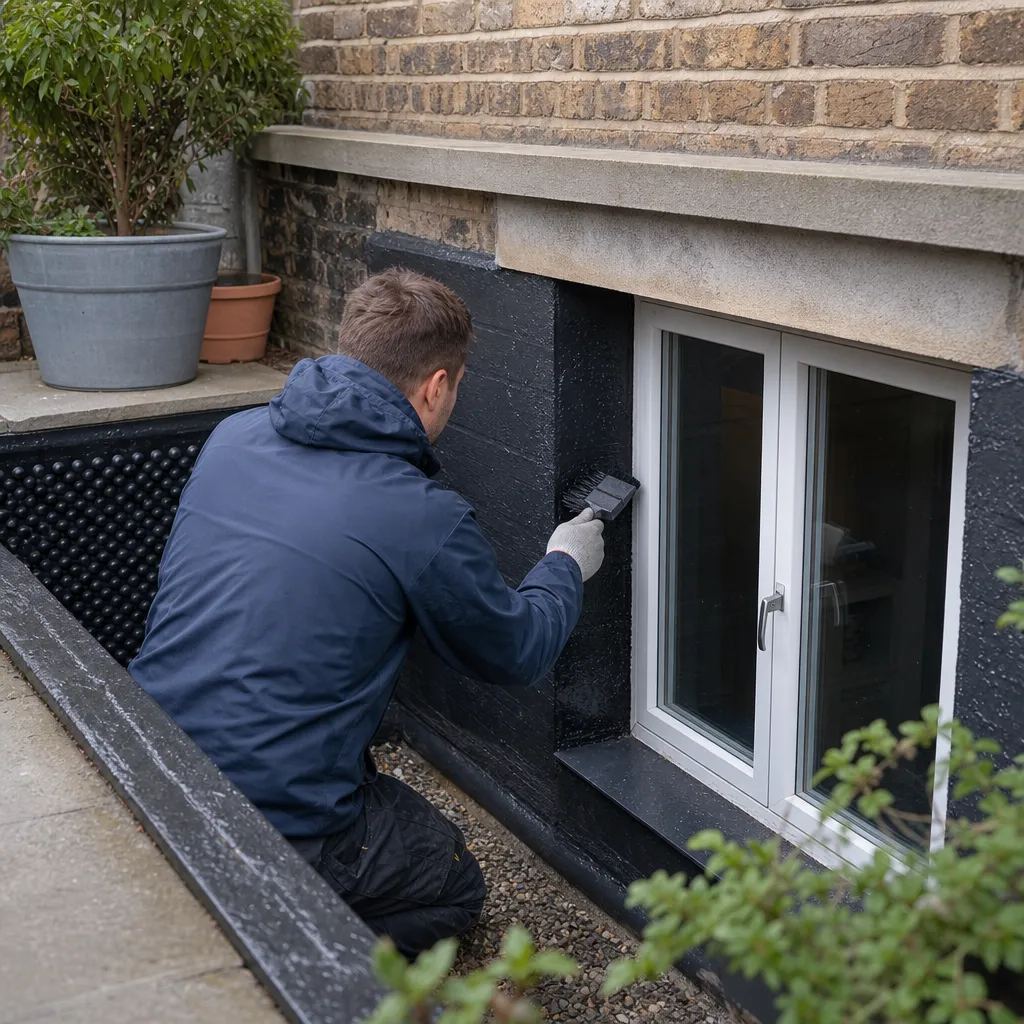
Securing Dry Basements: How to Prevent Moisture Intrusion
Preventing basement moisture starts with identifying the source: penetrating damp, rising damp, and condensation each need different fixes.
 Surveys & Inspections
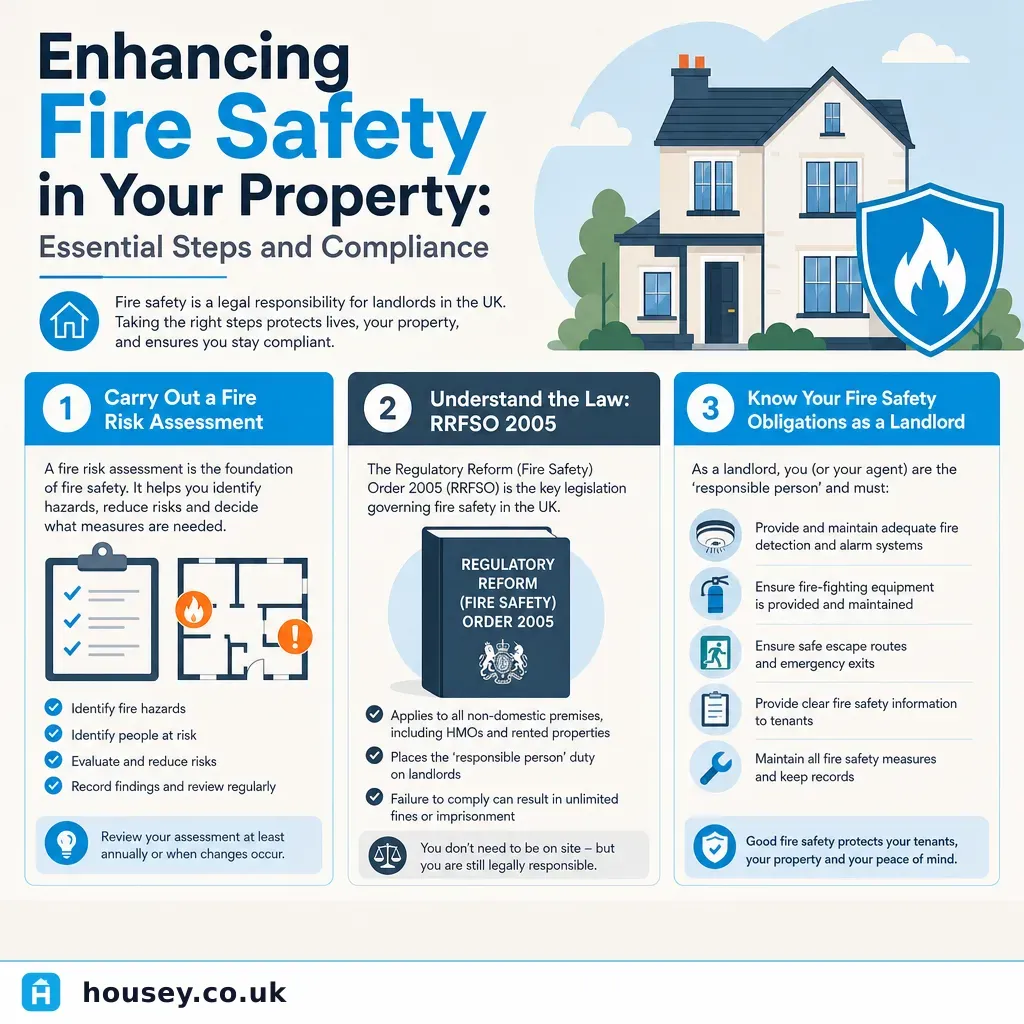
Enhancing Fire Safety in Your Property: Essential Steps and Compliance
Fire safety in UK properties is governed by Building Regulations Approved Document B and, for non-domestic and multi-occupied residential buildings, the Regulatory Reform (Fire Safety) Order 2005.
 Surveys & Inspections
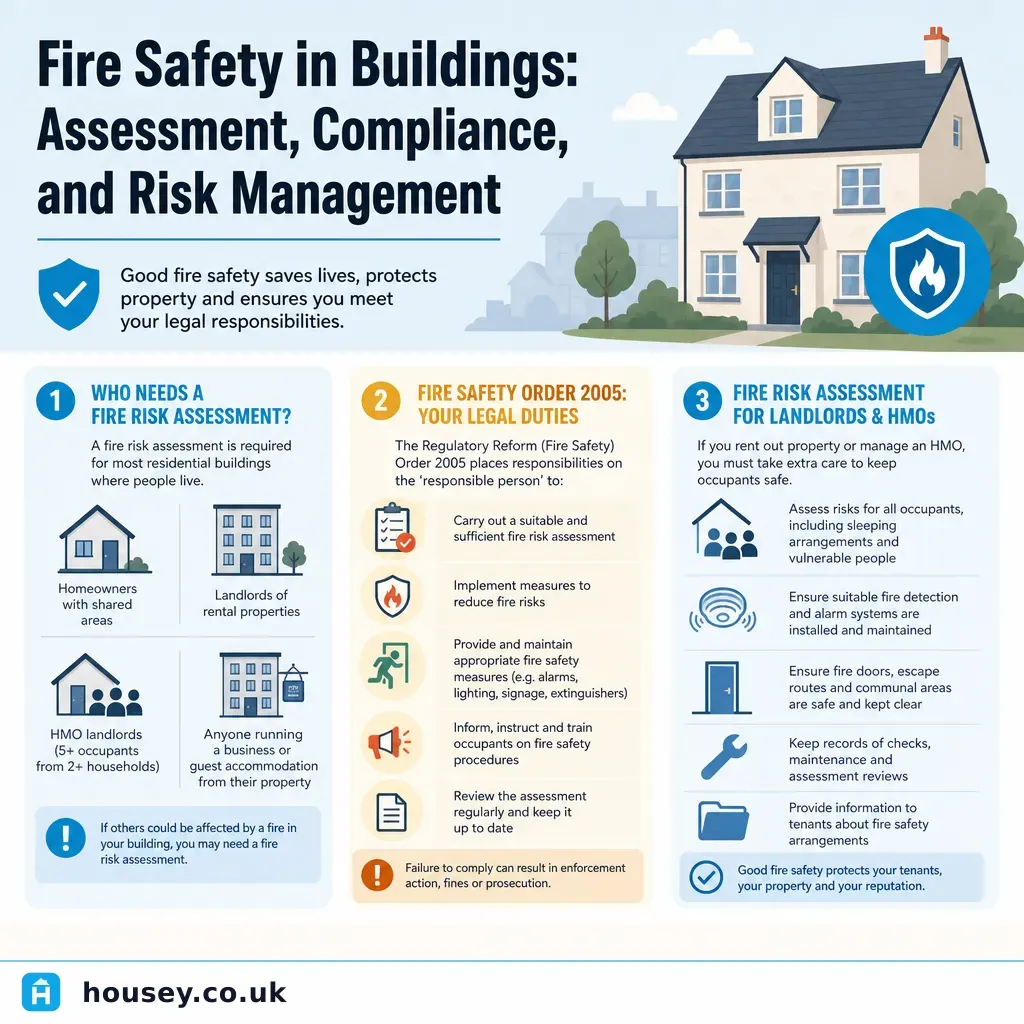
Fire Safety in Buildings: Assessment, Compliance, and Risk Management
The Regulatory Reform (Fire Safety) Order 2005 requires most non-domestic and multi-occupied residential buildings to have a written fire risk assessment carried out by a competent person.