Installing wireless fire alarm systems: costs and options
By Housey · Last reviewed 11th of May 2026
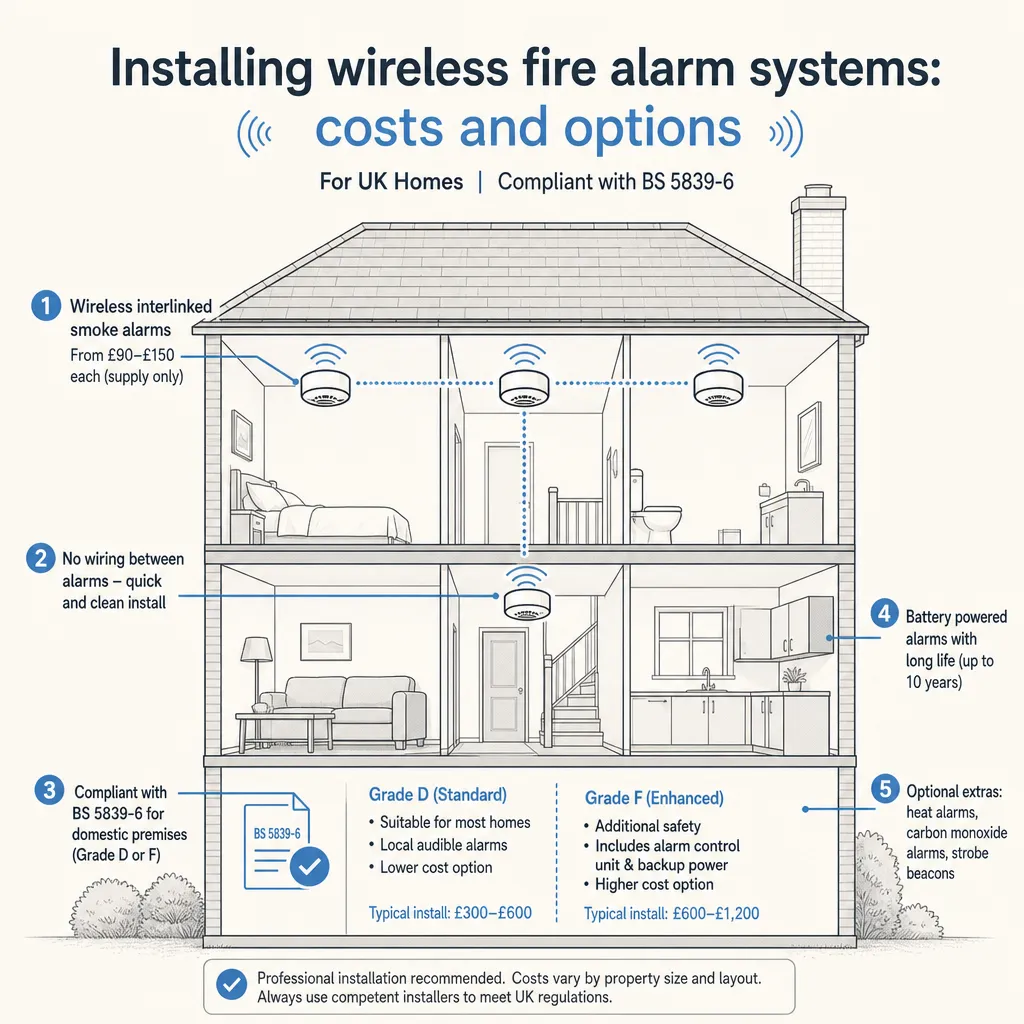
Installing wireless fire alarm systems: costs and options
Fire detection is a legal requirement in many UK properties and a practical necessity in all of them. Wireless fire alarm systems have become a practical alternative to hard-wired installations, particularly in occupied homes, older buildings, and properties where cable routes would be disruptive or costly. Whether you are a homeowner, a private landlord meeting your legal obligations, or a building manager upgrading a communal system, understanding installation costs and available options helps you specify the right solution for your property.
Key points
- The Smoke and Carbon Monoxide Alarm (England) Regulations 2022 require at least one working smoke alarm on every storey of a rented property and a carbon monoxide alarm in any room containing a fixed combustion appliance (excluding gas cookers).
- BS 5839-6:2019 is the British Standard covering fire detection in dwellings; Grade D (mains-powered with battery back-up) is the recommended minimum for new residential installations; Grade F (battery-only) applies to retrofit in existing homes.
- Wireless interlinked systems use radio frequency (RF) interconnection so that activating one alarm triggers all others simultaneously — they can satisfy Grade D or Grade F requirements without hard-wired cable running between devices.
- Indicative installed costs for a wireless interlinked system in a typical three-bedroom home range from £200–£600, depending on the number of devices, system grade, and installer. Indicative UK costs, last reviewed 2026-05-11.
- Houses in Multiple Occupation (HMOs) require a BS 5839-1 Grade A system with a central control panel — a standard domestic wireless system is not sufficient for licensed HMOs.
What does a wireless fire alarm system include?
A wireless domestic fire alarm system typically consists of:
- Smoke detectors (optical, ionisation, or combined) fitted to ceilings on each storey
- Heat detectors for kitchens, where cooking vapour or steam would cause false alarms from smoke detectors
- Carbon monoxide detectors in rooms with a gas boiler, open fire, or solid fuel appliance
- Wireless RF interconnection so that all devices trigger simultaneously when one activates
- Battery back-up or mains power with battery back-up, depending on the grade of system
Some systems include a central relay or wireless hub; others operate as standalone interlinked devices with no hub required. The right configuration depends on the property type, occupancy, and the applicable standard.
Wireless vs hard-wired: which suits your property?
| Wireless interlinked | Hard-wired interlinked |
|---|---|---|
Best for | Occupied homes, retrofit in existing buildings, period or listed properties | New builds, major renovations, properties being rewired |
Not ideal for | Large HMOs or commercial premises needing a Grade A panel system | Occupied properties where cable chasing would be disruptive |
Installation disruption | Low — surface-mounted, no cable routes required | Higher — cables chased into ceilings and walls |
Typical installed cost (3-bed home) | £200–£600 | £300–£800+ |
Battery maintenance | Required — battery life 1–10 years depending on device | Mains power reduces reliance on battery (back-up only) |
Grade achievable | Grade D (with mains connection) or Grade F (battery-only) | Grade D or Grade A with central control panel |
Indicative UK costs, last reviewed 2026-05-11.
How much does a wireless fire alarm system cost?
Costs vary by property size, number of devices required, grade of system, and who carries out the installation.
Property type | Devices typically needed | Indicative installed cost |
|---|---|---|
One- or two-bedroom flat | 2–3 smoke/heat detectors + 1 CO detector | £150–£300 |
Three-bedroom house | 4–6 smoke/heat detectors + 1–2 CO detectors | £250–£500 |
Four- to five-bedroom house | 6–10 devices | £400–£700 |
Small licensed HMO (Grade A required) | Central control panel + multiple zones | £1,500–£5,000+ |
Indicative UK costs, last reviewed 2026-05-11. Costs from specialist fire alarm installers may differ from general electricians. Always obtain at least two quotes.
Key cost drivers
- Grade of system. Grade D systems require an electrician to connect devices to the consumer unit; Grade F systems run on batteries and can often be installed without electrical work.
- Number of storeys and rooms. Each additional floor requiring detection adds at least one device cost.
- Brand and specification. Entry-level RF-interlinked smoke alarms start at around £20–£40 per device; commercial-grade wireless devices can cost £80–£200 each.
- Certification requirements. Landlords and building managers sometimes require BAFE SP203-1 certified installation for insurance or licensing purposes, which increases cost.
- Carbon monoxide detection. CO detectors are a separate device cost; combination smoke/CO alarms are available but more expensive per unit.
Landlord and rental obligations in England
The Smoke and Carbon Monoxide Alarm (England) Regulations 2022 require landlords to:
- Install at least one smoke alarm on every storey of the let property where there is a room used as living accommodation.
- Install a carbon monoxide alarm in any room containing a fixed combustion appliance, excluding gas cookers.
- Ensure all alarms are in working order at the start of each new tenancy.
Local councils can issue remedial notices requiring compliance within 28 days and may impose civil penalties of up to £5,000 for non-compliance. Scotland, Wales, and Northern Ireland have separate but broadly similar requirements — check the relevant devolved guidance if the property is not in England.
For licensed HMOs, additional requirements apply under the Housing Act 2004 and the Management of Houses in Multiple Occupation (England) Regulations 2006, typically requiring a full BS 5839-1 Grade A system.
What to ask before accepting a quote
- Is the system Grade D or Grade F under BS 5839-6:2019, and is that the appropriate grade for this property?
- Are all devices RF-interlinked so that activating one triggers all others simultaneously?
- Does the installer hold BAFE, NICEIC, or NAPIT accreditation relevant to fire detection work?
- Will mains-connected devices be installed by a Part P-competent electrician?
- What is the expected battery life and replacement schedule for each device?
- Will I receive a commissioning certificate confirming the system meets BS 5839-6?
- What happens if a device fails or the RF signal is interrupted — is there an audible fault alert?
Important limitations
This article provides general information only. Fire alarm requirements depend on the property type, tenure, occupancy, and any applicable licensing or planning conditions. For HMOs, care homes, blocks of flats, student accommodation, or commercial premises, the standards that apply are more complex than those described here. A qualified fire risk assessor or a BAFE-registered fire alarm installer should advise on the specific requirements for your property.
When this becomes urgent
Contact a qualified professional without delay if:
- You are a landlord and the property has no working smoke alarms — a council remedial notice gives only 28 days to comply before a civil penalty may be imposed.
- A fire risk assessment has identified inadequate or absent fire detection as a significant finding.
- Your current alarm system is more than 10 years old and has not been serviced or tested recently.
- You have recently installed a solid fuel appliance, gas fire, log burner, or biomass boiler and have not added a carbon monoxide detector in the same room.
What to ask a qualified professional
Before instructing a fire alarm installer or electrician, ask:
- Which standard or regulation specifically applies to my property type and tenure?
- Do I need a BAFE SP203-1 certified installation for insurance, licensing, or mortgage purposes?
- What grade and category of system would you recommend for this property, and why?
- Will the electrical work be notified to building control under Part P?
- Can you provide a commissioning certificate and system layout drawing on completion?
When to get professional help
Battery-operated Grade F wireless interlinked alarms can often be fitted by a competent homeowner following manufacturer instructions. Mains-connected Grade D systems must be connected to the consumer unit by a Part P-competent electrician. Any rented property, HMO, block of flats, or building subject to a fire risk assessment should involve a qualified fire alarm installer — ideally BAFE-registered — to ensure compliance with the applicable standard and any licensing conditions.
How Housey can help
A professional fire risk assessment can identify exactly which grade and configuration of fire detection is appropriate for your property before you purchase equipment or book installation.
Frequently asked questions
Do domestic wireless fire alarms meet BS 5839-6?
Many wireless interlinked smoke and heat detectors are tested and certified to BS EN 14604 or BS EN 54-5/7 and can form part of a Grade D or Grade F system under BS 5839-6:2019. Check the device's product data sheet to confirm which standards it meets before purchasing. Not all alarms marketed as wireless or smart are tested to these standards.
How often should wireless fire alarm batteries be replaced?
It depends on the device. Sealed lithium-battery alarms are typically rated for 10 years and replaced as a complete unit at end of life. Alarms with replaceable AA or 9V batteries usually need new batteries every 1–3 years. Check the manufacturer's guidance; most modern devices emit a low-battery warning chirp well before failure.
Do I need a professionally installed fire alarm in a rented property?
The regulations require working alarms but do not mandate professional installation for basic domestic systems. However, mains-connected Grade D devices must be wired by a Part P-competent electrician. For licensed HMOs, many councils specify a BAFE-certified or professionally installed and verified system as a licensing condition. Check your HMO licence conditions if applicable.
What is the difference between Grade D and Grade F fire alarms?
Grade D alarms are mains-powered (240V AC) with a battery back-up in case of power failure. Grade F alarms are powered entirely by a primary battery with no mains connection. Grade D is the recommended minimum for new residential installations under BS 5839-6:2019; Grade F is acceptable in existing homes where mains wiring is not being installed. Both grades can be RF-interlinked in wireless configurations.
Sources and further reading
- Smoke and Carbon Monoxide Alarm (England) Regulations 2022 — legislation.gov.uk
- Smoke and CO alarm guidance for landlords — GOV.UK
- BAFE fire detection and alarm system schemes — BAFE
- BS 5839-6 fire detection in dwellings — BSI Group
Useful next reads
 Surveys & Inspections
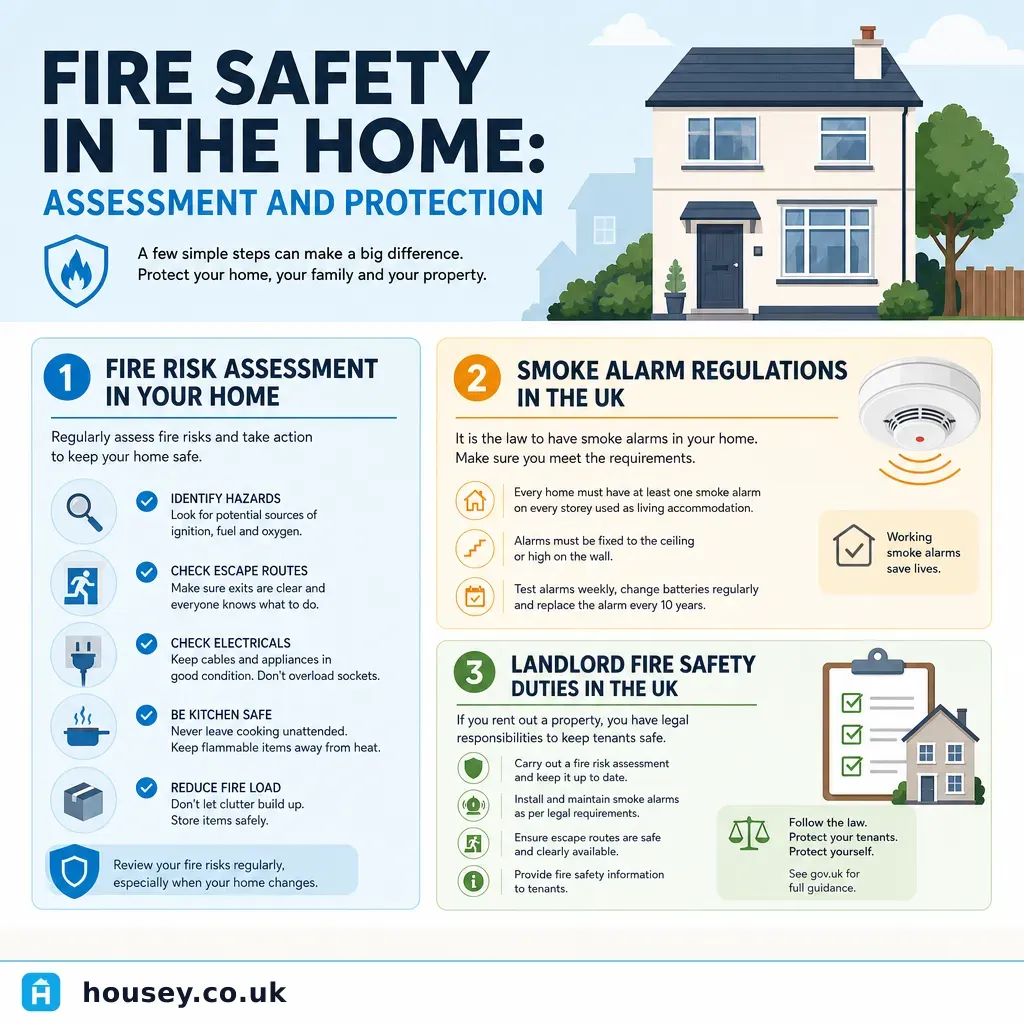
Fire Safety in the Home: Assessment and Protection
Most UK owner-occupied homes are the homeowner's responsibility to make fire-safe, while landlords have a legal duty to carry out fire risk assessments under the Regulatory Reform (Fire Safety) Order 2005.
 Surveys & Inspections
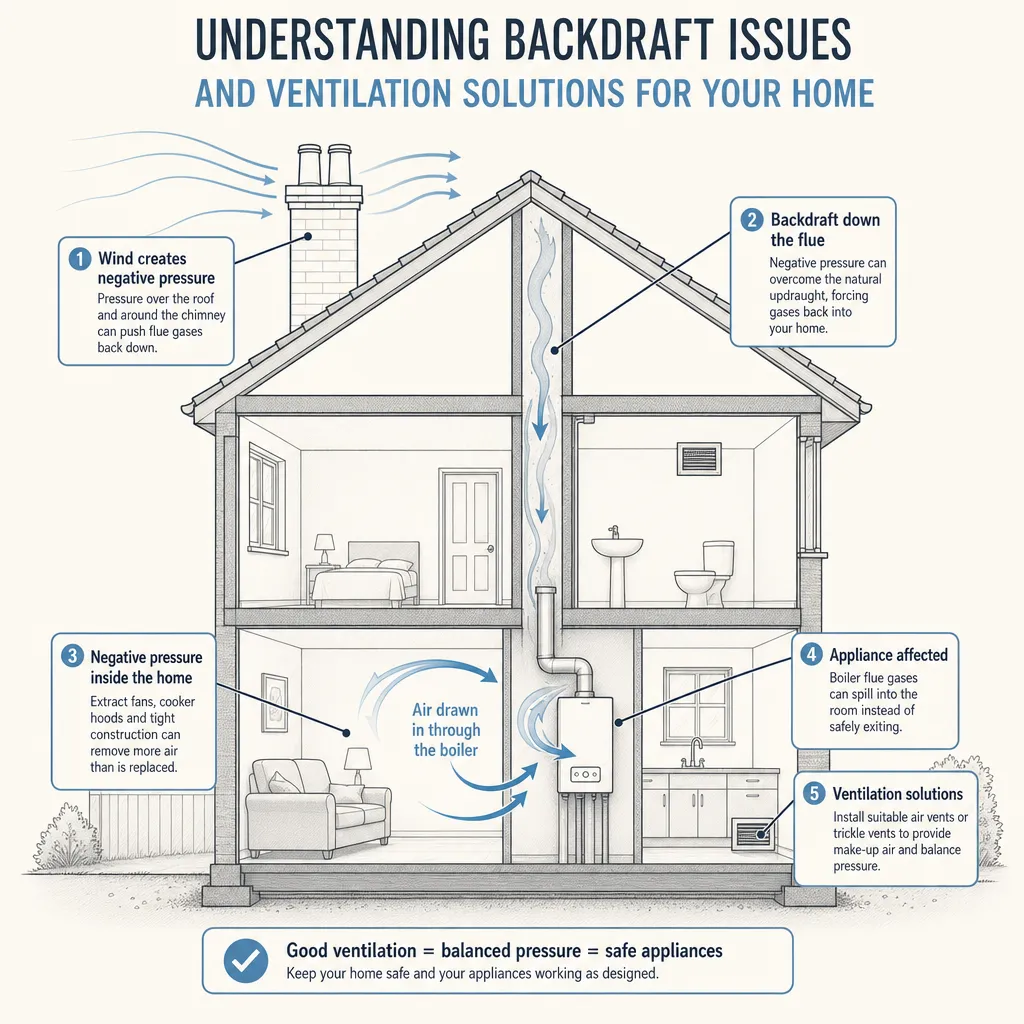
Understanding backdraft issues and ventilation solutions for your home
Backdraft occurs when negative pressure inside a building draws combustion gases back through a flue or chimney instead of expelling them outside.
 Surveys & Inspections
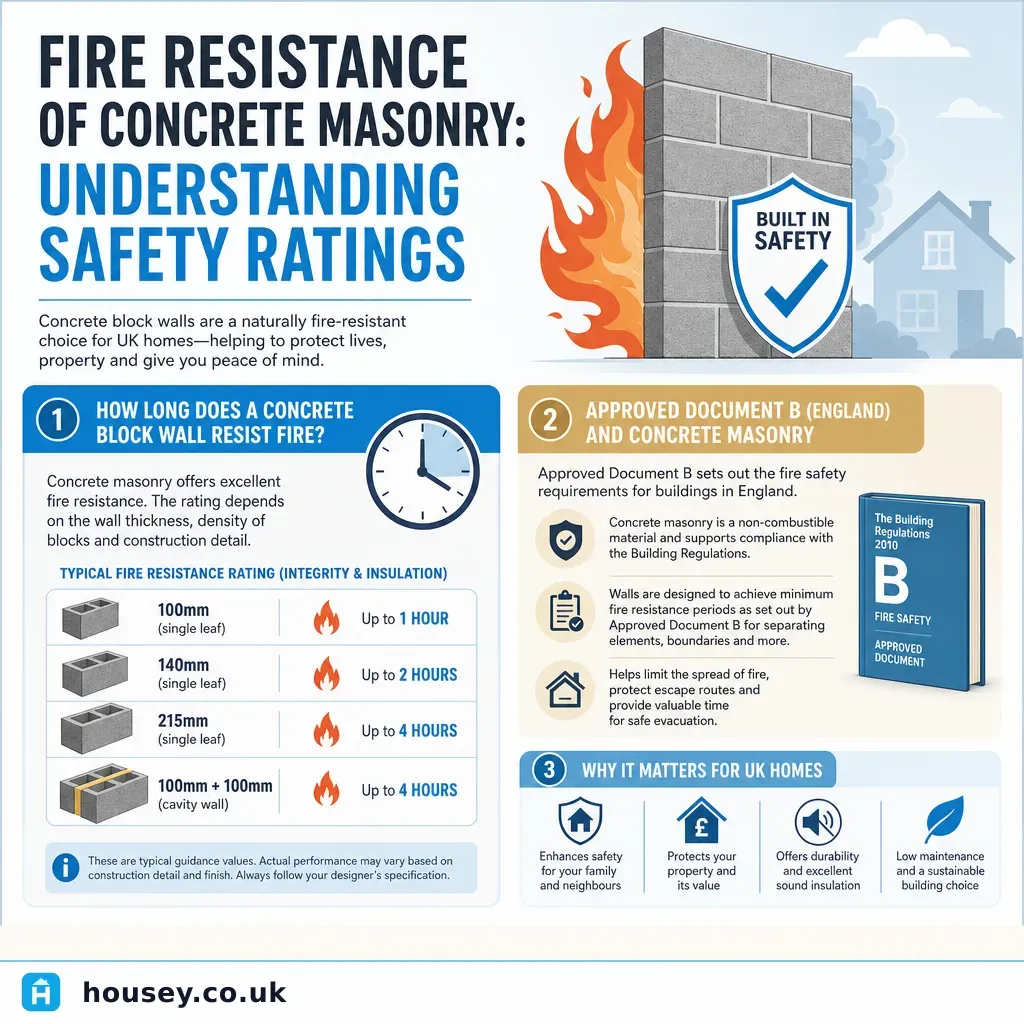
Fire Resistance of Concrete Masonry: Understanding Safety Ratings
Concrete masonry walls typically achieve 60 to 240 minutes of fire resistance depending on thickness, aggregate type, and construction method.
 Surveys & Inspections
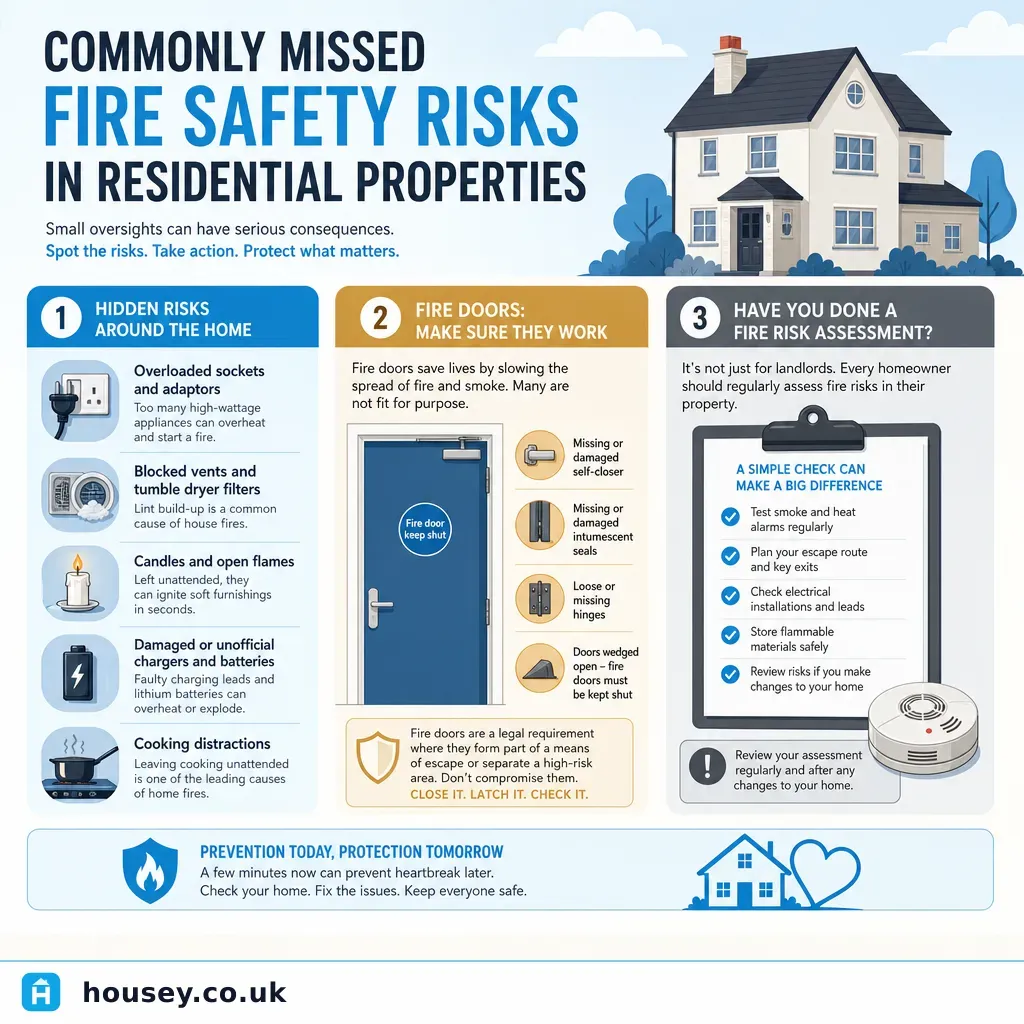
Commonly Missed Fire Safety Risks in Residential Properties
Commonly missed fire safety risks in UK homes include damaged fire doors without intumescent strips, breached compartmentation in roof spaces and floor voids, daisy-chained extension leads, and recessed downlighters without fire-rated covers.
 Surveys & Inspections
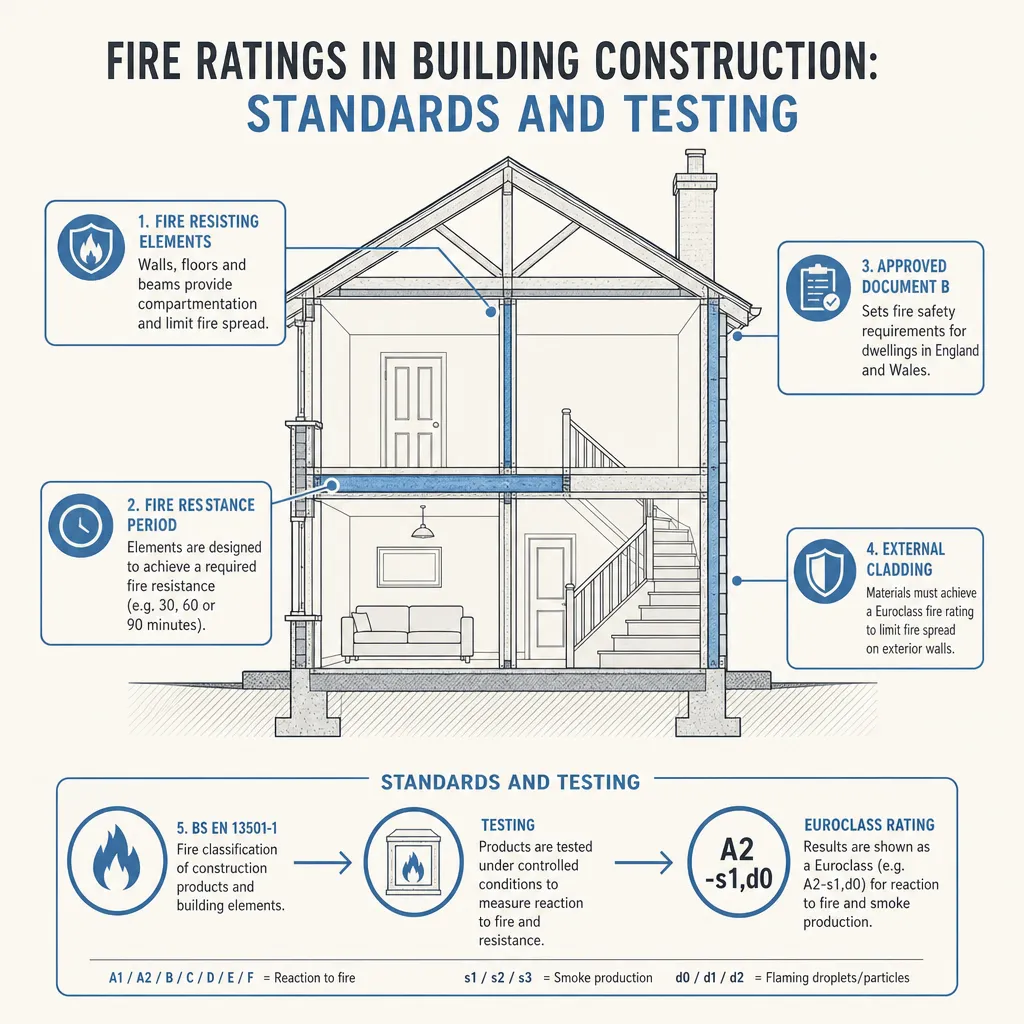
Fire Ratings in Building Construction: Standards and Testing
In UK construction, fire ratings describe how long a structural element or building assembly maintains load-bearing capacity, integrity, and insulation when exposed to a standard fire test — typically 30, 60, 90, or 120 minutes.