Home Storage Solutions: Organisation Ideas for Every Room
By Housey · Last reviewed 24th of May 2026
Home Storage Solutions: Organisation Ideas for Every Room
Storage is one of the most common frustrations in UK homes — particularly in older properties where period layouts, narrow hallways, low ceilings, and limited square footage leave little room for the accumulation of modern life. Whether you are preparing a property for sale, tackling clutter after a move, or simply trying to make a home function better day to day, a structured and room-by-room approach to storage pays real dividends.
Key points
- Built-in storage typically adds more usable space per square metre than freestanding furniture and tends to be viewed more favourably by buyers when professionally fitted.
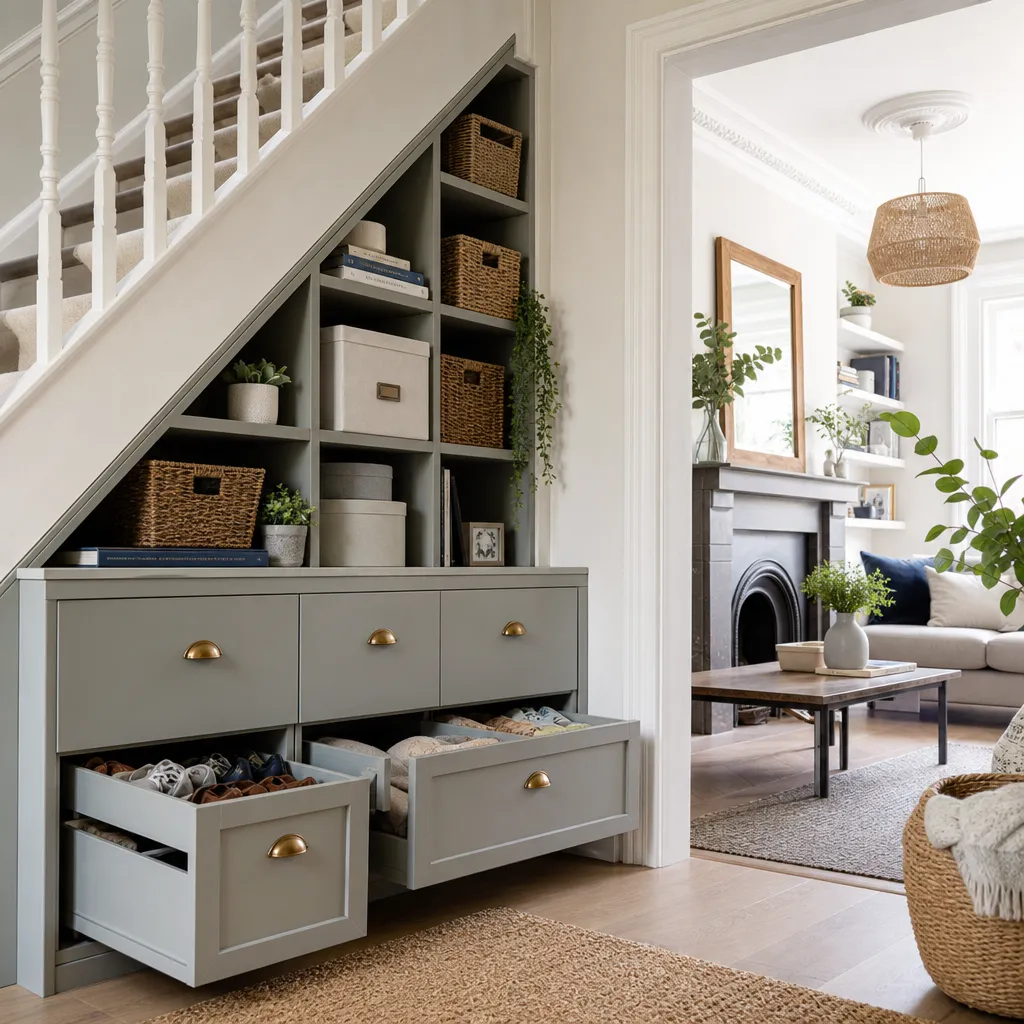
- The space beneath a standard staircase is among the most commonly wasted areas in UK homes — it can accommodate bikes, cleaning equipment, a home office nook, or bespoke drawer runs.
- Building Regulations do not generally apply to internal storage installations, but fire doors and escape routes must never be blocked — this is particularly important in flats and HMOs.
- Boarding a loft for storage directly over loose-fill insulation compresses it and reduces its thermal performance, which can affect your EPC rating.
- Sealed plastic boxes in damp-prone areas trap moisture and can cause mould — breathable storage is better for ground-floor cupboards, cellars, and under-stair spaces with external walls.
Matching storage type to room and need
Different rooms have different priorities. This table maps typical UK room challenges to the most practical solutions:
Room | Common problem | Practical solution | Notes |
|---|---|---|---|
Hallway | Coats, shoes, bags on the floor | Built-in coat cupboard, bench with storage, pegboards | Measure door swing clearance before fitting anything |
Kitchen | Worktop clutter, inaccessible deep cupboards | Pull-out larder units, drawer organisers, wall racks | Consider a kitchen designer for full fit-outs |
Living room | Media cables, books, toys | Alcove shelving, media unit with concealed cable management | Alcove shelving uses otherwise dead space in period homes |
Master bedroom | Wardrobe overflow | Built-in wardrobes, under-bed drawers, ottoman bed | Floor-to-ceiling builds use full UK ceiling height |
Children's bedroom | Toys, books, changing needs | Modular adjustable systems, open labelled shelving, child-height hooks | Choose systems that grow with the child |
Bathroom | Cleaning products, towels | Recessed wall niches, over-toilet shelving, vanity drawers | Check for pipes before fitting wall-mounted units |
Loft | Long-term and seasonal items | Raised loft boarding, pull-down ladder access | Do not compress insulation — use loft legs |
Under stairs | Wasted irregular space | Bespoke drawers, open shelving, home office, bike storage | Custom joinery maximises the irregular geometry |
Garden shed or garage | Tools, seasonal equipment | Wall-mounted pegboards, racking, ceiling hoists | Temperature and damp control matter for stored contents |
Room-by-room ideas
Hallway and entrance
In many UK homes — Victorian terraces, 1930s semis, inter-war bungalows — the hallway is narrow and the entrance immediately visible from the front door. Prioritise vertical space and conceal clutter:
- A built-in coat cupboard beside or beneath the stairs can house coats, shoes, bags, and a vacuum without encroaching on floor area.
- A bench with a lift-up lid provides seating for putting on shoes while hiding them inside.
- Pegboards are inexpensive, flexible, and easy to reconfigure as needs change.
- If your hallway has an alcove beside a chimney breast — common in Edwardian and inter-war homes — custom shelving or a fitted unit makes excellent use of otherwise dead space.
Kitchen
The kitchen accumulates equipment, food, cleaning products, and packaging constantly. Accessibility matters as much as capacity:
- Deep base cupboards become far more functional with pull-out drawers or wire baskets — items at the back stop being invisible and forgotten.
- A larder-style tall unit with internal pull-out shelving suits UK homes that lack a separate pantry.
- Magnetic knife racks and wall-mounted spice racks free up valuable worktop and drawer space without major works.
- Decanting dry goods into stackable, labelled containers maximises shelf space and reduces packaging clutter.
Bedroom
- Built-in wardrobes running floor to ceiling make the most of UK ceiling heights — typically 2.4 to 2.6 metres in most post-war homes — and eliminate the dust-collecting gap above freestanding furniture.
- Under-bed storage drawers or vacuum storage bags suit off-season clothes, spare bedding, and bulky items.
- Ottoman beds provide significant hidden storage within the same floor footprint as a standard bed.
Bathroom
- A recessed niche built between studs in the shower or beside the bath creates permanent storage without protruding into the room. Always check for pipes and ensure the recess is fully waterproofed.
- Vanity units that conceal plumbing also provide practical drawer or cabinet storage — look for soft-close versions that hold up to daily use.
- Over-toilet shelving units work even in compact cloakrooms where no other wall space is available.
Loft storage
Boarding a loft is popular but needs careful planning:
- Avoid boarding directly over loose-fill insulation — this compresses the material and reduces its effectiveness. Use proprietary loft legs or a raised boarding system to maintain insulation depth (typically 270mm mineral wool) while creating a usable floor surface.
- Ensure the loft hatch is insulated and draught-proofed — it is a common and easily overlooked source of heat loss.
- A pull-down loft ladder makes regular access practical and safe, and avoids the temptation to use an unsafe makeshift solution.
- Consider whether the loft structure can carry the additional load — check with a builder or structural engineer if in doubt.
A storage planning checklist
Before buying furniture or booking a joiner, work through this list:
What not to assume about home storage
- "More storage solves clutter": Storage gives clutter a home; only decluttering actually reduces it. Buying more shelving without editing what you own typically results in more shelving that is immediately full.
- "Loft boarding is always straightforward": Loft structures, insulation types, water tank positions, and access points vary significantly — some lofts are not suited to boarding without structural or thermal assessment first.
- "Any wall can take shelving": Check for pipes and cables before drilling. In older properties, walls may be lath-and-plaster rather than stud or solid masonry — each requires different fixings and a different approach.
- "Built-in storage always adds value": Poor-quality built-ins can actively reduce a property's appeal and are difficult to remove. Professionally designed and fitted joinery adds more value than flat-pack alternatives installed poorly.
- "Garage and loft storage is unlimited": Both spaces have limits on structural load, damp, temperature variation, and access — they are not suitable for everything you want to keep.
When to get professional help
Storage is usually a DIY-friendly domain, but professional input is worthwhile in specific situations:
- Bespoke joinery: A skilled joiner or cabinet maker can maximise awkward spaces — under stairs, eaves rooms, and period alcoves — that off-the-shelf solutions cannot reach or suit.
- Full kitchen redesign: Kitchen storage is best considered as part of a whole-kitchen plan rather than retrofitted around an existing layout piece by piece.
- Structural alterations: If storage improvements involve removing or altering walls, building regulations approval and possibly planning permission may apply — check with your local authority.
- Loft concerns: If you are unsure whether your loft structure can carry additional load, or if access or insulation levels are unclear, a builder or structural engineer can advise before you invest in boarding.
How Housey can help
Housey helps homeowners find the right local professionals for improvement and build projects. Whether you are planning bespoke built-in storage, a kitchen redesign, or a loft upgrade, use Housey to request quotes from tradespeople suited to your specific job and location.
Frequently asked questions
Does adding built-in storage add value to a home?
Professionally fitted built-in storage — particularly in hallways, bedrooms, and under stairs — is generally viewed positively by buyers as it solves a practical problem. The effect on value depends on quality of finish and suitability for the property. Low-quality built-ins can be a negative. Estate agents often cite good storage as a selling point for family homes.
Do I need planning permission for a storage outbuilding?
Planning permission is not usually needed for internal storage changes. A garden outbuilding is typically permitted development if it is single-storey, within certain size limits, and covers no more than 50% of the garden. If you live in a conservation area or a listed building, different rules apply — check with your local planning authority before proceeding.
What is the best storage solution for a small UK flat?
In a small flat, vertical space and dead corners are most valuable. Floor-to-ceiling shelving, built-in wardrobes, under-bed storage, and multi-function furniture — storage ottomans, beds with drawers — all help. Avoid bulky freestanding pieces that reduce floor area. In a leasehold flat, check your lease before making structural changes or drilling into walls.
How do I avoid damp damaging stored items?
Store items away from external walls and ground-floor areas where possible. Use breathable storage — cloth bags or cardboard rather than sealed plastic boxes — in areas prone to condensation. Silica gel sachets help in enclosed spaces. Address the underlying cause of any damp rather than simply working around it with packaging.
Sources and further reading
- Planning permission for outbuildings — GOV.UK
- Building regulations: when you need approval — GOV.UK
- Fire safety in the home — GOV.UK
- Loft insulation guidance — Energy Saving Trust
Useful next reads
 Improvement & Build
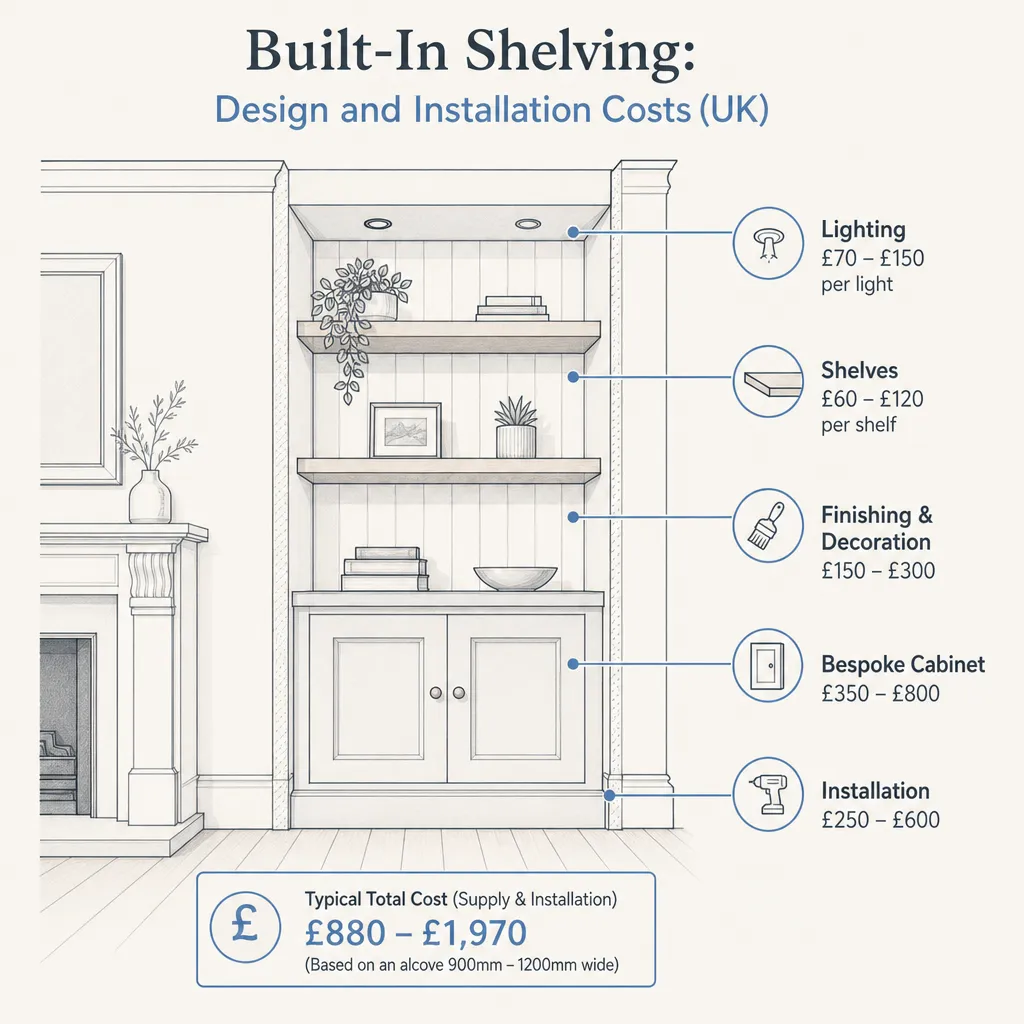
Built-In Shelving: Design and Installation Costs
Built-in shelving typically costs £400–£900 for a simple single-alcove MDF unit, rising to £1,400–£3,000 for a pair of painted alcoves with base cupboards.
 Improvement & Build
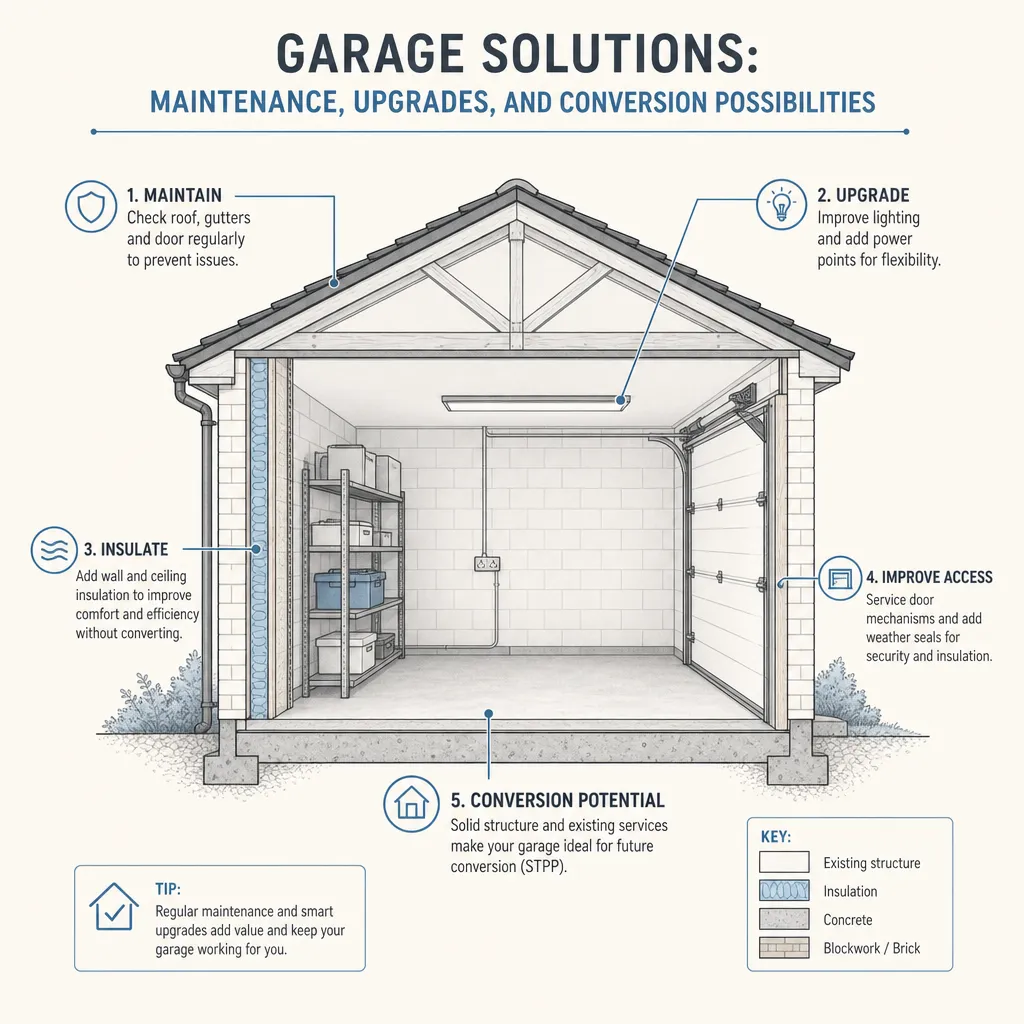
Garage Solutions: Maintenance, Upgrades, and Conversion Possibilities
Your garage can serve many functions — storage, workshop, hobby space, or a full habitable room conversion.
 Improvement & Build
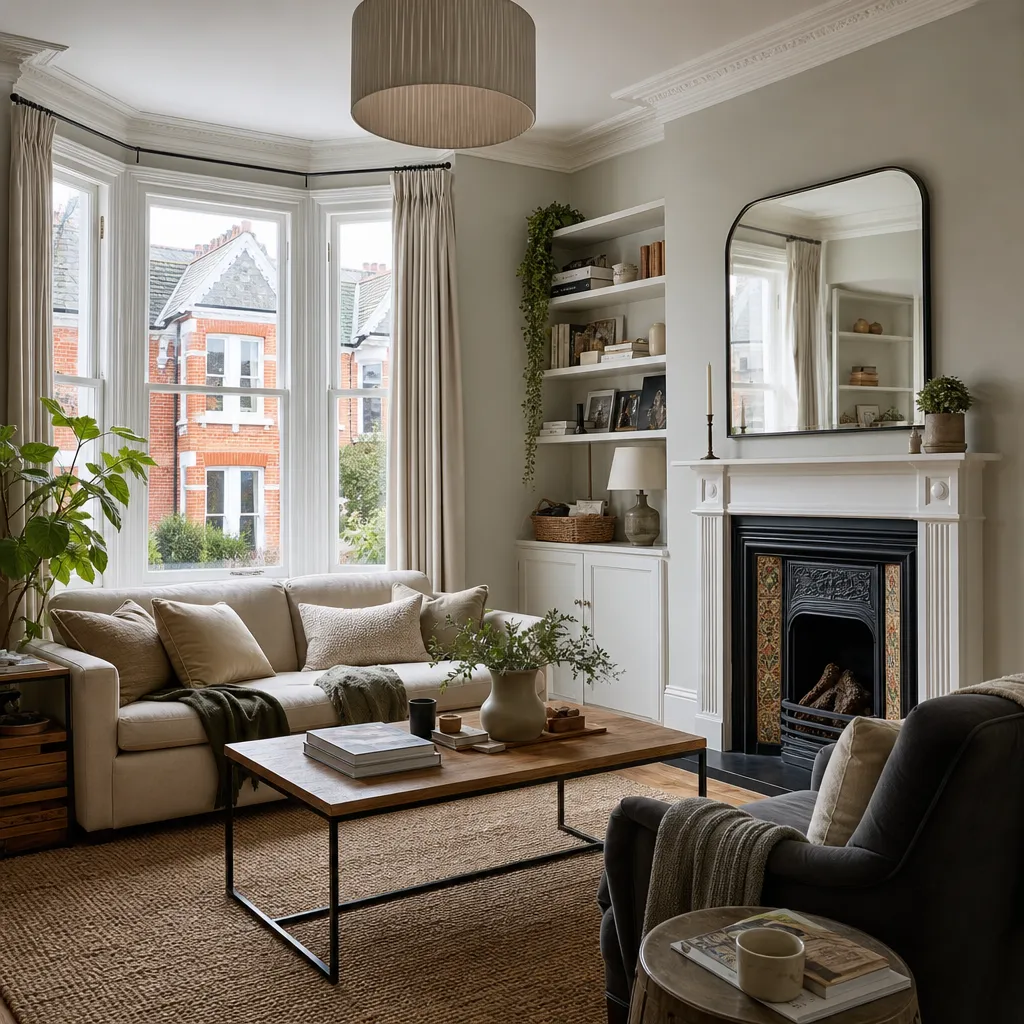
Creating Your Home Sanctuary: Design and Comfort Principles
Creating a home sanctuary is about balancing sensory comfort, functional layout, and personal aesthetic.
 Improvement & Build
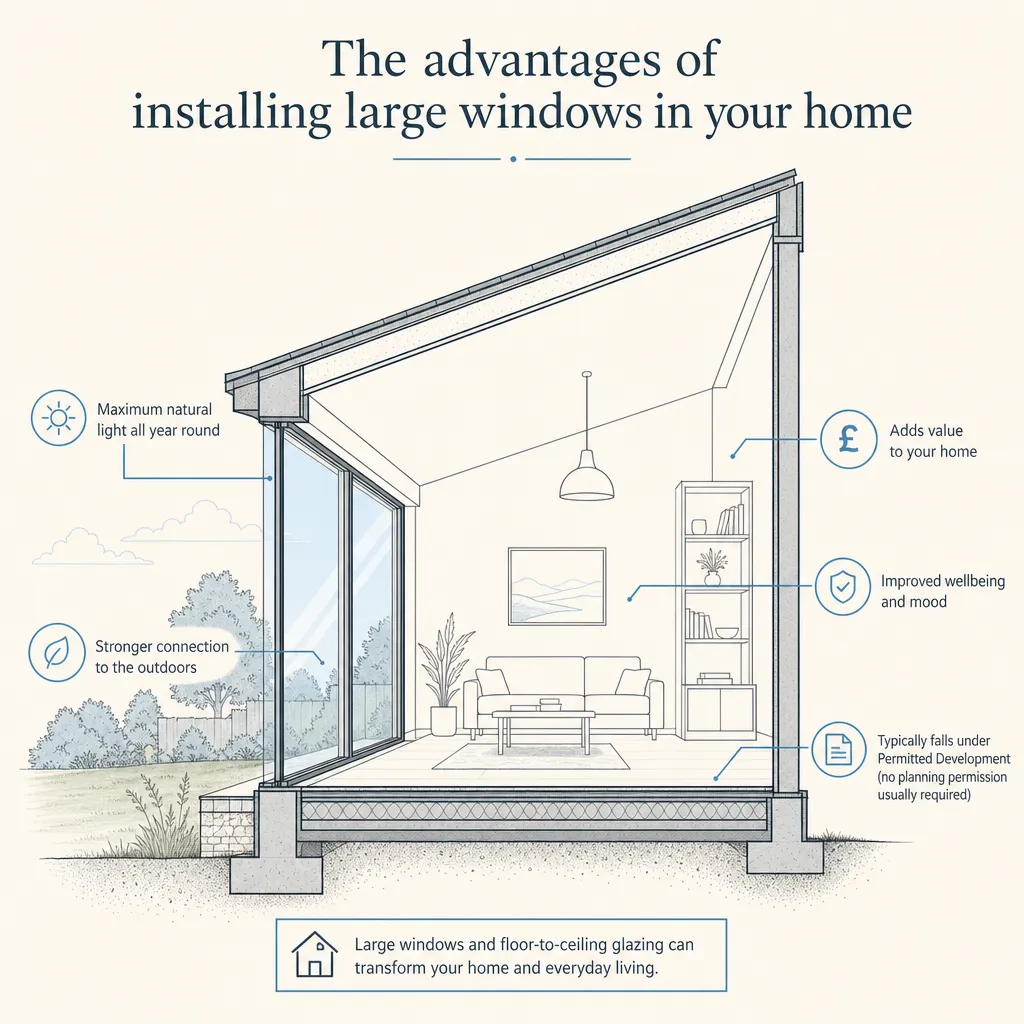
The advantages of installing large windows in your home
Large windows improve natural light, visual space, and the connection between interior rooms and gardens.
 Improvement & Build
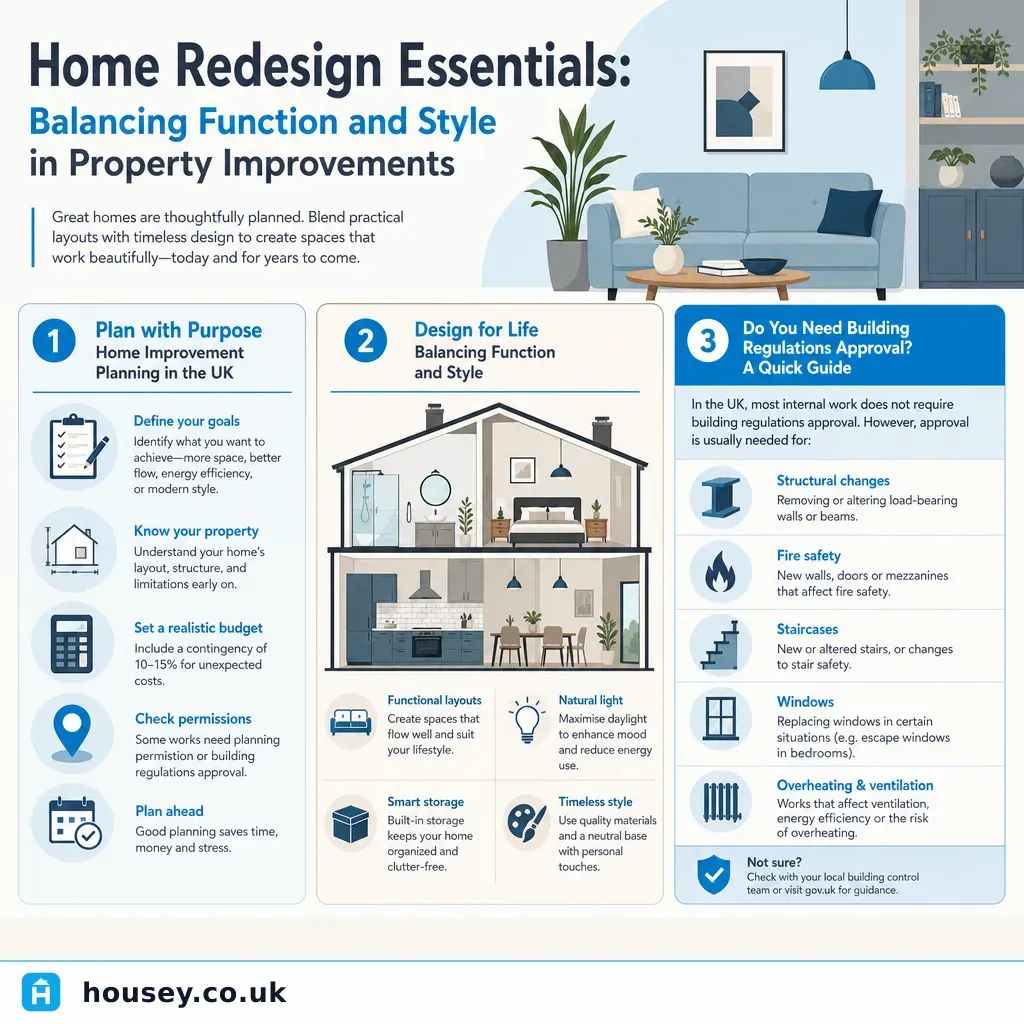
Home Redesign Essentials: Balancing Function and Style in Property Improvements
A successful home redesign starts with identifying functional problems — poor flow, limited storage, or lack of light — before committing to aesthetic choices.