Home Survey Inspections: What Professional Surveyors Examine
By Housey · Last reviewed 31st of May 2026
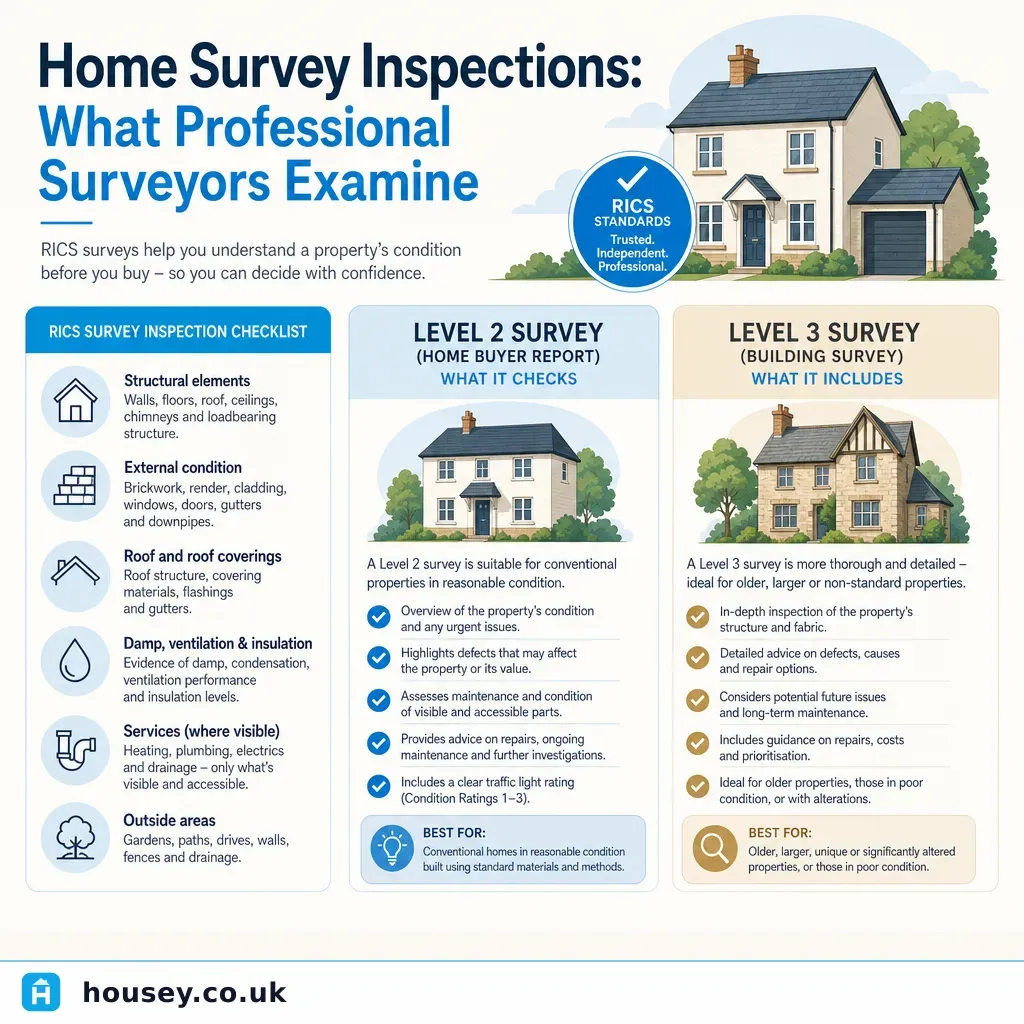
Home Survey Inspections: What Professional Surveyors Examine
Home surveys sit at a specific moment in the buying process — usually between offer acceptance and exchange of contracts — when a buyer needs an independent view of a property's condition before committing financially. The survey you commission, and what the surveyor examines, depends on the property's age, construction, and apparent condition. Knowing what falls within the inspection scope — and what does not — helps you read the report critically and decide where further specialist investigation may be needed.
Key points
- RICS publishes the Home Survey Standard, which all RICS-regulated surveyors must follow when delivering Level 1, Level 2, and Level 3 home surveys.
- Level 2 and Level 3 surveys rate defects using a three-condition scale: Condition Rating 1 (no repair needed), Condition Rating 2 (repair or replacement required in future), and Condition Rating 3 (urgent repair or further investigation required).
- A standard home survey is a visual inspection only — surveyors do not lift floorboards, open walls, or access enclosed roof voids without a specialist access agreement.
- Drainage inspection under a standard Level 2 or Level 3 survey is visual only; a separate CCTV drain survey is required to assess the condition of underground drainage runs.
- FENSA certificates confirm compliant replacement glazing installations; their absence is noted by the surveyor and may require further enquiry through conveyancing.
What a surveyor inspects
A RICS home survey covers the fabric of the property methodically from outside in. The main elements examined are:
Roof The roof covering — tiles, slates, flat-roof membrane — is assessed alongside ridges, verges, guttering, and flashings. Inspection is usually from ground level using binoculars, or from a loft hatch where one exists. Surveyors do not walk on roof surfaces.
External walls and structure Brickwork, render, stone, or timber frame is assessed for cracking, spalling, movement, and damp penetration. The pattern of cracking — horizontal, vertical, diagonal, or stepped — helps indicate whether movement is cosmetic or structural.
Windows, doors, and joinery Frames, sills, lintels, and seals are checked for rot, displacement, and failed double-glazing units. Missing FENSA documentation is noted and flagged for conveyancing enquiry.
Damp and moisture A calibrated damp meter is used alongside visual inspection to identify rising damp, penetrating damp, and condensation. Ground levels, air bricks, and the visible damp-proof course are all assessed.
Floors Visible areas of solid and suspended floors are inspected for unevenness, bounce, and moisture. Subfloor ventilation grilles and access hatches are noted where present.
Internal walls, ceilings, and staircases Cracking, bowing, water staining, and structural alterations are assessed. Where walls appear to have been removed, the adequacy of beam and padstone support is checked visually.
Services At Level 2 and Level 3, a visual check is made of the gas, electrical, and plumbing installations. This identifies visible concerns and recommends specialist tests — such as an Electrical Installation Condition Report (EICR) or a Gas Safe boiler service certificate — where appropriate. It is not a test of the installations themselves.
Outbuildings and grounds At Level 2 and Level 3, garages, garden walls, paths, and drainage gullies within the site boundary are inspected. Structures that appear to lack obvious planning consent or building regulations approval are noted.
What each survey level covers
Inspection area | RICS Level 1 | RICS Level 2 | RICS Level 3 |
|---|---|---|---|
Roof (external, visual) | ✓ | ✓ | ✓ plus loft void detail |
External walls and structure | Basic | ✓ | ✓ plus construction analysis |
Damp meter readings | No | ✓ | ✓ |
Services (visual check) | No | ✓ | ✓ |
Outbuildings and grounds | No | ✓ | ✓ |
Defect investigation and cause analysis | No | Moderate | In depth |
Cost or repair guidance | No | Indicative | ✓ |
Best for | Modern new-builds in good condition | Conventional homes built post-1900 | Older, larger, altered, or visibly defective properties |
What surveyors do not check
Understanding the limits of a visual inspection prevents misplaced expectations:
- Behind walls, under floors, and inside ceilings — without specialist equipment or an agreed intrusive inspection, these remain unseen.
- Underground drainage — visible drainage outlets are noted, but underground pipe condition requires a separate CCTV drain survey.
- Electrical testing — visible observations are made, but only an EICR conducted by a qualified electrician confirms installation safety to current standards.
- Gas appliances — the boiler and visible pipework are noted, but a Gas Safe engineer's service certificate is required to confirm gas safety.
- Timber and pest infestation — visible evidence is noted, but a specialist timber and damp survey provides more detail where risk is elevated.
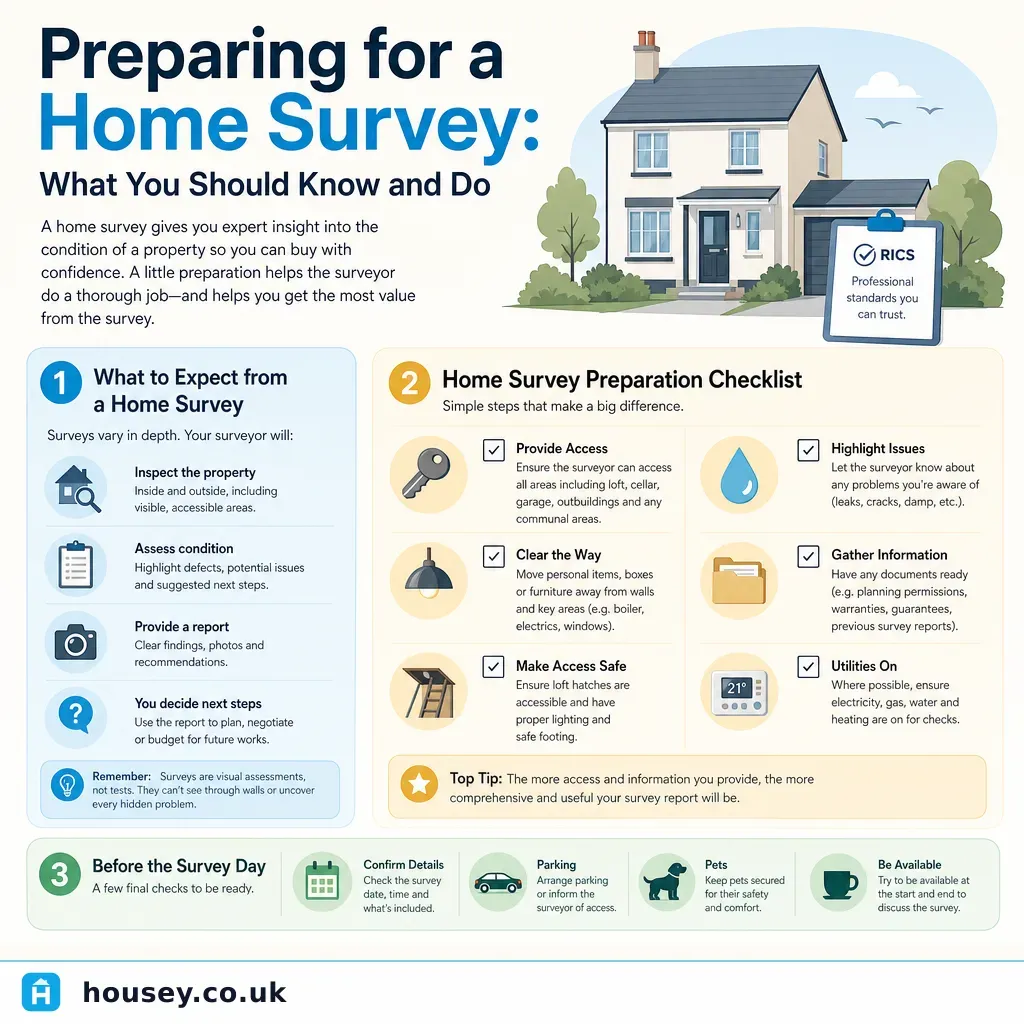
Preparing for your survey day
Whether you are the seller facilitating access or a buyer arranging entry, these steps help the surveyor complete a thorough inspection and reduce the risk of items being deferred:
Which survey level should you choose?
- Choose a RICS Level 1 (Condition Report) if the property is a modern new-build or recently converted home in good condition and you need a basic condition overview.
- Choose a RICS Level 2 (HomeBuyer Report) if the property is a conventional house or flat built after approximately 1900, with no obvious signs of major defects or unusual construction.
- Choose a RICS Level 3 (Building Survey) if the property is pre-1900, large, extended, altered, or constructed from unusual materials, or if you or the estate agent has noticed visible concerns.
- Ask a structural engineer if a specific defect — cracking, subsidence, or past movement — needs engineering diagnosis rather than a general condition assessment.
When to get professional help
A survey is itself the professional step, but findings sometimes prompt further specialist assessment:
- A Condition Rating 3 on any structural element, roof, or drainage item should be followed up before exchange of contracts.
- Suspected subsidence or significant cracking warrants a structural engineer's assessment rather than a general condition report.
- Evidence of damp in a solid-wall property may warrant a specialist damp and timber survey.
- Where the surveyor recommends an EICR or a Gas Safe inspection, commission these before exchange to understand the full remediation cost.
How Housey can help
Housey connects you with RICS-regulated surveyors for RICS Home Surveys across all three levels. Whether you need a RICS Level 1 survey on a new-build, a RICS Level 2 survey on a conventional property, or a detailed RICS Level 3 survey on an older home, you can compare quotes from qualified surveyors in your area.
Frequently asked questions
How long does a home survey inspection take?
A RICS Level 2 survey on a typical two- or three-bedroom house usually takes two to four hours on site. A Level 3 survey on a larger or older property can take four to eight hours. Written reports are generally delivered within five to ten working days of the inspection, though timescales vary by practice.
Can a surveyor access all areas of a property?
No. Home surveys are visual inspections. Surveyors cannot lift floorboards, open walls, move furniture, or walk on roofs. Areas that are locked, obscured, or unsafe are noted as not inspected in the report and may be flagged for further specialist investigation.
Do surveyors inspect gardens and outbuildings?
At RICS Level 2 and Level 3, surveyors typically inspect outbuildings, garages, garden walls, paths, and drainage visible within the site boundary. The level of detail varies between practices. Confirm the agreed scope with your surveyor before instruction to avoid unexpected gaps in coverage.
What should I do if the survey finds serious defects?
Focus first on Condition Rating 3 items and obtain specialist quotes for remedial work before exchange of contracts. You may wish to renegotiate the purchase price or ask the seller to carry out repairs. For serious issues — subsidence, significant structural movement, or drainage failure — seek specialist advice before proceeding.
Sources and further reading
- RICS Home Survey Standard — RICS
- GOV.UK: Buying a home — surveys and conveyancing — HM Government
- EICR guidance for homeowners — Electrical Safety First
- Gas Safe Register: Boiler servicing — Gas Safe Register
Useful next reads
 Surveys & Inspections
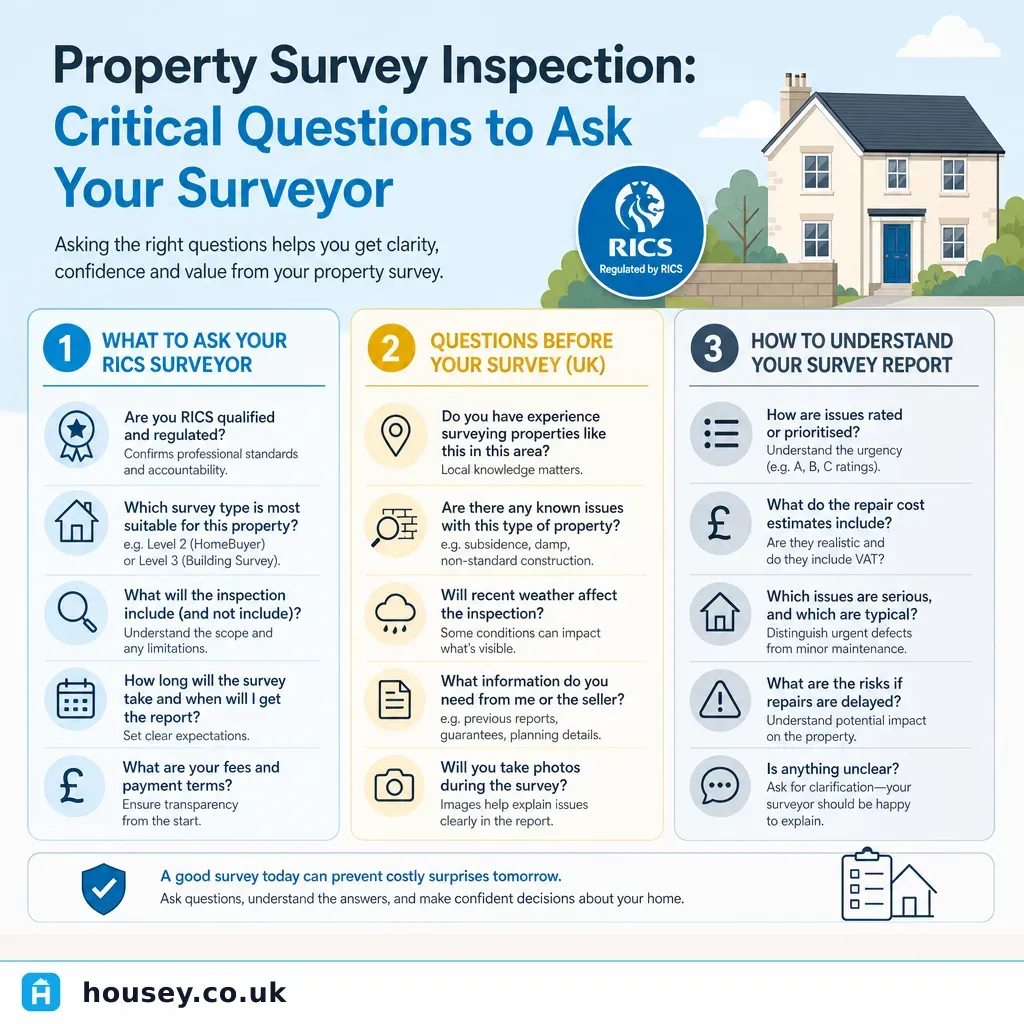
Property Survey Inspection: Critical Questions to Ask Your Surveyor
Before instructing a surveyor, ask which RICS level suits your property and what the report will and will not cover.
 Surveys & Inspections
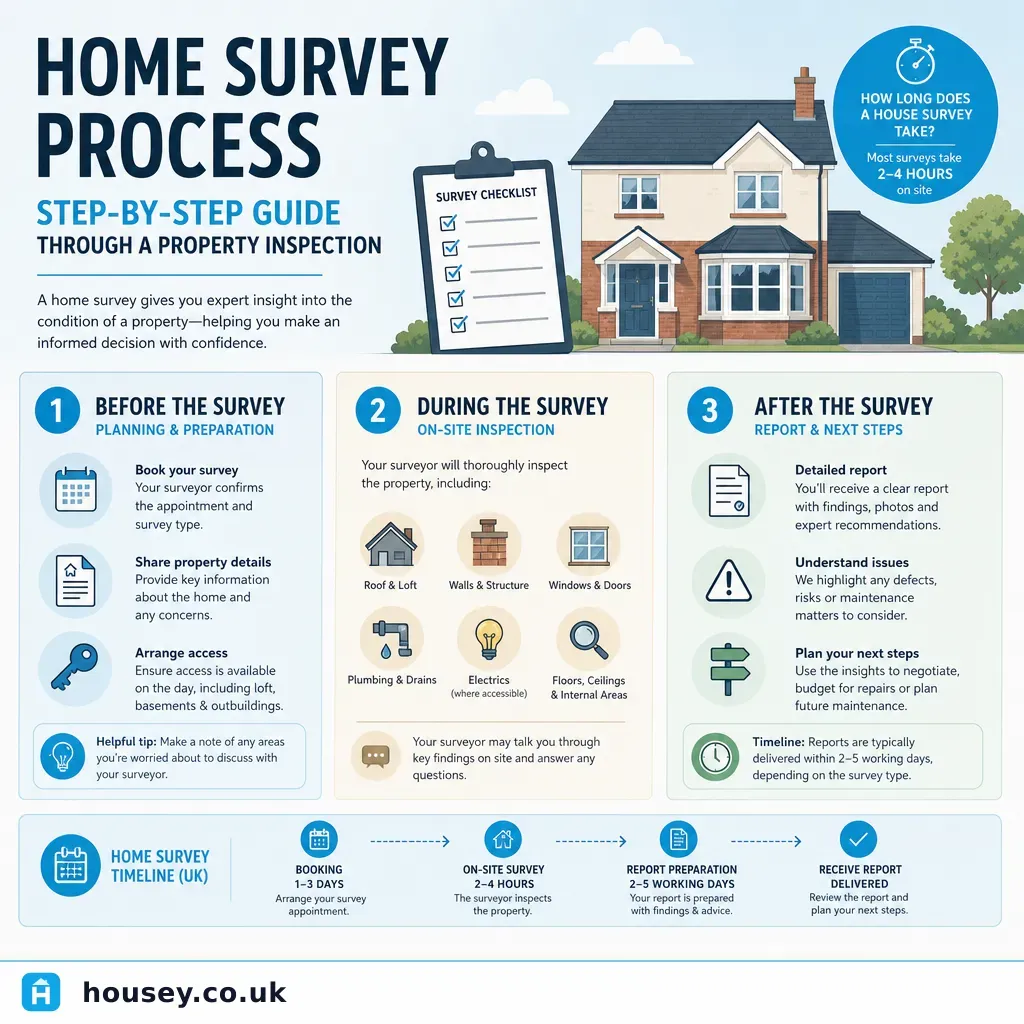
Home Survey Process: Step-by-Step Guide Through a Property Inspection
A RICS surveyor books and attends the property — usually 1–2 weeks after instruction — inspects accessible internal and external elements over 2–4 hours, and delivers a written report within 3–5 working days.
 Surveys & Inspections
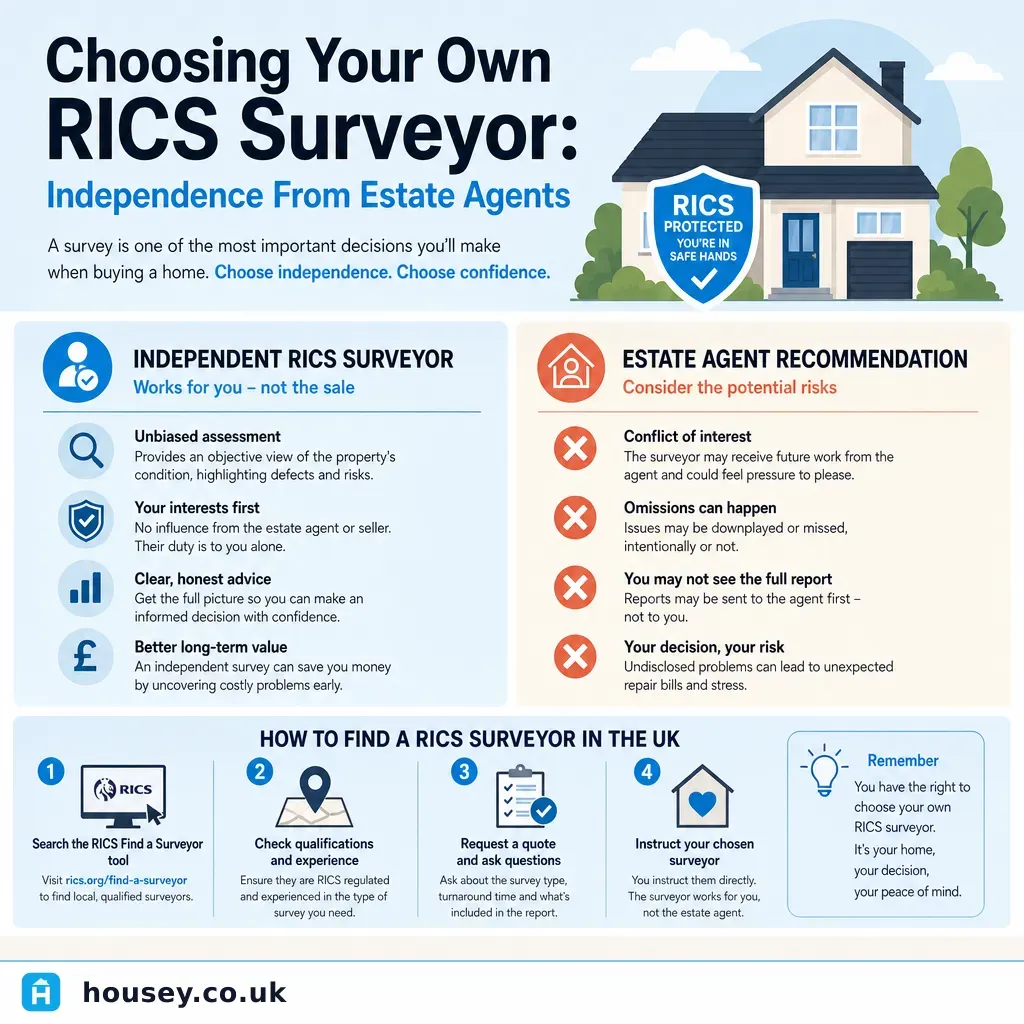
Choosing Your Own RICS Surveyor: Independence From Estate Agents
You have every right to choose your own RICS surveyor independently of your estate agent's recommendation.
 Surveys & Inspections
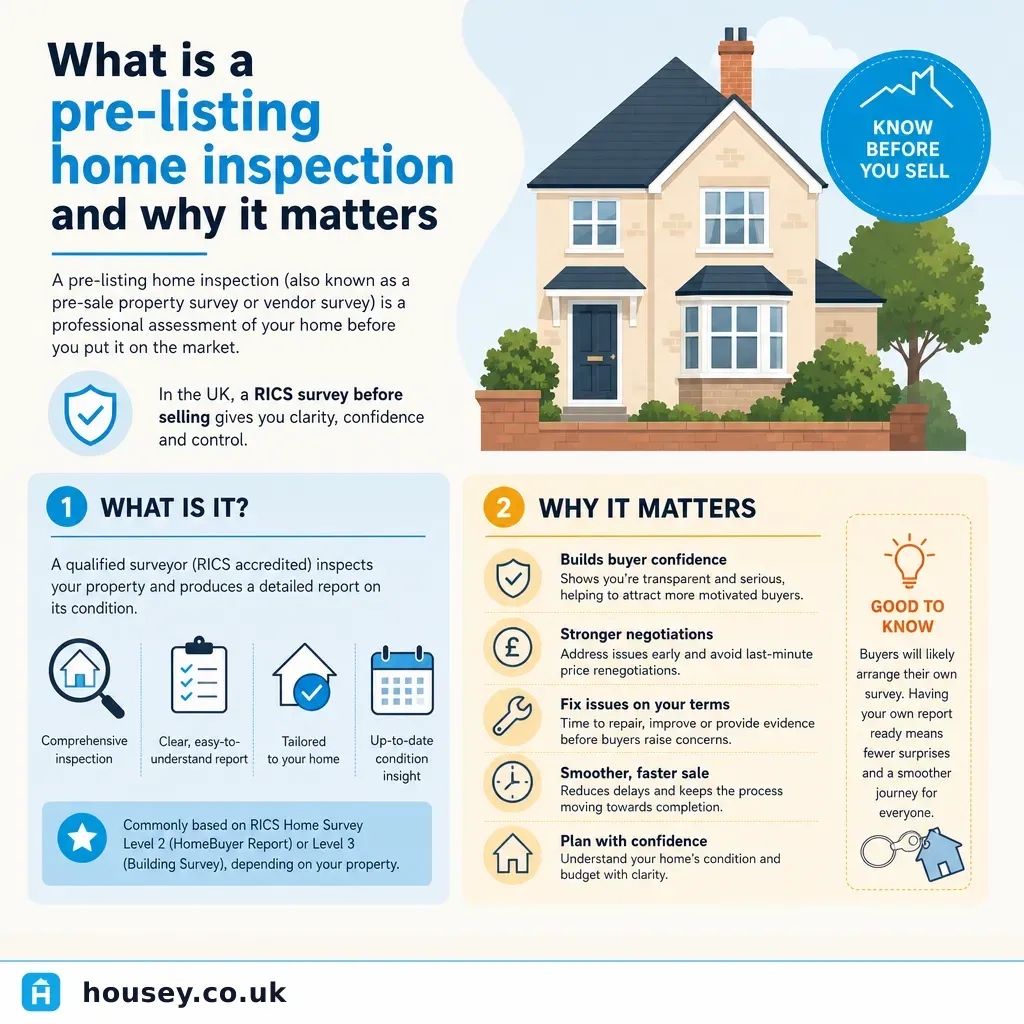
What is a pre-listing home inspection and why it matters
A pre-listing home inspection is a survey commissioned by the seller before marketing begins.
 Surveys & Inspections
Preparing for a Home Survey: What You Should Know and Do
Preparing for a home survey means giving the surveyor clear access to all parts of the property, gathering relevant documents such as planning permissions and Building Regulations certificates, and knowing in advance which survey level has been instructed.