Home Water Conservation: Strategies for Sustainable Living
By Housey · Last reviewed 26th of May 2026
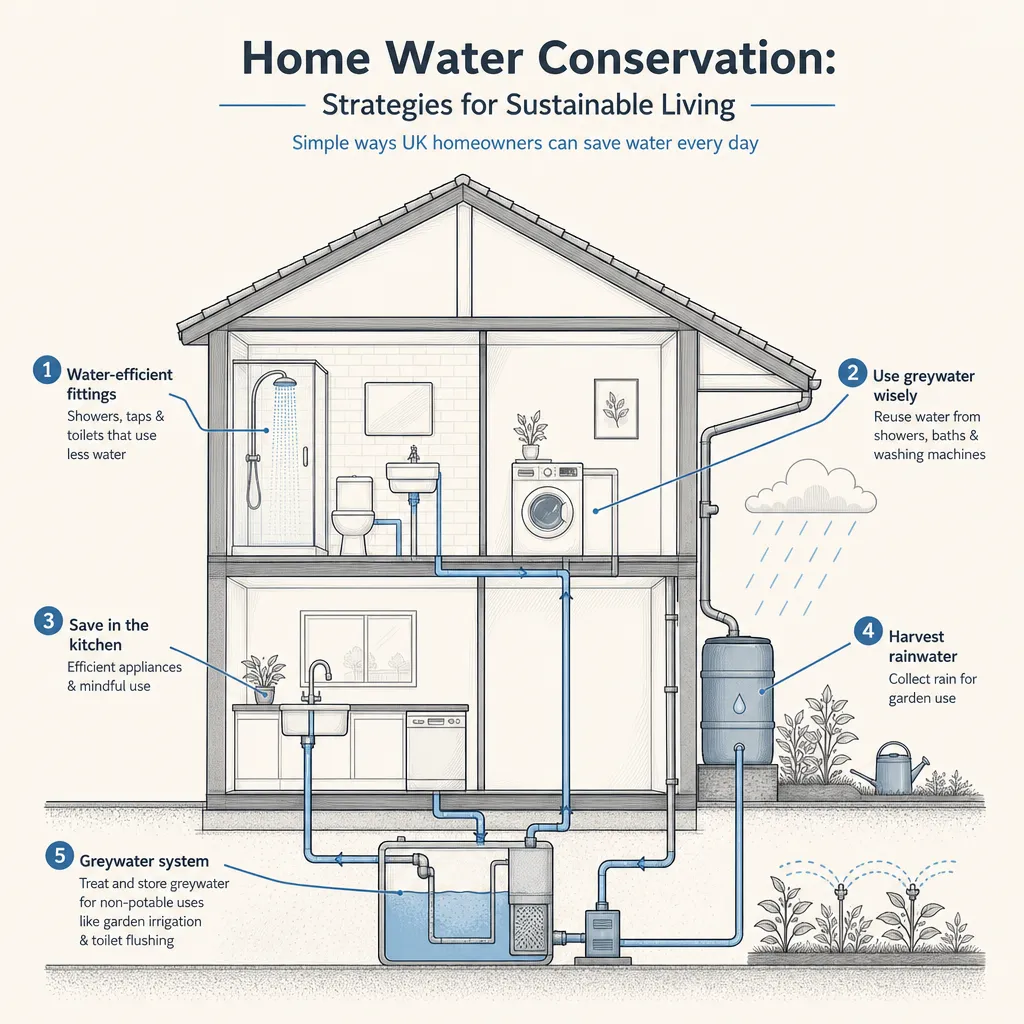
Home Water Conservation: Strategies for Sustainable Living
Water efficiency has moved up the agenda for UK homeowners as household bills rise, hosepipe bans become more frequent in drier regions, and environmental regulation tightens around new-build and retrofit standards. Whether you are renovating, fitting out an extension, or simply looking to reduce utility bills, there is a growing range of practical measures — from free devices offered by water companies to whole-house rainwater harvesting systems. Understanding what is available, what the regulations require, and where to start will help you make the most cost-effective choices.
Key points
- UK households use an average of approximately 142 litres per person per day, compared to a European average of around 128 litres, according to Water UK data.
- All products connected to the mains water supply must comply with the Water Supply (Water Fittings) Regulations 1999 and, where applicable, carry WRAS (Water Regulations Advisory Scheme) approval.
- Many UK water companies offer free water-saving devices — including cistern displacement bags, low-flow shower heads, and tap inserts — through their customer portals.
- Fitting a water meter can reduce household consumption by an average of 10–15% according to Water UK research; installation is usually free on request from your supplier.
- Greywater recycling and rainwater harvesting systems must not be cross-connected to the mains drinking water supply — this is a legal requirement under the Water Fittings Regulations 1999.
How much water does a typical UK household use?
Average consumption varies by property type, household size, and region, but Water UK figures consistently show the UK using more than many European counterparts. A standard three-bedroom house with four occupants might use around 560 litres per day in total. The biggest uses in a typical UK home are:
- Toilet flushing — approximately 30% of indoor water use
- Personal bathing and showering — approximately 25%
- Clothes washing — approximately 15%
- Taps (kitchen and bathroom) — approximately 15%
- Garden and outdoor use — highly variable; can reach 50% of total use during dry summers
This breakdown matters for prioritisation: the largest savings come from toilet flushing and showering, not from turning off the tap while brushing teeth — though that helps at the margin.
Low-cost and free measures you can take now
Homeowner water conservation checklist
Mid-range retrofits: what makes sense for UK homes?
Measure | Typical saving | Indicative installed cost | WRAS approval needed? | Best for |
|---|---|---|---|---|
Dual-flush toilet | 20–40% on toilet water use | £150–£450 supply and fit | Yes (cistern fittings) | Any home with a pre-2000 single-flush WC |
Low-flow shower head | 30–50% on shower water | £30–£150 DIY or fitted | Yes (if mains-connected) | Homes with power or mixer showers |
Water butt (200–500 litre) | Replaces mains water for most garden use | £30–£100 DIY | No (rainwater only) | Any home with downpipes and a garden |
Garden irrigation timer | Prevents overwatering | £20–£80 | Yes (if direct mains connection) | Gardens with automated systems |
Tap aerators | 40–60% flow reduction per tap | £5–£25 per tap DIY | Check WRAS compliance | Any home |
Greywater recycling (basic bath-to-WC) | 30–40% on toilet flush water | £1,500–£3,500 installed | Yes | Retrofits with accessible pipework |
Indicative UK costs, last reviewed 2026-05-26. Costs vary by region, contractor, and product specification.
More advanced options: greywater recycling and rainwater harvesting
For homeowners undertaking extensions, loft conversions, or significant bathroom refits, greywater recycling and rainwater harvesting become more economically viable because pipework access is available during construction and system integration is simpler.
Greywater recycling uses wastewater from baths, showers, and hand basins to supply toilet cisterns or laundry. Systems must comply with BS 8525-1:2010 (Greywater Systems) and must be clearly labelled as non-potable throughout. Cross-connection to the mains supply is illegal under the Water Fittings Regulations 1999. Installation should be carried out by a plumber registered under a competent person scheme or notified to building control.
Rainwater harvesting collects roof runoff, filters it, stores it in an underground or loft tank, and pumps it to non-potable end uses such as toilets, laundry, and garden irrigation. Systems should follow BS 8515:2009+A1:2013. Indicative installed cost for an underground 5,000-litre system: £3,000–£6,000+, depending on property type and access. Payback periods are typically long at current UK water tariffs, but these systems add resilience and may be viewed favourably in planning applications for larger developments.
Decision tree: which water conservation approach is right for you?
- If you have a garden and no water butt: fit a water butt first — lowest cost, immediate benefit, no regulations to navigate.
- If your toilet dates from before 2000: replace with a dual-flush WC or fit a WRAS-approved cistern displacement device.
- If your shower uses more than 10 litres per minute: fit a low-flow shower head or consider a modern shower unit.
- If you are extending or fitting a new bathroom: ask your architect or plumber about roughing in a greywater or rainwater system while walls are open.
- If you are on a meter and bills are still high: check for hidden leaks (turn off all taps and watch the meter for 30 minutes) before investing in technology.
- If you are seeking a whole-house retrofit assessment: ask your assessor whether water efficiency improvements qualify for local authority or water company incentives.
- If you let your property: check whether your local authority or water company operates any landlord-focused water efficiency grant schemes.
When to get professional help
Most low-cost water conservation measures are suitable for confident DIY. Use a qualified professional when:
- Any product is being connected directly to the mains water supply — use a WaterSafe-registered plumber
- Installing a greywater recycling or rainwater harvesting system, which have specific requirements under the Water Fittings Regulations 1999
- Your meter shows unexpectedly high consumption and you suspect a hidden leak — a plumber can perform a leak detection test
- You are integrating water conservation as part of a wider whole-house retrofit under PAS 2035
How Housey can help
A retrofit assessment can identify the most cost-effective water and energy efficiency measures for your specific property type and tenure. Housey also connects you with energy-efficiency consultants who can advise on whole-house improvement strategies, from insulation and ventilation to water management. Submit a request to receive quotes from local specialists.
Frequently asked questions
Will fitting a water meter definitely reduce my bills?
Not automatically, but research by Water UK suggests metered households use on average 10–15% less water — partly because consumption becomes visible on the bill. If your household uses less than average, for example a single person in a large house, a meter will almost certainly reduce costs. Your water company is legally required to install a meter on request at no charge.
Does a water butt need planning permission?
In most cases, no. A standard water butt is not a notifiable structure. However, if you live in a listed building or conservation area, check with your local planning authority before making any changes to external downpipes or drainage arrangements, as minor external alterations may require consent.
Are greywater systems hygienic?
Properly designed and installed greywater systems following BS 8525-1:2010 are considered safe for toilet flushing and external use. Systems must include filtration, appropriate storage time limits, and clear non-potable labelling. Systems that are poorly maintained or allow greywater to become stagnant can present a hygiene risk.
What are the best free water-saving measures in the UK?
The most impactful free or low-cost measures are requesting free devices from your water company, fitting a water meter, and installing a water butt. Together, these three steps can meaningfully reduce household water consumption and, if you pay metered charges, lower your water bill at minimal or no upfront cost.
Sources and further reading
- Water resources and efficiency — Water UK
- Water Supply (Water Fittings) Regulations 1999 — legislation.gov.uk
- Water Regulations Advisory Scheme — WRAS
- Water saving at home — Energy Saving Trust
- BS 8515:2009+A1:2013 Rainwater harvesting systems — BSI Group
Useful next reads
 Energy & Retrofit
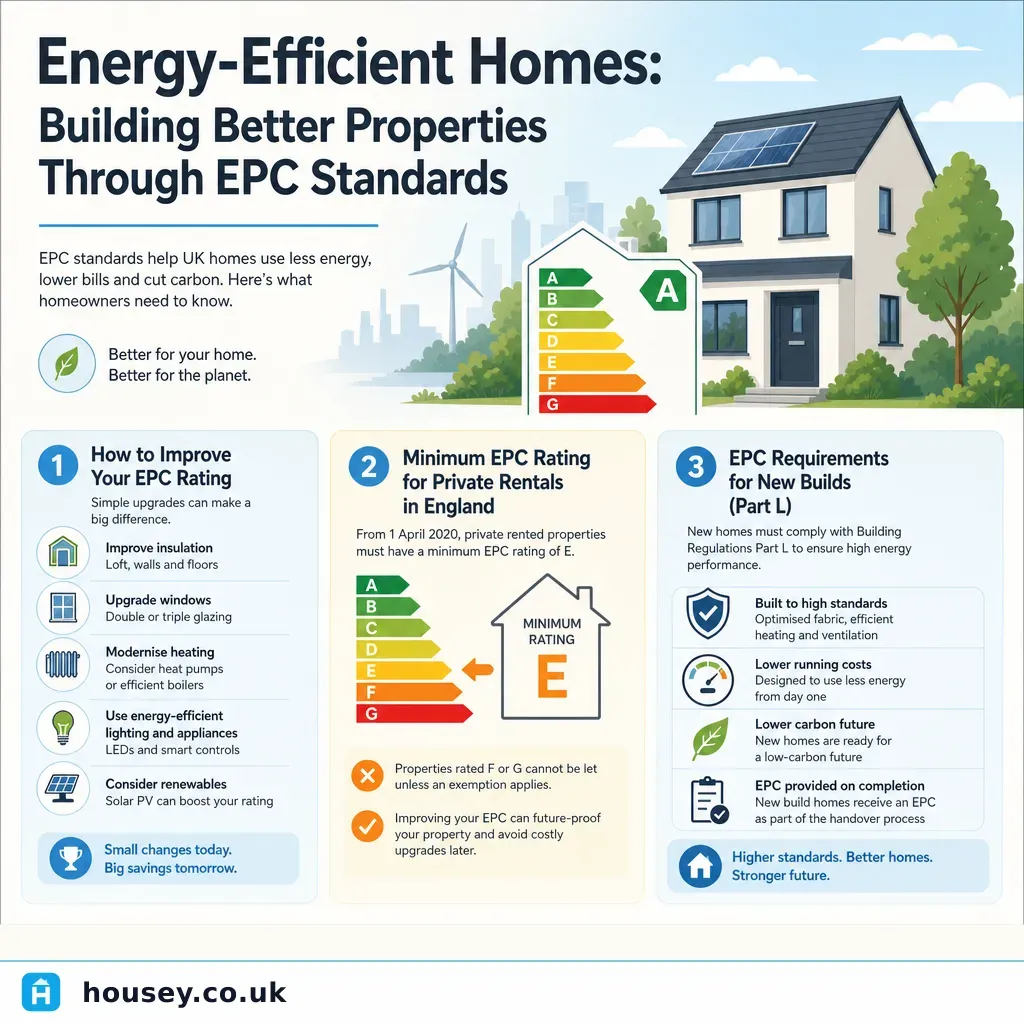
Energy-Efficient Homes: Building Better Properties Through EPC Standards
An EPC rates your home from A (most efficient) to G (least) using the Standard Assessment Procedure.
 Energy & Retrofit
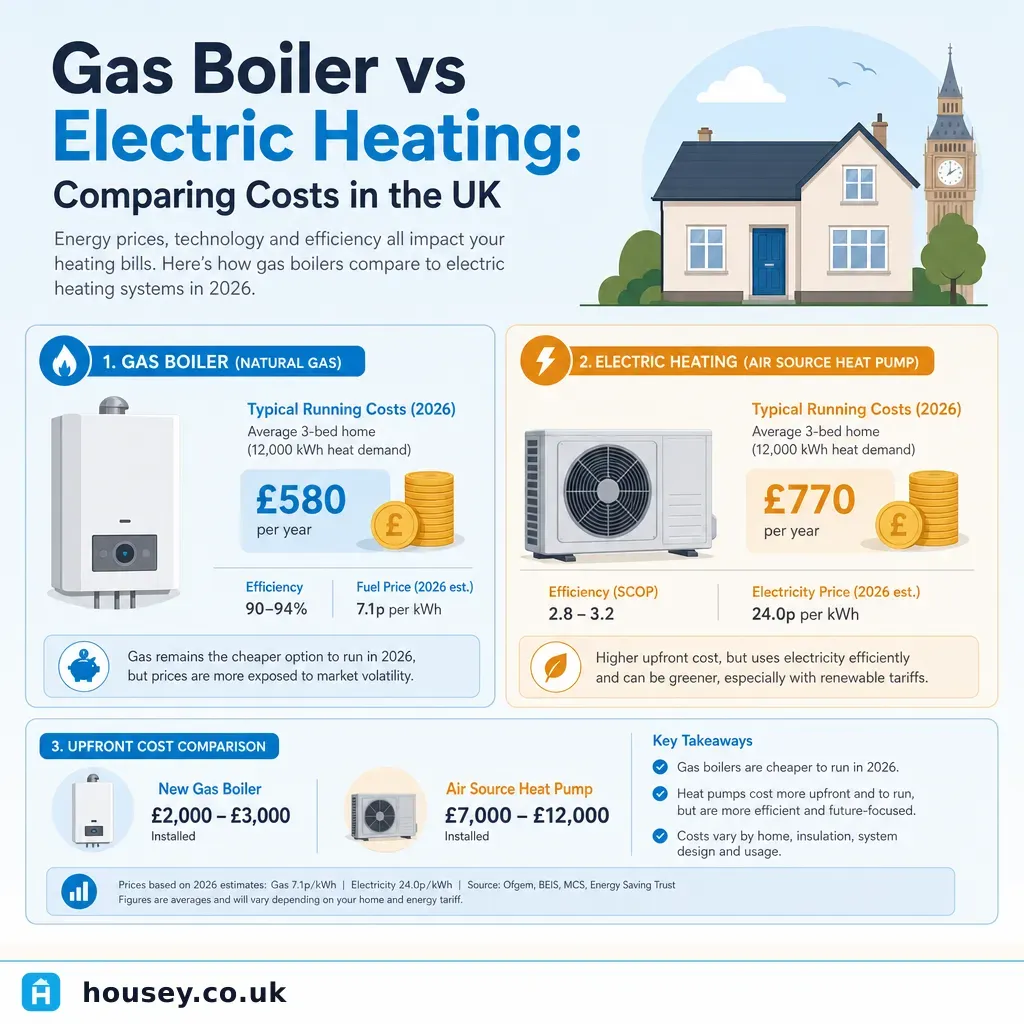
Gas Boiler vs Electric Heating: Comparing Costs in the UK
Gas boilers currently cost around 6.
 Energy & Retrofit
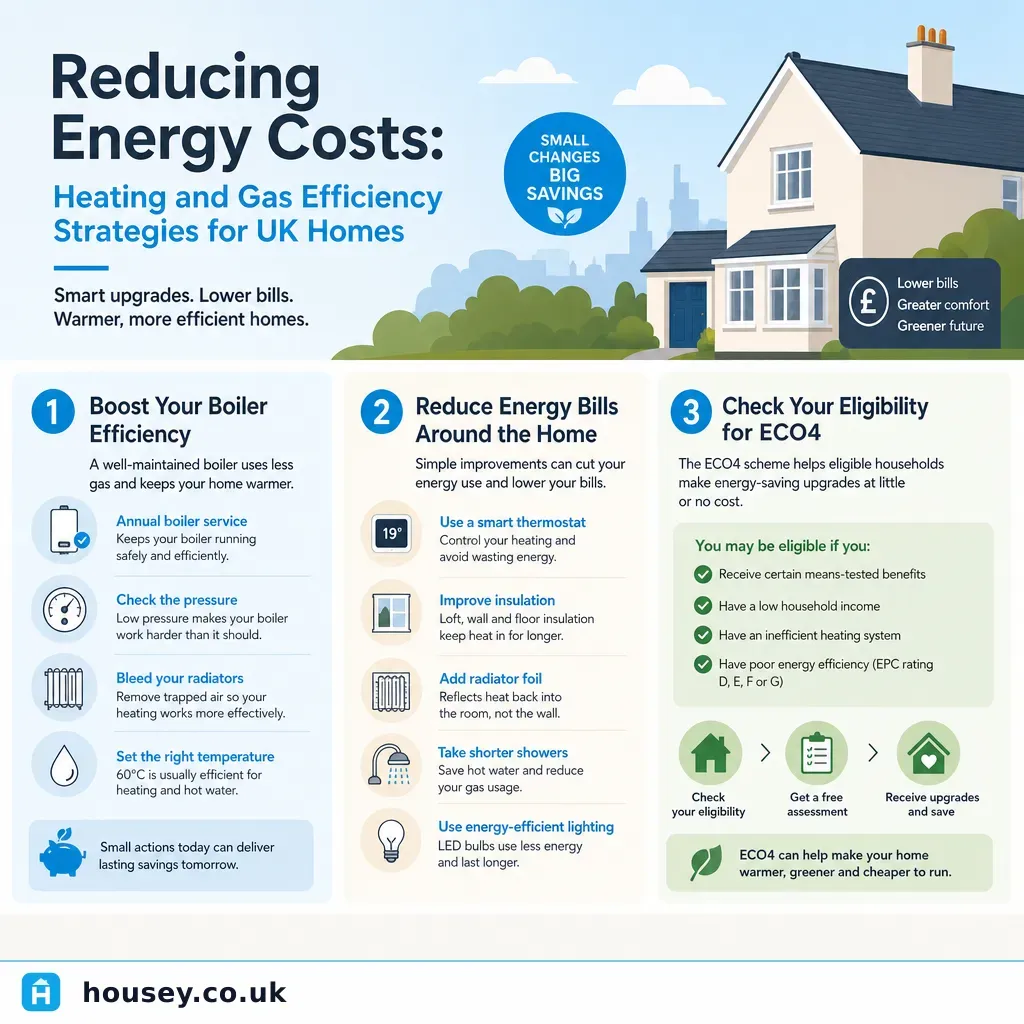
Reducing Energy Costs: Heating and Gas Efficiency Strategies for UK Homes
Most UK households spend around 55–60% of their energy bill on heating.
 Energy & Retrofit
Energy Retrofit Grants and Incentives: Improving Your Home's Efficiency
UK homeowners may be eligible for retrofit grants including ECO4 (insulation and heating for low-income households), the Great British Insulation Scheme, and the Boiler Upgrade Scheme, which provides up to £7,500 toward an air or ground source heat pump.
 Energy & Retrofit
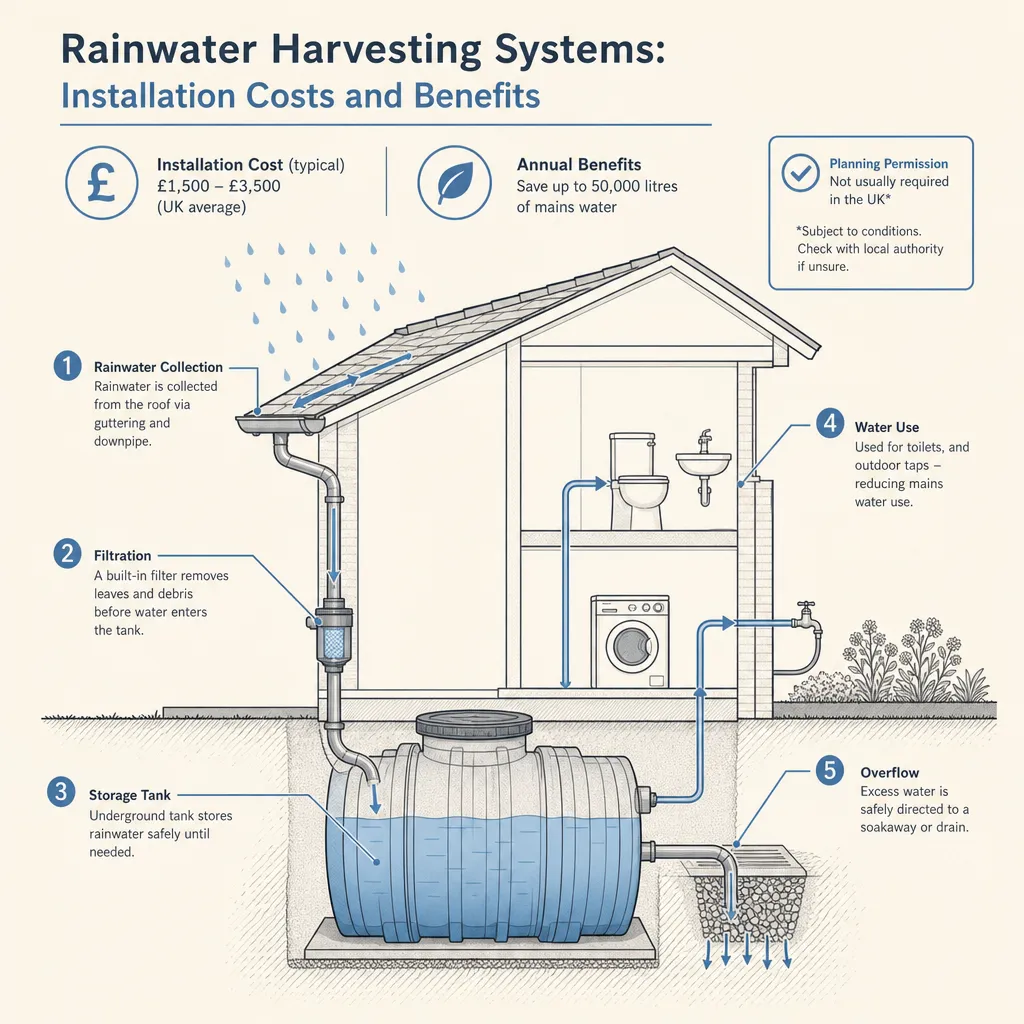
Rainwater Harvesting Systems: Installation Costs and Benefits
A domestic rainwater harvesting system costs £200–£600 for a simple above-ground butt or £2,500–£7,000 fully installed for an underground tank.