Homeowners Guide to RAAC: Recognition and Management
By Housey · Last reviewed 11th of May 2026
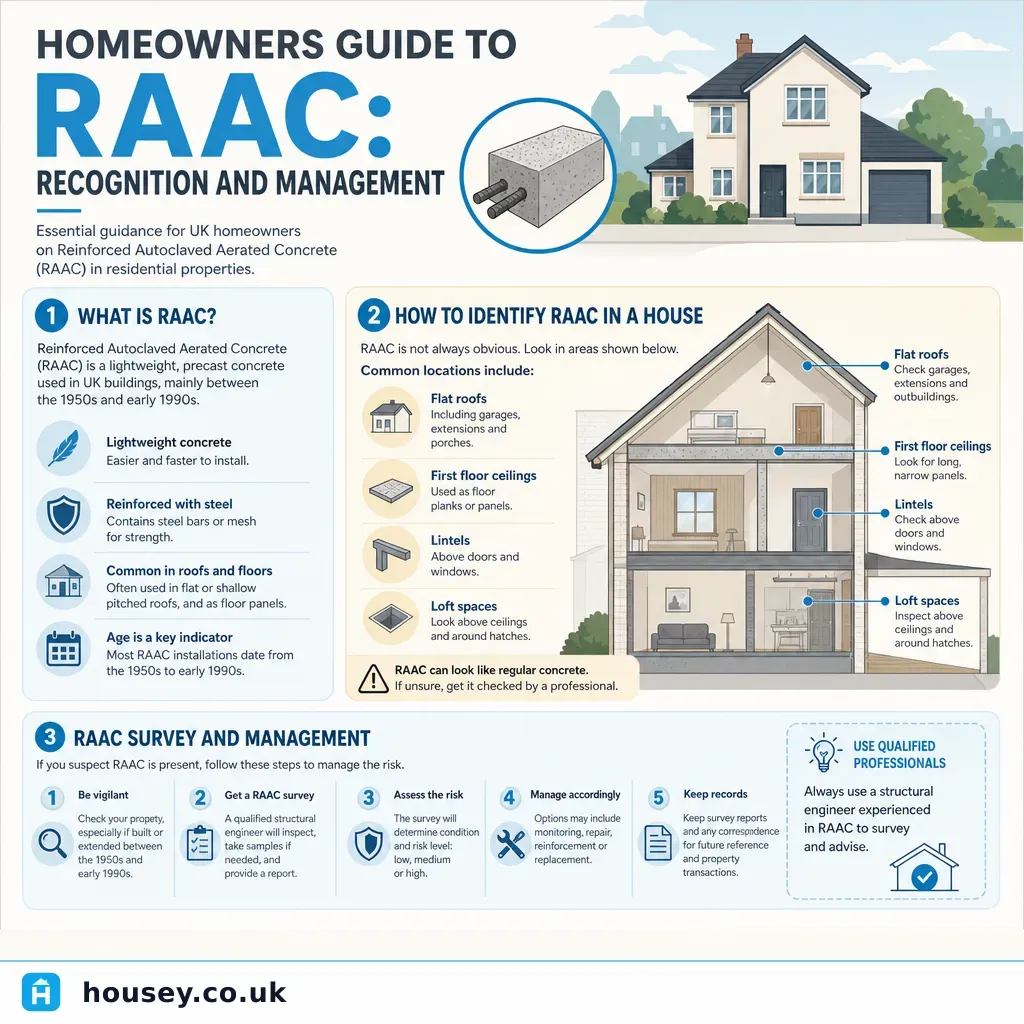
Homeowners Guide to RAAC: Recognition and Management
The 2023 school closure crisis brought reinforced autoclaved aerated concrete (RAAC) to widespread public attention, but the picture for residential homeowners is distinct from the public-sector story. RAAC was used in some residential construction — particularly local authority housing of the 1950s to 1970s — and questions about its presence, condition, and implications for mortgages, insurance, and property transactions are increasingly arising in the residential market. Understanding what RAAC is, where it occurs, and what a proper assessment involves helps homeowners and buyers make more informed decisions before committing to financially significant steps.
Key points
- RAAC is a lightweight, cellular concrete material used in UK buildings approximately between the 1950s and the mid-1990s, most commonly as flat-roof planks, floor panels between storeys, and external wall panels.
- RAAC has a recognised design life of approximately 30 years; most residential installations are now well beyond that period, making condition assessment increasingly important for properties of the relevant era.
- The Health and Safety Executive (HSE) and the Institution of Structural Engineers (IStructE) have both published guidance on RAAC identification, assessment, and management in buildings.
- In residential property, RAAC most commonly appears in ex-local authority flat-roofed blocks and maisonettes built between 1950 and 1975, though it can appear in other building types of that era.
- Mortgage lenders and building insurers may decline to lend or insure on properties where RAAC is confirmed or suspected without a satisfactory specialist structural engineer's assessment in place.
What is RAAC and why does it matter?
RAC is manufactured by mixing cement, lime, water, and a foaming agent (typically aluminium powder), then curing the mixture in a pressurised steam chamber — the autoclave. The result is a lightweight panel with a characteristic bubble-filled or cellular interior, clearly visible if a cross-section is exposed or a panel edge is examined in a loft or ceiling void.
Its appeal in post-war construction was cost and speed: RAAC panels were lighter and faster to install than traditional reinforced concrete. The structural problem is twofold. First, the design specification assumed a service life of roughly 30 years. Second, in conditions of moisture ingress — common in flat roofs — the steel reinforcement bars can corrode and expand, causing the surrounding concrete to delaminate. Unlike standard reinforced concrete, RAAC can fail with limited visible warning, making reactive maintenance inadequate once panels approach or exceed their design life.
Where does RAAC appear in residential buildings?
Location | Common property types | Typical era |
|---|---|---|
Flat roof structural planks | Ex-local authority flats, maisonettes, and houses with flat-roof extensions | 1950s–1970s |
Floor panels between storeys | Multi-storey local authority housing, some post-war flats and maisonettes | 1950s–1970s |
External wall panels (non-structural cladding) | System-built and modular social housing schemes | 1960s–1980s |
Internal wall panels (non-structural) | Some mixed-construction post-war homes and flatted blocks | 1950s–1980s |
RAC is less common in private-sector homes of the same period, which more typically used traditional masonry, timber-frame, or in-situ reinforced concrete construction. The highest residential concentration is in ex-local authority housing sold through the Right to Buy scheme and in blocks remaining in social or private landlord ownership.
How to recognise potential RAAC in your property
You cannot identify RAAC from external appearance alone — it can look like standard concrete or be concealed beneath finishes. The following are indicators that a specialist assessment is worth commissioning.
Red flags — consider instructing a specialist if:
- The property is a flat, maisonette, or house built between 1950 and 1980 with a flat or shallow-pitched roof
- The building appears to be system-built or non-traditional — regular panel joints, uniform panel dimensions, or an absence of conventional brick or block detailing
- Building records, a Home Report (Scotland), or a previous survey mention 'non-traditional construction', 'aerated concrete panels', or system-build types such as BISF, Airey, or Cornish Unit
- There are signs of water ingress through a flat roof or persistent ceiling staining beneath a flat roof structure
- A previous buyer withdrew following a survey without a clearly stated reason
- A mortgage lender has declined to lend or required a specialist structural report on the property
- You can see exposed panel edges in a loft or ceiling void showing a distinctly cellular or bubble-filled cross-section
If panels are accessible and you observe corroded reinforcement bars, delaminating concrete, or any sagging, do not disturb the material. Arrange a professional inspection — do not attempt to probe, cut, or apply load to the panels.
What a RAAC assessment involves
A specialist RAAC assessment by a chartered structural engineer typically includes:
- Document review: examining original building plans, maintenance records, planning history, and any previous survey or inspection reports.
- Visual inspection: checking accessible roof structures, loft voids, floor soffits, and wall panels for characteristic RAAC appearance and any signs of distress.
- Sounding and non-intrusive testing: tapping panels to detect hollow or delaminating areas and using a cover meter to check reinforcement depth and cover where accessible.
- Condition grading: engineers use a grading framework aligned with IStructE guidance, ranging from satisfactory condition through to requiring urgent remedial action.
- Recommendations: a management plan, monitoring programme, repair specification, or removal and replacement recommendation depending on the condition grade and risk level.
A structural survey or specific defect survey by a chartered structural engineer is the appropriate instruction. A RICS Level 2 or Level 3 home survey may flag RAAC as a risk or recommend further investigation, but engineering diagnosis and condition grading require a structural engineer with RAAC-specific experience — not a general building surveyor alone.
RAAC and the property market: mortgages and insurance
Since 2023, many mainstream mortgage lenders have introduced specific RAAC policies. Some lenders will decline any property where RAAC is confirmed; others will lend subject to a satisfactory structural engineer's report demonstrating the RAAC is in manageable condition and a remediation or monitoring plan is in place. Lender policies change — always check directly with your proposed lender before progressing a purchase.
If you are buying a property and RAAC is confirmed:
- Request the seller's full RAAC assessment report before exchange of contracts
- Verify your proposed lender's current RAAC policy and whether the existing report meets their requirements
- Check with your proposed buildings insurer that the property is insurable on standard terms before proceeding
- Seek legal advice on contractual protections and your right to information about material building defects
- Factor remediation costs and any ongoing monitoring programme into your purchase price negotiations
If you own a property and RAAC is confirmed:
- Notify your buildings insurer in writing immediately and request written confirmation of current cover
- Review your lease (if leasehold) to confirm responsibility for structural elements and any service charge provisions for major works
- Commission regular monitoring inspections at intervals your structural engineer recommends
Important limitations
This article provides general information about RAAC for UK homeowners, buyers, and leaseholders. The presence, condition, and structural implications of RAAC in any specific property can only be established by a qualified structural engineer or chartered building surveyor with relevant RAAC experience. Risk varies significantly with moisture history, construction details, and maintenance history. Mortgage lender and insurer policies on RAAC change and must be verified directly with each organisation. Nothing in this guide constitutes structural, legal, or financial advice.
When this becomes urgent
Contact a structural engineer promptly — do not wait — if:
- You can see ceiling cracking, deflection, or bowing beneath a flat roof structure in a property built between 1950 and 1980
- A flat roof has had repeated or unresolved water ingress over several heating seasons
- Powder, flakes, or fragments are falling from concrete panels in a loft space or between floors
- A lender, insurer, or surveyor has flagged RAAC risk or potential RAAC in writing
- You are approaching exchange of contracts on a property where RAAC has been identified — take legal advice before exchange, not after
What to ask a qualified professional
Before instructing a structural engineer or surveyor for a RAAC assessment, ask:
- Do you have specific experience assessing RAAC in residential buildings, and can you provide examples of comparable instructions?
- Will your assessment and condition grading follow IStructE or HSE guidance on RAAC?
- What access will you require — roof surface, loft void, ceiling soffit — and is any intrusive investigation included in the quoted scope?
- Will the report be in a form acceptable to mainstream mortgage lenders and building insurers?
- If RAAC is confirmed in poor condition, can you provide a remediation specification or refer me to a specialist contractor?
- What are the structural implications if RAAC panels cannot be economically repaired or replaced?
- Do you carry professional indemnity insurance covering structural assessments of this type and value?
When to get professional help
If you are in any doubt about whether a property contains RAAC — as a prospective buyer, existing owner, or leaseholder — commission a specialist assessment before making or committing to any significant financial decision. Do not rely on a general homebuyer survey or an unaided visual inspection to rule out RAAC in properties of the relevant era and construction type.
Housey can connect you with qualified professionals for structural surveys and specific defect surveys carried out by chartered engineers and surveyors experienced in non-traditional construction and RAAC assessment.
Frequently asked questions
Is RAAC dangerous in all cases?
Not necessarily. RAAC in good condition with no moisture ingress and intact reinforcement may not present an immediate safety risk. The concern is that condition can deteriorate, failure can occur with limited visible warning, and most installations have now exceeded their approximate 30-year design life. A professional condition assessment is the only reliable way to establish the current risk level.
Who is responsible for RAAC remediation in a leasehold flat?
In most leasehold arrangements, the structural fabric of a building — including roof planks and floor panels — is the freeholder's responsibility. However, this depends on the specific terms of your lease. If RAAC is identified in a block, leaseholders should formally request a structural assessment from the freeholder and take legal advice if the freeholder does not act.
Can I sell a property that contains RAAC?
You can market a property containing RAAC, but you have a legal obligation to disclose material facts through the Property Information Form (TA6). Concealing known structural defects can expose you to misrepresentation claims after sale. Commission a specialist report, disclose it fully to buyers, and take legal advice on appropriate contractual provisions before exchange.
Will home insurance cover RAAC-related damage?
Standard buildings insurance typically covers sudden, accidental damage rather than gradual deterioration. RAAC failure may or may not be covered depending on your specific policy wording and whether RAAC was a known condition when the policy was taken out. Notify your insurer in writing as soon as RAAC is identified and request written confirmation of your current cover.
Sources and further reading
- RAAC planks: guidance for building owners — Health and Safety Executive
- RAAC in buildings: guidance for assessors — Institution of Structural Engineers
- Reinforced autoclaved aerated concrete: government guidance — GOV.UK
- RAAC: what surveyors need to know — RICS
Useful next reads
 Surveys & Inspections
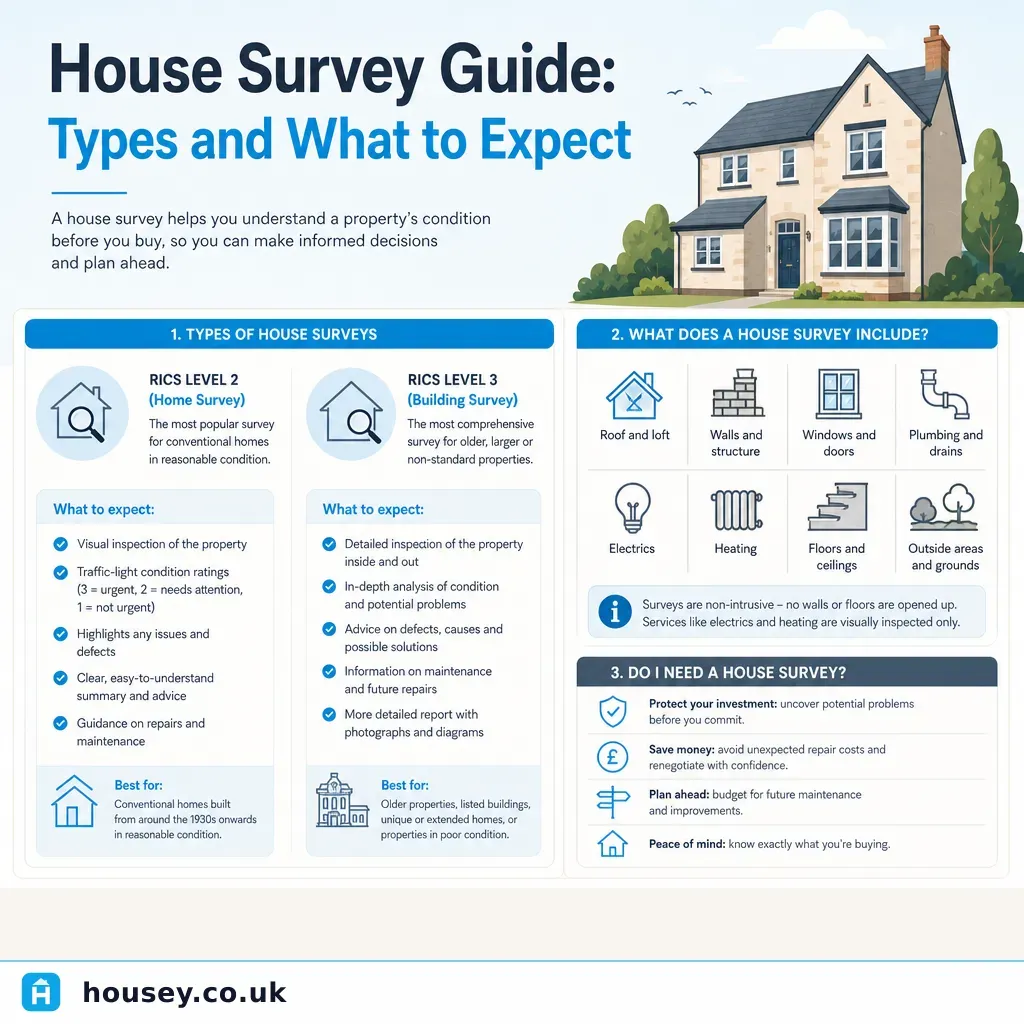
House Survey Guide: Types and What to Expect
UK house surveys come in three RICS-standardised levels: Level 1 (Condition Report) for new or near-new homes, Level 2 (Home Survey) for conventional post-war properties, and Level 3 (Building Survey) for older, altered, or defective properties.
 Surveys & Inspections
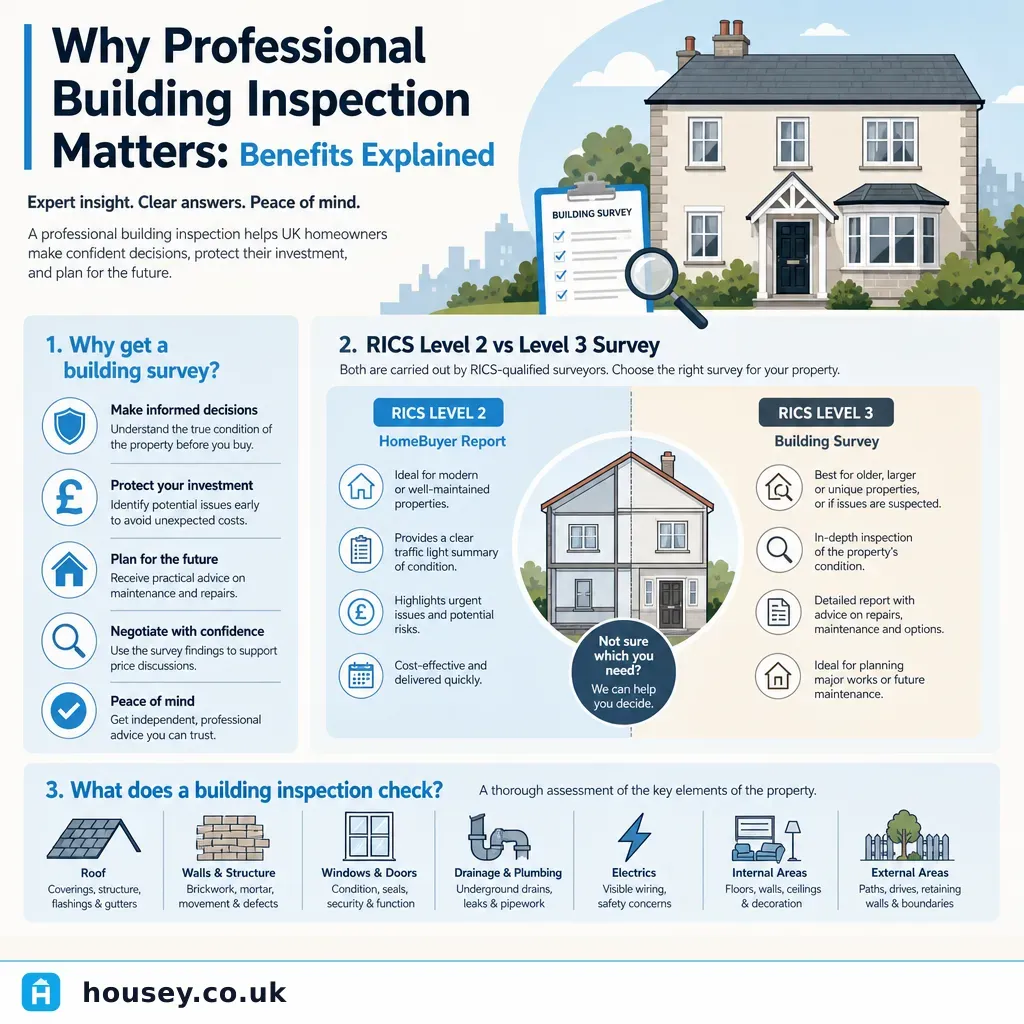
Why Professional Building Inspection Matters: Benefits Explained
Professional building inspection gives UK homeowners an independent, expert view of a property's condition and regulatory compliance.
 Surveys & Inspections
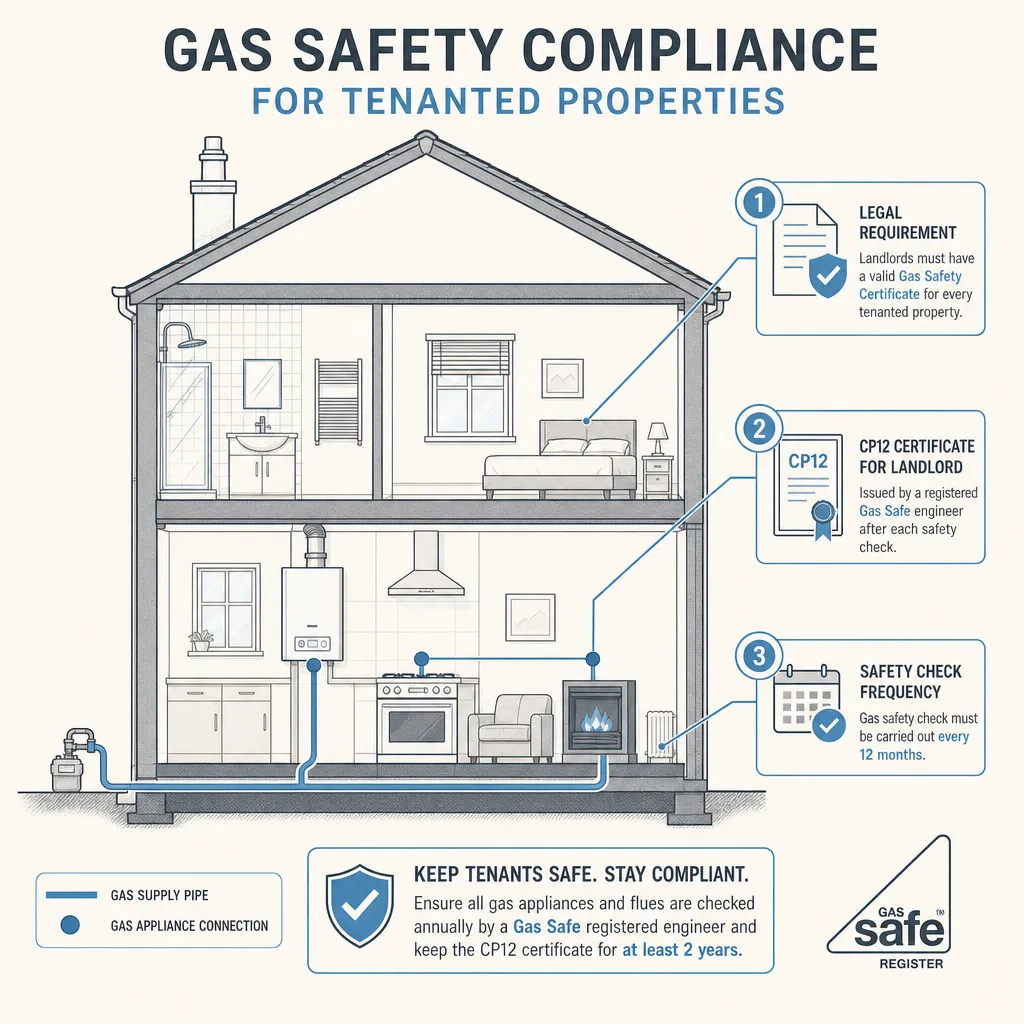
Gas Safety Compliance for Tenanted Properties
UK landlords are legally required to arrange an annual gas safety check by a Gas Safe registered engineer for every tenanted property with a gas appliance.
 Surveys & Inspections
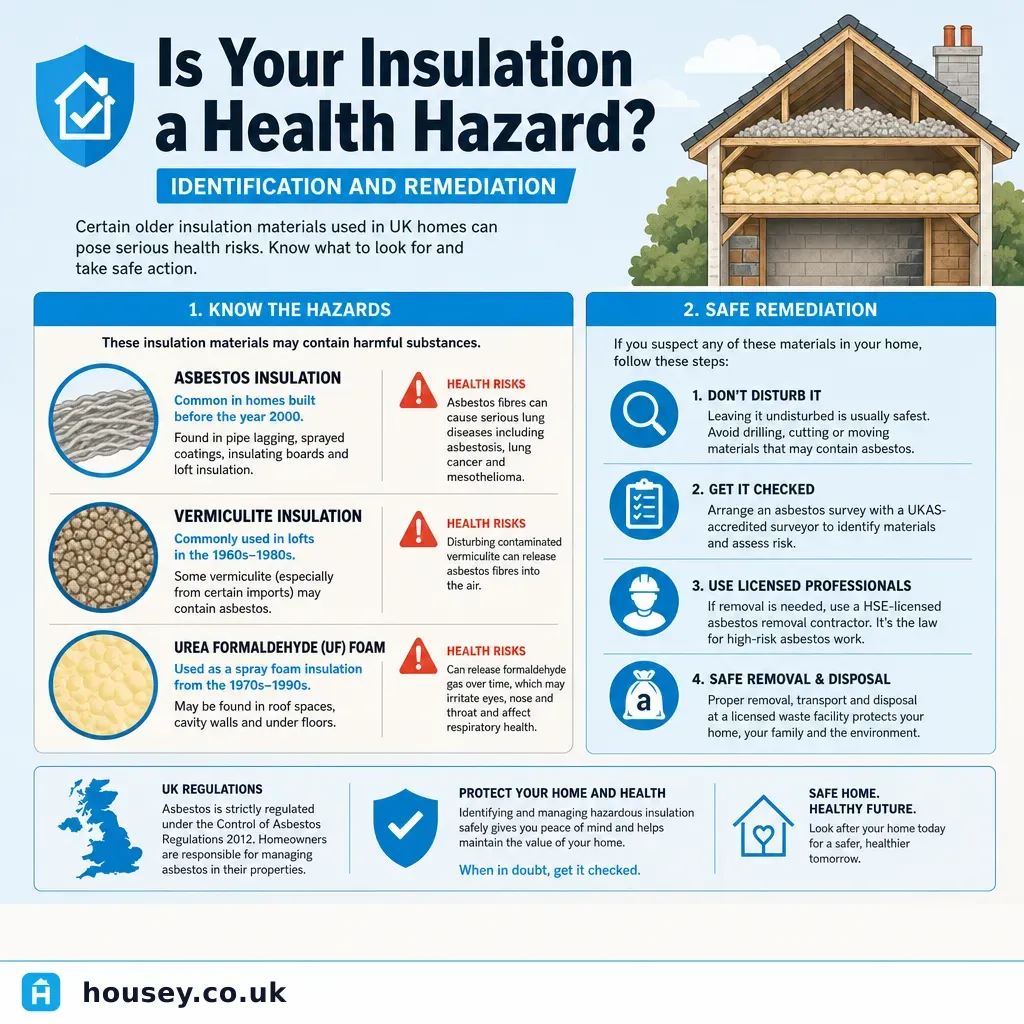
Is Your Insulation a Health Hazard? Identification and Remediation
Some insulation materials in pre-2000 UK homes may pose genuine health risks.
 Surveys & Inspections
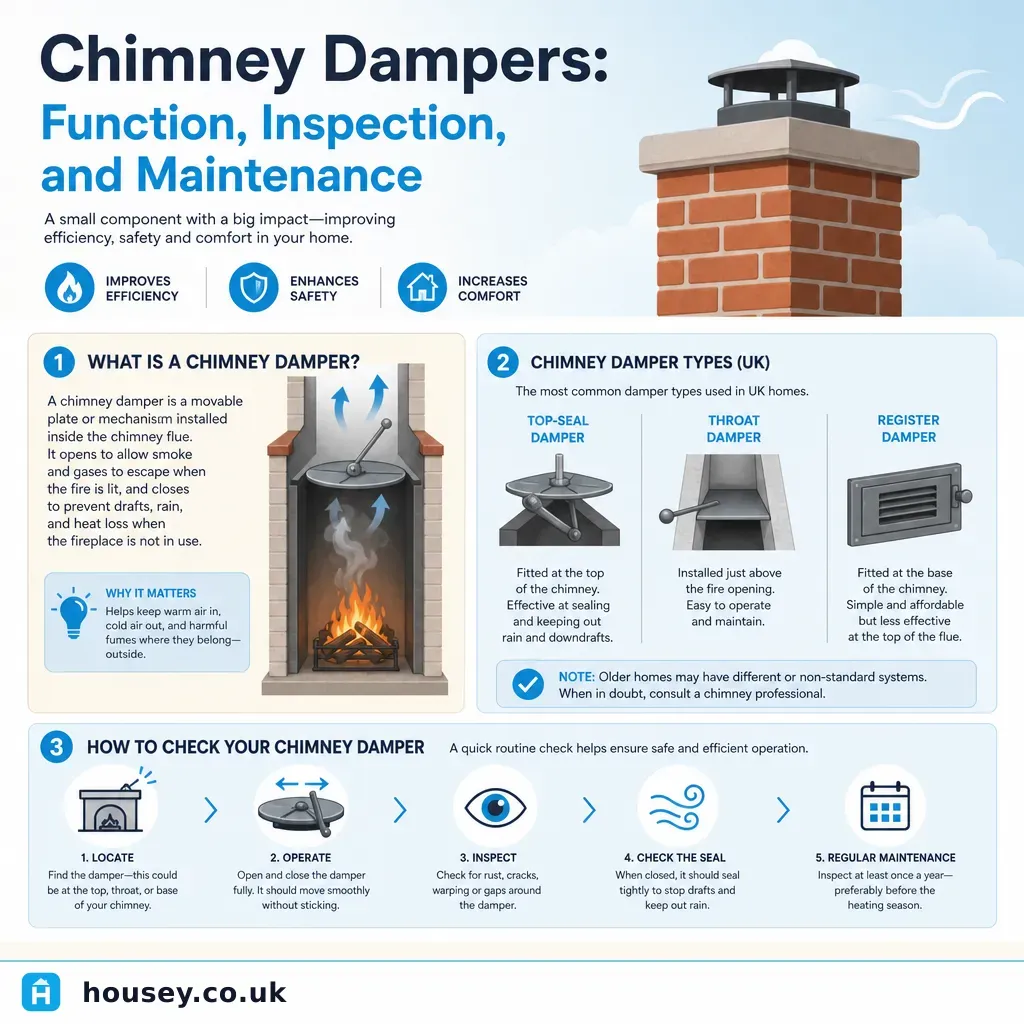
Chimney Dampers: Function, Inspection, and Maintenance
A chimney damper is a movable plate or valve in the flue that controls airflow when the fire is lit and seals the chimney when it is not.