Hot Tub Removal and Disposal Costs
By Housey · Last reviewed 7th of May 2026
Hot Tub Removal and Disposal Costs
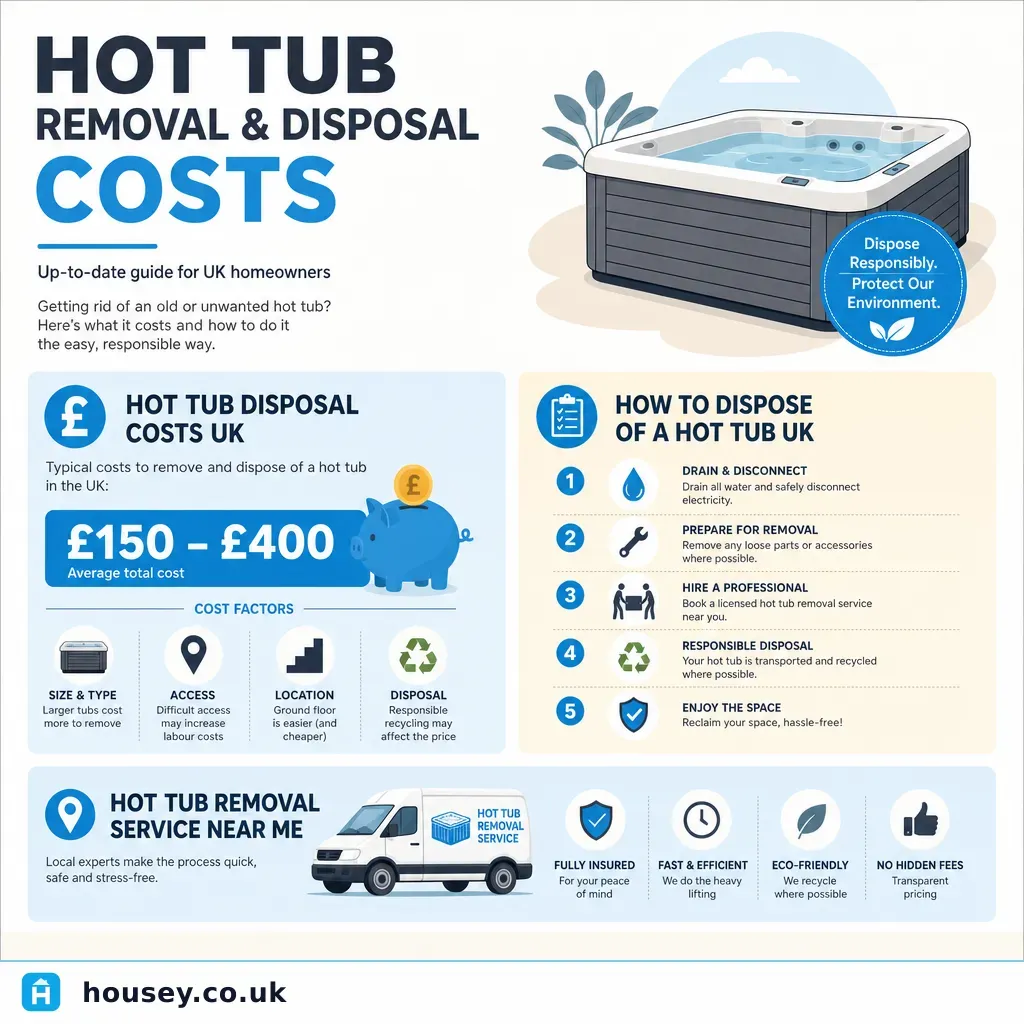
Hot tubs are large, heavy, and often permanently wired into the mains — which makes them considerably more complicated to remove than most garden furniture. Whether you are selling a property, moving home, or reclaiming outdoor space, understanding the full cost of removal and the legal obligations around disposal helps you plan accurately and avoid unexpected charges from contractors who quote low but exclude key elements.
Key points
- Hot tub removal typically costs £150–£450 for straightforward garden access; prices rise significantly if electrical disconnection, difficult access, or specialist lifting equipment is required (indicative UK costs, last reviewed 2026-05-07).
- The electrical supply to a hard-wired hot tub must be disconnected by a Part P-qualified electrician before removal — this is a legal requirement under Building Regulations Approved Document P in England and Wales.
- Hot tubs are classified as Waste Electrical and Electronic Equipment (WEEE) under the Waste Electrical and Electronic Equipment Regulations 2013 (SI 2013/3113) and cannot be disposed of via standard household waste collection or an unlicensed skip.
- An average hot tub weighs between 200 kg and 900 kg when empty — most require at least two workers and may need specialist equipment if access is restricted.
- Some removal companies offer recycling or resale options that can offset part of the cost, particularly for newer or branded models in working condition.
What does hot tub removal cost in the UK?
The price varies depending on the size of the hot tub, ease of access, whether electrical disconnection is needed, and how the unit will be disposed of afterwards.
Scenario | Indicative cost range |
|---|---|
Basic removal, easy garden access, no electrical work required | £150–£280 |
Removal including electrical disconnection by a qualified electrician | £250–£450 |
Removal requiring narrow access, on-site dismantling, or crane hire | £400–£800+ |
Collection by a WEEE-registered recycling firm (access arranged by you) | £100–£250 |
Buyer collects working unit (advertised for resale) | £0 — may attract a small payment |
Indicative UK costs, last reviewed 2026-05-07. Prices vary by region, size, and access. Always obtain at least two written quotes.
What factors affect the price?
Size and weight. Hot tubs range from compact two-person models to large eight-person units. Larger tubs require more labour and may need lifting equipment to clear gates, steps, or narrow side passages.
Garden access. Side-gate access is the most common constraint. If the hot tub cannot be wheeled or carried through a standard gate, the removal team may need to dismantle it on site or use a crane, which increases cost substantially.
Electrical disconnection. Most hot tubs in UK gardens are hard-wired to a dedicated circuit with an RCD-protected supply. Disconnecting this must be done by a qualified electrician. The disconnection alone typically costs £60–£150, though some removal companies include an electrician in their overall service. Never attempt to disconnect a hard-wired hot tub yourself.
Disposal method. Landfill disposal costs more than recycling, and some removal companies pass on a waste-transfer fee. If the hot tub is being donated or sold, the buyer's removal team takes on the disposal obligation.
Region. Labour costs in London and the South East are generally higher than in the Midlands, North, or Wales.
How is a hot tub legally disposed of?
Hot tubs contain electrical components — pumps, motors, heaters, and control units — that classify them as WEEE under the Waste Electrical and Electronic Equipment Regulations 2013. This means they cannot be disposed of via standard household waste collection or placed in a general skip without appropriate handling.
Legal disposal options include:
- WEEE-registered waste carrier: A licensed removal company that handles WEEE items and provides a waste transfer note as evidence of compliant disposal.
- Local authority Household Waste Recycling Centre (HWRC): Some centres accept large WEEE items, though size restrictions often apply — check with your local council before arranging transport.
- Manufacturer take-back schemes: Some hot tub manufacturers or retailers offer take-back programmes for older units.
- Resale or donation: If the hot tub is in working condition, advertising through local selling platforms transfers the disposal obligation to the new owner.
Always request a waste transfer note from any removal company handling disposal — this is your legal record that the waste was handled correctly under the Environmental Protection Act 1990.
Red flags when hiring a hot tub removal company
Watch out for these warning signs when comparing removal firms:
- No mention of WEEE compliance or waste transfer notes — a legitimate company will offer documentation as standard.
- Quotes that exclude electrical disconnection without flagging it — check whether disconnection is assumed to be complete already, or whether it is included in the price.
- No public liability insurance — removal of items weighing several hundred kilograms carries real risk; always verify cover before work begins.
- Cash-only payment with no written quote — a professional company will provide a clear written breakdown of what is and is not included.
- Vague descriptions of where the hot tub will go — ask specifically and confirm you will receive a waste transfer note.
What to ask before accepting a quote
Use this checklist when requesting quotes for hot tub removal:
- Is electrical disconnection included, and will the electrician be registered with a competent persons scheme such as NICEIC or NAPIT?
- Is the quote inclusive of VAT?
- What will happen to the hot tub, and will you receive a WEEE waste transfer note?
- How many workers will attend, and do they have the equipment to handle restricted access?
- Is public liability insurance in place, and can you see evidence of it?
- What could change the final price on the day — for example, access difficulty discovered on arrival or water remaining in the tub?
- How long will the job take, and will the area be left clear of debris and fixings?
When to get professional help
Hot tub removal sits at the intersection of heavy manual handling, electrical safety, and waste legislation — all of which carry legal obligations.
Always engage a qualified professional rather than attempting DIY removal if:
- The hot tub is hard-wired to the mains (the vast majority in UK gardens are).
- The unit weighs over 200 kg and access is restricted.
- You are unsure whether your chosen waste carrier is WEEE-registered.
- The hot tub contains chemical residues that need safe drainage.
For electrical disconnection specifically, this is notifiable work under Building Regulations Part P in England and Wales and must be carried out by a qualified electrician registered with a recognised competent persons scheme such as NICEIC or NAPIT.
How Housey can help
If you need to arrange removal of a hot tub alongside a broader move or property clearance, Housey can connect you with local house clearance services who handle large garden items and can advise on compliant WEEE disposal. Submit a single request and compare quotes from vetted local companies.
Frequently asked questions
Can I put a hot tub in a skip?
Not without additional measures. Hot tubs contain WEEE components and should not be placed in a general skip unless the operator confirms they hold a WEEE licence. Most standard skip-hire companies do not. Disposing of WEEE incorrectly can attract a fine. A specialist removal company with WEEE registration is usually the simpler and legally safer option.
Do I need an electrician before the removal team arrives?
For a hard-wired hot tub, yes. The electrical supply must be safely disconnected before the unit is moved — this is notifiable work under Building Regulations Part P in England and Wales and must be carried out by a qualified electrician. Some removal companies include an electrician in their service; others require you to arrange this separately. Clarify before booking.
How long does hot tub removal take?
A straightforward removal with good garden access typically takes two to four hours. If access is restricted, the unit needs dismantling on site, or electrical disconnection takes additional time, allow a full day. Ask the removal company for a time estimate when booking, particularly if you need to coordinate with other tradespeople or a property handover.
Can I sell my old hot tub instead of paying for removal?
Possibly. If the hot tub is in working order and a reasonably modern model, there may be demand through local selling platforms or secondhand dealers. A buyer who arranges their own collection takes on the removal and disposal obligation, potentially saving you the removal cost entirely or generating a small payment towards it.
Will the removal company drain the hot tub?
Some companies include draining as part of their service; others require you to drain it before they arrive. A full hot tub adds several hundred litres of water to an already heavy unit. Confirm this when booking, and check whether any chemical residues need to be neutralised before draining to a surface water drain.
Sources and further reading
- Waste Electrical and Electronic Equipment (WEEE): producer responsibilities — GOV.UK
- Approved Document P: Electrical safety in dwellings — GOV.UK / HM Government
- Register as a waste carrier, broker or dealer — Environment Agency / GOV.UK
- Find your local household waste recycling centre — GOV.UK
Useful next reads
 Buying & Moving
House Clearance Pricing and Service Options
House clearance costs in the UK range from around £150 for a one-bedroom flat to £1,500 or more for a four-bedroom house, depending on volume, location, and how much can be donated or recycled.
 Buying & Moving
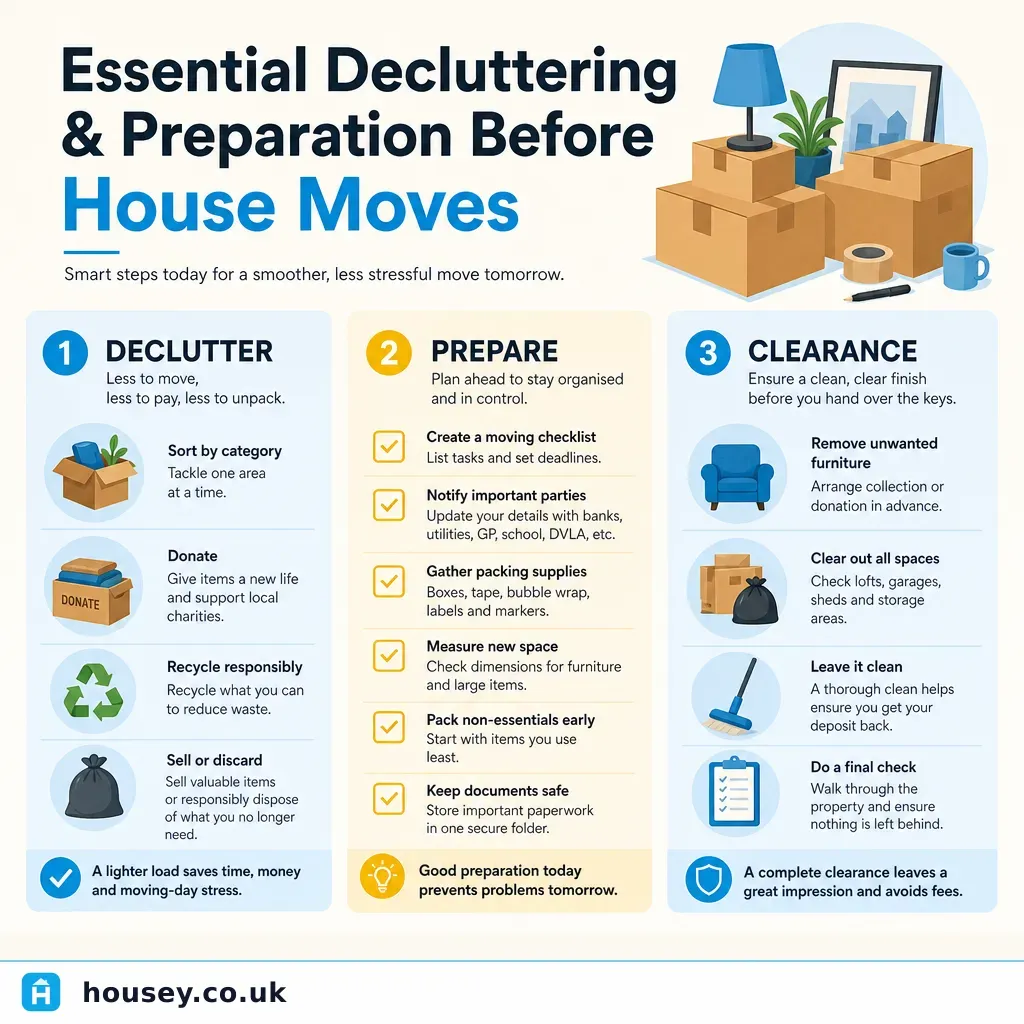
Essential decluttering and preparation before house moves
Decluttering before a house move reduces removal costs, improves property photographs, and simplifies unpacking.
 Buying & Moving
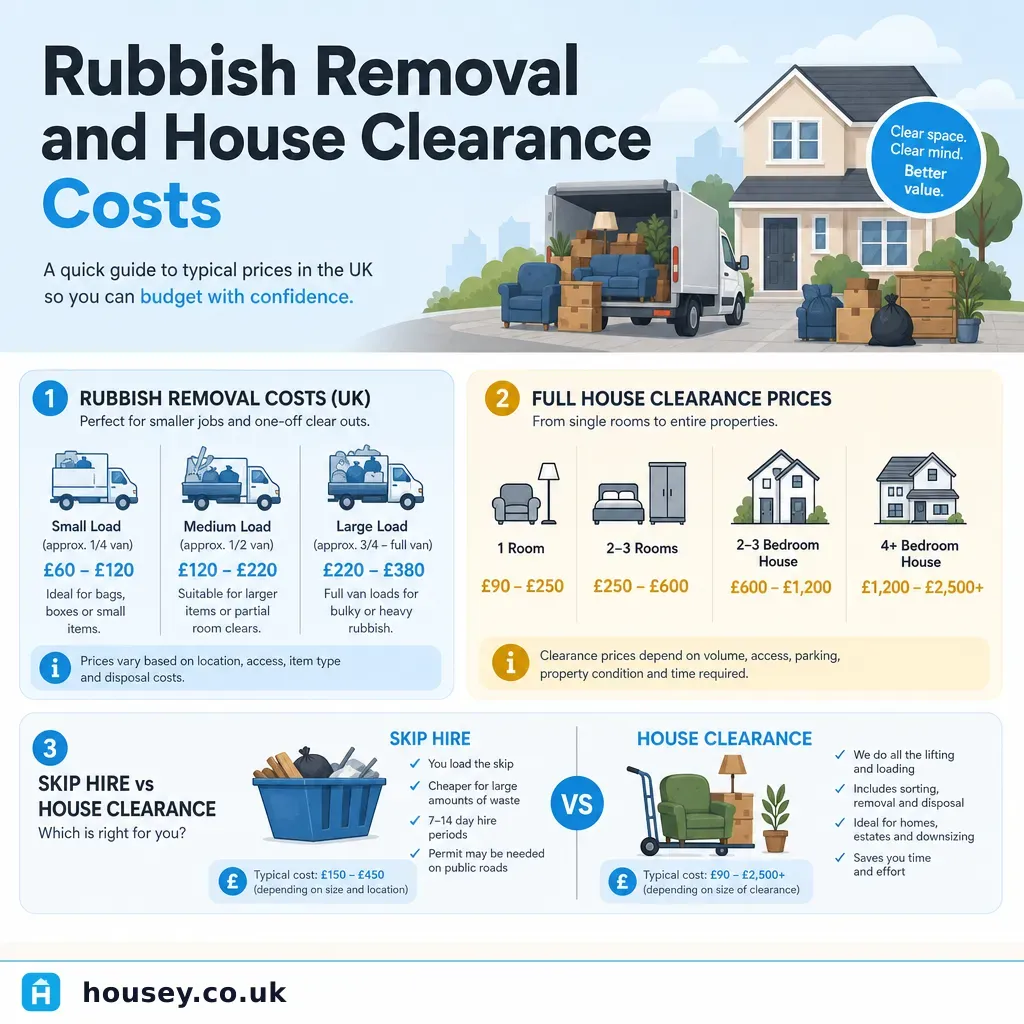
Rubbish Removal and House Clearance Costs
House clearance in the UK typically costs £150–£400 for a single room and £500–£1,500 for a full three-bedroom property, depending on volume, access, and hazardous items.
 Buying & Moving
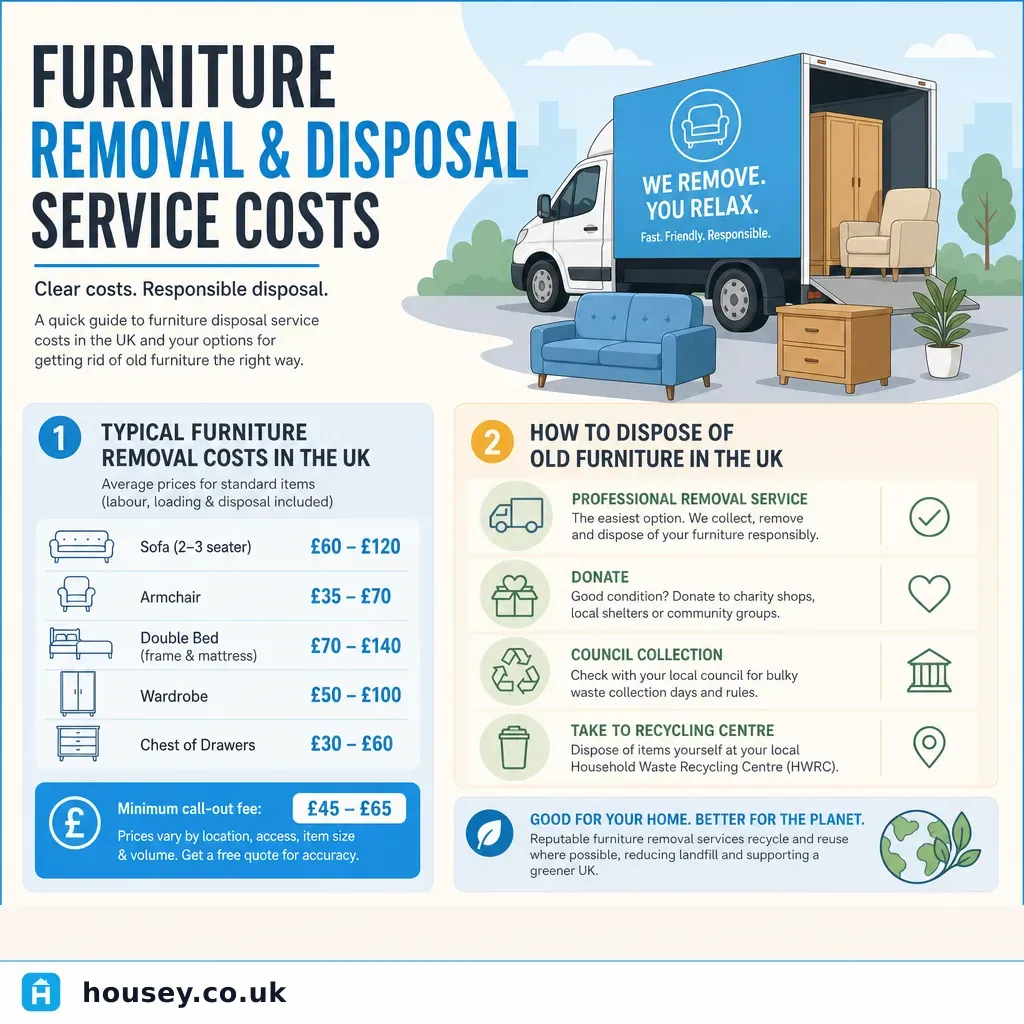
Furniture Removal and Disposal Service Costs
Furniture removal and disposal in the UK typically costs £50–£300 for a van load, depending on volume, item type, and whether the service includes recycling or charity donation.
 Buying & Moving
Professional House Clearance Services for Your Home
A professional house clearance firm removes all or part of a property's contents and disposes of them at licensed facilities.