Hot Water Cylinder Relocation: Installation Costs and Plumbing Modifications
By Housey · Last reviewed 5th of May 2026
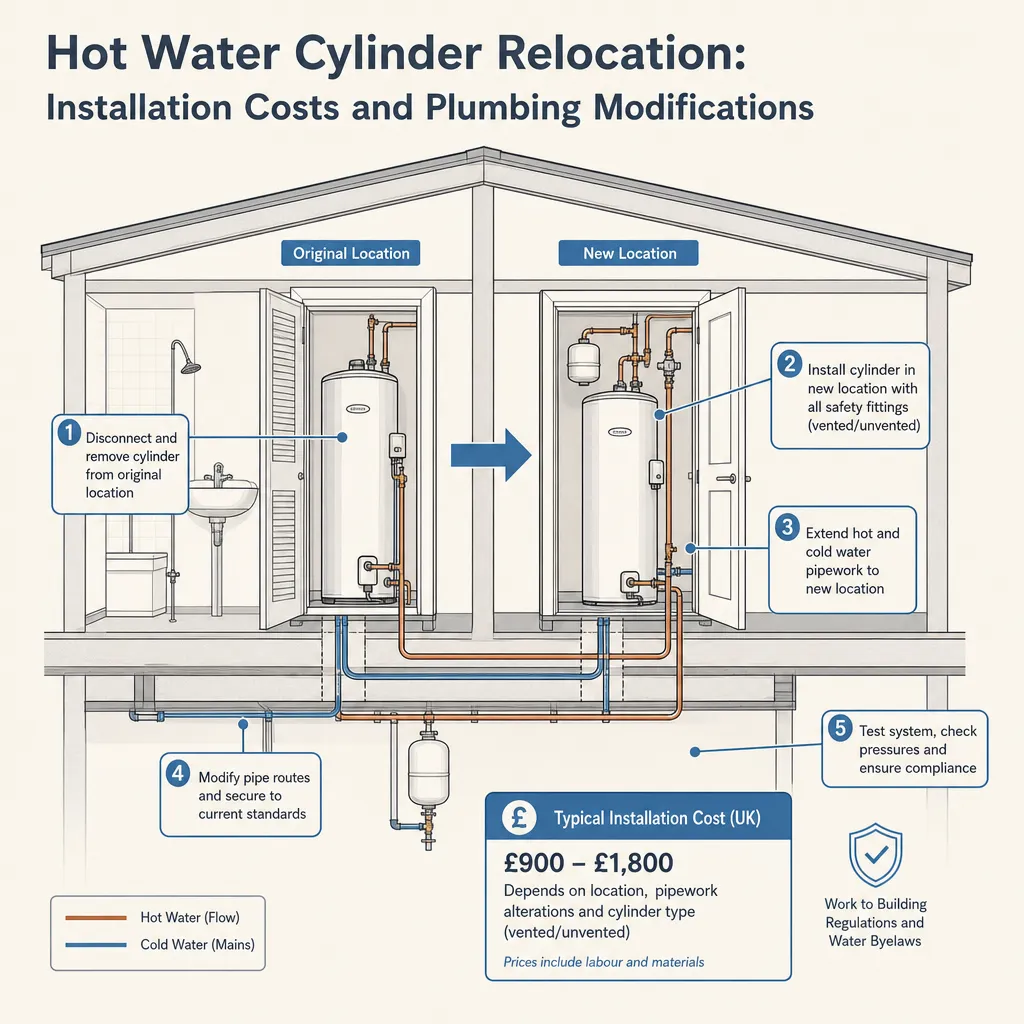
Hot Water Cylinder Relocation: Installation Costs and Plumbing Modifications
Relocating a hot water cylinder is one of the more involved plumbing projects a UK homeowner might face — most often prompted by a loft conversion, bathroom reconfiguration, or the need to repurpose an airing cupboard. The scope of work varies considerably depending on the type of system you have, how far the cylinder needs to move, and what Building Regulations apply. Understanding the cost drivers and what questions to ask before work begins helps you budget accurately and compare quotes on a like-for-like basis.
Key points
- Hot water cylinder relocation typically costs £800–£2,500 in the UK (indicative costs, last reviewed 2026-05-05), depending on cylinder type, distance of relocation, and pipework complexity.
- Unvented (pressurised) hot water cylinders must be installed by a G3-qualified plumber under Building Regulations Part G3 — using an unqualified installer is a criminal offence and may invalidate building insurance.
- Building Regulations Part G (Sanitation, hot water safety and water efficiency) requires notification to building control for unvented cylinder installation or relocation, either through a Competent Person Scheme or directly with your local authority.
- The Water Supply (Water Fittings) Regulations 1999 govern all connections to the mains water supply; modifications may require notification to your water supplier.
- Moving a cylinder more than approximately 2–3 metres from its current position typically requires a full re-pipe of the primary flow and return, cold feed, and hot draw-off, all of which add significantly to cost.
What does hot water cylinder relocation involve?
Moving a hot water cylinder is considerably more complex than a simple disconnect and reconnect. A typical relocation includes the following stages:
- Draining the existing cylinder and disconnecting all pipework, including primary flow and return, cold feed, hot draw-off, and any expansion pipework on unvented systems.
- Removing the cylinder and preparing the new location, which may involve reinforcing flooring, fitting a purpose-built frame, or creating a new dedicated cupboard space.
- Re-running pipework from the new cylinder position back to the boiler (primary circuit), to the cold water supply, and to all hot water outlets — the longer the run, the greater the material and labour cost.
- Re-routing any electrical connections, including the immersion heater supply and any cylinder thermostat wiring. A registered electrician is required if a new circuit is needed.
- Commissioning and testing, including pressure checks, thermostat verification, and — for unvented systems — confirming correct expansion vessel pre-charge pressure.
- Building Regulations notification for unvented systems, and any required building control inspection or self-certification.
Vented vs unvented cylinders: how cylinder type affects the project
The type of cylinder you have significantly affects who can carry out the work, what regulations apply, and the overall cost.
Feature | Vented (indirect) cylinder | Unvented (pressurised) cylinder |
|---|---|---|
Water pressure | Low — gravity-fed from cold water storage tank | Mains pressure — no cold tank needed |
Qualified installer required | General competent plumber (Gas Safe if boiler work involved) | G3-qualified plumber — mandatory under Part G |
Building Regulations notification | Not usually required for like-for-like relocation | Yes — self-certify or notify building control |
Expansion vessel | Not required | Required and must be correctly sized and set |
Indicative relocation cost | £600–£1,500 | £1,000–£2,500+ |
Common in UK homes | Pre-1990s properties; loft-conversion gravity systems | Modern homes; properties with combination systems |
Risk if installed incorrectly | Airlocks, poor flow, reduced pressure | Overpressure, scalding risk — serious safety hazard |
If you are unsure which system you have, check whether there is a cold water storage tank in your loft. A gravity-fed vented system will have one. A pressurised unvented system draws directly from the mains and will have a pressure reducing valve and expansion vessel fitted.
What factors drive the cost of relocation?
Indicative UK costs, last reviewed 2026-05-05. Quotes vary significantly based on region, access, and individual contractor rates.
Cost factor | Lower cost scenario | Higher cost scenario |
|---|---|---|
Distance of relocation | Moving within the same room or 1–2 metres | Moving to a different floor or far corner of the property |
Pipework required | Short re-route; existing pipe routes reusable | Full re-pipe through multiple rooms or floors |
Cylinder type | Vented indirect; no Part G notification | Unvented; G3 qualification, notification, commissioning certificate |
Access | Accessible airing cupboard location | Inside a stud wall void, under stairs, or in a tight loft space |
Cylinder condition | Existing cylinder retained and relocated | Cylinder replaced at the same time (adds £300–£900 for the unit) |
Electrical work | Immersion heater cable extended easily | New dedicated circuit required; registered electrician needed |
Making good | Minimal; new location is an existing cupboard | Significant plastering or boarding required after pipe chases |
Worked example: 1970s semi-detached home in the Midlands
A homeowner converting their airing cupboard into a study wants to move their existing 150-litre indirect vented cylinder to a purpose-built cupboard 4 metres away in an adjoining bedroom. The plumber needs to drain and remove the existing cylinder (approximately 1 hour), extend primary flow and return and cold feed through a stud wall and across the bedroom ceiling void (approximately 4 hours), reinstall and reconnect in the new location (2 hours), and test and commission (1 hour).
At a typical Midlands day rate of £250–£320 for a domestic plumber plus materials (copper pipe, fittings, lagging: approximately £80–£150), the indicative total is £800–£1,200. This does not include making good, plastering, or any electrical extension work for the immersion heater supply.
Do I need building regulations approval?
For unvented systems, yes. Building Regulations Part G3 requires that installation or relocation of an unvented hot water system is carried out by a G3-qualified engineer and either self-certified through a recognised Competent Person Scheme (such as APHC or CIPHE's registration schemes) or notified to your local building control body before works begin.
For vented systems, like-for-like relocation is generally not notifiable under Building Regulations. However, any modification to the cold water supply connection may require notification to your water supplier under the Water Supply (Water Fittings) Regulations 1999. Ask your plumber to clarify what notifications apply to your specific installation before work starts.
What to ask before accepting a quote
Use this checklist when comparing quotes from plumbers:
- Is the plumber G3-qualified, and can they provide evidence of current qualification (required for unvented systems)?
- What is explicitly included and excluded — pipework, materials, building control notification, making good?
- Will the existing cylinder be relocated or replaced? What make and capacity, and what warranty applies?
- How will pipework be routed? What walls, ceilings, or floors will need to be opened or chased?
- Who is responsible for plastering or boarding after pipework is run?
- Is VAT included in the quoted price?
- What commissioning documentation will be provided on completion (mandatory for unvented systems)?
- What happens if additional issues are found — for example, corroded pipework, an undersized expansion vessel, or inadequate existing pipe sizing?
When to get professional help
All hot water cylinder relocation work should be carried out by a qualified plumber. For unvented systems, G3 qualification is a legal requirement. Seek professional advice if:
- The proposed installer for an unvented system cannot provide current evidence of G3 qualification.
- You notice discolouration, rust staining, or persistent damp around the existing cylinder location — the cylinder may be corroding internally.
- Your existing cylinder is more than 15–20 years old; relocation may be an appropriate point to replace it.
- The proposed route requires cutting into structural elements or opening external walls.
- There is any uncertainty about the existing pipework condition, system pressure, or expansion vessel sizing.
How Housey can help
Housey helps UK homeowners find and compare quotes from vetted plumbing contractors for hot water cylinder relocation and system upgrades. Submit your project details to receive quotes from local tradespeople, making it easier to compare scope, qualifications, and price in one place before committing to any work.
Frequently asked questions
How long does it take to relocate a hot water cylinder?
A straightforward relocation within the same floor typically takes one working day for a plumber, or half a day with an assistant. More complex moves — involving different floors, long pipe runs, or unvented system commissioning — can take one to two days. Factor in additional time if plastering or making-good is required after pipework is run through walls or ceilings.
Can I move my hot water cylinder myself?
No. Plumbing modifications to hot water systems are governed by the Water Supply (Water Fittings) Regulations 1999. Unvented cylinder work specifically requires a G3-qualified engineer under Building Regulations Part G — DIY installation is illegal and could invalidate your home insurance. Even vented systems should be commissioned by a competent plumber to ensure correct operation and leak-free connections.
Will relocating my cylinder affect hot water pressure?
It can, particularly on vented (gravity-fed) systems where pressure depends on the height difference between the cold water tank and the outlet. Extending pipe runs may also reduce flow rate slightly. A plumber should assess the proposed route and may recommend pipe-sizing changes to maintain adequate pressure, especially if the cylinder is being moved further from the main outlets.
How much does it cost to replace rather than relocate a hot water cylinder?
Replacing a vented indirect cylinder typically costs £600–£1,500 installed, depending on capacity (common sizes: 120–210 litres). Replacing an unvented cylinder costs £900–£2,500 or more installed. If your existing cylinder is over 15–20 years old, replacing it at the same time as relocating can be cost-effective, as much of the labour cost for pipework is shared. Indicative UK costs, last reviewed 2026-05-05.
Does moving a hot water cylinder affect my boiler warranty?
Potentially. Some boiler manufacturers specify minimum and maximum primary pipe run lengths, and significantly extending the run could affect system efficiency or warranty terms. Check with your boiler manufacturer or the original installer before finalising the relocation plan, particularly if the cylinder is being moved to a different floor or a significantly longer distance from the boiler.
Sources and further reading
- Approved Document G: Sanitation, hot water safety and water efficiency — GOV.UK / MHCLG
- Water Supply (Water Fittings) Regulations 1999 — legislation.gov.uk
- Hot water and heating guidance — Energy Saving Trust
- Find a qualified heating and plumbing engineer — Chartered Institute of Plumbing and Heating Engineering (CIPHE)
Useful next reads
 Improvement & Build
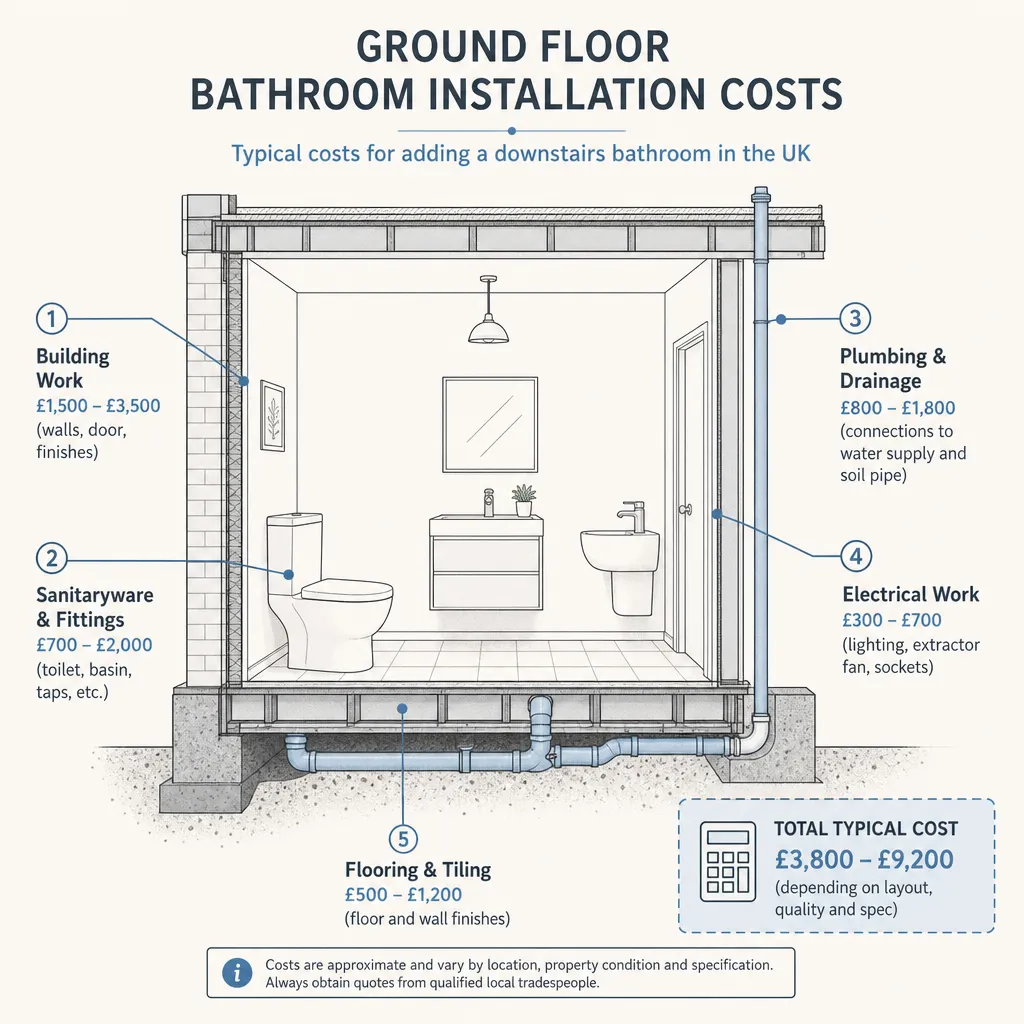
Ground Floor Bathroom Installation Costs
Installing a ground floor bathroom in the UK costs roughly £2,000–£5,000 for a basic cloakroom and £5,500–£15,000 for a shower room or wet room.
 Improvement & Build
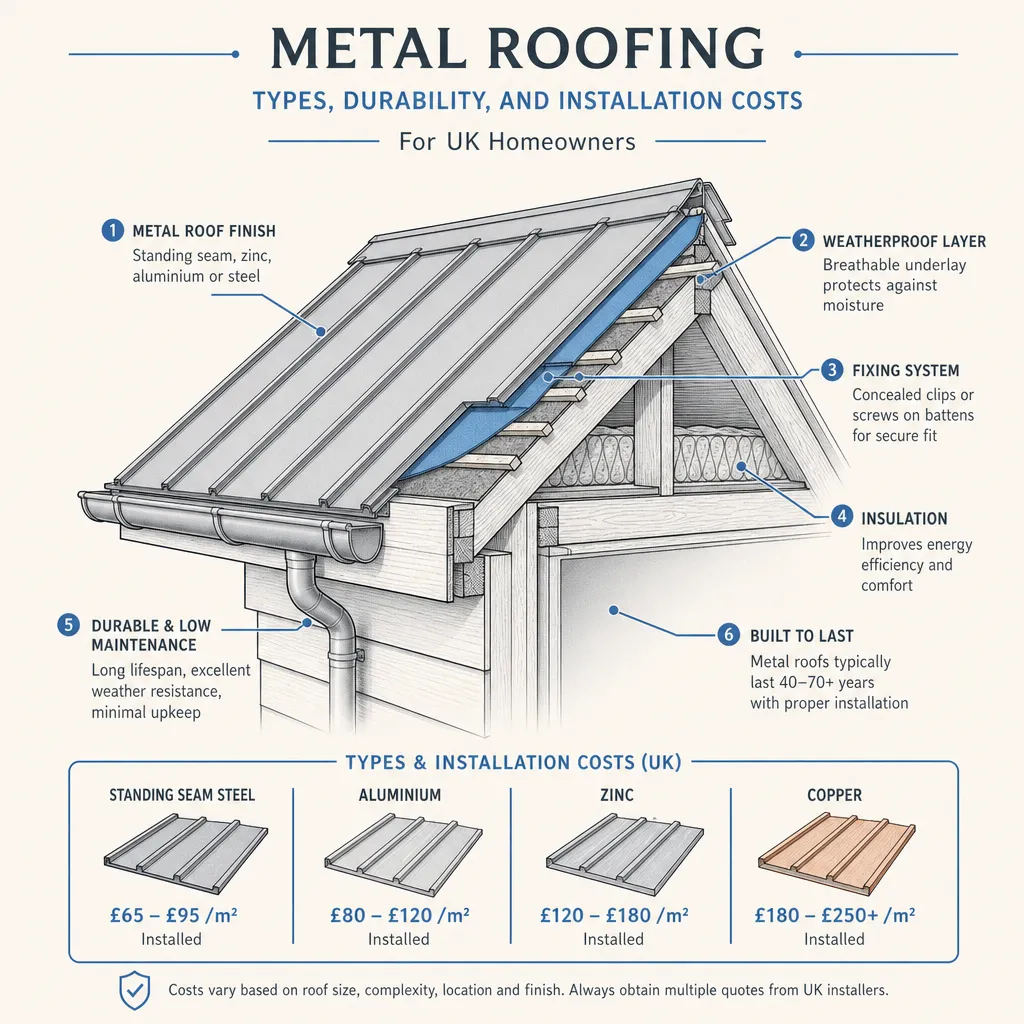
Metal Roofing: Types, Durability, and Installation Costs
Metal roofing in the UK includes standing seam, corrugated sheet, and metal tile systems in steel, aluminium, zinc, or copper.
 Improvement & Build
Synthetic Cedar Shake Roofing: Installation Costs and Material Performance
Synthetic cedar shake roofing uses polymer composite, rubber, or fibre-cement tiles to replicate the look of natural cedar wood shingles.
 Improvement & Build
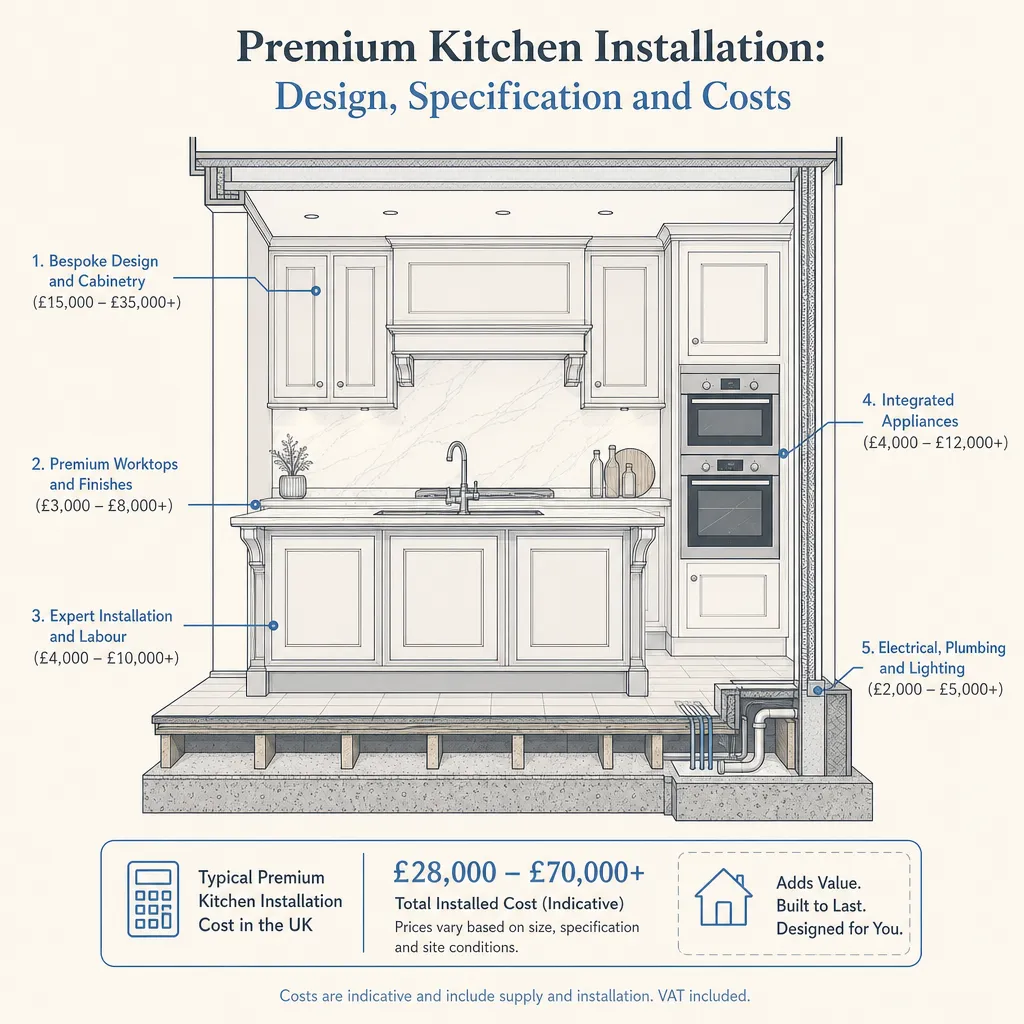
Premium Kitchen Installation: Design, Specification and Costs
A premium kitchen in the UK typically costs £20,000–£80,000 or more installed, depending on cabinetry specification, worktop material, appliance brands, and whether structural changes are needed.
 Improvement & Build
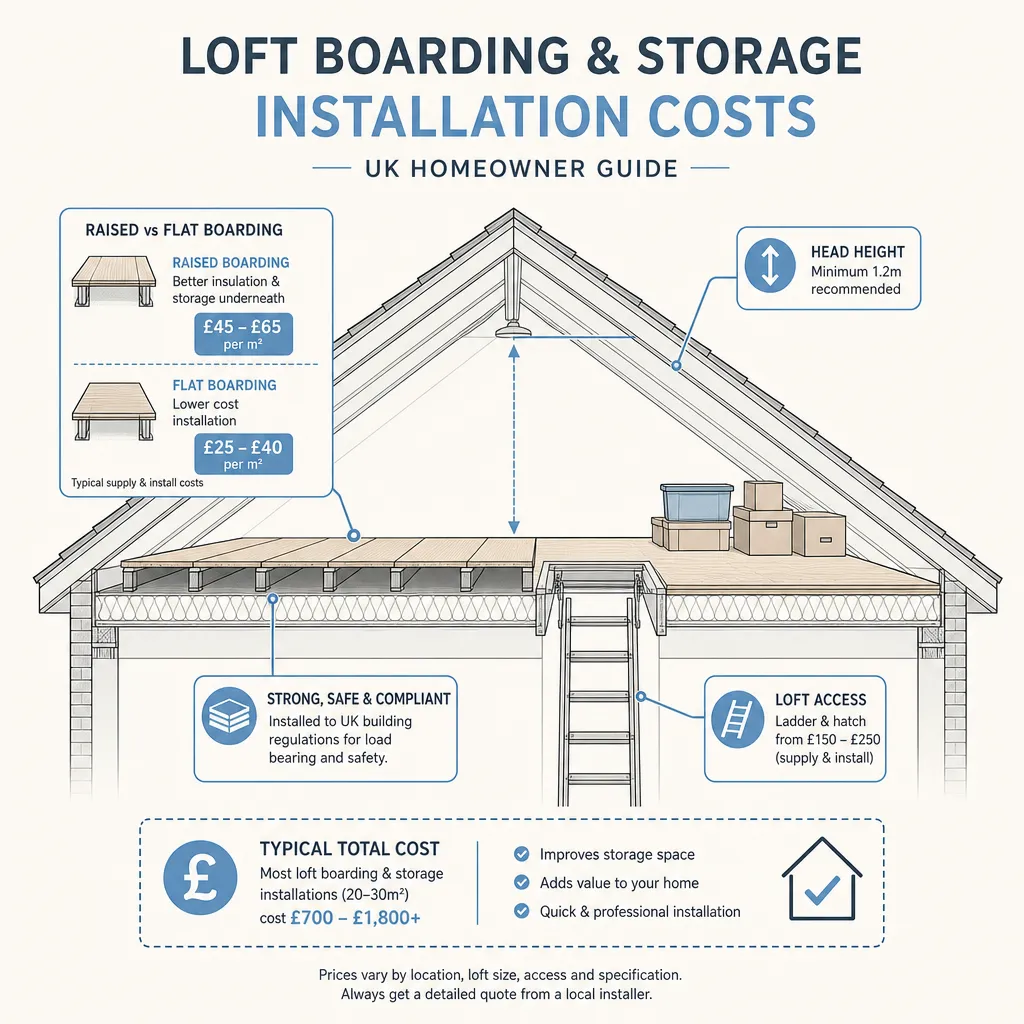
Loft Boarding and Storage Installation Costs
Basic loft boarding for an average semi-detached home costs £500–£1,500; a raised system that preserves insulation runs £800–£2,500.