Hot Water Tank Replacement and Installation Costs
By Housey · Last reviewed 7th of May 2026
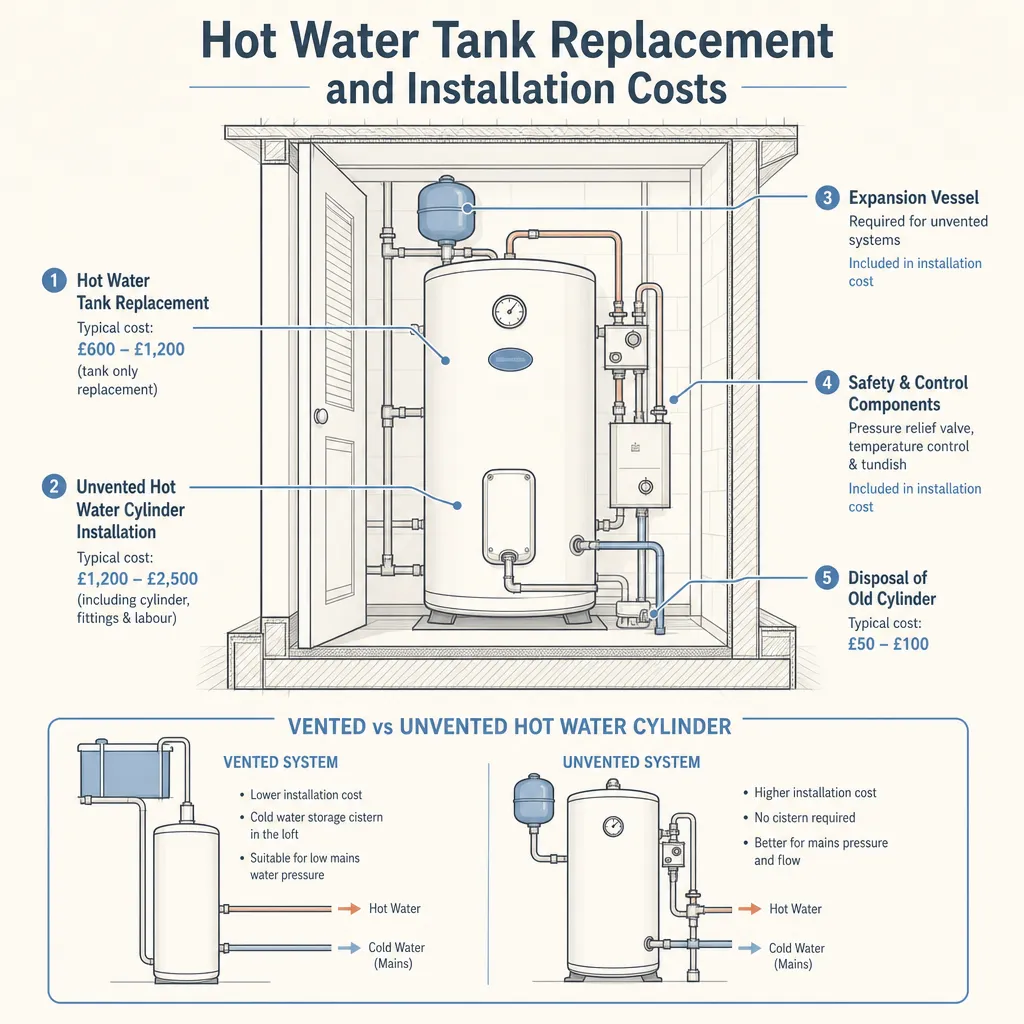
Hot Water Tank Replacement and Installation Costs
Many UK homeowners only discover their hot water cylinder needs replacing when it fails — often on a cold morning or when a slow drip from the airing cupboard becomes impossible to ignore. Whether you have an ageing vented copper cylinder or are considering upgrading to a mains-pressure unvented system, the costs and decisions involved vary considerably by cylinder type, capacity, and installer requirements. Understanding what drives the price — and who is qualified to carry out the work legally — helps you budget accurately and compare quotes with confidence.
Key points
- Unvented hot water cylinders must be installed by a G3-qualified engineer under Building Regulations Part G; an unqualified installation is unlawful and may invalidate your home insurance.
- A direct unvented cylinder (heated by an immersion element) typically costs £500–£1,000 for the unit; an indirect cylinder (heated by a boiler) usually costs £400–£900 to supply.
- Vented cylinders are cheaper to supply and install but deliver lower water pressure than unvented systems, which operate at mains pressure.
- Most hot water cylinders last 8–15 years; hard water areas — common across southern England, East Anglia, and the Midlands — can shorten this through limescale build-up.
- Replacing just the immersion heater element, the component that most often fails first, costs £100–£250 all-in and may extend the life of an otherwise sound cylinder.
Vented vs unvented hot water cylinders
Understanding the two main cylinder types is essential before requesting quotes, as costs, installation requirements, and performance differ significantly.
Feature | Vented cylinder | Unvented cylinder |
|---|---|---|
Water supply | Cold water storage tank in loft | Directly from mains |
Water pressure | Lower (gravity-fed) | Mains pressure — consistent throughout |
Space needed | Cylinder plus loft cold water tank | Cylinder only; no loft tank required |
Installer requirement | Any competent plumber | G3-qualified engineer only |
Typical unit cost | £150–£500 | £400–£1,200 |
Typical installation cost | £300–£600 | £500–£1,000 |
Approximate total installed | £450–£1,100 | £900–£2,200 |
Ongoing maintenance | Not usually required | Annual safety check recommended |
Indicative UK costs, last reviewed 2026-05-07. Quotes vary by region, cylinder capacity, and site complexity.
Choose a vented cylinder if you are replacing like-for-like in an older property with an existing cold water tank, the works are straightforward, and keeping costs down is a priority.
Choose an unvented cylinder if you want mains-pressure hot water throughout the house, you are removing the loft cold water tank, or you are extending or remodelling and want a simpler pipework layout going forward.
What determines the cost of hot water cylinder replacement?
Several factors push replacement costs up or down:
Cylinder capacity: A 120-litre cylinder suits a 1–2 bedroom home; a 4-bedroom property typically needs 210–300 litres. Larger cylinders cost more to supply and take longer to install.
Direct vs indirect heating: A direct cylinder is heated solely by immersion elements (electric). An indirect cylinder uses your boiler as the primary heat source, with an immersion element as backup — better suited to properties with gas or oil boilers and more economical to run on most tariffs.
Heat pump compatibility: Cylinders designed for air or ground source heat pumps have larger internal coils for low-temperature operation and typically cost £600–£1,500 for the unit alone.
Access and pipework alterations: A cylinder in a tight airing cupboard, or one requiring extended pipe runs or changes to the hot water distribution, increases both labour time and cost.
Regional labour rates: Installation costs are typically 15–25% higher in London and the South East than in the Midlands or northern England.
Disposal of the old unit: Some installers include removal and recycling of the old cylinder; others charge £50–£150 separately — confirm this before work begins.
Immersion heater element replacement
If the cylinder body is in sound condition but the heating element or thermostat has failed, replacing just the immersion heater component is considerably cheaper than a full cylinder replacement:
- Element only (supplied and fitted): £100–£200
- Thermostat only: £80–£150
- Element and thermostat together: £150–£250
Indicative UK costs, last reviewed 2026-05-07.
Immersion heaters operate at standard 240V household supply. This work requires correct isolation of the circuit and is best left to a qualified electrician or a plumber with electrical competence — do not attempt element replacement without confirming the circuit is safely isolated.
What to check before requesting quotes
Gather the following information before contacting installers. Providing it upfront lets contractors quote accurately and reduces the risk of unexpected costs arising on the day:
Signs your hot water cylinder may need replacing
The following symptoms suggest the cylinder may be approaching or beyond end of life:
- Rust-coloured or discoloured water from hot taps
- Visible corrosion, staining, or damp patches around the cylinder body or connections
- The pressure relief valve on an unvented cylinder discharging repeatedly — a safety concern that needs prompt attention
- Noticeably reduced hot water capacity or very slow recovery after heavy use
- Cylinder age exceeding 12–15 years, particularly in a hard water area
When to get professional help
Always use a qualified professional for any hot water cylinder installation. For unvented systems, a G3-qualified engineer is a legal requirement under Building Regulations Part G — an unqualified installation is unlawful, may void your home insurance, and creates a serious safety risk from over-pressure failure.
Call a professional urgently if you notice:
- Water pooling or actively leaking beneath the cylinder
- The pressure relief valve (PRV) discharging continuously or repeatedly — do not block or ignore this
- No hot water across multiple outlets with no boiler fault displayed
- A burning smell near the immersion heater or its associated wiring
How Housey can help
If you are replacing your hot water system as part of a larger home project — such as an extension that requires new or expanded hot water provision — Housey can help you find qualified tradespeople to coordinate the whole scope. Request quotes from extension builders who coordinate plumbing and heating alongside structural work and confirm they will include the hot water upgrade within the project specification.
Frequently asked questions
How long does a hot water tank replacement take?
A straightforward vented cylinder replacement typically takes 3–5 hours. An unvented system installation — particularly where pipework alterations are required — usually takes a full day. If the loft cold water tank is also being removed, allow additional time and the possibility of minor ceiling or plasterwork repairs.
Do I need building regulations approval for a hot water cylinder replacement?
Replacing a vented cylinder like-for-like does not usually require notification. However, installing or replacing an unvented hot water system is notifiable work under Part G of the Building Regulations in England and Wales. A G3-qualified installer will self-certify the work and issue a certificate — always request this on completion.
Is an electric immersion or gas-heated cylinder cheaper to run?
Gas-heated indirect cylinders generally cost less to run than purely electric immersion heaters at current UK energy prices. A well-insulated cylinder paired with an off-peak Economy 7 tariff or a solar diverter can narrow the gap significantly. An energy assessor can model running costs for your specific setup and tariff.
Can I replace my hot water tank myself?
Vented cylinder replacement is complex plumbing work; errors can cause water damage or poor system performance. Unvented cylinder installation is legally restricted to G3-qualified engineers under Part G of the Building Regulations — carrying out this work without the correct qualification is unlawful. Using a qualified plumber for any cylinder replacement is strongly recommended.
Sources and further reading
Useful next reads
 Improvement & Build
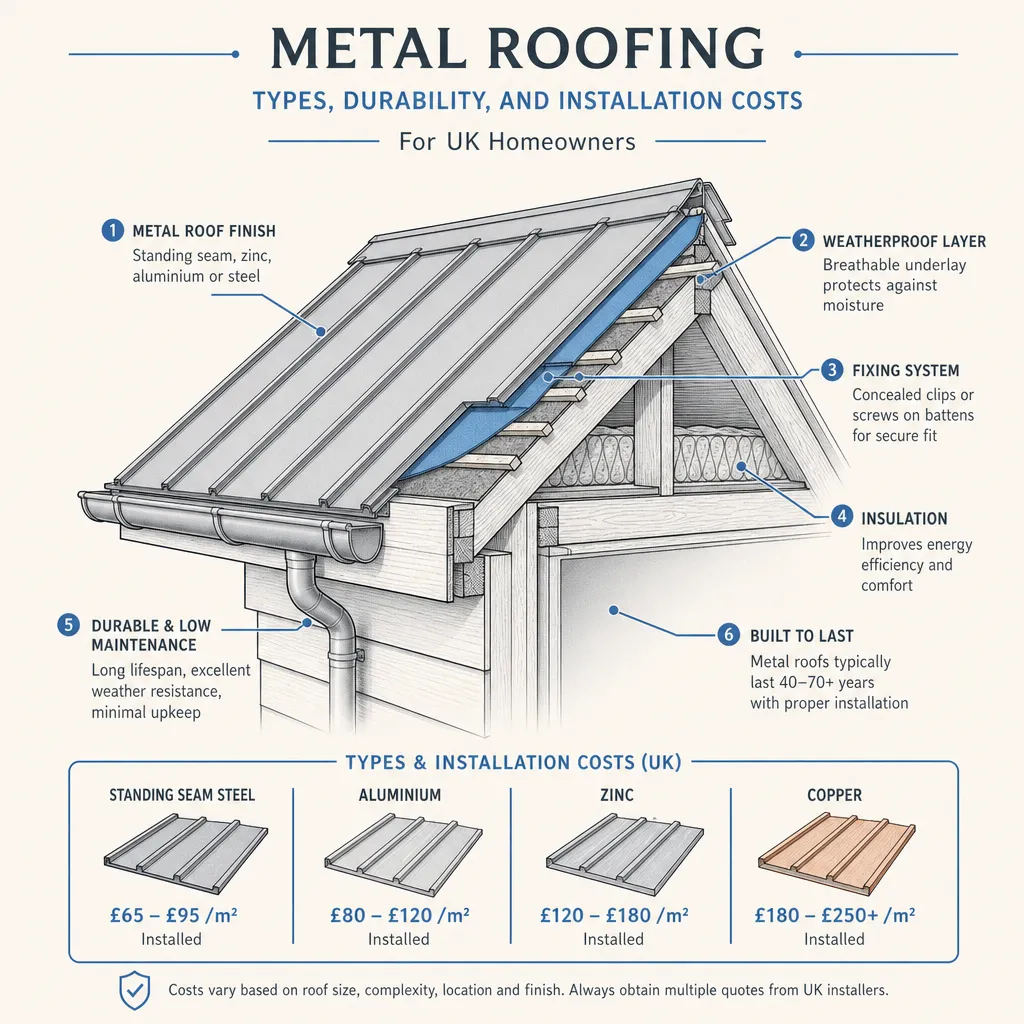
Metal Roofing: Types, Durability, and Installation Costs
Metal roofing in the UK includes standing seam, corrugated sheet, and metal tile systems in steel, aluminium, zinc, or copper.
 Improvement & Build
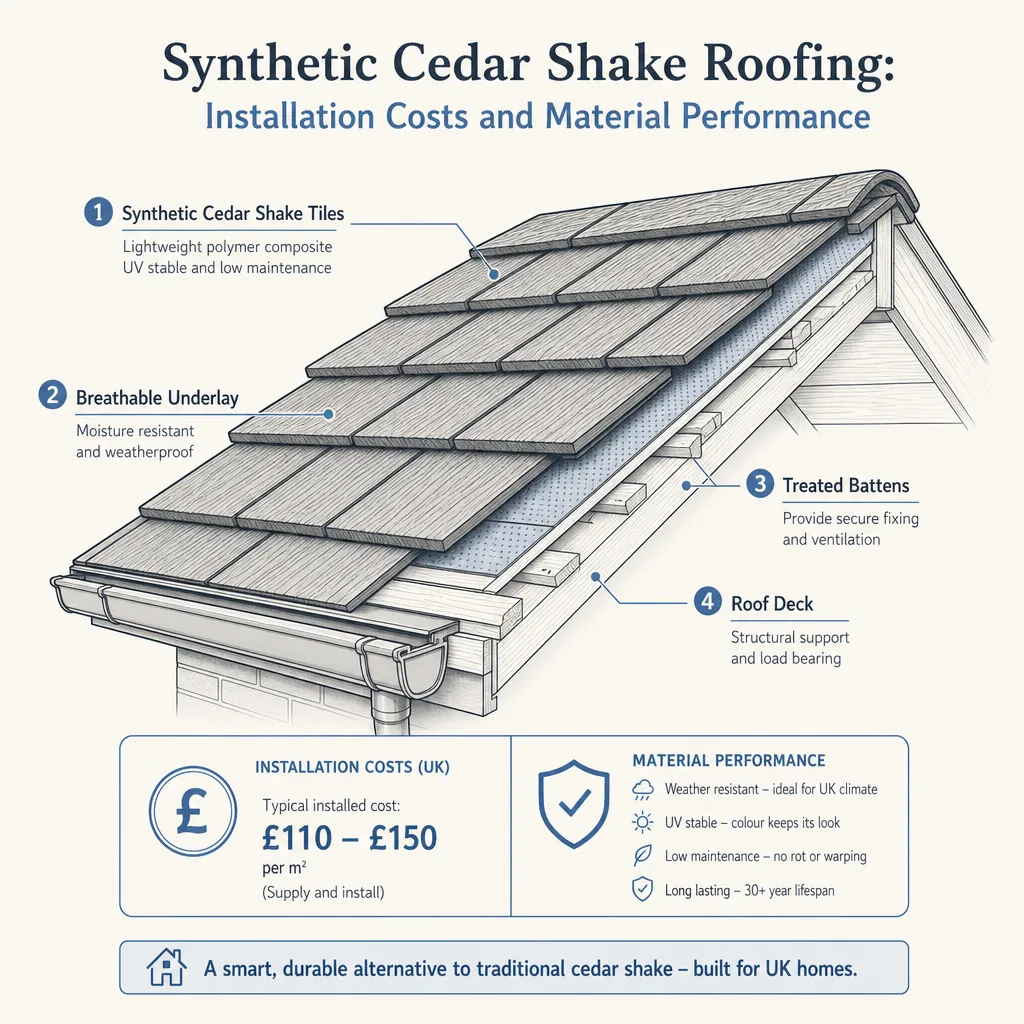
Synthetic Cedar Shake Roofing: Installation Costs and Material Performance
Synthetic cedar shake roofing uses polymer composite, rubber, or fibre-cement tiles to replicate the look of natural cedar wood shingles.
 Improvement & Build
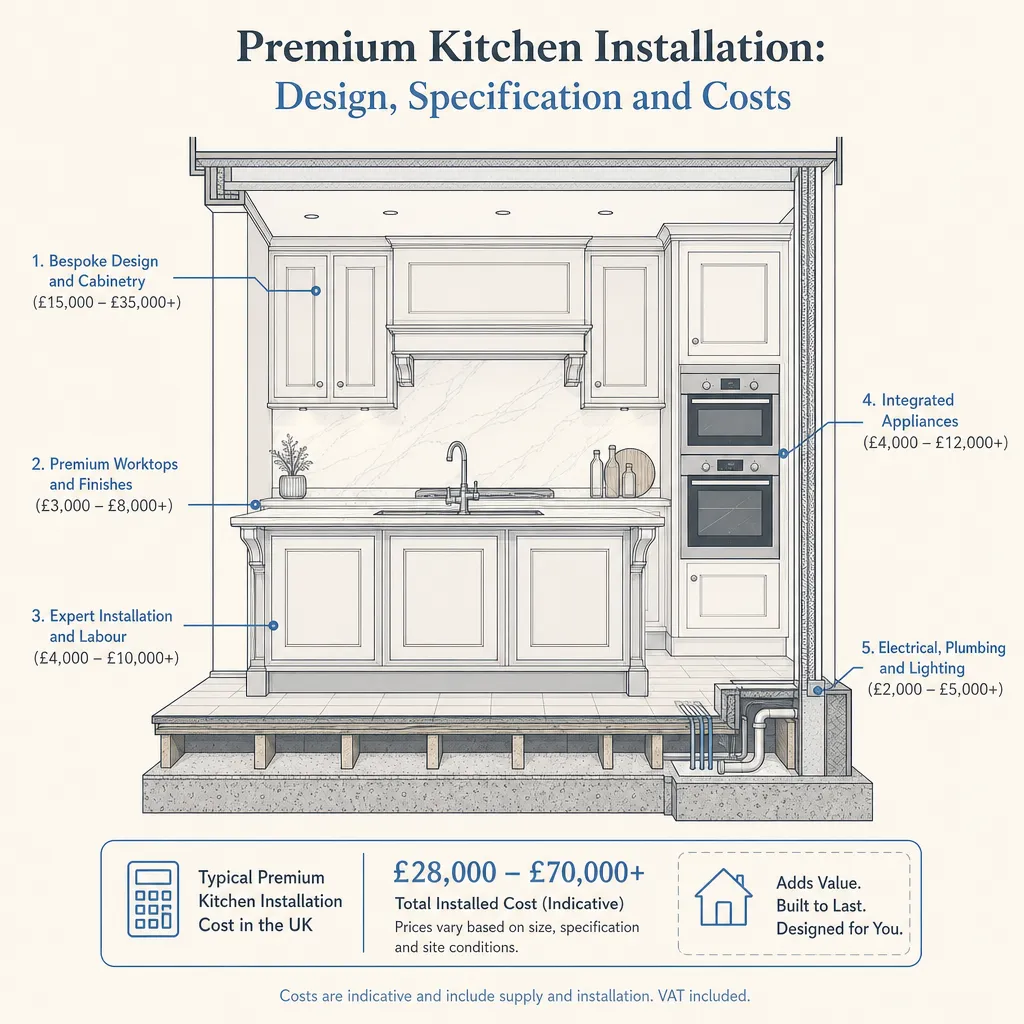
Premium Kitchen Installation: Design, Specification and Costs
A premium kitchen in the UK typically costs £20,000–£80,000 or more installed, depending on cabinetry specification, worktop material, appliance brands, and whether structural changes are needed.
 Improvement & Build
Loft Boarding and Storage Installation Costs
Basic loft boarding for an average semi-detached home costs £500–£1,500; a raised system that preserves insulation runs £800–£2,500.
 Improvement & Build
Cost of Installing Security Film on Windows
Security film for windows in the UK typically costs £25–£60 per m² for supply and professional installation, depending on film specification and window count.