House Refurbishment Project Costs and Timeline
By Housey · Last reviewed 7th of May 2026
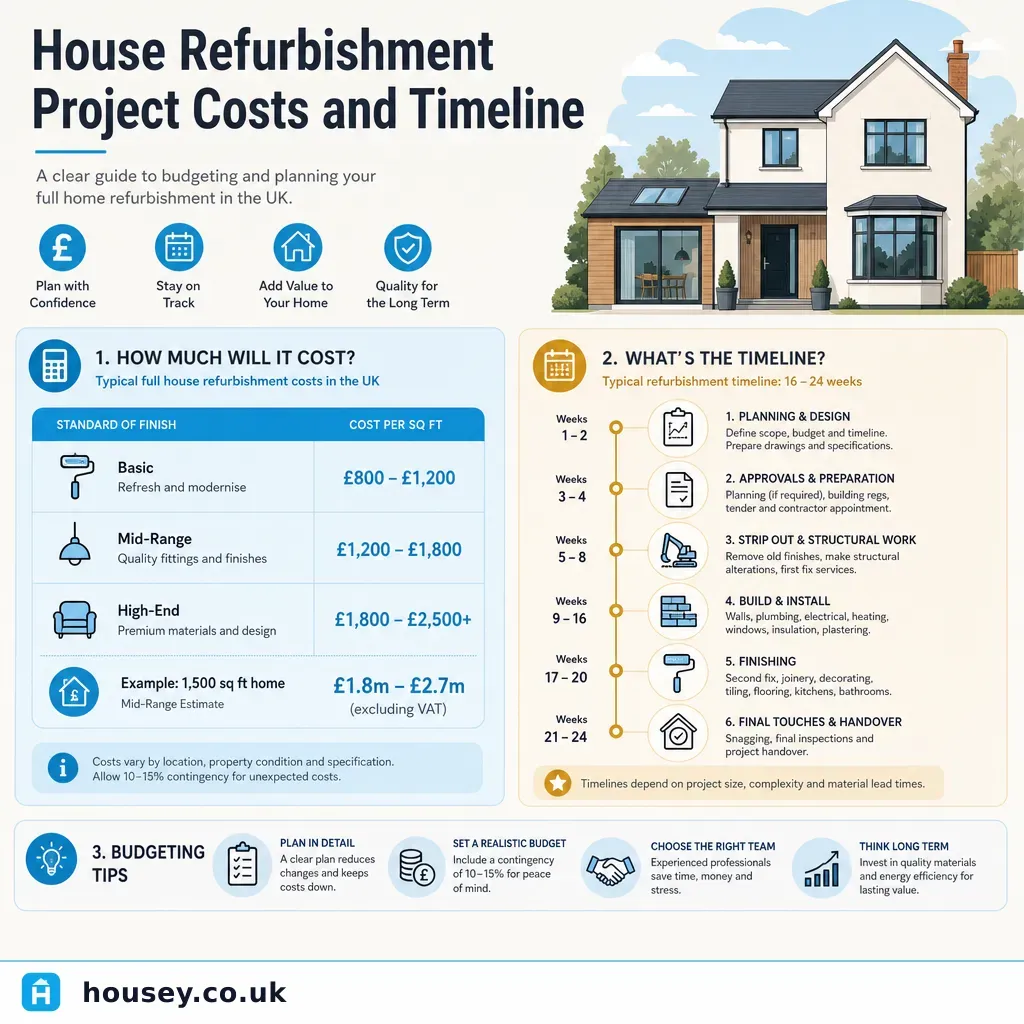
House Refurbishment Project Costs and Timeline
When you are weighing up a significant renovation, understanding what a realistic project costs — and how long it is likely to take — is essential before committing budget or briefing a contractor. Refurbishment projects vary enormously in scope: a cosmetic refresh of a tired 1970s bungalow has little in common with a full structural overhaul of a Victorian end-of-terrace. Misjudging the numbers at the planning stage often leads to stalled projects, contractor disputes, or properties left part-completed while owners seek additional finance.
Key points
- A light cosmetic refurbishment typically costs £500–£1,000 per square metre of gross internal area in the UK; full structural refurbishment runs £1,800–£2,500+ per square metre (indicative, last reviewed 2026-05-07).
- A contingency budget of 15–20% on top of your contractor's quote is standard industry practice; 10% is considered the absolute minimum for straightforward projects.
- Building Regulations approval is required for structural changes, electrical rewiring, boiler or heating replacement, and new bathrooms — separate from and in addition to any planning permission requirement.
- Most mid-scale whole-house refurbishments take 3–9 months on site; design, tendering, and approval stages can add a further 3–6 months to the total programme.
- VAT at 20% applies to most residential refurbishment work; properties vacant for more than two years may qualify for a reduced 5% rate — check current eligibility on GOV.UK.
What does a house refurbishment cost in the UK?
Refurbishment costs are usually quoted per square metre of gross internal area (GIA), but the figure varies substantially by scope, location, specification, and property condition. The following ranges are indicative, last reviewed May 2026.
Refurbishment level | What is typically included | Indicative cost per m² (UK, 2026) | Typical on-site timeline |
|---|---|---|---|
Light cosmetic | Redecoration, flooring, kitchen and bathroom refresh, minor joinery | £500–£1,000 | 4–12 weeks |
Medium — full fit-out | New kitchen, bathrooms, rewiring, replumbing, new heating system | £1,000–£1,800 | 3–6 months |
Full structural | Layout changes, loft or extension, full M&E replacement | £1,800–£2,500+ | 6–12 months |
Heritage or listed property | Conservation materials, listed building consent, specialist trades | £2,500–£4,000+ | 9–18+ months |
Costs in London and the South East are typically 20–40% higher than in the North or Midlands. Quotes vary significantly by contractor, specification, and site access.
What drives refurbishment costs?
Property condition: A property with blocked drains, a failing damp-proof course, or ageing wiring will cost more to refurbish than one in reasonable structural condition. A RICS Level 3 Building Survey before purchase can reveal hidden defects that significantly affect your budget.
Specification: Polished concrete floors, bespoke joinery, and high-end kitchen fittings increase the per-square-metre rate substantially. Agreeing a detailed specification before obtaining quotes prevents scope creep and mid-project disputes.
Location: Labour and material delivery costs vary across the UK. London projects typically run 20–40% above equivalent work in the Midlands or North.
Structural complexity: Moving load-bearing walls, underpinning, or extending requires structural engineering input and Building Regulations approval, adding both cost and programme time.
Phasing: A phased refurbishment — completing one floor at a time — may cost more per unit of work due to mobilisation costs, but allows you to remain in occupation and avoid temporary rental costs.
A worked example: three-bedroom Victorian terrace in the East Midlands
Consider a full medium-specification refurbishment of a three-bedroom Victorian terrace (approximately 90 m² GIA), purchased for £230,000.
Stage 1 — Design and Building Regulations (weeks 1–10)
- Appoint an architectural technologist to produce existing and proposed drawings.
- Submit a Building Regulations full plans application: approval typically takes 5–8 weeks.
- Estimated design fee: £1,500–£3,500.
Stage 2 — Tendering and contractor selection (weeks 6–14)
- Distribute drawings and specification to three contractors for competitive quotes.
- Allow 2–4 weeks for quotes to be returned; shortlist two and request references.
- Review contract terms and payment schedule before signing.
Stage 3 — On-site works (months 3–8)
- Strip-out and structural works: 2–4 weeks
- First fix rewiring, replumbing, rough-in for new heating: 3–5 weeks
- Plastering throughout — allow minimum 2 weeks drying before second fix
- Second fix: kitchen, bathrooms, joinery, flooring, decoration: 6–10 weeks
- Snagging and final clean
Stage 4 — Sign-off (weeks 28–34)
- Building control final inspection and completion certificate.
- Gas Safe certificate issued by registered engineer for new boiler.
- Electrical Installation Condition Report (EICR) issued by NICEIC-registered electrician.
Total elapsed time from design appointment to move-in: approximately 8–9 months. Total indicative project cost at £1,200/m² average: approximately £108,000 before contingency; approximately £124,000 with a 15% contingency allowance.
What to ask before accepting a refurbishment quote
Before signing any contract with a builder or contractor, ask:
- What is included and excluded? Request a fully itemised Schedule of Works, not a headline figure only.
- Who carries out each trade? Are electricians, plumbers, and plasterers employed directly or subcontracted? Are they Gas Safe, NICEIC, or equivalent registered where required?
- What Building Regulations approvals are covered? Some contractors exclude application costs and leave compliance to the client.
- What is the payment schedule? Stage payments tied to completion milestones are standard; avoid upfront deposits exceeding 10–30% of the total.
- Is VAT included in the quote? Always clarify whether figures are inclusive or exclusive of VAT at 20%.
- What contingency have you allowed? On older properties, a reputable contractor should acknowledge that unforeseen works are common.
- What warranties or guarantees apply? For roofing, windows, and damp-proofing, check whether guarantees are backed by insurance protection schemes.
Red flags when choosing a refurbishment contractor
Watch for these warning signs before signing:
- A quote significantly lower than others without a clear explanation — often reflects hidden extras, lower-quality materials, or an underestimated programme
- A request for full payment or a deposit exceeding 30% before any work begins
- No public liability insurance or reluctance to provide documentation
- No verifiable business registration address or trading history
- Unable to provide references from comparable completed projects
- Unwilling to provide a written contract or itemised Schedule of Works
When to get professional help
Most whole-house refurbishments benefit from professional oversight from the outset. Consider appointing:
- An architectural technologist or architect if the project involves structural changes, layout alterations, or a planning application — they produce the drawings needed for Building Regulations approval and can administer the contract.
- A project manager if you cannot be on site regularly, are coordinating multiple contractors, or the project value exceeds £50,000.
- A structural engineer wherever load-bearing walls are being removed, new openings formed, or foundations are affected.
- A PAS 2035-certified retrofit coordinator if the refurbishment includes energy-efficiency measures funded through ECO4 or another government grant scheme — this is a legal requirement for such funding.
How Housey can help
Housey can help you connect with qualified professionals at every stage of your refurbishment. Request quotes from extension builders for structural and main building works, compare proposals from project managers to keep your programme on track, work with architectural technologists on drawings and Building Regulations submissions, or explore design-and-build firms that handle multiple stages under one contract.
Frequently asked questions
Do I need planning permission for a house refurbishment?
Internal refurbishment — new kitchens, bathrooms, rewiring, replumbing, redecoration — generally does not require planning permission. Structural changes that alter the external appearance, such as new rooflights or extensions, usually need Permitted Development prior approval or full planning permission. Rules differ for listed buildings and conservation areas; always check with your local planning authority before starting structural works.
Can I live in the property during a refurbishment?
It depends on scope. Light cosmetic work is often manageable room by room and many homeowners remain in occupation. Full structural refurbishments involving rewiring, replumbing, and plastering throughout are generally faster and safer to complete with the property vacant. Your contractor should advise on the specific programme and whether phased occupation is practical.
Does a refurbishment add value to a property?
A well-executed refurbishment generally adds value, particularly where the baseline property is in poor condition or the works bring it in line with local comparables. Over-specification for the local market rarely achieves a proportionate price uplift. Kitchen and bathroom updates, energy-efficiency improvements, and bringing wiring and plumbing up to current standards tend to offer the strongest returns.
Is VAT charged on house refurbishment work?
Refurbishment of a residential property is generally standard-rated at 20% VAT. Properties empty for more than two years may qualify for a 5% reduced rate on certain qualifying works. Conversions of non-residential buildings to residential use may also attract the reduced rate. Check the current HMRC guidance on GOV.UK or seek professional accountancy advice before finalising your budget.
Sources and further reading
- Building Regulations: Approved Documents index — GOV.UK
- VAT on building work: Buildings and construction (VAT Notice 708) — GOV.UK / HMRC
- RICS Home Survey Standard — RICS
- Gas Safe Register: find a registered engineer — Gas Safe Register
- NICEIC: find a registered electrician — NICEIC
- HomeOwners Alliance: adding value to your home — HomeOwners Alliance
Useful next reads
 Improvement & Build
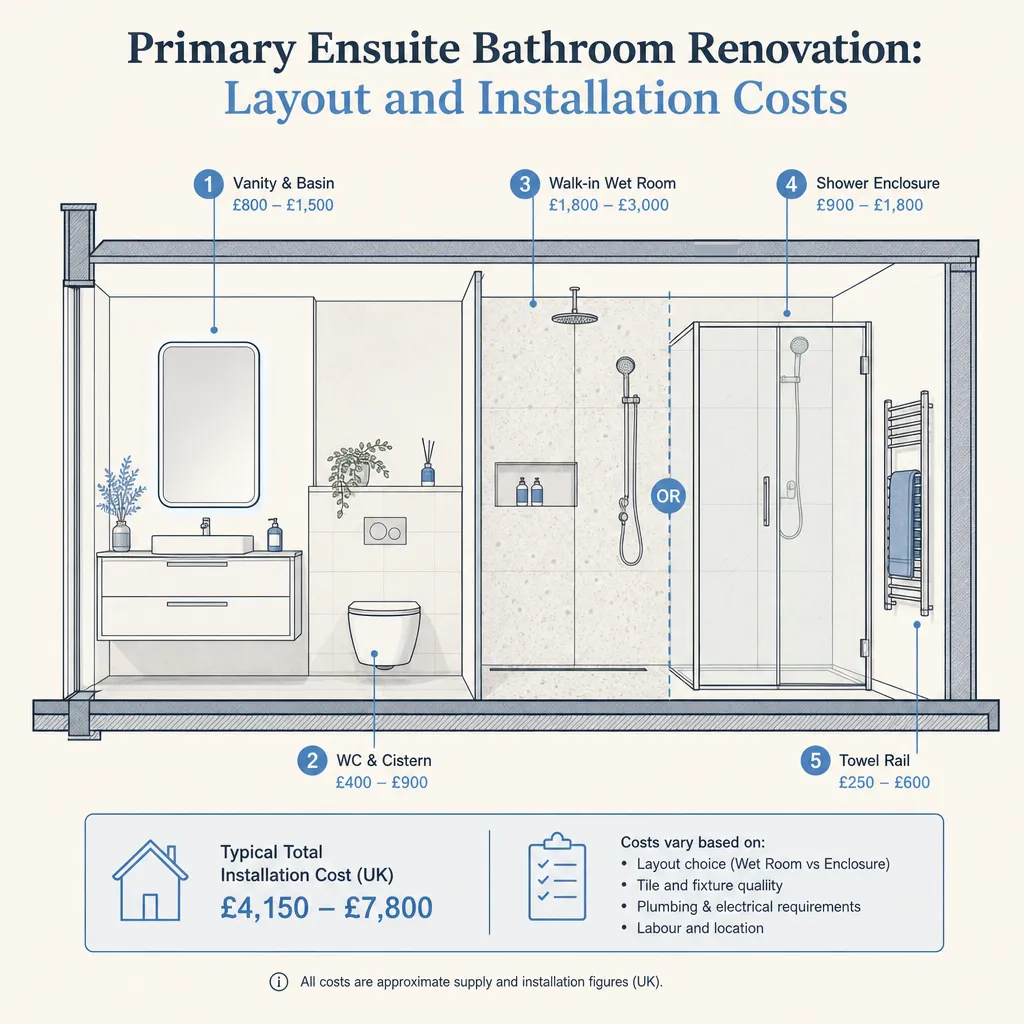
Primary Ensuite Bathroom Renovation: Layout and Installation Costs
A primary ensuite renovation in the UK typically costs between £3,000 and £12,000, depending on size, layout, and specification.
 Improvement & Build
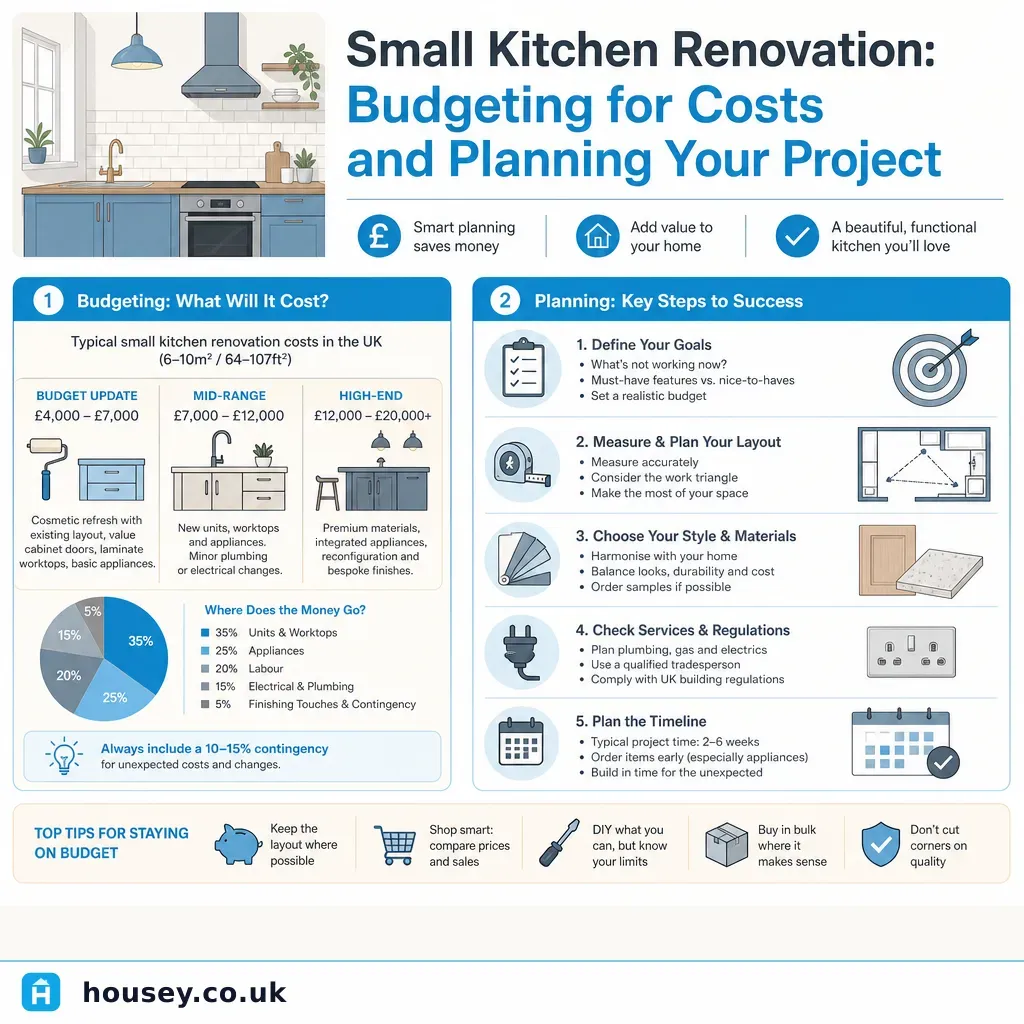
Small kitchen renovation: budgeting for costs and planning your project
A small kitchen renovation in the UK typically costs £5,000–£15,000 for a full refresh including new units, worktops, tiling, and appliances, though costs vary widely by specification, region, and whether structural changes or rewiring are involved.
 Improvement & Build
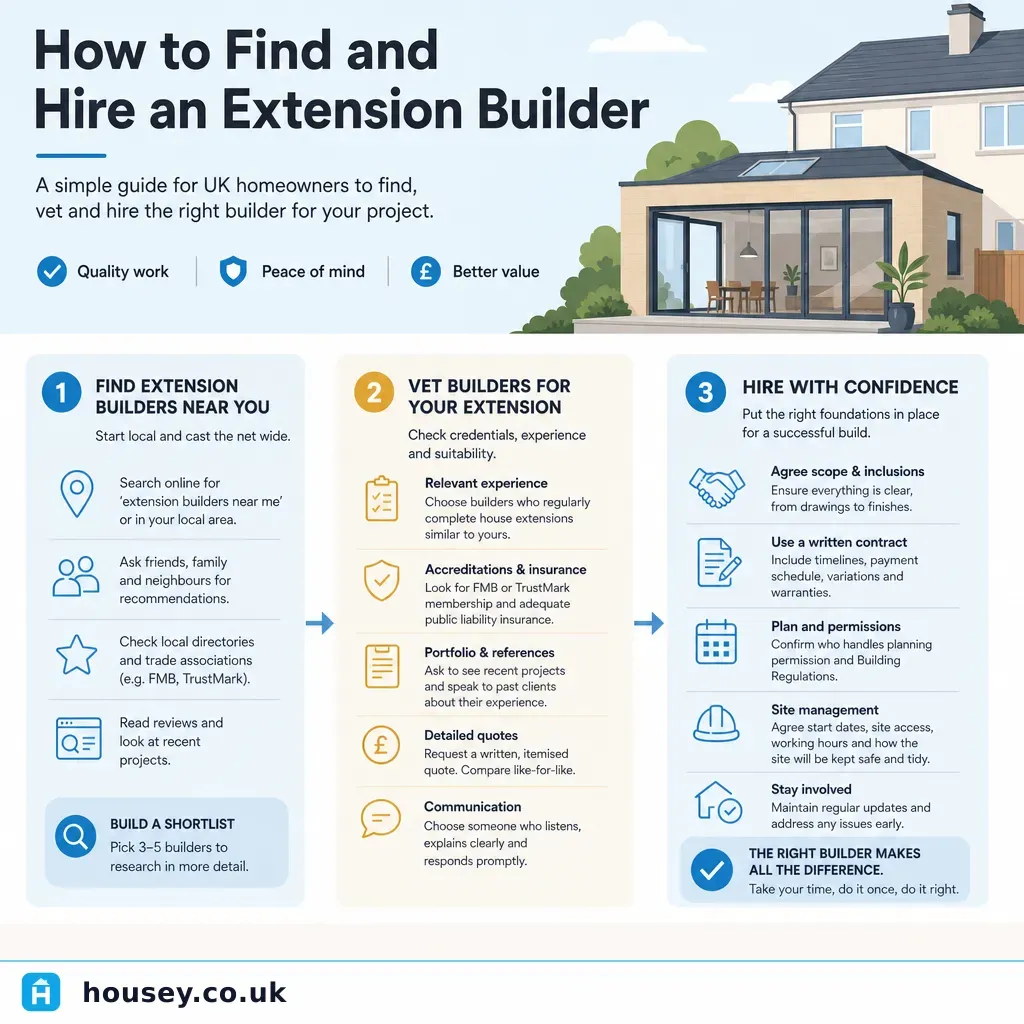
How to Find and Hire an Extension Builder
To hire a reliable extension builder, get at least three detailed written quotes from contractors with documented experience of similar projects.
 Improvement & Build
Laundry Room Renovation and Fitting Costs
A basic UK laundry room fit-out typically costs £2,000–£6,000 where plumbing and electrics are already in place, rising to £8,000–£15,000 or more when structural work, new drainage connections, or new electrical circuits are needed.
 Improvement & Build
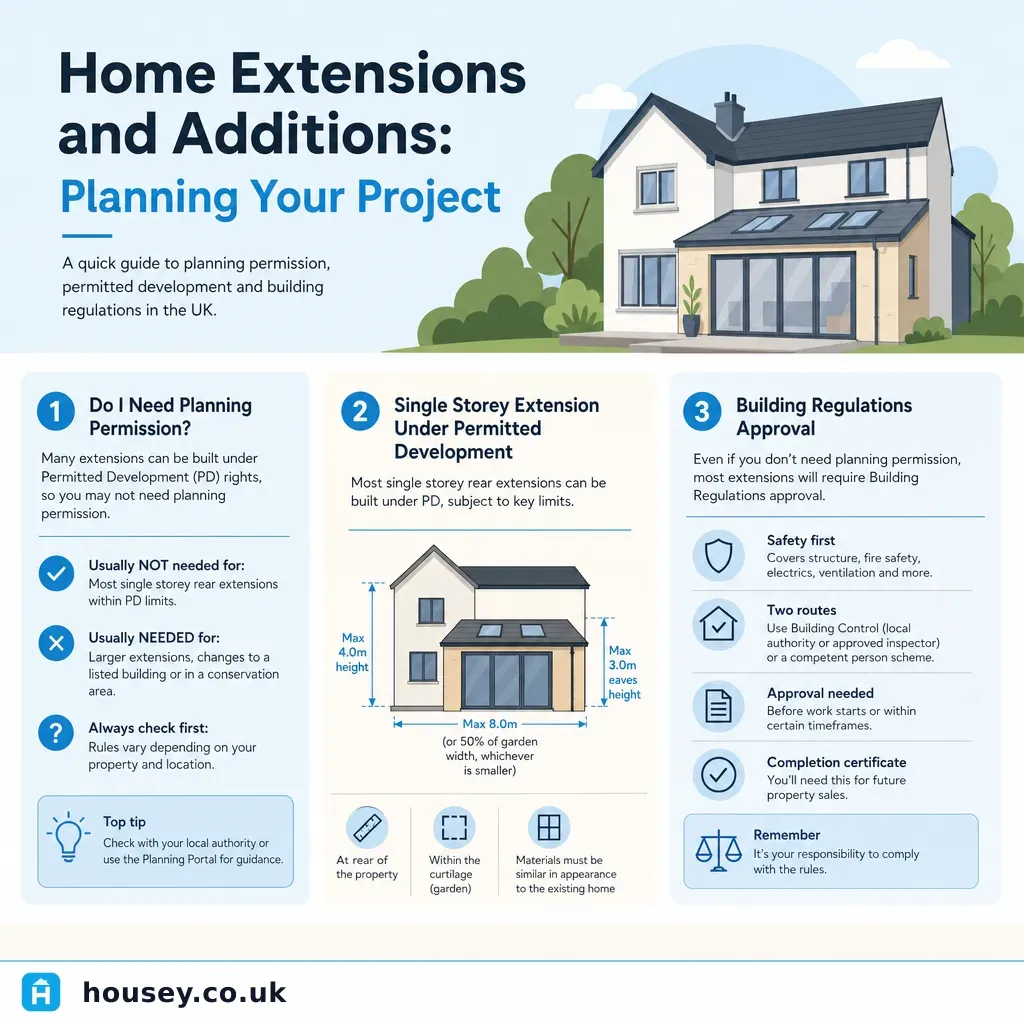
Home Extensions and Additions: Planning Your Project
Most single-storey rear extensions can be built under permitted development without a full planning application, provided they stay within depth limits of 4 m for detached or 3 m for semi-detached and terraced properties.