How Building Product Dealers Work with Architects: A Homeowner's Guide to Product Specification
By Housey · Last reviewed 30th of May 2026
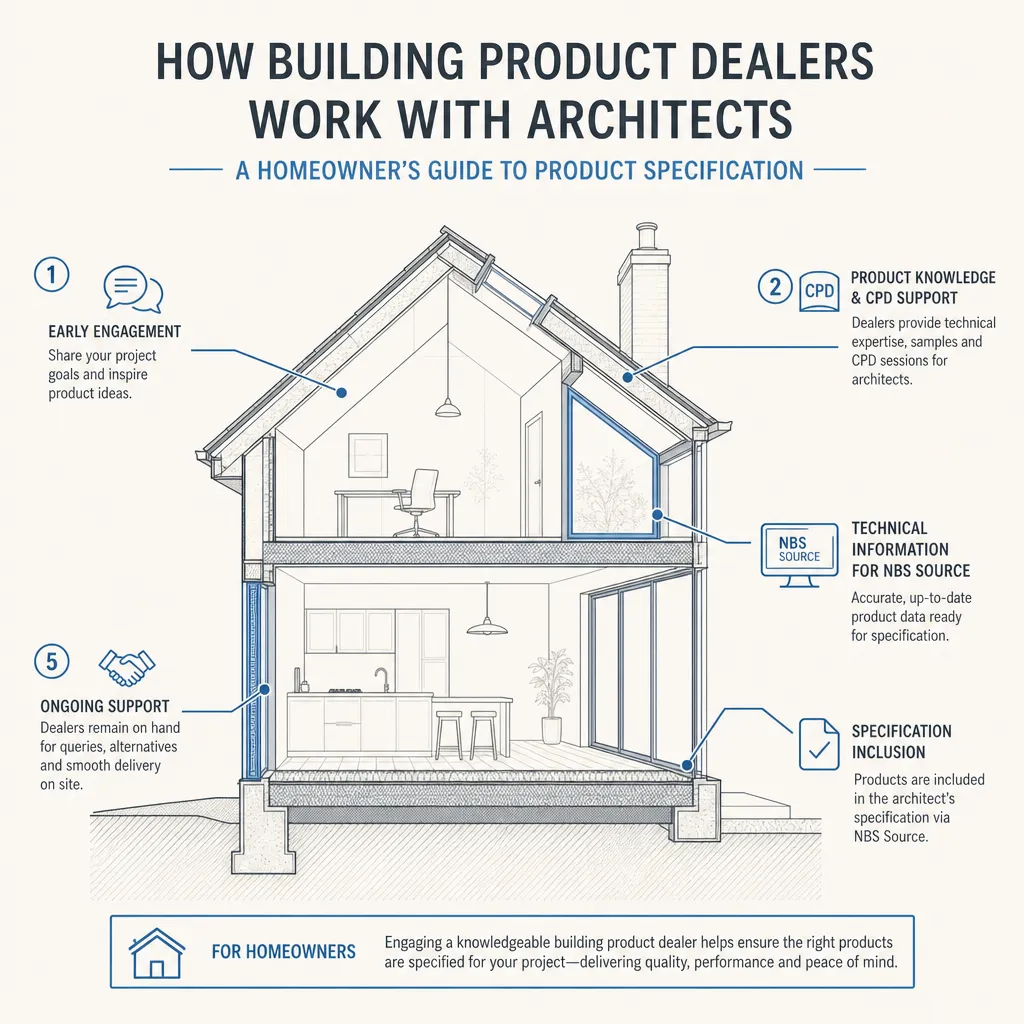
How Building Product Dealers Work with Architects: A Homeowner's Guide to Product Specification
If you are commissioning an architect for a new build, extension, or significant renovation, the products specified in your contract documents — insulation, windows, structural systems, flooring finishes, ironmongery — will largely be determined through a process you may never directly see. Understanding how architects encounter, evaluate, and formally specify building products helps you participate more meaningfully in design decisions, ask better questions, and understand why certain products appear in your final specification and construction contract.
Key points
- Architects write product specifications using the NBS (National Building Specification) system, now delivered via NBS Source — a cloud-based platform standard across UK construction contracts.
- RIBA-chartered architects must complete 35 hours of CPD per year to maintain their ARB registration; many of those hours are fulfilled through manufacturer and dealer-run CPD seminars that introduce new products and systems.
- The specification hierarchy runs: client brief → design intent → NBS specification → tender documents → contractor procurement; products can be substituted at tender stage unless the specification is marked as proprietary (naming a specific product) rather than performance-based.
- Building product dealers access architects through CPD lunch-and-learn sessions, RIBA-approved CPD events, trade shows such as Futurebuild, and direct technical sales visits to practices.
- Barbour ABI and NBS Tracker are used by manufacturers and dealers to identify live UK projects — tracking planning applications and specifications where their products may be relevant.
How architects decide which products to specify
Architects specify products through a combination of experience, CPD learning, technical research, and peer recommendation. Several channels shape what reaches a formal specification:
Channel | How it works | Homeowner relevance |
|---|---|---|
RIBA CPD events | Manufacturers run accredited sessions; architects earn CPD hours while learning about products | Your architect may have recently encountered a product suited to your project type |
NBS Source | Architects search and select products within the specification platform | Products listed on NBS Source are more easily included in formal specifications |
Trade publications | Architecture and building press (e.g. RIBA Journal, Architectural Review) | Influences architect awareness of emerging products and systems |
Trade shows | Futurebuild, Grand Designs Live, RIBA Exploring Architecture | Architects encounter new products and meet manufacturer representatives |
Technical sales representatives | Dealer reps visit practices to present products, provide samples, and offer technical support | If you have a preferred product, ask your architect to request a rep visit |
Client brief and preferences | Clients can include product preferences in the brief | You can legitimately influence specification if you have clear reasons |
Peer recommendation | Architects share product experience with colleagues | Past performance on similar UK property types is a strong driver of repeat specification |
How product specification flows through a UK project
Understanding the specification hierarchy helps you know when and how to influence product choices most effectively.
A worked example: specifying glazing on a Victorian terrace rear extension in a conservation area
Situation: A homeowner in Leeds is commissioning a contemporary rear extension to their 1890s mid-terrace. The property is in a conservation area. The design includes bifold doors and a large fixed glazed section.
- Brief stage: The homeowner mentions they want thermally efficient glazing and are concerned about solar gain. The architect notes the conservation area context — certain frame materials or colours may be restricted by local planning policy.
- Design intent stage: The architect selects a slim-profile aluminium system to maintain sightlines and satisfy Part L U-value requirements.
- NBS specification stage: Using NBS Source, the architect writes either a performance specification (stating required U-values and accreditations) or a proprietary specification naming a specific system. A performance spec allows contractor substitution; a proprietary spec requires the named product or an architect-approved equivalent.
- Tender stage: Contractors price the work. If performance-based, they may propose an equivalent system. The homeowner and architect should agree acceptable substitutions before tenders are returned.
- Procurement stage: The contractor orders through their preferred dealer, who may or may not be the same dealer that influenced the original specification.
At stages 1 and 2, homeowner input is most effective. At stage 4 and beyond, changes are more disruptive and potentially costly to accommodate.
What to ask your architect about product specification
Before your architect finalises the specification, consider raising these questions:
- Is this a proprietary or performance-based specification? A proprietary spec names one product; a performance-based spec allows equivalent alternatives — which can increase price competition at tender.
- What influenced this product choice? Understanding whether the recommendation comes from manufacturer CPD, peer experience, or independent testing helps you assess the basis for the decision.
- Are there comparable products at different price points? Architects may default to familiar products; asking about alternatives is reasonable and often opens up options.
- How does this product comply with the relevant Approved Document? Your architect should be able to demonstrate compliance with Part L, Part F, or Part B as applicable to the product category.
- What is the lead time, and is the product UK-sourced? Lead time affects your programme; UK-based supply typically reduces delay risk.
- Can I include a product preference in my brief? Yes — and the earlier you raise preferences, the easier they are to accommodate without disrupting the specification programme.
- What is the maintenance or replacement consideration? Some specified products have long lead times for replacement parts — relevant for long-term ownership decisions.
What not to assume about the specification process
Common homeowner misunderstandings about how building products enter a specification:
- "My architect chose this product completely independently." Architects are legitimately influenced by CPD events, dealer visits, and professional networks — as any professional is. This does not imply bias, but asking about the basis for a choice is entirely reasonable.
- "The specified product will definitely be what gets installed." Unless the specification is proprietary and enforced through the building contract, contractors may propose substitutes at tender stage. Agree substitution provisions with your architect before tenders are issued.
- "Building product dealers only work on large commercial projects." Many dealers actively target residential and small commercial practices. Products specified in domestic extensions frequently come from the same dealer networks as large housing schemes.
- "I have no say in what goes in my specification." As the client, you are a legitimate participant in design and specification decisions. Preferences stated clearly and early — before the NBS specification is finalised — are far easier to accommodate than changes raised after tender.
When to get professional help
If you have concerns about a specific product specification — particularly for fire-stopping, structural products, or insulation systems — consider:
- Asking your architect to share the technical data sheet and Approved Document compliance statement for the product in question
- Requesting that specifications reference UKCA-marked products tested to relevant British Standards
- Engaging a building control inspector early if you have concerns about specific material choices
For listed buildings or conservation area properties, consult your local planning authority or a conservation specialist before finalising any external material specifications — some materials require Listed Building Consent to use.
How Housey can help
Housey connects homeowners with vetted architects who can guide product specification decisions from brief stage onwards, and specialists in building regulations drawings who ensure your project documents meet current compliance requirements.
Frequently asked questions
Can I ask my architect to specify a particular brand or product on my project?
Yes. You can include product preferences in your client brief, and your architect should consider them. Your architect may advise on technical alternatives or compliance implications, but client preferences are a legitimate input — particularly at brief and concept design stage, before the NBS specification is finalised and tendering begins.
What is NBS Source and do I need to understand it as a homeowner?
NBS Source is a cloud-based platform most UK architects use to write formal product and construction specifications. As a homeowner, you do not need to use it directly, but knowing it exists helps you understand how product choices become formalised in your contract documents. If your project uses a JCT building contract, the NBS specification will form part of those documents.
How do I know if a specified product meets Building Regulations?
Ask your architect for the product's technical data sheet and compliance certification. For thermal products, look for U-value test reports referencing Part L. For fire-stopping or structural products, ask for third-party test certifications against relevant British Standards. UKAS-accredited test reports provide the highest level of independent assurance available.
Sources and further reading
- NBS Source — specification platform for UK construction — NBS (RIBA Enterprises)
- ARB CPD requirements for architects — Architects Registration Board
- RIBA CPD programme — Royal Institute of British Architects
- Building Regulations Approved Documents — GOV.UK
Useful next reads
 Planning & Pre-Build
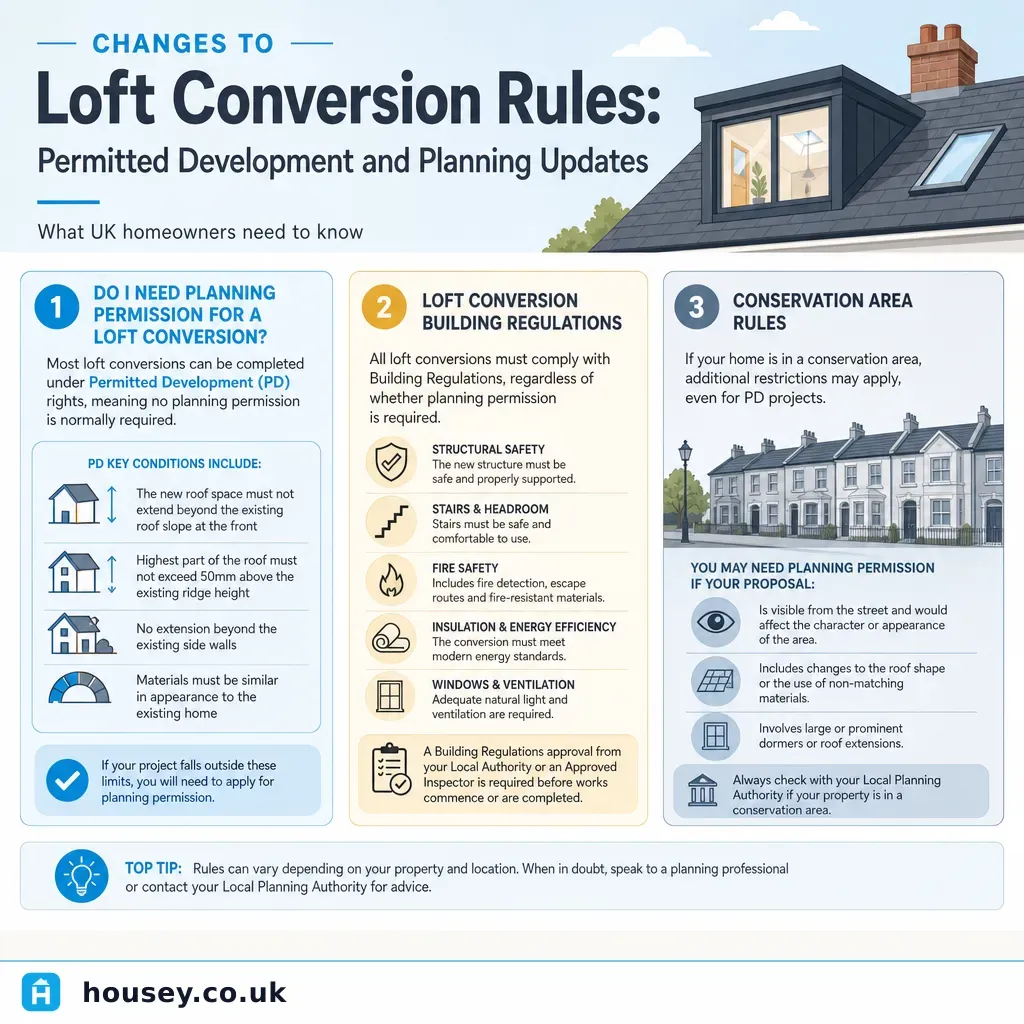
Changes to Loft Conversion Rules: Permitted Development and Planning Updates
In England, most loft conversions on standard houses qualify as Permitted Development under Class B of the GPDO 2015, allowing up to 40 cubic metres (terraced) or 50 cubic metres (detached or semi-detached) without a planning application — if conditions are met.
 Planning & Pre-Build
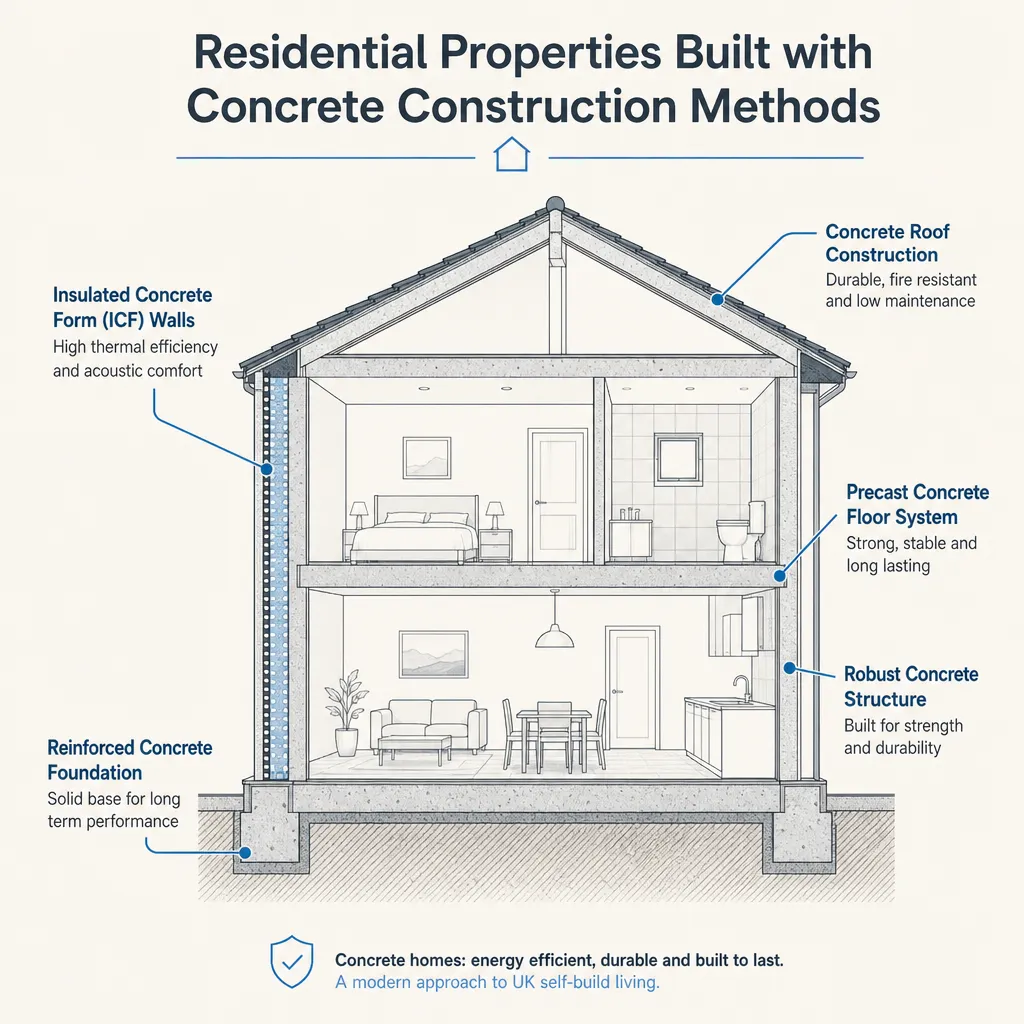
Residential Properties Built with Concrete Construction Methods
UK homes are built using several concrete methods: in-situ cast concrete, precast panel systems, insulating concrete formwork (ICF), and older non-traditional types such as Wimpey No-Fines and Laing Easiform.
 Planning & Pre-Build
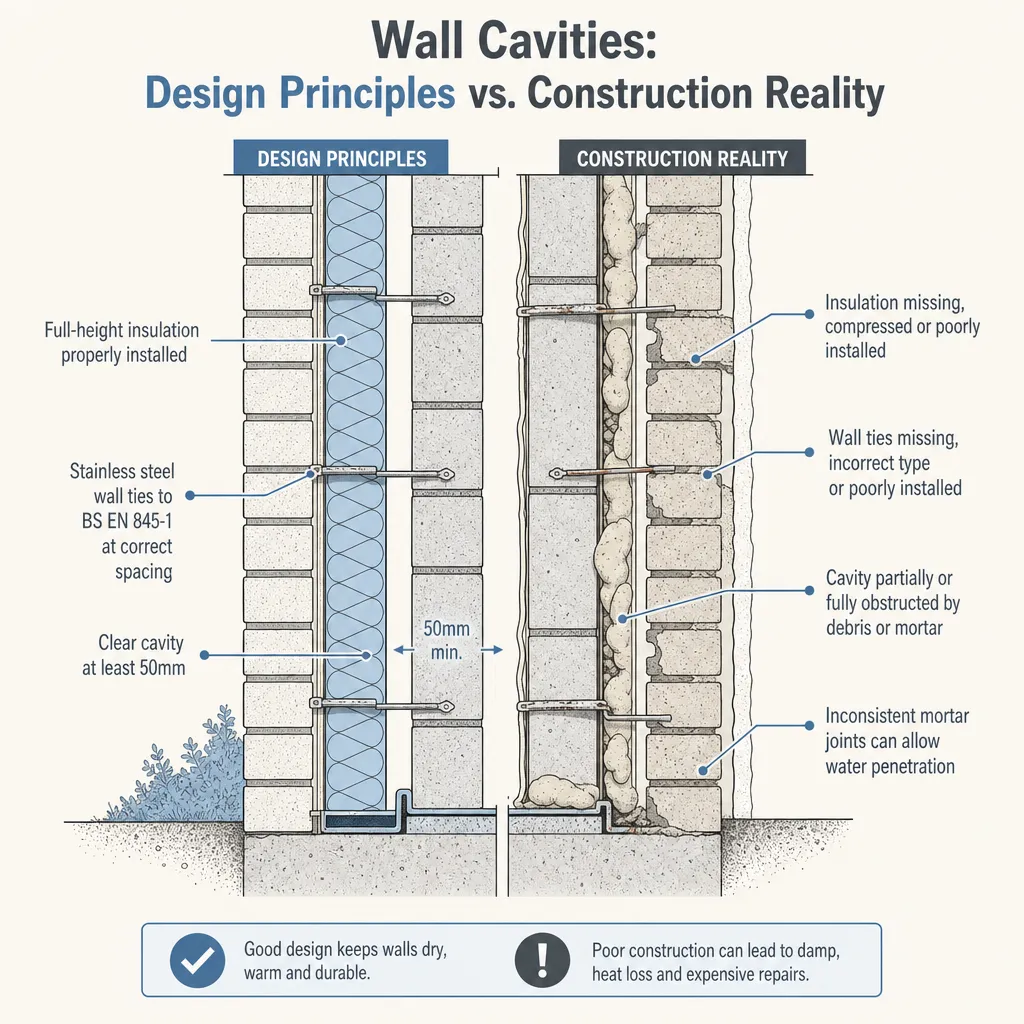
Wall Cavities: Design Principles vs. Construction Reality
A UK cavity wall is designed to resist weather, control heat loss, and structurally link two masonry leaves.
 Planning & Pre-Build
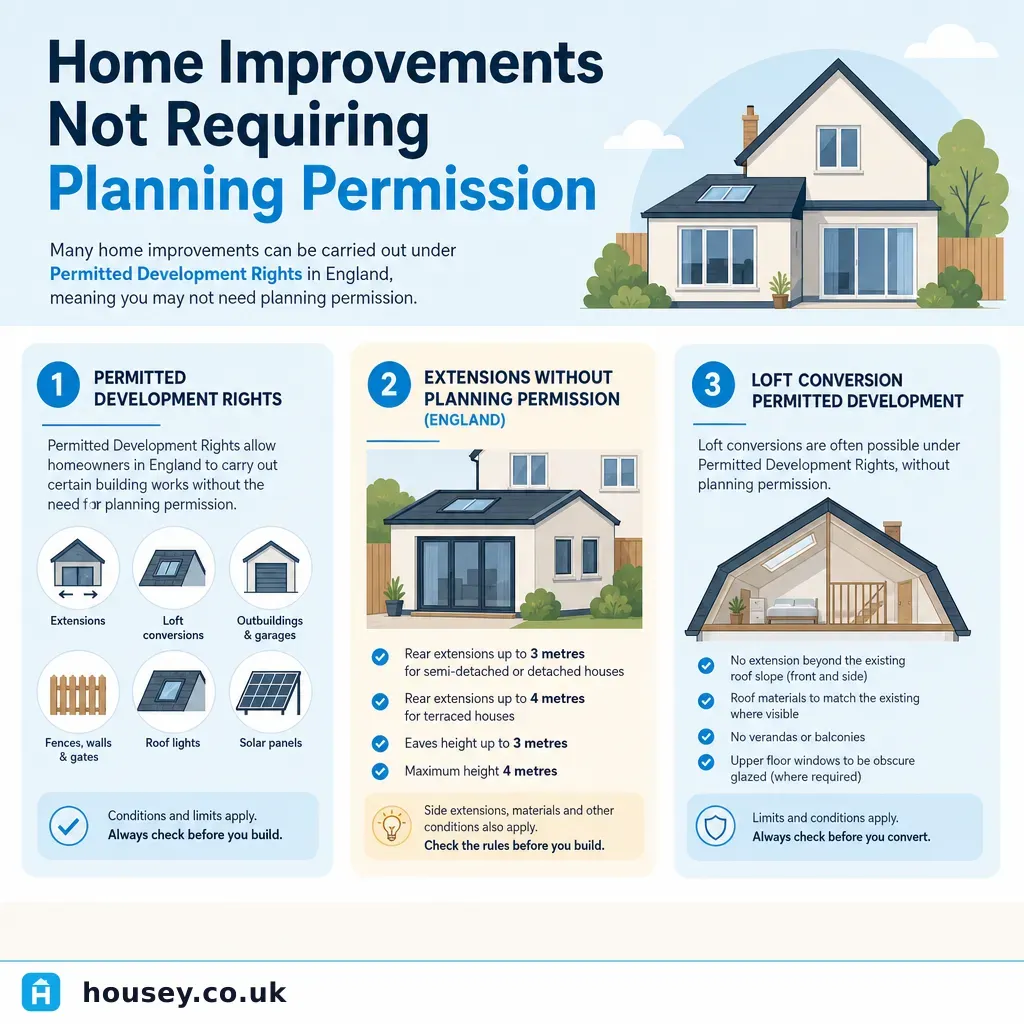
Home Improvements Not Requiring Planning Permission
Many common home improvements in England fall under Permitted Development Rights and do not require a planning application.
 Planning & Pre-Build
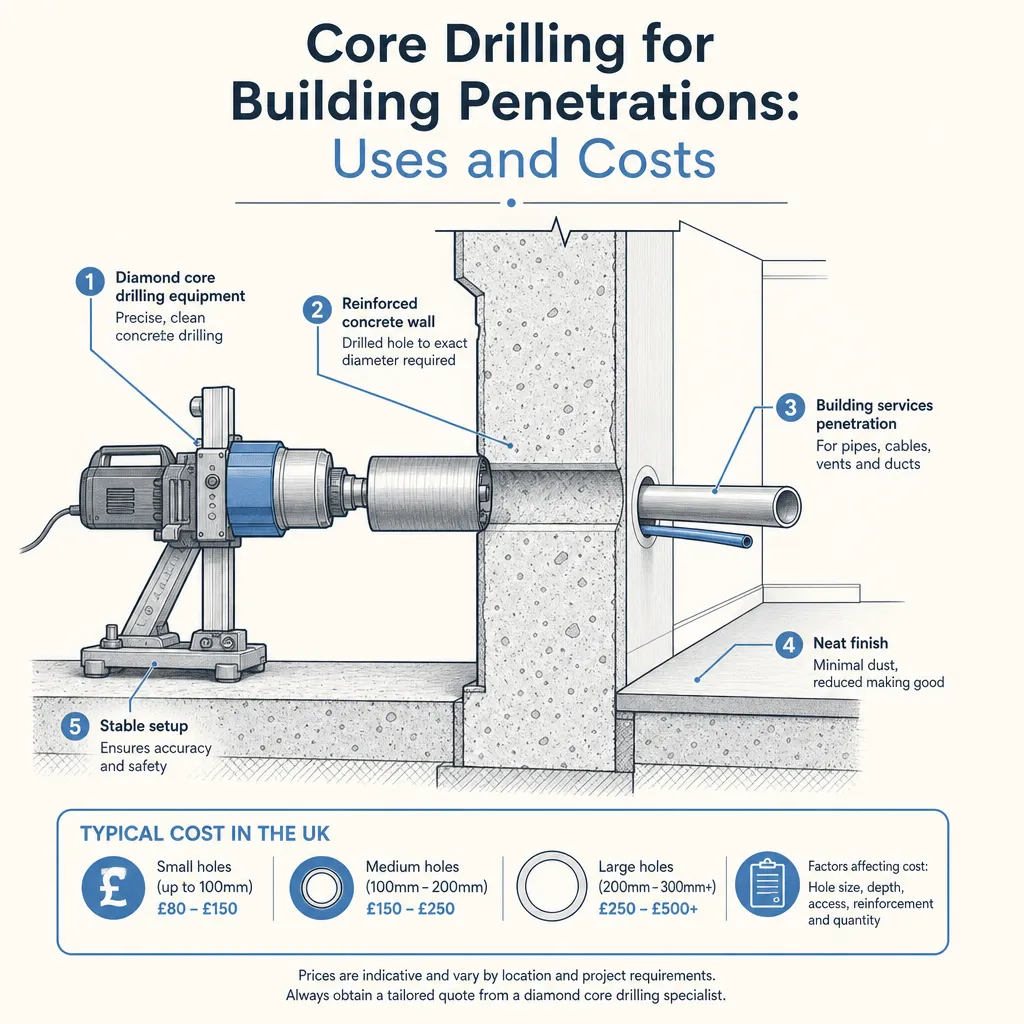
Core Drilling for Building Penetrations: Uses and Costs
Core drilling uses diamond-tipped equipment to cut clean holes through concrete, masonry, or block for pipes, ducts, cables, and building services.