Repairing uPVC Window Hardware: Fixing Broken Sash Mechanisms
By Housey · Last reviewed 3rd of May 2026
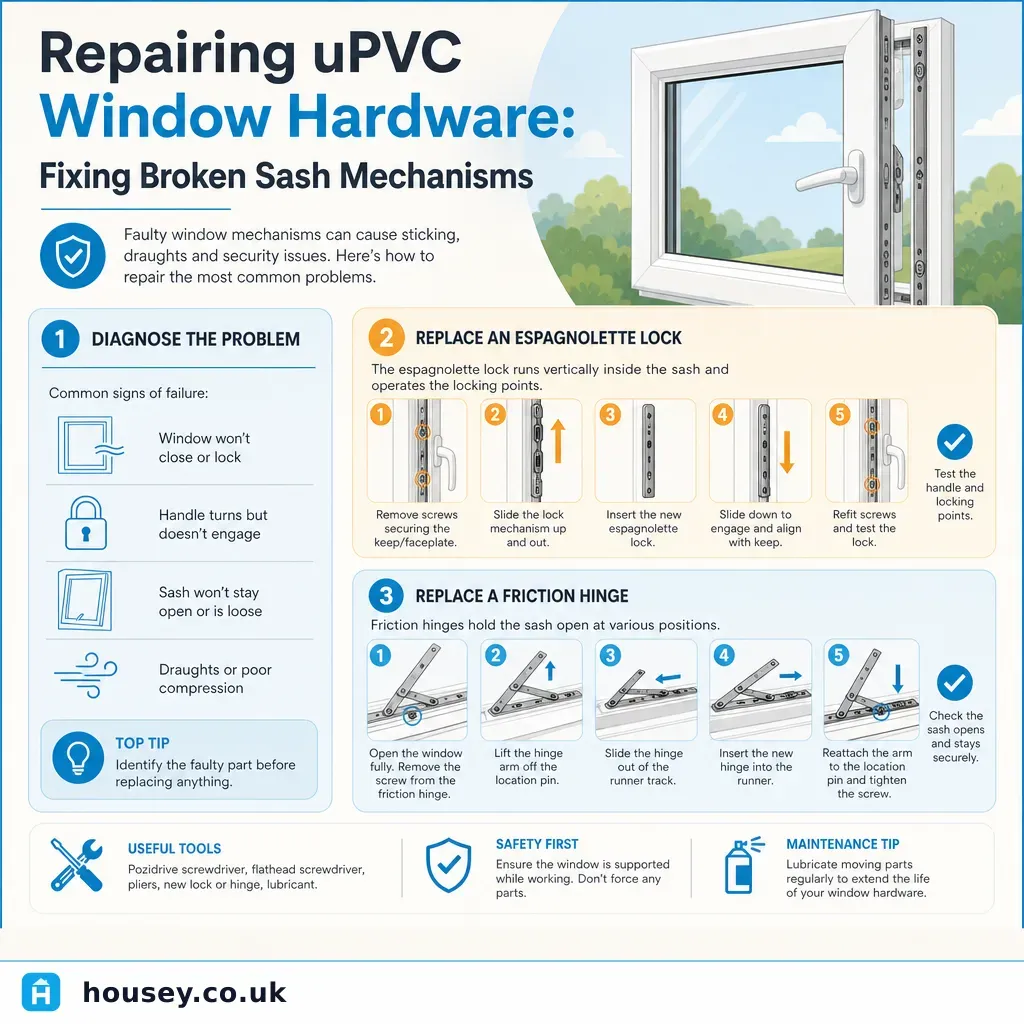
Repairing uPVC Window Hardware: Fixing Broken Sash Mechanisms
uPVC windows rely on a set of mechanical components — handles, multipoint locking systems, friction hinges, and espagnolette bars — that are subject to wear over time. When a sash mechanism fails, the window may not open, lock properly, or stay in position, creating both a security risk and a source of draughts. For most UK homeowners, the practical question is whether to repair the existing hardware or replace the window entirely — and in the majority of cases where the frame is sound, repair is the more cost-effective route.
Key points
- Most uPVC window hardware — handles, espagnolette locks, and friction hinges — can be replaced as standalone components without replacing the full window frame.
- Friction hinges are sized in millimetres (typically 200 mm, 300 mm, 400 mm, or 600 mm); always measure the existing hinge before ordering a replacement.
- FENSA registration applies only to full window replacements that include new glazed units — no notification to building control is required for like-for-like hardware repair.
- Replacing hardware prolongs frame life but will not resolve problems caused by a warped, cracked, or thermally degraded frame — in those cases, full replacement is the correct solution.
- Indicative cost for professional hardware repair on one window: £50–£200 depending on the component and region. Indicative UK costs, last reviewed 2026-05-03; quotes vary and at least two should be obtained.
How uPVC sash mechanisms work
A typical uPVC casement or tilt-and-turn window uses a multipoint locking system — often called an espagnolette lock — comprising a central gearbox operated by the handle, connected to locking bolts or mushroom cams that engage keep plates set into the frame. When you turn the handle, the gearbox drives a steel bar (the espagnolette) up and down, extending or retracting the locking points simultaneously.
The friction hinge holds the sash open at various angles and bears the weight of the sash as it swings. Over time, the friction pads inside the hinge wear down, causing the sash to drop or fail to stay open at a set position.
Common failure points and their typical causes:
- Handle spindle snaps or becomes loose — usually a handle and backplate replacement.
- Gearbox strips or seizes — gearbox replacement within the multipoint lock body.
- Espagnolette bar buckles or corrodes — full lock mechanism replacement.
- Friction hinge loses grip or binds — hinge replacement; measure size before ordering.
- Keep plates or strike plates misaligned — adjustment or keep replacement; sometimes caused by frame movement.
Should you repair or replace the window?
Issue | Repair feasible? | Recommended action |
|---|---|---|
Broken or loose handle | Yes | Replace handle and backplate — DIY-accessible in most cases |
Failed espagnolette gearbox | Yes | Replace multipoint lock mechanism |
Worn friction hinges (frame intact) | Yes | Replace hinge stays — measure size precisely first |
Cracked or warped uPVC frame | No | Full window replacement needed |
Misted or failed sealed unit | Partial | Replace glazed unit only — not a hardware issue |
Perished rubber gaskets causing draughts | Sometimes | Replace gaskets if frame is otherwise sound |
Multiple simultaneous hardware failures | Possibly | Professional assessment needed — may indicate end-of-life frame |
If the frame is structurally sound, hardware repair is almost always more cost-effective than window replacement. A typical uPVC frame has a service life of 20–35 years; hardware can wear out earlier, particularly on south-facing windows exposed to UV and thermal cycling.
Finding the right replacement parts
uPVC hardware is not universally interchangeable. Identify the following before ordering parts:
- Handle spindle length and section — the square bar that drives the gearbox; common sizes are 7 mm and 9 mm square, and these are not interchangeable.
- Backplate dimensions — measure the screw hole spacing (centres) to ensure the replacement plate fits the existing rebate.
- Gearbox brand and type — the brand and part number are often stamped on the gearbox body; common UK brands include Roto, Winkhaus, Yale, and Maco.
- Espagnolette bar length and rail profile — the bar must match the existing rail length and slot profile.
- Hinge size and type — measured as the arm length when closed, in millimetres; also confirm whether the hinge includes a restrictor (egress hinge) and check the weight rating for heavier sashes.
Buy from specialist UK window hardware merchants rather than relying on appearance alone — a handle that looks identical may have incompatible spindle dimensions.
Red flags: when to call a professional
Attempt hardware repairs yourself only if the frame is undamaged and the fault is clearly isolated to a single component. Call a qualified window repair specialist if:
- The sash has dropped significantly, suggesting hinge failure on a large or heavy sash — incorrect hinge replacement on a heavy sash can be a safety risk.
- The frame has visible cracks, delamination, or warping — hardware replacement will not address an underlying frame problem.
- The lock mechanism is failing on a ground-floor or otherwise accessible window — a security issue that should not be left unresolved or temporarily bodged.
- You cannot identify the hardware brand or source compatible parts — forcing incorrect components can damage the frame or compromise the lock engagement.
- The window is still within a manufacturer's or installer's guarantee period — DIY repair may void the warranty.
- Condensation is forming between the glass panes — this is a sealed unit failure requiring glazing replacement, not hardware repair.
What to ask a window repair specialist
Before accepting a quote, ask:
- What specific parts will be replaced, and what brand or specification are the replacements?
- Will you match the existing hardware brand to ensure correct compatibility with the frame profile?
- Is the frame itself in a condition worth repairing, or do you recommend full replacement?
- Does the repair include a guarantee on both parts and labour, and for how long?
- Is VAT included in the quoted price?
- Will any building control notification be required? (For pure hardware replacement, the answer should be no.)
When to get professional help
Consult a qualified window and door installer if the repair involves a large or heavy sash, if there is any evidence of frame movement or settlement affecting the reveal, or if you are a landlord with obligations under the Homes (Fitness for Human Habitation) Act 2018 to maintain windows in a safe and functional condition. Landlords should not defer window mechanism repairs that affect security or ventilation.
How Housey can help
If hardware repair is not feasible — or if you need a qualified installer to diagnose the fault and carry out the repair correctly — Housey can connect you with vetted window and door installers across the UK. Request quotes and compare them side by side before committing to either repair or replacement.
Frequently asked questions
Can I replace uPVC window handles myself?
In most cases, yes. Handle replacement on a uPVC casement window is straightforward: remove the screws securing the backplate, slide out the old spindle, insert the new handle with the correct spindle length, and refit. The main risk is ordering a handle with an incompatible spindle size — measure the existing spindle before you buy, as 7 mm and 9 mm square spindles are both common but not interchangeable.
How do I know if my uPVC window hinge needs replacing?
Common signs include: the sash drops noticeably when opened, the window no longer stays open at a fixed angle, you hear grinding or scraping when operating the sash, or the hinge is visibly bent or corroded. If the window has child safety restrictor clips, check first whether the clip has simply disengaged rather than the hinge itself having failed — this is a simple fix.
Does repairing uPVC window hardware need building regulations approval?
No. Like-for-like hardware repair — replacing handles, lock mechanisms, or friction hinges — does not constitute building work for the purposes of the Building Regulations and does not require notification to building control. FENSA registration applies only when replacing glazed units or the full window assembly, not to hardware-only repairs.
How much does uPVC window mechanism repair typically cost?
Indicative UK costs, last reviewed 2026-05-03: handle replacement, £20–£60 including parts and labour; multipoint lock replacement, £70–£150; friction hinge replacement per pair, £50–£120. Prices vary by region, window size, and whether proprietary or specialist parts are needed. Always obtain at least two quotes before accepting a price.
My uPVC window is misty between the panes — is that a hardware problem?
No. Condensation between the panes indicates a failed sealed unit — the gas-filled double-glazed unit has lost its hermetic seal. This is a glazing issue, not a mechanism or hardware fault. The sealed unit can usually be replaced without replacing the full frame, which is significantly cheaper than a new window. A glazier or window specialist can assess and quote for sealed unit replacement separately.
Sources and further reading
- FENSA: What work requires FENSA registration — FENSA
- Homes (Fitness for Human Habitation) Act 2018 — legislation.gov.uk
- Approved Document N: Glazing safety — GOV.UK
- Energy Saving Trust: Windows and doors — Energy Saving Trust
Useful next reads
 Improvement & Build
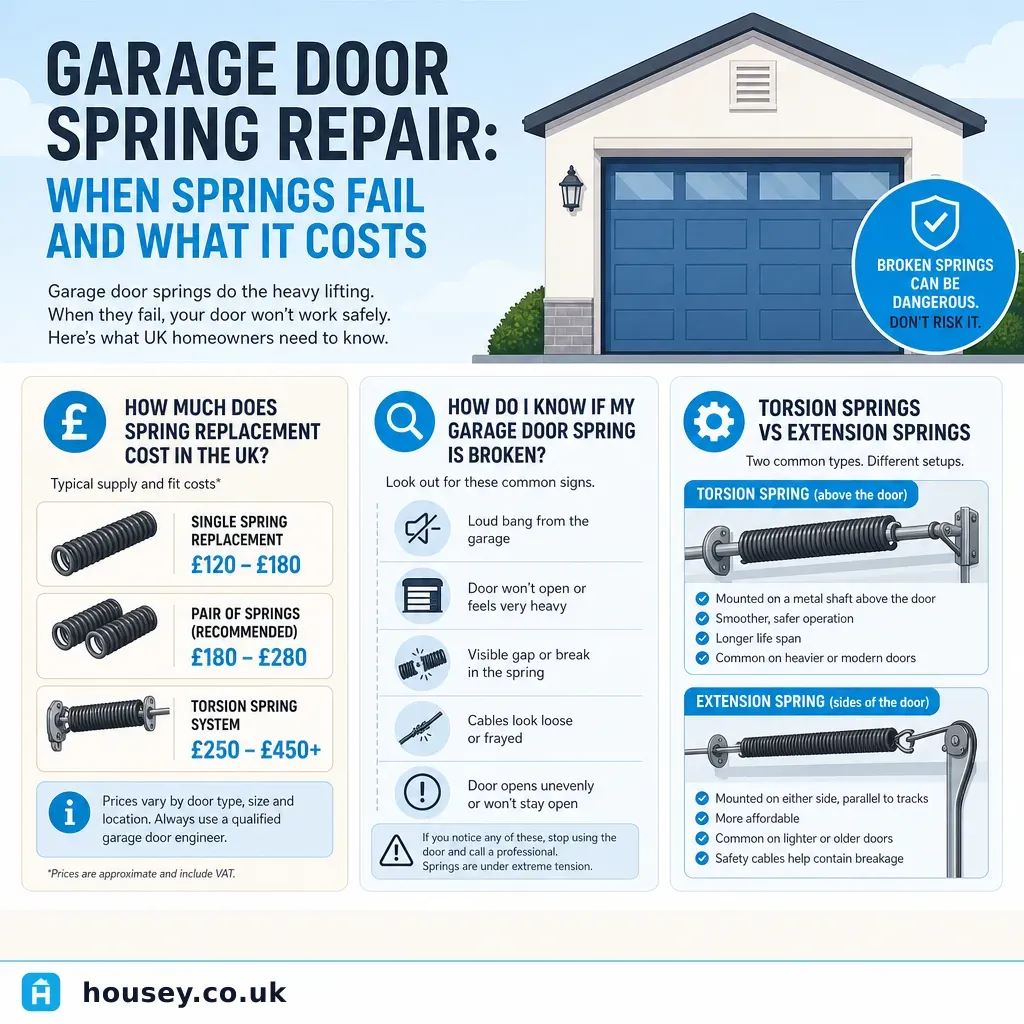
Garage Door Spring Repair: When Springs Fail and What It Costs
A broken garage door spring usually makes the door heavy, lopsided, or completely inoperable.
 Improvement & Build
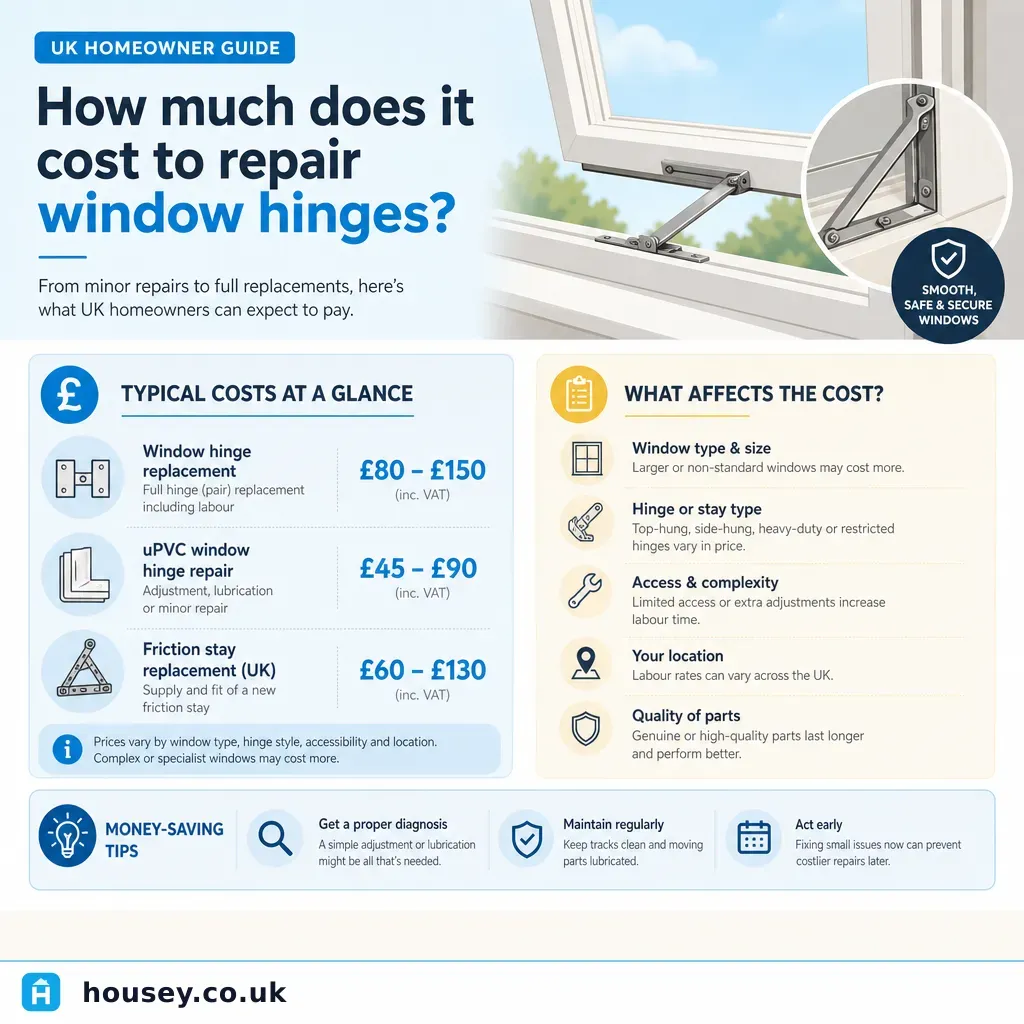
How much does it cost to repair window hinges?
Window hinge repair in the UK typically costs £60–£150 per window for a uPVC friction stay replacement, including parts and labour.
 Improvement & Build
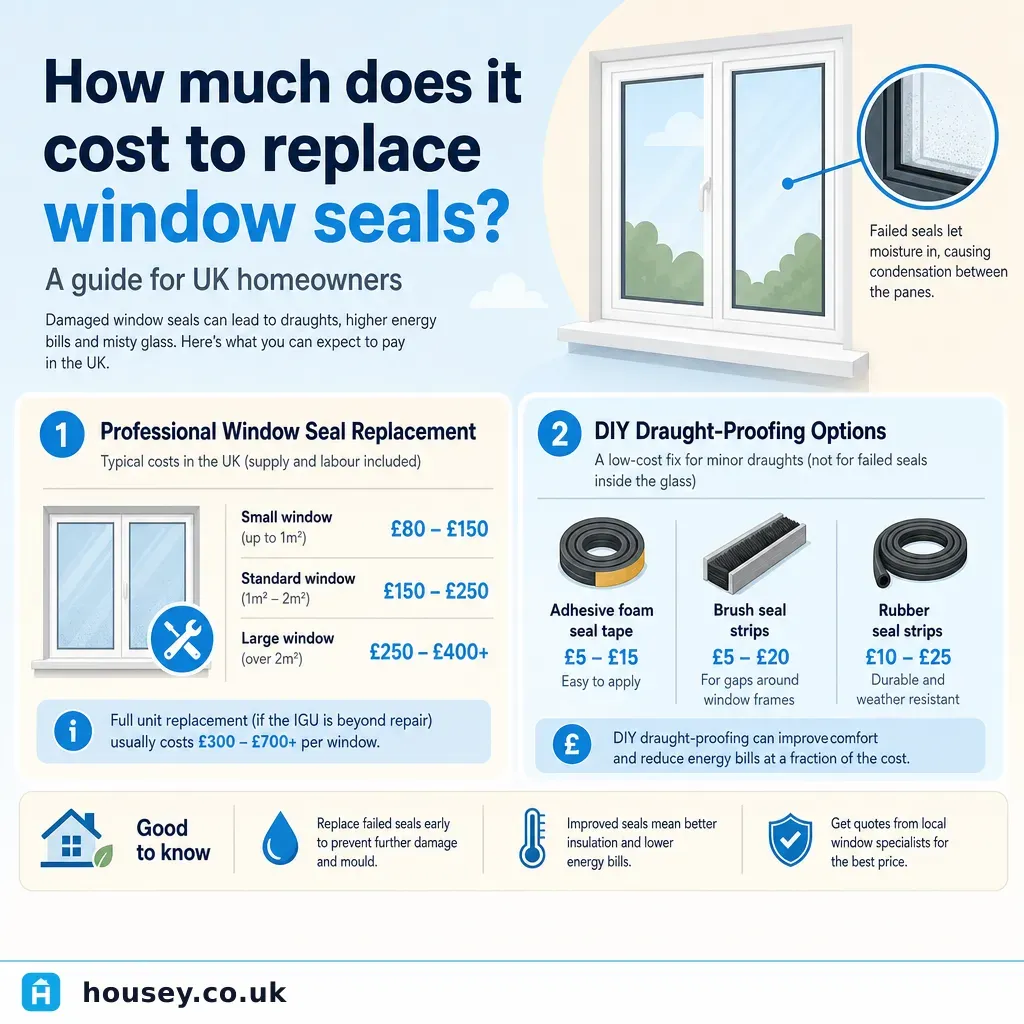
How much does it cost to replace window seals?
Replacing window seals in the UK costs between £40 and £350 per window depending on the repair type.
 Improvement & Build
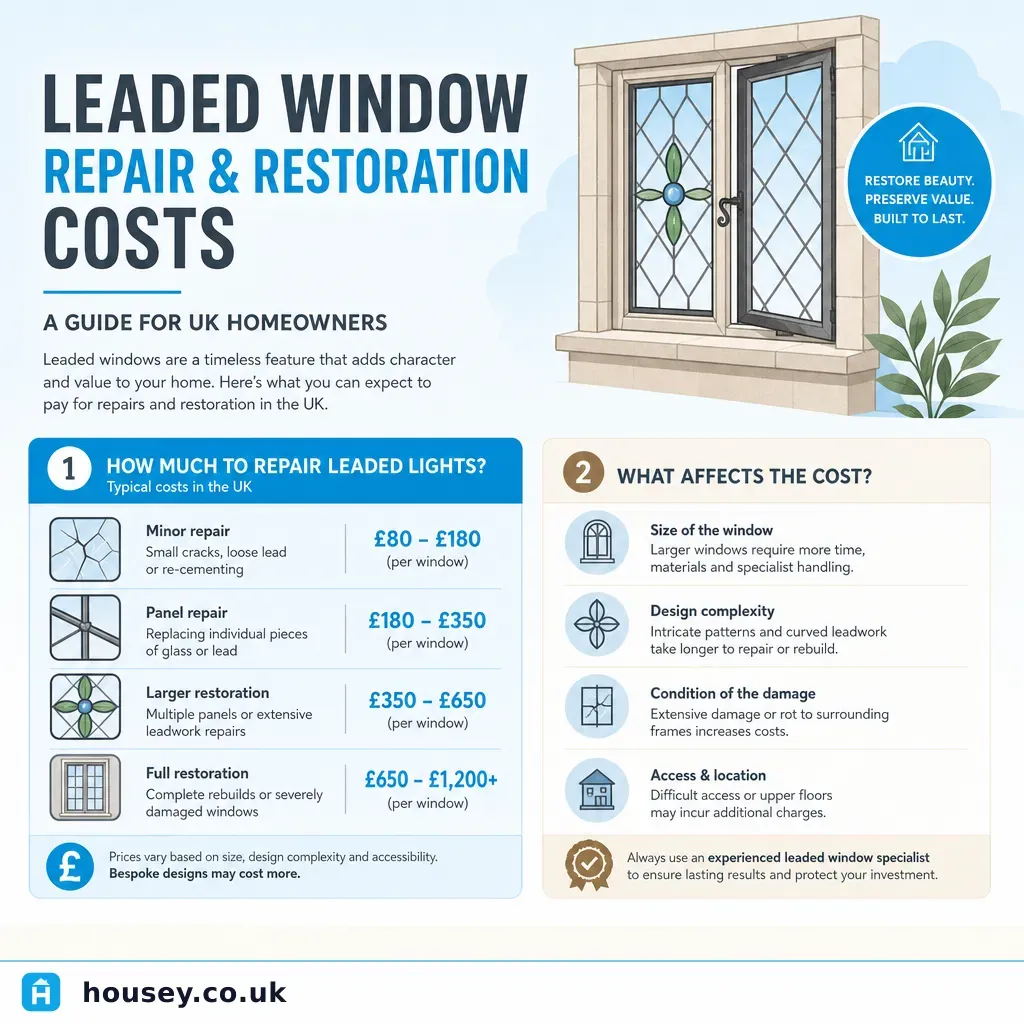
Leaded Window Repair and Restoration Costs
Leaded window repair in the UK typically costs £150–£600 for minor re-soldering or resealing, rising to £800–£2,500+ for full panel removal and restoration.
 Improvement & Build
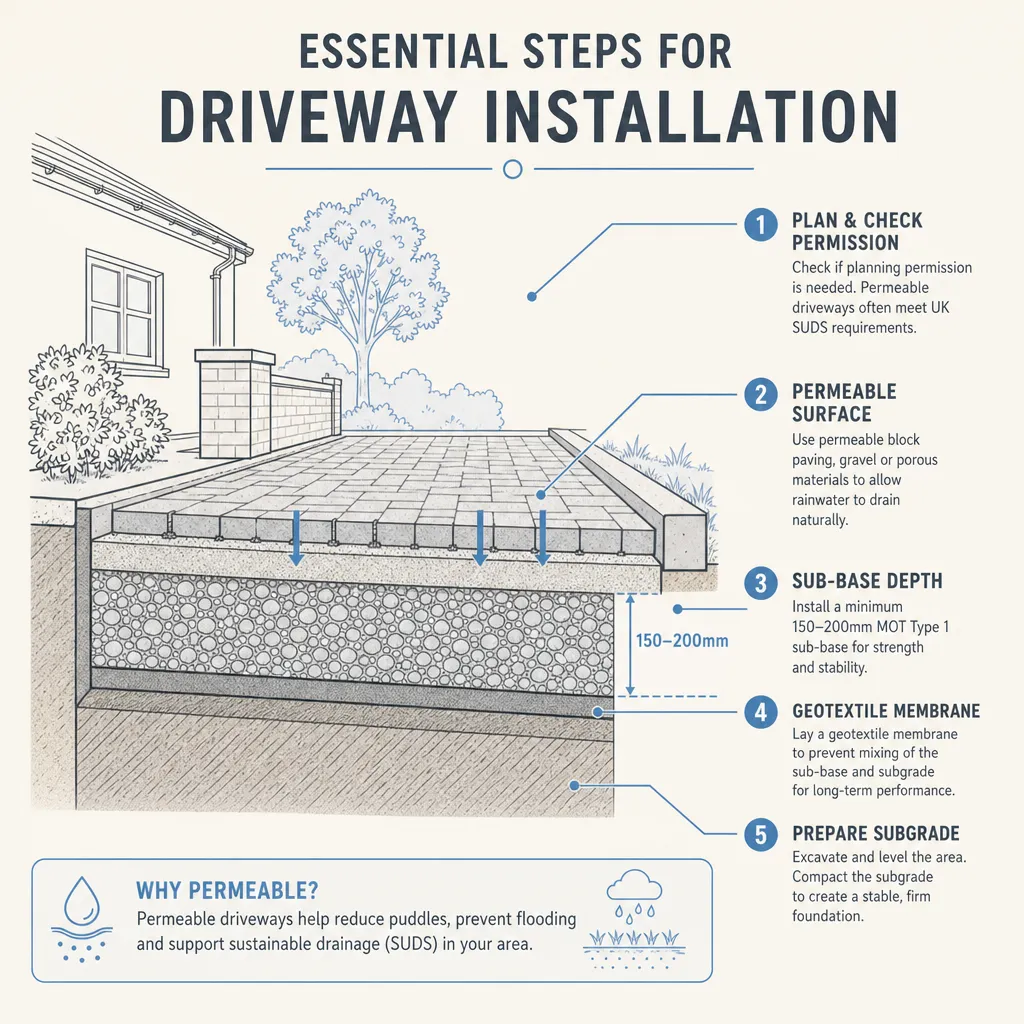
Essential Steps for Driveway Installation
Installing a driveway in England requires planning permission only when using an impermeable surface (standard tarmac, concrete, or block paving) on a front garden area over 5 m².