How much does it cost to replace window seals?
By Housey · Last reviewed 11th of May 2026
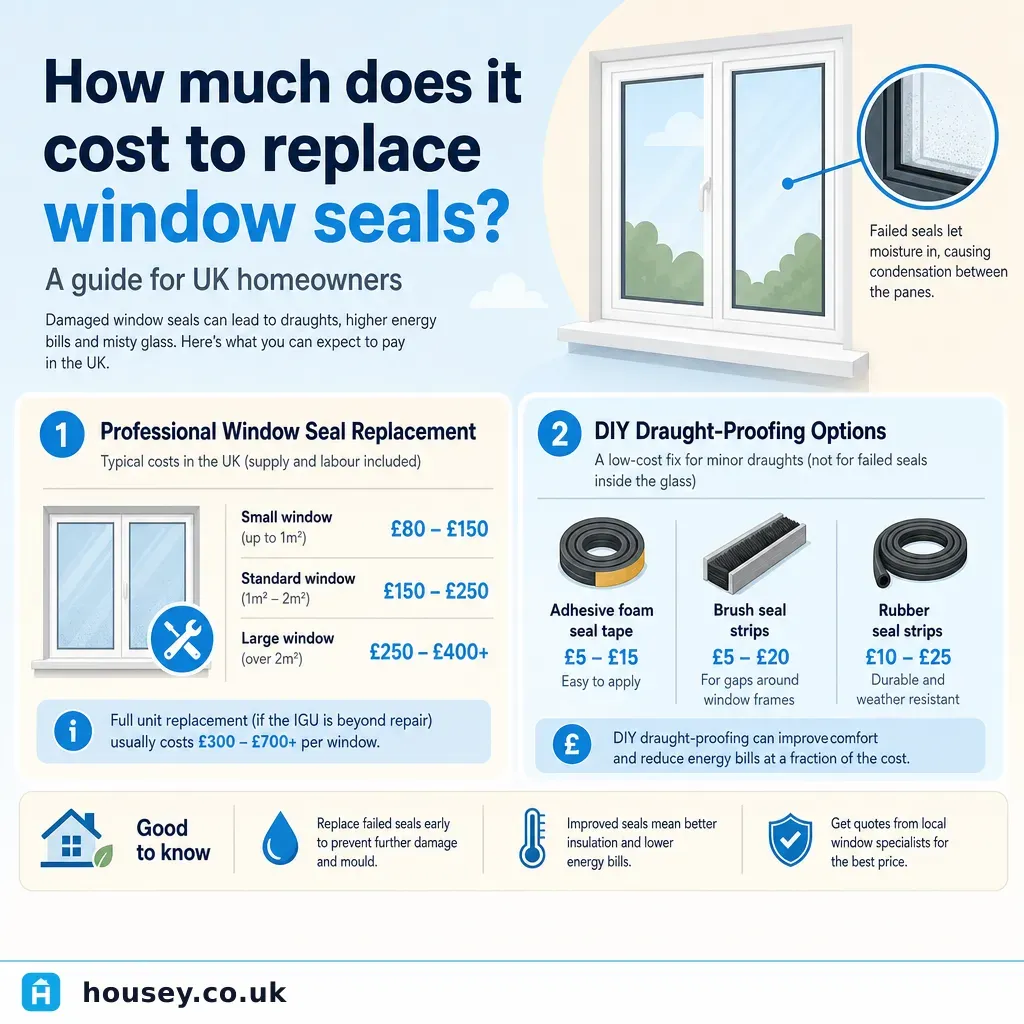
How much does it cost to replace window seals?
Condensation forming between the panes of a double-glazed window, cold air seeping through a closed sash, or damp patches appearing beneath a frame after heavy rain — these are all signs that a window seal has failed somewhere. Seal problems affect properties of all ages but are most common in homes built from the 1970s onwards when double glazing became standard across new and replacement windows. The cost and approach vary considerably depending on whether the problem lies with the sealed glass unit itself, the rubber gasket around the glass edge, the draught-proofing strip around an opening sash, or the external silicone bead — four distinct repairs that are frequently confused with one another.
Key points
- Replacing a failed double-glazed sealed unit — required when condensation appears between the panes — typically costs £80–£350 per pane including supply and fitting (Indicative UK costs, last reviewed 2026-05-11).
- Draught-proofing seal strips around an opening sash typically cost £5–£25 in materials for a DIY replacement, or £40–£100 per window when professionally fitted.
- The Energy Saving Trust estimates that draught-proofing all windows and doors in a typical UK home can save approximately £45–£65 per year on energy bills.
- Replacement windows (full frame and glass) in England must meet a minimum Window Energy Rating of Band C or a U-value of 1.4 W/m²K or better under Building Regulations Approved Document L.
- Replacement windows installed by a FENSA- or Certass-registered company do not require a separate building control notification — the competent person scheme provides the compliance certificate.
Types of window seal and what they cost
1. Sealed unit (double-glazed unit) replacement
When condensation appears between the glass panes, the inert gas fill inside the double-glazed unit has escaped and moisture has entered the gap. The only reliable remedy is to replace the sealed unit — the glass-and-spacer-bar assembly — while retaining the existing frame. A glazier removes the failed unit and installs a new one.
Typical cost (supply and fit): £80–£350 per unit, depending on pane size, glass specification (standard, low-e, toughened), and whether argon or krypton fill is specified. Larger panes in bi-fold or patio doors may cost more. Indicative UK costs, last reviewed 2026-05-11.
2. Rubber gasket replacement
The rubber gasket (also called a glazing seal or beading gasket) sits in the frame channel and holds the glass unit in place, forming a weather seal around the glass perimeter. Gaskets harden, crack, or pull away with age. Replacement is appropriate when the seal around the glass edge has visibly failed but the unit itself remains clear — with no condensation between the panes.
Typical cost (supply and fit): £40–£150 per window, depending on window size and frame profile. Indicative UK costs, last reviewed 2026-05-11.
3. Draught-proofing seal strips
Opening windows — casements, sashes, tilt-and-turn frames — have compressible seal strips around the sash perimeter. These flatten, harden, or peel away over time, allowing cold air in. Replacement strips are available from builders' merchants and DIY retailers.
Typical cost (DIY): £5–£25 per window in materials. Typical cost (professional): £40–£100 per window for supply and fitting of good-quality self-adhesive or brush seal strips. Indicative UK costs, last reviewed 2026-05-11.
4. Silicone perimeter sealant
A bead of silicone runs between the outer frame and the wall reveal. It can crack, shrink, or grow mould over time, losing its weatherproofing function. Reapplying silicone is a quick, inexpensive job.
Typical cost (DIY): £5–£15 in materials. Typical cost (professional): £20–£60 per window as a standalone job; often bundled with other window maintenance work. Indicative UK costs, last reviewed 2026-05-11.
Comparison: types of window seal repair
Repair type | What it fixes | Typical DIY? | Professional cost (indicative) | Signs you need it |
|---|---|---|---|---|
Sealed unit replacement | Condensation between panes | No | £80–£350 per unit | Fog or water trapped inside the unit |
Rubber gasket replacement | Cracked or pulled-away glazing seal | Possible with care | £40–£150 per window | Draughts around the glass edge; gasket visibly failing |
Draught-proofing strip replacement | Cold air around opening sash | Yes | £40–£100 per window | Draughts when window is shut; flattened or missing strip |
Silicone perimeter bead | Water ingress at frame–wall joint | Yes | £20–£60 per window | Damp near window reveal; cracked or mouldy silicone |
Red flags: signs your window seals need replacing
- Persistent condensation or fogging between glass panes: this will not resolve on its own — the sealed unit has failed and needs replacing.
- Draughts when the window is fully closed: draught-proofing strips have failed or the rubber gasket has hardened and shrunk away from the frame.
- Damp patches on the wall beneath or beside the window: the external silicone bead or frame seal is allowing water to track inside.
- Water visible inside the frame channel: moisture is bypassing a failed seal; in timber frames this can lead to rot if left unaddressed.
- Rising energy bills unexplained by heating system changes: significant draughts or failed thermal seals in double glazing can meaningfully increase heat loss.
- Mould around the window reveal: may indicate cold bridging caused by a failed thermal seal, creating condensation on the surrounding wall surface.
Does window seal replacement require building regulations approval?
Replacing a sealed unit within an existing frame, or renewing draught-proofing strips, does not require building regulations approval. However, replacing an entire window — frame and glass together — requires the new window to meet the thermal performance requirements in Building Regulations Approved Document L (Conservation of Fuel and Power). Replacement windows in England must typically achieve a minimum Window Energy Rating of Band C or a U-value of 1.4 W/m²K or better. Work carried out by a FENSA- or Certass-registered installer is self-certified under a competent person scheme, removing the need for a separate building control notification.
When to get professional help
Sealed unit replacement involves handling large, heavy glass panels, cutting glazing gaskets to exact lengths, and often working at height on upper floors — this is work for a glazier or window and door installer rather than a DIY task. If the frame surrounding the unit is also damaged, a full window replacement may be more cost-effective than a unit-only swap; a professional can advise before parts are ordered. Draught-proofing strip replacement and silicone re-pointing at ground-floor level are practical DIY tasks for most householders. Any work at height above 2 m should involve a professional.
How Housey can help
Housey connects you with qualified window and door installers who can diagnose the cause of your seal failure, advise on repair versus full replacement, and carry out the work to the correct thermal and weatherproofing standard. Describe your window issue and location using our service request form to receive quotes from local specialists.
Frequently asked questions
Can a failed double-glazing seal be repaired without replacing the unit?
No — once the inert gas fill has escaped and moisture has entered the space between the panes, the only reliable fix is to replace the sealed unit. Some companies offer to drill the unit and insert a desiccant, but this is a temporary measure that does not restore thermal performance or permanently clear the haze between the panes.
How long should window seals last?
Double-glazed sealed units typically last 15–25 years before seal failure becomes likely. Premature failure can occur with high UV exposure, frame movement, or poor original installation. Draught-proofing strips and silicone sealant generally need renewing every 5–10 years depending on exposure and product quality.
Will replacing window seals reduce my energy bills?
Draught-proofing strips reduce heat loss from cold-air infiltration — the Energy Saving Trust estimates savings of approximately £45–£65 per year across all windows and doors in a typical home. Replacing a failed sealed unit restores the double-glazing's thermal performance, which deteriorates once the inert gas fill is lost. Actual savings depend on the severity of the original problem and your home's overall insulation standard.
Is window seal replacement covered by a glazing warranty?
Many glazing companies offer a 5–10 year warranty on sealed units against seal failure. Check the original installation documents or ask your installer. If your home has an NHBC Buildmark or similar new-build warranty, failed seals may be covered within the initial defects period — typically two years from the completion date.
Sources and further reading
- Building Regulations — Approved Document L (Conservation of Fuel and Power) — GOV.UK
- Draught-proofing your home — Energy Saving Trust
- FENSA: competent person scheme for window and door replacement — FENSA
- Double glazing problems and repairs — Which?
- Problems with builders and tradespeople — Citizens Advice
Useful next reads
 Improvement & Build
Guide to Replacing Timber Sash Windows with Authentic Restoration
Restoring a timber sash window typically costs £150–£400 per window; full replacement costs £800–£2,500.
 Improvement & Build
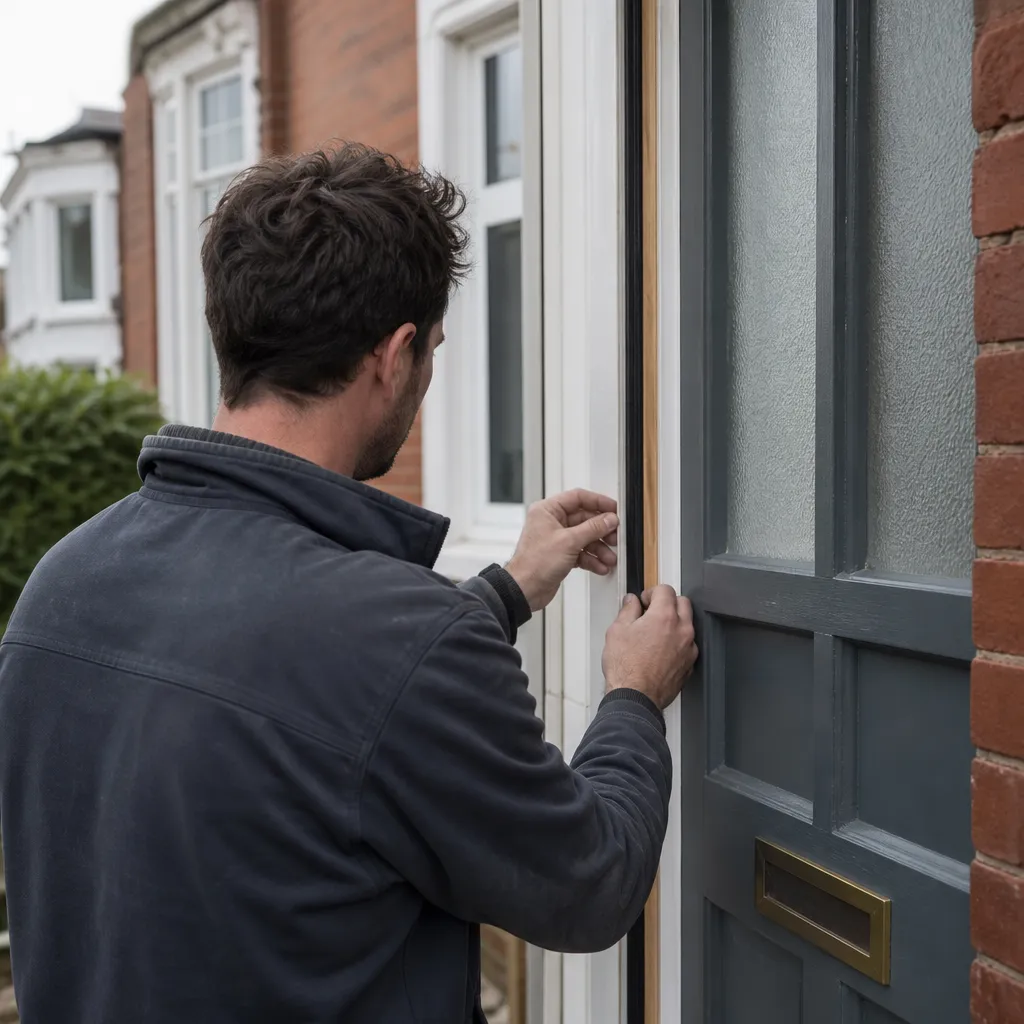
Door Weatherproofing And Sealing: Window And Door Contractors
Door weatherproofing involves fitting draught seals, threshold strips, letterbox brushes, and door sweeps to stop cold air and rain entering around the frame and threshold.
 Improvement & Build
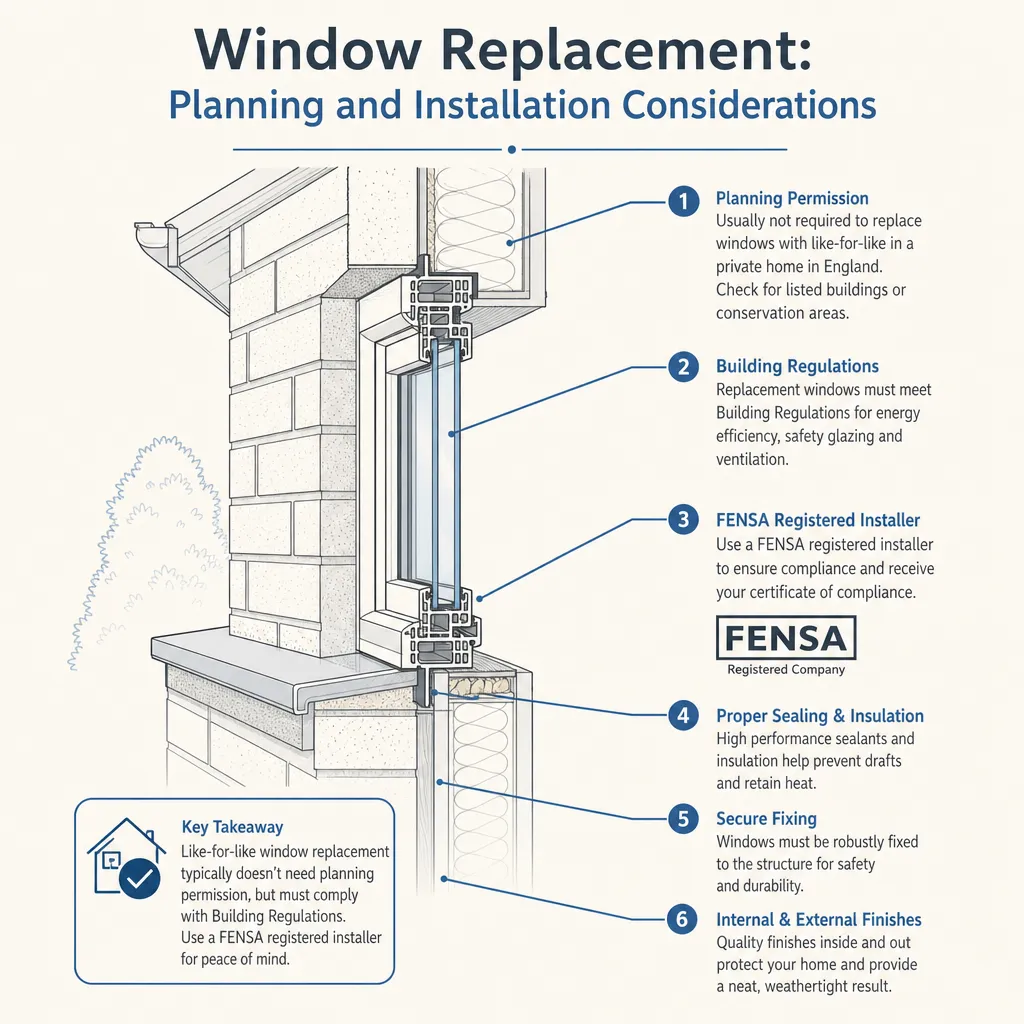
Window Replacement: Planning and Installation Considerations
Most window replacements in England fall under permitted development and do not need planning permission, though listed buildings, flats, and conservation areas are exceptions.
 Improvement & Build
Why Roof Efficiency Matters for Energy Performance
A roof typically accounts for up to 25% of a home's heat loss where uninsulated, making it one of the highest-return areas to address in older UK properties.
 Improvement & Build
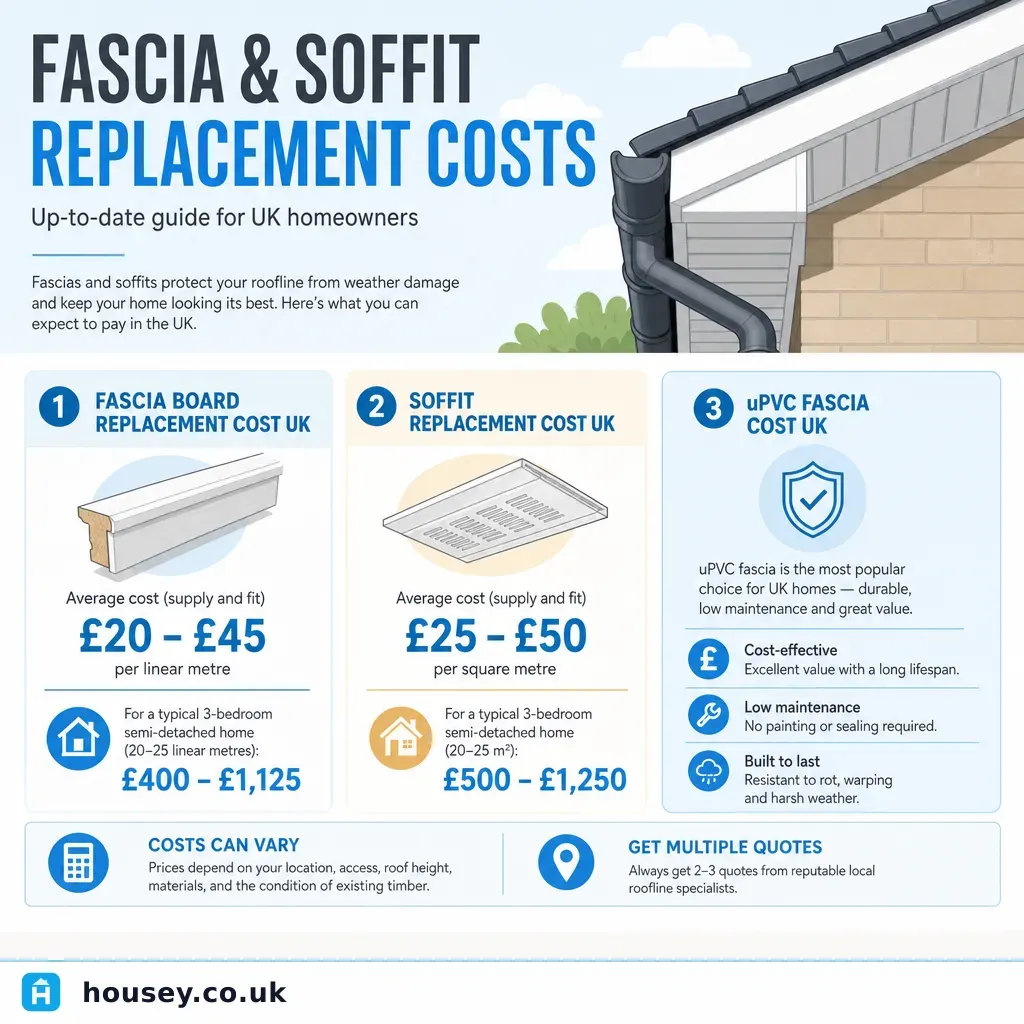
Fascia and Soffit Replacement Costs
Fascia and soffit replacement for a semi-detached house in the UK typically costs £1,800–£4,500 for uPVC boards and new guttering.