Patio Door Replacement and Installation Costs
By Housey · Last reviewed 7th of May 2026
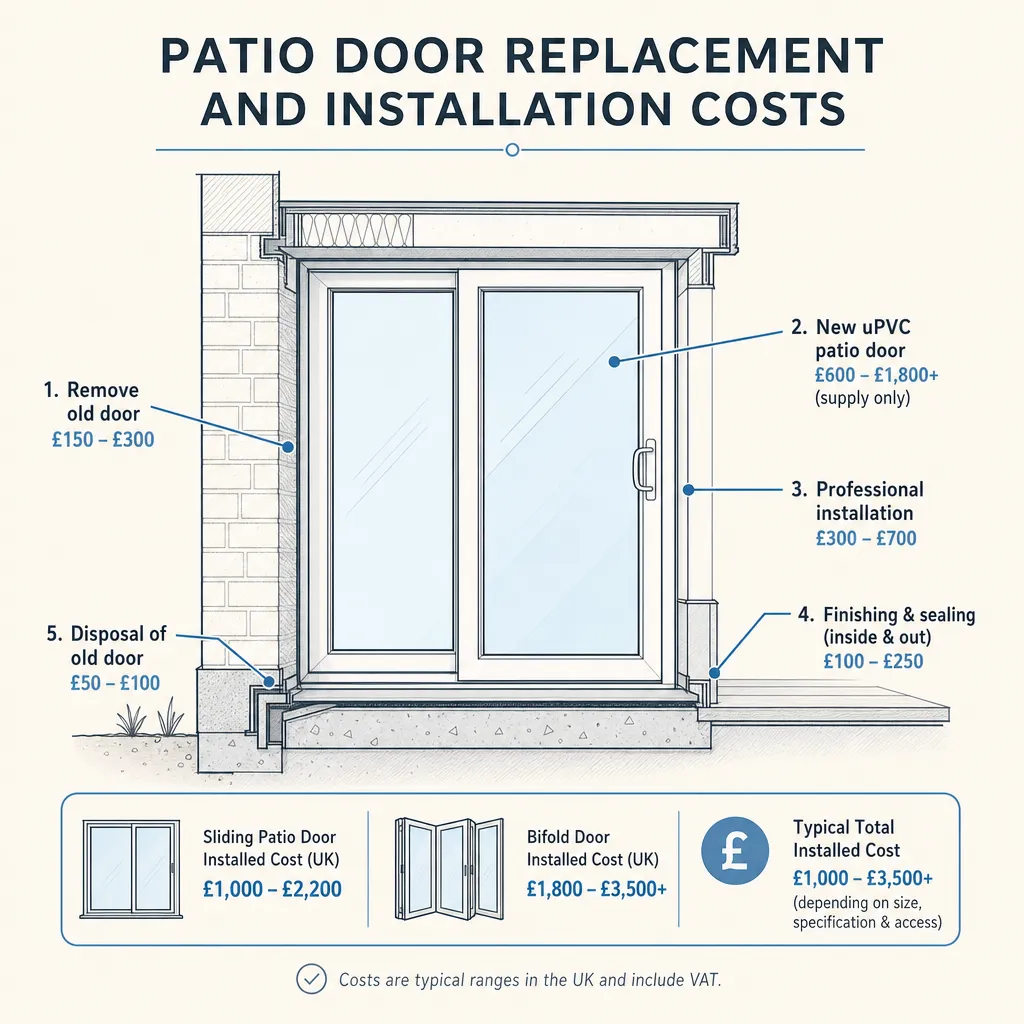
Patio Door Replacement and Installation Costs
Deciding to replace patio doors often arises during a rear extension, a kitchen renovation, or when ageing frames begin to leak heat, rattle, or jam on their runners. Whether you are swapping dated uPVC sliders for something more contemporary or opening up a rear wall for the first time, understanding what drives the cost — and what installation genuinely involves — helps you compare quotes accurately and avoid surprises once work starts.
Key points
- uPVC sliding patio doors typically cost £800–£2,000 installed for a standard two-panel unit; aluminium bifold doors run £3,000–£8,000 or more depending on configuration and specification.
- Any installer replacing glazed external doors in England and Wales must be FENSA or CERTASS registered, or the homeowner must submit a Building Regulations application to local authority building control.
- Building Regulations Part L (2022 revision) requires replacement external doors with more than 50% glazing to achieve a whole-unit U-value of 1.4 W/m²K or better.
- Listed buildings and properties in conservation areas may require planning permission for external door changes — check with your local planning authority before ordering.
Door types and typical costs
Door type | How it works | Typical installed cost | Best for | Limitations |
|---|---|---|---|---|
uPVC sliding (two-panel) | One fixed panel, one slides | £800–£2,000 | Standard openings, tighter budgets | Less contemporary sightlines; frames can discolour with age |
uPVC sliding (three-panel) | Two or three panels, one or more slide | £1,200–£2,800 | Wider openings | Larger visible frame sections |
Aluminium sliding | As above, with slimmer sightlines | £1,800–£4,500 | Contemporary homes, wider spans | Higher cost than uPVC |
Timber sliding or French-style | Wood frames, traditional appearance | £1,500–£4,000 | Older or listed properties | Higher maintenance; planning consent may be needed |
Bifold (aluminium) | Multiple panels fold and stack flat | £3,000–£8,000+ | Wide openings, indoor-outdoor connection | More complex installation; higher door threshold |
Inline sliding (flush-track aluminium) | Panel slides behind fixed, flush threshold | £3,500–£9,000 | Accessibility, high-specification renovation | Premium pricing; lintel may need upgrading |
Indicative UK costs, last reviewed 2026-05-07. Prices vary by region, supplier, and specification. Obtain at least three quotes before committing.
What installation involves
A like-for-like replacement in an existing opening typically completes in one day. The installer removes the old frame, prepares the reveals, fits the new frame using packers, seals with mastic, and tests operation and locking.
More complex work that adds time and cost:
- Widening an existing opening — new or upgraded lintel required; structural engineer input is often needed before work starts.
- Creating a new opening — significant structural work; building regulations approval almost always required.
- Flush threshold installation — may require changes to existing floor levels or the damp-proof course detail.
- Glazing upgrades — triple glazing or solar-control glass improves performance but typically adds 15–30% to glazing cost.
What affects the final price
Frame material: Aluminium commands a premium over uPVC due to slimmer sightlines and structural performance across wider spans. Composite frames (timber-aluminium) sit between the two on price and ongoing maintenance.
Glazing: Triple glazing achieves whole-unit U-values of 0.8–1.0 W/m²K versus 1.2–1.4 W/m²K for quality double glazing. The thermal benefit is genuine but so is the cost premium.
Colour: Powder-coated RAL colours on aluminium add to the unit cost. White uPVC carries no colour premium and remains the entry-level option.
Region: Labour rates in London and the South East are generally higher than in Northern England, Wales, or Scotland for equivalent products and installation scope.
Building Regulations and FENSA certification
Replacing external doors with significant glazing is notifiable work under the Building Act 1984. In practice:
- Use a FENSA or CERTASS registered installer — they self-certify on completion and issue a compliance certificate. Keep this document; solicitors request it on sale of the property.
- Submit a Building Regulations application to your local authority building control or an approved inspector if the installer is not scheme-registered.
Without a FENSA certificate, your conveyancer may require an indemnity insurance policy to cover the compliance gap on sale.
What to ask before accepting a quote
- What frame material, profile system, and manufacturer is being quoted?
- What is the whole-unit U-value, and does it meet Part L 2022 (1.4 W/m²K or better)?
- Is the installer FENSA or CERTASS registered, and will a compliance certificate be issued?
- Does the price include removal and disposal of the existing door and frame?
- Does it include making good the reveals — plasterwork, brickwork, and decoration?
- Are handles, multipoint locking, and threshold trim included in the price?
- What guarantees apply to the frame, sealed glass unit, and installation workmanship?
- Is VAT included in the quoted price?
- What could change the scope or price once the old frame is removed?
When to get professional help
Standard like-for-like replacements are routine for experienced installers. Seek additional input if:
- The opening is being widened or created from scratch — a structural engineer should confirm lintel adequacy before work begins.
- The property is listed or in a conservation area — consult the local planning authority before ordering any product.
- There are signs of damp, rot, or structural movement around the existing frame — diagnose and resolve these before fitting a new door.
- A flush threshold is needed for Part M accessibility compliance — check damp-proof course and floor build-up compatibility first.
How Housey can help
Housey connects you with vetted window and door installers who can quote for patio door replacements across the UK. Compare multiple quotes in one place before committing to a supplier or product specification.
Frequently asked questions
Do I need planning permission to replace patio doors?
In most cases, like-for-like patio door replacement is permitted development and does not need planning permission. Listed buildings, conservation areas, and Article 4 direction areas are exceptions. Always check with your local planning authority before ordering, as rules vary by location and individual property history.
How long does patio door installation take?
A standard like-for-like replacement typically completes in one day. Structural alterations, new openings, or accessibility threshold work extend this to two to three days or more. Your installer should confirm the programme once they have assessed the existing opening, lintel condition, and any making-good required.
What is the most energy-efficient type of patio door?
Triple-glazed aluminium or composite doors with a whole-unit U-value of 1.0 W/m²K or below offer the best thermal performance. Standard double-glazed doors meeting Building Regulations Part L (1.4 W/m²K or better) are sufficient for most UK homes and represent better value relative to the additional cost of triple glazing.
What is a FENSA certificate and do I need it?
FENSA is a competent person scheme for window and door installers in England and Wales. A FENSA certificate confirms the installation was self-certified as compliant with Building Regulations. You will need this when selling — without it, your solicitor may require an indemnity insurance policy to cover the compliance gap on sale.
Will replacing patio doors add value to my home?
Well-fitted aluminium bifold or inline sliding doors can improve a property's appeal and perceived space, but no specific value uplift is guaranteed. The return depends on property type, location, and overall home condition. Energy performance improvements may be more consistently valued by buyers than aesthetic changes alone.
Sources and further reading
- Approved Document L: Conservation of fuel and power — GOV.UK
- FENSA: Competent Person Scheme for glazing — FENSA
- Windows, doors and roof lights: planning permission — Planning Portal
- Building Act 1984 — legislation.gov.uk
- Double glazing and insulation — Energy Saving Trust
Useful next reads
 Improvement & Build
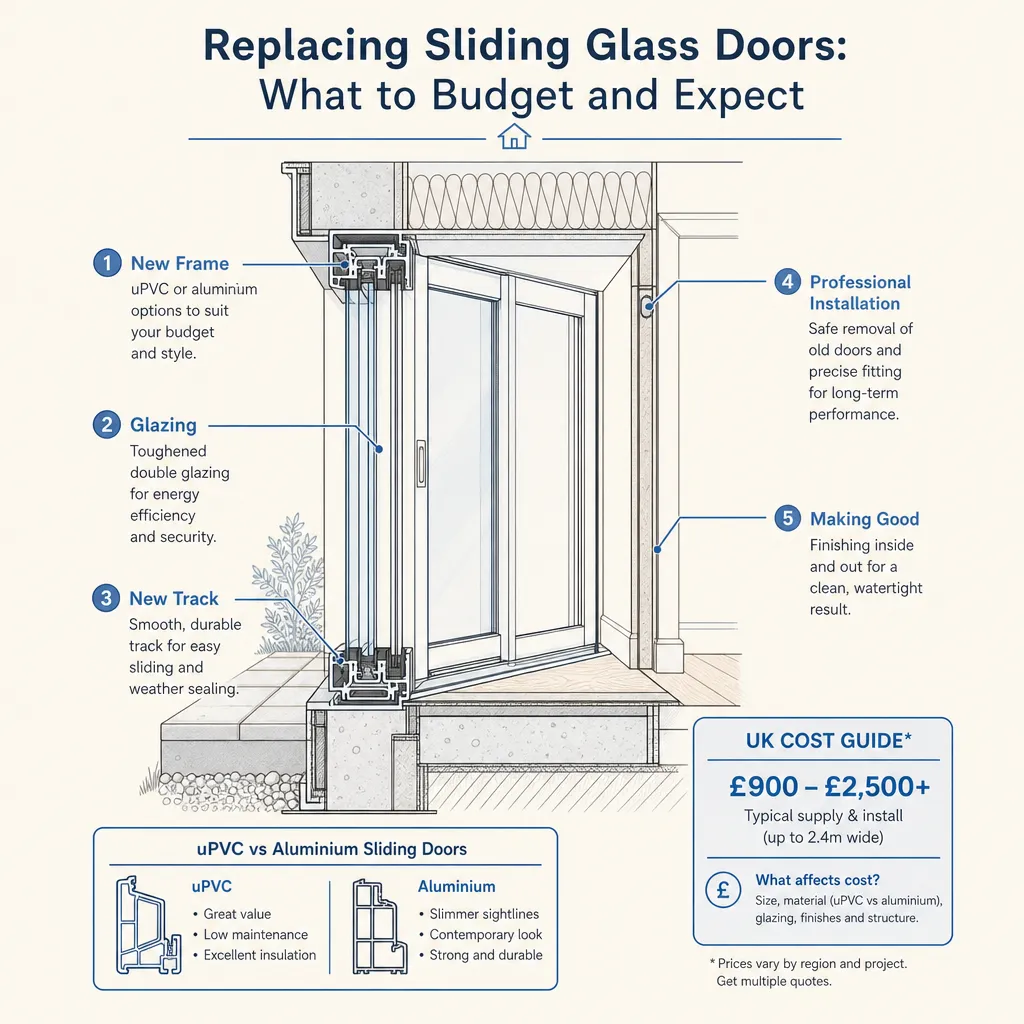
Replacing Sliding Glass Doors: What to Budget and Expect
Replacing sliding glass doors in a UK home typically costs £1,500–£4,500 depending on door size, glazing specification, and frame material.
 Improvement & Build
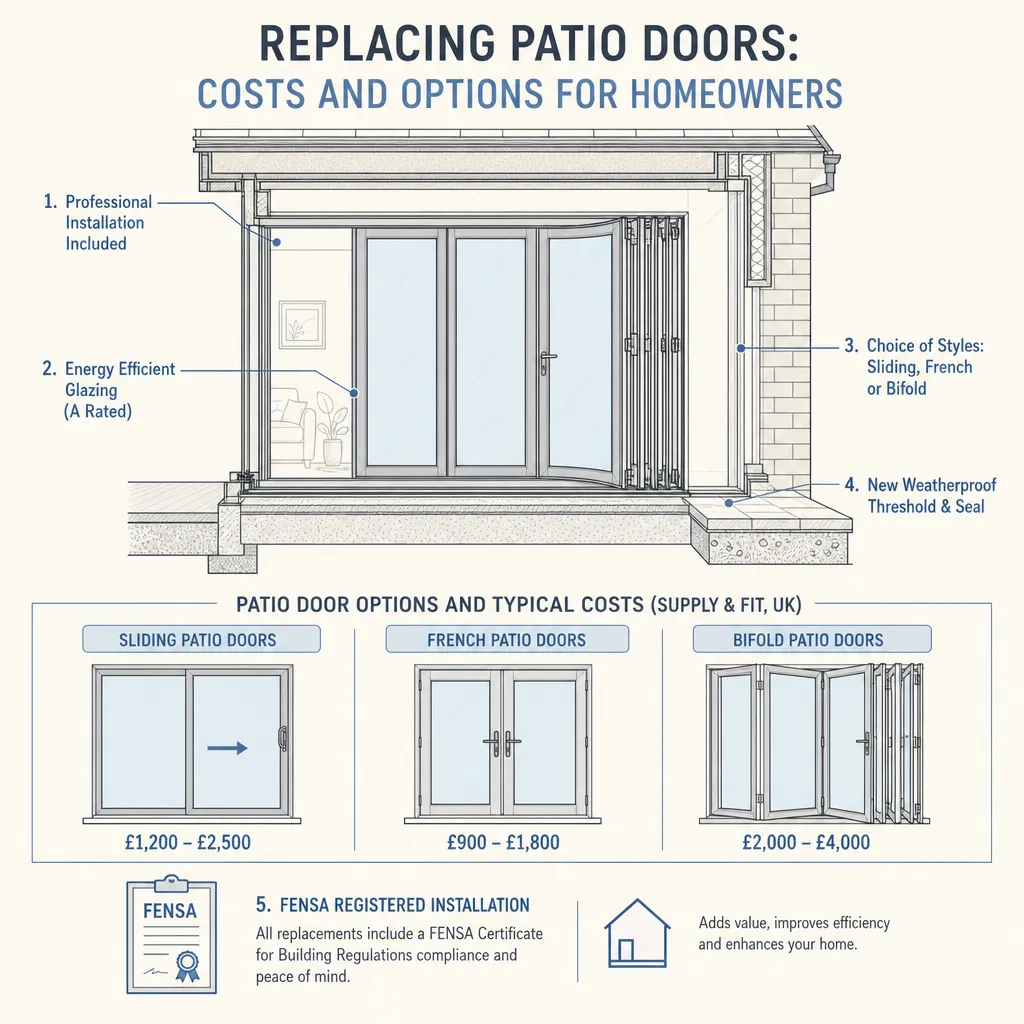
Replacing Patio Doors: Costs and Options for Homeowners
Replacing patio doors in the UK costs roughly £1,200–£2,500 for uPVC sliding or French doors, rising to £4,000–£9,000+ for aluminium bifold doors, including supply and installation.
 Improvement & Build
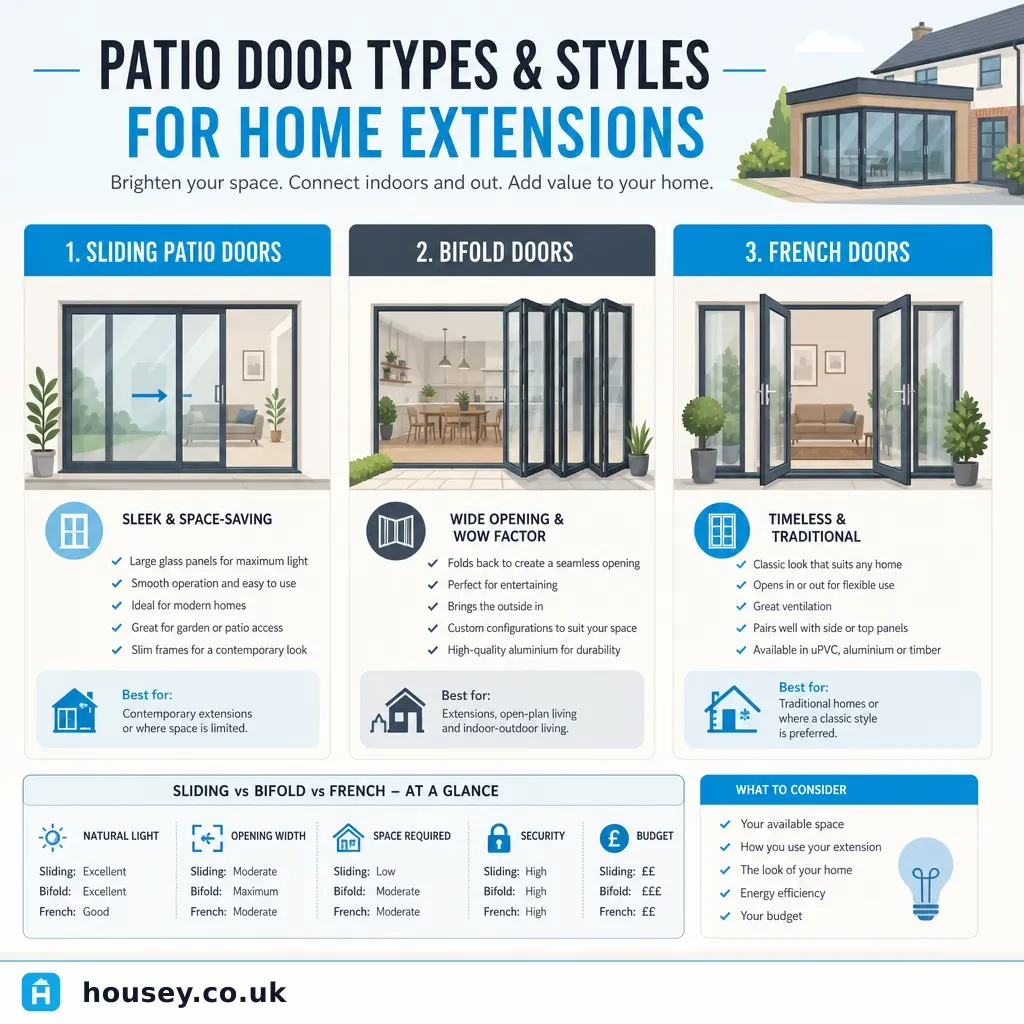
Patio Door Types and Styles for Home Extensions
For most UK home extensions, sliding doors suit openings up to 3.
 Improvement & Build
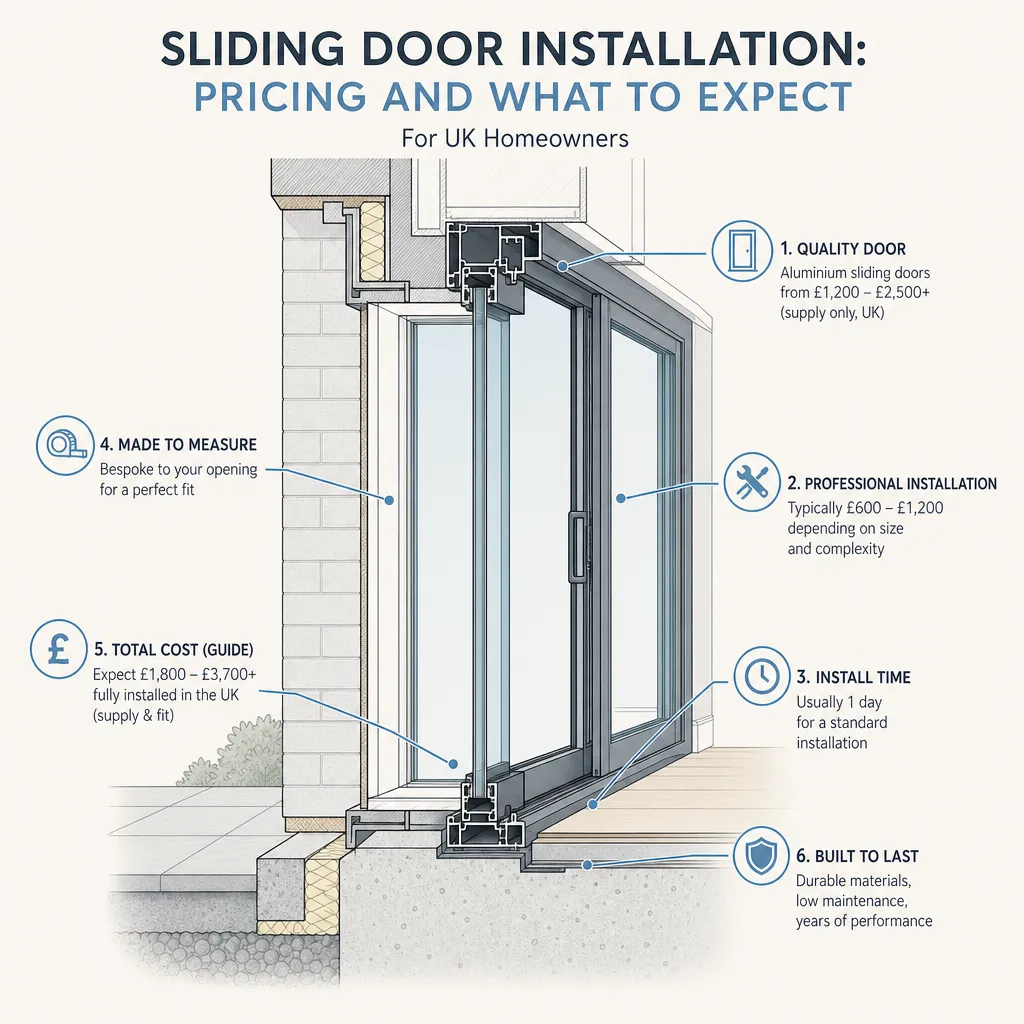
Sliding door installation: pricing and what to expect
A new sliding patio door in the UK typically costs £800–£3,000 fully installed, depending on size, material, and glazing specification.
 Improvement & Build
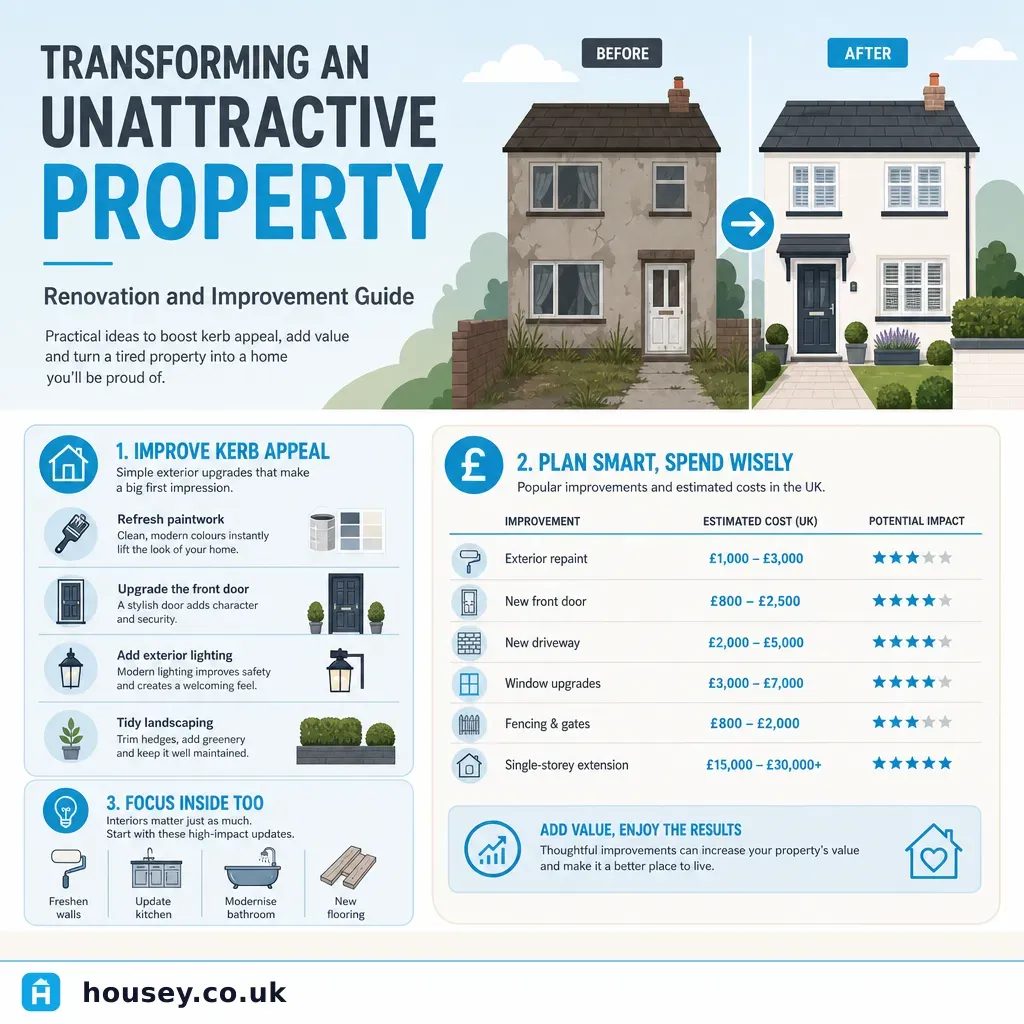
Transforming an Unattractive Property: Renovation and Improvement Guide
Transforming an unattractive UK property usually starts with surface-level improvements — render, windows, doors, and front landscaping — before tackling structural changes like extensions.