Spiral staircases: design options, installation costs and space considerations
By Housey · Last reviewed 12th of May 2026
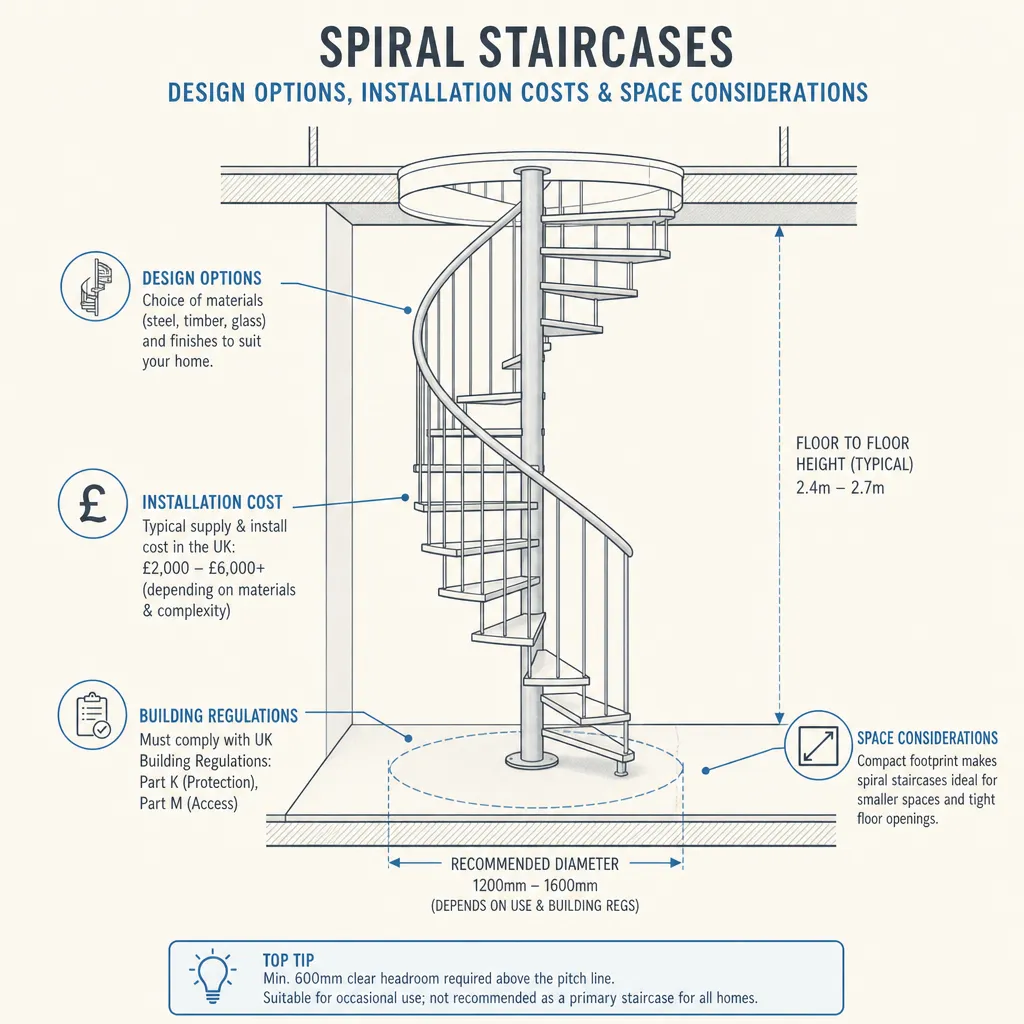
Spiral staircases: design options, installation costs and space considerations
Spiral staircases are a practical solution when floor space is limited or when a homeowner wants a striking architectural feature that a conventional straight flight cannot deliver. They appear most often in loft conversions, basement access routes, and open-plan renovations in Victorian terraces, 1930s semis, and contemporary new-build extensions. Getting the specification right before purchasing involves understanding UK Building Regulations, material options, and how installation complexity affects the overall budget.
Key points
- Building Regulations Approved Document K sets minimum going (tread depth), rise (step height), headroom (2 m for primary staircases), and handrail requirements for all staircases in England and Wales; Scotland uses the Technical Handbooks.
- A spiral staircase intended as the primary means of escape from an upper floor must comply with both Part K and Part B (fire safety) requirements, which can limit the acceptable minimum diameter.
- Kit spiral staircases start at around £800–£1,500 for mild steel; bespoke timber or glass designs typically range from £5,000 to £15,000 or more (indicative UK costs, last reviewed 2026-05-12).
- The floor opening required for a standard domestic spiral is typically 1,200–1,600 mm in diameter; this structural modification usually needs a structural engineer's input and building control sign-off.
- Listed buildings and conservation areas may require listed building consent even for internal alterations that affect the character of the building.
Which spiral staircase type suits your project?
The choice is usually driven by three factors: available floor space, intended use (primary everyday access or occasional secondary), and budget. Kits offer the fastest route to installation; bespoke designs allow precise dimensions, finishes, and integration with the wider interior scheme.
Material comparison
Material | Typical supply cost | Best for | Not ideal for |
|---|---|---|---|
Mild steel (painted or powder-coated) | £800–£3,000 | Budget-conscious projects, utility access | Damp spaces without regular coating maintenance |
Stainless steel | £2,500–£8,000 | Contemporary interiors, low ongoing maintenance | Projects with tight initial budgets |
Timber (pine, oak, or ash) | £2,000–£7,000 | Traditional or rustic interiors, warm aesthetic | Very compact spaces where wider treads are impractical |
Aluminium | £1,500–£4,000 | Lightweight requirement, external or garden use | High-footfall primary staircases |
Cast iron (reclaimed or reproduction) | £3,000–£10,000+ | Period properties, decorative architectural feature | Structural weight limits, tight retrofit spaces |
Glass balustrade upgrade | £1,000–£3,000 extra | Modern interiors wanting a light, open feel | Where child safety or budget are primary concerns |
Indicative UK supply-only costs, last reviewed 2026-05-12. Installation, structural work, and building control fees are additional.
How much does a spiral staircase cost to install in the UK?
Supply and installation costs depend on whether you buy a standard kit or commission a bespoke design.
Kit staircases (mild or galvanised steel) arrive largely pre-fabricated. A competent joiner or metalworker can install them in one to two days. Budget approximately £800–£1,500 for the unit plus £400–£800 for installation labour.
Mid-range bespoke designs involve a manufacturer fabricating to your exact floor-to-floor height, diameter, and finish. Total supply-and-fit costs for a steel or timber design typically run from £2,000 to £5,000.
High-specification or architectural designs — glass treads, solid oak, integrated LED lighting, or complex custom balustrades — often exceed £8,000–£15,000 installed.
Structural work is frequently overlooked in early budgets. Cutting or strengthening the floor opening, installing trimmer joists, and obtaining building control sign-off can add £500–£2,000 depending on the floor construction and access.
Always obtain at least three itemised quotes. Ask each supplier to separate unit cost, installation labour, structural allowance, and building control fees.
Building Regulations: what applies to spiral staircases?
All spiral staircases in habitable spaces in England and Wales must comply with Approved Document K (Protection from falling, collision and impact). Key minimum requirements for private staircases:
- Going (tread depth): at least 220 mm measured at the walking line (centre of the tread width).
- Rise (step height): maximum 220 mm per step.
- Headroom: minimum 2 m measured at the centre of the staircase width.
- Handrails: required on at least one side; between 900 mm and 1,000 mm in height.
- Balustrades: openings must prevent a 100 mm sphere from passing through to protect young children.
A spiral used only as a secondary access route — for example, to a hobby room or utility loft — may be subject to relaxed standards, but confirm this with your building control body before purchasing.
In Scotland, refer to the Technical Handbook — Domestic: Section 4 (Safety) for equivalent requirements.
Planning permission: when is it needed?
Internal alterations including new staircases generally fall under permitted development for residential properties, so no planning application is required in most cases. Exceptions include:
- Listed buildings: internal works affecting historic fabric or character require listed building consent from your local planning authority.
- Conservation areas: internal staircase changes are usually unaffected unless linked to a change of use or external alteration.
- Leasehold flats and apartments: consent from the landlord or management company is often required before building control approval is sought.
Check with your local planning authority if there is any doubt about your property's status.
Choosing the right diameter
The internal usable diameter affects both day-to-day comfort and Building Regulations compliance.
Diameter | Suited to | Everyday use comfort |
|---|---|---|
1,000 mm | Occasional-use secondary access only | Limited; borderline for Part K compliance |
1,200 mm | Secondary staircase, infrequent use | Acceptable for secondary access |
1,400–1,600 mm | Primary staircase, everyday household use | Comfortable; generally meets Part K |
1,800 mm+ | Feature staircases in larger or open-plan spaces | Generous; best for accessible design |
For a primary staircase serving a bedroom, most manufacturers recommend a minimum internal diameter of 1,400–1,600 mm to achieve comfortable compliance with Approved Document K.
Homeowner checklist before ordering
When to get professional help
A competent joiner or metalworker can install a standard kit staircase, but specialist input is warranted in the following situations:
- Cutting or modifying a floor opening in an older building where joist sizes, direction, or condition are unknown.
- Any concern that a load-bearing beam or structural element is nearby or affected.
- Compliance questions about Part K, Part B (fire escape), or accessible design under Part M.
- Listed building or conservation area consent queries.
- Bespoke designs requiring structural or architectural drawings for a full-plans building control application.
A structural engineer should assess any floor joist modifications. An architect or architectural technologist can prepare drawings where building control requires them.
How Housey can help
If your spiral staircase is part of a wider loft conversion, basement, or extension project, extension builders or design-and-build firms can coordinate structural modifications, building control approval, and staircase installation as a single package — often the most cost-effective approach for complex projects.
Frequently asked questions
Do spiral staircases need building regulations approval?
Yes. Any new staircase in a habitable dwelling in England and Wales is subject to Approved Document K. You will need either a full plans application or a building notice submitted to your local authority or an approved inspector before work starts. The staircase must meet minimum requirements for going, rise, headroom, and handrails to gain sign-off.
What is the minimum floor space needed for a spiral staircase?
The floor opening must match the external diameter of the chosen unit. Most domestic spiral staircases require a circular opening of 1,200–1,600 mm in diameter. You also need clear space at the base and upper landing for safe entry and exit. Confirm exact dimensions with your supplier and your building control body before any structural work begins.
Can a spiral staircase serve as the main staircase in a house?
Yes, provided it meets Approved Document K's requirements for a primary staircase — typically a minimum internal diameter of 1,400–1,600 mm to achieve the required centre-line going and headroom. It must also form a suitable means of escape in case of fire under Part B. Confirm the specification with your building control body before purchasing.
How long does spiral staircase installation take?
A standard kit installed by an experienced fitter typically takes one to two days once the floor opening is prepared. Bespoke designs or structural floor modifications can extend the programme to several days. Factor in bespoke manufacture lead times of four to twelve weeks, plus the building control inspection process after installation.
Sources and further reading
- Approved Document K: Protection from falling, collision and impact — GOV.UK
- Building Regulations approval: overview — GOV.UK
- Technical Handbook Section 4: Safety (Scotland) — Scottish Government
- Planning Portal: internal works and permitted development — Planning Portal
Useful next reads
 Improvement & Build
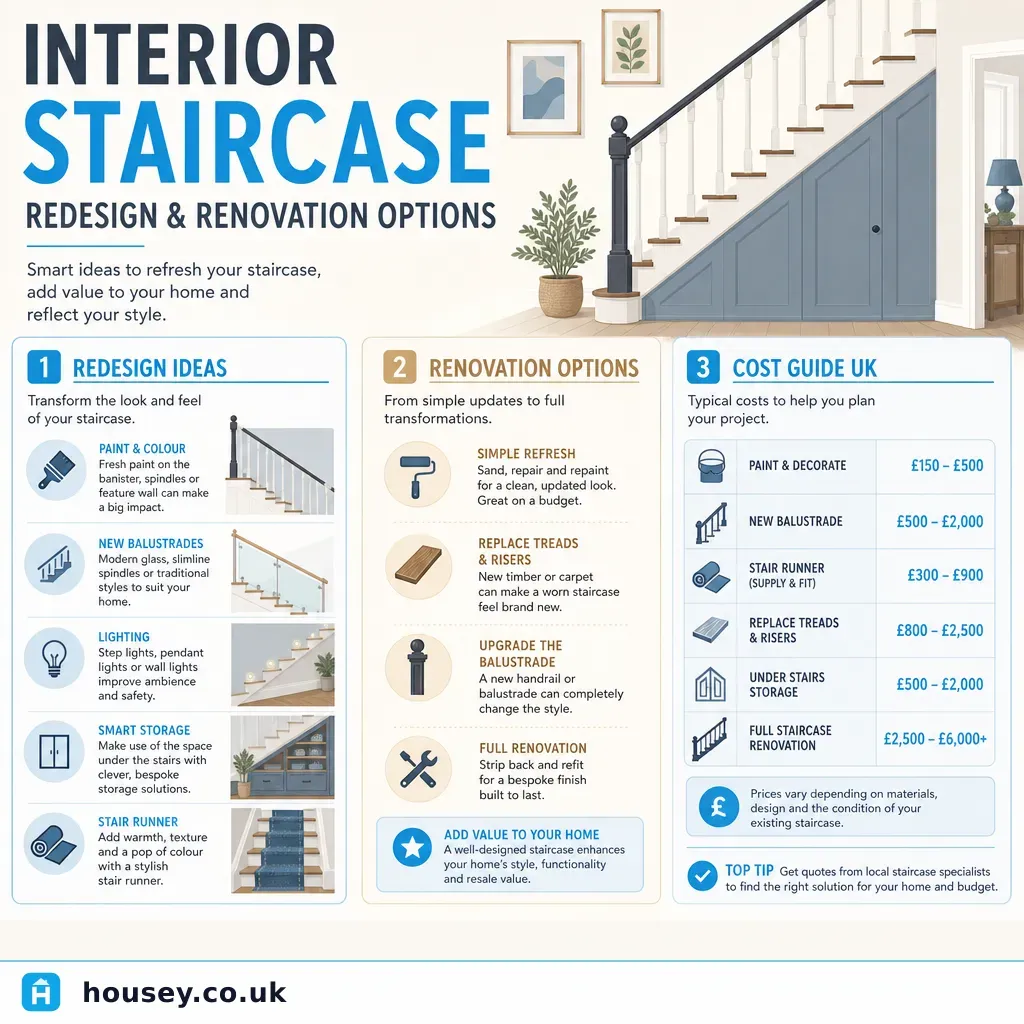
Interior staircase redesign and renovation options
Staircase renovation ranges from cosmetic updates — repainting treads, replacing balusters, or fitting a stair runner — to full structural redesigns with new flights and open-plan layouts.
 Improvement & Build
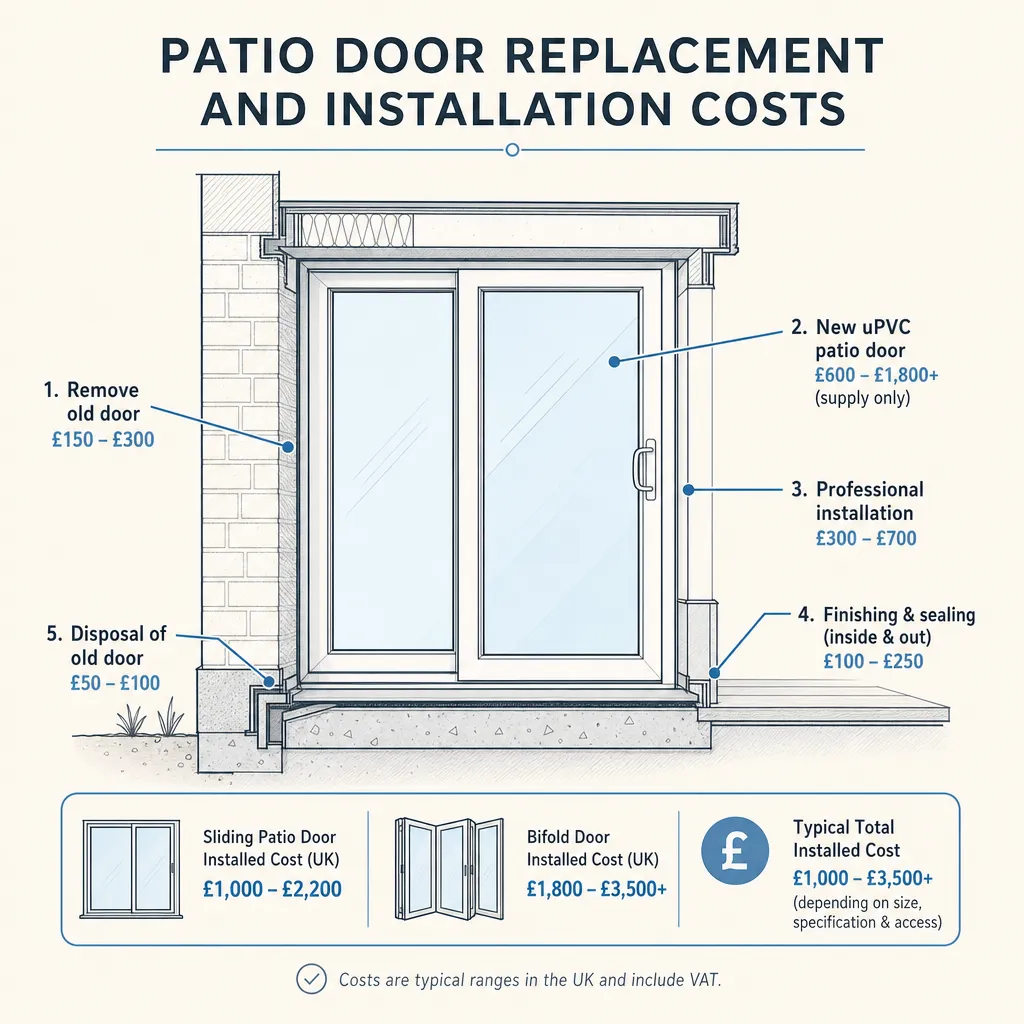
Patio Door Replacement and Installation Costs
Replacing patio doors in the UK typically costs £800–£2,000 installed for a standard uPVC sliding unit, rising to £3,000–£8,000 or more for aluminium bifold doors.
 Improvement & Build
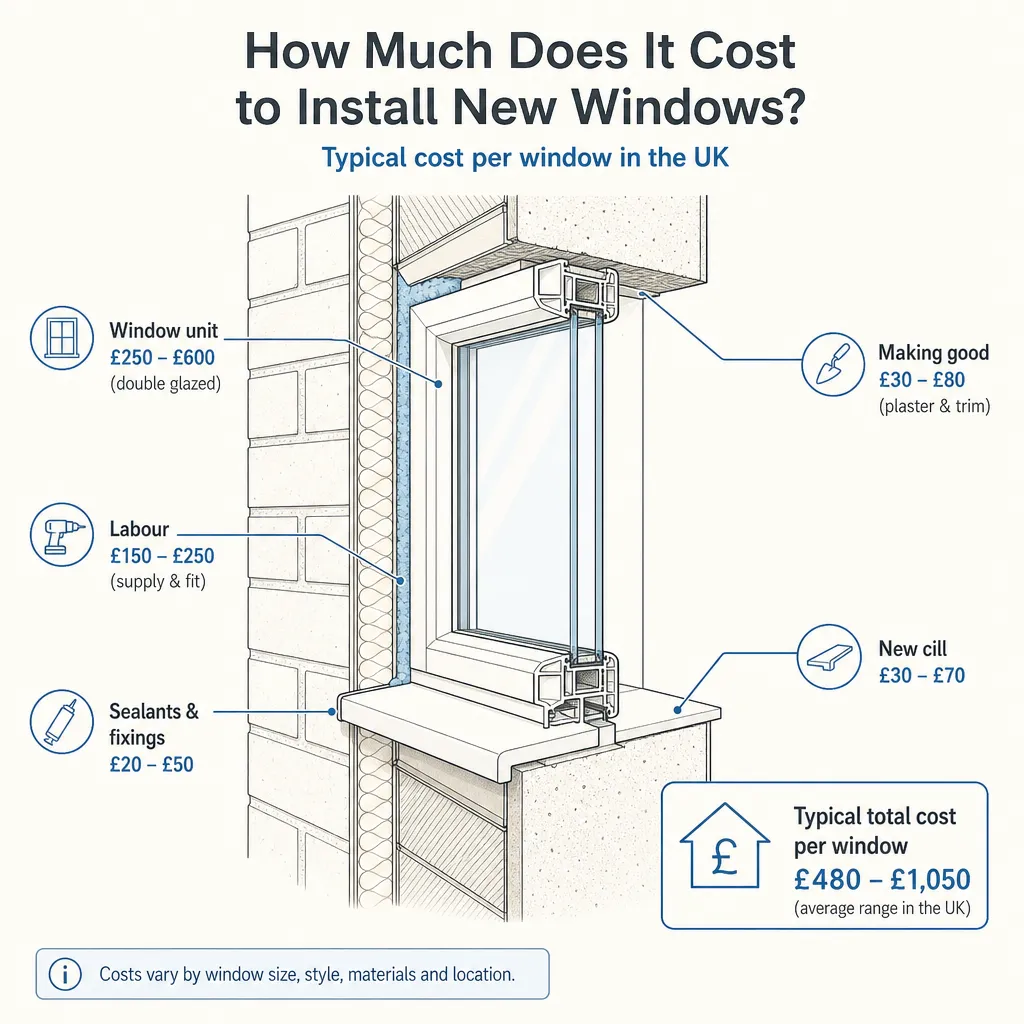
How Much Does It Cost to Install New Windows?
New window installation in the UK typically costs £300–£700 per uPVC double-glazed window (supply and fit), rising to £800–£2,500 for timber or sash windows.
 Improvement & Build
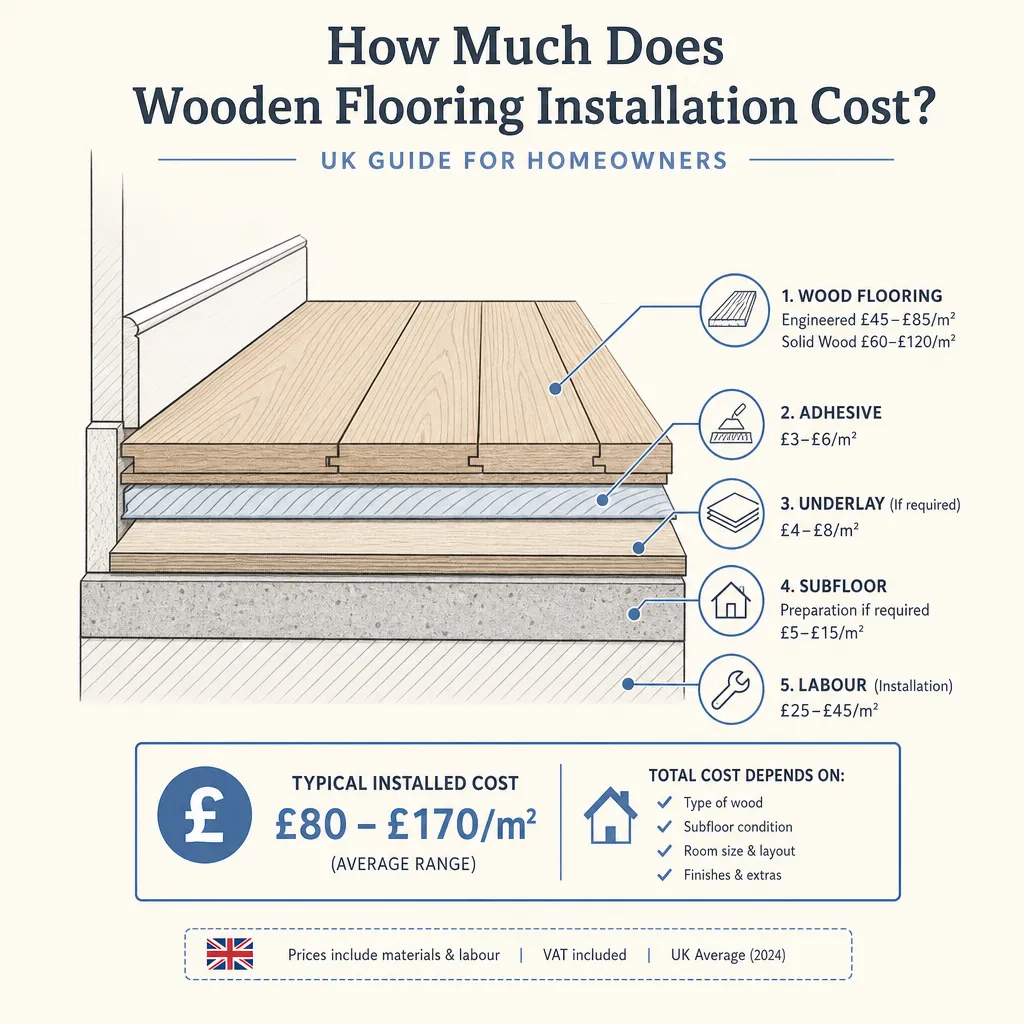
How Much Does Wooden Flooring Installation Cost?
Wooden flooring installation in the UK typically costs £15–£35 per m² for labour, with materials adding £15–£80 or more per m² depending on whether you choose engineered hardwood, solid hardwood, or bamboo.
 Improvement & Build
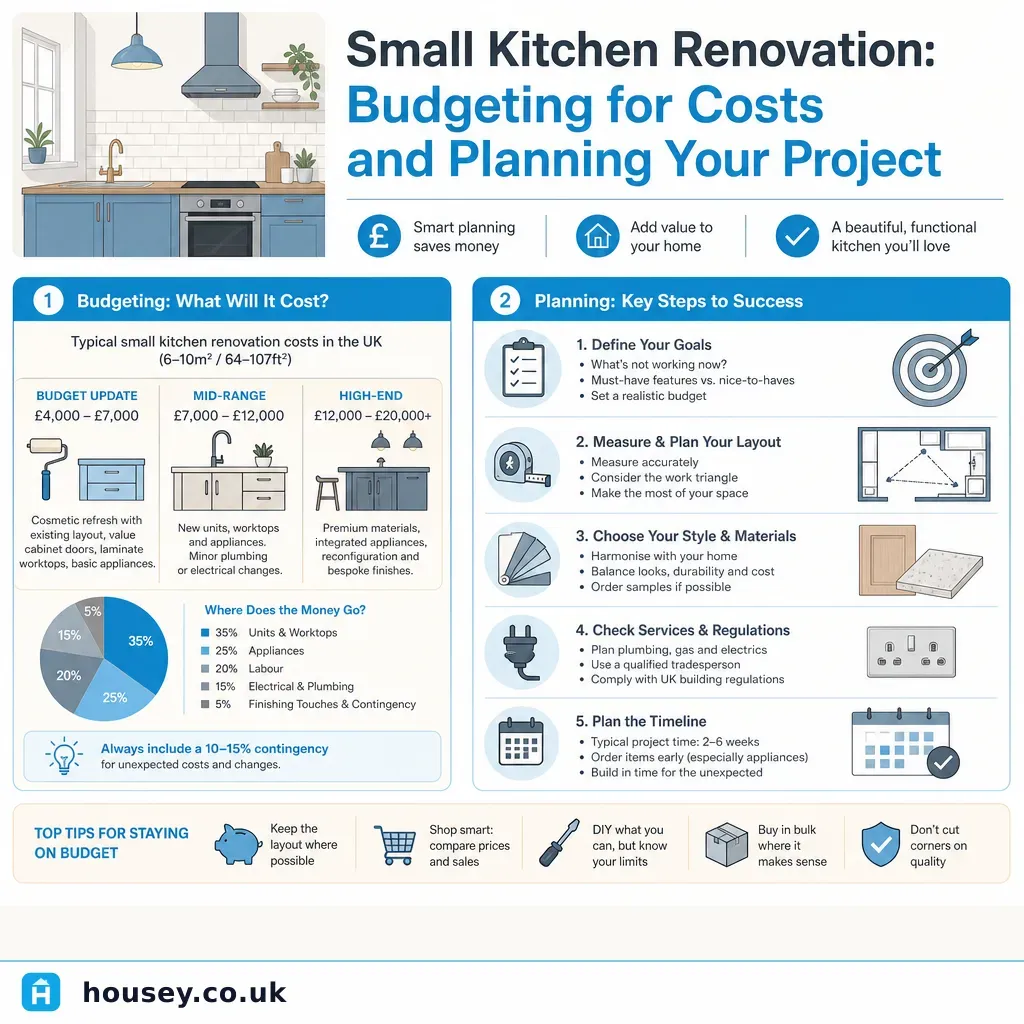
Small kitchen renovation: budgeting for costs and planning your project
A small kitchen renovation in the UK typically costs £5,000–£15,000 for a full refresh including new units, worktops, tiling, and appliances, though costs vary widely by specification, region, and whether structural changes or rewiring are involved.