How to Assess Tradecraft Quality in Home Improvement Projects
By Housey · Last reviewed 24th of May 2026
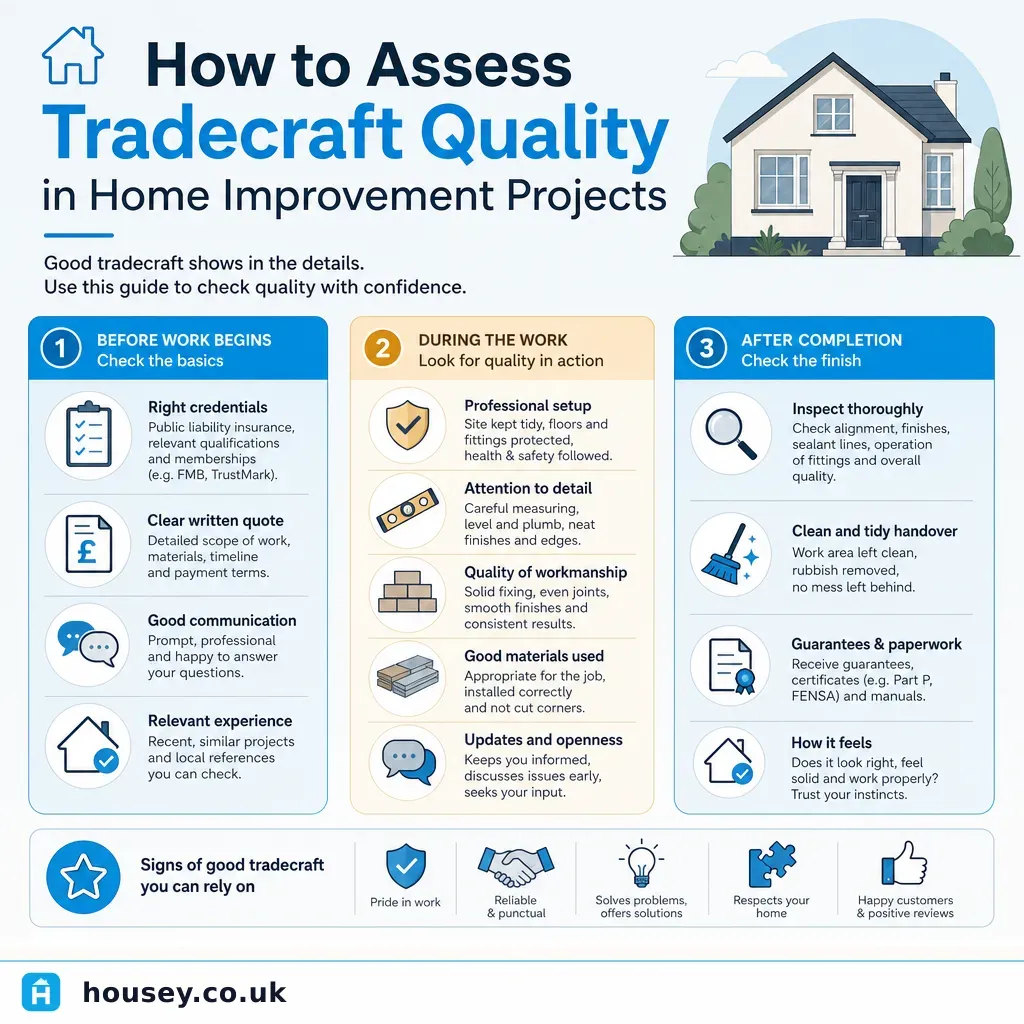
How to Assess Tradecraft Quality in Home Improvement Projects
Knowing whether building work has been done properly is one of the more underappreciated skills a UK homeowner can develop. Whether you are inspecting the work of a tiler, carpenter, or general builder, the ability to distinguish quality workmanship from a superficially tidy finish can protect you from costly remedial work later. Poor tradecraft often hides beneath fresh paint or grout lines — and defects undetected at practical completion can be significantly more expensive to fix once the contractor has left site.
Key points
- The Consumer Rights Act 2015 requires all trade services to be delivered with reasonable care and skill; failure to meet this standard gives you legal grounds to request remedial work or a price reduction.
- Regulated work — electrical, gas, replacement windows, and heating — must be self-certified through a Competent Person Scheme such as NICEIC, Gas Safe Register, or FENSA; you should receive the relevant certificate on completion.
- The Federation of Master Builders (FMB) and Which? Trusted Traders operate complaints and dispute resolution procedures, not just review ratings — membership carries more weight than a star score alone.
- Building Regulations completion certificates are required for extensions, loft conversions, structural alterations, replacement heating systems, and notifiable electrical work; without them you may face difficulties at resale.
- Retaining a percentage of the final payment (typically 2.5–5%) until a snagging inspection is complete is a standard commercial practice that gives you practical leverage if defects emerge after the contractor leaves.
What good quality workmanship looks like
Good tradecraft is consistent, precise, and durable. It is also appropriate to the task — a kitchen fitter's standard of finish differs from a structural engineer's concern for load paths. The following indicators apply broadly across most home improvement trades.
Structural and general building work
- Walls and floors should be plumb, level, and square within normal tolerance (typically ±3 mm over 2 m for plastered surfaces).
- Blockwork and brickwork joints should be consistent in depth and finish, with no cracked or unfilled perpends.
- New openings must be properly lintel-supported; any deflection in the lintel or surrounding masonry after work is complete is a concern.
- Fixings into masonry should use appropriate anchors for the substrate; hollow-sounding fixings after installation suggest incorrect specification.
Wet trades: plastering, tiling, and rendering
- Plastered walls should be flat without ridges, hollows, or visible beads pulling away from the surface.
- Grout lines in tiling should be consistent in width and fully filled; lippage (where tile edges do not align) should fall within the project specification.
- External render should be free of cracks, fully adhered, and correctly detailed at window and door reveals.
Carpentry and joinery
- Door frames should be square so doors open and close without binding or rattling.
- Skirting boards and architrave joints at corners should be mitred cleanly and pinned tight, with no visible gaps.
- Floor boards — engineered or solid — should lie flat without squeaks; any movement suggests incorrect fixing or inadequate acclimatisation before laying.
Electrical, plumbing, and gas
Work in these areas is regulated under Building Regulations Part P (electrical) and the Gas Safety (Installation and Use) Regulations 1998. Competent installers must self-certify through the relevant Competent Person Scheme or notify building control. You should receive a BS 7671 Electrical Installation Certificate for new or significantly altered electrical installations. Without these documents, you cannot demonstrate compliance when you sell.
Comparison table: types of quality assurance
Assurance type | What it covers | Issued by | When to check |
|---|---|---|---|
Competent Person Scheme certificate | Self-certification of regulated work (electrical, windows, heating) | Scheme operator (NICEIC, FENSA, Gas Safe, etc.) | On completion, before final payment |
Building Regulations completion certificate | Structural, fire, thermal, drainage work not self-certified | Local authority or approved inspector | On completion |
Trade body membership (FMB, Which? Trusted Traders) | Quality framework and complaints procedure | Trade body | Before instructing |
Manufacturer warranty | Materials and installed products | Manufacturer | On installation |
Workmanship guarantee | Labour defects for an agreed period | Contractor | Negotiated before work starts |
Red flags during and after a home improvement project
Watch for these warning signs at any stage of a project:
- No written contract or specification — makes disputes very difficult to resolve and limits your options under consumer law.
- Request for full payment upfront — legitimate contractors rarely require this; staged payments tied to milestones are standard practice.
- Reluctance to provide certificates — for regulated work, this may indicate the installer is not registered with the relevant Competent Person Scheme.
- Pressure to sign off before a proper inspection — a contractor who discourages you from inspecting work before final payment may be concealing defects.
- Hollow tiles or drummy plaster — tap the surface; a hollow sound indicates the material is not properly bonded to the substrate.
- Silicone used to fill structural gaps — this is a cosmetic treatment masking an underlying problem, not a structural repair.
- Exposed wiring, unclipped pipes, or unpainted fixings — these suggest the project was not completed to a properly finished standard.
What to ask before hiring a tradesperson
- What accreditations and memberships do you hold, and can I verify them independently online?
- Who will carry out the work — you personally, or subcontractors?
- Can you provide references from similar projects completed in the last 12 months?
- What are the terms of your warranty for materials and workmanship, and is it insurance-backed?
- What happens if defects are identified after you have left site?
- Is VAT included in the quoted price?
- What assumptions does this quote make, and what could cause the price or timeline to change?
Homeowner checklist: before, during, and after
Before work starts:
During the project:
After completion:
When to get professional help
If you suspect completed work is structurally defective, dangerous, or non-compliant with Building Regulations, professional assessment is important.
- A chartered building surveyor (MRICS or FRICS) can inspect completed work and produce a written expert report suitable for use in a dispute.
- An Approved Building Control inspector can advise whether unpermitted or non-compliant work needs to be regularised before resale.
- If electrical or gas work is suspected to be unsafe, contact NICEIC, NAPIT, or the Gas Safe Register — all operate public safety helplines.
- Citizens Advice can explain your options under the Consumer Rights Act 2015 if a contractor disputes a complaint.
How Housey can help
Housey connects UK homeowners with vetted local tradespeople and professionals across a wide range of home improvement services. Browse our service categories to find accredited specialists in your area and compare quotes before committing to any work.
Frequently asked questions
What does 'reasonable care and skill' mean under the Consumer Rights Act 2015?
The Consumer Rights Act 2015 requires any service provided in the course of a business to be carried out with reasonable care and skill. If work falls below this standard, you are entitled to ask the trader to redo or fix the work at no additional cost. If that is not practical, or if the trader refuses, you may be entitled to a price reduction. This applies to builders, decorators, plumbers, and most other tradespeople.
Do I need a building control certificate for all home improvements?
Not all projects require building control notification. Like-for-like replacements, redecoration, and most garden landscaping are generally exempt. Extensions, loft conversions, structural alterations, new or replacement heating systems, and electrical work beyond simple like-for-like replacement typically require notification. Check with your local authority or a qualified building control officer before starting work if you are unsure.
How long should a tradesperson's workmanship guarantee last?
There is no fixed statutory period for workmanship guarantees in the UK — these are commercial arrangements. One to two years is common for general building work. Some trade bodies, including the Federation of Master Builders, offer deposit protection and extended guarantee schemes for member firms. Always obtain any guarantee in writing and confirm it is insurance-backed rather than relying on the contractor remaining in business.
What if the contractor has left and I discover a defect?
Contact the contractor in writing — email is sufficient — setting out the defect clearly with photographs. Give them a reasonable opportunity to remedy the issue. If they refuse or do not respond, you may have a claim under the Consumer Rights Act 2015. Citizens Advice can advise on your options. If the contractor belongs to a trade body, its dispute resolution service is often faster than court action.
Sources and further reading
- Consumer Rights Act 2015 — legislation.gov.uk
- Competent Person Schemes — GOV.UK
- Federation of Master Builders — FMB
- Electrical Safety First — Electrical Safety First
- Citizens Advice: problems with tradespeople — Citizens Advice
Useful next reads
 General property advice
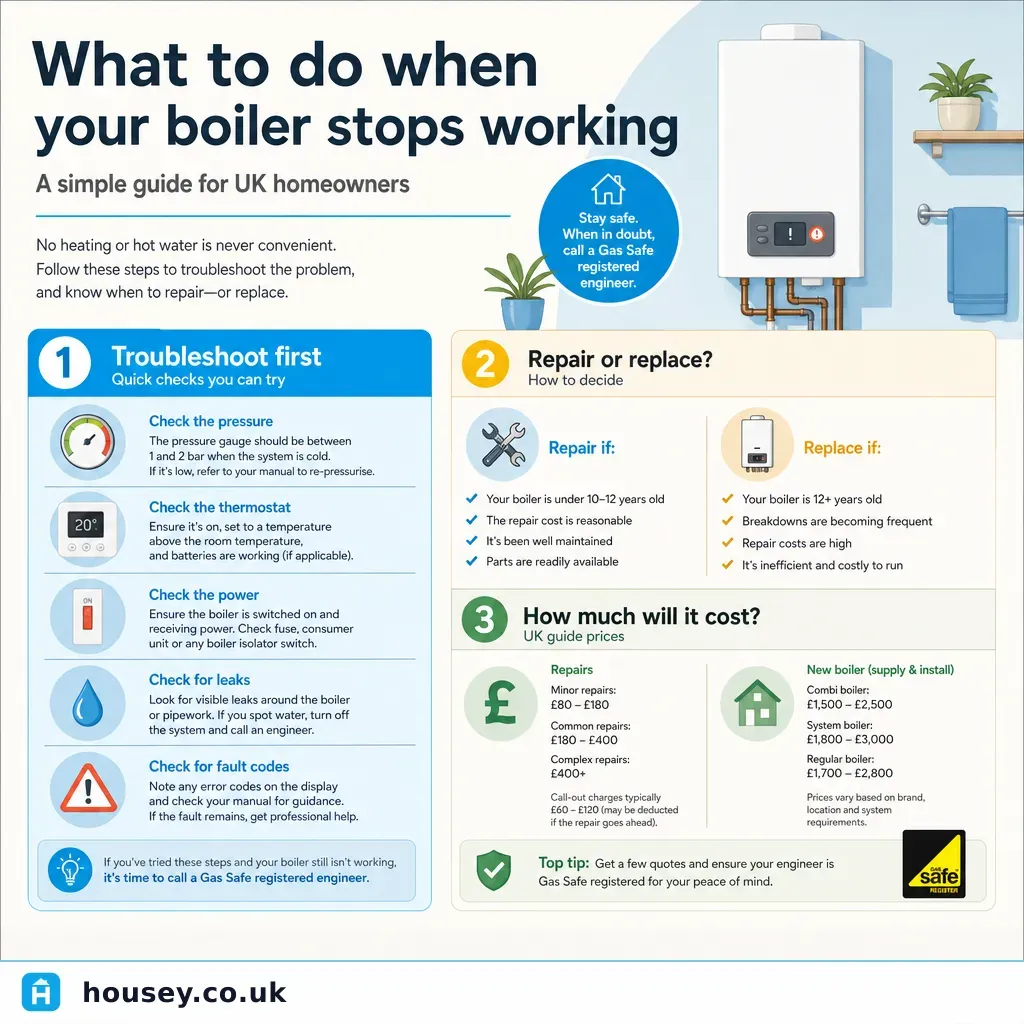
What to do when your boiler stops working
When your boiler stops working, check the pressure gauge (should read 1–1.
 General property advice
Property Market Trends: Activity Growth and Price Movements
UK property market activity is measured through completed sale registrations (HM Land Registry), lender mortgage data, and transaction volumes from HMRC.
 General property advice
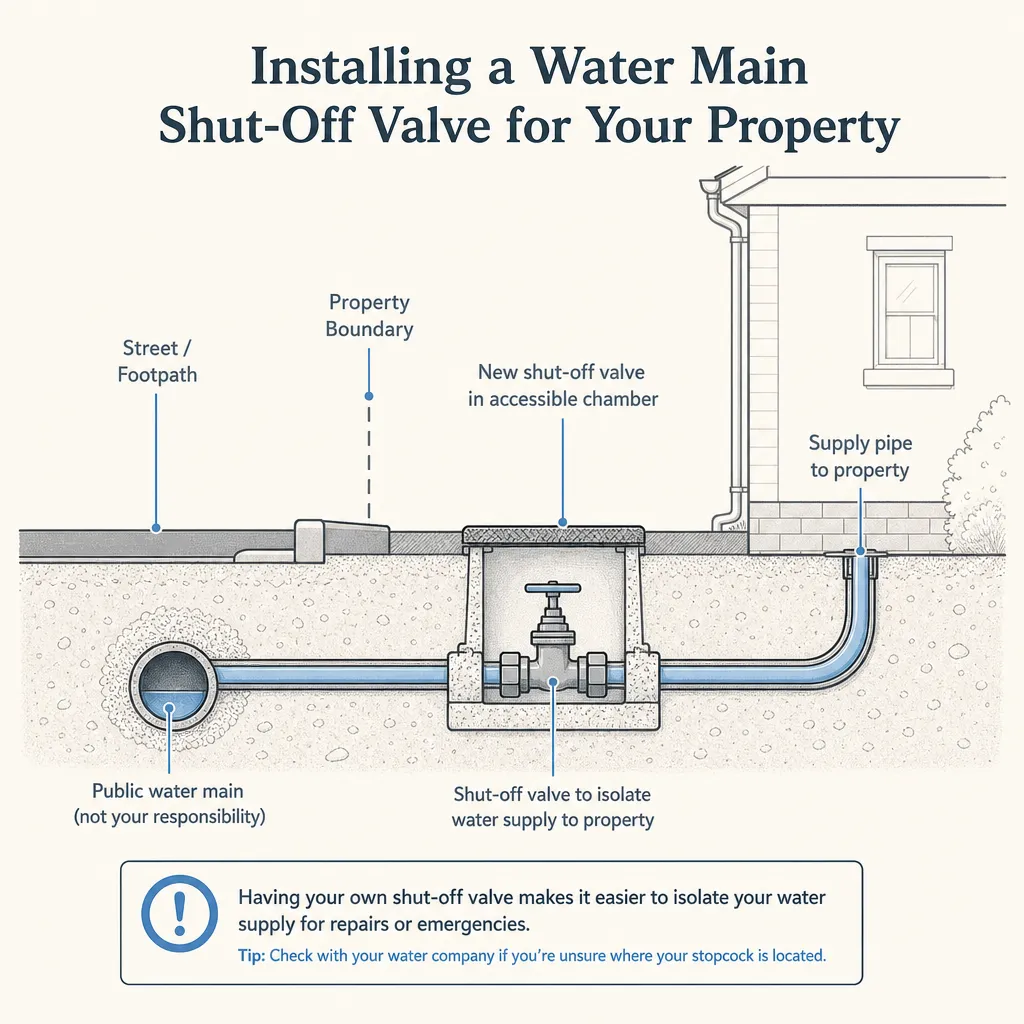
Installing a water main shut-off valve for your property
A water main shut-off valve — commonly called a stopcock — controls all water entering your home from the mains.
 General property advice
Monthly House Price Index: August Market Report and Analysis
The UK House Price Index is published monthly using completed Land Registry transaction data, meaning August figures typically reflect sales agreed months earlier.
 General property advice
Scottish Property Market: Activity and Regional Trends
Scotland's property market operates under distinct legal rules: sellers must provide a Home Report before marketing, transactions become legally binding at conclusion of missives rather than exchange of contracts, and Land and Buildings Transaction Tax replaces Stamp Duty.